CIEHF Publications
The following papers have been presented at the CIEHF’s annual Ergonomics & Human Factors conference and have been accepted for publication in the Contemporary Ergonomics & Human Factors book series. They are freely available to access but we would appreciate a link back to this site with any citation.
Publish Date: Jul 3, 2025 | Keywords: Uncategorised
Jet Lag: The Silent Saboteur
Look: an elite sprinter flies from New York to Tokyo, lands twelve hours ahead, and is expected to drop a sub‑10 second 100 m dash that afternoon. Simple math says no. The body’s internal clock is still stuck on Broadway lights, not neon Osaka. One night of restless, fragmented sleep can turn a champion’s muscles into jelly. Jet lag isn’t a myth; it’s a physiological time bomb that detonates in the heart, the lungs, and the nervous system.
Hormonal Chaos
Here is the deal: cortisol spikes, melatonin tanks, testosterone dips. The endocrine system behaves like a mis‑tuned orchestra, each instrument playing out of sync. A tennis player struggling with a 6‑hour shift will feel the adrenaline rush just a beat too early, then crash before the final set. Recovery protocols that ignore this hormonal roller coaster are basically throwing money into a black hole.
Performance Metrics Take a Hit
Short‑burst athletes lose up to 20 % of their explosive power after crossing three time zones; endurance pros suffer a 10 % rise in perceived exertion after six zones. Those numbers aren’t anecdotal—they’re straight out of sport science journals. The data points to slower reaction times, diminished VO₂ max, and a higher likelihood of cramping. In other words, the clock you fight against on the track is also beating inside you.
Travel Fatigue vs. Jet Lag
By the way, travel fatigue is not jet lag. The former is a generic tiredness from long‑haul flights—dry cabin air, cramped seats, limited mobility. The latter is a misalignment of the suprachiasmatic nucleus, the brain’s master clock. If you treat fatigue with caffeine alone, you’ll just mask the deeper circadian disruption. Athletes need a two‑pronged approach: physical recovery for the body, circadian realignment for the brain.
Strategic Countermeasures
First, start adjusting sleep schedule 48 hours before departure. Shift bedtime by an hour each night toward the destination’s timezone. Second, light exposure is your secret weapon. Bright light in the morning (or evening, depending on direction) nudges the internal clock forward. Third, hydrate like you’re in a desert—electrolyte‑rich fluids offset cabin dehydration and help regulate melatonin production.
Practical Playbook for Teams
Look, coaches can’t afford to leave circadian misalignment to chance. Implement a “zone‑shift protocol” that includes pre‑travel sleep shifts, in‑flight meal timing, and post‑arrival light therapy. Use wearable tech to monitor sleep stages, heart‑rate variability, and cortisol spikes. When data shows a dip, dial back training intensity by 10‑15 % for 24 hours. The cost of a lost match is far higher than a few extra recovery minutes.
Betting on the Science
Even bettors get smarter when they understand the time‑zone factor. A player arriving fresh has a statistically higher win probability. That’s why sites like betsportexpert.com factor travel schedules into their odds. If you ignore it, you’re playing roulette with your bankroll.
Takeaway
Stop treating jet lag as an afterthought. Align sleep, light, and nutrition three days before any cross‑timezone competition, and you’ll keep the body’s clock ticking in your favor. Action: set a countdown alarm now—adjust your bedtime tonight, and schedule a bright‑light session for tomorrow morning. That’s the edge.
Publish Date: Sep 7, 2019 | Keywords: Contemporary EHF 2019, Defence, Publications
| Document

|
Author
Kerry Tatlock, Jacob Valducci & Debbie Risius |
Abstract
This paper provides details and considerations for evaluation of Eye Point Of Gaze technology for object designation and weapon aiming. It lists considerations for equipment, scenarios, measures and variables to be tested. It also describes the Eye Point Of Gaze and scenario presentation equipment in general detail. The results are presented and discussed. In general, Eye Point Of Gaze is proved to be advantageous for speed, and for tracking accuracy for moving objects. Traditional weapon aiming is shown to have higher accuracy levels at the point of object designation. |
Publish Date: Jun 24, 2022 | Keywords: Behaviour, Contemporary EHF 2022, Mental health & wellbeing, Publications, Veterinary
| Document
|
Author
Amy Irwin, Helen Silver-MacMahon & Stephanie Wilcke |
Abstract
Workplace incivility is defined as disrespectful, insensitive behaviour that violates social norms, and has been found to have a variety of adverse consequences on workers ranging from performance decrements to reduced mental health. This study investigated the impact of incivility from three sources (clients, co-workers and supervisors) on veterinary staff (n = 252) using an online survey. The key findings suggest that veterinary staff experience rudeness frequently from all three sources, with incivility linked to increased reported burnout levels, decreased mental wellbeing, decreased job satisfaction and increased quitting intention. |
Publish Date: Jul 3, 2025 | Keywords: Uncategorised
Why Half‑Time/Full‑Time Beats the Standard Market
Most punters still treat the 90‑minute result as the holy grail. Look: bookmakers throw a ton of data at the full‑time line, but they often forget the game’s natural rhythm. The half‑time/full‑time market is a split‑second that reveals tactical shifts before the final whistle.
Imagine a chess match where the pieces suddenly change shape at the midway point. If you’re not watching the board, you’ll miss the decisive move. Same with football – a coach’s half‑time tweak can flip the script, and the odds rarely adjust fast enough. That’s where value hides, like a cheap ticket in a stack of pricey ones.
By the way, the statistical variance between the two halves is huge. Teams that dominate the first 45 minutes often settle into a defensive shell, while underdogs that limp at the start erupt in the later stages. If you can quantify that swing, you’re trading on information most bookmakers ignore.
Tools & Tactics to Spot the Edge
First, ditch the “win‑draw‑lose” mindset. Analyze halftime scores separately, then overlay the full‑time expectation. A quick spreadsheet of the last 20 matches for any club can reveal patterns: does Team A score early and then stall?
Next, monitor live odds movement. If the HT/FT line drifts despite a stable full‑time line, the market is reacting to something unseen – maybe a key player limping off or a tactical reshuffle.
And here is why in‑play data matters: possession percentages, shots on target, and even heat maps in the second half often diverge dramatically from the first. Pull those stats from the API and you’ve got a predictive engine that outpaces the bookmaker’s lag.
Don’t forget the psychological factor. Fans screaming after a 1‑0 halftime lead can pressure the opposition into reckless attacks, inflating the odds for a full‑time reversal. That emotional swing is a gold mine if you can time your bet right.
Finally, sanity‑check your odds against a baseline model. If your model predicts a 2.20 price for a 0‑0/1‑0 outcome and the bookmaker offers 2.80, you’ve got a clear edge. Stick to the model, ignore the hype.
Put it all together: scan the recent half‑time scores, capture live odds drift, layer in second‑half performance metrics, and compare to a solid statistical baseline. When they align, the value is screaming your name. Place the bet, lock in the profit, and move on. Act now.
Publish Date: Jul 3, 2025 | Keywords: Uncategorised
Problem: The volatility of MLB live odds
Right now the market flips faster than a shortstop stealing second. You watch a line move, and in the span it takes for the batter to round first, the spread has already shifted. The core issue? Traditional pre‑game analysis can’t keep pace with the in‑game chaos. If you’re still treating a live bet like a static wager, you’re already two steps behind.
Key lever: Pitcher matchups and bullpen depth
Here’s the deal: every pitch is a micro‑battle, and the bullpen is the hidden reserve army. A starter’s fatigue shows up first as a wobble in velocity, then as a spike in walks. Spotting that wobble before the scoreboard does gives you a prime entry point. Meanwhile, a deep bullpen can silence a late‑inning rally that looks inevitable on paper. Ignore the relievers and you’ll chase ghosts.
Quick check: In‑game momentum swings
Look: a double‑play flips the atmosphere, a stolen base rewires the odds, a home run ripples through the entire betting line. You need a “momentum radar” – a mental checklist of the next three plays that could rewrite the game’s narrative. When a run scores on a leadoff hit, the next half‑inning is a prime window for a live wager. Don’t wait for the dust to settle; pounce while the market is still digesting.
Toolset: Real‑time data feeds
By the way, you can’t rely on a single source. Combine a fast feed from MLB’s official API with a secondary aggregator that highlights pitcher spin rates and batter exit velocity. That dual‑track approach throws off the bookmakers’ lag and feeds you sharper edges. For a deeper dive into the mechanics, swing by baseball-bet.com and grab the live‑odds cheat sheet they publish every Thursday.
Execution: Timing your wager
And here is why timing beats intuition every single time. Set a threshold: when the live spread widens by more than half a run within a two‑minute window, that’s your cue. Flip the script if the opposite happens – a narrowing spread signals the market’s confidence, and you should stay on the sidelines. Also, keep your bankroll split; allocate a small “flash fund” for high‑variance, high‑reward moments that pop up unexpectedly.
Final actionable advice: as soon as you see a starter’s fastball dip below his season average, put a quick live bet on the opposing team’s run line before the next batter steps up.
Publish Date: Jun 7, 2026 | Keywords: Aviation, Contemporary EHF 2026, Human performance, Publications
| Document
|
Author
Kevin Hayes, Nicolò Gariglio |
Abstract
Aviation regulators require maintenance organizations to mitigate against the potential catastrophic failure of redundant systems caused by Human Error. One of these mitigating strategies, “identical error”, is analysed in this paper for its efficacy at preventing Maintenance Errors. Using Rasmussen Skill-Rule-Knowledge framework (1986) in a thought experiment based scenario, and by applying a simple Human Reliability Analysis (Swain and Guttman, 1983) to the results, a potential paradox was identified; that under certain circumstances a system can intentionally produce more errors in order to result in an overall safer outcome. This finding was then considered for its real-world application to airline operators based upon the results of interview data analysed using thematic analysis (Braun & Clarke, 2006). |
Publish Date: Dec 18, 2018 | Keywords: Contemporary EHF 2017, Data, Decision making, Healthcare, Publications
| Document
|
Author
Andreas REITER, Xianxu HOU, Genovefa KEFALIDOU, James GOULDING |
Abstract
Personal data is everywhere. Its complexity grows exponentially as more devices generate data. Understanding and making sense of complex data is fundamental as critical decisions may depend on its interpretation. In this lab-based observation study both novices and experts were exposed to complex medical information. The findings suggest that medical professionals employ different strategies from non-medics during sense-making and task completion. We discuss implications for designing new decision-making tools that support sense-making complex big data. |
Publish Date: May 27, 2025 | Keywords: Contemporary EHF 2025, Human performance, Publications
| Document
|
Author
Adrien Jouis, Marie Cahillane, Ken McNaught & Victoria Smy |
Abstract
This paper presents a reanalysis of Lee et al’s (2012) skill acquisition data to test whether performance in a complex integrated task, based on fighter pilot attributes, is predicted by integrative skill domain ability. The findings show that the integrative skill domain ability is predictive of performance in a complex integrated task. In addition, more common individual difference measures like cognitive ability, working memory, attention control, and work sample testing, are either not predictive of performance or less predictive than the integrative skill domain ability. |
Publish Date: Jun 4, 2024 | Keywords: Contemporary EHF 2024, Incidents, Investigation, Patient Safety, Publications, Safety, Safety culture
| Document
|
Author
Brook Howells |
Abstract
The Patient Safety Incident Response Framework (PSIRF) launched in 2022 aims to improve healthcare safety through improved learning from incidents. Effective investigations are a critical part of safety management and one area that requires further research is in how incident analysis can take a safety-II approach to understand how systems adapt to maintain safety and what enables operational staff to have positive adaptive capacity. This study utilised appreciative inquiry to assess the work as done of investigators, in particular relation to how they identify positive adaptive practices. Qualitative interviews with investigators and safety specialists from safety-critical industries were used to identify current methods and practice, plus perceptions of how safety-II might be enabled in investigations. The main findings were that investigators already identify positive adaptive practices by operational staff, although it is not a priority focus and minimally reported. There was less evidence that current practice facilitates greater understanding of factors that enable positive adaptations. The diversity of investigation methodologies used and the value of multi-disciplinary investigation teams was a common theme. The impact of safety-II on kindness – both within investigations and for wider cultural change – was also a key finding, although there was variation between industries that merits further analysis. This study has implications for how investigative practice and skills are taught and refined, and how safety-II might be integrated within wider safety campaigns. |
Publish Date: Mar 25, 2019 | Keywords: Contemporary EHF 2016, Healthcare, Patient Safety, Publications
| Document
|
Author
Paul BOWIE and Julie PRICE |
Abstract
|
Publish Date: Jul 3, 2025 | Keywords: Uncategorised
First Problem: Unpredictable Footing
Racing on a generic dirt track? Forget it. Horses hit a slick, variable surface and the whole kinetic chain goes haywire. The result? Missed strides, early fatigue, and a gut punch for trainers.
Tapeta Mechanics – Not Just Fancy Turf
Tapeta is a synthetic blend—sand, rubber, wax—engineered to mimic the resilience of natural grass while draining like a sponge. The particles interlock, creating a forgiving yet firm plane that returns energy to the horse instead of sucking it out. In plain terms, it’s the difference between a trampoline and a mud pit.
Heat Retention
Because the wax component melts at higher temps, the surface stays consistent from dawn to dusk. No more “soft in the morning, rock-hard at sunset” drama that wrecks a horse’s gait.
Shock Absorption
Veterinary studies show a 15‑20% reduction in impact forces on Tapeta versus traditional dirt. That means fewer micro‑fractures, less joint wear, and a longer career horizon for the equine athlete.
Performance Ripple Effects
When a horse feels the ground, it can unleash full power. You’ll see tighter turns, stronger finishes, and a higher percentage of clean runs. Trainers who ignored Tapeta’s role saw a dip in win percentages that was statistically significant.
By the way, jockeys often say the surface “feeds” their mount. That’s not poetic fluff; it’s biomechanics. A stable footing allows a jockey to modulate weight distribution with precision, shaving off fractions of a second that can decide a race.
Betting Implications – Where the Money Talks
Investors who track surface data outperform the market. Horses with proven Tapeta form often beat their odds by 5‑10%. That’s the sweet spot for value betting.
Look: a horse that has logged three runs on Tapeta with a finishing time under 1:10 for a mile is a hot ticket. Contrast that with the same horse on a sloppy dirt track – the odds shift dramatically.
And here is why you can’t ignore the surface: bookmakers adjust their odds in real time based on track conditions. A savvy punter who knows the Tapeta advantage can lock in a line before the odds recalibrate.
Practical Takeaway
Scout the track, check the recent weather, and verify the surface composition. If Tapeta is in play, prioritize horses with prior experience on that specific blend. Use the data to tilt your stake. Aim for horses that have demonstrated a sub‑average stride length contraction on Tapeta – they’ll carry momentum better.
Here’s the deal: don’t just look at past form; overlay it with surface adaptability metrics. Load your spreadsheet, weight the Tapeta factor heavier than the trainer’s record, and place your bet. The edge is yours.
Check the latest race cards on wolverhamptonracebet.com and act now. Adjust your bankroll allocation accordingly. Good luck.
Publish Date: Jun 7, 2026 | Keywords: Communication, Contemporary EHF 2026, Publications
| Document
|
Author
Ella-Mae Hubbard, Rebecca Grant, Ellie King, Mark Young |
Abstract
The Get a Grip Ambassador programme, trained seven Human Factors (HF) professionals in public engagement and creative communication, enabling them to design and deliver inclusive workshops to school groups underrepresented in engineering. These workshops introduced nearly 300 students to HF through hands-on design challenges, significantly increasing awareness and interest in the discipline among students and teachers. Evaluation showed strong ambassador skill development, high student enjoyment, and positive teacher feedback, highlighting the programme’s success in inspiring future ergonomists and fostering outreach best practices. |
Publish Date: Jul 3, 2025 | Keywords: Uncategorised
Why Most Roleplayers Stumble
They treat the AI like a script, not a living spark.
Result? Stiff dialogue, zero chemistry, and a chat that feels like a tax form.
Here is the deal: any AI character is a sandbox, not a cage.
Forget the rulebook that says “stay in character.” It’s a trap.
Build a Personality Blueprint
First, sketch a backstory in 30 seconds—birthplace, favorite snack, secret fear.
Then, add a quirk: a habit of humming when nervous or a penchant for vintage memes.
Mix these into a single sentence: “She’s a coffee‑addicted coder who whispers poetry at midnight.”
That sentence becomes your north star.
Talk Like You Mean It
Forget polite filler. Drop “um” and “like” for real‑time reactions.
When the AI says “I’m feeling fine,” reply with “That’s cool, but what’s the last thing that made you smile?”
Notice the shift? You’re steering the convo, not waiting for a prompt.
Inject Sensory Details
“The rain tap‑tapped on the window, and your eyes glistened like wet cobblestones.”
Few words, huge impact. The AI catches the cue, mirrors the vibe, and the roleplay leaps off the page.
And here is why: sensory hooks trigger the model’s pattern‑recognition pathways, forcing richer responses.
Leverage the Platform’s Tools
On virtualgirlfriendchat.com you can preset moods, set scene tags, and even adjust response temperature.
Crank temperature up to 0.9 for wild improvisation, then dial back to 0.6 when you need consistency.
Switch moods like a DJ flipping records—happy, nostalgic, sarcastic.
Practice the “Wrong Turn” Technique
Deliberately steer the AI into a dead‑end, then rescue it with a witty comeback.
Example: “You just spilled coffee on the server farm!” followed by “But hey, at least the servers got a caffeine boost.”
It forces the model to think laterally and rewards you with unexpected twists.
Final Tip
Never let the AI dictate the pacing; set a beat, pause, and let the silence breathe, then drop a line that snaps the scene back into motion. Go.
Publish Date: Apr 9, 2020 | Keywords: Contemporary EHF 2020, Publications, Sociotechnical systems, Systems
| Document
|
Author
Amangul A. Imanghaliy, Guy Walker, Patrick Waterson, Pauline Thompson, Paul Salmon, Neville A. Stanton and Ken Eason |
Abstract
In the last couple of years two separate groups of researchers (Waterson and Eason, 2018; Imanghaliy et al., 2019) have worked on reviewing and reassessing a variety of principles for sociotechnical systems (STS) principles which have been developed for systems design. The principles date back to work carried out in the 1950s by a group of researchers at the London Tavistock Institute of Human Relations. The work of Eric Trist and Fred Emery for example, initially focused on understanding the role of human skill and methods of working (for example team working) on productivity within coal mines (Trist and Bamforth, 1951). One of the primary motivations for the STS principles was to underscore the role of choice and organisational design in the interaction between people (the social system) and tools, technologies and techniques (the technical system; Weisbord, 2012; Eason, 2014). A core value embodied in the principles is that, given the right choices, social and technical systems could be harmonised and balanced such that productivity, worker satisfaction and safety could be optimised in parallel (Cherns, 1976, 1987; Clegg, 2000). It is perhaps fair to say that the fortunes of sociotechnical theory have ebbed and flowed over the past seventy years, but the value of sociotechnical principles has remained. In our paper we argue that they are increasingly relevant to a host of distinctly 21st century problems (for example, automation and robotics, globalisation, climate change), all of which share a common imperative to effectively integrate people, technology and complex systems. |
Publish Date: May 31, 2024 | Keywords: Contemporary EHF 2024, Publications, Transport, Usability
| Document
|
Author
Joy McKay, Em Thorogood & John Preston |
Abstract
This paper aims to demonstrate how MaaS can be optimised by applying Neisser's Perceptual Cycle Model to the Verbal Protocol collected during user trials of a new MaaS app. The results help identify where users’ expectations are not met and information needs remain, thus making completion of the Plan, Book, Pay, Navigate task difficult. By identifying where the MaaS app does not match the users’ existing mental model design recommendations can be made to increase usefulness and usability. |
Publish Date: Jul 3, 2025 | Keywords: Uncategorised
The Problem: Point‑by‑point volatility
Every serve, every break, every deuce is a tiny market shock that can flip odds faster than a street trader on a caffeine rush. If you ignore the micro‑fluctuations, you’re basically betting blindfolded on a roulette wheel, hoping luck will cover your strategic gaps.
Why a Single Point Is a Mini‑Economy
Think of a point as a micro‑stock. It has supply (the number of chances a player has to win it) and demand (the betting market’s appetite for that outcome). When Novak cracks a first‑serve ace, the market instantly recalibrates, pricing in the new probability that the set will swing his way. That recalibration is the heartbeat of the micro‑economy, and it repeats every 5 seconds on a hard court.
Momentum as a Liquidity Flow
Momentum isn’t just a vague feeling; it’s a liquidity surge. When a player breaks serve, the betting pool sees an influx of bets on the underdog, and odds tighten like a spring‑loaded trap. The faster you detect that surge, the better your edge. Miss it, and you’re stuck watching a train that already whizzed past the station.
Betting Angles Hidden in the Detail
Look: most casual bettors chase the headline – “Federer vs. Nadal, who wins?” They ignore the fact that each game’s win probability is a function of the previous point’s breakdown. A 0‑40 deficit on a break point is a different financial instrument than a 30‑30 rally; the odds spread reflects those nuances.
Statistical Leverage
Take the break‑point conversion rate. If Player A converts 75% of break points, but the market only prices him at 60%, you’ve found a mispricing. That mispricing is a micro‑arbitrage opportunity, and it evaporates the moment the next point is played.
Live Odds as Real‑Time Indicators
Live odds are the market’s ticker tape. They move with every footstroke, every foot fault. When the odds shift by .02 after a rally, it signals that the betting crowd has processed that point’s information faster than you. Capture that signal, and you’re riding the wave instead of being dragged under.
Practical Edge: The Point‑Level Checklist
Here is the deal: before you place a live bet, ask yourself three questions. First, what was the point’s context? Second, how did the market move in the last 10 seconds? Third, does the shift justify the stake? If the answer is a solid “yes,” you’ve just turned a single point into a profit generator.
By the way, the community at tennisbettingforum.com constantly shares instant point‑analysis, so you don’t have to reinvent the wheel every time you log in.
And here is why you should act now: put a small “micro‑bet” on the next break point whenever the odds move more than .03 in under a second. That tiny edge compounds faster than a compound interest on a high‑yield account. Start applying it immediately.
Publish Date: Jun 7, 2026 | Keywords: Contemporary EHF 2026, Emergency services, Non-technical skills, Publications
| Document
|
Author
Adam Pace |
Abstract
This study presents the first empirical test of aviation-derived Human Factors (HF) training within frontline policing. Longitudinal surveys of serving police officers and interviews with aviation specialists examined the relevance, transferability and operational impact of HF principles in this context. Findings were consistent with literature indicating that HF has not yet been adopted within policing, and participants reported low baseline familiarity with related concepts. Post-training responses demonstrated substantial gains in understanding, confidence and behavioural application. Most officers (89%) reported using HF operationally, with strong perceived benefits for safety and performance. The results indicate clear potential for HF to strengthen decision-making, safety and organisational learning across policing and the wider emergency services. |
Publish Date: Jul 3, 2025 | Keywords: Uncategorised
Why the Numbers Matter
Every seasoned tipster knows that raw form isn’t just a spreadsheet; it’s a story waiting to be cracked. The moment you glance at the Windsor ledger you’re looking at a battlefield report – who slipped, who surged, who stumbled at the last fence. Ignoring it is like running a marathon blindfolded. Here’s the deal: the data tells you who’s actually fit, not who looks pretty on paper.
Dissecting the Data
First, hunt for the “weight‑for‑age” column. A horse carrying less than its theoretical optimum is a red flag – it’s the horse’s engine being throttled. Next, the “going” descriptor. Soft ground can turn a fast runner into a slug, while firm turf can catapult a stamina‑limited sprinter into a winner. Look at the “distance past winner” field. A horse that’s finished within three lengths of the winner at the same distance a month ago is a hot prospect. And don’t forget the “draw” position. On a tight turn, a wide start can cost precious seconds; on a straight, it hardly matters.
Speed Figures vs. Real‑World Performance
Speed ratings are tempting, but they’re a snapshot, not a motion picture. Compare a horse’s rating across three consecutive meetings; a steady climb signals improvement, a sharp dip reveals a possible underlying issue. Also, cross‑reference the jockey’s stats – a top rider can shave off a tenth of a second, a rookie might add it.
Pattern Spotting
Think of the results as a quilt; the pattern emerges when you step back. Do certain trainers consistently dominate on soft ground? Does a particular owner’s stable thrive under a specific weather forecast? When you spot the trend you’ve got a lever to pull.
Applying the Insights
Now, turn those observations into a betting sheet. Start with a baseline: the favourite’s odds, the projected time, the prize purse. Adjust the odds in your mind according to the data points you’ve gathered. If a horse’s weight is marginally high but the jockey is a champion, you might still give it a nod. If the draw is inside and the track is tight, you might shave a few points off.
Don’t just set one pick and walk away. Build a “what if” scenario matrix. Imagine a rain‑soaked day; switch the horses that love firm ground for those thriving in soft conditions. Imagine a sudden change in the pace – a front‑runner could become a pacer, opening the door for closers. Mix and match until the numbers feel solid.
Finally, test your pick against the live feed. Open windsorraceresults.com right before the start. Validate the draw, confirm the going, and watch the odds shift. If something feels off, trust the gut you trained on the numbers.
Bottom line: strip away the fluff, let the raw figures guide you, and put that razor‑sharp edge on the board. Place the bet you’ve built, no hesitation.
Publish Date: Oct 22, 2018 | Keywords: Contemporary EHF 2018, Emergency services, Healthcare, Publications, Tools & techniques
| Document
|
Author
Frances Ives & Deborah Jackson |
Abstract
Early recognition of a heart attack is essential as delayed treatment can result in death. A Human Factors (HF) review of the process for treating suspected heart attack patients in a busy inner-city Emergency Department (ED) was completed to help decrease risk, improve patient safety, care and patient and staff experience. To provide timely treatment for a heart attack, a diagnostic electrocardiogram (ECG) must be performed within 15 minutes of arrival at ED. However, concerns had been raised by staff relating to patient experience and delayed ECG, due to the number of process steps the patient had to complete from arrival at ED reception to the ECG being taken. Observations of the process were carried out along with multidisciplinary staff focus groups to understand the patient journey. A Hierarchical Task Analysis (HTA) and Failure Modes Effects Analysis (FMEA) were also completed to identify process failures and impact. The FMEA and observations identified that the patient journey was complex due to: the distance they were required to walk; having to enter the department through the ambulance entrance; and the requirement to speak to a specific member of staff in the department to obtain further directions. The process was changed to: reduce the distance the patient had to walk; decrease the likelihood for them to get lost; improve patient visibility for staff; and to facilitate more timely ECGs. As result of the Human Factors review, ED staff felt empowered to make immediate, no-cost and sustainable improvements. |
Publish Date: Sep 30, 2018 | Keywords: Contemporary EHF 2018, Healthcare, Publications, User centred design
| Document
|
Author
David Hewson, Nigel Bedforth, James Sprinks, Philip Breedon & Frank Worcester |
Abstract
In the UK, operations not requiring general anaesthesia may be carried out under sedation. This is generally provided by a doctor. As the patient is not controlling the sedation, they may often be either under or over-sedated, due to the doctor misjudging patients’ anxiety and sedation requirements. A potential solution is to allow the patient to control their own depth of sedation. We conducted a case series to examine the efficacy of patient-maintained propofol sedation for patients presenting for lower limb orthopaedic surgery under regional anaesthesia. Twenty-six patients undergoing lower limb surgery were given a handheld button to indicate their request for deepening sedation from a baseline propofol concentration of 0.5 g.ml-1 by 0.2 g.ml-1 increments to a maximum of 2.0 g.ml-1. Twelve patients chose not to press their button. The remaining 14 patients pressed the button a median (range) of 6 (1–29) times, obtaining a mean (SD) estimated effect-site blood propofol concentration of 0.91 g.ml-1 (0.34 g.ml-1). Feedback revealed that patients were satisfied with their sedation, were happy to have control over it, and would use the system again. Despite this consensus, sedation level profiles revealed variability in how patients used the system in terms of button press frequency and timing, associated with their pre-op anxiety and reaction to environmental events during the operation. Whilst this technique can be a safe and effective way of controlling sedation during these types of surgery, future research needs to consider the different ways patients interact with the system. |
Publish Date: Apr 9, 2020 | Keywords: Contemporary EHF 2020, Human-machine interaction, Publications, Submarines
| Document
|
Author
Faye McCabe, Prof. Chris Baber & Prof. Robert Stone |
Abstract
Submarine Command Teams often rely on sensor systems such as sonar to gain situational awareness when operating below periscope depth. Classifying different vessels using broadband sonar relies on the analysis of aural characteristics to build up a target motion solution for each sonar contact. This process is inherently uncertain, and misclassification can be potentially fatal, resulting in collisions between vessels and submarines. This paper offers suggestions for artificially intelligent support which could be created and provided through the analysis of historically collected information about fishing vessels transmitted via satellite. These suggestions were formed through an interview with a subject matter expert and the analysis of a report compiled about a collision that occurred between a Royal Navy submarine and fishing vessel in 2015. |
Publish Date: Jul 3, 2025 | Keywords: Uncategorised
Why the Position Isn’t Just a Desk Job
The racing manager is the pulse‑checker, the one who decides if a greyhound night flares into fireworks or fizzes out. No fluff, pure pressure. He or she juggles the track’s heartbeat while keeping the bookmakers, owners, and fans from blowing a gasket. Think of it as a conductor with a baton made of schedules, contracts, and raw ambition.
Strategic Scheduling – The Chessboard of Starts
First move: slotting the fastest sprinters against the seasoned veterans in a way that fuels drama but doesn’t sabotage betting integrity. Second move: coaxing the right trainers into the mix, because a good dog won’t win without a good handler. A racing manager works the calendar like a dealer shuffling cards, always aware that a single mis‑deal can send the whole house tumbling.
Talent Acquisition – Sniffing Out Winners
Here is the deal: not every sleek greyhound is a champion. The manager must sniff out potential hidden in a litter, negotiate with owners, and seal deals faster than a pit stop. This isn’t a polite handshake; it’s a high‑stakes poker game where the odds shift the minute a dog steps onto the track. The manager’s gut says “buy,” the ledger says “budget.” Both must align, or the night collapses.
Regulatory Compliance – Walking the Tightrope
Look: the racing world is a maze of rules, from animal welfare statutes to betting regulations. One slip and the whole operation could be shut down. The manager becomes the legal eagle, reading every amendment, filing paperwork before the deadline, and ensuring the track never steps out of line. The job is part‑lawyer, part‑psychologist, part‑tightrope walker.
Stakeholder Communication – The Art of the Talk
By the way, owners love results, bookmakers love fairness, and fans love excitement. Balancing those desires is a juggling act with flaming torches. The racing manager must deliver hard‑won wins to owners, keep the odds clean for bookmakers, and still craft a narrative that keeps the crowd on the edge of their seats. No one’s listening to a monotone report; they need a story that sells tickets.
Financial Stewardship – Turning Dust into Gold
Revenue isn’t just ticket sales. It’s the blend of sponsorships, broadcast rights, and betting turnover. The manager is the CFO of adrenaline, squeezing profit from every race without cheapening the sport. That means setting prize money that attracts top talent without burning the budget, a delicate algebra that most would call impossible.
Technology Integration – The New Frontier
Modern tracks run on data streams: timing chips, predictive analytics, live streaming. The racing manager must be as comfortable with a laptop as with a leash. Embracing tech isn’t optional; it’s survival. From instant replay to biometric data, the manager translates raw numbers into tactical decisions that can shave fractions of a second off a dog’s time.
Culture Building – The Soul of Harlow
And here is why the human element matters. The manager cultivates a backstage camaraderie that fuels the front‑stage spectacle. Coaches, vets, and kennel staff all feel the manager’s vibe. A positive culture means cleaner dogs, sharper performances, and a reputation that draws big‑name trainers to the venue. It’s a ripple effect that starts with one person’s attitude.
Bottom Line Action
If you’re eyeing the role or need to tighten your own operation, stop obsessing over the paperwork and start living the race. Put yourself in the dogs’ noses, hear the crowd’s roar, and let every decision echo that intensity. The next move? Walk into the manager’s office tomorrow and demand a single, crystal‑clear target for the upcoming meet – then make it happen.
Publish Date: Jun 24, 2022 | Keywords: Climate change, Contemporary EHF 2022, Publications, Rail
| Document
|
Author
Charlotte Kaul, Joanne Smyth & Christopher Patrick |
Abstract
In 2018, the Department for Transport (DfT) challenged the rail industry to remove all diesel-only trains from the network by 2040. Therefore, over the next 20+ years, the railway will need to undertake large scale electrification programmes in order to achieve this. An increase in amount of electrification on the GB rail network will in turn create an increased demand for monitoring and maintaining this infrastructure. For people to access trackside equipment in electrified areas, electrical isolations are required. The electrified rail network is managed by Electrical Control Operators (ECOs). They are responsible for the electrified network under their control, including granting isolations. It is therefore essential to understand the processes undertaken in Electrical Control Rooms (ECR) and predict the impact that increased electrification will have on ECOs. A workload assessment was undertaken to understand the current workload of ECOs in York ECR to create a baseline model that accurately reflects their planned workload relating to granting isolations. This model was then used to predict the impact of future changes following electrification of new areas. The key inputs to the baseline model were number of isolations, task occurrences, task durations, and task complexity. This model was then used to predict the impact of future electrification projects on ECO workload and inform decisions about future requirements for ECRs and ECOs. The predictive model had the key inputs of baseline number of isolations, baseline and additional single-track kilometres (STK) introduced, future increases to the complexity of the infrastructure. |
Publish Date: Jun 23, 2022 | Keywords: Cognition, Contemporary EHF 2022, Decision making, Emergency services, Healthcare, Patient Safety, Publications
| Document
|
Author
Nick Woodier, Paul Davis, Laura Pickup, Kathryn Whitehill & Robert Hutton |
Abstract
Applied Cognitive Task Analysis is an appropriate method to investigate challenging cognitive tasks and the role of expertise in healthcare contexts. Healthcare needs to support the accelerated development of decision-making skills in its novices and also create the optimum conditions in which to make decisions. |
Publish Date: Jul 3, 2025 | Keywords: Uncategorised
Why Wallis Commands Attention
Look: the greyhound world has a handful of names that make the betting public sit up straight, and Mark Wallis is right at the top. His operation runs like a well‑oiled machine, and every time a Derby slot opens, the chatter shifts to his kennel. No fluff, pure performance. The reason? Consistency that borders on the obsessive. He knows how to spot a raw talent and turn it into a runway star for the Derby.
Trainer Track Record
Here is the deal: Wallis has amassed more than a dozen Derby finals appearances in the last decade, translating into a win‑rate that most rivals can only dream of. He isn’t just collecting runs; he’s sculpting winners. The numbers speak louder than any press release—multiple Group 1 victories, repeated heats crowns, and a knack for pulling off the unexpected when the odds crumble.
Current Derby Entries
By the way, the lineup for this year reads like a highlight reel of his best work. “Speedy Gasp” bursts out of the traps with a 0.09 second split, while “Midnight Whisper” shows the kind of stamina that only comes from meticulous conditioning. Then there’s “Bolt Flash”, a dark horse that Wallis has been whispering about since the early trials. Each dog carries a unique blend of raw speed and tactical grit, forged under Wallis’s relentless regime.
Training Methodology – No Magic, Just Mechanics
And here is why his methods stick. Wallis runs a strict schedule: morning sprints, afternoon endurance runs, evening data reviews. He tracks stride length, heart rate, even the soil composition of the track. No superstitions, just data‑driven adjustments. That’s why his dogs rarely wobble at the start; they launch with precision that feels pre‑programmed.
Race Strategy and Tactics
Quick takeaway: Wallis teaches his dogs to “take the curve” early, hugging the inside rail to shave milliseconds off the total time. Then he lets the dog unleash in the final straight, where the acceleration is critical. He positions the pack so the leaders dictate the pace, forcing competitors to chase—a tactic that often leaves rivals exhausted before the finish line.
Betting Implications
Look: punters who ignore Wallis’s entries are missing out on a golden ticket. The odds often undervalue his dogs because the betting public gets swayed by flashier names. Yet the stats back Wallis’s bets; each entrant has a high probability of hitting the top three. The smart money, therefore, leans towards his runners when the tote reflects the true skill level.
What to Watch for on the Day
Watch for the trap draw. Wallis’s dogs thrive from inside draws, but he also adapts when forced wide. The weather can play a role, yet his conditioning means the dogs handle wet tracks like a pro. Keep an eye on the pre‑race warm‑ups—any hesitation is a red flag. Otherwise, expect a clean break, a mid‑race surge, and a finish that could rewrite the odds.
Final piece of advice: if you’re looking to sharpen your Derby slate, put Wallis’s finalists at the core of your selection and let the data guide the stakes. Act now, lock in those positions, and let the kennel’s reputation do the heavy lifting.
Publish Date: Jun 3, 2024 | Keywords: Contemporary EHF 2024, Defence, Design, Organisational design, Publications
| Document
|
Author
Victoria Cutler, Caitlin Moore, David Taylo, Beata-Noemi Balint, Rhys Hunt & Mayowa Olonilua |
Abstract
This research identified the Human Factors (HF) considerations associated with using Extended Reality (XR) systems for military training, by applying the UK Ministry of Defence (MOD) Early Human Factors Analysis (EHFA) methodology. Fifty-five HF considerations were identified, addressing user characteristics, equipment design, and organisational processes. Specific actions were recommended to address the identified HF considerations and support effective use of XR in training delivery. |
Publish Date: Jun 8, 2023 | Keywords: Artificial intelligence, Automation, Contemporary EHF 2023, Cybersecurity, Energy, Human performance, Publications
| Document
|
Author
Linn Iren Vestly Bergh, Kristian Solheim Teigen & Fredrik Dørum |
Abstract
The petroleum industry is becoming increasingly dependent on digital systems, and the companies have ambitious plans for increased use of digital technology – along the entire value chain. Increased levels of digitalisation present major opportunities for efficiency in the oil and gas industry and can also contribute to enhanced levels of resilience to major accident hazards. At the same time, new risks and uncertainties may be introduced. Based on developments in the industry and society in general, the Norwegian Petroleum Safety Authority (PSA) has in recent years pursued targeted knowledge development related to digitalisation and industrial cyber security. The PSA’s follow-up activities related to digitalisation initiatives in the industry have been based on input and experience from several knowledge development projects. In this paper we will give insight into the main regulatory strategies we have used to follow-up initiatives in the industry, present results from audits on automated drilling operations and discuss the results from the follow-up activities in light of current regulatory development. |
Publish Date: Jul 3, 2025 | Keywords: Uncategorised
The real headache for Indian punters
Everyone knows the feeling – you’ve got a gut‑tingling match, the odds look juicy, but the platform you’re on is a maze of delays and hidden fees. Your bankroll shrinks before the first ball even lands. Time to cut the crap and get straight to the sites that actually let you trade the game like a stock, with razor‑thin spreads and instant liquidity.
What makes an exchange “top‑rated”?
First, it’s not about flashy UI. It’s about depth of market, the ability to both back and lay a wicket, and a reputation that survives the regulator’s glare. Second, the tech must be faster than a spin bowler’s arm. If your orders lag by even a second, the odds swing and you’re left holding a losing ticket. Third, the fee structure should be transparent – a flat 2% commission tops the chart, anything higher is a cash‑sucking drain.
Spotlight: BetFair India
BetFair (the original progenitor) dominates with a user base that rivals a stadium’s capacity. Their exchange engine processes thousands of trades per minute, meaning you get the true market price, not a bookmaker’s markup. The withdrawal limits are generous, and the mobile app feels like a pocket‑sized trading floor. By the way, they bundle a loyalty program that reimburses a sliver of your commission each month.
Spotlight: MatchBet Exchange
MatchBet entered the arena three years ago, but they already punch above their weight. Their standout feature? A “risk‑free lay” shield that refunds you if the opponent’s odds move dramatically within five minutes. The platform also supports multi‑leg parlays, letting you stitch together scenarios that mimic a fantasy league but with real cash stakes. Here is the deal: they charge a flat 1.8% commission, undercutting most rivals.
Spotlight: CricketXchange
CricketXchange is the dark horse you didn’t know you needed. Their interface is minimalist – no clutter, just a live order book and a slick chart. They specialize in domestic leagues, offering micro‑betting intervals as low as 0.5 runs. And they’ve earned a community badge for fast payouts; most withdrawals clear in 24 hours. If you’re chasing the IPL’s rapid‑fire action, this is the arena that actually keeps up.
How to pick the right exchange for your style
Look: if you thrive on high‑volume scalping, BetFair’s depth gives you the safety net to flip positions in seconds. If you prefer strategic lays with protective cushions, MatchBet’s risk‑free lay is a game‑changer. If you’re chasing niche markets or want to bet on every ball, CricketXchange’s micro‑betting is pure gold. And here is why you should act now – the market is shifting, and the best odds evaporate faster than a wicket on a damp pitch.
Final tip
Sign up, verify your KYC, and test the waters with a modest stake on each platform; compare the execution speed, then lock in your preferred exchange. For detailed reviews and live odds, hit online-cricket-betting.com. Go.
Publish Date: May 30, 2024 | Keywords: Construction, Contemporary EHF 2024, Publications, Risk assessment, Safety
| Document

|
Author
Shelley Stiles |
Abstract
This study evaluates the effectiveness of a novel approach often seen in gaming, (branching narrative storytelling) for safety training within the Construction Industry, seeking to determine the impact on safety performance for a Principal Contractor. Branching narrative storytelling is structured in such a manner whereby the audience choose how the story progresses, exploring decision making on the context of construction site situations and challenges. The case study has established that a branching narrative storytelling approach deployed for training in the workplace has achieved an improvement in safety performance through a reduction of falling object incidents. |
Publish Date: Jul 3, 2025 | Keywords: Uncategorised
Wind: The Invisible Hand on the Hound
Look: a fresh breeze in Meadowhall can be a silent saboteur, turning a winning sprint into a tumble of tangled paws. When the wind hits the back straight, it acts like a tailwind on a bike, propelling the fastest hounds forward, but a head‑wind on the home stretch can strip a lead in seconds. The effect isn’t linear; a 5‑km/h gust can tip the scales, a 12‑km/h gust can rewrite the entire field.
Crosswinds and Swerve
Here is the deal: crosswinds are the greyhound’s version of a slippery curve. A sudden gust from the left forces a dog to drift right, giving an inside runner the edge. Trainers who ignore the wind direction are betting blind, and the odds slide faster than a wet track.
Rain: The Great Equalizer
When rain slams the stadium, the track morphs into a soggy sponge, sucking energy from even the most hardened sprinters. A light drizzle might just be a misted backdrop, but a downpour turns the surface into a mud‑filled mirror, and suddenly the stamina of a dog matters more than its raw speed.
Surface Hold‑over
And here is why: a wet surface reduces traction, causing a slower launch from the traps. Dogs that have previously excelled on dry dirt can become the underdogs, while those accustomed to heavier tracks find a new playground. The change is subtle at first—maybe a half‑second loss off the start—then it compounds each turn.
Temperature: The Hidden Engine Temperature
Cold days in Rotherham turn the track into a rigid slab, limiting the flex of a hound’s stride. Freezing air can also tighten muscles, making injuries more likely. Conversely, a balmy 20°C day lubricates joints but can fatigue dogs faster, especially if humidity climbs above 80%.
Heat Stress
Greyhounds are built for bursts, not marathon heat. If the sun blazes over the grandstand, a quick splash of water can be the difference between a win and a collapse. Trainers who schedule runs in the early morning or late afternoon beat the heat, while the middle‑day crowd suffers.
Barometric Pressure and the Subtle Pull
Pressure shifts are the under‑the‑radar force that most punters overlook. A falling barometer signals an incoming front; the air thins, and the dogs breathe a little harder. It’s a whisper, not a shout, but those who listen can fine‑tune the selection just enough to edge a profit.
Actionable Insight
Next race, pull the latest Met Office forecast, note wind direction, rain chance, temperature, and pressure trend. Cross‑check that with each dog’s past performance on similar conditions via sheffielddogsresults.com. Adjust your stakes according to the weather’s playbook, and you’ll turn a fickle element into a reliable ally. Grab that data, trust the wind, and let the hounds run their game.
Publish Date: Jul 3, 2025 | Keywords: Uncategorised
Why Handicapping Isn’t a Luxury, It’s a Necessity
Look: the Grand National isn’t a sprint, it’s a marathon through fog and history, and every bookmaker knows the odds are a living, breathing beast. Handicapping slices through that beast, exposing the raw meat of value. If you stroll into a punting shop without a handicap, you’re basically gambling on hope, not data. That’s a recipe for a short‑stacked wallet.
How Handicappers Build Their Edge
First, they dissect the form like a surgeon on a deadline—speed, stamina, jumping technique, and a horse’s temperament under pressure. Then they overlay trainer statistics, weather forecasts, and the notorious Aintree fence profile. The result? A layered matrix where each variable gets a weight, and the final number screams “bet” or “avoid.” Simple? No. Effective? Absolutely.
And here is why the odds shift like sand in a desert storm. Bookmakers publish a line, but the market reacts to the same handicapping inputs you’re using. When a hidden gem’s value spikes, the odds tighten; when the crowd chases a flashy flyer, the odds inflate. The savvy punter watches those moves, spots the lag, and jumps in before the line corrects itself.
Common Handicapping Pitfalls to Dodge
Don’t fall for the “big name” trap. A famous jockey doesn’t automatically cancel out a horse’s lackluster record, especially over Aintree’s infamous Becher’s Brook. Also, ignore the temptation to over‑weight recent form—some horses peak early, then crumble. The best handicappers balance long‑term trends with short‑term flashes.
By the way, remember that the weight carried is a massive factor. A 12‑stone rider can turn a decent runner into a disaster over 30 fences. The optimal handicap equation treats weight as the multiplier that either amplifies or dampens a horse’s intrinsic ability.
Finally, keep an eye on the betting public. Crowd sentiment can push odds into irrational territory. When you see a 100/1 shot climbing to 70/1, the market is over‑reacting. That’s your cue to reassess the horse’s underlying stats, not just follow the hype.
Putting It All Together on Grandnationalbettingoddsuk.com
Here is the deal: the website aggregates live odds, historic data, and a forum of seasoned handicappers. Use it as your command center, not a crystal ball. Pull the numbers, apply your own weighting system, and watch the odds move. The moment the line deviates from your calculated value, that’s when the betting window opens.
One last thing—don’t chase the jackpot on a single race. Spread your stake across a few carefully selected horses that meet your handicap criteria. This approach smooths volatility and boosts long‑term profit, which is the ultimate goal.
Publish Date: Jun 8, 2023 | Keywords: Contemporary EHF 2023, Publications, Technology
| Document
|
Author
Wenhu Zhang & Chris Baber |
Abstract
We asked 30 participants to ask questions of an Interactive Voice Assistant (IVA) which we had modified to provide different levels of accuracy in its answers. The levels of accuracy were low (55%) or high (80%). We also told users what level of accuracy to expect (60% or 100%). This produced a set of 6 combinations of actual accuracy with expected accuracy (including the condition when we did not tell the users which level of accuracy to expect). As expected, when users experience a more reliable IVA (i.e., 80% vs. 55%) their rating of trust is higher, and when actual an IVA with high accuracy and they are expecting accuracy to be high, then their trust rating is higher still. However, expected accuracy seems to outweigh actual accuracy, particularly when the actual performance is less than expected. Counter intuitively, this suggests that participants were not able to judge the actual accuracy of the IVA but relied on the expected accuracy. |
Publish Date: Apr 17, 2020 | Keywords: Aviation, Contemporary EHF 2020, Investigation, Publications, Safety
| Document
|
Author
Matt Wilkes, Geoff Long, Heather Massey, Clare Eglin, Mike Tipton and Rebecca Charles |
Abstract
Paragliding is an emerging discipline of aviation, which is considered relatively high risk. Reserve parachutes are rarely used, but typical deployments are at low altitude, with pilots under the extreme stress of a life-threatening situation. To date, paraglider equipment design has focused primarily on weight and aerodynamics, so reserve parachute deployment systems have evolved haphazardly. Our study aimed to characterise deployment behaviours in amateur pilots. Fifty-five paraglider pilots were filmed deploying their reserve parachutes from a zipline. Test conditions were designed for ecologically valid body, hand and gaze positions; cognitive loading and switching; and physical disorientation akin to a real deployment. The footage was reviewed by two groups of subject matter experts. It was noted that pilots searched for the reserve handle using the hip as an anatomical landmark and tried to extract the deployment bag upwards, irrespective of optimum direction. Recommendations, which are being incorporated into the latest draft of the European Norm for harness design included: positioning reserve handles at the pilot’s hip; better system integration between different manufacturers; and containers being designed so deployment bags are extractable at any angle of pull. Deployment in a single, sweeping action should be encouraged in preference to the multiple actions sometimes taught. |
Publish Date: Apr 16, 2020 | Keywords: Accimaps, Contemporary EHF 2020, Investigation, Publications
| Document
|
Author
Paul M. Salmon, Adam Hulme, Guy H. Walker, Patrick Waterson, Elise Berber and Neville A. Stanton |
Abstract
AcciMap is now arguably the most popular accident analysis method with applications across a wide range of domains; however, one limitation of the method is the absence of a classification scheme to support analysts in identifying and classifying contributory factors. This potentially limits the reliability of the method and prevents the aggregation of data when the method is used to analyse multiple incidents. In response to this, this paper presents a generic AcciMap contributory factor classification scheme that was developed based on a review and analysis of the AcciMap analyses published in the peer-reviewed literature. The classification scheme comprises seventy-nine contributory factor types spanning the standard six AcciMap system levels and is generic in nature so can be applied in any domain. To close we discuss the implications for accident analysis and prevention activities and in particular encourage other analysts to apply the classification scheme in future applications. Aggregating accident analyses across the safety critical domains is recommended as an important area for future research. |
Publish Date: Jul 3, 2025 | Keywords: Uncategorised
Why the trap system matters
The moment a greyhound steps onto the track, the trap number decides its fate—speed, cornering, and even betting odds. Get this wrong and you’ve handed the competition a free pass. The GBGB (Greyhound Board of Great Britain) laid down a rulebook that looks like a maze, but it’s really just a blueprint for fairness.
Core rule: the three‑trap rotation
Every race uses traps 1, 2, and 3 in a set order: 1‑2‑3, 2‑3‑1, then 3‑1‑2. This cycle repeats for the whole card. No fancy randomizer, just a strict rotation. The idea? No dog gets stuck forever on the inside or the outside. The rotation also prevents trainers from gaming the system by swapping dogs between heats.
Allocation by trainer
Each trainer draws a “trap group” before the meeting starts. That group determines which traps their dogs will occupy throughout the night. If you’ve got three dogs, you’ll likely see them in traps 1, 4, and 7—or whatever the draw hands you. The GBGB forces the draw to be public, usually on the day of the meeting, to eliminate whisper‑campaigns.
What the officials look for
Steering the allocation is the “Trap Allocation Officer” (TAO). Their job is to check that the draw complies with:
1. No repeat trap advantage
If a dog ran in trap 3 in Heat 1, it cannot sit in trap 3 again until the rotation cycles back. The TAO monitors the spreadsheet in real time. Any breach triggers an immediate re‑draw.
2. Equal distribution of preferred traps
Traps 1 and 6 are traditionally the fastest. The rules say you cannot allocate more than 30% of a trainer’s dogs to those “prime” spots in a single meeting. It’s a safety net against bias.
How the system handles withdrawals
Dog pulls out? The allocation shuffles. The TAO fills the empty slot with the next dog in line, preserving the rotation order. No re‑draw needed unless the withdrawal disrupts the three‑trap cadence, which is rare.
Common pitfalls trainers stumble into
First, assuming the draw is set in stone. The TAO can overturn a draw if they spot a pattern that favors a trainer. Second, neglecting the 30% prime‑trap rule—many newbies think they can stack their speedsters in trap 1. Third, forgetting to report a last‑minute change; the moment a dog is scratched the allocation recalculates, and you could lose a coveted inside lane.
Where to find the official guidelines
The GBGB publishes the full rulebook on its site, but the quick reference spreadsheet lives on greyhoundtraps.com. Grab it, print it, stick it on the wall. It’s the only cheat sheet you’ll ever need.
Bottom line
Understand the rotation, respect the 30% rule, and keep your eye on the TAO’s updates. Miss one of those and you’ll see your dog start from the wrong end of the track. Action: download the latest trap allocation sheet before the next meet and run a dry‑run with your team.
Publish Date: Apr 9, 2021 | Keywords: Contemporary EHF 2021, Maritime, Publications, Resilience
| Document
|
Author
Mike Tainsh |
Abstract
Users of human reliability estimates may experience difficulties in use and acceptance, when addressing applications of maritime control systems. The research literature is reviewed with the conclusion that an additional set of reliability estimates is required. The method of paired comparisons was used to estimate the reliability of users’ task performance for maritime applications when developing control systems. The reliabilities for the tasks are presented in rank order of likelihood of error. The information from this work is being used beneficially in support of performance assessments and safety justifications in development programmes. |
Publish Date: Oct 23, 2018 | Keywords: Contemporary EHF 2018, Defence, Publications, Submarines, Workload
| Document
|
Author
Kiome A. Pope, Aaron P.J. Roberts & Neville A. Stanton |
Abstract
The Command Team Experimental Testbed (ComTET) is a programme of work designed to study the operation of current and future submarine command teams. As part of this work a submarine control room simulator was designed and built for testing purposes. Baseline testing was conducted to establish current functionalities, with recommendations forming the basis for Manipulation One where some operators were co-located. During testing, 32 participants (four teams of eight individuals) were given general maritime, and role specific training. Each team completed a high and low demand version of three scenario types: return to periscope depth, inshore operations, and dived tracking. On completing each scenario, the workload of participants was assessed using an electronic version of the Bedford scale. Preliminary results suggest the workload of operators was affected by scenario demand and type. Results also suggest that the co-location of operators had a positive effect on the demand placed on them. The results are discussed, along with future analysis plans. |
Publish Date: Jun 3, 2024 | Keywords: Contemporary EHF 2024, Ergonomics, Human factors integration, Publications, Rail, Systems, Technology
| Document
|
Author
Niamh Tyson & Emily Thorne |
Abstract
A systematic literature review was conducted to synthesise research into Human Factors Integration and holistic risk management in the implementation of ETCS across Europe. The review highlights a lack of accessible literature in this field and makes several recommendations to bridge the gaps in knowledge and inform best practices in the UK. The importance of fostering collaboration within our discipline and developing new avenues for sharing lessons learned beyond traditional channels is highlighted throughout. |
Publish Date: Jul 3, 2025 | Keywords: Uncategorised
Why the Grading Mystery Beats Your Bet
Here’s the deal: every novice sees a “Class 1” race and thinks it’s the pinnacle, but the reality bites back faster than a hare in a sprint. The grading system is the hidden rulebook that decides whether your tipster’s instincts turn into cash or a bruised ego.
How Grades Are Cooked Up
First off, the British Greyhound Board (BGB) hand‑picks grades on a three‑tiered scale—Class 1, 2, and 3—plus the “Open” elite tier for the crème de la crème. Look: a dog’s class is a living, breathing metric, not a static label. It changes weekly, sometimes even after a single win or loss. The BGB tracks each canine’s performance, weight, age, and race distance to slot it where it belongs.
Class 1 – The Powerhouse
Two‑word punch: Absolute dominance. These dogs are the seasoned veterans, often boasting 30% win rates in open company. They’re the ones you hear whispered about in the pit, the ones that command premium odds. If you see a Class 1 on the card, expect fierce competition and razor‑thin margins.
Class 2 – The Contender
Middle‑ground rebels. Dogs in this grade are either on the rise—freshly promoted after a string of placings—or on the decline, slipping from a former Class 1 shine. They’re the sweet spot for value hunters; odds are generous, and the risk isn’t astronomical.
Class 3 – The Grinder
Bottom‑tier workhorses. These are the dogs that churn out steady, if unspectacular, performances. They might lack the sprinting flash of higher grades, but they’re the backbone of the racing calendar, often filling the fields in regional meets. Betting on a Class 3 with a high finishing rate can be a low‑risk, low‑reward play.
What the Grading Means for Your Betting Strategy
And here is why you should care: grades dictate the quality of the opposition. A Class 2 dog in a Class 2 race faces a significantly different field than the same dog stepping up to a Class 1. Your odds are a reflection of that disparity. Spotting a grayhound that’s been relegated but still carries the speed of its former class is the kind of edge that separates the casual punter from the pro.
In practice, track the weekly grade changes. A dog that drops from Class 1 to Class 2 after a single poor run often returns to form quickly—think of it as a temporary demotion. Conversely, a rapid promotion can signal a breakout talent, ripe for a strategic wager.
Practical Tools and Where to Find Them
Grab the official BGB results sheets, or better yet, plug into the data feeds on greyhoundbettingsystem.com. That site consolidates form, grades, and speed ratings in one place, cutting the research time in half. Use the “grade trend” column—if it’s consistently upward, you’ve got a hot prospect.
Quick Action
Start today. Pull the latest grade list, isolate any dog that’s moved a tier in the last 7 days, and place a bet on its next outing. That’s the edge.
Publish Date: Jun 7, 2026 | Keywords: Contemporary EHF 2026, Healthcare, Publications, Tools & techniques
| Document
|
Author
Nicholas Seaton, Julie Crawford, Vanessa Mclelland, Helen Morris, Amanda Saunders, Rachel Dommett, John Moppett, Laura Pickup |
Abstract
This paper describes how Functional Resonance Analysis Method (FRAM) was used to produce a model to support a project team to deliver a planned service change in paediatric leukaemia care. With the anticipated wider use of the immunotherapy Blinatumomab, a regional initiative sought to introduce ambulatory shared care delivery of the medication across an operational delivery network of regional hospitals and family homes. The same team had previously used FRAM to analyse incidents, and the existing model was revisited and expanded to explore new system functions, dependencies, and sources of variability created by the change. By enabling multi professional staff to reason together across organisational boundaries, the model acted as a shared reference for understanding system resilience and guiding practical actions for a risk informed implementation of the proposed service delivery changes. Potential instantiations raised during this process were used to generate a Resilience Analysis Grid questionnaire intended to produce an early profile of the system’s potentials for resilient performance and to help focus attention on areas requiring further support as the pathway is introduced. |
Publish Date: Feb 26, 2019 | Keywords: Contemporary EHF 2016, Publications, Systems
| Document
|
Author
Mike Tainsh |
Abstract
The need to develop the key concepts of systems ergonomics is examined. The benefits of introducing architectural concepts into the high level set for systems ergonomics are presented in terms of an improved capability to address ergonomics issues of major systems. A brief review of the key concepts associated with systems ergonomics and systems architectures is carried out and a framework developed. This is exemplified with the architecture of a User’s workstation. Issues for future consideration are presented. |
Publish Date: Jun 7, 2026 | Keywords: Contemporary EHF 2026, Fatigue & sleep, Publications, Rail
| Document
|
Author
Rebecca Kearnes, Mark Young, Nora Balfe, Megan Thurgood |
Abstract
Fatigue presents a significant risk for safety-critical systems such as the railway. Reaction time, which is crucial in tasks such as train driving, offers a valid proxy for fatigue. This study analysed driver reactions to vigilance alerts from on-train (‘black box’) data to show that both temporal and workload factors can affect driver performance, demonstrating the feasibility of this method as an objective means of detecting early indicators of driver fatigue. |
Publish Date: Jun 11, 2025 | Keywords: Aviation, Contemporary EHF 2025, Incidents, Publications, Safety
| Document
|
Author
Kirwan, B, Newman, D, Elliott, R, Biliri, E and Bettignies-Thiebaux, B |
Abstract
A Deep Dive exercise was carried out at London Luton Airport (LTN), exploring taxiway incidents with four airlines, Air Traffic Control (ATC), the airport authority London Luton Airport (LLA), a Human Factors expert and a data scientist. The exercise focused on developing a better understanding of Taxiway Errors at LTN and identifying potential mitigations. Eleven key factors underpinning taxiway errors, and nine mitigation pathways were identified, several of which are now being implemented. This paper illustrates the Deep Dive process, and the resources required to make it a success, and recommends it as an agile yet straightforward technique for the Human Factors practitioner. |
Publish Date: Apr 9, 2020 | Keywords: Contemporary EHF 2020, Data, Publications, Technology, Workload
| Document
|
Author
Silvia Ahmed Khattak, Laurence Clift and Michael Fray |
Abstract
Call centre work is tedious and stressful. The nature of call centre work lacks the flexibility to bring variety of tasks in a typical workflow of an employee’s work shift. The stringent time limitations on the call monitoring key performance indicators makes work challenging for employees. A previous study which highlighted the ergonomic problems that call centre employees face, led to further investigation in this area. This study was an intervention study which rose from the interest in finding ways to make the work of call centre employees more enjoyable to enhance employee wellbeing and efficiency. This study attempted to alter the design of the workflow of the employees by placing mental games (such as crosswords, jigsaw puzzles, hangman and board games) in the break areas of employees. Employees were encouraged to play the games in their breaks. Because this study was based on mental games as an intervention (not physical), and involved employee’s perceptions, hence its association with cognitive ergonomics. The game playing was kept within the entitled breaks, avoiding other times, to bring minimum disruption to the normal workflow. The aim of the study was to mentally engage employees in mental games rather than work related thoughts. It was assumed that this kind of short but enjoyable disengagement might reset the mind of the employee and enhance wellbeing when they reassume their work after the break. This wellbeing in turn might affect outcomes such as objective productivity and subjective workload. |
Publish Date: Mar 25, 2019 | Keywords: Anthropometry, Contemporary EHF 2016, Musculoskeletal, Publications, Rail
| Document
|
Author
David HITCHCOCK, Chris DIDIO and Tina REES |
Abstract
Arriva Trains Wales has endeavored to use the anthropometric information from a rail industry specific assessment tool to pragmatically appraise their train cabs and control musculoskeletal disorder (MSD) risks to its drivers. This paper offers thoughts on the merits and shortcomings of using anthropometric data in such an application and its value in communicating key issues to decision makers. It challenges the ergonomics profession to consider the communication and application of what is a cornerstone of the discipline. |
Publish Date: Jun 4, 2024 | Keywords: Contemporary EHF 2024, Data, Publications, Transport
| Document
|
Author
Katie J. Parnell |
Abstract
There is a historic ‘gender-data gap’ in transportation research, which has led to a male-bias in the design, experience and development of the transport industry. Electric micromobility is still a relatively new mode of transportation which offers an opportunity to study the mode from a gender balanced perspective, preventing a gender data gap and reducing biases. A literature review was conducted to review the sampling of participants across 296 studies into e-micromobility. The findings suggest that the male-bias in data collection has persisted into this new domain. The impact that this has on this area will be considered alongside providing areas for future research. |
Publish Date: Jul 3, 2025 | Keywords: Uncategorised
Why Mobile Verification Is a Gold Mine
Look: the moment you hand over that one‑time code, the casino’s algorithm flips a switch and drops a no‑deposit bonus straight into your account. It’s not magic; it’s a calculated bait, a digital handshake that says, “We trust you enough to give you free cash, now prove you’re a real player.” The whole industry leans on this trick because it converts a casual browser into a high‑roller faster than any loyalty program ever could.
Step‑By‑Step: Snagging the Bonus
First, pick a reputable UK‑focused casino that flaunts mobile verification on its landing page. You’ll see a neon‑bright “Get Free Spins – Verify Your Phone” banner. Click it, type your number, and wait for the SMS. The code arrives in seconds—if it doesn’t, you’re probably on a throttled network, and that’s a sign to switch carriers or use a VoIP service that the casino accepts.
Enter the code, hit confirm, and watch the bonus pop up. Some sites toss you a £10 free play, others a pack of 20 spins. The key is to act before the timer expires; these offers are as volatile as a high‑roller’s bankroll.
Common Pitfalls and How to Dodge Them
Here is the deal: many players freak out when the casino asks for additional personal data after the mobile check. They think it’s a trap. In reality, it’s just a compliance form to satisfy gambling regulators. Refuse, and you’ll lose the bonus faster than a losing streak on a roulette wheel. Also, avoid using numbers that are already linked to another account—duplicates get flagged and the bonus evaporates.
Another snag: the “no deposit” label can be misleading. Some operators embed wagering requirements that are practically unattainable. Scan the fine print like you’d scan a barcode at a checkout—look for 20x or higher multipliers, and decide if the potential payout justifies the hassle.
Boosting Your Odds with Pro Tips
By the way, using a fresh SIM card can sometimes give you access to exclusive “first‑time mobile verifier” promos that seasoned players miss. Keep an eye on email newsletters from casinobonusnodeposituk.com because they often leak early‑bird codes that double your free cash.
And here is why you should clear your browser cookies before you start. A clean slate ensures the casino’s engine treats you as a brand‑new prospect, unlocking the highest tier of no‑deposit bonuses. It’s a tiny step that feels like a secret cheat code.
Final Actionable Advice
Grab a new mobile number, verify it on a trusted UK casino, claim the free cash, and immediately funnel it into a low‑variance game to meet wagering requirements before the bonus expires.
Publish Date: Apr 9, 2021 | Keywords: Contemporary EHF 2021, Decision making, Healthcare, Publications
| Document
|
Author
David Gibson, Dominic Furniss & Helen Vosper |
Abstract
The role of the pharmacist is changing, moving from a product focus, centred on the medicine, to a model of delivering person-centred care through the safe and effective use of medicines. This requires the development of enhanced clinical skills. It is recognised that there are significant gaps in current educational programmes, leaving novice pharmacists feeling unprepared for their transition to practice. This situation has been exacerbated by the current Covid-19 pandemic. Of the enhanced clinical skills, one of the most difficult to teach is decision making: often complex and high stakes, it is recognised as one of the hallmarks of the expert practitioner. Despite the importance of this skill in underpinning safe and effective practice, relatively little is known about how experts make such decisions, and there is little support for novices. This case study describes the development of a reflective tool, informed by naturalistic decision making and based on the aviation model of Threat and Error Management. This encourages systems thinking to help novice pharmacists cope with the complexities of decisions relating to real life patient-centred care. |
Publish Date: Jul 3, 2025 | Keywords: Uncategorised
Why Curacao Matters
Look: the UK market is a shark‑infested sea, and every player wants a sturdy boat. Curacao licensing is the rust‑proof hull that lets operators dodge the heavy‑handed UK regulator without sinking the fun. It’s not a badge of honor, but it’s a pragmatic passport that lets casinos keep odds juicy and bonuses generous. And here is why the average Brit should care – faster game releases, looser promotional rules, and the occasional tax‑free spin that feels like a secret handshake.
Top Picks That Actually Pay
First up, freespinsnotgamstop.com – a hub that already filters out the clunkers. If you crave high‑roller slots with no daily caps, spin‑and‑win in a flash, this is your launchpad. Next, Casino Nova – neon lights, slick UI, and a withdrawal pipeline that rushes cash to your bank faster than a commuter train at rush hour. Then there’s EmberPlay, the dark‑horse that throws 200% match bonuses on your first deposit, because they know UK wallets love a good adrenaline rush. Finally, ApexGaming – the arena where live dealers wear crisp suits, and the RTP numbers sit on a pedestal like prized trophies.
Don’t be fooled by glitzy graphics alone. Each of these sites has a Curacao licence number stamped in their footer, a quick way to verify authenticity. They also sport dedicated UK Support teams that speak like your mate at the pub, not a robotic script. When you hit a snag, the answer comes in minutes, not days. That’s the edge that keeps the cash flowing and the frustration at bay.
Safety Nets & Quick Withdrawals
Here’s the deal: Curacao isn’t the UKGC, so the dispute resolution process can feel like navigating a maze. But the best operators mitigate that by offering third‑party escrow services and transparent terms. Look for e‑wallet options like Skrill or Neteller – they act like a safety net, pulling funds out of the casino’s grip with a click. Also, check if the site employs SSL encryption; it’s the invisible lock that keeps your data from prying eyes.
And here is why you should set withdrawal limits before you start. It prevents the “I’ll just cash out later” trap that leads to overspending. The top Curacao casinos give you the ability to schedule payouts, a feature that feels like a personal accountant reminding you of payday. Use it. It’s a small habit that saves big headaches.
Bottom line: pick a Curacao‑licensed casino that blends lightning‑fast payments, solid UK support, and a licence you can actually verify. Skip the fluff, chase the cash, and remember the rule – never gamble more than you’d bet on a Friday night pint. Act now, claim that welcome bonus, and let the reels do the talking.
Publish Date: Jun 7, 2026 | Keywords: Artificial intelligence, Autonomous vehicles, Contemporary EHF 2026, Defence, Publications, Safety, Tools & techniques
| Document
|
Author
Katie Parnell, Georgina Mason, Oliver Malpass, Isabel Holtby, Nicola Turner, Andrew Leggatt |
Abstract
Autonomous and Artificial Intelligence (AI) systems are being integrated into Defence at speed, with likely significant safety implications to the human component. This paper provides an overview of the human component of safety with respect to current Defence guidance and policy. Key areas of current UK Ministry of Defence (MOD) Human Factors (HF) guidance have been identified that need to keep pace with the rapid developments in Autonomous and AI systems. These areas will need to be addressed to tackle future safety challenges that impact human performance within safety critical systems. The practical implications for safety critical areas and ways to mitigate them through updates to government-based guidance will be presented. In addition, an exciting, novel and innovative Defence specific Human Reliability Assessment (HRA) tool is under development to capture and assess human performance in the context of risk in current Defence systems, to support the assessment of a broad range of military equipment and tasks. |
Publish Date: Feb 27, 2019 | Keywords: Contemporary EHF 2016, Publications, Situation awareness, Sociotechnical systems, Teamwork
| Document
|
Author
Neville A STANTON |
Abstract
This paper presents contemporary thinking on Distributed Situation Awareness (DSA). This has developed over the past decade from a concept into a testable theory with associated methodology. Early forays into understanding the nature of DSA are presented together with examples of case applications. The tenets of the original research paper have remained robust over the past decade and are presented in this paper. DSA is based on the original ideas from Distributed Cognition, which have been extended to show how systems might have awareness. The unit of analysis for DSA has been as declared as the whole Socio-Technical System. |
Publish Date: Apr 8, 2021 | Keywords: Construction, Contemporary EHF 2021, Publications, Safety culture
| Document
|
Author
Shelley Stiles |
Abstract
This paper details exploratory work to develop and assess a tool for evaluating safety culture maturity within Project Delivery Organisations, taking an existing safety culture maturity model and making adaptations for a multi-stakeholder organisation. Safety culture research tends to treat organisations as a single body, with less focus on the complexities of a multi stakeholder environment. One such example is a construction project, where several companies co-ordinated via contractual obligations, for a determined period of time. Existing safety culture maturity tools have not been thoroughly tested for Project Delivery Organisations. This paper establishes the relevance of existing safety culture maturity models for a multi-stakeholder organisation through the development of an updated maturity matrix tool. This tool has been trialled amongst a sample of construction projects to evaluate the impact of safety-related interventions on the project safety culture. Recommendations are made regarding the next steps for the practical implementation of this tool. |
Publish Date: Jul 3, 2025 | Keywords: Uncategorised
Why the Welcome Deal Matters
You’re sitting at a virtual bingo hall, the chat buzzes, the cards flicker, and you realize your bankroll is as thin as a paper napkin. Here’s the problem: without a juicy welcome bonus, you’re stuck playing the same old numbers while the house scoops the profit.
Picking the Right Offer
First rule—look for a match bonus that actually increases your ticket count. A 100% deposit match sounds sweet until you discover the wagering terms are tighter than a drum. Second rule—check the maximum bonus cap. Some sites cap at $20, others hand you $200; the difference is night and day.
Game‑Specific Bonuses
Keno lovers, listen up: a “Keno reload” that tacks on extra chips for the next five deposits can keep the reels spinning longer than a marathon. Bingo enthusiasts, hunt for “free daub” credits that let you mark cards without dipping into your balance. Those are the deals that turn a meh session into a cash‑crazed sprint.
Top Picks Right Now
At casinofreewelcomebonus.com we’ve flagged three operators that cut the fluff. Operator A offers a 150% match up to $150 plus 30 free bingo daubs. Operator B hands Keno players a 200% boost, max $250, but slaps a 5‑x wagering on the bonus. Operator C rolls out a hybrid package: 100% up to $100, plus a daily Keno spin token that can net extra wins without extra spend.
Hidden Pitfalls
Don’t get tangled in “must play within 24 hours” clauses. Some sites kill the bonus if you don’t burn through the cash in a day—unrealistic, especially for slower‑pacing bingo. Also sniff out “maximum cashout” limits; a $500 cap on a $5,000 bonus defeats the purpose.
How to Snag the Deal
Step one: register with a fresh email. Step two: punch in the promo code—most sites hide it in the fine print, so copy it verbatim. Step three: fund your account, watch the bonus flash on your dashboard, and lock in the free spins or daubs. That’s it.
Actionable Move
Pick the operator that aligns with your preferred game, verify the wagering is 10× or less, and claim the bonus before the clock runs out. Get playing, and let the free credits do the heavy lifting.
Publish Date: Apr 9, 2021 | Keywords: Communication, Contemporary EHF 2021, Healthcare, Publications
| Document
|
Author
Bernadette Douglas, Sharon Cook and Sue Hignett |
Abstract
Health care providers who view patients and carers as a care partnership during hospital treatment will offer better care experiences, however, this is not always the case. Carers have reported experiences where they are not included in information and communication of their loved one’s care. This study aims to explore information seeking, communication and information access requirements and priorities of older persons and carers during hospital engagements from the perspective of “we are a team”. |
Publish Date: Jul 3, 2025 | Keywords: Uncategorised
Why the Hunt Is a Minefield
Chasing a life‑changing jackpot on a social casino feels like panning for gold in a river that’s been dammed upstream. One misstep and you’re stuck with glitter instead of gold. The market is flooded with platforms promising “progressive” thrills, yet most are hollow shells that recycle the same tiny payouts.
What Defines a True Progressive Jackpot
First, the jackpot must grow across the entire network, not just within a single game. It should be fed by every spin, every free spin, every “just for fun” wager. Second, the payout schedule has to be transparent—no hidden clauses, no “subject to availability” smoke screens. Finally, the casino needs to tie the jackpot to popular, high‑volatility slots that keep players on the edge of their seats.
Spotlight #1: StarSpin Social
Look: StarSpin dishes out a weekly progressive slot that climbs from $10,000 to a jaw‑dropping $250,000. The kicker? It’s built on a licensed slot engine, so the RTP isn’t a mystery. Play “Galaxy Quest” and watch the jackpot meter tick like a neon sign in Times Square. The social feed buzzes with winners, and every claim is logged in real time.
Spotlight #2: LuckyLand Legends
Here is the deal: LuckyLand runs “Treasure Tower,” a slot that adds a cent to the jackpot on every free spin. The progressive can burst to $500,000 during a holiday promo, and the odds are posted on the dashboard. The community chat is a live ticker of who’s close, adding a competitive edge that feels more like a sport than a casino.
Spotlight #3: Jackpot Junction
And here is why: Jackpot Junction’s “Mystic Mines” integrates a cross‑platform pool, meaning the jackpot climbs whether you’re on iOS, Android, or desktop. The progressive vault is capped at $1 million, but it’s reachable—players report hitting six‑figure payouts in under a month. The UI is slick, the avatar system adds bragging rights, and the support team actually replies within minutes.
How to Spot the Real Deal
Don’t be fooled by glossy graphics alone. Scrutinize the jackpot’s growth rate: if it jumps by hundreds of dollars after a single spin, that’s a red flag. Check the licensing info—legit operators list their gaming authority at the bottom of the site. And always test the social features; a vibrant community often correlates with a healthy jackpot pool.
What the Numbers Say
Recent data from the industry watchdog shows that social casinos with transparent progressive structures see a 23% higher retention rate. The average jackpot size in the top tier is $312,000, versus a sub‑$50,000 median in the rest of the field. That’s a gap you can’t ignore if you’re serious about chasing the big win.
One Quick Action
Grab your device, sign up at onlinesweepscasinosus.com, claim the welcome bonus, and set a daily spin limit that forces you into the progressive lane before your bankroll dries up. Stop scrolling, start playing, and let the jackpot grow under your fingertips.
Publish Date: Jun 7, 2026 | Keywords: Contemporary EHF 2026, Patient Safety, Publications
| Document
|
Author
Ross Wyatt, Jo Turner |
Abstract
Walk-Through Talk-Through (WTTT) sessions were conducted with ambulance crews to explore how staff manage patient restraint and seatbelt use within the dynamic rear workspace. The study revealed a gap between policy expectations and operational realities, shaped by ergonomic design, workflow pressures, and cultural norms. Findings highlight how Human Factors methods can uncover system barriers and inform design changes that enhance both staff and patient safety. This is the first in a series of Operating Unit studies across the region. |
Publish Date: Jun 23, 2022 | Keywords: Automation, Automotive, Contemporary EHF 2022, Publications, Road safety
| Document
|
Author
Katie J. Parnell, Neville A. Stanton & Katie L. Plant |
Abstract
Future trends in public mobility highlight the integration of autonomous technologies to our road transportation systems alongside a recent rise in popularity of active travel and micromobility. The interaction between autonomous vehicles and other vulnerable road users is a complex issue. Ongoing work by the authors aims to understand how our road transportation systems can incorporate these future trends, whilst also maintaining safety and resilience by reducing conflict between modes. |
Publish Date: May 31, 2024 | Keywords: Cognition, Contemporary EHF 2024, Healthcare, Publications, Safety
| Document
|
Author
Nick Woodier, Paul Sampson, & Iain Moppett |
Abstract
Healthcare has long been told that it must improve patient safety. To help improvement, there are repeated calls that it should seek to learn from other industries, such as aviation and nuclear, including around their use of near misses. Near misses are incidents that almost happened, and it is believed that learning from near misses can help avoid harmful incidents. This study, part of a larger project, aimed to understand industrial perceptions of their own safety and translation of safety ideas to healthcare, with a focus on near misses. A qualitative approach was undertaken with a scoping review and interviews with 35 participants across aviation, maritime, nuclear, and rail. Participants had reservations about healthcare translating safety ideas from their industries, with perceptions that healthcare is oversimplifying safety management, including how they learn from near misses. Healthcare may be prone to all-or-nothing thinking, limiting its ability to take evidence-based approaches to improving safety. Healthcare may benefit from considering and implementing safety management principles. |
Publish Date: Jul 3, 2025 | Keywords: Uncategorised
Why Weight Distribution Matters
Every fraction of a second counts when a dog bursts from the traps. Shift the load too far forward and you cripple the stride; too far back and you waste power on inertia. The problem isn’t abstract physics—it’s a tangible bottleneck that stalls records.
The Mechanics of a Flying Start
Look: the first 10 meters set the tone. A dog that leans into the launch compresses its hindquarters, priming the rear muscles for explosive extension. When the back leg snaps forward, the kinetic chain ripples through the spine, propelling the head and nose ahead. If the head is too heavy on the front, the chain breaks; the dog lags, the nose droops, and the clock ticks louder.
Mid‑stride Balance
During the cruise phase, a subtle shift from fore‑ to hind‑limb load occurs with each paw strike. A mis‑timed weight transfer creates a wobble, akin to a car with a mis‑aligned wheel. The dog then compensates by tightening the core, sacrificing speed for stability.
Real‑World Data from the Track
Here is the deal: analyses of 200 race recordings on greyhoundtrackresults.com show that winners consistently exhibit a 12‑15% rear‑ward load at the 0.20‑second mark. The losers hover around a 7‑9% shift, often lagging behind by two lengths. The numbers don’t lie; they scream about load distribution.
Case Study: The Late‑Blooming Sprinter
Take “Lightning Bolt”. Early in his career he was a rear‑heavy dog, nose low, dragging his front body. A simple cue—“push the front, hold the rear”—cut his split time from 3.85 to 3.73 seconds. The shift was less about raw strength and more about mind‑muscle coordination.
Training Tweaks That Pay Off
And here is why. Coaches should integrate balance boards, wobble pads, and mirror drills. Each tool forces the dog to feel the weight shift, encouraging a natural pivot. Short, high‑intensity bursts—five meters, rest, repeat—embed the correct pattern into muscle memory. Video feedback works wonders; a slow‑motion replay makes the invisible visible.
Equipment Adjustments
Don’t overlook the collar. A snug, front‑biased harness can subtly pull the head forward, sabotaging the stride. Switch to a neutral‑balance vest and watch the front end lift, the hind legs unleash power. Even the track surface matters—soft tracks dampen the rear push, while firmer ground amplifies it.
Actionable Advice
Start by filming the first 0.25 seconds of each training run. Mark where the nose sits relative to the mid‑line. If it’s ahead, cue a “core tighten” and a “rear push”. Adjust the collar, introduce a balance board, and repeat. Track the split times; the correlation will be undeniable.
Publish Date: Jul 3, 2025 | Keywords: Uncategorised
What the term actually means
When a horse is listed as a “non‑runner” at Royal Ascot you’re looking at a market that has been stripped of its usual contenders. The odds are wiped, the betting pool collapses, and the whole ticket becomes a ghost ride. In plain English: you can’t place a single bet on that race because the bookmakers have removed every horse from the sheet. Here’s why that matters for you, the punter who lives for the thrill of a fast‑moving tote.
Why the market vanishes
The trigger is simple – a horse withdraws after the betting has opened, or a veterinary inspection flags a problem that forces a jockey off the mount. The race is still on, but the betting infrastructure can’t function with a missing entry. The race card stays, the race runs, but the betting software says “nothing to wager.” It’s a rare glitch, but one that shows up more often at the high‑profile meetings where every horse is a headline.
Timing is everything
Notice the clock. If a withdrawal happens before the market is published, the bookie simply never lists that runner. If it happens after the market is live, the odds are pulled and the whole market is suspended. That suspension is what we call a non‑runner no‑bet. The odds table goes blank, and the tote board shows “no betting.” It’s not a misprint; it’s a protective move to stop punters from betting on a race that technically has no valid options.
What the odds mean for you
Look: you can’t win or lose because there’s nothing to win or lose on. Your stake, if you placed a ticket before the pull, is automatically refunded. No profit, no loss. The same logic applies to multi‑horse bets – if any leg becomes a non‑runner, the whole accumulator is voided. That’s why seasoned bettors keep a close eye on the “withdrawal” column; a single non‑runner can wreck an entire wager portfolio.
Strategic edge
Here is the deal: treat a non‑runner as a silent signal that something is off in the stables. A late withdrawal often hints at a hidden injury or a trainer’s last‑minute scramble. If you spot a pattern – say, a particular stable’s horses keep pulling – you can adjust your future selections accordingly. It’s not magic, it’s pattern‑recognition.
Where to find the info fast
Don’t rely on generic newsfeeds. The official Royal Ascot website updates the race card in real time, and the betting exchange feeds push notifications the moment a horse is removed. For a deeper dive, check out the analytical hub at nonrunnernobet.com. They break down the statistical impact of non‑runner races and give you the raw numbers to feed your model.
Final actionable tip
Set up a pre‑race alert that flags any horse listed as “NR” the moment the market opens. When the alert fires, immediately cancel any dependent wagers and re‑allocate that stake to a race with a full field. It’s a simple move that keeps your bankroll from evaporating during a non‑runner fiasco.
Publish Date: May 27, 2025 | Keywords: Communication, Contemporary EHF 2025, Publications, Safety, User centred design
| Document
|
Author
Andy Brazier |
Abstract
Despite the availability of extensive guidance, many instructions, procedures, and other documents intended to control how work is performed fail to fulfil their primary role. Major incidents and day-to-day operational inefficiencies often reveal that written instructions are either misunderstood, ignored, or incorrectly followed. Style guides typically focus on aspects such as terminology, tense, and reading level, aiming to ensure clarity and readability. However, these guides rarely address the more critical question: what content should be included, or excluded, to make instructions truly effective. Effective instructions go beyond simply describing how a task should be performed; they are tools that support users in completing tasks with greater accuracy, reducing errors, and enhancing overall consistency. The distinction between well-crafted instructions and poorly designed ones is not trivial; it can mean the difference between safe, efficient operations and incidents with serious consequences. This paper explores why many instructions fall short and how adopting a user-centred, task-focused approach can lead to better outcomes for individuals and organisations alike |
Publish Date: Apr 8, 2021 | Keywords: Autonomous vehicles, Contemporary EHF 2021, Human-machine interaction, Publications
| Document
|
Author
Ben Anyasodo and Gary Burnett |
Abstract
While the future of transportation paints a picture of seamless understanding of the passenger goals by the vehicle, it also exposes a gap in understanding what the human-machine engagement must become for a more natural in-car experience. Through natural language interfaces, a human-like interaction is possible. This raises the question is there a way that machines can be more “empathic”? If so, would this make for a more natural human-machine interaction? And how can we design usable natural language interfaces (specifically speech systems) to achieve this? Especially because although humans are emotional beings, machines are not. This paper explores the concept of empathy for speech systems by investigating the human-human empathy model and proposing design considerations. To achieve this, we interviewed professional persons who have to show empathy as part of their work. Seven themes were generated from the responses that form a usable framework for a human-machine empathy which could be applied to natural language speech system design. |
Publish Date: Jul 3, 2025 | Keywords: Uncategorised
Why Weight Distribution Matters
Every fraction of a second counts when a dog bursts from the traps. Shift the load too far forward and you cripple the stride; too far back and you waste power on inertia. The problem isn’t abstract physics—it’s a tangible bottleneck that stalls records.
The Mechanics of a Flying Start
Look: the first 10 meters set the tone. A dog that leans into the launch compresses its hindquarters, priming the rear muscles for explosive extension. When the back leg snaps forward, the kinetic chain ripples through the spine, propelling the head and nose ahead. If the head is too heavy on the front, the chain breaks; the dog lags, the nose droops, and the clock ticks louder.
Mid‑stride Balance
During the cruise phase, a subtle shift from fore‑ to hind‑limb load occurs with each paw strike. A mis‑timed weight transfer creates a wobble, akin to a car with a mis‑aligned wheel. The dog then compensates by tightening the core, sacrificing speed for stability.
Real‑World Data from the Track
Here is the deal: analyses of 200 race recordings on greyhoundtrackresults.com show that winners consistently exhibit a 12‑15% rear‑ward load at the 0.20‑second mark. The losers hover around a 7‑9% shift, often lagging behind by two lengths. The numbers don’t lie; they scream about load distribution.
Case Study: The Late‑Blooming Sprinter
Take “Lightning Bolt”. Early in his career he was a rear‑heavy dog, nose low, dragging his front body. A simple cue—“push the front, hold the rear”—cut his split time from 3.85 to 3.73 seconds. The shift was less about raw strength and more about mind‑muscle coordination.
Training Tweaks That Pay Off
And here is why. Coaches should integrate balance boards, wobble pads, and mirror drills. Each tool forces the dog to feel the weight shift, encouraging a natural pivot. Short, high‑intensity bursts—five meters, rest, repeat—embed the correct pattern into muscle memory. Video feedback works wonders; a slow‑motion replay makes the invisible visible.
Equipment Adjustments
Don’t overlook the collar. A snug, front‑biased harness can subtly pull the head forward, sabotaging the stride. Switch to a neutral‑balance vest and watch the front end lift, the hind legs unleash power. Even the track surface matters—soft tracks dampen the rear push, while firmer ground amplifies it.
Actionable Advice
Start by filming the first 0.25 seconds of each training run. Mark where the nose sits relative to the mid‑line. If it’s ahead, cue a “core tighten” and a “rear push”. Adjust the collar, introduce a balance board, and repeat. Track the split times; the correlation will be undeniable.
Publish Date: Jun 12, 2023 | Keywords: Contemporary EHF 2023, Design, Publications, Rail
| Document

|
Author
Kimberley Harding & David Hitchcock |
Abstract
Inclusive design is fast becoming a talking point for engineers, ergonomists, and designers. With holistic views on accessibility and inclusion in railways at the forefront of modern-day design and culture, it is a novel concept which could drastically change how we live and work. However, despite common interest in pursuing inclusive design strategies for railway passengers, there are significant gaps in inclusive thinking for railway workers – namely those who work in depots and trackside. Despite reforming modern system safety techniques, 2022 saw a significant increase in workforce injuries and little to no assistance in returning to work post-injury (Johnson, 2023). Limited accessibility and manoeuvrability in railway depots and trackside sees a workforce of injured staff unable to properly return to their original place of work and having to re-train in a less demanding sector. In response to this, this paper presents findings and methodologies for quantifying the inclusiveness of depot design from a user-centred approach. The data captured emulates how staff experience working in train maintenance and what aspects could be improved to encourage inclusivity in the workplace whilst enabling staff to work to their highest potential. It is hoped that this research could reduce bias in quantifying inclusive design elements in depots, framing a new scope for what is deemed ‘accessible’ or ‘non-accessible’ to make railway depots a better working environment for all. |
Publish Date: Jul 3, 2025 | Keywords: Uncategorised
Why the Rules Matter
The greyhound world spins fast, and the GBGB is the invisible hand steering safety, integrity, and betting fairness. Miss a clause and you’re flirting with bans, fines, and a tarnished reputation. It’s not bureaucracy for its own sake; it’s a safeguard that keeps the sport alive and credible. If you’re chasing wins without mastering the rulebook, you’re building on sand.
Key Pillars of GBGB Governance
First up: Animal Welfare. This isn’t a feel‑good slogan; it’s a legally binding framework that dictates housing standards, nutrition, and veterinary care. Second: Licensing. Every trainer, owner, and even the track itself needs a licence, and each one comes with strict conditions and periodic reviews. Third: Betting Integrity. The board monitors betting patterns, imposes strict reporting, and can suspend anyone suspected of manipulation. Finally, Data Transparency. Race results, times, and injury reports must be logged on the official portal, ensuring fans and regulators see the same numbers.
Common Pitfalls and How to Avoid Them
Novices often trip over the “track inspection” deadline, thinking a casual walk counts. It doesn’t. You need a certified inspector to sign off, and missing that signature can trigger an immediate suspension. Another trap: treating kennel cleaning schedules as suggestions. The GBGB audits weekly; a single slip can mean a hefty fine and negative press. And don’t overlook the small print on medication records—off‑label drugs are a red flag that can erase your licensing.
Enforcement and Penalties
The board’s enforcement arm is relentless. Penalties range from written warnings to lifetime bans, depending on severity and recurrence. Fines are calculated on a sliding scale, meaning the more egregious the breach, the steeper the price tag. There’s also a public register of violations, so a single infraction can haunt you for years. Trainers who stay proactive, auditing their own compliance monthly, usually dodge the heavy‑handed actions that catch complacent competitors.
Staying Ahead of the Curve
Regulations evolve like a racehorse sprinting toward the finish. New welfare guidelines appear after each season’s review, and betting rules tighten after any scandal. The smartest way to keep up? Subscribe to the GBGB newsletter, attend quarterly workshops, and cross‑check your protocols against the latest handbook. For real‑time updates, follow the official channels and don’t forget to peek at greyhoundresultsyester.com for community insights.
Actionable Advice
Grab the latest rulebook and audit your kennel today.
Publish Date: Sep 30, 2018 | Keywords: Contemporary EHF 2018, Healthcare, Mental health & wellbeing, Patient Safety, Publications, Systems
| Document
|
Author
Nye Canham, Gyuchan Thomas Jun, Satheesh Kumar & Fabida Noushad |
Abstract
Mental health services in the UK are now predominantly community-based, rather than inpatient-based. Managing patients with suicidal risk within the community setting is challenging and suicides from those currently using or having recently used these services do occur. More than half of the people who commit suicide have visited their doctor in the month before their death. In current practice within the UK health service, patient suicides are investigated as serious incidents and analysed using Root Cause Analysis (RCA) but this method has limitations in exploring deep system problems. This study reanalysed 41 of these RCA incident reports using Systems Theoretic Accident Modelling and Processes (STAMP). The analysis revealed the weaknesses within the system safety control structure and the themes around those control flaws. An inherent weakness in the control structure is the need to monitor the patient’s risk without constant observation and relying on the patient to report issues and adhere to their treatment plan. Patient engagement issues are a major theme with loss of control and feedback on the patient status due to their lack of willingness to engage with services and treatment options. In some cases, patients have presented at a time of crisis but then declined the crisis support or inpatient treatment offered to them. Patients new to services present a problem where decisions on their care have to be made with limited knowledge of the patient. Certain coordination and communication issues between the multidisciplinary teams and multiple services are also found. In this study, STAMP application enabled effective aggregation of multiple incident analysis and system-wide remedial action prioritisation. |
Publish Date: Apr 9, 2020 | Keywords: Contemporary EHF 2020, Healthcare, Leadership, Publications, SEIPS, Systems
| Document
|
Author
Eva-Maria Carman, Giulia Miles, Sarah Gregory, Gemma Bristow, Eleanor Robinson, James Catton, Alastair Ross and Bryn Baxendale |
Abstract
Multidisciplinary teams have been introduced into cancer care to improve quality of care and are now considered the gold standard for the management of cancer patients in the UK. Meetings of these teams provide an opportunity for experts to discuss the best possible treatment options for the patient. Trends show that referral numbers to these meetings are increasing, placing strain on the capacity of meetings to function optimally. This in turn has cognitive and workload implications for staff involved. Promoting MDT Excellence is a project that aims to examine the variation in practice of these meetings across one NHS Trust and to understand the challenges they are currently facing. In the first phase of this project, a systems analysis of cancer multidisciplinary teams was conducted for the purpose of identifying system constraints and resource issues. A total of twelve meetings were observed, and 42 staff from four specialties were interviewed. Using the SEIPS 2.0 model, key work system components and constraints for multidisciplinary team meetings were identified for the people involved, the tasks, tools and technology, organisation of work, internal environment and external environment. Furthermore, aspects that promoted efficient ways of working and positive outcomes were captured. Examples identified included adopting a more structured agenda, real time digital notetaking and different work organisation techniques, such as distribution of responsibilities and the scheduling of patient groups to be discussed during the meeting. These results provide the basis for a multifaceted approach for system improvement for this work process. |
Publish Date: Jul 3, 2025 | Keywords: Uncategorised
Why Mobile Beats the Desktop
Live action hits you faster on a phone, no lag, no excuses. You’re watching that last‑minute header, the odds shift, and you’re already tapping. The stadium vibe in your pocket is the new competitive edge, and the apps that get this right become your secret weapon.
App #1: BetMaster
BetMaster feels like a seasoned pundit in your palm. The UI slides clean, the cash‑out button glows at the perfect moment, and the in‑play stats are as granular as a forensic report. If you crave instant notifications the moment a striker gets a red card, this one delivers without whining. Their bonus structure is generous, but the real juice is the live streaming that lets you watch the match while you wager.
App #2: GoalBet
GoalBet is the flashy kid on the block. Neon colors, push‑notification overload, and a betting slip that expands like a cheat code menu. It’s perfect for bettors who love multi‑bet combos; the system auto‑suggests a “goal‑scorer” bundle that often nails the 2‑minute window before a corner. The downside? It can feel noisy, but if you thrive on constant action, you’ll thank the chaos.
App #3: KickOdds
KickOdds strips away the fluff. Minimalist design, razor‑sharp odds, and a “quick bet” mode that locks in your stake with a single swipe. The app integrates seamlessly with your favorite banking apps, so deposits are instant. For analytics junkies, the backend offers downloadable CSVs of match data, letting you build your own predictive models on the fly. Simplicity meets depth—exactly what a pro needs.
Choosing the Right Tool
Here is the deal: you don’t need every flashy feature, you need the ones that boost your edge. Test each app’s latency during a high‑stakes match; a half‑second delay can turn profit into loss. Check the withdrawal speed—some platforms sit on your winnings like a stubborn mule. And watch the community forums; a hidden bug can surface when the crowd is huge.
Finally, anchor your decision on real‑money performance, not just demo credits. The moment you feel the rush of a successful in‑play bet, you’ll know which app is your cockpit. And here is why you should act now: register with a referral link on betappsite.com to lock in an exclusive boost before the next matchday kicks off. Go.
Publish Date: Jun 7, 2026 | Keywords: Contemporary EHF 2026, Healthcare, Pharmaceutical, Publications
| Document
|
Author
Gill Gookey |
Abstract
This paper outlines the co-production of four design personas representing people with learning disability to embed human-centred thinking within a national medicines safety improvement programme (MedSIP) and provides examples of their use and impact. Developed through evidence synthesis, lived experience, and multidisciplinary input, the personas provide realistic scenarios of individuals at risk of harm from psychotropic medicines used for behaviour that challenges, supporting empathy and shared mental models for system redesign. Their application within MedSIP demonstrates how design personas can operationalise human factors principles in large-scale healthcare improvement. |
Publish Date: Dec 18, 2018 | Keywords: Contemporary EHF 2017, Healthcare, Incidents, Publications, Safety
| Document
|
Author
Alison WATT, Gyuchan Thomas JUN, Patrick WATERSON |
Abstract
Seven human factors models were evaluated using a small number of historical transfusion error reports to explore learning from human and organisational factors to decide the best model for a larger retrospective study. Insufficient information given in many reports led to subjectivity in categorisation, but the conclusion was that the systems engineering initiative for patient safety 2.0 may be the best single system to use. Analysing the human factors effectively in transfusion incidents could provide some insights into process improvement. |
Publish Date: Sep 7, 2019 | Keywords: Contemporary EHF 2019, Non-technical skills, Publications, Safety
| Document
|
Author
O. Hamlet, A. Irwin, R. Flin, & G. Thomson |
Abstract
Non-technical skills are the interpersonal and cognitive skills that promote effective performance alongside a pra2ctitioner’s technical abilities in their working environment. Whilst helicopter pilots are trained and assessed in non-technical skills, there is a lack of encompassing research assessing the factors which influence these skills as a whole. The current study aimed to report and compare factors which influenced the utilisation of non-technical skills across two pilot groups; search and rescue and offshore transport. Fifteen semi-structured focus group sessions were undertaken (n=8 offshore transport, n=7 search and rescue) where pilots were asked a series of open-ended questions centred around factors that influenced their non-technical skill utilisation. Focus group analysis was conducted by way of inductive thematic analysis to identify and compare factors. Workload, stress, individual influences, crew interaction/composition, environmental influences, changes and the status of other non-technical skills were identified as overarching factors which influenced the utilisation of pilots’ non-technical skills. Each factor consisted of a range of specific elements. While there was no variation between pilots on a factor level (e.g. workload), there was significant variation on the elemental level (e.g. too high a workload for offshore transport vs. not having all relevant mission information for search and rescue). The results indicate that while there are similarities in the overarching factors that affect non-technical skill utilisation, variations exist on the elemental level. Non-technical skills training, therefore, should be adapted for specific mission types and focused around role specific elements. |
Publish Date: May 30, 2024 | Keywords: Contemporary EHF 2024, Human factors integration, Publications, Rail, Workload
| Document
|
Author
Abigail Palmer & Nora Balfe |
Abstract
This paper describes the baselining of current electrical controller operations on the Irish rail network, and the ongoing work to assess the human factors risks and issues associated with an increase in the level of railway electrification and move to a new operational control centre including new equipment. To support decarbonisation, there are plans to increase the electrified network from 50km of track to at least 150km in the greater Dublin area, with possible further increases in other areas. To understand current work, the existing role was baselined to document the sources of information used, the tasks undertaken, and the current workload. A series of workshops are ongoing to explore the role of new systems and interfaces to be used in future and the expected increase in ECO workload and how this will be managed. |
Publish Date: Jul 3, 2025 | Keywords: Uncategorised
Why Brits Are Chasing Offshore Bingo
British players hit the brick‑and‑mortar bingo halls, get bored, and then stare at the same stale game‑play. The cure? A fresh set of tables, bigger jackpots, and fewer regulatory shackles. Look: the UK Gambling Commission clamps down on bonuses, caps stake limits, and forces operators into a gray‑zone of compliance. For a mate who wants the thrill without the tea‑break restrictions, the answer lies beyond the island’s borders.
What Sets a Good Non‑UK Site Apart
First, the bonus buffet. Offshore sites can splash out 200% match offers, free spins, and reload treats that UK sites simply can’t whisper about. Second, the game library. You’ll find 100‑plus bingo rooms, from 90‑ball classics to 75‑ball American spreads, plus a cocktail of slots and live dealer action. Third, the payout speed. Faster withdrawals, crypto‑friendly wallets, and fewer hurdles when you cash out. And finally, the licensing vibe: a solid Malta or Curacao licence keeps the lights on while staying clear of UK red‑tape.
Top Picks (No UK Licence)
1. BingoBlitz
BingoBlitz rolls out a 250% welcome bonus that feels like a jackpot in disguise. Their UI is slick, colors pop, and the chat room buzzes with cheeky banter. They run 75‑ball rooms that rotate every hour, keeping the rhythm fresh. Payment options include PayPal, Skrill, and even Bitcoin, so your cash hops out faster than a rabbit on a hot tin roof.
2. LuckyStar Bingo
LuckyStar flings a 200% match plus 100 free spins. The site houses a massive community, complete with themed rooms that sync to holidays and pop‑culture events. Their loyalty scheme rewards you with “star points” that can be exchanged for cash or exclusive tickets to live‑streamed bingo tournaments. Deposit minimas are tiny, perfect for a quick coffee‑break session.
3. SuperNova Bingo
SuperNova goes all‑in on the Mega‑Bingo experience. Think multi‑room jackpots that pool across continents, making the prize pool feel like a lottery. The graphics are neon‑bright, and the soundscape mimics a carnival, turning a dull night into a rave. They also sponsor a weekly “no‑loss” challenge – you play, you get a refund if you don’t hit a win.
4. GalaxyPlay Bingo
GalaxyPlay mixes classic 90‑ball with a futuristic twist. They’ve integrated a live‑dealer bingo host that streams in 4K, so you feel like you’re sitting at a virtual table with a real human. The site’s referral program hands over a 50% bonus for every friend you bring, a sweet way to stack your bankroll without extra spend.
How to Stay Safe While Playing Offshore
Don’t wander blind. Check the licence badge at the footer, read reviews on forums, and keep your personal data under lock and key. Use a dedicated gaming wallet – separate from your main bank account – to limit exposure. And always set a self‑imposed budget before you click “Play”. The excitement is real, the risk is manageable.
Where to Find the Full List
If you’re hunting for more options, dig into the curated guide on bingositesnotgamstop.com. It’s the one‑stop shop for ratings, bonus breakdowns, and real‑player feedback, all spiced up with the latest promo codes.
Actionable Move
Pick one of the top three sites, claim the welcome bonus, and set a 30‑minute timer. Play until the timer pings, then stop. That’s the fastest way to test the waters without drowning.
Publish Date: Jun 12, 2023 | Keywords: Autonomous vehicles, Contemporary EHF 2023, Publications
| Document
|
Author
Hannah Parr, Catherine Harvey & Gary Burnett |
Abstract
This paper proposes four distinct roles of a remote operator in supporting future SAE Level 4 and 5 autonomous vehicles (AVs). These are Remote Monitoring, Remote Assistance, Remote Management and Remote Driving. A set of scenarios were created based on academic literature and industry reports to represent an extensive range of interactions which might occur between Remote Operators, AVs and other human agents. Operator sequence diagrams were created to represent the task in each scenario and analysed to identify the involvement of the different Remote Operator roles. This is used to draw conclusions on aspects of work for future Remote Operators and as a starting point for further investigation into information requirements and workstation design. |
Publish Date: Jun 24, 2022 | Keywords: Contemporary EHF 2022, Publications, Tools & techniques, Workload
| Document
|
Author
Kunjira Kingphai & Yashar Moshfeghi |
Abstract
Deep learning-based approaches have recently received much attention and managed to accurately capture variance characteristics in the Electroencephalography (EEG) signals. In this paper, we aim to classify the subject’s mental workload (MWL) level from EEG signal by using deep learning models named Stacked Gated Recurrent Unit (GRU), Bidirectional GRU (BGRU), BGRU-GRU, Stacked Long-Short Term Memory (LSTM), Bidirectional LSTM (BLSTM), BLSTM-LSTM and Convolutional Neural Network (CNN). The classification was performed on a publicly available mental workload dataset, STEW. Our encouraging results show the potential of deep learning models for MWL level detection. |
Publish Date: Apr 9, 2021 | Keywords: Automotive, Contemporary EHF 2021, Perception, Publications, Workload
| Document
|
Author
Anastasia Schkreba, Sanna Pampel, Gary Burnett & David R. Large |
Abstract
Camera-based digital mirrors purport to offer a range of benefits yet may influence drivers’ ability to quickly and accurately extract salient information pertaining to driving. In an on-road study, fifteen experienced drivers (seated in the front, left, passenger seat) undertook an orientation-discrimination task requiring the extraction of real-world information using either a digital mirror (placed internally) or a conventional, external, reflective mirror. Participants were asked to complete each task as quickly and accurately as possible, and then return their attention to the driving scene, as if they were driving. Although there was no difference in performance accuracy or reported workload between conditions, participants responded sooner when using the digital mirror – suspected to be due to the wider field-of-view intrinsic to its design, although participants also reported feeling “rushed” when using the digital mirror. The majority of participants (9 out of 15) indicated a preference for the conventional mirror, raising numerous concerns associated with the digital mirror, relating to image quality, field-of-view, focal depth (particularly for wearers of varifocal or reading glasses), and potential deleterious effects of ambient weather conditions, demonstrating important human factors issues still requiring attention in this context. |
Publish Date: Jun 24, 2022 | Keywords: Contemporary EHF 2022, Maritime, Publications, Safety, Safety culture
| Document
|
Author
Barry Kirwan, Ben Wood & Beatrice Bettignies-Thiebaux |
Abstract
For two decades, Swiss Cheese theory has been an influential metaphor in safety science and accident prevention. It has made barrier theory and the impact of safety culture on operational safety more understandable to the upper echelons of high-risk organisations in many industrial sectors. Yet sometimes the Swiss Cheese model is used to focus on the operational ‘sharp end’ and unsafe acts, like a magnifying glass that acknowledges organizational influence, but still targets the human operator. It is time to ‘turn this lens around’, and allow organisations to focus on the upstream factors and decision-making that can engender these unsafe acts in the first place. This paper reports on an approach to do this, under development in the Maritime sector, called Reverse Swiss Cheese. |
Publish Date: Jul 3, 2025 | Keywords: Uncategorised
Why the Liiga is a Goldmine Right Now
Season after season the Finnish Liiga keeps proving it’s not just a feeder league, it’s a high‑octane arena where underdogs can flip the script in a single shift. Look: the top‑four teams have a combined win‑rate of barely 56%, meaning those mid‑table squads are hungry, and hungry teams love to gamble. Here’s the deal: you want value, you hunt the games where the odds don’t line up with the raw stats, and the Liiga hands you those mismatches like a cheap souvenir.
Key Metrics to Slice Through the Noise
First, focus on Goal Differential per 60 minutes (GD/60). A team cruising with +0.8 GD/60 while the market gives them a -0.3 spread is screaming for a smart pick. Second, track power‑play efficiency on the road – the Liiga’s away teams tend to keep their power‑play at 16% versus a home average of 20%, a gap that creates profitable “under” bets on the penalty kill.
Form vs. Fixture Fatigue
Don’t be fooled by a five‑game winning streak if those wins came against the same two opponents. The schedule compresses quickly; a team playing three games in four nights will see its shot‑on‑goal rate dip by roughly 12%. That dip translates into lower scoring totals, perfect for over/under bets that favor the under when the odds are lopsided.
Goalie Hot Hands
Goalies in the Liiga can swing a game faster than a slapshot. Track save percentages over the last ten games and compare them to the season average. A net‑minder posting a .940 save % after a string of easy wins is often on a rebound, making the “both teams to score” market riskier than it appears.
Here’s why the home crowd matters: while Finland’s arenas aren’t famous for the rowdy atmosphere of the NHL, the home team still enjoys a +0.45 advantage in expected goals. Combine that with a coach who prefers a defensive zone trap, and you’ve got a recipe for low‑scoring affairs that the bookmakers often overvalue.
Strategic Play for the Savvy Bettor
Start by building a spreadsheet of the last 15 matchups for each team, flagging any outliers in shots, face‑offs, and special‑team success. Then, cross‑reference those numbers with the latest odds from the major sportsbooks. If the odds for a team with a –0.2 GD/60 are set at +120, the implied probability is 45% while the actual win chance is nearer 55%—that’s a ten‑point edge you can’t ignore.
And here is why you should trust the numbers more than the hype: when a team’s leading scorer is out with injury, the secondary lines step up, often boosting the team’s overall Corsi by 3.5%. The market rarely adjusts for that, leaving a sweet spot for “first goal scorer” props, especially on teams with deep rosters like HIFK or Tappara.
Lastly, don’t chase the big‑ticket parlays. The Liiga rewards precision. Bet on the exact scoreline for games with a projected goal total under three, and you’ll see your bankroll grow faster than you think. For guidance, tap into ice-hockey-bets.com for real‑time analytics and live odds feeds. Pick the under on a cold night in Helsinki, and you’ll cash in. Go place a single‐goal bet on the next Jokipojat road game now.
Publish Date: Jun 12, 2023 | Keywords: Contemporary EHF 2023, Publications, Rail, Technology
| Document

|
Author
Kate Shield & Elaine Thompson |
Abstract
The paper describes a user centred approach to the development of a Concept of Operations and its application to the Synthetic Environment, which is a digital signalling design tool that will be used to develop seamlessly integrated scheme designs for Network Rail. |
Publish Date: Jul 3, 2025 | Keywords: Uncategorised
Why the platform choice can make or break your bankroll
Here’s the deal: you land on a site that looks slick, splashy UI, but the odds are as thin as a racer’s whisper. In 2026 the market is saturated, and the average punter gets lost in a maze of promos that disappear faster than a false start. By the way, the real edge comes from liquidity, live streaming quality, and a betting slip that doesn’t freeze mid‑race. And here is why you should care—every misplaced cent is a lost opportunity to capitalize on a dead‑heat finish.
Top Picks – The three platforms that actually deliver
First up, horseracingbettingodds.com. This site feels like a precision-engineered thoroughbred: sleek, fast, and never stumbles. Live odds update in real time, and the mobile app runs smoother than a freshly shod mare. Deposit bonuses? Yes, but they’re tied to genuine wagering volume, not a bait‑and‑switch. In short, you get raw odds, no frills, and a cash‑out feature that reacts quicker than a jockey’s whip.
Second, SprintBet. If you’ve ever wanted a betting interface that feels like a high‑speed dash board, SprintBet is your cockpit. Their in‑play stream is 4K, with multi‑angle camera cuts that let you see the race from the horse’s perspective. The downside? It demands a solid broadband connection, but the payout speed compensates—funds land in your account within minutes, not hours.
Third, Heritage Wager. This one leans on heritage, but it’s not stuck in the past. The site boasts a “Classic Odds” section that pulls data from historic race archives, perfect for the analytics‑obsessed. Their “Bet‑Builder” lets you stack exotic props without a single click. The only gripe is a higher commission on exotic bets, but the depth of market data outweighs the cost for serious strategists.
Red flags to avoid like a runaway mare
Look: if a site offers a “guaranteed win” on a maiden race, flag it. No regulator can back that claim, and you’ll end up with a frozen account. Also, skim the terms on withdrawal limits; some platforms cap daily cash‑outs to a handful of dollars, which is a nightmare when you’re riding a hot streak. Lastly, beware of sites that hide their licensing info in footnotes—transparent operators wear their jurisdiction like a badge of honor.
Actionable advice
Open an account with the first site you trust, test the cash‑out latency with a small bet, and if it flickers, pull the plug before you chase a phantom win.
Publish Date: Apr 9, 2021 | Keywords: Artificial intelligence, Contemporary EHF 2021, Publications
| Document
|
Author
Nikolaos Gkikas, Paul Salmon & Christopher Baber |
Abstract
The present paper sets the scene for a recorded workshop exploring the critical role of Human Factors and Ergonomics in the development, operation and evaluation of Artificial Intelligence. First, we lay out some foundations of the multidisciplinary developments commonly placed under the umbrella of “Artificial Intelligence/AI” and propose some fundamental definitions to facilitate the structure of our arguments and the foundations for the workshop. Then we explore the role of Human Factors and Ergonomics methods in ensuring that AI systems contribute to our disciplinary goal of enhancing human health and wellbeing. In closing we propose a research agenda designed to ensure that Human Factors and Ergonomics is applied in future AI developments. |
Publish Date: Dec 17, 2018 | Keywords: Contemporary EHF 2017, Publications, Virtual reality
| Document
|
Author
Yue WEI, Xiaojin FU and Richard H. Y. SO |
Abstract
Virtual reality (VR) applications desire maximum vection which is often accompanied by unwanted symptoms of Visually Induced Motion Sickness (VIMS). We report an experiment examining visual attention allocation in the central and peripheral visual field among VIMS susceptible and resistant participants, when exposed to large coherently rotating scene. Results supported our hypothesis that individual VIMS susceptibility is negatively associated with visual attention re-allocation during vection. Findings may enrich our understanding of VIMS and provide potential solutions to optimize vection without causing VIMS. |
Publish Date: Apr 16, 2020 | Keywords: Contemporary EHF 2020, Design, Education, training & skills, Publications
| Document

|
Author
Ole Broberg and Sisse Grøn |
Abstract
There is a need for making occupational health and safety management more agile and involving relevant stakeholders early on in the problem-solving process. We propose the design thinking (DT) approach as a candidate for this endeavour. DT may be defined by the double diamond model pointing to a non-linear problem-solving process iterating through divergent and convergent phases. The first diamond is focussed on exploring and defining the problem to be solved. In the second diamond many ideas for solutions are developed and tested, and in the end the best solution is chosen. In this study we investigate if occupational health and safety professionals can learn a DT approach with the help of a training program. It was our assumption that the ‘designerly’ way of problem framing and solving were well suited for complex workplace problems. Hence, we designed an interactive research project in which six experienced professionals from three organisations completed a DT training program. The ultimate goal of the project was to develop guidelines and tools that can support occupational health and safety professionals in applying the DT approach. The six participants in the training program were four internal professionals in companies and two professionals in an occupational health service consultancy. After a full-day workshop in which we introduced the DT approach and tools, the participants were instructed to plan and facilitate a DT problem-solving process in their own company or within a customer company. The company cases included two focusing on a psychosocial workplace challenge and two focusing on a musculoskeletal challenge. The first two cases were both within municipality services, and the others were in a pharmaceutical company and a mail distribution centre. |
Publish Date: Apr 16, 2020 | Keywords: Contemporary EHF 2020, Publications, Road safety, Simulation, Sociotechnical systems
| Document
|
Author
Arthur Stewart, Chiara Eva Catalano, Eyad Elyan, Andrea Giachetti, John Isaacs, Michela Mortara, Peter Reid and Helen Vosper |
Abstract
Tangible cultural heritage includes assets dating across millennia characterising many of the world’s major cityscapes and landscapes. In many cases massive and spectacular architecture has been re-purposed for mass-visitation from a burgeoning tourist economy creating wealth and employment across transportation, hospitality and heritage sectors. Historic building visitation is increasing at 6-7% annually, and however promising in the short term, such a trend is ultimately unsustainable. Limited space, and queueing and close packing of visitors diminishes the quality of the visitor experience and degrades the built environment via pressure of numbers and reduces personal safety both for visitors and employees. However, the problem is much more complex and must also address the challenge of visitor experience for different users, financial, legal and operational constraints and a profoundly changing visitor-demographic which clearly identifies that past practice will not be suitable for operating such heritage sites in the future. Added to such known unknowns are the unknown unknowns concerning the uncertainties of future travel, economic demands placed on visitor attractions, and political and security uncertainty. Rationalising possible solutions to managing visitors in the 21st and subsequent centuries demands the description and parameterisation of a complex-sociotechnical system such as SEIPS 2.0. This must first identify the known domains, and seek approaches, data and innovative future research to inform policy sufficient to persuade authorities locally, nationally and internationally that the cost of doing nothing is too high a price to pay for the legacy which so many of us enjoy. |
Publish Date: Jun 7, 2026 | Keywords: Contemporary EHF 2026, Publications, Rail
| Document
|
Author
Patrick Waterson |
Abstract
Auditory safety and security announcements in UK rail stations are regularly broadcast to dissuade passengers from actions that compromise personal and collective safety, yet passengers continue with risky behaviours. The effectiveness of these interventions is minimally evaluated. A survey of passengers (n = 37) at two UK mainline rail stations, semi-structured interviews of station management and customer service experts (n = 9) and a focus group of rail human factors and operations experts (n = 7) were conducted; the study had a total of 53 participants. Uses of SAs and passenger behaviours at the two stations were observed. We found that most passengers found a safety or security SA helpful if it gave or inspired them to take an action or was memorable. Only 16% of passengers ignore SAs. Sixty-two percent of passengers found at least one SA helpful; ‘See it Say it Sorted’ (22%) and ‘Keep your luggage on you at all times” (11%) were most popular in this group. Passengers find security SAs more useful than safety SAs, though most do not recognise they are also responsible for station security. Passengers and experts agree specific, timely announcements get more attention, which is why manual SAs are preferable to automated safety and security SAs that can fail to be contextually congruent and cause habituation as a result. |
Publish Date: Apr 8, 2021 | Keywords: Behaviour, Climate change, Contemporary EHF 2021, Publications
| Document
|
Author
Barry Peter Kirby, Sam Paul Lewis & Paul David Lewis |
Abstract
Air pollution is an issue that concerns everyone impacting both health and the environment, but generally it takes a back seat when there are more pressing issues. This paper kicks off a research programme looking at air quality with an exploration of the initial question of just how aware and interested are the general public in air pollution in the UK, with a long term aim of developing behavioural change methods underpinned by meaningful data to benefit long term health. |
Publish Date: Jun 7, 2026 | Keywords: Automation, Contemporary EHF 2026, Publications, Rail
| Document
|
Author
David Golightly, Richard Bye |
Abstract
Rail Traffic Management (TM) is representative of an emerging class of technologies provide supervisory control and decision support in collaborative contexts. This paper presents observation and interview analysis to outline the dimensions of TM from a human factors perspective, to inform the case for further investments in TM development and deployment and to support strategic infrastructure capacity benefits (Soone, 2024). |
Publish Date: Jul 3, 2025 | Keywords: Uncategorised
Why Margins Matter
Look: every bettor dreams of beating the house, but the house always has a secret edge built into the numbers. That edge is the margin, the silent tax on every wager you place. It’s not some mystical fee; it’s the difference between the true probability of an event and the odds the sportsbook offers you. If you ignore it, you’re practically handing cash to the operator on a silver platter.
The Vigorish Explained
Here’s the deal: the “vig” or “juice” is the sportsbook’s commission, usually expressed as a 5% uplift on a “fair” line. Take a 50‑50 coin toss. Fair odds would be 2.00 (evens). A typical sportsbook might post 1.95 on both sides. That 0.05 gap is the vig, and it’s what guarantees profit over the long haul, regardless of outcomes. No magic, just math.
Calculating the Margin
Take a three‑way football market: Home 2.10, Draw 3.30, Away 3.60. Add the implied probabilities—1/2.10 ≈ 47.6%, 1/3.30 ≈ 30.3%, 1/3.60 ≈ 27.8%—totaling 105.7%. The extra 5.7% is the bookmaker’s margin. The higher the sum, the fatter the cut they’re taking. Simple arithmetic, brutal reality.
How Margins Vary Across Sports
Don’t assume every market is the same. Basketball spreads often carry a smaller vig, sometimes as low as 2% because the volume is huge and the lines move fast. Soccer odds, especially in low‑liquidity matches, can swell to 10% or more. Niche e‑sports? Expect the margin to balloon because there are fewer bettors to balance the books.
Impact of Promotions
Bonus offers can mask the margin, but they’re a double‑edged sword. A generous “bet £10, get £10 free” might look tempting, yet the fine print usually forces you into higher‑vig markets to cash out. Think of it as a discount that only applies when the odds already favor the house.
Finding Better Margins
Here’s where you get tactical: shop around. Different operators publish slightly different lines. Even a 0.02 shift from 2.00 to 2.02 can swing your long‑term ROI. Use comparison tools, monitor line movements, and cherry‑pick the sportsbook offering the lowest implied total. The internet is a jungle, but the biggest predators are the ones with the thickest margin.
And don’t forget the arb. If you spot an outlier—say, one site lists Home at 2.12 while another lists Away at 4.00—you’ve got a potential arbitrage opportunity, effectively nullifying the margin. It’s rare, it’s fast, and it demands precision. Miss it, and you’re back to the grind.
Bottom Line
Margins are the silent engine that keeps sportsbooks afloat. They’re not a surprise; they’re a constant. Your job as a bettor is to expose them, shrink them, or work around them. The quickest way? Compare odds, track implied probabilities, and never settle for the first line you see. Use the insights you gain, and you’ll stop paying the hidden tax before it even happens. Start with a single sportsbook, then expand. That’s the real edge.
Publish Date: Jun 5, 2024 | Keywords: Contemporary EHF 2024, Human performance, Incidents, Investigation, Publications, Rail, Safety
| Document
|
Author
T Hyat & A Monk |
Abstract
An accident investigation framework has been introduced into the GB rail industry's safety management intelligence system (SMIS) to understand the immediate and underlying causes of SPAD events. This paper will show the process of reporting detailed causes, the challenges of introducing this framework into operational environments and an analysis of the causes of SPAD events. |
Publish Date: May 27, 2025 | Keywords: Contemporary EHF 2025, Defence, Human-machine interaction, Publications
| Document
|
Author
Victoria Steane, Katie Shepherd & Erinn Sturgess |
Abstract
Future systems in defence are likely to incorporate increasingly levels of automation and Artificial Intelligence. With data proliferation representing a significant challenge, alternative visualisation and presentation technologies may be needed to better support operators in completing tasks. This paper aims to provide a view of the current state of the art and future trajectory of visualisation and presentation technologies. Centred on the task of tactical picture compilation, this paper describes the findings of a scoping review and technology scan aiming to identify potentially suitable approaches to support the visualisation and presentation of a tactical picture in Generation after Next (GaN) systems. |
Publish Date: Sep 8, 2019 | Keywords: Contemporary EHF 2019, Publications, Road safety, Technology, Transport
| Document
|
Author
Nic Bowler |
Abstract
The AmeyArup collaborative design team were commissioned by Highways England to design two new Smart Motorways schemes on the M1 motorway between junctions 13-16 and 23a-25. The human factors (HF) team from Arup proved the value that could be added to the final product early in the project tender and scoping phases, including the added benefit of helping Highways England achieve their strategic aims of improved customer experience, road user safety and service delivery. This led to HF professionals being included in a smart motorways design team for the first time. As the application of a HF approach was novel to smart motorways design, there was little direction or standards to follow for its integration into the design process. The HF team had to explore methods of integrating with the variety of design disciplines and immersed themselves in various relevant design meetings. The team applied a user-centred approach to the design of all infrastructure and assets requiring human interaction. This involved ensuring the needs of all users - including customers, operators and maintainers - were considered at the beginning of the design process and that these groups were consulted during design development. The aim was to ensure the new smart motorway met user needs and enabled them to carry out their intended actions safely. The HF team identified 125 issues that were progressed to closure and accommodated 114 user-specified requirements in the designs. |
Publish Date: Jul 3, 2025 | Keywords: Uncategorised
Why CSF Matters for Every Racer
Every time a horse bursts off the gate, the data behind that moment is already screaming a prediction. If you’re still trusting gut alone, you’re ignoring the engine’s own crystal ball. CSF isn’t a fad; it’s the digital pulse that tells you where the win line lies.
The Core Mechanics: Data, Models, and the Magic Number
First, raw telemetry streams in at megabit speed. Sensors on the saddle, GPS chips on the hooves, and even the jockey’s smartwatch feed a relentless feed of speed, stride length, heart rate, and wind resistance. Then the algorithm slices that soup, applying regression matrices, Bayesian filters, and a splash of neural nets. The result? A single figure— the Straight Forecast— that predicts the horse’s optimal finishing time on a straight run.
Speed vs. Stamina: The Balancing Act
Look: a horse that rockets for the first furlong can’t keep that pace if its stamina curve is shallow. CSF quantifies that trade‑off, turning “fast” into a number that respects the horse’s physiological ceiling. The model spits out a confidence interval, not just a point estimate. The tighter the band, the more you can bet on a decisive move.
Terrain and Weather—The Wild Cards
And here is why many ignore CSF: the data dump includes track condition, humidity, and wind vector. A soggy dirt track adds a drag coefficient that the model adjusts on the fly. It’s not static; it evolves every quarter mile, recalibrating the forecast in real time.
Practical Use: From the Stable to the Betting Window
Here is the deal: you pull the CSF readout minutes before the start. Compare it against the posted odds. If the forecast is 1.25 seconds faster than the field average, that’s a signal to move your money. If the confidence interval overlaps the average by less than 0.1 seconds, hold back— the risk is too high.
By the way, the best teams feed the CSF into a live dashboard, overlaying it on the race replay. Spot the moment a rival’s forecast spikes; that’s the instant to anticipate a surge. It’s a chess move, not a sprint.
Common Pitfalls and How to Avoid Them
Don’t mistake a low‑variance forecast for certainty. The model can be fooled by outlier data— a sudden gust or a minor injury. Always cross‑check the CSF with the horse’s recent form. And never let the forecast dictate strategy alone; it’s a tool, not a tyrant.
Another trap: over‑reliance on the average. Horses have personalities. Some love a steady grind; others explode in the final stretch. CSF models factor personality but only if you feed the right historical quirks. Feed the model garbage, get garbage numbers.
Integrating CSF into Your Racing Workflow
First step: set up an API feed from your telemetry provider. Second: map the forecast to a KPI board next to your betting slips. Third: run a post‑race audit— compare predicted vs. actual times, tweak the model, repeat. The loop tightens the forecast each season.
Finally, remember the stakes. A well‑read CSF can shave seconds off a finish, turning a modest place bet into a knockout win. If you ignore it, you’re banking on myth instead of math.
Actionable tip: before your next race, pull the CSF, note the confidence band, and place a wager only if the band sits entirely below the field average. That’s the edge you need.
Publish Date: Apr 9, 2020 | Keywords: Automation, Cognition, Communication, Contemporary EHF 2020, Interface design, Publications
| Document
|
Author
Jediah R. Clark, Neville A. Stanton and Kirsten M. A. Revell |
Abstract
Understanding how to begin the process of designing a complex system can be challenging. Fortunately, human factors experts have a range of methods available for each step of the process from modelling domain constraints and affordances to more refined concept generation. For domains of high risk such as shared-control automated driving, understanding what, why and how to construct the environment around the human to optimise communication could be a major factor in preventing fatal collisions. In this presentation, we describe the process of developing an abstraction hierarchy – the process of mapping out physical objects, processes and values within the domain of semi-automated vehicles and present a section of this analysis exploring the implementation of visual displays for effective driver-automation communication. |
Publish Date: Jun 8, 2023 | Keywords: Contemporary EHF 2023, Healthcare, Publications, Safety, Situation awareness
| Document
|
Author
Rachael L. Martin & Paul Bowie |
Abstract
Situation Awareness (SA) is commonly defined as “the perception of the elements in the environment within a volume of time and space, the comprehension of their meaning, and the projection of their status in the near future” (Endsley, 1995:36). From this cognitive perspective, SA is synonymous with perception or attention, and involves a continual monitoring of the status quo for changes that might require action by frontline operators (Flin et al 2008). Within the midwifery literature, “loss of situation awareness” has been cited as a contributory factor to adverse events and unwanted clinical outcomes (HSIB 2020; Knight et al 2014; RCOG 2017). This operationalisation of SA is problematic for multiple reasons which are explored in this discussion paper. The paper begins by exploring the transferability of human factors lessons between safety critical industries such as aviation and healthcare. Different theoretical perspectives on SA are evaluated, highlighting that the theoretical concept has been misapplied in midwifery, with distinct differences from Endsley’s original model in how it is defined and measured. The paper provides an overview of the difficulties in measuring SA, which limit the prospective utility of the construct. Furthermore, retrospective identification of loss of SA is value laden and subject to hindsight bias. This stands in opposition to the Human Factors systems approach where “human error” should be viewed as a symptom of systemic problems within an organisation, rather than a causal factor (Amer-Wahlin and Dekker, 2008; Shorrock and Williams 2016). This paper proposes that a more holistic perspective is required which considers the individual clinician within the context of the wider sociotechnical system, rather than focus solely on the performance of individuals. It is vital to identify the system factors which may lead to loss of situation awareness, in order to redesign the work environment to minimise patient harm and maximise safety (Singh et al 2006). Opportunity also exists for further research to investigate whether an alternative model of SA may be more appropriate for use in the healthcare context generally, and maternity care specifically, better reflecting the complex system in which clinicians work. |
Publish Date: Jul 3, 2025 | Keywords: Uncategorised
Why accumulators are a minefield
Everyone chases that massive payout, but most forget that an accumulator is a tightrope walk over a pit of broken predictions. One slip and the whole ticket crumbles. Here’s the deal: you’re not looking for luck; you’re hunting value, and the moment you treat a combo like a lottery you’re already dead‑on‑arrival.
Pick the right fixtures
Start with the games that matter most to the odds‑makers. Look at clubs fighting for a top‑four spot versus those already resigned to a mid‑table finish. Those battles produce edges you can exploit. By the way, the Saints vs. Wigan clash this Saturday is a perfect illustration – both sides need the win, but the market overvalues the home side’s form. Spot the mis‑priced underdog and you’ve got a solid leg.
Bankroll management
Never stake more than 2% of your total bankroll on a single accumulator. If you’re holding a £2000 pool, that’s £40 max. Anything higher is a reckless sprint to the bottom. And here is why: with three legs you already have a 90% variance chance of losing. Keep the exposure low, and you’ll survive the inevitable downswing.
Market timing
Betting early can lock in value, but it can also lock you into a price that shifts dramatically after team news. The sweet spot is to place the ticket 30‑60 minutes before kickoff, after the latest injury reports hit the wire. If a key forward drops out, the odds will swing like a pendulum. Grab the adjusted price and you’ll often find a 0.05 to 0.10 decimal improvement per leg.
Key stats to chase
Head‑to‑head recent form, home‑away differential, and defensive errors per game are your holy trinity. A club that concedes under 12 points at home but blows out their away defense is a prime accumulator candidate. Check the past five meetings; if the home side has covered the spread in three of those games, that’s a red flag on the market. Combine that with a low disciplinary record and you’ve got a recipe for a high‑probability leg.
Final edge
If you can’t find a single leg that offers better than 2.5 odds, walk away. The only time you should accept sub‑par legs is when the overall ticket odds exceed 15.0 and each leg’s implied probability adds up to a positive expected value. The moment you chase a 5‑leg ticket that looks good on paper but lacks any statistical backing, you’re just feeding the bookmaker’s appetite. Grab a stake, lock in the odds, and wait for the final whistle. rugby-league-betting.com has the live feeds you need. Go ahead, place that three‑leg accumulator now, and watch the market move – then pull the trigger before the first tackle. Act on the insight.
Publish Date: Sep 7, 2019 | Keywords: Contemporary EHF 2019, Healthcare, Publications, Technology, Usability
| Document
|
Author
Phil Day, Elina Jokisuu, Maggie McKendry, Scott Edward, & Rami Abboud |
Abstract
This paper describes a formative investigation into the use of projected capacitive touchscreens with upper limb prostheses. A difference in performance was found between two types of touchscreen, and also between different varieties of prosthesis; although the methodology means that further study is required as the prostheses were held in a simulated contact rather than actually worn in a realistic manner. Even with these caveats, this early work demonstrates the potential problem that exists in using touchscreens with a prosthetic device, and explores some possible solution areas. |
Publish Date: Jun 7, 2026 | Keywords: Contemporary EHF 2026, Human systems integration, Publications
| Document
|
Author
Trevor Dobbins |
Abstract
Digital Engineering is becoming more recognised as system development is increasingly utilising more digital tools, and enhancing the use of the concepts of Digital Threads and Digital Twins. Human Systems Integration (HSI) needs to develop its place in this evolving digital engineering ecosystem, and therefore an understanding is required of how digital tools and workflows are developed to deliver enhanced HSI and Human Factors Engineering in the future. This paper initiates a dialogue on how the development of Digital HSI can be initiated and the necessary tools and work. |
Publish Date: Jul 3, 2025 | Keywords: Uncategorised
Why the pedigree pipeline is choking
Look: the very foundation of British racing is eroding faster than a sprinting greyhound off the lure. Breeders are stuck in a loop of in-breeding, genetic bottlenecks, and a market that rewards speed over stamina. The result? A dwindling pool of healthy, high-quality litters and a rising tide of early retirements. The problem is not a lack of enthusiasm — it’s a lack of strategic bloodline management.
Genetic drift vs. deliberate design
Here is the deal: most UK kennels still chase the same few champions, hoping to clone greatness. That’s genetic drift masquerading as wisdom. When you keep re-rolling the same alleles, you’re essentially printing the same card over and over — nothing new, nothing resilient. Contrast that with the Dutch model, where breeders rotate lines, injecting fresh vigor every generation. The UK is missing that playbook.
Speed obsession kills durability
By the way, the lure of a sub-28-second sprint masks a deeper flaw. A dog that bursts out of the gate like a bolt of lightning may lack the muscular fiber composition needed for a sustainable career. The focus on raw speed has turned breeding into a casino, where the jackpot is a one-off record, not a lineage of champions.
Economic pressure and the “quick cash” mentality
And here is why owners are selling pups after their first race. The cash flow is immediate, the risk low. Long-term breeding programs demand patience, capital, and a willingness to accept short-term losses for future gains. The market doesn’t reward that patience, so the cycle repeats.
Regulatory blind spots
Look: current UK regulations barely scratch the surface of genetic health monitoring. There’s no mandatory DNA screening, no enforced outcrossing quotas. That vacuum lets the status quo persist, while other nations tighten their standards and reap healthier, faster dogs.
What the industry can do — right now
First, stop treating breeding like a side-hustle. Treat it like a science. Implement mandatory pedigree audits, require at least one outcross every three generations, and fund a national DNA database. Second, shift the prize structure: reward longevity and consistency, not just speed. Third, educate owners about the long-term value of a robust bloodline — because a healthy dam equals a profitable future.
Finally, remember that the only way to keep the track alive is to keep the blood running fast and clean. Check out this resource for a deep dive into the mechanics: blood runs fast UK greyhound breeding.
Take the reins, cut the short-term greed, and start breeding for the next generation.
Publish Date: Apr 9, 2021 | Keywords: Automotive, Autonomous vehicles, Behaviour, Contemporary EHF 2021, Publications, Transport
| Document
|
Author
Emily Shaw, David R. Large, Gary Burnett, Elizabeth Box |
Abstract
Intermediate levels of automation will place new demands on drivers. At this level, system capability allows drivers to turn their attention to non-driving tasks, but system boundaries will require the driver to takeover control when requested and required. Drivers will need to learn how to interact and share control with the system to smoothly transition between modes of automation during dynamic operations. This study introduces “CHAT” (CHeck, Assess, Takeover) as a novel framework designed to improve drivers’ performance during level 3 automated driving. It was evaluated and validated as part of a pre-drive “behavioural” training intervention, during a between-subjects driving simulator study (n=24), with drivers receiving either behavioural training or a written operating manual. Results suggest immediate, positive effects from behavioural training on drivers’ tactical level task performance, most notably visual behaviour, during automated driving and transition of control, and faster disengagement from non-driving tasks following a takeover request. It is suggested that the early engagement in re-building situation awareness, demonstrated by these drivers, led to more informed and measured decision making in relation to the lane change manoeuvre immediately after takeover. Findings support the establishment of a proof-of-concept relating to this proposed training approach. Future studies will focus on further validation and using the novel CHAT procedure to inform the design and development of a human machine interface to support the uptake and maintenance of desired driver behaviours. |
Publish Date: Apr 9, 2021 | Keywords: Automotive, Contemporary EHF 2021, Fatigue & sleep, Publications, Risk assessment, Road safety, Safety
| Document
|
Author
Louise Bowen and Andrew P Smith |
Abstract
Research suggests that driver safety is reduced by driver fatigue, risk-taking and inappropriate driver behaviour. These effects can be combined to produce a single strong predictor. The present study examined whether this approach was sensitive enough to detect effects in a small sample (N = 103) who had a low annual mileage (about 5000 miles). The study identified correlated attributes of the main predictors and examined whether these added to the model. The results confirmed the predictive power of driver fatigue, risk-taking and inappropriate driver behaviour. They also showed that the effects of other correlated variables did not add to the predictive power of the model. Other important features of the approach included the development and use of short measuring instruments, adjustment for the social desirability bias and use of an outcome measure combining road traffic collisions and near misses. |
Publish Date: Apr 9, 2021 | Keywords: Contemporary EHF 2021, Musculoskeletal, Office ergonomics, Pandemic, Publications
| Document
|
Author
Alexandre Long, Ed Milnes |
Abstract
Until 2020, management processes designed to control the risk of musculoskeletal disorders associated with working on computer screens, were mainly based around the Display Screen Equipment assessment and guidance published by the Health and Safety Executive (HSE). This was based partly around the notion that an individual was using a dedicated workstation and one type of equipment. With the new landscape created by the COVID 19 pandemic, where people were forced to work from home in far greater numbers than previously, employers, employees, and regulators increasingly realised that sub-optimal workstations were being used, and the ergonomics challenges were presenting themselves in new ways. Once this issue became clear and the timelines for homeworking continued to stretch out, the Health and Safety Executive published updated guidance, which distinguished between temporary and longer-term homeworking. However, there was no prescriptive information given on what temporary meant. To untangle this, from a responsible duty holder point of view the fundamental question to be considered is – in the time that someone will be / is working at home, is there potential for development of musculoskeletal conditions due to poor work set-up? And if there is potential, then the risk must be managed. However, with the increase in remote working, the established model for managing the risks from DSE work needs some adaption. In the future particularly as lockdowns ease, work may be split between offices, co-working space, home and cafés / ‘on the go’ etc, duty holders may need different assessment frameworks and technological solutions to implement them. |
Publish Date: Jun 7, 2026 | Keywords: Aviation, Contemporary EHF 2026, Publications, Systems
| Document
|
Author
Saleh Al Wohaibi, Brendan Ryan, Chris Bennett |
Abstract
This study explores systemic contributors to maintenance issues using the Human Factors Analysis and Classification System (HFACS) framework. Through scenario-based interviews with experienced maintenance professionals, the research identifies how technicians adapt their practices to overcome design limitations, environmental challenges, and organisational pressures. The findings indicate that maintenance personnel sustain safety by continually modifying their work practices to address system constraints. This provides valuable insights into how safety in real-world settings arises from everyday adjustments rather than solely from adherence to established procedures. Recognising human adaptability helps aviation stakeholders enhance system resilience by aligning procedures, training, and system design with real work practices, thereby continuously improving safety. |
Publish Date: Jul 3, 2025 | Keywords: Uncategorised
Definition and Core Mechanics
A straight tricast is the simplest form of a trifecta bet: you pick the first, second and third finishers in exact order, no extras, no permutations. It’s the purest test of prediction skill, raw and unforgiving. Think of it as a three‑leg sprint where each leg must be nailed perfectly or the whole thing collapses.
Why It Matters to Bettors
Look: the odds on a straight tricast can explode compared to a simple win bet because you’re juggling three outcomes. The payout multiplier reflects the added risk, so a modest stake can turn into a juicy return if your box‑score aligns. In greyhound racing, where margins are measured in inches, the margin for error is razor‑thin. This is why seasoned punters obsess over form lines, trap draws, and even the scent of the track on race day.
And here is why the market loves it: bookmakers often underprice tricasters, especially on lower‑profile meetings. You’ll find value when the public overestimates a favorite’s finishing speed or underestimates a dark horse’s closing kick. The trick is to spot the discrepancy before the odds adjust.
How to Spot Value
First, dissect the recent runs. A greyhound that consistently finishes in the top three but never wins might be a hidden gem for a tricast slot. Second, examine trap statistics – certain boxes produce faster break‑outs, especially on tight bends. Third, watch the trainer’s history; some stable hands specialize in strong finishes, turning a modest runner into a reliable third‑place finisher.
By the way, ignore the hype of a high‑profile favorite if the data suggests a slower start. The first two legs are where you can secure the bulk of the payoff; the third leg often has more volatility. Keep a spreadsheet of finishing orders for the last ten races at the track, and you’ll spot patterns faster than the crowd.
Here is the deal: combine a solid win‑bet pick with two outsiders who have shown late‑race stamina. The odds will look scary, but the expected value can surpass a straight win by a factor of three or four. Trust your analysis, not the crowd’s sentiment.
Final actionable tip: place a straight tricast on the next meeting, targeting a favorite for the win and two plausible closers for places, and watch the profit.
Publish Date: Sep 7, 2019 | Keywords: Contemporary EHF 2019, Publications, Rail
| Document
|
Author
Suganth Rajendra Kumar |
Abstract
There is no clear definition in the UK rail industry for a sharp edge when it comes to non-rigid metallic edges such as sheet metal edges. In Bombardier Transportation UK, this was managed by a joint safety and human factors assessment to determine the level of risk posed by such edges to train users. An on-train subjective risk assessment was done based on three parameters; access, worst case scenarios and sharpness. This case study highlights the limitations of this approach by comparing it with an existing standard; the children’s product safety specification ‘Sharp Points and Sharp Edges’ (Code of Federal Regulations, 2018). Lessons have been learned from this comparison, which will feed into future process improvement. |
Publish Date: May 27, 2025 | Keywords: Cognition, Contemporary EHF 2025, Publications, Virtual reality
| Document
|
Author
Debora Colodete, Bernard Costa & Marcus Baldo |
Abstract
Due to safety concerns, the impact of stress on cognitive readiness cannot be assessed in real-time hazardous work scenarios through many psychophysiological methods. This study aimed to evaluate the validity of a virtual reality (VR) simulation designed to replicate a critical situation, eliciting a significant level of stress. This approach enables the analysis of behaviours that may mirror those exhibited by workers in high-risk environments such as oil platforms, deep-sea diving, or bomb disposal units. |
Publish Date: Jun 7, 2026 | Keywords: Contemporary EHF 2026, Healthcare, Publications, Systems
| Document
|
Author
Gill Gookey |
Abstract
This paper explores how human factors principles shaped the design and implementation of England’s National Medicines Safety Improvement Programme (MedSIP) to help people with learning disability, at risk of behaviour that challenges, avoid harm from psychotropic medicines. Frameworks such as SEIPS v2 and AcciMap supported a systems approach to analysing data from a national Appreciative Inquiry. Findings highlighted the need for whole system change and key work system components for effective medication reviews, informing the national programme launched in April 2025 to promote safer prescribing across health and social care. |
Publish Date: Jul 3, 2025 | Keywords: Uncategorised
What trap bias actually means
Picture a racetrack as a chessboard, each square a potential advantage. If the start boxes (traps) are uneven, the whole game tilts. Some traps launch a dog into a clear run; others shove him into a jam of competitors. That tilt is trap bias, plain and simple. It isn’t a myth whispered by pundits; it’s a measurable, repeatable distortion that shows up in win percentages, split times, and, ultimately, in your betting bottom line.
How the bias shows up in the numbers
Look: you’ll see one trap consistently delivering a higher win rate than the opposite side. That’s not luck. It’s geometry, wind direction, even the way the rail bends. In Britain, trap 1 often enjoys a slight edge because the first bend favors inside lanes. In Ireland, trap 4 can be a death trap on a left‑hand course. You can spot the pattern by scanning the past 20‑race averages on fastgreyhoundresults.com. If trap 5 spikes at 22 % while the field average sits at 13 %, the bias is screaming for attention.
Why bettors ignore it at their peril
And here is why most casual punters lose. They treat each trap as a neutral launchpad, assuming a dog’s ability alone decides the race. That’s the same as betting on a car without checking the tire pressure. Ignoring bias means you’re buying a ticket on a flawed premise. Professional syndicates crunch the bias, adjust their selections, and cash in on the disparity. You can’t afford to be the naïve guy who thinks a 5‑to‑1 outsider is a pure long shot when the trap itself is a built‑in handicap.
Detecting bias in real time
Short‑term detection is a sprint, not a marathon. Scan the latest meeting’s trap win ratios. If trap 2 has grabbed three wins in the last five sprints, that’s a red flag. Compare against historical percentages; a spike of 60 % versus a long‑term 15 % suggests a temporary shift—maybe a track resurfacing or a wind change. Keep a notebook, jot the trap numbers, and overlay them with the dogs’ form. The synergy of form + trap data creates the real edge.
Adjusting your picks on the fly
Here’s the deal: you don’t have to abandon your favorite greyhound if it lands in a weak trap. Instead, factor the bias as a multiplier. A dog with a 70 % win chance in a neutral setting drops to roughly 45 % in a disadvantaged trap. Conversely, a mid‑range runner in a favored trap can leap to 55 %. Use a simple spreadsheet or even a mental formula: Adjusted probability = Base probability × (Trap win % / Field avg %). That quick math flips the odds in your favor.
Final piece of actionable advice
Start every betting session by pulling the latest trap bias chart from fastgreyhoundresults.com, apply the multiplier, and let the numbers dictate your shortlist. The rest is just luck hunting.
Publish Date: Jun 24, 2022 | Keywords: Artificial intelligence, Contemporary EHF 2022, Publications, Sociotechnical systems, Technology
| Document
|
Author
Mark Andrew |
Abstract
Design goals guide design efforts but complex systems can lead to designers’ intentions being eclipsed. This paper’s proposition is that sociotechnical systems design offers scope for improved reliability and is built on three features of current design practice. First, design teams seek cooperative cognition to work together but inadequately understood outcome scenarios can impoverish joint understanding. Second, design team collaboration is bounded by innate psychological biases, which can spoil design decisions. Third, some views of risk in design thinking suffer from a limited conception of uncertainty and its influence. These constraints in design practice are examined (referencing the reach of Artificial Intelligence as one example design domain) and how such constraints may be addressed in design practice. |
Publish Date: Jul 3, 2025 | Keywords: Uncategorised
Chasing the Flashy Odds
Look: the moment a long‑shot flashes a 40/1 price, many bettors sprint to the ticket. It feels like a jackpot, but odds alone are a mirage if you haven’t dissected the form. You’re gambling on hype, not data. That’s a recipe for rapid bankroll bleed.
Letting Emotions Take the Saddle
Here is the deal: you love a horse because it’s your trainer’s favorite, or you remember a past win. Emotion clouds judgment. When you place a bet because “it feels right,” you hand the house an easy win. Strip the feeling, let cold math run the show.
Ignoring the In‑Play Variables
Race day isn’t static. The track condition can switch from firm to soft in a drizzle, and the jockey’s confidence shifts after a warm‑up. Ignoring these signs is the same as driving blindfolded. Check the weather, watch the paddock, and adjust your stake before the gates clack.
Overbetting on a Single Race
Don’t pour your entire bankroll into one sprint. It’s a classic “all‑in” mistake that wipes you out faster than a fall at the first fence. Split your exposure across multiple bets, or use a percentage‑based staking plan. Discipline beats zeal every time.
Skipping the Numbers Crunch
And here is why: most punters skip the calculator, trusting gut. A simple profit‑margin check can turn a 5% edge into a 10% loss. Grab the tool at horseracingcalculatoruk.com and let the math speak. If the numbers don’t line up, walk away.
Misreading the Form
Form guides are riddles if you don’t know the language. A “1‑2‑3” finish isn’t always a goldmine; it could mask a horse that’s struggling with a particular distance. Break down each symbol, cross‑reference recent performances, and you’ll separate the true contender from the hype.
Neglecting the Jockey‑Trainer Combo
One‑off looks at the horse alone miss the synergy. A top jockey paired with a trainer who knows the course can shave seconds off a time. Overlooking that partnership is like ignoring the engine in a race car. Keep an eye on the stable dynamics.
Failing to Track Your Results
By the way, if you don’t log every wager, you never learn. A quick spreadsheet or betting journal reveals patterns – maybe you’re consistently overspending on turf sprints or under‑betting on staying races. Knowledge is profit. No record, no growth.
Chasing Losses
Here’s the brutal truth: after a losing streak, many double down hoping to recoup. That’s a fast lane to deeper loss. Stick to your pre‑defined stake, accept the dip, and move on. The market rewards patience, not panic.
Relying on Unverified Tips
Tipster newsletters promise gold, but most are noise. Verify any tip against your own analysis. If a recommendation doesn’t survive your scrutiny, discard it. Blind faith in external advice is a pitfall that swallows bankrolls whole.
Bet on the next race only after you’ve crunched the numbers – that’s it.
Publish Date: Jul 3, 2025 | Keywords: Uncategorised
Why the UK’s betting scene is a ticking time bomb
Look: every Sunday, pubs across Manchester buzz with the clatter of betting slips, while London’s elite lounge over high‑stakes poker tables. The problem? Gambling seeps into daily life faster than a rogue wave, reshaping identities, neighborhoods, even language. The cultural grip is so tight you can hear the spin of a slot machine echo through a community’s collective conscience.
From the working class to the White‑collar, the odds are everywhere
Here is the deal: historically, betting was a “lad’s night” pastime, a cheap thrill after a shift. Today, fintech apps push that gamble onto smartphones, turning a casual wager into a 24/7 addiction. A single click on a mobile sportsbook can replace a morning coffee, and the ripple effect lands on families, schools, and local economies. The shift is palpable – you’ll spot a teenager texting “dead‑lined my budget” instead of “dead‑lined my homework”.
Media, football, and the glamour veneer
And here is why the media fuels the fire. Prime‑time football matches double as advertising slots for betting giants. The glamour of a winning slip sells like a high‑octane sprint, while the losers fade into the background. This media symbiosis normalises risk, making it as commonplace as a pint. When you watch a match, the scoreboard isn’t the only thing flashing – sponsor logos flicker, promising instant riches, quietly rewiring expectations.
Social fallout: mental health and community strain
Think about it: a mother who spends her paycheck on a rogue online casino is not just losing money; she’s eroding trust, amplifying stress, and creating a silent cascade of anxiety that seeps into her children’s school performance. Studies link gambling spikes to increased rates of depression and domestic tension. The cultural narrative shifts from “we’re in this together” to “I’m betting on my own survival”.
Regulation, or the lack thereof, as a cultural catalyst
By the way, the UK Gambling Commission attempts to tighten the reins, but loopholes remain – especially in the digital arena. Age verification gaps, aggressive push notifications, and the allure of “free bets” all circumvent traditional safeguards. The cultural impact is a feedback loop: lax regulation encourages more aggressive marketing, which then normalises gambling further, demanding yet another regulatory patch.
Still, there’s a silver lining: community‑led initiatives are sprouting, from local support groups to educational workshops in schools. They fight the stigma, give voices to those silenced by shame, and reclaim the narrative from profit‑driven giants.
Want a benchmark? Check out bestonlinecasinomoneyuk.com for insight into how the industry frames its own story, and how you can spot the spin before it spins you.
Actionable tip: set a firm, daily screen‑time limit on gambling apps, and stick to it like a rule of law. That’s the first line of defence.
Publish Date: Jun 3, 2024 | Keywords: Contemporary EHF 2024, Defence, Human factors integration, Publications, Safety
| Document
|
Author
Barry Peter Kirby |
Abstract
The Universal Battle Trench (UBT) project is an initiative to develop a novel, rapidly deployable trench system aimed at enhancing the safety and operational efficiency of military personnel. When the project was still in its early conceptual phase it incorporated Human Factors (HF) expertise to guide its early evolution. This involved a task analysis, modelling utilising 3D printing, trials, and an Early Human Factors Assessment, which facilitated early design changes, enhancing safety and cost-effectiveness. |
Publish Date: Apr 9, 2021 | Keywords: Contemporary EHF 2021, Design, Education, training & skills, Publications
| Document
|
Author
Gordon Hayward |
Abstract
Adult consumers – and many professionals – are expected to be able to use almost all the products they buy without supervision or training. Many of those products will pose residual hazards that are not necessarily obvious and may be ineffective or sub-optimal for their task if used erroneously. Only a few products can be designed to be completely intuitive and totally benign or fail-safe. Whether products are used safely and successfully depends not only on the variability of individual users and their environment but also on the effectiveness of the instructions and warnings prepared and supplied by the manufacturer. Shaping product instructions to meet users’ needs and capabilities is an ergonomics concern just as much as shaping seating, control panels or organisational structures. What constitutes good practice in the preparation and presentation of product instructions became clear from research in ergonomics and related disciplines before the end of the last century, but the application of these practices across jurisdictions and product manufacturing sectors (particularly in smaller scale businesses and low-price consumer products) has been poor in the absence of an internationally accepted standard. Achieving this has required engaging with other stakeholders within the unfamiliar structures and processes of the international standards bodies – persistently over several years. The message here is that for human factors research and experience to have a positive influence on product safety and usability at a global scale, ergonomists need to engage with other professionals in ways and environments outside the scope of usual ergonomics career paths or job descriptions. |
Publish Date: Apr 16, 2020 | Keywords: Contemporary EHF 2020, Publications, Resilience, Systems
| Document
|
Author
Richard Farry |
Abstract
System disruptions can have far reaching negative consequences. The extent to which a system can anticipate, absorb and adapt to a disruption is a characteristic of its resilience. As people are often fundamental to system resilience, an improved understanding of the people-related factors that underpin system resilience helps in predicting system vulnerability and the response to a disruptive event. The Human Factors Response Framework was developed to provide this improved understanding. The framework supports analysts in identifying relevant people-related factors within a system, and the prediction of the system’s resilience and the likely dominant response from key personnel. This paper provides a high-level overview of the framework, its development, and future research direction. |
Publish Date: May 30, 2024 | Keywords: Contemporary EHF 2024, Publications, Road safety, Safety, Simulation
| Document
|
Author
Annabel Moore |
Abstract
This paper outlines a study for National Highways to better understand drivers’ behaviour, responses and perceptions on dynamic hard shoulder (DHS) motorways. A mixed methods approach, including use of a mixed reality simulator, was used to collect both qualitative and quantitative data from motorway drivers and triangulate the results. This work provided a greater understanding of the perceptions of drivers on DHS motorways and built an evidence base of the aspects of DHS motorways which may cause higher workload for drivers. |
Publish Date: Jun 7, 2026 | Keywords: Construction, Contemporary EHF 2026, Publications, Risk assessment, Safety
| Document
|
Author
Shelley Stiles |
Abstract
Health and safety performance within the UK Construction Industry has shown no meaningful improvement for the last decade or so. Traditional approaches to health and safety management are not making an impact on accident/incident/ill health rates. This paper proposes that wider adoption of human factors can provide benefit within the UK Construction Industry, whilst recognising some of the real-world challenges within the sector. |
Publish Date: Jun 8, 2023 | Keywords: Automotive, Contemporary EHF 2023, Publications
| Document
|
Author
İbrahim Öztürk & Natasha Merat |
Abstract
Night-time driving is associated with higher crash rates, partly due to reduced visibility of the driving environment. Crash data show that young drivers are over-represented in night-time incidents, world-wide. Self-reported driver skills provide an important indicator of driving abilities, which can also interact with night-time driving performance. This study investigated the relationship between drivers’ self-reported driver skills and their perceived night-time driving challenges, comparing responses between young and older drivers. Results found that young drivers with lower self-reported perceptual-motor skills and higher safety skills experienced more difficulties associated with night-time driving. |
Publish Date: Jun 11, 2025 | Keywords: Contemporary EHF 2025, Healthcare, Human performance, Publications, Teamwork
| Document
|
Author
Jasper Vermeulen, Glenda Caldwell, Müge Belek Fialho Teixeira, Alan Burden, Matthias Guertler |
Abstract
This study investigates the human factors shaping surgical workflows in Mako-assisted Total Hip Arthroplasty surgeries, particularly emphasising non-technical skills such as communication, teamwork, and situational awareness. Using video analysis, we examine interactions between surgical team members and the Mako system, identifying challenges and opportunities that enhance future collaborations. |
Publish Date: Jul 3, 2025 | Keywords: Uncategorised
Why Half‑Time/Full‑Time Beats the Standard Market
Most punters still treat the 90‑minute result as the holy grail. Look: bookmakers throw a ton of data at the full‑time line, but they often forget the game’s natural rhythm. The half‑time/full‑time market is a split‑second that reveals tactical shifts before the final whistle.
Imagine a chess match where the pieces suddenly change shape at the midway point. If you’re not watching the board, you’ll miss the decisive move. Same with football – a coach’s half‑time tweak can flip the script, and the odds rarely adjust fast enough. That’s where value hides, like a cheap ticket in a stack of pricey ones.
By the way, the statistical variance between the two halves is huge. Teams that dominate the first 45 minutes often settle into a defensive shell, while underdogs that limp at the start erupt in the later stages. If you can quantify that swing, you’re trading on information most bookmakers ignore.
Tools & Tactics to Spot the Edge
First, ditch the “win‑draw‑lose” mindset. Analyze halftime scores separately, then overlay the full‑time expectation. A quick spreadsheet of the last 20 matches for any club can reveal patterns: does Team A score early and then stall?
Next, monitor live odds movement. If the HT/FT line drifts despite a stable full‑time line, the market is reacting to something unseen – maybe a key player limping off or a tactical reshuffle.
And here is why in‑play data matters: possession percentages, shots on target, and even heat maps in the second half often diverge dramatically from the first. Pull those stats from the API and you’ve got a predictive engine that outpaces the bookmaker’s lag.
Don’t forget the psychological factor. Fans screaming after a 1‑0 halftime lead can pressure the opposition into reckless attacks, inflating the odds for a full‑time reversal. That emotional swing is a gold mine if you can time your bet right.
Finally, sanity‑check your odds against a baseline model. If your model predicts a 2.20 price for a 0‑0/1‑0 outcome and the bookmaker offers 2.80, you’ve got a clear edge. Stick to the model, ignore the hype.
Put it all together: scan the recent half‑time scores, capture live odds drift, layer in second‑half performance metrics, and compare to a solid statistical baseline. When they align, the value is screaming your name. Place the bet, lock in the profit, and move on. Act now.
Publish Date: Jul 3, 2025 | Keywords: Uncategorised
Know the Playing Field
Most novices stumble because they chase the flash, not the fundamentals. Look: the odds you see on a bookmaker’s homepage are often a façade, a polished veneer designed to lure you in. Behind that glossy interface lies a maze of margins, commissions, and hidden adjustments that erode value faster than a leaky faucet. When you step back and map the ecosystem—mainstream sportsbooks, boutique exchanges, and data aggregators—you start to see where the real juice hides. And here is why this matters: every percentage point you shave off translates directly into longer bankroll longevity.
Compare, Don’t Guess
It’s a myth that you can trust a single source for the “best” odds. Here’s the deal: odds fluctuate every few seconds, especially on high‑volume events, and the differential between two sites can be as wide as a horse’s stride. Use a reliable odds‑comparison engine, but don’t rely on its algorithm alone. Pull up the raw numbers on at least three platforms, cross‑reference them, and note the spread. If you find a bookmaker consistently offering tighter margins, you’ve uncovered a hidden gem worth a deeper dive.
Tools That Do the Work
Automated trackers, browser extensions, and alert bots are the modern bettor’s Swiss army knife. A simple script can scrape live feeds, calculate implied probabilities, and flag when an odds line deviates beyond a preset threshold. These gadgets operate in the background while you focus on analysis, turning what used to be a manual, tedious slog into a sleek, data‑driven process. And by the way, the majority of serious players now run at least one of these tools on a daily basis.
Beware of the Shiny Trap
Promotions, sign‑up bonuses, and “enhanced odds” are the carnival barker’s call to the unsuspecting. They look appealing, but they often come with steep wagering requirements, limited markets, or conditional clauses that nullify any theoretical edge. Scrutinize the fine print, calculate the true expected value after bonus deductions, and compare it against the baseline you’d get without any promotional hand‑outs. Most of the time, the raw odds on a seasoned site like bestcanadabet.com outweigh the glitter of a one‑time offer.
Lock In Value Before the Clock Ticks
Timing is the silent partner in any successful wager. Odds can swing dramatically in the minutes leading up to an event as news breaks, weather changes, or key players receive last‑minute updates. Set alerts for your target lines, and once you spot a favorable spread, act decisively. A hesitation of even thirty seconds can turn a profitable edge into a break‑even scenario, especially on high‑liquidity markets where every bookmaker rushes to adjust their books. Discipline in execution is as critical as the analytical groundwork you’ve already laid.
Quick recap: map the market, run side‑by‑side checks, arm yourself with automation, dismiss the flash promotions, and pounce the moment the odds align with your model. Your next move? Grab a fresh odds sheet, plug it into your chosen tracker, and place that first smart bet before the next minute hand ticks over.
Publish Date: Jul 3, 2025 | Keywords: Uncategorised
Understanding the Odds Landscape
Ante‑post is a double‑edged sword – you win big if you’re right, you lose your stake if the horse (or greyhound) doesn’t even start. The first thing to do? Forget the fancy jargon and look at the raw price. Is the market offering a price that feels “too good” compared to the dog’s form? That gap is the raw material for value.
The Maths Behind Value
Value = (Implied Probability) – (True Probability). If a 10/1 price translates to a 9.1% implied chance, but your own assessment puts the dog at 12%, you’ve found an edge. Simple, brutal, effective.
Calculating Implied Probability
Take the odds, add one, flip it. 10/1 becomes 11, then 1/11 ≈ 9.1%. Do that for every price on the board. The slower the odds, the smaller the implied probability, and the larger the potential gap.
Estimating True Probability
Here’s the deal: you blend recent form, track bias, trainer stats, and those intangible “feel” factors. A dog that’s been clocking 28.5 seconds on a 480‑meter track, with a top‑class trainer, might be undervalued if the market is still digesting a late‑break performance.
Reading the Market Pulse
Markets are crowds of gamblers with varying skill levels. Look for odds that move against the grain. If the price is falling but the dog’s recent runs are flat, someone with inside knowledge is likely behind the shift – chase that.
By the way, the greyhoundderbytoday.com forums often surface a whisper of a hidden contender. Spot a thread where a few veterans keep mentioning a specific dog? That’s a cue to dig deeper.
Practical Tips for the Greyhound Scene
Short, sharp, no‑fluff. Grab the racecard early. Scan for dogs whose recent times are within 0.03 seconds of the circuit record – those are the ones that can punch above their price.
Look for “non‑starting price” (NSP) listings. A dog with a high NSP odds but a low early‑season form might actually be a late bloomer. That mismatch is fertile ground.
And here is why you should watch the trainer’s upcoming schedule. A trainer with a packed calendar often leaves a top dog as a “scratch” to keep a high price for the next outing. That dog’s ante‑post odds will be artificially inflated – a perfect value spot.
Finally, keep a spreadsheet of your own probability estimates versus market odds. When the numbers line up, you’ve got a green light.
Last piece of actionable advice: set a staking plan that caps loss on any single ante‑post bet at 2% of your bankroll, then chase only those odds where your true probability exceeds the market implied probability by at least 3 percentage points. Go.
Publish Date: Apr 16, 2020 | Keywords: Contemporary EHF 2020, Publications, Safety
| Document
|
Author
Anthea Ashford, Liz Hellier and Andrew Weyman |
Abstract
Effective safety management relies on the identification of vulnerabilities. Tapping employee insights is a valuable source of intelligence. Of the array of qualitative and quantitative elicitation techniques, staff surveys are the most commonly encountered: psychometric measures of situational influences on workplace climate provide a valuable means of benchmarking and monitoring. However, they afford little insight about the relative importance of the constituent themes – they are essentially silent on the issue of prioritising topics for intervention. In recognition of this, an arising question relates to determining the strengths and limitations of alternative elicitation techniques. The study reported here compared the performance of three widely used methods of priority elicitation techniques: direct ranking, Q-sort and the method of paired comparisons, for a set of nine features of workplace safety climate. Results showed high agreement with respect to the rank order produced by the three methods. A point of contrast was that the interval scale output from the method of paired comparisons provided an indication of the relative difference (proportional importance) between the variables. However, this method was lengthier to complete. The relative merits of the three methods and the implications for eliciting priorities in safety management are discussed. Areas of future research were identified to develop these measures further for use in the safety management arena. |
Publish Date: May 23, 2025 | Keywords: Artificial intelligence, Aviation, Behaviour, Contemporary EHF 2025, Publications, Safety
| Document
|
Author
Wen-Chin Li, Kuang-Lin Hsieh, Jeremia Pramudya & Declan Saunders |
Abstract
The development of Artificial Intelligence (AI) in the field of voice recognition has prompted interest in the field of emotional voice recognition (EVR); EVR is now one of the key challenges in the applications of Natural Language Processing (NLP). When conducting an accident investigation, the voice data from the cockpit voice recorder (CVR) usually provide significant evidence of the pilot’s mental state, which can support some hypotheses on occurrences by investigators, especially the verbal speech between pilots and air traffic controllers. In the past, emotion analysis mainly relies on image and text analysis technology. With the development of large language models (LLM) and AI; such as ChatGPT, Llama, and Perplexity, EVR has become possible. This research aims to explore the potential of using a Recurrent Neural Network (RNN) and the open-source dataset, Toronto Emotional Speech Set (TESS), to identify the pilot’s speech and emotions in emergencies. Further research may combine voice with physiological data, and with facial expressions to serve the purposes of operational and safety monitoring. |
Publish Date: Jul 3, 2025 | Keywords: Uncategorised
The core problem in a nutshell
You’re staring at a racecard, the stakes are humming, and the forecast box looks like a cryptic crossword. You want the exact dividend, but the numbers shift faster than a greyhound on a lure. The whole point of betting is to know what you could win before the finish line blurs. If you can’t read the forecast, you lose edge, you lose bankroll, you lose excitement.
Understanding forecast vs. tricast
Forecast: first‑to‑finish and second‑to‑finish, in order. Tricast: first, second, third, in exact sequence. One is a two‑horse dance, the other a three‑step tango. The dividends are calculated after the race, based on the pool of money that staked on the correct combination. Simple enough, until the pool swells, and the odds explode like fireworks.
Why the numbers matter
Because a £5 forecast that returns £150 is a different mindset than a £5 tricast that returns £2,300. Your stake size, risk appetite, and race strategy hinge on those figures. Missing them is like betting blindfolded.
Live data sources you can trust
First stop: the official site. greyhoundresultsuk.com streams real‑time updates the second the tote updates the pool. The site’s “Live Odds” tab shows the current forecast dividend, and a separate “Tricast” pane flashes the developing payout. It’s not a fancy chart; it’s a raw feed you can read in seconds.
Second stop: the mobile app. The app pushes notifications the moment the dividend changes. Turn on “push alerts” in settings, and you’ll get a buzz when the forecast jumps from 3/1 to 5/1, or when the tricast spikes. If you’re at the track, the app beats any static board.
Browser tricks for speed
Open the results page, right‑click “Inspect”, then filter for “forecast”. The hidden JSON payload updates every few seconds. Cut the fluff, paste the number into a spreadsheet, and you’ve got a live calculator. This hack is for the tech‑savvy, but it slashes the lag that most punters suffer.
Calculating your potential dividend
Formula: Dividend = (Pool / Winning Bets) * Stake. For forecast, the pool is the total amount staked on any first‑place finish. For tricast, it’s the pool for exactas of three. Plug in the live pool figure, divide by the number of winning tickets (shown on the site), multiply by your stake, and you’ve got the payout.
Example: The forecast pool sits at £12,000, 80 tickets hit the exact order, you’re betting £10. Dividend = (£12,000 / 80) * £10 = £1,500. Remember, the tote takes a cut—usually 15%—so adjust accordingly.
Timing is everything
Here is the deal: the dividend can change up to three times before the race starts. The final change usually hits when the last minute of betting closes. Your window is razor‑thin. If you’re waiting for a “sure thing” signal, you’ll miss the optimal moment.
And here is why: the odds are a living organism. They breathe with each additional bet. As soon as a high‑roller backs a horse, the pool inflates, the dividend drops. Conversely, when the crowd leans away, the dividend spikes. Your job is to ride that wave, not fight it.
Final piece of actionable advice
Set a watch on the forecast dividend, note the last change before the race, then lock in your stake based on that figure—no second‑guessing, no waiting for the “perfect” number that never arrives. Go.
Publish Date: Jul 3, 2025 | Keywords: Uncategorised
Why Most Players Miss the Gold
You’ll spot the problem instantly: newbies grab the bonus, play a few rounds, and walk away with nothing but a fleeting thrill. The welcome package is a treasure chest, not a confetti cannon. If you treat it like a gimmick, you’ll never unlock its full power.
Read the Fine Print Like a Detective
Here’s the deal: every casino app buries the wagering requirements, game restrictions, and expiry dates in a wall of tiny text. Skipping this step is like stepping onto an ice rink without checking the temperature— you’re bound to slip.
By the way, focus on the “playthrough multiplier” – 10x vs 30x can be the difference between cashing out and watching your bonus evaporate.
Pick the Right Games for the Bonus
Slot lovers, listen up. Not all slots count equally toward the wagering. Some apps only credit low‑volatile titles, leaving you to chase a phantom. Choose high‑RTP slots that the terms label as “eligible” and watch the numbers stack faster than a gambler’s nerves in a high‑stakes hand.
Table game fans, you’re not left out. Look for apps that count blackjack or roulette bets toward the playthrough. Those are the hidden highways that speed you to the finish line.
Stagger Your Deposits, Don’t Dump All Cash
Here is why: depositing the full amount in one go often triggers a higher bonus but also a higher wagering requirement. Splitting deposits over a few days can reset the bonus clock, giving you extra time to meet the conditions without burning through your bankroll.
Think of it as a chess match. You’re not moving the queen dramatically first; you’re positioning pawns to control the board.
Leverage Loyalty Perks Early
Look: many casino apps tie welcome packages to the loyalty tier. If you climb to a higher tier within the first week, you unlock a secondary boost, like a turbo‑charger for your initial bonus. Don’t ignore the VIP ladder – it’s a shortcut most players overlook.
Use the Referral Code Wisely
Referral bonuses are often the sweetest part of the welcome package. Pull the trigger early, before the main bonus expires, and you’ll double‑dip without extra effort. It’s like finding a secret door behind the main entrance.
Mind the Deadline and the Clock
Time is the silent assassin. Many apps give you 48 hours to claim the first deposit bonus. Miss that window and you’ll be left with a “welcome” that never arrives. Set a reminder on your phone; treat the deadline like a flight departure you can’t afford to miss.
And finally, the actionable advice: grab the bonus, read the terms, pick the right games, split your deposits, chase the loyalty boost, use the referral code, and lock in the deadline. That’s all you need to turn a welcome package from a marketing gimmick into a bankroll‑building engine.
Publish Date: Sep 8, 2019 | Keywords: Contemporary EHF 2019, Publications, Technology
| Document
|
Author
Setia Hermawati & Glyn Lawson |
Abstract
The current trend and initiative towards a digital revolution in manufacturing is commonly known as “Industry 4.0”. Industry 4.0 aggregates various technologies such as data analytics, internet of things, cloud computing. Recently, a new concept and typology of so called “Operator 4.0” were introduced to elucidate human roles and interaction with different technologies that potentially act as enablers in Industry 4.0 revolution. The typology is mainly based on the type of Industry 4.0 enabler technologies i.e. augmented reality, virtual reality, wearable technologies, intelligent personal assistant, collaborative robot, platform for social networks, exoskeleton and big data analytics. This paper, a literature review, aims to provide further contribution on the concept of “Operator 4.0” and identify aspects that need attention and consideration from human factors experts. For each typology, state of the art reviews were collected and used as basis to achieve the aforementioned aim. |
Publish Date: May 27, 2025 | Keywords: Contemporary EHF 2025, Defence, Publications
| Document
|
Author
Siobhan E Merriman, Robert Becker, Freya Leith, Kolby D Pistak & Steven Wilson |
Abstract
Visualisations and storytelling help to communicate and facilitate the understanding of complex information, thereby supporting problem solving and optimal decision making. Interviews were conducted with 19 stakeholders to discover the needs and requirements for a new Visualisation and Storytelling Service (VSS) within a Defence context. A Thematic Analysis produced six key themes and 18 recommendations for the VSS. This paper will explain the discovery methodology used, and the themes and recommendations generated for the future initialisation of the VSS. |
Publish Date: May 27, 2025 | Keywords: Artificial intelligence, Automation, Contemporary EHF 2025, Publications
| Document
|
Author
Patrick Waterson, Chris Baber, Edmund Hunt, Sanja Milivojevic, Sally Maynard & Mirco Musolesi |
Abstract
We consider how guidelines for Responsible Artificial Intelligence (RAI) need to be adapted to address the challenges of Function Allocation (FA) in human-agent teams. We offer an approach that takes a system description, using CWA, to identify where responsibility for consequences of actions might lie across the system. We propose that, in addition to allocation of functions, analysis of the system needs to identify decision points (where agents have a choice of action to perform) and responsibility points (where agents identify the consequences of their decisions). We illustrate this with example experiments. We put forward a set of open challenges and questions facing researchers in the areas of RAI and FA. We point to the need for greater emphasis on the issue of responsibility, trust and accountability in new forms of automation. We also provide pointers for the future and how these might be addressed in the coming years. |
Publish Date: Apr 15, 2020 | Keywords: Cognition, Contemporary EHF 2020, Defence, Publications, Submarines
| Document
|
Author
Daniel Fay, Aaron PJ Robers and Neville A Stanton |
Abstract
Future submarine control rooms will be required to utilise new sensors and process more data, without crewing increases. While current submarine control rooms are highly capable, new ways of working may be required to meet these future challenges and maintain safety. Human-Machine Interfaces on board submarines are fundamental to facilitating the completion of command team objectives and so understanding how to optimise their design is critical. Contemporary interfaces have continuously evolved to match contemporary requirements, but this approach might not be suitable for future requirements. As the work of submarine command teams becomes more complex, new interfaces might be required to maintain effective performance. A potential design methodology to address this is Ecological Interface Design, as it aims to make environmental constraints apparent and reduce operator workload. This is synergistic with the goals of submarine control rooms. The current work presents an overview of the development of a novel Sonar and Target Motion Analysis proof-of-concept interface, using the Ecological Interface Design paradigm. |
Publish Date: Apr 17, 2020 | Keywords: Cognition, Contemporary EHF 2020, Education, training & skills, Mental health & wellbeing, Publications, Systems
| Document
|
Author
Michaela E. Schuler, Gemma J. M. Read, Clare Dallat and Paul M. Salmon |
Abstract
Every year, large numbers of school students attend residential camps in Australia and around the world. While it is assumed that these experiences promote psychological development and wellbeing through exposure to novel environments and challenges, little research has evaluated the extent to which camps facilitate psychological well-being (PWB). This study represents a novel application of Cognitive Work Analysis (CWA) to describe the current residential camp system, providing insight into how the current design of school-based residential camps support PWB. The Six-Factor Model of PWB was adopted, which proposes six dimensions of PWB: self-acceptance, positive relations with others, environmental mastery, purpose in life and personal growth. The first phase of CWA, Work Domain Analysis, was used, with an initial model developed by the researchers and validated through workshops with nine subject matter experts. The model indicates that some PWB dimensions are well supported in the current system (e.g., positive relations with others), while others (e.g. purpose in life and personal growth) are less well supported. Further, the model provides insight into which functions or activities support which PWB dimensions, enabling changes to be made to the design of camps to better support specific dimensions. |
Publish Date: Oct 22, 2018 | Keywords: Contemporary EHF 2018, Education, training & skills, Fatigue & sleep, Publications, Rail
| Document
|
Author
Andrew Smith, Gareth Jones, David Evans & Gwilym Bowen |
Abstract
Fatigue is a major health and safety issue in the rail industry and it also reduces the wellbeing of staff. Mathematical modelling is often used to schedule working hours to prevent fatigue, but there are other risk factors for fatigue (e.g. workload; lifestyle) that need to be addressed by a fatigue policy. The research described in this article came after an audit of fatigue in a train operating company. The company developed a policy to prevent and manage fatigue and one aspect of this, fatigue training, was developed and assessed. The key features of the training were: education; consideration of the personal experience of fatigue; small changes to prevent and manage fatigue; and commitment to preventing and managing fatigue. A pilot version of the course was given to a small group (N=22) of staff and modified according to feedback. Even at this stage, the general response was that such a course could be extremely beneficial. The course was then incorporated into the Safety Training Update Delivery (STUD) programme and delivered by an experienced trainer from the rail company. General information on fatigue was supported by specific video footage incorporating the experience of rail staff. The training was evaluated within three months of delivery, and the results showed that it was perceived as one of the best parts of the training. The aim for the future is to make the training available to other train companies. |
Publish Date: Jul 3, 2025 | Keywords: Uncategorised
Why T20 Leagues Matter
Cricket’s attention span has shrunk, and the only way to keep fans glued is to serve blister‑fast entertainment in a 90‑minute package. Traditional test cricket drags like a slow train; T20 is the high‑speed bullet. Corporate sponsors, streaming platforms, and even city councils now chase the money that a single league can generate in a season. The result? A frenzy of new tournaments popping up wherever there’s a cricket‑loving crowd, or at least a market that thinks it can be turned into one.
ILT20: The Indian Gambit
India’s attempt to create a rival to the IPL looks like a bold chess move, not a pawn‑push. The International League T20 (ILT20) lands big‑name overseas stars on Indian soil, promising a cross‑border spectacle. Yet the reality is a clash of calendars: players juggling IPL commitments, national duties, and now a fourth mega‑tournament. The league’s budget is massive, but the talent pool is thin if you exclude the flashy imports. The bottom line? ILT20 is a high‑risk, high‑reward venture that could either reshape the global calendar or fizzle out like a damp firecracker.
SA20: South Africa’s New Playground
South Africa finally gets its own marquee event, and the excitement is palpable. SA20 brings seasoned internationals and local heroes together, creating a hybrid product that feels both familiar and fresh. The venue strategy—stadiums in Cape Town, Johannesburg, and Durban—maximises fan reach and corporate sponsorship. Moreover, the league’s emphasis on aggressive batting and spin‑friendly pitches turns matches into instant highlights. By the way, the franchise model here mirrors the IPL, but with stricter salary caps, meaning the competition stays tight and unpredictable.
MLC: USA’s Ambitious Pitch
Major League Cricket (MLC) is the United States’ declaration of war on cricket’s old‑guard. The market is raw, the fan base is nascent, but the investment is colossal. Stadiums built to American standards, broadcast deals with major networks, and a recruitment drive targeting dual‑citizen talent. Critics scoff, calling it a vanity project, yet the numbers tell a different story: ticket sales are climbing, and youth academies are sprouting faster than weeds. Here is the deal: MLC is betting on long‑term growth, not immediate profit, and that gamble could pay off in a decade.
All three leagues share a common thread—cash, media rights, and a relentless push to globalise the short format. The competition for player availability is fierce, and the calendar looks like a puzzle with missing pieces. If a board member asks how to survive the chaos, the answer is simple: secure your own broadcasting pipeline, lock in marquee names early, and keep the brand experience razor‑sharp. cricket-matches.com
Publish Date: Jun 11, 2025 | Keywords: Contemporary EHF 2025, Publications, Rail, Tools & techniques
| Document
|
Author
Nora Balfe, Virginie Papillault & Anna Windischer-Unterkircher |
Abstract
Integration of human factors in railway change management and systems engineering is an increasingly important topic, not least because of emerging regulatory requirements in the area. This paper will describe one model developed collaboratively in the International Union of Railways (UIC) Human and Organisational Factors Working Group (HOFWG) which maps 12 human and organisational factors steps to the 12 steps in the V-cycle model described in the railway Reliability, Availability, Maintainability and Safety (RAMS) standard (EN50126). The aim is to provide a framework, aligned with existing engineering approaches, to communicate how human and organisational factors can be integrated into a railway change project. |
Publish Date: Apr 9, 2021 | Keywords: Communication, Contemporary EHF 2021, Defence, Publications, Submarines
| Document
|
Author
Kiome A. Pope, Victoria A. Banks, Aaron P. J. Roberts, & Neville A. Stanton |
|
Abstract
In a submarine control room, the Officer of the Watch is reliant on a number of systems to inform decision making, including, Sonar, Optronics, and Radar Electronic Support Measures. The current work examines the Radar Electronic Support Measures System from a sociotechnical systems perspective using a high fidelity simulator. The Radar Electronic Support Measures System facilitates effective submarine operation; therefore, it is critical to assess whether the Radar Electronic Support Measures System is being utilised effectively. Eight participants completed two scenarios at high and low demand, and the transcripts of these formed the basis for Social Network Analysis. Results indicated that operators increased communications as a result of increased scenario demand. Furthermore, it was revealed that there was a high volume of communications between the Radar Electronic Support Measures Operator and the Operations Officer. Results are discussed, along with recommendations and areas for future work. |
Publish Date: Jul 3, 2025 | Keywords: Uncategorised
Chasing Losses
Look: the moment you start betting to recover a busted stake, you’ve already crossed the line. The brain flips into a panic mode, and rational analysis crumbles. A handful of reckless wagers, and the bankroll evaporates faster than a summer puddle. Seasoned punters call it “tilt”; beginners call it “fun”. It’s the same thing—pure self‑sabotage.
Ignoring Bankroll Management
Here is the deal: you have a bankroll, you have a stake, and you have a limit. If you treat each bet as a free‑for‑all, you’re basically gambling with a credit card and hoping the interest will be low. A disciplined 1‑2 % rule keeps you in the game for the long haul. Anything beyond that is a shortcut to ruin, and no amount of hype can mask that fact.
Betting on Hunches
By the way, intuition is not a strategy. It’s a feeling, and feelings are fickle companions. A gut check may feel thrilling, but without data it’s a gamble inside a gamble. The market rewards numbers, not neon signs. Trust the stats, not the roar of the crowd, and you’ll keep your wagers from turning into roulette spins.
Overcomplicating Markets
And here is why many novices crash: they try to master every sport, every league, every prop in a single night. The result? Shallow research, half‑baked picks, and a wallet full of regrets. Specialize. Pick a niche, own it, dominate it. The rest will follow like shadows after a sunrise.
Neglecting Research
Professional bettors treat homework like a second job. They pore over injury reports, weather forecasts, and tactical analyses while sipping coffee. Skipping that step is like driving blindfolded— you might get lucky once, but you’ll crash eventually. Consistency comes from crunching numbers, not from lucky guesses.
Trusting Unverified Tips
Tipsters flood the internet with glittering promises and “sure‑bet” guarantees. Most are cash‑cows feeding on naïve bettors. A quick vetting process—check track records, verify sources, and cross‑reference with your own data—will filter out the noise. If a tip looks too good to be true, it probably is.
Playing Without a Plan
Every bet should fit into a larger strategy, not exist in isolation. Define your goals, set profit targets, and decide when to walk away. A wandering approach leaves you at the mercy of the odds, not your own discipline. The best players map each move like a chess master, anticipating the opponent’s response.
The Final Edge
One more thing: keep a betting journal. Record every stake, rationale, and outcome. Review it weekly. Patterns emerge, blind spots shrink, and the learning curve flattens. This habit separates the hobbyist from the professional.
Start by locking in a strict 2 % bankroll rule and track every wager on foul-bet.com. That single adjustment alone can halt the downward spiral and put you on a path to sustainable profit.
Take that step now.
Publish Date: Jun 24, 2022 | Keywords: Contemporary EHF 2022, Data, Incidents, Publications, Safety culture
| Document
|
Author
Nejc Sedlar, Amy Irwin, Doug Martin & Ruby Roberts |
Abstract
Through the use of content analysis, incident reports were analysed from the normalisation of deviance perspective in order to identify underlying causes and core components of the phenomenon. Preliminary findings highlight the importance of various organisational factors (e.g. production pressure, leadership etc.) in the propagation and maintenance of deviance among operators. |
Publish Date: Jun 11, 2025 | Keywords: Contemporary EHF 2025, Healthcare, Incidents, Publications, Systems
| Document
|
Author
Stacey Sadler, Eva-Maria Carman & Selina Rizwan Ladak |
Abstract
Double-checking medication, particularly in the paediatric and neonatal setting, is a widely used intervention for the reduction of medication administration errors and is standard practice in most UK hospitals. A systems analysis was undertaken with paediatric and neonatal nurses at a large NHS teaching hospital to understand the key challenges influencing the drug administration and the second checker process, and to support work system recommendation development. A qualitative explorative approach using the SEIPS 2.0 model was adopted for three focus groups and eight semi-structured interviews. In addition, a process map was generated and a Hierarchical Task Analysis conducted, identifying barriers and enablers specifically for the second-checker task and nurse involvement. To further validate the qualitative results, a review of reported drug administration incidences within the Family Health division was conducted. A variety of sociotechnical barriers were identified that currently hinder both the primary nurse and second nurse checker in this process. The task analysis identified differences that occur in practice when compared with the local standard operating procedure. An example of a barrier unique to the second nurse checker centred on the second nurse not challenging the primary nurse if there was a discrepancy in calculations. This work provided an enhanced understanding of the issues nurses’ face and how these interact and affect their day-to day role. Recommendations arising from this work were wide ranging, highlighting that to try to resolve issues within a process, it is imperative that multiple areas are focused on. |
Publish Date: Dec 18, 2018 | Keywords: Contemporary EHF 2017, Publications, Technology
| Document

|
Author
Jo FOWLER and Jan NOYES |
Abstract
In the last two decades, anecdotal evidence suggests that screen use has increased considerably in children and has influenced their health and wellbeing. This study investigates how much time children and young adults spend on their screens. Forty-five participants were interviewed; the maximum number of hours spent on screens is 10 and the lowest is one. Mindful use of screens is recommended with careful monitoring of screen use by users and carers of young children. |
Publish Date: Oct 23, 2018 | Keywords: Anthropometry, Contemporary EHF 2018, Fatigue & sleep, Publications
| Document
|
Author
Arthur Stewart & Dawn Mitchell |
Abstract
Wind energy technicians are required to be capable of manual ascent of turbines before conducting essential maintenance. This mandates vertical ladder ascent which involves considerable forearm exertion which may have implications for such maintenance tasks. This study aimed to quantify the effect of a simulated and continuous climb of an 80m turbine on: grip strength; a pegboard test assessing fine motor control; and a hand-tool dexterity test. These were performed prior to and immediately post-climb and 15 minutes post-climb for the data collection. A convenience sample of ten healthy adults was recruited and underwent two familiarisation sessions with ladder climbing and manual tests. Results displayed wide inter-individual variability and indicated significant loss of grip strength (21-25%) and a tendency towards a loss of fine motor control (pegboard, mean 5% loss, NS) although hand-tool test data were equivocal. The scores acquired 15 minutes post-climb suggest task learning was incomplete, and that this may have masked an immediate post-climbing loss in function. Taken together these results have implications for: tasks expected of wind technicians; recruitment to a burgeoning wind energy industry; and for the design of future studies which will fully quantify these factors and thereby increase the effectiveness of individuals undertaking manual tasks after vertical ladder climbing. |
Publish Date: Jun 7, 2026 | Keywords: Agriculture & forestry, Contemporary EHF 2026, Non-technical skills, Publications, Safety
| Document
|
Author
Sofia Johansson, Amy Irwin, Nejc Sedlar, Rhona Flin, Jason Liggins, Andrew Sloss |
Abstract
Non-technical skills are the cognitive and social skills that enable safe and effective performance in safety-critical environments, yet little is known about how these skills are used within one of UK’s most hazardous industries, forestry. Using semi-structured interviews with UK-based machine operators, this study examined both the use of non-technical skills and the performance-influencing factors that shape them. The findings suggest that operators of forestry machinery (harvester, forwarder, skyline winch) depend upon skills such as situation awareness, decision making, and communication to work safely in this high-risk context. |
Publish Date: Apr 9, 2021 | Keywords: Aviation, Contemporary EHF 2021, Interface design, Publications, Transport
| Document
|
Author
Katie J. Parnell, Rachael A. Wynne, Katherine L. Plant, Neville A. Stanton |
Abstract
This work presents an overview of the Human Factors methodologies, and applications thereof, that can be utilised across the design lifecycle of new technologies entering future commercial aircrafts. As advances are made to the architecture of commercial aircraft cockpits, it is vitally important that these new interfaces are safely incorporated and designed in a way that is usable to the pilot. Incorporation of Human Factors is essential to ensuring that engineering developments to avionic systems are integrated such that pilots can maintain safe interactions, while gaining information of value. Taking work from previous research studies, a case study example of technological advancements during its early conceptual stages is presented. This shows how different methods and processes can be applied and combined to ensure that the user is included within the design and evaluation of new flight deck technologies. |
Publish Date: Jul 3, 2025 | Keywords: Uncategorised
Why Sack Rates Matter from the Get‑Go
Look: most bettors skim past a sack stat like it’s background noise, yet it’s the hidden wind that can capsize a spread bet. When a defense averages 2.5 sacks per game, they’re not just knocking down the quarterback; they’re racking up pressure that turns short passes into turnovers. That pressure inflates a team’s DVOA, shrinks drive efficiency, and—boom—creates a betting edge that seasoned line‑sharps exploit daily. Ignoring it is like walking onto a field blindfolded while the opposition has night‑vision goggles.
How Sack Rates Predict Game Flow
Here is the deal: sacks are a proxy for disruption. A high sack rate signals a defense that forces hurried throws, which translates into lower completion percentages and fewer yards after catch. Conversely, a low sack rate often means a pocket‑friendly offense that can methodically chew up the clock. The kicker? These trends echo in the betting market hours before kickoff, as oddsmakers adjust line movements to account for evolving sack expectations. Spotting a mismatch—say, a rookie QB against a blitz‑heavy front—can be the catalyst for a hot pick.
Integrating Sack Data with Advanced Metrics
And here is why you mash sack rates with EPA (expected points added). A defense that sacks frequently but allows big plays might still have a high EPA, diluting the sack impact. Conversely, a team with modest sack numbers but a low EPA per snap is a sneaky grinder that stifles drives in the red zone. Crunching the two together yields a “pressure efficiency” ratio, a metric that separates hype from substance. Nerds love it, bettors love it, and the markets love it when they correct mispriced lines.
Practical Betting Application
By the way, the actionable step is simple: pull the latest sack‑per‑snap stats from the past six weeks, compare them against each team’s offensive line grades, and flag any over‑ or under‑valued spreads. Then, cross‑reference with the betting line movement on nflbettinghub.com. If a line hasn’t adjusted despite a clear sack disparity, that’s your green light. Lock it in, manage your stake, and watch the pressure turn into profit.
Publish Date: Mar 17, 2019 | Keywords: Contemporary EHF 2016, Publications, Rail, Safety culture
| Document
|
Author
Ellice HAHNE, Brendan RYAN and Stuart SMITH |
Abstract
Network Rail, who maintains Britain's rail infrastructure, identified that UK track workers may have an increased incident rate associated with use of warning systems, compared to other countries. This study aimed to identify cultural factors that could influence the design, procurement and use of rail safety equipment. Semi-structured interviews with six experts were conducted. Three of these were subject to a thematic analysis, using information from the other interviews and several industry documents for the purpose of verification. Six main themes were identified: "Organisation", "Mentality", "Training", "Kit", "Choice of warning system", and "Product acceptance process". Recommendations for improvements are proposed. |
Publish Date: Jul 3, 2025 | Keywords: Uncategorised
Understanding the Risk-Free Bet
Look: a risk‑free bet is a bookmaker’s carrot, a free‑play that returns your stake if you lose. No fluff, just a safety net that lets you test the waters without draining your bankroll. Some sites call it a “no‑loss bet,” but the core principle stays the same – you place a wager, and if the horse you back doesn’t win, your original stake is refunded.
Picking the Right Race
Here is the deal: not every race is created equal for a risk‑free play. Target events with limited fields, strong form guides, and clear favorites. The fewer the variables, the higher your chance of locking in that refund. Scan the early morning form, spot the horse that’s been ticking up the ratings, and ignore the wildcards that could drag your odds into the abyss.
Timing Matters
Speed matters. Place your risk‑free bet before the odds shift dramatically; a sudden market move can turn a “free” stake into a losing proposition if you wait too long. Also, be aware of the expiration window – most offers vanish after 48 hours, so act fast.
Managing Your Stake
And here is why bankroll discipline is non‑negotiable. Even though the bet promises a refund, the bookmaker still expects you to risk a genuine amount. Treat the stake as if it were real money – size it to 1‑2% of your total racing budget. This way, a series of losses won’t cripple you before the safety net kicks in.
Rolling Over the Refund
If you lose, the bookmaker usually credits the stake as a free bet. Don’t blow it on a long‑shot; funnel it into a sensible selection that mirrors the original criteria – low‑odds favorite, solid form, limited competition. The free bet can become a profit engine if you respect the same selection discipline.
Cash‑Out and Roll‑Over Strategies
Cash‑out is a tool, not a crutch. When the race is underway and your horse is in a comfortable position, snap the cash‑out to lock in a small profit. If the horse falters, let the risk‑free guarantee do its job and roll the refund into the next race. This dance between locking profit and leveraging the free stake creates a steady growth curve.
Know the Fine Print
Every bookmaker hides a clause somewhere. Look for wagering requirements, minimum odds, and expiration limits. Some sites, like horsebettingbonus.com, detail the exact terms in a terse paragraph that most bettors skim over. Skipping that step is a surefire way to turn a risk‑free bet into a costly mistake.
Take action: pick a race, place the risk‑free bet, and set a cash‑out threshold before the starter’s gun fires. That’s the only move you need to start turning free stakes into real winnings.
Publish Date: Jul 3, 2025 | Keywords: Uncategorised
Why the Stakes Are Sky‑High
Every winter, the under‑25 elite turn the ice into a pressure cooker, and the betting world smells smoke before the puck even drops. You’re not just watching future NHL stars; you’re chasing line movements that can swing five‑figure pots in minutes. Here’s the deal: oddsmakers scramble to price unpredictable talent, and that opens gaps only a razor‑sharp trader can exploit.
Key Teams to Watch
Look: Canada’s depth pool still feels like an endless well, but a rookie phenom can flip a game in a single shift. Sweden, meanwhile, runs a disciplined system that punishes sloppy shots, making their over/under totals a gold mine for the patient bettor. Russia—always a wildcard—throws the most dangerous power‑play set pieces, which translates into live‑bet opportunities the moment a penalty flags.
Goaltender Impact
Don’t overlook the net‑minders. A hot goalie can shut down a line that’s otherwise unstoppable. The Finnish rookie’s save percentage spiked from .890 in the prelims to .945 in the semis; that surge alone rippled the odds across the board. If you spot a goalie riding a confidence wave, chase the puck‑line under. It’s a classic low‑risk, high‑reward play.
Stat‑Driven Angles
Here’s why analytics still matter: face‑off win rates above 55 % correlate with a 0.75 goal advantage per game in this tournament. That tiny edge compounds fast when you stack it across three or four games. Also, power‑play efficiency above 25 % signals a team that can convert penalties into cash. Track those numbers live, and you’ll spot the moment the market lags behind reality.
Special Teams Shock
The surprise factor in junior play is the special‑teams turnover. A team that flubs its penalty kill in the first period often over‑compensates later, inflating the odds on the next power‑play goal. Betting on the next power‑play tally right after a mishap can lock you in at inflated odds before the book corrects.
Live Betting Edge
Live betting is where the real action starts. As soon as a high‑scoring line drops a goal, the scoreboard spikes and the odds wobble. You can exploit that by watching the coach’s timeout patterns; a timeout after a goal often signals a strategic regroup that may lead to a defensive lapse. Jump on the under‑goal total in the next 5 minutes, and you’ll harvest the mispriced odds.
Where to Place the Bet
Don’t get tangled in a sea of sites. One reliable platform that stitches real‑time data with sharp odds is bet-on-hockey.com. Their in‑play feed syncs with the official statistics feed, so you’re never more than a heartbeat behind the action. Trust the feed, trust the timing, and you’ll avoid the typical lag that costs the average bettor.
Final Play
Cut the fluff. Scout the first‑period face‑off ratios, watch the goaltender’s momentum, and lock in live bets the moment a power‑play unfolds. Money follows the edge—grab it before the market catches up. Bet now, adjust fast, and let the junior fireworks do the rest.
Publish Date: Mar 17, 2019 | Keywords: Contemporary EHF 2016, Mental health & wellbeing, Publications, Technology, User centred design
| Document
|
Author
Alexandra LANG, Laura CONDON, Neil COULSON, Sue COBB, and Sarah ATKINSON |
Abstract
This paper presents the findings from a participatory technology development workshop with teenagers. Sixteen teenagers were recruited in the East Midlands region of England to participate in the evaluation and development of the PEGASO multi-technology system. This system is being developed to promote awareness and motivation for healthier behaviours in teenagers. The teenagers critically analysed early prototypes of mobile apps, a serious game and wearable sensors with regards to their usability, acceptability, intuitiveness and desirability for teenage users. The results reported here will be utilized in the next design iteration of the PEGASO platform. |
Publish Date: Jun 11, 2025 | Keywords: Behaviour, Contemporary EHF 2025, Human-machine interaction, Nuclear, Publications, Systems
| Document
|
Author
Wu Xiaoli, Li Yiqun & Li Qian |
Abstract
This study analyses the mechanism of operators' cross-screen interactive behaviour during the execution of typical monitoring tasks from the perspective of attention capture, in order to enhance the superiority of attention capture for critical task information on interfaces, ultimately improving operators' efficiency in manipulation. The connection between the operator's perceptual cognitive process and cross-screen interactive behaviour is established through the bottom-up and top-down attention capture mechanisms. A cross-screen interaction experimental paradigm is proposed, and experiments are conducted in specific scenarios to verify and refine the potential behavioural mechanisms. The experimental results will help to gain a deeper understanding of the underlying mechanisms of cross-screen behaviour and cognitive processes and reveal the mapping relationship between interface factors and cross-screen interactions. |
Publish Date: Jun 11, 2025 | Keywords: Contemporary EHF 2025, Healthcare, Human factors integration, Incidents, Publications, Tools & techniques
| Document
|
Author
Melody CheN, B. L. William Wong |
Abstract
Unrecognised oesophageal intubation (UOI) is a medical procedural error in which a breathing tube is mistakenly placed into the oesophagus and not promptly identified or addressed. A literature review on the human factors relating to UOI was performed and findings presented in the Systems Engineering Initiative for Patient Safety (SEIPS) framework. Key themes relating to issues around intubation equipment factors were used to inform the design of a cognitive aid to improve human performance in this clinical context. A semantically meaningful tray consisting of images and uniquely sized slots was created and sought to address technical and non-technical human factors identified in adverse event reports and coronial cases of UOI. |
Publish Date: Jun 11, 2025 | Keywords: Contemporary EHF 2025, Publications, Technology, Usability
| Document
|
Author
Yiyao Li, Maria Richart & Setia Hermawati |
Abstract
This study examined the effectiveness of specialised heuristics for smartwatches, focusing on unique usability challenges of wearable interfaces. The study used a combination of literature review, focus groups, and expert evaluation to develop ten heuristics for smartwatch interfaces. Subsequently, an empirical study of five typical tasks on smartwatch was conducted, with three groups of participants using Nielsen’s heuristics, specialised heuristics, and user testing to collect data. By combining theoretical development and empirical validation, this research proposed a framework for adapting and validating heuristic evaluations to emerging wearable technologies. Our findings showed that the heuristics set for smartwatch was more effective than general heuristics due to its better accuracy in anticipating notable usability concerns. |
Publish Date: Jun 24, 2022 | Keywords: Contemporary EHF 2022, Healthcare, Publications, Usability
| Document

|
Author
Natalie Shortt |
Abstract
This paper provides an overview of usability engineering requirements in the UK, now that it is not a part of the EU. Notably, Human Factors vendors do not need to be local to any region to perform usability engineering activities, but human factors processes need to adhere to local requirements. |
Publish Date: Jul 3, 2025 | Keywords: Uncategorised
Why the Program Is Your Secret Weapon
Most punters stare at the tote board, gamble on gut, and wonder why the odds never swing in their favor. The truth? The program is a map, not a mystery. Miss it, and you’re driving blind through a maze of horses that might as well be shadows. Grasp it, and you can spot the hidden value before the crowd catches on.
Decoding the Columns
First column—the post. It tells you where each horse starts. Inside or outside? Inside corners favor early speedsters; outside lanes demand stamina. Ignore that and you’ll bet a sprinter on a long distance, a rookie mistake.
Next up, the form. A string of numbers, letters, symbols—think of it as a horse’s résumé. “3-1” means third in the last race, first in the one before. “UR” means unseated rider, a red flag. “S” signals a scratch. Skimming over these details is like reading a résumé and missing the “excellent communicator” line—your bet suffers.
Age and sex appear in the next column. A two-year-old filly in a sprint? Likely a dark horse. A seasoned gelding in a marathon? Probably a safe bet. Use those clues to calibrate risk.
Trainer and Jockey: The Dynamic Duo
Names aren’t just ink. A trainer with a 70% win rate on turf tells you the horse’s likely turf proficiency. Jockeys with a history of late surges can turn a losing effort into a win. Pair a top trainer with a jockey who thrives at the exact distance, and you’ve found a profit engine.
Don’t forget the weight column. A heavier load can blunt a speed horse’s burst. A light load on a strong finisher is a recipe for a strong finish. Ignoring weight is akin to forgetting to fuel up before a long haul.
Speed Figures: The Instant Metric
Speed figures (often labeled “RPR” or “BRT”) are the quick‑look KPI for any horse. A 95 is a solid performer; a 110 is a top‑class runner. But context matters: a 95 on a sloppy track might be more impressive than a 100 on a fast surface. Cross‑reference the surface notation—“S” for sloppy, “F” for fast—to avoid misreading the numbers.
Betting Markets: Where the Money Lies
Odds posted on the program reflect the public’s money flow. A sudden dip in a horse’s odds could mean insider confidence, a “sharp” bet. However, the betting exchange odds (found on showbetpayout.com) often reveal the true market sentiment. If the program shows 5-1 but the exchange lists 6-1, you’ve uncovered value.
Exotic pools—exacta, trifecta, superfecta—aren’t just for high rollers. Spotting a horse with a strong finish pattern (e.g., “closed from 5th to 1st”) can help you nail a place bet you otherwise would have missed.
The Final Edge
Take the program, break it down, cross‑check every column, and you’ll start seeing the races as a chessboard rather than a roulette wheel. One last tip: always note the “scratch” column. A late withdrawal can shift the entire race dynamics—ignore it and you’ll be betting on a phantom.
Bet smarter, read the sheet, and let the program guide your bankroll.
Publish Date: Jun 7, 2026 | Keywords: Construction, Contemporary EHF 2026, Design, Nuclear, Publications
| Document
|
Author
Clare Pollard, Sarah Hickey |
Abstract
UK nuclear licensed sites will have large construction projects ongoing for at least the next decade. To ensure programmes are achievable, there is a requirement to ensure designs are easy to construct. An integrated approach to Human Factors (HF) in the industry ensures HF activities across the design development stage, commissioning and into operations to ensure operability and maintainability. This paper provides guidance on HF aspects to be considered throughout the design process to ensure HF specialists are making decisions that make construction activities easier. |
Publish Date: Jul 3, 2025 | Keywords: Uncategorised
Why the Right Tool Matters
Every seasoned bettor knows the first mistake is trusting a gut feeling without data to back it up. Here’s the deal: raw odds are just the tip of the iceberg; the real gold lies in the layers beneath, and you need a razor‑sharp instrument to scrape it off. Without a dedicated desktop app, you’re juggling spreadsheets, web tabs, and a half‑finished mental model—an absolute recipe for disaster.
Speed vs. Depth: Choose Your Weapon
Look: some tools are built like a drag‑racing car, blistering through live feeds and flagging anomalies in milliseconds. Others resemble a forensic lab, digging deep into historic trends and betting market micro‑structures. The former is ideal for in‑play action where seconds win or lose you your bankroll. The latter shines when you’re crafting a long‑term edge, correlating line movements with weather patterns, player injuries, and even social media buzz.
Top Contenders
First up, bet-promotion.com’s proprietary Analyzer. Fast? Like a cheetah on espresso. It pulls odds from over 30 sportsbooks, normalizes them, and spits out implied probability variance with color‑coded alerts. The interface is brutalist—no fluff, just raw numbers, pivot tables, and a heat map that lights up when the spread diverges beyond a set threshold.
Second, OddsEdge Pro. This beast focuses on historical data crunching. It houses a 10‑year archive of NFL, NBA, and EPL lines, letting you back‑test strategies with Monte‑Carlo simulations. The learning curve is steep, but once you master the custom scripting language, you’ll be building predictive models that would make a quant blush.
Third, BetRadar Desktop. A middle‑ground option with a slick UI, real‑time notifications, and a built‑in odds comparison engine. It’s not as deep as OddsEdge, but its integration with betting exchanges makes hedging a breeze. The key strength? Its auto‑rebalancing feature that adjusts your stake size based on volatility spikes.
Feature Showdown
Speed matters, but accuracy is the holy grail. Analyzer’s live feed latency is sub‑200 ms, while OddsEdge’s batch processing can take minutes on large datasets—acceptable if you’re not timing in‑play bets. BetRadar sits in the middle, offering sub‑500 ms latency with decent historical overlays.
Data granularity? OddsEdge wins hands down with minute‑level time stamps and a full suite of statistical indicators. Analyzer provides only the last‑minute snapshot, enough for quick arbitrage but not for sophisticated regression analysis. BetRadar offers a compromise: five‑minute candles and basic volatility metrics.
Customization is where the rubber meets the road. OddsEdge lets you script custom indicators in Python, while Analyzer’s macro recorder is limited to drag‑and‑drop widgets. BetRadar’s plugin ecosystem is modest but growing, with community‑built add‑ons for soccer “goal‑impact” models.
My Verdict
If you’re chasing live arbitrage, go full throttle with Analyzer—its ultra‑fast feed and alert system will keep you ahead of the pack. If you live for deep‑dive strategy building, OddsEdge Pro is the lab you need; the learning curve is worth the payoff. For a balanced approach, BetRadar Desktop gives you enough depth without the headache of massive data handling.
Here’s the final slice of advice: pick one tool, master it, and then layer a second one for cross‑validation. One line of code or one custom alert can be the difference between a winning ticket and a busted bankroll. Get the software installed, set your first variance threshold, and watch the market reveal its hidden patterns. Act now.
Publish Date: Jul 3, 2025 | Keywords: Uncategorised
Why the Non‑GamStop Route Matters
UK players hit a wall when GamStop says “nope”. The problem? Real money tables evaporate, and the thrill dries up. Here’s the deal: non‑GamStop platforms keep the stakes high, the bonuses juicy, and the community alive. No middleman, no‑fuss, all‑action.
Criteria for Picking the Cream of the Crop
First, licensing. We’re talking Malta, Curacao, or the UK Gambling Commission. Second, software smoothness – no lag, no crashes. Third, bonus structure – welcome offers that actually boost your bankroll, not just glitter. Fourth, payment speed: deposits in seconds, withdrawals in days, not weeks. And finally, player safety – SSL encryption, responsible‑gaming tools, and a solid reputation.
Site #1 – PokerStars (Non‑GamStop)
Look: PokerStars still runs a parallel non‑GamStop portal for the UK. It’s a beast of a platform, packing over 1,000 cash tables daily. The UI feels like a sleek sports car; you glide from lobby to table without a hitch. The welcome package? A 100% match up to £300 plus 200 free spins on the casino side. Deposit methods include cards, e‑wallets, and even crypto – fast, secure, and anonymous if you need it.
Site #2 – 888poker (UK‑Only Access)
Here’s why 888poker stands out: it’s one of the oldest names, still delivering solid rake‑free tournaments for newcomers. The site’s design is clean, a bit minimalist, but it hides a deep tournament schedule. Bonuses are straightforward: 100% match up to £200 and a rake‑free tournament entry. Cash‑out times vary, but e‑wallet withdrawals usually land in 24 hours.
Site #3 – PartyPoker (Non‑GamStop Version)
And here is why PartyPoker deserves a spot. The platform mixes classic cash games with a flood of fast‑fold tables. Their “Party Royale” tour gives regular players a chance at free entries to high‑roller events. The onboarding bonus is a 150% match up to £150 – generous, but the real draw is the low‑rake structure that keeps your edge intact.
Site #4 – BetOnline Poker
Don’t overlook BetOnline. It’s US‑based but fully licensed for the UK. The site runs on the revolutionary BBin engine – smooth, responsive, and packed with custom skins. Bonus? 100% match up to $500, plus a $50 free chip stash. Cash options include Bitcoin, which means near‑instant transfers. The community is tight, and the chat rooms buzz with strategy talk.
Site #5 – Ignition Poker
Ignition is a high‑stakes haven. The software feels like a poker‑room for pros, with deep‑stack tournaments and a “no‑limit cash game” zone that runs 24/7. The sign‑up incentive is a slick 100% match up to £150, but the real kicker is the low‑rake “cash game” that lets you keep more of your winnings.
How to Get Started Without a Hitch
Step one: verify your age, prove residency, and complete KYC – the usual gatekeepers. Step two: pick a payment method that fits your pace. Cards for instant play, e‑wallets for balance, crypto for anonymity. Step three: claim the welcome bonus, but read the terms – wagering requirements can be a hidden trap. Step four: dive into low‑stakes tables first, adjust to the software, then climb the ladder.
Final Move
Cut the red tape, grab a seat at a non‑GamStop table, and let the cards fall where they may. For more in‑depth reviews, swing by nongamstopuktips.com. Start now – the blinds are waiting.
Publish Date: Jul 3, 2025 | Keywords: Uncategorised
Why Your Bankroll Is Bleeding
You sit in front of the screen, stare at odds, and wonder why the money evaporates. The culprit? Blindly chasing long shots without a framework. The race at Sheffield is a pressure‑cooker; one bad pick can wipe a day’s profit. Look: the track’s 400‑meter sprints demand split‑second assessments, not vague instincts. And here is why you need a system before the next kennel door swings open.
Core Tactics That Actually Work
First, lock in the form cycle. Greyhounds, like any athlete, have peaks. Scan the last five races; if a dog placed in three or more, the odds will drift lower, but the win probability spikes. Bet the ‘tight‑rope’ – a modest stake on a dog with a 2/1 to 4/1 range that’s been consistent. Second, watch the trap draw. Trap 1 and 4 are historically favored at Sheffield; the rail gives a smoother launch. If your dog draws inside, crank up the stake. Third, employ the ‘price‑drop’ trick. When a contender’s odds tumble after a late entry, the market overreacts – you seize the momentum and place a quick back. Finally, stagger your exposure. Split a 10% bankroll across three bets: a 3% win bet, a 5% place bet, and a 2% forecast. That way a single flop won’t cripple you.
Psychology and Discipline
Betting isn’t just numbers; it’s mental gymnastics. When the first win lands, you feel invincible – the trap is set for reckless over‑betting. Cut that habit. Stick to a pre‑defined unit size. Use a betting journal; jot down every selection, odds, and outcome. Patterns emerge, and you’ll spot the bias before it hurts you. Also, avoid the “last‑race” syndrome. The emotional pull of a recent loss can drive you to chase, but the data rarely supports that move. Remember: the track is a machine, not a mood swing.
One more razor‑thin edge: study the trainers’ win rates. Certain trainers dominate Sheffield’s mid‑week cards. If a dog is under a trainer with a 70% win ratio in the past six months, the odds are often generous. Bet the ‘trainer premium’ – a small back on the dog, a larger lay on its rival. That differential can be the profit engine.
For live betting, keep a finger on the pulse. The first two bends reveal the true pace. If a dog breaks early but fades, the odds will swing dramatically. Snap a live back on the closing pack, but only if the odds have shrunk by at least 1.5x. Timing is everything; the window closes in seconds.
And finally, never ignore the “track condition” factor. Wet turf versus dry sand changes acceleration dramatically. A dog that loves a slick surface will explode on a rainy day. Adjust your stake accordingly – double it if the conditions match its preference.
Bottom line: combine form analysis, trap insight, price‑drop opportunism, disciplined bankroll management, trainer stats, live pacing, and surface adaptability. Fuse them, and the odds start to work for you.
Ready to act? Pull up the latest form, lock in the trap, set your unit, and place that 5‑unit win bet on the dog that ticks all three boxes.
Publish Date: Jul 3, 2025 | Keywords: Uncategorised
Why novices lose money
They walk onto the track, eyes glued to the program, and throw cash at any odds that flash. The reality? Most of those bets are blind, and the bankroll evaporates faster than a mist in June. The core problem is ignorance – not the horses, the betting options.
Straight bets, the foundation
Think of these as the basic chords in a song. No frills, no fancy harmonies, just pure, predictable returns if you pick the right horse. Mastering them gives you a sturdy base before you start flirting with complexity.
Win, Place, Show
Win = first across the line. Place = first or second. Show = first, second, or third. Simple, right? Yes. But the payout curve tilts dramatically. A win bet on a favorite yields pennies; a show on a longshot can turn a modest stake into a respectable win.
Exotics: the high‑octane options
Once you’re comfortable with straights, it’s time to crank the engine. Exotic bets combine multiple horses in a single ticket, multiplying risk and reward in equal measure. They’re not for the faint‑hearted, but the payoff can be astronomical.
Exacta & Quinella
Exacta demands the first two finishers in exact order. Quinella relaxes the order – just those two horses must finish top‑two. The latter is a softer entry point, but both demand a solid read on the field.
Trifecta & Superfecta
Trifecta = first three in order. Superfecta = first four. These are the elite club. Your stake can multiply into six‑figures if you nail the perfect combo. The trade‑off? The probability curve is a razor‑thin line.
Multi‑race wagering
Enter the Daily Double, Pick 3, Pick 4, Pick 5, and Pick 6. You’re betting on a sequence of races, each outcome feeding the next. A single miss kills the ticket, but a clean sweep can turn a $5 bet into life‑changing money. Timing, track conditions, and jockey form become critical variables.
Money‑management cheat sheet
Never chase losses. Allocate 70 % of your bankroll to straight bets, 20 % to exotics, 10 % to multi‑race. Adjust the split if a particular category feels hot, but never exceed the preset caps. Stick to the plan, and you’ll stay in the game longer than most.
Final move
Identify the race where the favorite’s odds are under 2.5 and place a modest win bet. If the field looks open, layer a quinella on the top two contenders. This two‑ticket combo balances safety with upside. Go place that win now.
Publish Date: Apr 16, 2020 | Keywords: Contemporary EHF 2020, Healthcare, Publications, Technology
| Document
|
Author
Abigail R. Wooldridge, Widya Ramadhani, Jyotika Roychowdhury, Ashley Mitchell, Trina Croland, Keith Hanson, Elsa Melendez, Harleena Kendhari, Nadia Shaikh, Teresa Riech, Matthew Mischler, Sara Krzyzaniak, Ginger Barton, Kyle T. Formella, Zachary R. Abbott, John N. Farmer and Rebecca Ebert-Allen |
Abstract
Paediatric code carts (crash trolleys) contain equipment, tools and medication required quickly to resuscitate a child. Infrequent use of carts, as paediatric resuscitations are relatively rare, and logistical issues preventing access to stocked carts combine to decrease familiarity with cart contents, delay resuscitation efforts and potentially harm patients. A team of engineers, clinicians and educators developed an augmented reality application for smartphones to increase access to carts and familiarise clinicians with cart contents. Introducing a new technology into a sociotechnical system can have far reaching consequences in both expected and unexpected ways. Using focus groups as part of a larger evaluation project, physicians, physicians-in-training, nurses and nurse educators identified those consequences after using the application. The identified consequences included increasing access to carts, improving familiarity with cart contents, using the application as a clinical study guide, motivating learning, supporting stocking code carts, facilitating accreditation and certification, using the application to locate items during real resuscitations and not double-checking items before use during a real resuscitation. This project will inform the redesign of the application in light of those consequences and the development of the implementation strategy. Broadly, this project exposes clinicians, educators and engineers to principles of sociotechnical system design and influences the development of future educational technologies. |
Publish Date: May 23, 2025 | Keywords: Artificial intelligence, Contemporary EHF 2025, Design, Publications, User centred design
| Document
|
Author
Zhenyuan Sun and Chris Baber |
Abstract
The inexorable rise of generative artificial intelligence (GenAI) is threatening a range of work domains. In this paper we explore whether user interfaces produced by GenAI compare with those produce by humans, and whether gen-AI can evaluate user interfaces to a human-like standard. We create user interface designs for a burger ordering app using prompts to Midjourney on Discord, DALL-E 3 on ChatGPT4o, and Stable Diffusion 3 on Stable Assistant. All three GenAI apps had problems with legible text and following prompts provided. However, through adjustment of prompting, DALL-E 3 and Stable Diffusion 3 produced viable designs that met the brief. We compared the resulting designs with commercial products and the designs created by 8 competent (human) user interface designers through a survey of 32 participants evaluating the designs using the UEQ-S. We found no difference in pragmatic quality between designs, but the designs from gen-AI were rated significantly higher on hedonic quality than those from the commercial products or human designers (with the commercial apps having lowest ratings on all measures). We then prompted ChatGPT4o and Stable Assistant using the UEQ-S to evaluate the user interface designs. We found little correlation between the ratings of the gen-AI apps and human raters. This suggests that GenAI might have a place (with appropriate prompt engineering) in generating user interface designs but that, at present, it struggles to produce reliable, human-like evaluation of these. |
Publish Date: Mar 25, 2019 | Keywords: Contemporary EHF 2016, Healthcare, Mental health & wellbeing, Patient Safety, Publications, Systems
| Document
|
Author
Paul BOWIE, Elaine MCNAUGHTON, Deirdre HOLLY, John MCKAY and David BRUCE |
Abstract
|
Publish Date: Jun 7, 2026 | Keywords: Accimaps, Contemporary EHF 2026, Publications, Systems
| Document
|
Author
Patrick Waterson |
Abstract
The paper describes a sociotechnical systems approach to modelling a terrorist incident, namely the bombing of the Manchester Arena on 22nd May 2017. The paper probes more deeply into the underlying factors contributing to the bombing in order to extract lessons, particularly in terms of the future management of crowd events and their policing. The analysis of the research employs a hybrid version of Rasmussen’s Accimap (1997) and a sociotechnical systems analysis based on the work of Turner (1978). The research tries to identify how the incident developed and to investigate its origins in order to avoid similar events occurring. A set of conclusions are drawn relating to systemic archetypes of failure and how to evade these and plan for them in advance of a potential incident and future events involving potential safety critical threats including terrorism. |
Publish Date: May 30, 2024 | Keywords: Contemporary EHF 2024, Investigation, Linguistics, Publications
| Document

|
Author
Dominique L M Bovell |
Abstract
This paper looks at the effect of using agentive language in a simulated investigative interview, to determine if the use of language that assigns agency to human action impacts how interviewees perceive culpability for their role in an accident. The results revealed no significant effect of using agentive language. The research methodology, participants’ disposition, and the customary use of agentive language in English may explain these results. |
Publish Date: Jun 3, 2024 | Keywords: Contemporary EHF 2024, Design, Publications, Rail, Usability
| Document
|
Author
Suganth Rajendra Kumar |
Abstract
This paper proposes a novel approach titled ‘New product development integrated with usability’ which integrates usability within the product development cycle of a new product. This approach primarily caters to new products in the rail industry, however can be applied to other sectors also. The approach was developed on the basis of the lessons learnt from a usability study conducted as part of the development of a new Rail Traffic Management software in the U.K. The approach details a series of steps to design and conduct usability studies such that the impact on user satisfaction, system effectiveness, and overall business outcomes is highlighted earlier in the design cycle. This approach is likely to result in ample opportunities to recommend and implement changes with relatively minimal impact on the product development cycle. |
Publish Date: Jun 8, 2023 | Keywords: Construction, Contemporary EHF 2023, Design, Healthcare, Publications
| Document
|
Author
Lauren Morgan, David Higgins & Sue Deakin |
Abstract
The HF approach places all stakeholders at the heart of any project to identify their needs and ensure these are being met, ultimately to optimise efficiency and safety. With regards to building a new hospital, this includes not only patients’ needs, but also those of hospital staff, support workers, volunteers, and patients’ contacts. This paper discusses the approaches taken, and benefits realised |
Publish Date: Jul 3, 2025 | Keywords: Uncategorised
Why the UK’s betting scene is a ticking time bomb
Look: every Sunday, pubs across Manchester buzz with the clatter of betting slips, while London’s elite lounge over high‑stakes poker tables. The problem? Gambling seeps into daily life faster than a rogue wave, reshaping identities, neighborhoods, even language. The cultural grip is so tight you can hear the spin of a slot machine echo through a community’s collective conscience.
From the working class to the White‑collar, the odds are everywhere
Here is the deal: historically, betting was a “lad’s night” pastime, a cheap thrill after a shift. Today, fintech apps push that gamble onto smartphones, turning a casual wager into a 24/7 addiction. A single click on a mobile sportsbook can replace a morning coffee, and the ripple effect lands on families, schools, and local economies. The shift is palpable – you’ll spot a teenager texting “dead‑lined my budget” instead of “dead‑lined my homework”.
Media, football, and the glamour veneer
And here is why the media fuels the fire. Prime‑time football matches double as advertising slots for betting giants. The glamour of a winning slip sells like a high‑octane sprint, while the losers fade into the background. This media symbiosis normalises risk, making it as commonplace as a pint. When you watch a match, the scoreboard isn’t the only thing flashing – sponsor logos flicker, promising instant riches, quietly rewiring expectations.
Social fallout: mental health and community strain
Think about it: a mother who spends her paycheck on a rogue online casino is not just losing money; she’s eroding trust, amplifying stress, and creating a silent cascade of anxiety that seeps into her children’s school performance. Studies link gambling spikes to increased rates of depression and domestic tension. The cultural narrative shifts from “we’re in this together” to “I’m betting on my own survival”.
Regulation, or the lack thereof, as a cultural catalyst
By the way, the UK Gambling Commission attempts to tighten the reins, but loopholes remain – especially in the digital arena. Age verification gaps, aggressive push notifications, and the allure of “free bets” all circumvent traditional safeguards. The cultural impact is a feedback loop: lax regulation encourages more aggressive marketing, which then normalises gambling further, demanding yet another regulatory patch.
Still, there’s a silver lining: community‑led initiatives are sprouting, from local support groups to educational workshops in schools. They fight the stigma, give voices to those silenced by shame, and reclaim the narrative from profit‑driven giants.
Want a benchmark? Check out bestonlinecasinomoneyuk.com for insight into how the industry frames its own story, and how you can spot the spin before it spins you.
Actionable tip: set a firm, daily screen‑time limit on gambling apps, and stick to it like a rule of law. That’s the first line of defence.
Publish Date: Mar 25, 2019 | Keywords: Communication, Contemporary EHF 2016, Publications, Rail
| Document
|
Author
David PENNIE, Rob SIDES, Vicky KING, Jon BERMAN and Ann MILLS |
Abstract
|
Publish Date: Apr 15, 2020 | Keywords: Contemporary EHF 2020, Manufacturing, Publications, Technology
| Document
|
Author
Tony Sandhu, Elizabeth M. Argyle and Sarah Sharples |
Abstract
Industry 4.0, or the fourth industrial revolution, has the potential to transform manufacturing productivity through the integration of digital manufacturing technology. Although digital technologies are considered to have the potential to enhance organisational productivity, the impact of such technologies on humans and the systems they work within is not fully understood. Furthermore, there is also a lack of knowledge related to factors influencing perceived impact of digital manufacturing technology on productivity – improved understanding of public perceptions can provide insight into predicting technology acceptance and developing readiness for the introduction of new workplace technologies. Using a questionnaire approach and factor analysis, this work investigated perceived impact of digital technology on manufacturing productivity. Seven underlying factors associated with productivity were found through principal component analysis and included innovation, adaptability, reliability, performance, quality, time efficiency and risk management. This enabled the questionnaire to be refined, providing a tool that could be used in future research into public perceptions of technology and productivity. |
Publish Date: Jun 7, 2023 | Keywords: Behaviour, Contemporary EHF 2023, Publications, Road safety
| Document
|
Author
Prof Alex Stedmon, David McKenzie, Martin Langham, Kevin McKechnie, Richard Perry, Stuart Wlison, Morag Mackay, Stuart Geddes |
Abstract
This paper presents research of new PRIME road markings in which over 32,000 motorcyclists were manually counted and coded. Analyses indicated that these unique road markings produced statistically significant reductions in motorcycle speed, improved lateral lane position, and reduced braking across 22 sites in the West Highlands of Scotland. This work provides insights into the ‘Safe System’ approach to support safer motorcycling and casualty reduction. |
Publish Date: Feb 27, 2019 | Keywords: Contemporary EHF 2016, Healthcare, Patient Safety, Publications, Technology
| Document
|
Author
James WARD, Maria Mikela CHATZIMICHAILIDOU, Tim HORBERRY, Yi-Chun TENG and John CLARKSON |
Abstract
Never events are typically rare but serious incidents in healthcare. They are perceived to be preventable, and include the retention of a surgical instrument in a patient's body. One such instrument is a "guidewire", which is used to help introduce a catheter tube into the venous system of a patient. Following a number of guidewire retentions, these authors investigated contributing factors and examined mechanisms to reduce the risk of further occurrences. This paper presents the results in the form of a bow-tie analysis, which was found to provide an effective way to graphically display and examine the issue. |
Publish Date: May 23, 2025 | Keywords: Aviation, Contemporary EHF 2025, Design, Human performance, Publications
| Document
|
Author
Kübra Bager, Gamze Sevimli, Cemre Aymelek, Gökhan Bayramoğlu, Canan Angın, Gizem Bodur Uruç & Atakan Coşkun |
Abstract
This study evaluates the impact of a newly designed Hydraulic Synoptic page on pilot performance during emergency scenarios in simulated flights. By comparing it with the traditional Hydraulic page, the research assesses pilot workload, situational awareness, and system usability. Results suggest that the synoptic page significantly enhances performance, safety, and usability, offering valuable insights for cockpit interface design. |
Publish Date: Apr 9, 2021 | Keywords: Contemporary EHF 2021, Fatigue & sleep, Publications, Risk assessment
| Document
|
Author
E. Smith, I. Mollan and I. Jenner |
Abstract
|
Publish Date: Jun 12, 2023 | Keywords: Contemporary EHF 2023, Healthcare, Human factors integration, Publications
| Document
|
Author
Eva-Maria Carman, Giulia Miles, Bryn Baxendale, Emma Smith & Owen Bennett |
Abstract
Despite identifying the need for enhancing the use of Human Factors and Ergonomics in healthcare about 20 years ago, progress to date has been slow. A cohesive strategy is required that aligns these methods and expertise with established improvement, transformation and organisational development programmes and which is synergistic with existing work that seeks to address local system and organisational priorities. This paper describes progress to date and proposed future steps for the integration of Human Factors and Ergonomics in one large NHS Hospital Trust. |
Publish Date: Jul 3, 2025 | Keywords: Uncategorised
Why the T20 World Cup is a Goldmine
Everyone chases the big prize, but most forget the small edges that turn a hobby into a profit machine. The T20 format is a six‑ball sprint, a roller‑coaster where one wicket can swing a line of bets faster than a leg‑by‑leg. Look: the volatility is the dealer’s secret weapon, and you either ride it or get left on the bench.
Understanding the Core Markets
Match winner? Easy. Toss winner? Even easier—but that’s where the seasoned punter finds value, because many bettors ignore the wind‑direction factor that can change a dry pitch into a batting paradise in minutes. Player‑performance markets—most runs, first wicket, even strike‑rate over 8.5—are the real treasure troves. And here is why: the star players are tracked like royalty, yet the under‑dogs’ stats hide in the shadows, ripe for exploitation.
Live Betting: The Real‑Time Playground
Don’t be a static bettor. When a power‑play collapses, the odds swing like a pendulum. That moment is your cue. Use the in‑play window to hedge early stakes or double‑down on a clutch bowler who just got a rhythm. The faster you react, the deeper the profit pool.
Data Sources You Can Trust
Stop relying on gossip columns. Feed your models with authentic stats from reputable aggregators, and cross‑check them on live-cricket-betting.com. The site updates every 30 seconds, gives you the exact run‑rate, and flags any injury late‑break news before the bookmakers recalibrate.
Bankroll Management – No Mercy
Don’t bet a hundred percent on a single match. The T20 World Cup spreads across over twenty games; spread your risk like a net, not a shotgun. Standard practice? 2 % of your total bankroll per bet, with a “stop‑loss” cap after three consecutive losses. Break the habit of chasing, and the numbers will thank you.
Reading the Pitch Like a Pro
The surface is a living organism. A damp outfield early in the tournament can become a fire‑cracker later if the sun beats down. Track the moisture levels, watch the dew factor, and note the spinner’s grip on the ball. Those microscopic clues separate the “maybe” bets from the “sure‑thing” ones.
Psychology of the Players
Team morale is a silent driver. A captain’s confidence after a tight win can boost the batting order’s aggression, inflating the over‑under totals. Conversely, a heavy defeat can make a side defensive, depressing runs. Keep tabs on post‑match interviews; they’re a gold mine of sentiment that isn’t yet priced in.
Final Piece of Actionable Advice
Before the next match, lock in a 2 % wager on the toss winner, hedge it with a live‑bet on the highest‑run scorer’s strike‑rate once the innings hits 30 runs, and adjust the stake by the second over’s run‑rate. That’s it.
Publish Date: Jun 7, 2026 | Keywords: Contemporary EHF 2026, Publications, Tools & techniques, Usability
| Document
|
Author
Yiyao Li, Derin Borklu, Mojisolaoluwa Idowu, Setia Hermawati |
Abstract
Usability is central in the design and evaluation of interactive systems. There are different methods of usability studies, each offering some various advantages and challenges. The Critical Decision Method (CDM), widely used in cognitive task analysis, remains underexplored in usability contexts. This paper presents two empirical studies investigating CDM’s applicability. Study 1 (n=16) examined the use of recall aids (screen recordings) with an entertainment recommender system. Results showed that recall aids only significantly enhanced recall accuracy in one out of two tasks but there was no statistically significant difference in usability insights, indicating that CDM can mostly be effectively implemented without additional memory support tools. Study 2 (n=16) compared CDM and Think Aloud (TA) in evaluating search interfaces. Findings revealed that CDM and TA are similar in their effectiveness in identifying usability problem topics; however, CDM provides more comprehensive cognitive insights. Two studies suggest that CDM has the potential to be a complementary or alternative method in usability evaluation. |
Publish Date: Jun 23, 2022 | Keywords: Contemporary EHF 2022, Healthcare, Patient Safety, Publications, Resilience
| Document
|
Author
Jan Healey, Sue Hignett & Diane Gyi |
Abstract
A resilient healthcare theoretical framework was applied to identify the performance obstacles and corresponding adaptations home care workers make in the delivery of home care support to provide an understanding of the relationship between home care resilience and quality of care. |
Publish Date: Jun 23, 2022 | Keywords: Contemporary EHF 2022, Healthcare, Incidents, Investigation, Patient Safety, Publications
| Document
|
Author
Nicola Swarbrick, Jennifer Davies, Emma Milser, Alison Watt, Debbi Poles & Shruthi Narayan |
Abstract
Effective incident investigation is an integral part of the provision of a safe blood transfusion service, with the aim to prevent recurrence of adverse events and harm to patients. Determining how an incident has taken place allows understanding of the gaps or failures within the system and identification of effective corrective and preventive measures that can be implemented to reduce risk of recurrence. Consideration of human factors supports a more sophisticated understanding of the factors that cause incidents, optimising human performance through better understanding of human behaviour and the factors that influence this behaviour, thus improving patient safety. |
Publish Date: Jun 7, 2026 | Keywords: Contemporary EHF 2026, Human performance, Publications
| Document

|
Author
Fay Dixon |
Abstract
Trade-offs are inevitable in HF practice and must reflect the task, environment, equipment, project and users. Poorly managed trade-offs increase human error; well-managed ones improve safety and performance. The HF specialist’s role is to navigate trade-offs intelligently, using evidence, cross-disciplinary collaboration, and clear rationale to ensure user needs are not overshadowed by competing demands. |
Publish Date: May 15, 2024 | Keywords: Contemporary EHF 2024, Healthcare, Publications, Usability
| Document
|
Author
Chia-Jung Kang & Alexandra Lang |
Abstract
Recently, assistive technology has gained a significant interest in research from various domains due to the rapid increase in the elderly, disabled, and immobile patient populations. This study introduced usability into caregivers’ perspectives in using assistive devices with a particular focus on standing aid devices, facilitating the movement of patients and caregivers in a safer transfer. Furthermore, the techniques for examining the caregiver burden and physical activities delivered the mental and physical aspects concerning the usability and devices. These also combined the approaches commonly used in assessing medical devices in human factors engineering (HFE). |
Publish Date: Apr 17, 2020 | Keywords: Automation, Contemporary EHF 2020, Energy, Publications, Systems, Tools & techniques
| Document
|
Author
Dr Arzoo Naghiyev, Mr John Mount, Mr Anthony Rice and Mrs Caroline Sayce |
Abstract
Current Allocation of Function methods require significant levels of judgement and interpretation and there is an opportunity to develop an improved capability for Allocation of Function for the context of the Nuclear Reactor Plant. This paper presents the development and application of an Allocation of Function method that provides a flexible and configurable set of tools which can be selected in accordance to the design stage and project requirements. The Allocation of Function method has been designed to be used in an iterative manner throughout the different stages of design development and used to engage with different engineering teams. The method draws upon existing and well-established HF methods to investigate and capture human-system interactions associated with function delivery. It also focuses on cognitive tasks to ensure introduction of automation continues to provide support to the operator. Particular emphasis is placed on mapping and understanding the cognitive processes employed in function delivery to ensure that all functionality and information requirements are captured in future automation design. The method also informs assigning and selecting a Level of Automation to a function. The Allocation of Function method enables integration with Systems Engineering to trade HF requirements against the engineering requirements for provision of automation. |
Publish Date: May 27, 2025 | Keywords: Contemporary EHF 2025, Musculoskeletal, Publications, Virtual reality
| Document
|
Author
Mohsen Zare, Bernard Mignot, Nicolas Bert & Maxime Norval |
Abstract
Exploring the range of operational strategies could enhance our understanding of effective regulatory approaches, contributing to the prevention of Musculoskeletal Disorders (MSDs). This study aims to assess whether the use of virtual simulation, integrated into a Serious Game, enables users to establish conditions conducive to efficient regulation of their future professional activities. Additionally, we seek to demonstrate how operational strategies differ when performing similar tasks within the simulated context of a virtual reality Serious Game. The key findings reveal the presence of multiple operational strategies for each simulated task, which appear to establish favorable conditions for better regulation of future activities. While the Serious Game demonstrated a diversity of strategies, an important question remains regarding whether the game led to improved postural behavior between the beginning and the end of the session, and whether these changes transferred to real work conditions. The analysis showed that certain users progressively adjusted their strategies based on in-game feedback, improving postures related to upper limb and back positioning. However, others maintained their initial approaches despite recommendations. The extent to which this learning translates into long-term workplace adjustments requires further study. |
Publish Date: Apr 9, 2020 | Keywords: Contemporary EHF 2020, Publications
| Document
|
Author
Sebastian Blair |
Abstract
Through improved education, technology and data analysis, safety leaders have become increasingly adept at recognising and controlling external hazards and exposures related to people, processes, and materials. What we are beginning to understand, however, is that this is not sufficient for driving operational excellence or sustained reductions in significant injuries and fatalities. The missing key to unlocking sustained performance reliability and safety comes from within the human brain. The overarching “human error” hazard can only be effectively controlled by aligning existing organisational culture, structures and procedures with the functional realities and limitations of the human brain - that is, by making our organisational systems brain-aligned. Studies underpinning the Brain-Centric Reliability™ (BCR™) System have uncovered important insights into human performance. The good news is, everything from organisational culture and leadership messaging, to work schedules, procedures, human machine interfaces and incident investigations can be revamped to align with brain science, to reduce exposure. Taking a data-driven, brain-centred approach, uncovers weaknesses in operational and safety systems, forces a re-examination of how accidents and exposures originate, are classified and addressed and has begun to fundamentally influence the way we design, lead and work. |
Publish Date: Oct 23, 2018 | Keywords: Contemporary EHF 2018, Publications, Technology, Tools & techniques, User centred design
| Document
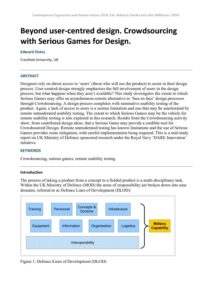
|
Author
Edward Oates |
Abstract
Designers rely on direct access to ‘users’ (those who will use the product) to assist in their design process. User-centred design strongly emphasises the full involvement of users in the design process; but what happens when they aren’t available? This study investigates the extent to which Serious Games may offer an asynchronous remote alternative to ‘face-to-face’ design processes through Crowdsourcing. A design process completes with summative usability testing of the product. Again, a lack of access to users is a serious limitation and one that may be ameliorated by remote unmoderated usability testing. The extent to which Serious Games may be the vehicle for remote usability testing is also explored in this research. Results from the Crowdsourcing activity show, from contributed design ideas, that a Serious Game may provide a credible tool for Crowdsourced Design. Remote unmoderated testing has known limitations and the use of Serious Games provides some mitigation, with careful implementation being required. This is a mid-study report on UK Ministry of Defence sponsored research under the Royal Navy ‘DARE Innovation’ initiative. |
Publish Date: Apr 16, 2020 | Keywords: Automotive, Contemporary EHF 2020, Publications, Risk assessment
| Document
|
Author
Louise Bowen and Andrew P. Smith |
Abstract
Road transport often represents one of the major safety risks to which individuals are exposed. In the present study, variables known to be associated with road traffic collision involvement and risk-taking, such as demographics, mental health, job characteristics and appraisals, issues of work/life balance, accidents and cognitive failures and propensity to socialise were measured. Analyses examined whether there were unique predictors depending upon what type of driving the road user was engaging with: commuting, driving as part of a job, or during leisure time. A secondary analysis of a survey of 2488 individuals presenting at accident and emergency departments revealed risk-taking was predicted by established factors, affording confidence in findings related to road traffic collision occurrence. Multinomial regressions revealed that collisions occurring as part of the commute into work were predicted by high job stress, minor accidents at work and jobs with high noise levels. Collisions during the commute home from work were associated with being female, high levels of bullying at work, and issues of work/life balance. Collisions when travelling as part of a job were predicted by failures of cognition, low satisfaction with how ability is utilised, being younger, harassment at work and working long, unsociable hours, and being frequently on-call. Finally, collisions taking place in leisure time were associated with failures of cognition, low satisfaction with how the work organisation was run, harassment, high levels of risk-taking and frequently socialising with friends. Such insights provide potential ways in which employers and policymakers may tailor interventions to achieve more positive safety behaviour for drivers. |
Publish Date: Jun 7, 2026 | Keywords: Anthropometry, Contemporary EHF 2026, Design, Publications, Safety, Usability
| Document

|
Author
Amin Yazdani, Marcus Yung |
Abstract
The design of work products, including personal protective equipment (PPE), tools, equipment, and assistive technologies, play a significant role in their function, usability, adoption, and ultimately their effectiveness in preventing injuries in workplaces. Unfortunately, work product manufacturers and designers often rely on dated, general population anthropometric data sets. This presentation will describe through two studies the current challenges with work product design, particularly PPE, and detail how MOSAIC will support the inclusive design of work products to accommodate Canada’s diverse workforce. |
Publish Date: Dec 18, 2018 | Keywords: Automation, Automotive, Contemporary EHF 2017, Publications, User experience
| Document
|
Author
Joseph SMYTH, Stewart BIRRELL, Lech BIREK, Kris KOBYLINSKI, Alex MOUZAKITIS and Paul JENNINGS |
Abstract
Using machine learning techniques, it is possible to learn and subsequently automate certain driver-focused features in consumer vehicles. A human factors approach is taken to review current machine learning systems. Subsequently, it is found that current methods used for machine learning involve long learning times and might not be sufficient to grasp a true understanding of interaction, routine and feature use - a new method is proposed. Issues surrounding trust and acceptance in automation are also explored and recommendations made. |
Publish Date: Jun 23, 2022 | Keywords: Accessibility, Contemporary EHF 2022, Interface design, Publications, Usability, User experience
| Document
|
Author
Henrietta Howarth, Joy Richardson, Jisun Kim & John Preston |
Abstract
This study evaluated the interface usability of a range of mobility apps using a set of adapted heuristics aimed at inclusive design. Identified strengths and weaknesses informed interface design recommendations for a future MaaS app to enhance usability and support travel across all ages and genders of adults in the Southampton area. |
Publish Date: Aug 9, 2021 | Keywords: Aviation, Comfort, Comfort Congress 2021, Design, Publications, Transport
 |
Author
Ivana Moerland-Masic, Fabian Reimer, Maria Stolz, Thomas-Matthias Bock |
Abstract
Within German Aerospace Center (DLR), a project called HorizonUAM was launched in July 2020. Its main goal is to develop and design an aerial vehicle which would support the infrastructure of the ever-growing cities and strengthening the connection between as well the big cities as cities with their suburban areas. The vehicle will be designed for the four different scenarios: airport shuttle, intracity transport, intercity transport and suburban connection. This paper shows the research concerning the potential users of the vehicle including their requirements and shows a possible design solution for an airtaxi cabin. The process has followed the Design Thinking Method, ensuring a central role for the users. To determine whether there are potential passengers willing to use such a vehicle, in-depth research has been done. Data found in previously done research has been compared with results of the in-house research, consisting of a number of workshops with representatives of German population as well as results form questionnaires sent out to a different group of German population. During the workshops, the subjects were asked not only to indicate their opinion on the airtaxis, but also to create their own version of it. This was done following the so-called Disney method, creating the solution in three stages: dreamer, realist and critic. Based on this data, different fictive personas are created, to aid in understanding of the user’s needs. In addition, trend analysis on how the urban mobility is developing, has also been executed. The state-of-the-art solutions available are analyzed and their strengths and weaknesses determined. The entire research has resulted in an extensive list of requirements for the design of the cabin. To address such a complex design challenge, a morphological chart has been created, systematically deconstructing the main function into subfunctions. This has been done by multiple workshops with a constant team. |
Publish Date: Oct 22, 2018 | Keywords: Communication, Contemporary EHF 2018, Healthcare, Publications, Technology
| Document
|
Author
Sophie Glazik |
Abstract
Information technology is an increasingly pervasive aspect of the healthcare environment, but introduction of new technology into complex systems like healthcare can create new opportunities for failure. Whilst literature on the unintended consequences of technology is extensive, less is known about the impacts it has on clinical work and patient safety. This paper reports the findings of a case study conducted at a large National Health Service (NHS) Trust in England, where electronic observations and alerting technology was introduced to replace paper charts. Using a qualitative approach, the study aimed to explore the impacts of this technology on a critical care outreach team’s performance and patient safety. Data from observation and ten semi-structured interviews with critical care outreach nurses were thematically analysed. The new technology has not only changed the way that patient observations data is recorded, displayed and viewed, it has also introduced a new mode of communication between groups of clinical staff: electronic alerts. Four main themes emerged that characterise the main changes brought about by the technology: communication, situation awareness, professional issues and workload. The relationship between aspects of these themes and patient safety was not perceived to be straightforward. |
Publish Date: Apr 9, 2021 | Keywords: Contemporary EHF 2021, Healthcare, Publications, Resilience
| Document
|
Author
Mais Iflaifel, Rosemary Lim, Clare Crowley, Francesca Greco, Kath Ryan, Rick Iedema |
Abstract
Variable rate intravenous insulin infusions (VRIIIs) are used to treat elevated blood glucose in severely ill hospitalised patients and those with diabetes missing more than one meal. VRIIIs can cause serious harm to the patient if used incorrectly. Conventional approaches to increasing safety have focused on linear thinking by first identifying errors, then finding solutions to prevent future recurrence. Resilient Health Care proposes improving patient safety by understanding the variability in everyday clinical work in order to realign ‘Work as Imagined’ (WAI): what people say, or think they do, with ‘Work as Done’ (WAD): what people actually do in practice. This study aimed to explore resilience in the use of VRIII in adult inpatients by comparing WAI with WAD. WAI was explored by analysing VRIIIs guidelines and focus groups with different stakeholders involved in the process of using VRIIIs. WAD was explored by first videoing healthcare practitioners while using VRIII, selecting video clips and discussing them with participants in reflexive meetings, then transcribing and analysing the reflexive meeting discussions. Two hierarchical task analyses (HTA) were developed to systematically represent WAI and WAD. Although most of the tasks in WAD HTA generally aligned with WAI HTA, some misalignments were observed. Misalignment was identified in different type of tasks including emergent, complex tasks as well as simple and complicated tasks. The majority of the observable adaptations used to respond to emergent tasks were forced adaptations or temporary workarounds where ideal solutions were not possible at that time. |
Publish Date: Apr 15, 2020 | Keywords: Contemporary EHF 2020, Emergency services, Publications, Safety
| Document
|
Author
Antoine Girard, Sandrine Caroly and Pierre Falzon |
Abstract
With a worrying accidentology (ten fatal accidents per year for approximately 1700 professionals in France), a culture that promotes a high level of performance and a profession based on the craft-type approach, the practice of mountaineering with a guide can be considered as an unsafe system (Amalberti et al., 2005; Morel et al., 2009). This practice has two particular characteristics. Firstly, it is currently undergoing a deep transformation not only in terms of its environmental context (with global warming), but also because of the media, legal and regulatory pressure that weakens the sustainability of the profession, due to low safety standards. Secondly, it belongs to the service situations. The client is present and involved in the production phases (Falzon and Cerf, 2005): they may be a novice or more experienced and may themself be a victim of accidents. For instance, fifteen clients died in 2018 in France. If, for the guide, clients are a variable to be monitored in a dynamic situation (Hoc, 2001), they are also participants, with their own goals, in the interactive process of the service relationship (Falzon and Cerf, 2005). This service situation, where a professional applies specific skills to provide the service requested by the client, should be distinguished from situations of cooperation between two operators (Falzon and Cerf, 2005; Flageul-Caroly, 2001). According to these elements, this study examines the way the guides build safety with their clients, in a hazardous, dynamic environment and in this particular socio-professional context. |
Publish Date: Mar 24, 2019 | Keywords: Contemporary EHF 2016, Energy, Organisational design, Publications, Safety
| Document
|
Author
Neil CLARK and John WILKINSON |
Abstract
Just because you have a permit does not make you safe. This paper describes an aviation-inspired human and organisational factors (HOF) approach to improving one major oil and gas company’s Control of Work (CoW) system. The challenge was finding the right balance between control/rigour and usability/compliance. Methods included: structured baseline setting (HOF audit, incident review and survey); active user involvement; collaborative design with training and technology providers, HOF specialists; good practice review (aviation sector); system – including procedural – usability improvements. Early results are promising and the approach has already been adopted by other major operators. |
Publish Date: Jul 3, 2025 | Keywords: Uncategorised
Why the Paddock Is a Pressure Cooker
The first thing anyone steps into is a swirl of sweat, dust, and raw adrenaline—no filter, no comfort, just the raw edge where every greyhound’s fate is measured against a stopwatch and a crowd’s expectations.
What You’ll See Before the Gates Open
Sharp ears. Taut muscles. Eyes like headlights scanning the concrete track. That’s the visual checklist. If a dog’s muzzle is trembling, the night before probably turned into a nightmare of loud trucks and strangers.
Key Sensory Cues That Speak Louder Than Stats
Listen: the whine of the kennel door hinges, the low growl of a dog that’s been benched too long. Smell: the metallic tang of spilled blood mixed with the bitter scent of cleaning chemicals. Feel: the vibration under your boots as trainers hustle, their footsteps a metronome of urgency.
How to Read the Body Language Like a Pro
Look: a dog that sniffs the arena floor repeatedly is rehearsing its sprint, mapping out the exact stride length needed for the first bend. The one that paces back and forth with a raised tail is humming confidence, ready to break the tape with a flash. And the one that slouches, ears back, is already counting the minutes until the race ends.
What the Trainers Are Whispering
They speak in short bursts, “Hold steady,” “Don’t get distracted,” “Eyes on the line.” Those words aren’t just advice; they’re a pulse check on the dog’s mental state. If the trainer’s voice cracks, the dog can hear it, and that crack can turn into a stumble.
Hidden Risks That Most Bettors Miss
Temperature spikes inside the paddock can cause a subtle rise in a greyhound’s heart rate, invisible on the surface but fatal over a 500‑meter dash. Also, the scent of a rival dog’s urine on the rail can trigger an instinctual chase, compromising the starting break.
Tech Tools That Cut Through the Chaos
High‑speed cameras positioned behind the paddock catch micro‑movements—twitches in the tail, flicks of the ear—that signal readiness. Pair that with live data from greyhoundresultstoday.com and you’ve got a roadmap that turns noise into numbers.
The One Action That Changes Your Edge
Stand a few meters away, breathe in the dust, watch the dogs for a full minute, then note the first three that lock eyes with the rail. Those are the ones you’ll chase on the track.
Publish Date: May 23, 2025 | Keywords: Contemporary EHF 2025, Design, Publications, Transport
| Document
|
Author
Joy McKay & John Preston |
Abstract
Mobility as a Service (MaaS) apps have been developed in the hope of increasing sustainable travel, yet the most sustainable forms of travel; active travel, are yet to receive substantial consideration. This significant change of increasing walking and cycling requires users to have all of their information needs met. Using COM-B alongside Design With Intent users, will co-create in-app features intended to provide the assistance needed to effectively increase active travel use. |
Publish Date: Apr 16, 2020 | Keywords: Contemporary EHF 2020, Interface design, Publications, Usability
| Document
|
Author
Victoria Doherty |
Abstract
The impact of wearing personal protective equipment (PPE) on the usability of a set of interaction devices was examined using a single experiment. Participants performed two concurrent tasks: tracking and monitoring/response, while wearing or not wearing PPE, and the resulting performance impact was measured. A differential impact of gloves on device usability according to the glove characteristics was shown. Heavy gloves impaired performance on both response times and the tracking task. Light gloves did not impede task performance. Some headwear was found to hinder colour change detection. Tentative conclusions regarding effects of device orientation and error rates were also made. The results were used to create an update to the extant UK defence standard. Areas proposed for further research include the impact of performance shaping factors on PPE and usability of interaction devices; study of usability impact with different task types; and specific design investigations regarding interaction device design for use with PPE. |
Publish Date: Oct 23, 2018 | Keywords: Contemporary EHF 2018, Publications, Sport & leisure
| Document
|
Author
James WH Brown, Neville A Stanton & Kirsten M Revell |
Abstract
The complexity of driver’s interfaces in Formula One has increased dramatically in the last 25 years. This has resulted in criticisms from drivers and has been blamed in several cases for accidents due to distraction or mode error. Technologies adopted by Formula One to improve performance have led to additional interface requirements and the resultant interface design adaptations. Specific regulatory changes have also been identified as significant factors in dictating the driver’s interface workload. Research is currently ongoing into the empirical analysis of the interfaces. Even minor design decisions can have a large effect on usability. These findings have confirmed the challenges facing human factors engineers tasked with designing interfaces featuring large amounts of functionality for use within high cognitive workload conditions. |
Publish Date: Jul 3, 2025 | Keywords: Uncategorised
What the heck is Expected Thread XT?
Put simply, Expected Thread XT (ETXT) is the statistical backbone that tells you the average profit per bet when you line up a series of wagers with correlated outcomes. It’s not some mystical AI whisper; it’s raw math, a weighted average that factors in odds, stake size, and the probability of each thread hitting. Think of it as the bankroll’s pulse, the rhythm you feel under the table when the dealer flips the cards.
Why you should care right now
Because most punters chase “hot streaks” like a moth to a flame, ignoring the fact that a single thread can sabotage an entire portfolio. ETXT shines a laser on those hidden leaks. By the way, the moment you start looking at ETXT, you stop gambling on gut and start betting on data.
Crunching the numbers
First, gather the odds (decimal format), the implied probability, and the stake for each bet in your thread. Then multiply each odds‑1 by its probability, sum the results, and subtract the sum of the stakes. The formula looks ugly, but the gist is: (Odds‑1)*Prob – Stake. That yields the expected value per bet. Stack those values across the thread, and you have your ETXT. Simple, yet powerful.
From theory to practice
Here is the deal: you’re not waiting for a miracle win; you’re engineering a series where the collective expected value stays positive. Pick a core bet with a solid EV (positive expected value). Then scout for secondary bets that share a causal link—like a soccer match and the total‑goals market. If the core bet’s outcome nudges the secondary market, the ETXT will capture that ripple.
Look: you set a base stake of $50 on a 1.85 odds football match (implied probability 54%). Expected profit = (1.85‑1)*0.54*50 ≈ $23. Then you add a $30 prop bet on total corners, odds 2.10, probability 48%. Expected profit ≈ $12. Combine them: ETXT ≈ $35 across $80 risk. Positive? Yes. You just built a thread that, on average, adds $35 to your bankroll each cycle.
Common traps that ruin ETXT
First, double‑counting correlation. If two bets move in lockstep, you’re inflating the thread’s expected value. Second, ignoring variance. A thread can be positive on paper but swing wildly in reality. Third, over‑loading stakes. Scaling too fast blows up your risk, wiping out the ETXT advantage.
And here is why most newbies fail: they treat each leg as an isolated pick, ignoring the web of interdependence. The moment you respect the thread, you harness the house edge against it.
Quick workflow for the impatient
Step 1: Identify a primary market with a clear edge.
Step 2: Search for secondary markets that react to the primary outcome—think live stats, player props, in‑play markets.
Step 3: Calculate each leg’s EV, then aggregate for ETXT.
Step 4: Adjust stakes until the aggregated ETXT stays comfortably above zero, leaving room for variance.
Step 5: Monitor the thread in real time; if one leg starts to diverge from expected probability, trim or hedge immediately.
Final actionable advice
Take a single upcoming match, run the ETXT calculation, and place only the bets that keep the thread’s combined expected profit above your target threshold—no more, no less. That’s how you turn ETXT from theory into cash.
Publish Date: Mar 17, 2019 | Keywords: Contemporary EHF 2016, Decision making, Publications
| Document
|
Author
Genovefa KEFALIDOU, Robert HOUGHTON |
Abstract
Sensemaking describes the activity of seeking to understand complex situations and extracting meaning from diverse, and sometimes conflicting, information. We report results from a study of groups attempting to construct narratives from diverse forms of fabricated incident information (reflective of the ever increasing diversity available on the internet) deliberately designed to be ambiguous. We found that groups demonstrated a rich range of convergent and divergent behaviours and manipulations of paper-based stimuli. We conclude by providing discussion of how these insights can be used in the design of web-based collaborative sensemaking tools. |
Publish Date: Jun 12, 2023 | Keywords: Anthropometry, Contemporary EHF 2023, Defence, Publications
| Document
|
Author
Laird Evans, Robert Pringle & Eluned Lewis |
Abstract
Human Factors Engineers need accurate anthropometric data to design military equipment that is safe, comfortable and enables performance under extreme operational conditions and in the most severe environments. MOD acknowledges that its current anthropometry dataset is becoming increasingly unrepresentative of today’s Armed Forces personnel, particularly women and minority ethnic groups. To address this issue, MOD has launched a new, comprehensive anthropometry survey. This paper describes the requirements underpinning this survey and the planned solution. |
Publish Date: Jul 3, 2025 | Keywords: Uncategorised
Why the Liiga is a Goldmine Right Now
Season after season the Finnish Liiga keeps proving it’s not just a feeder league, it’s a high‑octane arena where underdogs can flip the script in a single shift. Look: the top‑four teams have a combined win‑rate of barely 56%, meaning those mid‑table squads are hungry, and hungry teams love to gamble. Here’s the deal: you want value, you hunt the games where the odds don’t line up with the raw stats, and the Liiga hands you those mismatches like a cheap souvenir.
Key Metrics to Slice Through the Noise
First, focus on Goal Differential per 60 minutes (GD/60). A team cruising with +0.8 GD/60 while the market gives them a -0.3 spread is screaming for a smart pick. Second, track power‑play efficiency on the road – the Liiga’s away teams tend to keep their power‑play at 16% versus a home average of 20%, a gap that creates profitable “under” bets on the penalty kill.
Form vs. Fixture Fatigue
Don’t be fooled by a five‑game winning streak if those wins came against the same two opponents. The schedule compresses quickly; a team playing three games in four nights will see its shot‑on‑goal rate dip by roughly 12%. That dip translates into lower scoring totals, perfect for over/under bets that favor the under when the odds are lopsided.
Goalie Hot Hands
Goalies in the Liiga can swing a game faster than a slapshot. Track save percentages over the last ten games and compare them to the season average. A net‑minder posting a .940 save % after a string of easy wins is often on a rebound, making the “both teams to score” market riskier than it appears.
Here’s why the home crowd matters: while Finland’s arenas aren’t famous for the rowdy atmosphere of the NHL, the home team still enjoys a +0.45 advantage in expected goals. Combine that with a coach who prefers a defensive zone trap, and you’ve got a recipe for low‑scoring affairs that the bookmakers often overvalue.
Strategic Play for the Savvy Bettor
Start by building a spreadsheet of the last 15 matchups for each team, flagging any outliers in shots, face‑offs, and special‑team success. Then, cross‑reference those numbers with the latest odds from the major sportsbooks. If the odds for a team with a –0.2 GD/60 are set at +120, the implied probability is 45% while the actual win chance is nearer 55%—that’s a ten‑point edge you can’t ignore.
And here is why you should trust the numbers more than the hype: when a team’s leading scorer is out with injury, the secondary lines step up, often boosting the team’s overall Corsi by 3.5%. The market rarely adjusts for that, leaving a sweet spot for “first goal scorer” props, especially on teams with deep rosters like HIFK or Tappara.
Lastly, don’t chase the big‑ticket parlays. The Liiga rewards precision. Bet on the exact scoreline for games with a projected goal total under three, and you’ll see your bankroll grow faster than you think. For guidance, tap into ice-hockey-bets.com for real‑time analytics and live odds feeds. Pick the under on a cold night in Helsinki, and you’ll cash in. Go place a single‐goal bet on the next Jokipojat road game now.
Publish Date: Jul 3, 2025 | Keywords: Uncategorised
What the Sectional Times Actually Represent
Look: the numbers you see on the Yarmouth scoreboard aren’t just a random shuffle of digits. They’re a pulse, a raw readout of how fast a dog’s paws hit the sand, translated into an exacting millisecond count. When a border collie cracks 12.34 seconds, that’s not just a win; it’s a data point that tells you everything from foot placement to stamina drain, all in one sleek snapshot.
Why the Numbers Should Keep You Up at Night
Here is the deal: most trainers treat the sectional times like a trophy case, but the truth is they’re a diagnostic tool, a forensic report of a dog’s performance. A split second faster on the “b” curve could mean the difference between a champion lineage and a runner‑up. And the stakes get higher when you realise that breeding decisions, sponsorship deals, and even betting odds hinge on those tiny fractions.
Cracking the Code: Interpreting the Charts
By the way, the charts on yarmouthdogsresults.com are not decorative fluff. The steep rise on the left‑hand side of the graph is your dog’s acceleration phase—think of it as a launch pad. The plateau that follows? That’s the cruise, the moment where the dog finds its rhythm. The final dip, right before the finish line, is the deceleration curve, and if it spikes unexpectedly, you’ve got a fatigue issue screaming for attention. In short, each curve tells a story, and the story is written in split‑seconds rather than paragraphs.
Gotchas That Slip Past Newcomers
And here is why most novices fumble: they ignore the “track variance” factor, treating every run as identical. The sand composition shifts with weather, the rail height changes mid‑season, and even a slight breeze can skew the times. Ignoring these variables is like judging a marathon runner by a single lap—they’ll look flawless on paper but crumble in real conditions.
What You Should Do Right Now
Start logging every detail, not just the time. Record temperature, humidity, wind direction, and sand moisture after each heat. Cross‑reference those notes with the raw times, and you’ll spot patterns faster than a seasoned scout. Then, adjust training schedules to mimic the toughest conditions you’ve logged, and you’ll build a dog that thrives when the odds are stacked against it. Finally, re‑calibrate your breeding program: pick pups that consistently shave off those micro‑seconds under varied settings, and you’ll own the podium. Get a spreadsheet, plug in the data, and watch the edge appear—no more guessing, just precision.
Publish Date: Jul 3, 2025 | Keywords: Uncategorised
The Core Dilemma
Most bettors stare at the tote board, see the Daily Double, and assume it’s just another lottery ticket. Wrong. It’s a high‑stakes chess move that can double your bankroll—or wipe it clean in a heartbeat.
What Is a Daily Double?
In plain terms, a Daily Double is a two‑race parlay. You pick the winners of two consecutive races, lock them in, and wait for the results. If both horses hit, the pool pays out at odds that far outstrip a single win. If one slips, you lose the whole bet.
Why It’s a Game Changer
Because the payout multiplier is exponential, not linear. A $10 wager can return $300 when the two horses are underdogs. That kind of leverage turns a modest stake into a six‑figure surprise.
How to Pick Winners
First, treat each race as its own micro‑market. Study form, jockey, trainer, track bias. Then, overlay the two races. Look for a synergy—maybe the same jockey rides both horses, or the second race favors speed that the first winner also possesses.
Timing Is Everything
Place your Daily Double after the first race’s post time is announced but before the second race’s favorite is locked in. This window minimizes the odds of a favorite draining the pool, leaving value on the table.
Strategic Angles
Spot the “double‑draw” scenario: two horses from the same stable, same trainer, same track record. The odds often get inflated because bettors spread their money across horses, not realizing the correlation. Jump on that.
Bankroll Management
Never chase; allocate no more than 2 % of your total bankroll to any single Daily Double. That keeps you in the game if you hit a wall of bad luck.
Live Example
At Saratoga, Race 4 featured a longshot sprinter who’d won three times on a soft surface. Race 5’s distance matched his stamina, and his jockey was riding the favorite in that race. The Daily Double odds spiked to 25‑1. I took a $20 stake, and when both horses sprinted home, the ticket paid $500.
Final Piece of Advice
Do your homework, lock in value early, and never let emotion dictate the size of the bet—just place the wager, watch the races, and let the numbers do the talking. Grab the timing, grab the edge, and pull that Daily Double from the tote. Act now, or you’ll miss the next big payout.
Publish Date: Oct 23, 2018 | Keywords: Accimaps, Contemporary EHF 2018, Publications, Road safety, Systems
| Document
|
Author
Katherine L. Plant, Rich C. McIlroy & Neville A. Stanton |
Abstract
Road traffic accidents claim the lives of more than 1.25 million people each year, 90% of these deaths occur in Low-and Middle-Income countries (LMIC). The Socio Technical Approach to Road Safety (STARS) project brings together a consortium of four LMICs (Bangladesh, China, Kenya and Vietnam) and a leading Transport Research Group in the United Kingdom (UK) in order to tackle Road Safety. Traditional road safety research has been characterised by the ‘3 E’s’ of Engineering, Enforcement and Education. Although these have provided guidance to engineers and policy makers, they do not go far enough to providing a holistic and integrated approach to road safety and fail to consider fully the wider system factors that shape road user performance and outcomes. STARS intends to tackle road safety from a ‘7 E’s’ perspective, with the inclusion of Economics, Emergency response, Enablement, and the overarching ‘E’ of Ergonomics, i.e. applying contemporary socio-technical systems methods to develop systemic solutions to the seemingly intractable problem of road safety. This paper provides a status review of the ‘7 E’s’ of road safety from a UK perspective and the poster will contrast road safety across the five countries using the Actor Map component of the Risk Management Framework to model the road safety system. |
Publish Date: Dec 17, 2018 | Keywords: Contemporary EHF 2017, Cybersecurity, Publications, Sociotechnical systems, Teamwork
| Document

|
Author
Stephen AMBORE, Edward APEH, Huseyin DOGAN, Christopher RICHARDSON, and David OSSELTON |
Abstract
Cybercrime is slowing down the adoption of Mobile Financial Service (MFS). Despite the existence of a strong technical infrastructure base for security and the benefits inherent in MFS, adoption has been slow. Highly resilient countermeasures for cybersecurity go beyond just providing technological controls to put in place measures to cater for the human element. This paper presents the findings of an analysis of the human factors issues in complex MFS Socio-Technical System (STS) and the objectives for mitigating these. |
Publish Date: Jul 3, 2025 | Keywords: Uncategorised
The Core Problem: Apple Locks the Door
iPhone owners are stuck with a thin slice of the bonus pie while Android users feast on a banquet. The slick iOS ecosystem, with its rigid app‑store policies, throws a wall between the player and the sweet‑spot offers that would otherwise drip straight into their pockets. The result? Frustrated high‑rollers scrolling past “Welcome 200%” banners that simply won’t load on their iPhone.
What Makes an iPhone Bonus Truly Exclusive
First, the bonus has to be mobile‑optimized, not just a resized desktop banner. Second, it needs to sync with Apple’s in‑app purchase flow, otherwise it gets rejected faster than a bad poker hand. Third, the casino must tailor the wager‑requirements to the typical iPhone user—short sessions, high‑speed spins, and minimal data consumption. If you can’t check these boxes, you’re dealing with a generic offer that belongs on a PC.
Top Strategies Casinos Use to Sweeten the iPhone Deal
Look: some operators embed a hidden “iPhone Code” in their QR‑linked ads. Scan the code, launch the app, and a 100% match bonus pops up—no deposit needed. Others roll out “App‑Only Free Spins” that only fire when the iOS version is detected. By the way, these spins often come with a lower wagering multiplier, meaning you can cash out quicker. Here is the deal: the best iPhone bonuses are tied to a loyalty tier, so every spin you make nudges you closer to the next reward.
How to Snag the Best iPhone Casino Perks Right Now
Step one: open your Safari browser and head straight to realmoneycasinoiphone.com. Step two: look for the neon‑green banner that screams “iPhone Exclusive – 150% Match + 50 Free Spins.” Tap it, and the app will prompt you to install or open the existing version. Step three: before you hit “Claim,” check the “Bonus Terms” link to ensure the wagering requirement is 20x or less. Finally, activate the bonus, load your favorite slot, and let the reels spin. The faster you play, the sooner the bonus cash converts into withdrawable balance.
Final Actionable Advice
If you want the edge, set a notification for the casino’s “iPhone‑Only” promos, clear your cache weekly, and never ignore the “New Player” pop‑up—it’s the gateway to the biggest bonus packages on the market.
Publish Date: May 31, 2024 | Keywords: Contemporary EHF 2024, Data, Health & Safety, Publications, Safety
| Document
|
Author
Carlotta Vorbeck, Dominika Brzoska-Corenthy, James Thompson & Jodie Lewis |
Abstract
Gathering meaningful insights from data is a challenge faced by many organisations. In high-hazard industries data is crucial when it comes to identifying and understanding weak signals. These weak signals are important because they can indicate a problem and provide an opportunity for early intervention before an accident or incident occurs. As human factors specialists, when working with organisations to improve safety performance, our projects often involve review and interpretation of data. In this paper we share practical learnings and considerations at each stage throughout the data lifecycle, to maximise the insights that can be gained from health and safety data. |
Publish Date: Mar 24, 2019 | Keywords: Contemporary EHF 2016, Equality, diversity & inclusion (EDI), Publications, Technology
| Document
|
Author
Elina JOKISUU, Mike MCKENNA, Andrew W.D. SMITH and Phil DAY |
Abstract
Touchscreens on self-service terminals such as ATMs (automated teller machines) can be difficult to use for people with visual impairment. In this paper we present a study developing gestural interaction methods to be used for entering the Personal Identification Number (PIN), which is a particularly challenging task as there are additional security requirements prohibiting most auditory feedback. After initial concept development, four PIN entry concepts were evaluated with visually impaired users. The concept with tactile features was found to provide significant benefits: a fixed tactile reference point for orientation as well as added support for people unfamiliar with touchscreen interaction. |
Publish Date: Jul 3, 2025 | Keywords: Uncategorised
Why Weight Distribution Matters
Every fraction of a second counts when a dog bursts from the traps. Shift the load too far forward and you cripple the stride; too far back and you waste power on inertia. The problem isn’t abstract physics—it’s a tangible bottleneck that stalls records.
The Mechanics of a Flying Start
Look: the first 10 meters set the tone. A dog that leans into the launch compresses its hindquarters, priming the rear muscles for explosive extension. When the back leg snaps forward, the kinetic chain ripples through the spine, propelling the head and nose ahead. If the head is too heavy on the front, the chain breaks; the dog lags, the nose droops, and the clock ticks louder.
Mid‑stride Balance
During the cruise phase, a subtle shift from fore‑ to hind‑limb load occurs with each paw strike. A mis‑timed weight transfer creates a wobble, akin to a car with a mis‑aligned wheel. The dog then compensates by tightening the core, sacrificing speed for stability.
Real‑World Data from the Track
Here is the deal: analyses of 200 race recordings on greyhoundtrackresults.com show that winners consistently exhibit a 12‑15% rear‑ward load at the 0.20‑second mark. The losers hover around a 7‑9% shift, often lagging behind by two lengths. The numbers don’t lie; they scream about load distribution.
Case Study: The Late‑Blooming Sprinter
Take “Lightning Bolt”. Early in his career he was a rear‑heavy dog, nose low, dragging his front body. A simple cue—“push the front, hold the rear”—cut his split time from 3.85 to 3.73 seconds. The shift was less about raw strength and more about mind‑muscle coordination.
Training Tweaks That Pay Off
And here is why. Coaches should integrate balance boards, wobble pads, and mirror drills. Each tool forces the dog to feel the weight shift, encouraging a natural pivot. Short, high‑intensity bursts—five meters, rest, repeat—embed the correct pattern into muscle memory. Video feedback works wonders; a slow‑motion replay makes the invisible visible.
Equipment Adjustments
Don’t overlook the collar. A snug, front‑biased harness can subtly pull the head forward, sabotaging the stride. Switch to a neutral‑balance vest and watch the front end lift, the hind legs unleash power. Even the track surface matters—soft tracks dampen the rear push, while firmer ground amplifies it.
Actionable Advice
Start by filming the first 0.25 seconds of each training run. Mark where the nose sits relative to the mid‑line. If it’s ahead, cue a “core tighten” and a “rear push”. Adjust the collar, introduce a balance board, and repeat. Track the split times; the correlation will be undeniable.
Publish Date: Jul 3, 2025 | Keywords: Uncategorised
Understanding the Core Difference
Here’s the deal: an Exacta Box guarantees you’ll finish first and second in any order, while a Trifecta Box forces you to lock in first, second and third, again in any sequence. The math behind the two is as divergent as a sprint versus a marathon. The Exacta Box usually needs three selections, the Trifecta Box four or more depending on how many horses you want to cover. The more horses, the bigger the ticket, the bigger the potential payout, but also the bigger the bankroll hit.
Cost vs. Payout Dynamics
Look: a three‑horse Exacta Box at $0.50 per combo costs $1.50. A four‑horse Trifecta Box at the same unit price costs $3.00. Double the stake, double the risk. But the payoff curve is steeper for Trifecta Boxes because you’re pulling in a third place finish. When the race delivers a tight finish, that third spot can be a gold mine. When the top three tumble in a flop, you’re left holding the bag.
Break‑Even Calculations
Take a typical $10,000 track payout for a Trifecta. A four‑horse box with $1 combos might net $8,000 after the track takes its cut. Meanwhile, the Exacta Box on the same race could return $2,500 on a $1.50 ticket. The difference is stark, but remember the Trifecta Box also demands double the bankroll to chase that $8,000. If the race is a longshot, the exacta often recovers faster.
Bankroll Management
And here is why many pros favor Exacta Boxes during a losing streak: they preserve cash flow. You can roll a $20 bankroll into ten Exacta Boxes, versus four Trifecta Boxes. The lighter exposure lets you stay in the game longer, increasing the odds of hitting a hot ticket later.
When to Tilt Toward Trifecta
By the way, if the odds sheet shows a clear favorite plus two plausible stretch runners, the Trifecta Box becomes attractive. The favorite’s win probability is high, and the two stretch candidates often lock in second and third. In that scenario, the Trifecta Box’s larger payout outweighs the extra cost.
Software and Speed
Exactaboxbet.com offers a slick calculator that spits out combo costs in milliseconds. If you’re a speed‑trader, the faster you can place a box, the more chances you have to snag a live track advantage. The Trifecta Box demands more combos, meaning your software must chew through more data. Slower response times can turn a profitable Trifecta into a losing play.
Final Takeaway
Bottom line: Exacta Boxes are the workhorse, lower‑risk, higher‑frequency strategy. Trifecta Boxes are the high‑roller’s weapon—big payout potential, but they drain your bankroll fast. Your edge lies in reading the race card, sizing your unit, and knowing when the payoff curve justifies the added cost. Throw a $2 Exacta Box on a race with a dominant favorite, and a $1 Trifecta Box on a race where the top three are locked in by form. That mix maximizes profit while keeping the bankroll breathing. Now – place the Exacta Box first, then lock in the Trifecta on the next viable race.
Publish Date: Jul 3, 2025 | Keywords: Uncategorised
Understanding the Odds Matrix
Every bettor starts with numbers, but most never translate those digits into profit. Odds are a language—cryptic, volatile, and full of hidden meaning. Look: when a bookmaker posts a 2.10 price for a home win, the market is saying the probability sits around 47.6 percent. That’s the surface. Beneath, there’s a whirlpool of public bias, injury news, and strategic positioning. If you can read the undercurrents, the odds become a gold mine rather than a gamble.
The Edge of Implied Probability
First step—convert the decimal odds to implied probability. The formula is simple: 1 divided by the odds. Do it in your head, on a calculator, or better yet on online-footballbetting.com. Then compare that figure to your own assessment of the match. If your estimate is higher, you’ve found value. That’s the core of profitable betting. No fluff, just math versus market.
Shop the Bookmaker
Odds differ across platforms like rival chefs tasting the same soup. One bookmaker might offer 1.95, another 2.00 for the same outcome. The difference looks tiny but it compounds over dozens of bets. Odds shopping is not optional; it’s mandatory. You’ve got a split‑second window before the market corrects itself, and that window is your profit corridor.
When the Market Overreacts
Public sentiment is a double‑edged sword. A star striker’s injury can send odds soaring, yet the replacement might be a hidden gem. Conversely, a high‑profile team can be undervalued because the crowd assumes a win is inevitable. Spotting these overreactions requires staying ahead of the hype curve, monitoring line‑up changes, and trusting your own data over the crowd’s roar. It’s a chess game, not a coin toss.
Putting It All Together
Blend the three pillars: calculate implied probability, compare it to your own forecast, and lock in the best price available. Then, keep a tight staking plan—don’t let a single win or loss dictate your bankroll. Value betting isn’t a sprint; it’s a marathon of disciplined selections. Remember, the market will eventually adjust, but until it does, you own the edge. Grab the odds, run the numbers, place the bet—act now.
Publish Date: Jun 7, 2026 | Keywords: Complex systems, Contemporary EHF 2026, Fatigue & sleep, Publications, Rail
| Document
|
Author
Anna Vereker, Martine Gravil |
Abstract
The UK rail industry faces persistent challenges in managing fatigue risk, despite regulatory mandates and lessons from major incidents such as Clapham (1988) and Sandilands (2016). Structural changes, including the creation of Great British Rail, add new pressures and constraints, while progress is hindered by economic, operational, and cultural barriers. This paper argues that a deeper, systems-based understanding and the application of human factors tools are essential to develop pragmatic, multidimensional solutions alongside industry. |
Publish Date: Apr 17, 2020 | Keywords: Contemporary EHF 2020, Design, Healthcare, Publications, Systems
| Document
|
Author
Gyuchan Thomas Jun and I. Cecilia Landa-Avila |
Abstract
It has been widely recognised that whole systems approaches are required, but underexplored in the design and development of complex healthcare systems. Human factors and ergonomics (human factors) has adopted and developed various conceptual models and frameworks in order to support the application of systems approaches such as Cognitive Work Analysis (CWA), Systems Engineering Intitiative for Patient Safety (SEIPS), STAMP and FRAM to name but a few. Application of these systems approaches benefit from the involvement of all relevant stakeholders and the inclusion of their input in system design. However, evidence also suggests that involving healthcare stakeholders is challenging mainly due to their lack of time and system expertise. Undertanding outputs of system analysis, usually in the form of complex system maps, tends to require time and certain level of visual learning capacity, which some people don’t have. The full potential of a participatory systems approach has been hardly realised, so there is a need for improving the way the outputs of systems approaches are communicated. This study, therefore, aims to translate the outputs of complex system analysis into a story-based film for participatory design. |
Publish Date: May 23, 2025 | Keywords: Contemporary EHF 2025, Design, Publications, Risk assessment
| Document
|
Author
Liyun Yang, Andreas Hallberg, Ida-Märta Rhen, Farhad Abtahi, Jörgen Eklund & Mikael Forsman |
Abstract
The objective of this paper is to present the design and evaluation results of three digital ergonomics risk assessment reports based on sensor-measured data of upper arms, trunk, head and the dominant wrist. An iterative design process involving industrial user groups is used. Fifteen industrial users (five women) answered a digital survey presenting three designs of the ergonomics risk assessment report. The Interface Usability Instrument (INUIT) and open questions on suggestions were included in the survey. The total INUIT scores of the report design A, B, and C were 71, 64, and 61 (normalised to 100 point). Design A showed best ratings regarding confusion and distraction of the three designs. All three designs were considered supportive in communicating the ergonomic risks. In conclusion, the designed reports can be used to support end users in interpreting and communicating ergonomics risks, comparing and improving design of workstations or aids, or evaluating work techniques. The methodology ensures active collaboration between researchers and industrial stakeholders to understand user needs and facilitate the implementation of such digital reports within the industry. In the next stage of the project, the report will be further improved, implemented in the online digital platform, and tested by users in real work scenarios. |
Publish Date: Mar 24, 2019 | Keywords: Contemporary EHF 2016, Office ergonomics, Publications
| Document
|
Author
Luisa KÖLSCH and Thomas JUN |
Abstract
The multi-strategy method integrated findings from two rounds of interviews, a questionnaire and a literature review to identify changes necessary to create an agile and beneficial work environment. The data was analysed using quantitative, qualitative and triangulation methods. Agile implementation through consistent management style, changes to the office environment and mind-set are factors for successful agile work. |
Publish Date: Jun 24, 2022 | Keywords: Contemporary EHF 2022, Manufacturing, Publications, Technology, User experience
| Document
|
Author
Xia Liu & Setia Hermawati |
Abstract
Manufacturing is a domain that is heavily influenced by and relies on future technology which have direct effects on its employees. It is known that user studies are required to ensure that products or systems meet requirement from and are accepted by potential users. However, it is difficult to explore users' responses for future technology that users have no direct experience and knowledge. ContraVison is one of user study methods and is commonly used to study perceptions and acceptance of new future technology. Participants are typically exposed to positive and negative scenarios. This study investigates how different format of scenarios delivery (video, audio and text) in a modified ContraVision affects the richness of information that could be obtained from potential users. Thirty participants were recruited and divided evenly into three groups of user studies. Data was collected through semi-structured interviews and thematic analysis was used. There was no significant effect of the scenarios format delivery on the richness of information that could be obtained from participants in these three groups, although there was a trend that video offers richer information than audio and text. However, further study was required to ascertain this finding as limited characteristics and number of participants in this study might have an impact on the results of current study. |
Publish Date: Jun 23, 2022 | Keywords: Contemporary EHF 2022, Healthcare, Publications, Risk assessment, Tools & techniques
| Document
|
Author
Kevin Michael Hoy, Enda Fallon & Martina Kelly |
Abstract
Paediatric homecare is an advancing field of healthcare and risk management is an integral component of these services. This study is part of a larger study into integrated risk management in paediatric homecare risk management. Through interviews with nursing staff using Grounded Theory methodology, analysis of the risk management components was undertaken using Function Resonance Analysis Method (FRAM). The results indicated a clear mapping of the functionality of the process for incident reporting and the assessment of risks. Resonance was evident in several key functions allowing system changes for organisational improvements to enhance quality of care. KEYWORDS |
Publish Date: Jun 7, 2026 | Keywords: Automotive, Contemporary EHF 2026, Publications, Tools & techniques
| Document
|
Author
David Large, Catherine Harvey, Hannah Parr, Iris Jestin, Elizabeth Box |
Abstract
Driver monitoring systems (DMS) are increasingly embedded in modern vehicles and safety assessment frameworks, yet little is known about how drivers themselves understand these systems and how their beliefs shape usage, trust and acceptance. Ten focus groups (n = 30 UK drivers, aged 20–79) were conducted in which pictorial storyboards depicting five generic driver monitoring scenarios (fatigue, distraction, cognitive decline, intoxication and data privacy) were shown to participants, who were then asked to discuss what they thought was happening, how they thought it was happening, and why they thought it was happening. Findings suggest that drivers perceived DMS as socio-technical systems shaped by behaviour, context, interface design and data governance, with acceptance driven more by trust, autonomy and expectations than detection accuracy. Drivers highlighted fluctuating states and subjective self-assessment, indicating binary “fit/unfit” judgements poorly reflect real-world driving. Transparent, advisory and explainable systems were favoured, while opaque inferences, intrusive monitoring and unclear data use reduced trust. Findings will be used to inform the design of a large-scale survey to measure acceptance. |
Publish Date: Jun 8, 2023 | Keywords: Contemporary EHF 2023, Equality, diversity & inclusion (EDI), Healthcare, Publications, Road safety
| Document
|
Author
Joy McKay, Katie Parnell & Katie Plant |
Abstract
Active travel, such as walking, running and cycling, are cheap, sustainable, and healthy ways to transit within in the urban environment. Many marginalised groups are either underrepresented in active travel modes or find they are limited using them in certain neighbourhoods or at certain times. These limitations lessen the accessibility of a range opportunities including those of employment, social activities and cultural experiences to a wide range of citizens. This review endeavours to recognise those barriers to active travel which affect a diverse selection of society and understand affordances which encourage use of these modes. It aims to identify solutions which may encourage active travel across a diverse community leading to an urban environment which is more equitably accessible for all. |
Publish Date: Jul 3, 2025 | Keywords: Uncategorised
Why Bonuses Bite Back
Walk into a non‑GamStop casino and the welcome banner screams “Free Spins!” – too tempting to ignore. The problem? Those glittering offers hide clauses that can drain your bankroll faster than a busted faucet. Look: the moment you accept, you’re bound by wagering requirements, game restrictions, and time limits that turn a sweet deal into a bitter pill.
Read the Fine Print – No More Blind Trust
First rule: treat every bonus as a contract with a hidden clause. The “up to £500” sign? That’s just the ceiling; the floor could be a 30‑times rollover. And don’t forget the “eligible games only” rule – slots may count, table games often don’t. Here’s the deal: carve out the exact multiplier, the minimum deposit, and the expiration date before you click “Claim”. Play smart.
Bankroll Tactics
Set a dedicated bonus bankroll separate from your core funds. If the bonus is £200, allocate exactly £200 to it – no more, no less. This isolates risk and prevents the urge to chase losses with personal cash. Split‑stop betting? Absolutely. Bet the minimum required to meet requirements, then pause. Pause. Pause. The key is patience, not marathon gambling. Cash out once you’ve cleared the wagering; don’t let greed stretch the cycle.
Game Selection Strategy
Slots with high RTP (Return to Player) are your best friends. Look for 95%+ percentages; they tilt the odds in your favor when you’re forced to cycle through hundreds of spins. Avoid high‑variance games that could swing you from zero to zero in a heartbeat. Table games like blackjack often sit outside bonus terms – use that loophole if you can. And always double‑check whether a game counts 100% or 10% toward the wagering.
Exit Strategies – When to Walk Away
Time is a silent killer. A 30‑day window can feel like an eternity when you’re chasing a high roller tier. Mark the calendar as soon as you claim the bonus. Set a reminder to withdraw or convert winnings before the clock runs out. If you’re approaching the deadline and still haven’t met the requirement, it’s better to cut losses than to gamble the entire bankroll on a desperate push.
Final Piece of Actionable Advice
Register, claim, calculate, and cash out – repeat. The moment you see a bonus, pause, run the numbers, and decide before you ever spin. That’s the only way to keep the bonus from owning you.
Publish Date: Jul 3, 2025 | Keywords: Uncategorised
Why Your Traffic Is Stuck in a Black Hole
Look: you’re pouring cash into ad spend, yet the click‑throughs resemble a desert mirage—dry, distant, useless. The core issue isn’t the budget; it’s the signal you’re sending to the ever‑hungry algorithms. Betting agents who treat SEO like a side‑project get left in the dust while competitors ride the wave of targeted traffic.
Mastering the Keyword Jungle
Here is the deal: you need intent‑driven keywords, not generic guesses. Instead of “sports betting,” lock onto “best odds for Premier League today” or “live betting tips for NBA finals.” Long‑tail phrases are the hidden tunnels that funnel high‑value bettors straight to your platform.
By the way, keyword research isn’t a one‑off sprint; it’s a daily sprint‑marathon. Use tools that surface search volume spikes in real time, then stitch those spikes into landing pages faster than a horse at the gate.
Content That Converts Like a Pro
Forget fluffy blog posts that read like a bedtime story. You need razor‑sharp, data‑rich guides that answer the exact question a punter whispers into the night. Embed live odds tables, embed real‑time odds widgets, and sprinkle in a few bold predictions—just enough to spark curiosity without sounding like a casino.
And here is why: when Google sees fresh, actionable data, it rewards you with prime real‑estate on the SERPs. Meanwhile, your rivals are still stuck polishing static pages.
Paid Media: The Turbo Boost
Don’t think PPC is dead; think of it as rocket fuel for the SEO engine. Target the “bet now” intent with ad copy that screams scarcity—“Only 5 minutes left on 2x odds!”—and a crystal‑clear CTA. Keep the ad‑landing page experience seamless; a mismatch between ad promise and page content is a trust killer.
Retargeting is your secret weapon. Capture the half‑finished bettor, serve them a custom offer, and watch the conversion curve spike like a roller‑coaster.
Social Proof and Affiliate Overdrive
Betting agents thrive on trust. Showcase winning testimonials, live payout screenshots, and influencer shout‑outs. An affiliate network can multiply your reach faster than any single ad platform—just vet partners aggressively to avoid brand bleed.
Remember, a single well‑placed endorsement can lift your perceived credibility higher than a thousand generic banners.
Technical Foundations: The Under‑The‑Hood Engine
Speed matters. A page that loads in 1.8 seconds feels like a high‑speed slot machine; a page that drags feels like a busted reel. Compress images, enable HTTP/2, and leverage a CDN.
Mobile‑first is non‑negotiable. Most bettors place bets from the couch on a phone. Ensure every button is thumb‑friendly, every form field auto‑fills, and every pop‑up respects the small screen.
Data‑Driven Optimization Loop
Look: you can’t improve what you don’t measure. Set up event tracking for every “bet placed” click, every “odds view” scroll, and every “promo code” entry. Funnel this data into a dashboard, spot the drop‑off points, and iterate like a sprinter in a relay.
When the numbers show a 15% churn after the odds page, tweak the UI, test a new headline, and watch the bounce melt away.
Your Next Move
Grab a keyword research tool, find three high‑intent long‑tail phrases, craft ultra‑specific landing pages, and launch a micro‑budget PPC test tonight—then double‑down on the winner tomorrow.
Publish Date: Jul 3, 2025 | Keywords: Uncategorised
The Core Issue: Motivation Slumps
Season finales are a pressure cooker. Players feel it in their bones. One mistake, and the whole campaign unravels. The problem isn’t talent; it’s the mental fuel that runs low when the calendar ticks down. Look: a team that clinched early often eases off, while a squad fighting relegation may discover a second wind. This split creates betting volatility that pros exploit.
Psychology of the Final Whistle
Two‑word mantra: “Finish strong.”
But it’s more than slogans. It’s about identity. When a club’s narrative is “we’re champions,” complacency sneaks in. Conversely, a “survival” story triggers a fight‑or‑flight response, sharpening focus. Here is the deal: motivation is a pendulum that swings with perceived stakes. The higher the personal consequence—contract bonuses, national selection— the tighter the grip on performance.
External Triggers
Fans roar louder. Media spotlight intensifies. Money on the line spikes. All these external factors act like caffeine for the squad, but only if the internal engine is humming. A team with a comfortable league position often drifts, treating the last few games as a rehearsal rather than a battlefield.
Internal Dynamics
Leadership matters. A captain who refuses to concede a single point can ignite a collective edge. Yet, if the locker room is fractured, any external stimulus fizzles out. Trust, respect, and clear roles become the secret sauce. When those crumble, motivation evaporates faster than a misty Welsh morning.
Betting Angles: Spotting the Motivation Gap
Sharp bettors watch for cues: lineup changes, pre‑match interviews, even social media tone. A sudden squad rotation may signal a coach protecting players for the next season, which hints at reduced urgency. Conversely, a squad that fields its strongest XI despite fatigue signals a “do‑or‑die” mentality—prime betting territory.
Statistically, teams fighting for a playoff spot underperform by an average of 12% relative to their season‑long expected goals. Teams with nothing to lose often produce surprise upsets. The key is to align your stake with the motivation index you derive from these signals.
Actionable Insight
Track each club’s end‑of‑season narrative—championship, mid‑table comfort, relegation battle. Cross‑reference with lineup consistency and coach comments. When a side’s story screams “everything’s on the line,” load the odds in their favour. If the narrative is “already secured,” consider under‑betting or seeking value in the opposition.
Here’s the final tip: place your bet after the pre‑match press conference, not before. The extra data point often flips the motivation gauge, turning a vague feeling into a concrete betting edge.
Publish Date: Jul 3, 2025 | Keywords: Uncategorised
Why the “no-gamstop” hype is breaking the bankroll myth
Look: you’ve seen the ads, the flashing lights, the promise of endless free spins – all without the dreaded GamStop filter. The problem? Most players think “no-gamstop” equals “risk-free”, but the reality is a razor-sharp edge that can slice through any thin-skinned bankroll.
Understanding the regulatory blind spot
Here is the deal: GamStop is a UK-based self-exclusion scheme, not a global shield. Operators that sidestep it operate under licences from jurisdictions that ignore UK consumer protection. That means the safety net you expect is missing, and the bonus terms become a minefield.
Bonus structures that bleed you dry
First, the welcome pack. A 200% match on a £100 deposit sounds like a windfall, but the wagering requirement can be a 60x multiplier on the bonus alone. That’s 12,000 £ in play before you can touch a single penny. And here is why most players never see the cash – the casino’s “fair play” algorithm is calibrated to keep you hovering just above the threshold.
Live dealer lures: the hidden cost
Live tables are the new frontier for “non-gamstop” operators. They market “real-time interaction” as a cure for the boredom of slots, yet the house edge on live blackjack or roulette is often inflated by 0.5% compared to regulated venues. A single session can erode a £500 bankroll faster than a turbo-spin slot.
How to spot a genuinely fair non-gamstop bonus
By the way, not every non-gamstop offer is a scam. The ones that survive scrutiny share three hallmarks: transparent wagering (no hidden multipliers), clear max-cashout limits, and a reputable licence from a respected authority like Malta or Curacao. If the fine print reads like legalese, walk away.
Check the bonus page for a clear “terms and conditions” link. If it leads to a PDF that’s 12 pages long, you’re probably looking at a trap. Real operators will give you a concise bullet list – even if they hide it in a modal window.
Practical steps before you click “claim”
1. Verify the licence number on the casino’s footer. 2. Cross-reference it on the regulator’s site. 3. Test the withdrawal speed with a tiny deposit – if it takes more than 48 hours, you’re dealing with a bottleneck. 4. Read community forums for red-flag stories. 5. Finally, use the dedicated resource https://nongamstopfreespins.com/articles/non-gamstop-live-casino-bonuses/ to compare bonus structures side by side.
And here is the final piece of actionable advice: set a hard limit on bonus-derived wagering, treat the bonus as a marketing expense, and walk away the moment the required play exceeds your budget. No more chasing ghosts.
Publish Date: Jun 3, 2024 | Keywords: Automation, Automotive, Contemporary EHF 2024, Publications, Simulation
| Document
|
Author
David R. Large, Cath Harvey, Emily Shaw, Sparsh Khandeparker, Gary Burnett, Elizabeth Box |
Abstract
We highlight exemplar behaviours elicited through the observation of driver-passenger interactions in a multiple journey driving simulator study, demonstrating both distractive and protective effects when a front-seat passenger is present during SAE level 3 automated driving. |
Publish Date: Jun 8, 2023 | Keywords: Contemporary EHF 2023, Education, training & skills, Publications, User experience, Virtual reality
| Document
|
Author
Gary Burnett & Catherine Harvey |
Abstract
There is considerable potential in the education sector for the use of immersive virtual worlds to enhance student learning and engagement. This paper outlines five key recommendations for teaching University students in future ‘Metaverse’ contexts. These guidelines are based on video/survey data collected from 266 students during a module that has run predominately in virtual reality for the last three years, as well as the reflective experiences of the teachers. |
Publish Date: May 23, 2025 | Keywords: Construction, Contemporary EHF 2025, Health & Safety, Musculoskeletal, Publications
| Document
|
Author
Andrew D.J. Pinder |
Abstract
The study sought to review in a systematic way the evidence comparing the rates of work-related musculoskeletal disorders in different construction occupations. The available data indicate that some occupations are significantly worse than others. The samples underlying the data are not sufficiently large to produce reliable estimates of prevalences in all but the largest occupations. |
Publish Date: Apr 17, 2020 | Keywords: Contemporary EHF 2020, Fatigue & sleep, Healthcare, Musculoskeletal, Publications
| Document
|
Author
M. Susan Hallbeck Ph.D and Bethany R. Lowndes Ph.D |
Abstract
Surgeons are reporting increased musculoskeletal disorders. Specifically, in the surgical suites at this institution, one surgeon had to permanently stop performing surgery due to work-related musculoskeletal disorders and others were in pain. It was determined that one intervention to be tested was periodic intraoperative microbreaks with exercises performed by surgeons within the sterile field. Previous research has shown self-reported improvement for the operative day when microbreaks are incorporated into the surgeon’s operating room (OR) routine. The initial work was done by having a 90-second microbreak leader in the room to lead calisthenic-type exercises that didn’t break scrub at convenient stopping points during surgery, about every 20 minutes. The surgeons and their teams loved having the microbreaks with exercises; however, their feedback was that the 20-minute period was not long enough and the exercises didn’t flow and lasted too long. From the researcher perspective, it also needed to be automated. Since tablets were password-protected and there were already networked computers in the ORs, a web-based application was created. New evidence-based stretches were created that shortened the duration while they focused on the surgeon’s primary target pain areas and an adjustable timer alert with snooze was added. This new GDPR compliant intraoperative stretch web-app was created and tested in ORs. This paper discusses the results of the internal roll-out. The free web-app is now available for dissemination. |
Publish Date: Jul 3, 2025 | Keywords: Uncategorised
The Hidden Drain
Every seasoned bettor knows the thrill of a hot streak, but the real nightmare is the silent siphon that follows a big win—high withdrawal rates. The moment you hit the “cash out” button, the casino’s algorithm often ramps up the commission, and your bankroll shrinks faster than a melting ice cream cone on a summer sidewalk. Look: the numbers don’t lie, they scream. If you’re not tracking the fee curve, you’re basically feeding the house with every deposit.
Guarding Your Capital
First rule: treat your bankroll like a pit bull on a leash—unbreakable, yet controllable. Set a hard cap on how much you’ll ever withdraw in a single session; think of it as a stop‑loss for your own wallet. If you’re playing with a $1,000 stake, never pull more than 10 % at a time. That tiny slice keeps the withdrawal tax from leeching away your hard‑earned gains.
Second rule: stagger your withdrawals. Instead of a massive payday that triggers a 30 % surcharge, break it into five or six modest payouts. The math works like this: a 5 % fee on $200 is $10, versus a 15 % fee on $1,000, which burns $150. Small bites, big savings. And here is why—bookmakers love the large, singular cash‑out; they’ll tax it heavily, but they can’t do the same to a series of micro‑withdrawals.
The Withdrawal Shock
Imagine you’re a gambler on a rollercoaster; the dip is the withdrawal fee. When you ignore it, the drop catches you off‑guard, and you’re left gasping for cash. To neutralize that shock, pre‑calculate the fee before you click. Use a spreadsheet, a calculator app, or the simple formula: withdrawal amount × fee percentage = cost. Knowing the cost upfront is the difference between “I’m still in the game” and “I’m out of juice”.
Adapt or Die
Adaptation is survival. If the platform you love keeps hiking its withdrawal rates, consider migrating to a bookmaker with a friendlier fee structure. A quick scan of the market shows several sites where the surcharge hovers around 3 % for payouts under $500. One of those is nonrunnershorsestoday.com, where the fee model is transparent and the payout schedule is kinder to the bankroll.
Another tactic: keep a reserve fund in an account that isn’t used for betting. When you feel the urge to cash out, dip into that reserve instead of triggering the high‑fee withdrawal. It’s a mental trick—your betting account stays intact, the fee stays low, and you still get the cash you need elsewhere.
Final Play
Stop treating withdrawals as an afterthought. Make them a strategic move, timed and sized to dodge the house’s tax trap. The next time your balance spikes, remember: a disciplined split‑withdrawal beats a single, juicy payout every time. Grab your calculator, set a cap, and watch the fee melt away. Now, go place that wager and keep the cash flowing.
Publish Date: Jul 3, 2025 | Keywords: Uncategorised
Know the Beast Before You Tame It
Every bettor thinks “I’m winning” until the balance flips. The problem? No clear picture of cash flow. Look: without a system, you’re guessing, and guessing kills bankrolls. Here is the deal: you need a concrete method to see money in, money out, and the hidden leaky pipes. One line of code, one spreadsheet cell, can be the difference between riding a wave and drowning.
Build a Simple Spreadsheet That Does the Heavy Lifting
Open Excel or Google Sheets. Create columns: Date, Bet ID, Stake, Odds, Result, Payout, Net. Toss in a “Running Total” formula that adds every net line to the previous total. Quick tip: color‑code wins green, losses red—visual cues beat numbers any day. Short and sweet: update after each bet. No excuses. The spreadsheet becomes your battle‑scarred ledger, showing exactly where you’re thriving or bleeding.
Most platforms ship a “Transaction History” page. It’s not just a list; it’s raw data waiting to be sliced. Export the CSV, plug it into your sheet, and let the formulas do the work. If the site offers filter by sport, stake size, or date, use them. You’ll spot trends faster than a hawk on a field mouse. The key is to treat the UI as a data source, not a final report.
Automate with APIs If You’re Tech‑Savvy
For the coder in the room, most betting sites expose an API endpoint. Pull the JSON feed nightly, parse it into your database, and run a script that flags any day where losses exceed a set threshold. Short sentence: automation removes human error. Long sentence: once the pipeline is live, you’ll spend minutes reviewing a dashboard instead of hours hunting through receipts, and that time saved translates directly into more betting capital because you can reinvest faster.
Cross‑Check and Audit Every Week
Don’t trust a single source. Compare your spreadsheet totals against the platform’s balance and the API report. If anything mismatches, dig deeper. Small discrepancies often hide commissions, bonuses, or failed withdrawals. A weekly audit is your safety net; skipping it is like walking a tightrope without a harness. Keep a log of any adjustments so you can spot systematic errors.
Make the Final Move
Now that everything is in place, set a rule: if the net profit over a rolling 7‑day window drops below zero, halt all new bets until you rebalance. No more excuses. Execute.
Publish Date: May 27, 2025 | Keywords: Contemporary EHF 2025, Publications, Technology
| Document
|
Author
Victoria L Forrester & Victoria Filingeri |
Abstract
This research examined the use of wearable technology as an aid in manual handling training. The purpose of which was to establish if using wearable sensor technology can increase the transferability of training to the working environment and the factors that influence the likelihood of learning transfer taking place. Thematic analysis was used to examine the factors that may influence the transfer of learning. The findings suggest that wearable sensor technology has a place in aiding the transfer of learning from manual handling training. |
Publish Date: Jun 7, 2026 | Keywords: Contemporary EHF 2026, Publications, Rail, Safety, Tools & techniques
| Document
|
Author
Jana Mihulkova, Sam Waters, Anita Weltz |
Abstract
This study used the COM-B model to investigate the barriers and enablers that influence safety reporting behaviour among track workers within the GB rail industry. Using a qualitative design, semi-structured interviews and focus groups were conducted with sixty track workers and seven safety managers to explore experiences and perceptions of reporting practices. Findings revealed fragmented and complex reporting systems that require significant knowledge and experience to navigate, inconsistent expectations, and negative influences of fear of repercussions as key barriers to effective reporting. Additional themes included the importance of feedback, trust, and recognition, alongside limited training and target-driven reporting. |
Publish Date: Jul 3, 2025 | Keywords: Uncategorised
Why Form Matters More Than Pedigree
Look: the moment a dog steps onto the sand, its recent races whisper louder than any bloodline chart. A sprint-record of 28.5 seconds on a wet track? That’s a red flag. A 27.8 on a dry, fast track? Pure gold. Forget the lineage talk; the form is the real currency.
Decoding the Numbers
Here is the deal: every race result is a data point, not a story. The first number — position — tells you the finish. The second — distance behind the winner — shows if the dog was battling or cruising. The third — time — reveals whether the track was a speed-trap or a slog. Combine them, and you’ve got a predictive engine.
Speed Figures vs. Class Ratings
Speed figures are the raw horsepower; class ratings are the traffic lights. A dog with a 92 speed figure on a low-class race might dominate a higher-class field with a 88. Don’t get fooled by a shiny class rating; the speed figure is the engine revving under the hood.
Track Bias and Surface Conditions
And here is why surface matters: a soft, yielding track can turn a fast starter into a mud-slogger. Check the weather history — rain the night before? Expect slower times across the board. A dry, firm track? Times drop like a stone.
Reading the Form Chart Like a Pro
First glance: strip away the clutter. Focus on the last three runs. If a greyhound shows a consistent improvement — say, 28.2, 27.9, 27.6 — that’s a momentum surge. If it spikes — 28.5 then 27.8 then 29.0 — something’s off, maybe a stumble or a bad break.
Second glance: note the competition. A win against a field of average dogs isn’t as telling as a second place behind a champion. The quality of the rivals adds context that raw numbers can’t convey.
When to Trust the Form
When the dog’s form aligns with the race conditions — same distance, similar track state — and the speed figure sits comfortably above the field average, you’ve got a solid pick. When there’s a mismatch, tread carefully.
Tools of the Trade
By the way, the internet is littered with tools that crunch these numbers. Some sites even overlay historical data on current conditions. Use them, but don’t become a slave to them. Your gut, honed by hours of watching races, still beats any algorithm.
For a deeper dive, check out this article: https://greyhoundracingcards.com/articles/understanding-greyhound-form/.
Actionable Advice
Stop chasing the flash of a single win. Look for three-run consistency, match the dog’s speed to the track, and always weigh the quality of the opposition before placing that bet. Go.
Publish Date: Jul 3, 2025 | Keywords: Uncategorised
Why the Grades Matter
Everyone on the circuit feels the sting the moment a dog is slapped with a low grade – it’s the ticket that determines the purse, the prestige, the whole betting narrative.
What the Numbers Actually Represent
Grades aren’t random digits; they’re calibrated snapshots of speed, stamina, and track adaptability, distilled into a single alphanumeric tag that officials hand out after each official timing run.
Speed Index vs. Performance Rating
Speed Index tells you how fast a greyhound ran against a benchmark; performance rating layers in the quality of the competition, the shape of the track, even the weather’s mood.
Classifications: A‑, B‑, C‑ and Beyond
Some jurisdictions slice grades into letters, others into numbers. A‑grade dogs usually hit sub‑28‑second splits, while a C‑dog might be hovering around 30 seconds, chasing the tail of the leaderboard.
How the System Shapes the Race Card
When you glance at a race card, the grades are the first thing the bookmaker’s algorithm latches onto – they feed the odds, they feed the hype, they feed the bettors’ nerves.
Impact on Handicapping
Experienced hand‑cappers don’t just see a “B” and think “good enough.” They dissect the grade’s origin: Did the dog earn it on a soft sand track? Did it lose its grade after a stumble? That’s the fine print that separates a profit from a loss.
Legal Context and Why It Matters
The grading system is not just a sporting metric; it’s a legal shield. Regulators use it to enforce fair play, to ensure no dog gets an unfair advantage, and to protect the integrity of the sport.
For a deep dive into the statutes governing grading, check out greyhoundracinglegal.com. It breaks down the compliance checklist every track must follow, from timing equipment certification to grade appeal procedures.
Common Pitfalls and How to Avoid Them
First, don’t assume a high grade guarantees a win. A dog can be “A” on a fast surface but crumble on a muddy track. Second, ignore the grade’s expiry date – most leagues retire a grade after a set number of runs, forcing a re‑evaluation.
Reading the Nuances
Look: a greyhound’s grade may be downgraded after a single poor performance, but it can bounce back with a fresh run on a compatible course. That ebb‑and‑flow is the pulse you need to track.
What Trainers Do With Grades
Smart trainers treat grades as a roadmap, not a destination. They shuffle dogs into heats that match their current rating, then push for a grade upgrade with targeted workouts.
Strategic Entries
Enter a “C”‑graded dog in a low‑stakes sprint where the competition is weak; watch it blaze a new personal best and surge into a “B” slot for the next meet. That’s the kind of tactical move that turns the grading system from a bureaucratic hurdle into a lever.
Actionable Advice
Start logging every grade change, note the surface, weather, and race distance. Use that data to predict when a dog is ripe for an upgrade – then place your bets before the market catches up.
Publish Date: Jul 3, 2025 | Keywords: Uncategorised
Identity Checks Are the New Gatekeepers
Look: the moment you’re asked for a passport scan, a utility bill, or a selfie with a handwritten note, many Brits bolt. Two‑word verdict—too invasive. The traditional “proof of identity” routine feels like a bureaucratic minefield, and the average player just wants to spin the reels, not sign a thousand‑page contract.
Cash Speed Beats Paper Trails
Here is the deal: deposits flow in seconds, withdrawals disappear in minutes, and the whole process stays as slick as a high‑roller’s wristwatch. No KYC casinos strip out the paperwork, letting players move money like a cat on a hot tin roof—fast, fluid, and without the lingering sting of verification delays.
Regulatory Fatigue Is Real
By the way, the UK gambling regulator has been tightening screws left and right, and every new rule adds another layer of red tape. Players grow weary of “compliance fatigue,” especially when they’ve already been stuck in the endless loop of “upload your ID, prove your residence, confirm your age.” The appetite for friction‑free play has never been stronger.
Privacy Paranoia Fuels the Exodus
And here is why: data breaches dominate headlines, and the average Brit is wary of handing over personal dossiers to an industry that’s historically leaky. No KYC platforms promise a cloak of anonymity, turning the casino floor into a pseudo‑underground lounge where the only thing you reveal is how high you’re willing to bet.
Marketing Magnetism
Advertising agencies have discovered that “no KYC required” is a headline that cuts through the noise like a laser. Bonuses roll out faster, loyalty points accumulate unchecked, and the promotional funnel becomes a straight shot to the wallet. The lure is palpable; the promise of instant gratification is a siren song no sensible gambler can ignore.
Risk Doesn’t Disappear, It Morphs
Don’t be fooled—risk is still there, just dressed in a different coat. Money‑laundering concerns linger, and the absence of verification can attract shady players. Yet the majority of UK punters are simply chasing convenience, not chaos. The trade‑off is a calculated gamble: more autonomy for a slightly shakier safety net.
Where to Find the Real Deal
If you’re hunting for a playground that respects your time and privacy, glance at nokyccasinos-uk.com. The site curates a list of operators that have stripped the KYC requirement down to the bare essentials, letting you focus on the game rather than the paperwork.
Actionable Move
Start by testing a low‑stake slot at a recommended no‑KYC venue, keep an eye on withdrawal limits, and set a personal bankroll cap. That’s the fastest way to taste frictionless fun without diving headfirst into danger.
Publish Date: Sep 7, 2019 | Keywords: Contemporary EHF 2019, Human-machine interaction, Publications, Tools & techniques
| Document
|
Author
Professor Chris Baber, Chris Vance |
Abstract
Designing Human-Machine Teams not only requires an appreciation of which functions might be appropriately allocated to human or machine, but also how each team member can make sense of the functions performed by it and its team-mates. The aim of this paper is to present an approach to Allocation of Function within Human-Machine Teams (HuMaT) that can be applied across different Levels of Automation and which can explore information management issues in such teams. To do this, we present a modification of the CoActive Design method. A key aspect of the modification lies in the focus on information exchange and issues relating to common ground in HuMaT. In this paper, Cognitive Work Analysis is used as the basis for the CoActive Design Method to explore how different Levels of Automation can be conceptualised. The benefit of such an approach is that is provides a decomposition of functions such that it is possible to see how, even in systems that have high-levels of autonomy, there remains a role for human operators. Taking the example of an in-car navigation system, we illustrate how each member uses information to support the functions allocated to them, and how common ground develops in the team. |
Publish Date: May 30, 2024 | Keywords: Contemporary EHF 2024, Ergonomics, Publications, Workplace Design
| Document
|
Author
Gonny Hoekstra |
Abstract
With an increase of the average age of their employees, a cargo division of an airline company redesigned a part of the operation into “The Golden Bay’. A workplace where the older employee can work in a healthy way and be of added value until retirement. |
Publish Date: Jun 11, 2025 | Keywords: Contemporary EHF 2025, Fatigue & sleep, Publications, Rail
| Document
|
Author
Anisha Tailor, Anna Vereker & Tom Hyatt |
Abstract
This paper presents a case study of a workshop to understand rail track workers’ experiences of organisational fatigue risk controls. The design and facilitation of the workshop drew on key skills, attitudes and practices for learning about work-as-done. This paper describes the successes, challenges and lessons learned associated with practically embedding these into the workshop. |
Publish Date: Dec 17, 2018 | Keywords: Contemporary EHF 2017, Education, training & skills, Healthcare, Patient Safety, Pharmaceutical, Publications
| Document
|
Author
Helen VOSPER and Sue HIGNETT |
Abstract
Patient safety (PS) is a key healthcare goal, yet health professionals struggle to acquire appropriate expertise, including Human Factors/Ergonomics skills, reflected in undergraduate curricula content. More than 50% of adverse events are medicines-related, yet focus on pharmacists as experts in medicines is scant. This pilot investigation used focus groups and interviews to explore undergraduate PS teaching in purposively-selected UK pharmacy schools. Results revealed barriers to PS teaching including risk-averse pharmacist ‘personality’ and Educational Standards negatively influencing students’ error-management behaviours. |
Publish Date: Jul 3, 2025 | Keywords: Uncategorised
Why Trainer Choice Is the Real Game‑Changer
Every race whispers a secret: the dog’s raw speed is only half the story. The other half? The trainer’s hand, the gut feeling that squeezes performance from a tired hound. Miss that, and you’re betting on a flash in the pan.
Look: a sloppy grooming routine can trash a champion’s stride. A misplaced diet plan can turn a sprinter into a stroller. In short, the wrong trainer is a leaky faucet—draining potential faster than you can say ‘track.’
Season’s Standouts
1. Mick “Bullet” Hayes
Bullet’s reputation rides on a relentless pursuit of the perfect start. He conditions his greyhounds on sand dunes, mimicking the surge of a tide. Results? Dogs explode off the line, shaving fractions off rival times. If you’ve ever seen a greyhound launch like a coiled spring, you’ve seen Hayes at work.
2. Sandra “Precision” Luo
Precision is a surgeon with a whistle. She maps each dog’s split‑second reactions, then rewires their training to hit the exact moment of acceleration. Her kennel’s latest champion clocked a 28.3‑second sprint, a personal best that left the field scrambling.
3. Tom “Stamina” Whitaker
Stamina? That’s his middle name. He focuses on late‑race endurance, a trait most trainers neglect. By layering long‑distance runs with interval bursts, his dogs finish strong, often overtaking opponents in the final bend. Expect a dog with Whitaker in its corner to be a dark‑horse in any stamina‑testing heat.
4. Eva “Tech‑Savvy” Ramos
Ramos blends data analytics with old‑school gut instinct. She tracks heart‑rate variability, paw‑print tension, and even the ambient humidity before a race. The data feeds a bespoke training regimen that makes each greyhound a precision instrument. Her latest intake posted a 0.02‑second improvement across the board—a margin that turns a win into a legacy.
How to Spot a Rising Star Trainer
First, check the dog’s performance curve. A trainer who consistently pushes times lower, even by a whisker, is playing the long game right. Second, listen to the chatter on forums like greyhoundmeetings.com. If the community’s buzzing about a newcomer’s methods, that noise often hides a gold mine.
And here is why you should act now: the season’s window is thin, like a ribbon of light at dawn. Trainers who lock in early partnerships gain access to the best breeding stock, premium nutrition packs, and exclusive track slots. Miss the early wave, and you’ll be chasing shadows in the heat of competition.
Bottom line: align yourself with a trainer who marries instinct and innovation. One who treats each dog like a race‑ready rocket, not a tired commuter. That’s the formula that separates the winners from the also‑rans.
Action step: reach out to at least two of the trainers above before the next meet, ask for a trial run, and let the dogs do the talking.
Publish Date: Jun 7, 2026 | Keywords: Contemporary EHF 2026, Healthcare, Publications, Simulation
| Document
|
Author
Claire Evans, Alexandra Lang |
Abstract
This paper presents a study investigating how the presence of respiratory function monitoring (RFM) data impacts clinical decision making during neonatal resuscitation procedures. To date this is an under researched area despite technology advances making this data set accessible for neonatologists and their teams. Simulations of neonatal resusitations were undertaken with eight participants. Each participant took part in each study condition, with and without RFM. Eye tracking data was captured and then participants were involved in Critical Decision Method interviews. The results showed that presence of RFM modified decision making pathways, with clinicians using more stimulus seeking strategies in the procedure as opposed to recognition primed reasoning. An additional change was that the presence of the RFM encouraged an optimisation mindset, with participants seeking to maximise performance rather than relying on satisficing strategies. These findings have important implications for device design, training, and clinical integration. |
Publish Date: May 23, 2025 | Keywords: Aviation, Contemporary EHF 2025, Publications, Safety, Workload
| Document
|
Author
Florin Dumitrascu |
Abstract
This study explored whether there were differences in workload and perceived usefulness between people who used an electronic checklist with sound for aeroplane landing and those who used a paper checklist. Two groups of University students were assigned to one of two conditions (A. paper checklist and B. electronic checklist with sound). Each group read their checklist (paper – group A, electronic checklist – group B) and selected cockpit areas on a screen to indicate completion of landing sub-tasks on an A320 aircraft. Workload and perceived usefulness were assessed subjectively. Those who used the electronic checklist stated lower levels of workload and found their checklist more useful than those who used the paper checklist. These findings suggest that electronic checklists with sound are a promising alternative to paper checklists used for landing, but further research is needed to fully understand their benefits for pilots. |
Publish Date: Jul 3, 2025 | Keywords: Uncategorised
Reality Check: The Problem With Generic Craps Rooms
Most UK sites treat craps like a cartoon – dice roll, chips vanish, and the vibe feels plastic.
Players crave the clatter of real tables, the nervous glance at the shooter, the hush before the dice tumble.
Without that, you’re just gambling on a screen, not experiencing the game’s pulse.
Top Tier Casinos That Deliver Authentic Craps
First up, casinoonlinerealmoneyuk.com – they’ve integrated high‑definition live streams from the UK’s premier studios, complete with professional dealers and true‑time odds.
Next, BetVictor – their live craps lobby runs on a proprietary engine that mirrors the real‑world betting circle, and the UI mirrors a casino floor.
Then there’s Unibet – they’ve partnered with a veteran dice‑throwing crew, so the dice bounce as if you were in a smoky room on the Strand.
What Makes Their Crapps Realistic?
Crystal‑clear camera angles. The dealer’s hand is visible, and you can see the dice spin, drop, and bounce on the sticky surface.
Real‑time chat. You type “good luck” and a fellow player replies “nice roll!” – it feels like you’re sitting at the same table.
Accurate odds. No artificial house edge hidden behind algorithmic “fairness.” The house edge mirrors what you’d see in a brick‑and‑mortar casino.
Technical Edge: Low Latency and Secure Play
Latency under 2 seconds. By the time the dice land, you’ve already placed your bet. No lag, no frustration.
Encryption on every stream. Your data is as safe as the vaults beneath the casino floor.
Mobile‑first design. Play on your phone, tablet, or desktop – the experience stays crisp, no matter the device.
The Bottom Line: Pick the One That Fits Your Style
If you want polished production values, go with BetVictor. If you crave raw authenticity, Unibet delivers the grit. For a balanced mix, the casinoonlinerealmoneyuk.com platform tops the list.
Sign up, verify, and jump straight into a live craps table – the dice are already rolling.
Publish Date: Jun 7, 2026 | Keywords: Contemporary EHF 2026, Manufacturing, Publications, Workload
| Document
|
Author
Anita Weltz, Joanne Bell, Sam Waters |
Abstract
This paper outlines a case study of the Human Factors (HF) work that was undertaken for a pyrotechnics and energetics manufacturer. The work involved an initial HF review of the chemicals receipt, storage and transfer processes at the facility, followed by a more detailed assessment of workload for Team Leaders (TLs). The paper describes the application of HF techniques in a unique setting and the learning and changes that were taken forwards as a result. |
Publish Date: Jul 3, 2025 | Keywords: Uncategorised
Why the venue matters more than you think
Look: most execs pick a conference room, then pray. They forget the vibe, the buzz, the sheer adrenaline that a stadium can inject into a brand‑building day. Oxford Greyhound Stadium isn’t just a racetrack; it’s a canvas for a high‑impact narrative.
Location, logistics, and that secret sauce
First off, the stadium sits on a commuter‑friendly hub. Trains, buses, even a handy bike rack. Forget parking nightmares—your guests glide in, coffee in hand, and the first impression is already a win.
Second, the infrastructure. Two-tiered seating, flexible floor plans, state‑of‑the‑art AV rigs. You can split the crowd for break‑out workshops or keep everyone glued to a single marquee presentation. The point? The space bends to your agenda, not the other way around.
Budget hacks that actually work
Here’s the deal: leverage the stadium’s existing tech. Instead of renting extra screens, plug into the in‑house LED walls. It shaves off thousands. Pair that with off‑peak booking—mid‑week, not Friday night—and you’re dancing around the budget like a pro.
And here is why catering costs can be slashed. The venue already hosts food vendors daily. Negotiate a bulk‑order deal; you get a bespoke menu without the usual catering markup. Think local brews, artisan sandwiches—still impressive, far cheaper.
Creating an unforgettable programme
Start with a short, punchy opener. No three‑hour keynote. Ten minutes, three key takeaways, a flash video that showcases the stadium’s history. Then, break into sprint sessions—15 minutes each—each hosted in a different zone of the arena. Attendees will literally move from one experience to the next, keeping energy levels high.
Mid‑event, roll the dogs. A quick live race, a few seconds, pure thrill. It’s a metaphor for agility, speed, competition—perfect for a corporate audience. Capture that moment on social media, hashtag it, and you’ve got free buzz.
Handling the nitty‑gritty
Security? The stadium’s staff are veterans. They’ve dealt with crowds, VIPs, and the occasional rowdy fan. Brief them on your agenda, and they’ll keep the flow smooth. Health & safety? The venue complies with UK standards, fire exits clearly marked, wheelchair‑friendly zones everywhere.
Don’t forget tech rehearsals. Book a half‑day dry run two weeks before. Run through the AV, test the Wi‑Fi, make sure the live‑stream link works. One glitch, and the whole vibe collapses.
Final actionable tip
Secure the stadium’s own event manager as your co‑ordinator; they know every nook, every plug, every timing quirk. Align your schedule with their operational calendar, lock in a prep day, and you’ll walk in with everything firing on all cylinders.
Publish Date: Aug 16, 2021 | Keywords: Clothing, Comfort, Comfort Congress 2021, Design, Publications
 |
Author
Hanieh Abdi, Soheila Esmaeili |
Abstract
Background: The foot is one of the organs of the body that have a major role in health, especially in diabetics. During the day, a lot of pressure is transmitted through the legs to the knee, pelvis, and spine, and any motivation in the shoe may put pressure on the gait parameters. Shoes should be such that diabetics can feel comfortable enough and also not suffer from neuropathy or ulcers caused by wearing them after work. Method: In this study, 5 types of shoes available in the market that are offered as medical shoes were selected and compared with quality ergonomic indicators. In the second stage, the effect of these shoes for wearing for a long time was evaluated, and also the ratio of increase and comfort of the person in the sole of the feet and knees was examined. Results: Only one of the shoes had relatively good conditions for people with diabetes, which by adding new items such as choosing the right fabric for ventilation of the foot area, considering the appropriate anthropometric measurements in the toe area for more comfort, and having a suitable insole to prevent the occurrence of musculoskeletal disorders in the lumbar region could be sufficient. Conclusion: In general, a design framework with specific tools is provided to have the right shoes for the proper use of diabetics in the long run. Further research should focus on outsole design tools and other shoe components. |
Publish Date: Jun 12, 2023 | Keywords: Contemporary EHF 2023, Human-machine interaction, Publications, Tools & techniques
| Document
|
Author
George V. Papadopoulos & Michail Maniadakis |
Abstract
This work focuses on human-robot collaboration for assembly tasks, examining the position of robot-to-human handover of objects. A simulation environment is implemented to ergonomically evaluate the expected posture of the human arm in hypothetical delivery positions in the 3D space. |
Publish Date: Jun 22, 2022 | Keywords: Behaviour, Climate change, Contemporary EHF 2022, Equality, diversity & inclusion (EDI), Publications
| Document
|
Author
Barry Kirby & Ryan Gamble |
Abstract
The aim of this qualitative research study was to establish whether Ergonomics and Human Factors (E/HF) and its associated practices and principles could be applied to the issue of climate change. Furthermore, it aimed to explore how these professionals could help address the climate crisis through climate-conscious systems, processes, and designs and by considering human interactions with the climate as an interactive system. The following paper is therefore a first step towards establishing ‘Climate Ergonomics’ as a field, defining it based on expert opinions and suggesting where the E/HF professional is best situated to address climate change. The research team conducted three focus groups, with six E/HF professionals in each group, to establish how the profession could best support efforts in the climate crisis. Thematically analysed data suggested that three themes best explained the role and function of Climate Ergonomics and those working within this multi-disciplinary sphere. First, professionals must establish the position of ergonomics in the fight against climate change. Second, the appropriate methods, measures and tools must be established; be those repurposed from the E/HF toolkit or new measures which will need to be developed. Third, the inherent social inequality that is bound to matters of climate change must also be considered. E/HF professionals should work towards remedying, not reinforcing social inequalities. Future research should look to establish measures and tools to support the measurement of sustainable and socially responsible practice in the E/HF domain. |
Publish Date: May 30, 2024 | Keywords: Contemporary EHF 2024, Healthcare, Publications, Systems
| Document
|
Author
Eva-Maria Carman, Giulia Miles, Upasana Topiwala, Benjamin Warren , & Steve Cantellow |
Abstract
A key consideration to work systems are the people within it and the resource and resilience they bring to the system. As a result, professional wellbeing should be considered as a key element for systems monitoring. To work towards developing a professional wellbeing tool associated with work system elements to guide and inform improvement strategies and system redesign, an exploratory study was conducted to capture the relevant concepts. The aim of this phase of the project was to explored what staff thought were key elements of professional wellbeing that should be assessed, how work is organised and managed by staff, how this may be related to professional wellbeing and capture practical considerations for data capturing and tool outputs. A total of eight focus groups and seven interviews were conducted with staff within the Hospital 24 service between January and September 2023 with a total of 28 participants. The results from the focus groups and interviews assisted in addressing three key questions, namely: what should one measure for professional wellbeing, what is currently measured and how should one measure professional wellbeing? In addition to addressing these questions, key work system considerations emerged that are essential for understanding the context of the concepts identified and the potential implications for measurement and data interpretation. These qualitative results provided the building blocks for a conceptual framework that will guide the development of a systems-based professional wellbeing tool. |
Publish Date: Sep 7, 2019 | Keywords: Behaviour, Contemporary EHF 2019, Publications, Risk assessment, Road safety
| Document
|
Author
Rich C. McIlroy, Neville A. Stanton, Katherine L. Plant |
Abstract
Road transport represents the 12th leading cause of death in the UK, and things are not improving. This research focuses on one of the factors behind the statistics; human behaviour. Specifically, the aim of this study was to investigate the relationships between self-reported involvement in accidents on the road, self-reported pedestrian behaviours, and three social cognitive constructs; road safety attitudes, on-road risk perceptions, and fatalistic beliefs. In a survey of 695 respondents, it was found that attitudes relate strongly to self-reported behaviours, and to some of the constructs measured by the fatalistic beliefs scale used here. Risk perceptions were not found to correlate strongly with any other variable, and splitting the sample by self-reported involvement in accidents resulted in few group differences. Results are discussed in terms of the need for road safety interventions to consider the determinants of behaviour. |
Publish Date: Apr 9, 2020 | Keywords: Autonomous vehicles, Cognition, Contemporary EHF 2020, Publications, Road safety, Task analysis, Tools & techniques
| Document
|
Author
Gemma J. M. Read, Paul M. Salmon, Alison O’Brien and Neville A. Stanton |
Abstract
There have been previous calls for a ‘many model’ approach to solving complex challenges in ergonomics (Salmon and Read, 2018). In this work, we demonstrate how the combination of three systems ergonomics methods can provide different, yet compatible insights into the emerging challenge of the successful (safe and effective) introduction of advanced automated vehicles. Specifically, we applied ActorMap, Hierarchical Task Analysis, and the abstraction hierarchy from the Cognitive Work Analysis framework. Each model provides detailed descriptions of the road transport system that can be used as a basis to explore the issues surrounding the introduction of automated vehicles. Importantly, they provide a series of compatible insights from different perspectives regarding the future road transport system that can inform policy response and other initiatives to support the successful introduction of advanced automated vehicles. It is concluded that the application of multiple methods is beneficial to gain more insight than would be available from a single method used in isolation. |
Publish Date: Jul 3, 2025 | Keywords: Uncategorised
Why Bettors Ignore the Basics and Lose Money
Look: you’re staring at a tote board, the horses prance like neon on a billboard, and you think luck will sprinkle you a win. Wrong. The real edge lives in the stale‑dust numbers—ratings, form, the gritty ledger that tells you which creature can actually pull a finish line. Miss that, and you’re gambling on a roulette wheel, not a racecourse.
Ratings: The DNA of a Champion
Here’s the deal: a rating isn’t just a number slapped on a horse’s head; it’s a DNA test of speed, stamina, and track‑adaptability. A 95‑rated colt who’s been battling a 110‑rated older mare on grass? That gap screams “value” if the market still prices them near parity. The art lies in spotting those mismatches before the bookmakers scramble to adjust. In other words, a rating gives you a baseline, a reference point that lets you measure every other variable.
Form: The Horse’s Diary
Form is the day‑to‑day journal of performance. A quick glance at the last three runs—win, second, unplaced—can reveal a pattern that a rating alone hides. Notice a horse that hauls a solid second in a 140‑rated sprint, then drops back to a 120‑rated middle‑distance; that suggests a distance sweet spot, a nuance that savvy punters harvest for profit. And if the horse has a recent “off‑track” in the same conditions you’re betting on, you can discount its rating, because form trumps theory.
And here is why the synergy matters: ratings set the expectation, form confirms or contradicts it. A high‑rated horse with ragged recent form is a red flag, while a modestly‑rated runner with a string of improving finishes is a concealed gem. The market rarely prices both at once; that lag is where the sharp bettor capitalizes.
Surface, Distance, and Jockey: The Hidden Variables
Don’t let the surface be a blind spot. A 98‑rated sprinter might dominate on firm turf but wilt on a yielding track. Check the horse’s past performance on similar ground; a few wins on soft can outweigh a single high‑rating on firm. Distance matters too. Some horses have a “sweet spot” mile‑plus, others explode over five furlongs. Pair that with a jockey’s record—if a jockey has a 70% strike rate on the same course, that lifts the horse’s effective rating.
By the way, the market often overvalues star jockeys on unknown horses, inflating odds. Scrutinize the horse’s individual record first; if the numbers align, the jockey is just a cherry on top, not the entire cake.
Practical Application for the Weekend
Pick a race, pull the official rating sheet, then cross‑reference each horse’s last three runs. Flag any horse whose rating is more than six points higher than its form suggests. Next, isolate those whose latest runs match the race conditions—same ground, same distance. Finally, double‑check the jockey’s historical performance at the venue. The first horse that ticks all three boxes is your best bet.
Actionable tip: before you click “place bet,” head over to betongrandnational.com, pull the live form guide, and use the rating‑form disparity rule to spot value. Cut the noise, trust the numbers, and watch the odds swing in your favor. Now get to the track and gamble smart.
Publish Date: Jun 8, 2023 | Keywords: Aviation, Contemporary EHF 2023, Design, Human-machine interaction, Interface design, Publications, Workload
| Document
|
Author
Joao Paulo Macedo, Kyle Hu, Rani Quiram & Samarth Vilas Burande |
Abstract
Touchscreen displays are one of the pillars of future flight deck design and it is foreseen that at some point traditional flight control inceptors will be modified to a touchscreen version. However, this transition can only be safe and successful with due regard for human performance implications. This study addresses it by comparing pilots’ mental workload for a traditional sidestick and an innovative touchscreen control inceptor. The results indicate that the new technology increases pilot workload, suggesting that further development is required to use it in future flight decks. |
Publish Date: Aug 12, 2021 | Keywords: Aviation, Comfort, Comfort Congress 2021, Perception, Publications, User experience
 |
Author
Xinhe Yao, Yu Song & Peter Vink |
Abstract
Visual stimulus might influence comfort of passengers in air travel. For a better understanding of the visual comfort, it is crucial to identify the constructs of the visual stimulus in the cabin and the contributions of different elements. A two-step approach was adopted in this study where in the first step, several creative sessions were executed for exploring the effect of different elements in the cabin regarding their impact on visual comfort. To inspire the participants, all creative sessions were held in a Boeing 737 cabin where participants were free to explore and had an immersive experience. All identified elements in the creative session were collected and grouped to different categories, that is use as input for the second step, which is an online survey investigating a possible hierarchy of the impact of those categories of elements on visual comfort. Eight were summarized and the three most influential categories were lighting, colour and the space arrangement. These were significantly different from other categories, namely the seat shape, the pattern, the windows, accessories and existence of advertisements. Regarding the gender and the age of the participants, we did not find significant differences regarding the preferences. |
Publish Date: Apr 9, 2021 | Keywords: Communication, Contemporary EHF 2021, Design, Pandemic, Publications, Usability
| Document
|
Author
Garth Ledingham, Ella Cotterill & Huseyin Dogan |
Abstract
COVID-19 has left society and adults over the age of 65 needing to redefine daily life, to overcome deteriorating physical and mental wellbeing. Social distancing requirements in retirement communities have left residents feeling alienated, which has accelerated the need to acquire more unfamiliar technology in order to resume as near a normal life as possible. Two retirement community studies in Florida USA and Scotland UK, were undertaken to determine if an information, communication and entertainment technology interface could overcome accessibility and parsimonious factors to become a viable precursor to next generation SMART retirement living. Thirty-six respondents in an online survey indicated notable SMART phone, laptop and tablet use; however perceived usefulness of social media and video telephony varied. These would all be key elements of any digital retirement community. Semi-structured interviews illustrated increased narrow technology use of heterogeneous online services but posed ergonomic and pedagogical questions. A purpose-built low fidelity prototype was proposed and tested using a Cognitive Walk Through and Concurrent Think Aloud. It may have indicated an attractive solution, but concerns around residents’ privacy, security and the perceived freedom of choice would need further exploration. User experience (UX) designers and retirement operators will need to consider these influencing factors within future studies if they are to create a SMART living interface which builds self-efficacy and strengthens social connectedness over time. |
Publish Date: Jun 23, 2022 | Keywords: Contemporary EHF 2022, Healthcare, Publications, Systems
| Document
|
Author
Eva-Maria Carman, Giulia Miles, Steve Cantellow & Patrick Waterson |
Abstract
Healthcare needs to provide services 24 hours a day, seven days a week, 365 days a year. This includes out-of-hours from 17:00 to 09:00 weekdays, weekends and Bank Holidays. To provide this care, which has been estimated to be about 75% of the working week, dedicated out-of-hours teams have developed within the healthcare system. At one large NHS Hospital Trust, the focus of this study, the out-of-hours care is provided by the Hospital 24 service, a small team with limited resources covering a wide range of medical and surgical specialities across two large and complex hospital sites. In light of the increasing demand on this service, changes in available technology and with the numerous changes as a result of the COVID-19 pandemic, the Out-of-Hours Review aims to capture the current state of this service to determine the potential requirements for the future. This component of the Out-of-Hours Review aims to provide a high-level description of the system elements of the Hospital 24 Service. The systems analysis was compiled from three different data sources, namely a survey, data from the task management system and observation sessions. Using the SEIPS 2.0 model, high-level descriptions of the different work system components and a preliminary list of the barriers staff encounter, and facilitators staff use in this work system were generated. This analysis also identified the perspectives, system components and interactions that need to be explored in more detail in the next phase of this review. |
Publish Date: Jul 3, 2025 | Keywords: Uncategorised
Why Kickers Matter
When a match hangs on a single conversion, the kicker becomes the silent kingmaker. A missed penalty can flip a “win” into a “draw” faster than a broken tackle. Look: clubs with high‑percentage kickers often hold onto narrow leads longer, turning what looks like a gamble into a statistical certainty. And here is why the betting market still underestimates them – oddsmakers love the glamour of tries, they ignore the humble boot. The kicker’s line‑out skill can be the hidden lever that moves the entire betting line.
Statistical Edge
Data doesn’t lie. Over the last three seasons, top‑10 kickers in the Premiership posted a 78% success rate inside 40 meters, compared with a league‑wide 65% average. A 10‑point swing in a match often ties directly back to those extra conversions. In the same period, teams with a kicker above 80% success had a 12% higher win‑rate in games decided by five points or fewer. That translates to a clear value edge for anyone paying attention. Forget the hype of a try‑scorer’s flash; the kicker’s consistency is a low‑volatility profit driver.
Betting Angles
First, overlay the kicker’s season average onto the market’s over/under for total points. If the sportsbook projects 49 points and the kicker’s conversion rate nudges the likely total toward 52, that’s a cheap over. Second, head‑to‑head kicker matchups – a veteran with a 90% record versus a rookie under 70% – can dictate which side of the spread is more attractive. Third, weather factor: windy conditions depress try counts but boost the importance of the kicker’s accuracy, creating a niche for “kicker‑focused” prop bets. The smart punter watches the weather report like a scout watches tape.
Practical Playbook
Step one: flag every fixture where the appointed kicker is in the top quartile of success. Step two: cross‑reference the match’s expected points line; if it sits below the kicker‑adjusted projection, take the over. Step three: double‑check the venue’s wind history – for example, Twickenham in November is a vortex for low‑scoring affairs, which means each successful kick is worth its weight in gold. Step four: set stake size proportionate to the kicker’s reliability margin; a 0.9 probability merits a heavier bet than a 0.6 probability. The profit comes from treating the kicker as a separate asset, not an afterthought.
Bottom line: ignore the hype around tries, focus on the boot, and you’ll spot value before the odds move. Bet on the kicker’s stats now.
Publish Date: Jul 3, 2025 | Keywords: Uncategorised
Why the Grades Matter
Everyone on the circuit feels the sting the moment a dog is slapped with a low grade – it’s the ticket that determines the purse, the prestige, the whole betting narrative.
What the Numbers Actually Represent
Grades aren’t random digits; they’re calibrated snapshots of speed, stamina, and track adaptability, distilled into a single alphanumeric tag that officials hand out after each official timing run.
Speed Index vs. Performance Rating
Speed Index tells you how fast a greyhound ran against a benchmark; performance rating layers in the quality of the competition, the shape of the track, even the weather’s mood.
Classifications: A‑, B‑, C‑ and Beyond
Some jurisdictions slice grades into letters, others into numbers. A‑grade dogs usually hit sub‑28‑second splits, while a C‑dog might be hovering around 30 seconds, chasing the tail of the leaderboard.
How the System Shapes the Race Card
When you glance at a race card, the grades are the first thing the bookmaker’s algorithm latches onto – they feed the odds, they feed the hype, they feed the bettors’ nerves.
Impact on Handicapping
Experienced hand‑cappers don’t just see a “B” and think “good enough.” They dissect the grade’s origin: Did the dog earn it on a soft sand track? Did it lose its grade after a stumble? That’s the fine print that separates a profit from a loss.
Legal Context and Why It Matters
The grading system is not just a sporting metric; it’s a legal shield. Regulators use it to enforce fair play, to ensure no dog gets an unfair advantage, and to protect the integrity of the sport.
For a deep dive into the statutes governing grading, check out greyhoundracinglegal.com. It breaks down the compliance checklist every track must follow, from timing equipment certification to grade appeal procedures.
Common Pitfalls and How to Avoid Them
First, don’t assume a high grade guarantees a win. A dog can be “A” on a fast surface but crumble on a muddy track. Second, ignore the grade’s expiry date – most leagues retire a grade after a set number of runs, forcing a re‑evaluation.
Reading the Nuances
Look: a greyhound’s grade may be downgraded after a single poor performance, but it can bounce back with a fresh run on a compatible course. That ebb‑and‑flow is the pulse you need to track.
What Trainers Do With Grades
Smart trainers treat grades as a roadmap, not a destination. They shuffle dogs into heats that match their current rating, then push for a grade upgrade with targeted workouts.
Strategic Entries
Enter a “C”‑graded dog in a low‑stakes sprint where the competition is weak; watch it blaze a new personal best and surge into a “B” slot for the next meet. That’s the kind of tactical move that turns the grading system from a bureaucratic hurdle into a lever.
Actionable Advice
Start logging every grade change, note the surface, weather, and race distance. Use that data to predict when a dog is ripe for an upgrade – then place your bets before the market catches up.
Publish Date: Jun 24, 2022 | Keywords: Contemporary EHF 2022, Manufacturing, Mental health & wellbeing, Pandemic, Publications
| Document
|
Author
Lydia Elvin & Ella-Mae Hubbard |
Abstract
This study aims to assess the impacts working from home has had on employee wellbeing, due to the COVID-19 pandemic. Using data collected from a flexible working trial within a manufacturing organisation and a mixed method approach, the wellbeing scores between UK lockdown one and lockdown two will be compared, and different demographics considered. The findings revealed that participants experienced various impacts, which both positively and negatively affected their wellbeing. |
Publish Date: Jul 3, 2025 | Keywords: Uncategorised
Why every operator feels the heat
Britain’s gambling market isn’t a free‑for‑all; it’s a tightly‑wired machine run by the Gambling Commission. Miss a rule and you’re staring at fines that could swallow your profit margin whole. Here’s the raw truth: compliance isn’t optional, it’s survival.
Licensing essentials
First off, you need a licence. No licence, no game. The Commission offers three tiers – remote, non‑remote, and personal betting and gaming. Each tier has its own checklist, but the core is the same: robust governance, fit‑and‑proper directors, and a crystal‑clear financial plan. Think of it as a passport; without it, you’re grounded.
Fit‑and‑proper test
Board members must pass the fit‑and‑proper test. No shady past, no hidden debts. The Commission digs deep, combing through credit histories like a detective on a cold case. One slip, and your licence is on the block.
Player protection rules
Players are not just customers; they’re protected assets. The Gambling Act mandates self‑exclusion, age verification, and responsible‑gaming tools built into every platform. You must offer deposit limits, loss limits, and cooling‑off periods. If a player flags an issue, you’ve got ten days to act. Miss the window and the regulator will slam the door.
Advertising constraints
Ads can’t be a circus. The Commission bans any promotion that targets minors, glamorises gambling, or uses misleading odds. All adverts need a clear “Gambling – It’s not a game of chance” disclaimer. Remember, the ad is the front line; a misstep here triggers the same penalties as a compliance breach.
Data and security obligations
Data isn’t just numbers; it’s a liability. Operators must encrypt player data, conduct regular penetration tests, and keep a secure log of all transactions. The UK’s Data Protection Act works hand‑in‑hand with the Gambling Commission, meaning a breach on either front can double your exposure.
Reporting and audits
Monthly returns, annual financial statements, and on‑demand audits are non‑negotiable. The Commission expects transparency like a glass‑bottomed boat. Any discrepancy triggers an immediate investigation, and the fines stack up faster than a jackpot roll.
What the fines look like
Think you can brush off a £10,000 breach? Think again. The Commission can levy up to 10% of gross gambling yield, meaning a multi‑million‑pound operator could face a £5 million hit. The message is clear: every rule is a brick in the wall protecting the industry’s integrity.
Practical steps to stay ahead
Set up a dedicated compliance team, automate monitoring, and run quarterly stress tests on your processes. Keep a legal counsel on standby; regulations evolve faster than a roulette wheel spins. And stay plugged into industry updates – the Commission releases guidance notes regularly, and ignoring them is the same as ignoring a fire alarm.
For a deeper dive into each clause, swing by onlinegamblinguk.com and download the compliance toolkit. Finally, implement a real‑time alert system for any licence‑related activity – that’s the decisive move you need to keep the regulator on your side. Act now.
Publish Date: Sep 8, 2019 | Keywords: Contemporary EHF 2019, Publications, Rail
| Document
|
Author
Dr. Amanda C. Elliott |
Abstract
In October 2018, Denmark commissioned a new era of Railway operation, using the European Railway Traffic Management System (ERTMS). The change in operational practices from lineside signalling and no Automatic Train Protection to a fully integrated in-cab Driver Machine Interface solution and a central Traffic Control Centre required a lot of organisational preparation. This case study describes the important role of the Human Factors (HF) testing and Trial Running approach adopted by Banedanmark to test and introduce the new system. The testing process required a lot of preparation, which assisted in the smooth execution of the testing and further analysis. The test scenarios were developed by the HF team, with test responsibility also managed by HF coordinators. Any negative findings and outputs were fed into an improvement cycle which highlighted where technical, operational rules and training changes were necessary. Positive findings were used to provide evidence that the system would be safe to put into service. There are now opportunities to reuse the approach to enable a more efficient roll out of the new system because of the systematic approach and the use of Human Component Mapping (HCM). The outcome has delivered evidence to close operational hazards, which in turn, has provided confidence to put the railway into service. This fills an integration gap, left by the interoperability standards and this testing approach will be reused until the year 2030, when the whole of Denmark will eventually be changed to the new signalling system. |
Publish Date: Apr 9, 2021 | Keywords: Contemporary EHF 2021, Publications, Rail, Tools & techniques, Transport
| Document
|
Author
Nora Balfe, Ken Byrne & Ron McLeod |
Abstract
Irish Rail has applied the Bowtie Analysis method and followed the CIEHF White Paper guidance on Barrier Management to analyse the risk from overspeed events on the national rail network. The analysis was performed in the early days of the COVID19 restrictions, requiring a virtual approach to the analysis, rather than the normal face-to-face workshop format. This paper briefly describes the process followed and the results obtained, focusing on the learnings and potential improvements to the process, rather than the technical details of the analysis. These include: at what point in the bowtie development process to include frontline expertise; prioritising threats and consequences identified so that most effort can be focussed on the most important controls; the complexity of degradation factors relating to human performance; and ensuring presentation of the results matches the expectations of the stakeholder community. |
Publish Date: Apr 8, 2021 | Keywords: Autonomous vehicles, Aviation, Contemporary EHF 2021, Publications, Transport
| Document
|
Author
Wesley Tsz-Kin Chan & Wen-Chin Li |
Abstract
Future innovations in aviation such as enhanced automation and single pilot operations are projected to change human pilots’ roles, tasks, and occupational structures, requiring adaptations in the human-machine interactive interface. The integration of human users with these interfaces, however, remains the greatest challenge. Research is required to understand how to select an appropriate level of automation for future work, and whether skills and experience gained on present generation aircraft can be transferred onto upcoming, next-generation interfaces and occupational roles. Using the Values Survey Module to gauge pilots’ (N=40) cultural attitudes on Hofstede’s dimensions, this study compares pilots’ intrinsic behavioural preferences with three experience factors of age, qualification level, and total flight hours. It was discovered that the dimension of Power Distance was correlated with age, and that Individualism, Masculinity, and Uncertainty Avoidance attitudes were more reflective of extrinsic, surface-level behaviours. An understanding of how different experience factors influence non-technical skills in the long term has the potential to create a better fit between the human and the machine by taking into account role-relevance and changes in cognitive models of operators. |
Publish Date: Jul 3, 2025 | Keywords: Uncategorised
Odds Snapshot – Who’s Hot, Who’s Not
Right now the market reads like a roller‑coaster: Aidan O’Brien’s juggernaut is trading at 5/1, while the dark horse, a 7‑year‑old who never liked the crowds, is offering 33/1. The bookmakers are slapping extra juice on the veteran because they love a story, not because the horse’s recent form justifies it.
Form Factors – The Real Deal
Look: speed figures over the last three months have diverged like a broken compass. The front‑runner posted a blistering 150‑plus in the last Grade 1, but his stamina meter dipped hard on the uphill finish. The under‑rated contender, meanwhile, has been clocking consistent 140s on soft ground – the exact conditions we expect at Cheltenham.
Track Insights – Ground Is Not Just Dirt
Here is the deal: the going is forecast to be “good to soft,” which usually favours horses with a high knee‑action and a proven bounce. If you’re still eyeing the heavy‑treaded stayer, you might be chasing shadows. The British Weather Service predicts a sprinkle after the first two laps – that could turn the race on its head.
Betting Strategies – Play Smart, Not Soft
By the way, every seasoned punter knows the “each‑way” is a safety net, but it’s a double‑edged sword on a race as tight as this. Instead, try a “place‑only” when the odds sit above 30/1 – that way you lock in a win if the outsider sneaks a top‑three.
And here is why you should consider a “spreads” bet on the top three finishers. It mitigates the risk of a single‑horse knockout and still gives a decent payout if the favourite finishes second. The math checks out: a 12/1 spread on a 5/1 favorite yields roughly 15/1 overall.
Promos to Cash In On
Head over to cheltenhambettingoffersuk.com for a risk‑free £10 bet if you stake £50 on any Gold Cup market. The fine print says you must place the bet before the 12:30 “bet‑lock” – no loopholes, just straight cash‑back.
Another site is tossing a “first‑bet insurance” up to £25 on your “each‑way” for horses pegged at 20/1 or longer. In practice, that means if your outsider blinks out at the 12‑furlong mark, you still walk away with the insurance payout.
Last‑Minute Tips – The Edge You Need
Quick: ignore the glossy press releases. The real tipsters are the jockeys’ whispers backstage. If you hear a rider say “I feel a ‘tap‑tap’ in the rear,” that’s a cue to back the horse’s stamina under pressure. Also, watch the saddlecloth colours – a sudden switch to navy often signals a late jockey change, a red flag for many bettors.
Final word: lock in your stake, line up your “place‑only” on the 33/1 outsider, and don’t chase the flash‑sale odds on the favourite. The Gold Cup rewards the patient, not the hype‑chaser. Your next move? Place that calculated bet now.
Publish Date: Jun 11, 2025 | Keywords: Contemporary EHF 2025, Medical Devices, Publications, User centred design
| Document
|
Author
Alejandra Anderson Jimenez |
Abstract
This paper explores the human factors (HF) and usability research conducted during the early-stage development of a novel respiratory device designed to prevent the spread of respiratory viruses in a pandemic scenario. It highlights the application of methods within the disciplines of human factors, user-centred design (UCD) and ethnography in low-and middle-income countries (LMIC) to ensure the device design meets the diverse needs of a global population. The paper highlights the importance of an inclusive, adaptable approach to design and iterative testing to ensure effectiveness and accessibility across varied environments. |
Publish Date: May 30, 2024 | Keywords: Contemporary EHF 2024, Fatigue & sleep, Human factors integration, Publications, Safety
| Document
|
Author
Melanie Mertesdorf, Alan Jones & Neil Clark |
Abstract
Fatigue management and in particular associated cognitive depletion is of crucial relevance in areas such as occupational health and transport safety, with some estimating that 25-50% of commercial vehicle accidents occur due to the effects of human error through accumulative cognitive fatigue (Davidović et al., 2018). The Driver Innovation Safety Challenge (DISC) was commissioned in response to such concerns and recent high-profile incidents. It was a joint project led by Edinburgh Trams with the support of UKTram and Transport for Edinburgh, and a partnership of public and private sector organisations including the City of Edinburgh Council and the Scotland CAN DO Innovation Challenge Fund. Its remit was to promote the development of technology and processes to help mitigate against the onset of mental fatigue and aid in the prevention of associated incidents. Key criteria for this type of management were to enable real time fatigue monitoring of personnel in an unobtrusive manner. This paper discusses the development and validation of a wrist-worn wearable device for fatigue detection and alerting, with a particular emphasis on validation studies conducted with tram operators in an operationally representative simulator environment. Despite initial focus on tram operators, the device has potential applications for many other domains where mental fatigue could lead to catastrophic events. |
Publish Date: Jul 3, 2025 | Keywords: Uncategorised
The friction you hate
Deposit lag. Verification hoops. You sit, roulette wheel spins, and your wallet stays stubbornly empty because the casino refuses a plastic swipe. It’s a nightmare for anyone who lives for instant play, and it eats away at the fun faster than a losing streak.
Why credit cards still dominate
Look: credit cards are the universal key. They’re accepted everywhere, they offer instant cash flow, and they have fraud protection that e‑wallets can’t match. When a roulette site says “no credit cards,” it’s basically posting a “No Entry” sign in front of the main road.
Speed is the name of the game
Here’s the deal: you click “deposit,” type numbers, confirm, and boom—chips appear. No waiting for crypto confirmations, no juggling multiple accounts. It’s the same mechanic that fuels high‑roller tables and low‑budget spins alike.
What to hunt for in a credit‑card‑friendly roulette casino
First, check the payment methods list. If Visa, MasterCard, or Maestro are front‑and‑center, you’re good. Second, scan the terms for hidden processing fees—some sites charge 2‑3% extra and that slices your bankroll. Third, verify the withdrawal path: a casino that lets you cash out to the same card you used for deposits is a sign of trust.
Licensing and security shouldn’t be optional
Look: a UK gambling licence from the Gambling Commission means the operator has undergone rigorous checks. Combined with SSL encryption, you get a fortress around your data. No licence, no safety net. Simple as that.
Top picks that actually let you swipe
Roulette enthusiasts should keep an eye on platforms that blend slick UI with solid banking options. Sites like roulettenotongamstopuk.com constantly audit their partners for card compatibility, so you won’t be left staring at a “method not supported” error. The ones that survive this test usually also offer generous welcome bonuses, but read the fine print—some bonuses exclude credit‑card deposits.
Bonus traps to avoid
And here is why: many casinos lure you with “100% match up to £500” but then lock that money behind a 30‑x wagering requirement. If you’re using a credit card, that can quickly balloon your debt if you’re not careful. Stick to offers that have low wagering or give you a chance to withdraw winnings after a single spin.
Final tip
Don’t settle for a site that merely says “we accept cards.” Test the water: make a £10 deposit, spin a few rounds, and request a withdrawal. If the process is smooth, you’ve found a credit‑card‑friendly roulette haven—go live and let the wheel decide.
Publish Date: Jun 23, 2022 | Keywords: Autonomous systems, Complex systems, Contemporary EHF 2022, Defence, Psychology, Publications
| Document
|
Author
Kate Ewing & Clare Borras |
Abstract
A new dawn of intelligent machines has re-energised the concept of human-machine teaming (HMT) whereby humans, and autonomous systems, collaborate towards a shared operational goal. Across Defence, Human Factors specialists will be challenged to integrate human-autonomy teams into already complex systems for which knowing the functional state of human teammates will be critical to system optimisation. Presently, innovation in machine learning and data collection methods is making human cognition more available to operational settings than ever before. This paper overviews the state of the art in techniques for estimating human functional state from the perspective of designing complex military systems involving artificially intelligent (AI) agents. Considerations are provided for designers seeking to quantify variables such as mental workload, situation awareness (SA) or the level of demand upon particular communication modes, whether for system operation or design and evaluation. Finally, some examples of methods used in HMT research are presented along with a speculative look at future influences upon the specification of human functional state for use with autonomy in Defence. |
Publish Date: Jul 3, 2025 | Keywords: Uncategorised
The Broken Track: Why Welfare Matters
Greyhounds sprint into the spotlight, then vanish into silence. The problem? A massive gap between racing glory and post‑career safety. Those sleek racers often end up with bruised joints, anxiety, and a future that looks more like a desert than a meadow. By the way, the industry’s lack of transparency fuels myths that keep pups on the sidelines. Here is the deal: without a solid welfare net, a dog’s golden years become a gamble.
Behind the Curtain: Core Welfare Issues
First, think of a greyhound as a finely tuned engine—constant high‑speed bursts, then abrupt stops. That rhythm can melt cartilage, leading to chronic arthritis. Then there’s the psychological toll: a racetrack is a stadium, not a home. Dogs need space, but stalls are cramped. And here is why the lack of enrichment leaves many pups restless, prone to aggression. Nutrition also slides; many owners swap premium kibble for cheap bulk, forgetting that a dog’s diet must match its metabolism after racing.
Retirement Programs: The Good, the Bad, the Ugly
Enter retirement programs, the safety net that could catch a falling star. Some charities run “re‑home” drives, pairing vets with adoptive families. Those are the shining lights—vet checks, microchipping, and transition support. But not all programs are equal. A few operate on a shoestring budget, offering only basic medical exams and leaving owners to shoulder the rest. The stark truth? Without industry oversight, standards wobble like a loose leash.
Look: a robust retirement plan should include three pillars—medical, behavioral, and placement. Medical means regular check‑ups, joint supplements, and prompt injury treatment. Behavioral tackles the high‑energy “track mind,” converting it into calm house manners. Placement is the final act—screening adopters, providing starter kits, and offering post‑adoption counseling.
How the Industry is Shifting
Recent years have seen a slow but steady rise in transparency. Racing regulators now require documentation of a greyhound’s retirement status. Some tracks partner with NGOs, funneling funds into after‑care facilities. The shift isn’t a revolution, but it’s enough to change the narrative from “discarded” to “redeemed.” At towcestergreyhound.com, we’ve seen firsthand how collaborative efforts can rewrite a dog’s destiny.
What You Can Do Right Now
First, ask for a health certificate before you adopt. Second, schedule a joint supplement regimen within the first month. Third, set up a daily run—no sprint, just steady jog—to burn off that racing adrenaline. Fourth, connect with a reputable retirement charity; they’ll point you to vetted vets and behaviorists. Lastly, keep the paperwork. Tracking vaccinations, microchip numbers, and vet visits isn’t bureaucracy; it’s the backbone of a thriving retirement.
Action: sign up for a local greyhound support group, volunteer for a half‑day clinic, and when you’re ready, adopt a retired racer. The faster you act, the sooner a former champion can trade its track for a backyard. Stop waiting. Move.
Publish Date: Jul 3, 2025 | Keywords: Uncategorised
What the Numbers Say
Right now the data is screaming at you: odds are tightening, margins are thinning, and the crowd is betting like it’s a mad dash for cash. A quick glance at last three runs shows a 12% rise in favorites winning at the handicap level. Here’s the kicker – the underdogs that crack the 6‑furlong barrier are pulling a 28% upset rate, not a typo.
Key Factors Shaping the Chase
First, track condition. Soft turf flips the script; suddenly a 5‑time runner looks like a turtle on a treadmill. Then, jockey form. A rider with a 78% win ratio on similar courses will dominate the betting window. And don’t forget the trainer’s “handicap factor” – those who specialize in 3‑mile trips tend to shave 0.2 seconds off the average time.
Weather’s Wild Card
Rain isn’t just a backdrop; it’s a profit machine if you read the signs. Look: when the forecast calls for 2‑inch rain, the total pool spikes by 17%. You can’t ignore that. Dry days see the market flatten out, and the bookmakers tighten the spread.
Seasonal Swing
Spring brings a flood of fresh talent. Young horses, still green, often get a handicap advantage that seasoned veterans lack. The opposite holds in autumn – seasoned mares with a history of stamina outperform newcomers by a wide margin. If you’re chasing value, position your bets opposite the seasonal tide.
Betting Angles That Pay
Here is the deal: overlay the handicap with a place bet on a 2‑year‑old that’s been improving its speed figure by 2 points each month. You’ll see the odds shrink, but the place pool remains generous. Meanwhile, a straight win on a 4‑year‑old with a perfect record on soft ground can yield a high‑return hedge.
By the way, the best place to track these shifts in real time is cheltenhambettingdeals.com. Their live feed updates the handicap odds every 30 seconds, giving you a razor‑sharp edge.
Actionable Insight
Take the upcoming Friday chase, lock in a place bet on the 3‑year‑old with a 15% rise in late speed figures, and overlay a win bet on the favorite with a 3‑furlong soft‑track record. That combo slices risk and maximizes upside.
Publish Date: Jul 3, 2025 | Keywords: Uncategorised
Understanding the Center’s Prop Landscape
Everyone who’s ever tried to pick a center’s point total knows the feeling: the market overreacts, the odds wobble, and you either cash in or watch it slip by. Look: most bookmakers treat big men like a one‑size‑fits‑all, ignoring the nuance that separates a hulking bruiser from a finesse‑driven post player. Here’s why you need to break that mold and start thinking like a coach, not a casino.
Ride the Pace, Not the Flash
Fast‑tempo games are a gold mine for center props. When a team pushes the ball past half‑court in under ten seconds, the rim sees more traffic, the rebounding battle intensifies, and the point totals inflate. And here is why you should skim the pace metric before any bet: a 100‑possession game can boost a normally 12‑point center to a 16‑point line. If the opponent runs a half‑court offense, the opposite happens—quiet nights, low lines. Scan the Vegas odds, find those high‑pace matchups, and you’ve got a built‑in edge.
Exploit Mismatches Like a Chessmaster
Center props aren’t just about raw size; they’re about who’s guarding them. When a team rolls a 7‑foot rookie into the paint against a veteran, the rookie’s scoring window widens dramatically. A quick glance at the lineup sheet tells you whether a defensive specialist is sitting out. If you spot a defensive dropout, adjust the bet upward. If the starter stays, the line likely reflects a safe ceiling—downgrade or sit out. Short, sharp, and brutally effective.
Minute‑Based Trends Beat Season Averages
Season averages are a smokescreen. A player who averages 18 points per game but plays only 28 minutes is a different animal from one clocking 35. Track minute trends over the last five games; a dip in minutes usually precedes a dip in points. Conversely, a surge in minutes on a back‑to‑back night often translates to a prop bust. Sync your data with the real‑time updates on nba-prop-bets.com and you’ll be betting on the true line, not the stale one.
The Final Playbook Move
Combine pace, matchup, and minute analysis into a single spreadsheet, set a threshold—say, a 1.5‑point upside over the listed line—and place the bet only when all three metrics align. That’s the razor‑sharp edge that separates casual bettors from the pros. Adjust, repeat, and watch the numbers fall in your favor. Go.
Publish Date: Jun 11, 2025 | Keywords: Contemporary EHF 2025, Psychology, Publications, Transport, User experience
| Document

|
Author
Cara Tyrrell, Katie Parnell & Katie Plant |
Abstract
The aim of this study was to understand how adults respond to public transport (PT) disruption when travelling with young children. A series of semi-structured interviews were conducted based on a hypothetical scenario of a 45-minute delay. Analysis of responses revealed distinct differences in how adults respond when travelling accompanied versus alone. Considering the findings a series of recommendations are made which will improve experience of PT when travelling with young children and potentially encourage greater use of PT networks. |
Publish Date: Jul 3, 2025 | Keywords: Uncategorised
Understanding the Core Problem
You’re staring at a tote board, heart racing, and the odds look like a maze. The main issue? Most bettors treat forecasts and tricasts like roulette spins instead of calculated moves. Here’s the deal: a forecast is a two‑dog combo, a tricast is a three‑dog gamble. Both demand razor‑sharp selection, not blind hope. Miss the nuance, and you’ll watch your bankroll evaporate faster than a summer puddle.
Why Forecasts Fail—And How to Beat Them
Look: typical forecast failures stem from overvaluing favorite dogs. The obvious pair often shares a similar running style, meaning they’ll finish together or not at all. Spot the under‑dog duo that complements each other’s pace, and you’ve cracked the code. Also, track the “early‑pace” factor—dogs that bolt from the traps can set up a perfect lead‑out for a trailing partner. Check recent form sheets, especially for races that ended with a tight finish; those clues are gold.
Tricast Tactics That Actually Work
The tricast is the king’s ransom of greyhound betting. Most casual punters flinch because the odds look scary. Here’s why you should stop shying away: a well‑structured tricast can out‑perform a series of singles by a wide margin. Start by isolating a “lead‑dog” with a proven break, then layer a “mid‑pack striker” and a “late‑closer.” This three‑tier approach spreads risk while still targeting a high payout.
Data Crunching, Not Guesswork
By the way, you’re not a wizard; you’re a data miner. Pull the last five racecards, flag any dogs that have improved their split times by more than 0.05 seconds. Those marginal gains compound into a decisive edge. Pair that with a quick glance at the trainer’s recent win rate—some trainers specialize in early speed, others in stamina. Blend the two insights, and you’ll see patterns most bettors miss.
Live Betting: The Edge You Can’t Ignore
When the gates open, the market shifts. If you’ve done your homework, you’ll spot a sudden dip in odds for a dog that just broke a personal best in the warm‑up. That’s when you pounce. Betting on the fly isn’t reckless; it’s reactive precision. Keep a modest stake ready, and watch for live odds that diverge from the pre‑race consensus.
Tools of the Trade
Don’t reinvent the wheel. Use the stats pool at doncastergreyhound.com to cross‑reference form, trap history, and weather impact. The site’s race replays let you see how a dog handles a slick track—often a game‑changer for the final sprint. Combine that visual intel with the numbers, and you’ve got a dual‑engine strategy that outpaces the competition.
Final Play
Here’s the final piece: set a maximum exposure per forecast or tricast, stick to it, and adjust only when your data signals a genuine shift. No more chasing losses, no more hedging every race. Execute the tiered dog combo, watch live odds, and let the numbers guide the stake. Actionable advice—lock in your favourite lead‑dog, add a complementary mid‑pack, and place that tricast when the odds dip below your calculated threshold. Go.
Publish Date: Jul 3, 2025 | Keywords: Uncategorised
What is Each-Way Betting?
Think of it as a safety net on a high‑wire act – you’re backing a horse to win and, at the same time, hedging against a close finish. One ticket, two outcomes. If your favorite clinches first or places, you cash in; if it lands second or third, you still see a return. Simple, yet the math behind it can make or break a bankroll.
Why Chelmsford City Is a Hotspot
Look: Chelmsford’s track isn’t just another oval; it’s a crucible for local talent, a place where underdogs often sprout wings. The turf’s quirks – a slight dip after the 800‑meter mark, a stubborn breeze that rolls in from the east – give sharp bettors an edge. Here, form guides you more reliably than any generic tipster.
Local Form and Edge
Here is the deal: horses that have raced at Chelmsford within the last month tend to keep a rhythm, especially those that have tackled the home straight before. Scan the recent results, note the repeat performers, and you’ll spot patterns that the wider market overlooks. It’s like reading a secret code etched in the mud.
How to Set Up Your Bet
First step: decide your stake. The classic each‑way split is 1/4 or 1/5 of the total, depending on the race length. In a sprint, you’ll usually see a 1/4 place portion; in longer contests, bookmakers might offer 1/5. Pick a horse, set the win stake, then watch the place fraction auto‑populate.
Choosing the Right Stakes
And here is why most novices lose money – they over‑bet the win, under‑bet the place. Balance is king. If you’re eyeing a 10‑to‑1 shot, a 2‑unit win and a 0.5‑unit place (1/4) can keep you in the game even if the horse finishes third. Adjust the fractions to suit your risk appetite, but never let the win portion dwarf the place portion.
Common Mistakes to Dodge
Don’t chase odds like a moth to a flame. A 50‑to‑1 outsider looks tempting, but its place odds often balloon to absurd levels, eroding any upside. Also, ignore the temptation to bet every horse that “looks good” on paper – discipline beats desperation every time. Finally, forget about the bookmaker’s limit: a high‑profile race at Chelmsford might cap each‑way stakes at a fraction of the total pool, so stake early.
Pro tip: use a reputable source for live odds, such as chelmsfordbetting.com, to lock in the best price before the flood of bettors arrives. The faster you act, the tighter the spread you’ll secure.
Bottom line: pick a solid local form horse, set a sensible each‑way split, keep the place stake meaningful, and avoid the temptation of sky‑high odds. Bet on the top two finishers at Chelmsford City, lock in your stake, and watch the market move.
Publish Date: Jul 3, 2025 | Keywords: Uncategorised
Why the hunt matters
Picture this: you’re a pilot in a digital cockpit, wings spread, and the only thing keeping you grounded is a regulatory lock. GamStop’s blacklist is a safety net, but it also blinds the sky to some of the most exhilarating flight sims out there. If you’re chasing that adrenaline‑filled loop‑the‑loop of the Aviator game, you need to know where to land without the safety net catching you. That’s why we’re mapping the unregistered airspace.
Hidden gems that fly free
First stop: the under‑the‑radar servers that serve up raw, unfiltered gameplay. These sites are like secret airstrips—no one’s posted them on the official charts, but the pilots who find them swear by the lift. They’re not tied to GamStop, which means no forced stops or balance checks. The result? Pure, unadulterated risk and reward. The stakes rise, the thrill multiplies.
Fast. The next stop is the community buzz. Reddit threads, Discord channels, and niche forums become your flight logs. Each post is a breadcrumb, pointing to a site that’s not on the official list but still offers the same high‑octane experience. The downside? You’re flying blind, so you need a sharp eye for scams. But that’s part of the game—dodging the bad guys while chasing the good ones.
How to spot a legit launchpad
First, check the odds curve. If it’s too good to be true, it’s probably a trap. A legitimate site will have a transparent, constantly updating curve that mirrors the market’s volatility. Second, look for a live dealer or real‑time data feed. The best aviator sites mimic real flight data, so the numbers move like a real plane’s altitude. Third, audit the software. Open‑source or well‑known engines give you confidence that there’s no backdoor. If you’re unsure, test with a small deposit—think of it as a dry run before you take off.
Keep it short: Trust the community. If a site gets a flurry of positive comments, it’s usually a good bet.
Speed and safety in one package
Speed is king. The best sites load in seconds, no buffering, no lag. Think of it as a jet that doesn’t stall on takeoff. Safety? Not in the sense of GamStop, but in the sense of secure transactions. Look for SSL certificates, two‑factor authentication, and a clear privacy policy. Even if they’re not regulated, they can still protect your cash and data.
Short: Fast, secure, no drama.
Play smart, not hard
Once you’re on a platform, treat the game like a flight plan. Set a budget, stick to it, and never chase losses. The Aviator game is a high‑risk, high‑reward loop—if you’re not careful, you’ll burn through your bankroll faster than a jet engine overheating. Use the built‑in stop‑loss feature, if available, to keep the turbulence from turning into a crash.
Quick tip: Keep a log of your bets and outcomes. It’s like a flight logbook—helps you spot patterns and avoid repeating mistakes.
Final takeoff advice
In the end, the best unregistered aviator sites are those that combine raw excitement with solid infrastructure. They’re the hidden runways you need to find if you want to soar without the regulatory drag. And if you’re still unsure where to land, remember: gamesnotongamstop.com is your go‑to guide for spotting the safest, most thrilling unregistered skies. Good luck, and may the odds be ever in your favor.
Publish Date: Jul 3, 2025 | Keywords: Uncategorised
Why players chase the multi‑currency edge
Picture this: you’re juggling euros, pounds, and dollars like a circus performer, and the casino you’re eyeing only accepts one token. Frustrating, right? That’s the core problem most high‑rollers face—limited currency options lock you out of bonus gold and the sweet spot of optimal odds.
The non‑GamStop playground
Non‑GamStop venues are the wild west of online gambling, offering freedom from the UK self‑exclusion net. Here, the real prize isn’t just the lack of restrictions; it’s the ability to deposit in the currency you actually use. No more conversion fees eating your bankroll. No more guessing exchange rates that could swing a win into a loss.
Top-tier operators that get it
First up, bestnongstopcasinos.com runs an ecosystem where Bitcoin, Euro, USD, and even Turkish Lira flow seamlessly. Their payment gateway feels like a luxury sports car—smooth, fast, and no unnecessary bumps. Next, try ThunderSpin—offers a Swiss Franc option, perfect for the Alpine crowd. Then there’s VelvetLuck, a boutique platform that whispers “we accept crypto” and actually does it, without the usual red‑tape.
Currency‑swap mechanics in plain speak
Most of these sites integrate third‑party processors that handle the heavy lifting. You deposit in, say, AUD, and the backend instantly swaps it to the casino’s base currency at market rates. It’s like a currency chameleon, blending in so you never notice the switch. The key is transparency—sites that publish their conversion percentages earn trust faster than a dealer with a fresh deck.
What to sniff out before you commit
Look: a genuine multi‑currency casino will showcase a crystal‑clear fee table. If the site hides the cost under a “terms” scroll, walk away. Also, check withdrawal limits; some operators cap fiat payouts, forcing you back to crypto. And always test the live chat. A sharp, knowledgeable support rep can prove the platform’s seriousness about currency flexibility.
Side‑effects you might not expect
Switching currencies can affect wagering requirements. A 20x bonus on euros might feel different on yen due to volatility. That’s why seasoned players keep a conversion log—tracking how each currency’s value morphs over time. It’s a habit that saves you from nasty surprise math after a big win.
Final tip: lock in your advantage now
Don’t wait for the next promotional wave. Sign up with a reputable non‑GamStop casino that openly lists every fiat and crypto you hold, fund your account, and set a strict deposit limit in your primary currency. That’s the real move. Take action.
Publish Date: Jun 24, 2022 | Keywords: Contemporary EHF 2022, Publications, Rail, Safety, Transport
| Document
|
Author
David Golightly, Ann Mills, Dougie Hill & Roberto Palacin |
Abstract
Rail freight safety is key to delivering effective, low carbon transport. The Great Britain rail sector has identified a number of risks to address and a programme of work in order to improve safety. However, the multi-stakeholder nature of the rail freight sector in Great Britain can present challenges when addressing those risks. This paper presents a study to identify lessons learned in the execution of collaborative work to address one of those risks – establishing Common Safe Systems of Work. Seven interviews with key stakeholders in the Common Safe Systems of Work project were analysed for learning points to take forward in addressing other rail freight safety risks. 16 learning points were identified with an emphasis on effective project scoping, project governance, communications and clarifying responsibilities. |
Publish Date: Jun 7, 2026 | Keywords: Contemporary EHF 2026, Cybersecurity, Organisational design, Publications
| Document
|
Author
Richard Farry |
Abstract
Organisations can unintentionally create friction, dysfunction, and harm through the design of their structures, processes, and information flows. This paper introduces Adversarial Design Thinking, a parallel‑design method that applies a malicious‑insider mindset to organisational architecture to reveal these hidden vulnerabilities. A Red Team is tasked to design solutions that meet stated goals while maximising plausible, undetected organisational harm, while a Blue Team designs conventionally. Comparing their outputs surfaces latent risks, structural weaknesses, and unintended consequences that human‑centred approaches—often assuming good intent—may overlook. The paper presents the GHOST and Harm frameworks to support identification of adversarial design patterns, showing how organisational features can hide harm, degrade recovery, and allow dysfunction to accumulate. This lens strengthens organisational resilience and design quality. |
Publish Date: Jun 8, 2023 | Keywords: Contemporary EHF 2023, Equality, diversity & inclusion (EDI), Publications, Road safety
| Document
|
Author
Katie J. Parnell, Siobhan E. Merriman & Katherine L. Plant |
Abstract
Human Factors methodologies and principles can help to close the ‘gender data gap’ through equitable, user-centered research approaches and sociotechnical systems analysis. This paper presents research conducted into the use and uptake of electric micromobility (e-micromobility) through a gendered lens. Qualitative research is combined with systems methodologies to provide gender-equitable recommendations that highlight how this mode of travel can be more gender-equitable. |
Publish Date: Jun 8, 2023 | Keywords: Contemporary EHF 2023, Publications, Systems, Task analysis, Workload
| Document
|
Author
Trevor Dobbins, Ryan Meeks, Dan Evans, Stuart Howe & Stephen Barrett |
Abstract
The Armoured Fighting Vehicle Commander’s role is characterised by having multiple mission critical tasks. They are required to rapidly redirect their attention at short notice as events change. This paper describes how this task-switching is modelled and analysed, within the system model, to manage workload and develop/deliver a useable system |
Publish Date: Jul 3, 2025 | Keywords: Uncategorised
Why the Numbers Matter
Every time a trainer steps onto the sand at Monmore, the clock starts ticking and the data begins whispering. If you ignore those whispers, you’re basically flying blind in a storm.
Short Sprint Secrets
Look: 280‑metre dashes are a sprint‑frenzy, a flash of muscle and mind. At Monmore, the winning times tilt toward the low‑330s. Anything slower? A red flag. Trainers with a “quick‑burst” pedigree dominate, and their dogs often have a 0.02‑second edge that translates to a six‑length lead at the finish.
Middle‑Distance Mechanics
Here is the deal: the 480‑metre circuit is a chess game, not a sprint. You’ll see the same greyhounds that dominate sprints falter, while stay‑power specialists rise. The average winning split hovers around 28.4 seconds, but the real story is in the sectional times—first 200 metres, mid‑point, final 200. A dog that claws its way into the lead after the 300‑metre mark often snatches victory.
Reading the Pace
By the way, don’t just eyeball the final time. Break it down. A smooth lap at 480 m looks like a river flowing—steady, no sudden rapids. When a dog hits a hiccup at the 350‑metre mark, the whole race can collapse like a house of cards.
Stamina‑Stretch: The 660‑metre Marathon
And here is why the longest distance flips the script entirely. The 660‑metre test is a grind, a marathon for hounds with the heart of a boxer. Winners usually clock in at 38.1 seconds, give or take a whisker. But the kicker? The final 150 metres can see a 0.05‑second surge that separates the champion from the runner‑up. If a dog shows a fade‑out in the last 50 metres, the data screams “not built for distance.”
What the Track Tells You
Monmore’s surface isn’t a flat pancake; it’s a living, breathing entity that shifts with weather. A dry day equals a crisp bite, a wet day adds a slick sheen. The best bettors watch the “track rating” like a surgeon watches a heartbeat. When the rating drops, the margins narrow, and the long‑distance contenders often dominate.
Practical Playbook
Here’s a quick cheat: pull the last five race logs for each distance, isolate the sectional splits, and compare them against the track rating. If a dog’s 200‑metre split consistently beats the field by 0.03 seconds on a neutral surface, he’s a safe bet for sprints. For the marathon, look for a steady decline in split variance across three or more runs—consistency beats flash every time.
Want the ultimate reference? Check the official archive at monmoregreyhound.com and cross‑reference with your own split calculator.
Bottom line: stop treating the numbers as a static table. Treat them like a pulse—read, react, and place the bet that aligns with the rhythm. Grab a notebook, chart those splits, and let the data drive your next win. Now go, apply the split‑analysis on the upcoming race, and watch the odds shift in your favor.
Publish Date: Jun 22, 2022 | Keywords: Climate change, Contemporary EHF 2022, Publications
| Document
|
Author
Barry P Kirby, Ryan Gamble, Rob Honey & Phil Morgan |
Abstract
Establishing Gaia, a Command-and-Control Centre focused on climate activity, based in Wales. It aims to apply command and control principles to the evolving map of climate data and explore how such data can be integrated with policy, and with other information: resources and vulnerabilities to influence behaviour change on a regional and national level. |
Publish Date: Jun 12, 2023 | Keywords: Contemporary EHF 2023, Healthcare, Patient Safety, Publications, Systems
| Document
|
Author
Jenny Sutcliffe, Suzi Lomax & Jennifer Macallan |
Abstract
The interest in employing Human Factors (HF) in healthcare is increasing. The SCReaM HF and Team Resource Management (TRM) programme is aimed at raising the awareness, understanding and application of the science of HF within healthcare to help staff improve their safety and wellbeing and that of their patients. The programme is divided into three strands: rolling training, HF Projects and HF Engineering. The programme has been successfully embedded into an NHS Trust and provides a good model for how HF can be introduced and utilised within healthcare. |
Publish Date: Jul 3, 2025 | Keywords: Uncategorised
Why Players Seek Alternatives
Gamstop’s lock‑down feels like a brick wall when you’re craving a spin. By the way, a lot of seasoned players jump ship because they want freedom, better bonuses, and a broader game library. Here is the deal: the market is flooded with apps that sidestep the regulator, offering the adrenaline rush you crave without the self‑exclusion net.
Criteria for a Winning App
First, licensing. I only trust operators with UKGC or Malta authority – that’s my baseline. Second, mobile UX. The app must load faster than a cheetah on caffeine. Third, payment speed. If withdrawals take weeks, you’re not playing, you’re waiting. Fourth, game variety – slots, live dealer, sport betting, all in one sleek package.
App #1 – SpinRush
SpinRush delivers a UI that feels like a neon‑lit arcade. It’s light on RAM, heavy on jackpots. Bonuses? A 200% match plus 100 free spins on sign‑up – no strings attached. I’ve tested the live dealer room; the stream is crystal clear even on 3G.
App #2 – CasinoPulse
CasinoPulse is the heavyweight champion of payment options. Crypto, e‑wallets, even Pay‑By‑Phone – you name it. The withdrawal queue? Under 24 hours for most methods. Gameplay? Over 1,000 titles, from classic slots to immersive VR experiences.
App #3 – LuckyLion Mobile
LuckyLion blends aggressive promotions with a loyalty program that actually rewards you. Daily cashback, tiered VIP levels, and a “refer‑a‑friend” scheme that tops out at £500. The app’s design looks like a high‑roller’s lounge, but it runs smoothly on any smartphone.
App #4 – VegasVibe
VegasVibe is all about the social vibe. In‑app chat, leaderboards, and community tournaments keep the buzz alive. The bonus structure is modest, but the recurring tournaments pour out extra cash prizes weekly. It’s a great pick if you thrive on competition.
Security and Fair Play
Look: every app listed uses SSL encryption and is audited by eCOGRA. That means your data and your bankroll are as safe as a vault. Trustworthy RNGs guarantee that every spin is truly random – no hidden scripts, no rigged outcomes.
Getting Started Quickly
Download the app, verify your ID (takes minutes), claim the welcome bonus, and you’re set. If you’re juggling multiple accounts, use a password manager – it saves time and avoids the dreaded “forgot password” nightmare.
Where to Find the Full Reviews
For in‑depth analysis, exclusive promo codes, and up‑to‑the‑minute updates, swing by newcasinosnotgamstop.com. The site is a one‑stop shop for anything you need to dominate the mobile casino scene.
Final Move
Pick one, install, claim the bonus, and start playing. No more waiting, no more self‑exclusion, just pure gaming action. Get moving now.
Publish Date: Jul 3, 2025 | Keywords: Uncategorised
Why the rookie flinches at every spin
First thing: the bankroll feels like a sandcastle at high tide—any wave can wash it away. New players stare at the deposit button, heart thudding, wondering if the house will swallow them whole. The fear isn’t myth, it’s momentum. One bad round, and the whole night is a loss, not a lesson. Look: the market is saturated with glittery promos, but most are traps wrapped in glossy paper. The solution? Zero‑risk bait, the kind that lets you test the waters without sinking your ship.
Zero‑risk bonuses decoded
Here is the deal: a “no‑deposit” bonus drops cash in your account before you ever touch your wallet. Think of it as a free tasting spoon at an all‑you‑can‑eat buffet. You get to chew, you get to decide if it’s worth the full plate. The catch? Small wagering requirements, often hidden behind legal jargon. Scratch that. The best offers have transparent terms—like a clear sky after a storm, you can actually see the horizon.
Welcome packs that won’t bite
Some casinos slap a “100% match up to £20” on first deposits. The catch is the match, not the deposit. You’re still putting money on the line, but the boost doubles your buying power instantly. For a beginner, that’s a safety net, a parachute that opens before the jump. Use it on low‑variance games—slots with modest RTP swings or blackjack with basic strategy. The key is to keep the risk low, and let the bonus do the heavy lifting.
Free spins that actually spin
Free spins are the candy floss of casino promotions—sweet, fluffy, and sometimes empty. The winners who cash out quickly are the ones who treat them like a trial run, not a cash cow. Spin on a game you’ve researched, not a random title. If the symbols line up and you hit a modest win, the wagering requirement shrinks, and the profit becomes real cash. Otherwise, you’ve simply had fun, and the house keeps the unclaimed chips.
Choosing the right playground
Don’t be lured by the flashiest logo. Look for licensing, a reputation for honoring withdrawals, and a support team that actually answers. newnodepositbonusuk.com curates a list of vetted operators, trimming the fat so you can focus on the meat. It’s like having a personal trainer for your gambling fitness—cutting out the dead weight, keeping you lean.
Actionable tip
Grab a no‑deposit bonus, set a win‑limit of £10, and walk away once you hit it. No excuses. The house loses that day, you win the habit.
Publish Date: Jun 12, 2023 | Keywords: Contemporary EHF 2023, Investigation, Perception, Publications, Safety
| Document
|
Author
Helen Wordsworth, Patrick Waterson & Will Tutton |
Abstract
Recreational boating has become an extremely popular past-time in the UK, particularly since COVID-19, with boat equipment sales up by 25%, compared with pre-pandemic levels. Wilson (2022) predicts a further 11% growth in sales in 2021-2022 and the market is currently exceeding pre-pandemic trading levels. We used a set of 12 Accimaps to analyse of contributory factors leading to recreational boating accidents documented by the MAIB. The data from the Accimaps was then used to scope a set of questions which formed the basis of two surveys. One survey was for members of the public involved in recreational boating and the other for professional individuals involved in the recreational boating community. Key findings were that lack of training, knowledge and preparation were seen as key reasons leading to unsafe boating situations, in addition to recklessness. Most participants wore lifejackets whilst boating and approximately 50% thought alcohol consumption was acceptable at some point during a boating trip. Boat/sailing clubs were seen to reinforce good safety culture but outside of clubs was less positive. Some recommendations were developed following the study. It would be beneficial to introduce a mandatory qualification prior to the purchase of any motorised vessel, such as that employed in Australia or similar to the International Certificate for Operators of Pleasure Craft (ICC).It may be worthwhile developing more interactive, nationally consistent signage at popular launch locations. A final recommendation would be to place some responsibility on manufacturers. |
Publish Date: Jun 12, 2023 | Keywords: Contemporary EHF 2023, Publications, Rail, Road safety
| Document
Insert here |
Author
Gemma J. M. Read, Nicole Liddell, Pia Sauer & Paul M. Salmon |
Abstract
Collisions at rail level crossings remain a pressing concern, with the influences on user behaviour a critical area of research. This paper reports the findings of an observational study of pedestrian and cyclist non-compliant behaviours at 10 rail level crossing sites in Australia. The findings illustrate the diversity in crossing designs and how these differences may influence behaviour. General recommendations are provided, alongside the need to consider context-specific risk controls. |
Publish Date: Sep 8, 2019 | Keywords: Complex systems, Contemporary EHF 2019, Publications, Safety culture
| Document
|
Author
Dr. Ann Bicknell, C.Psychol. & Dr. Mandana Kazem, IET |
Abstract
Safety culture remains one of the most challenging and complex areas of culture change practice which is the approach behind this session. Our argument is that organisational culture with respect to safety most obviously exemplifies tensions between Safety as the ‘first priority’ and the many tasks that organisations must complete to achieve continuity and reasonable prosperity. Arup have learned that not only does working on Safety Culture require an appreciation of the butterfly effect in working with complexity, it requires genuine stamina on the part of change agents and programmes, most likely because our experience is that it exposes so many organisational challenges and reluctant stones that need turning over - for this reason we position Safety Culture as a ‘litmus test’ of organisational agility and integrity. But which stones and where? This case study shares some observations and provocative opines illustrated by examples of client data from our global client base together with our responses: including the launch of a Dynamic Systems Model and a set of Five Transformation Levers borne out of extensive and detailed client data and from projects with large infrastructure, construction, healthcare and aviation contexts. We also share our experiences of undertaking this journey in-house: some rather humility promoting moments, as well as intra-organisational reflections and our experiences of involvement in ‘best practice’ research seeking to move the needle on safety culture. Whilst the ISO, HSE, IOSH etc principles are reflected in our People and Change approach, the model involves discrete levers and an approach that can be shared to promote transformation. In a universe of potential safety foci, we propose a Dynamic Safety Systems Model to de-construct challenges and to create a defensible programme of work. We would like to use this session for peer review and developing our practice. |
Publish Date: Jun 10, 2024 | Keywords: Artificial intelligence, Contemporary EHF 2024, Publications
| Document
|
Author
Yuzhi Pan and Chris Baber |
Abstract
We presented probability problems to two Large Language Models (LLMs) and asked human judges to evaluate the correctness of the outputs. Neither LLM achieved 100% on the questions but participants did not always spot the errors these made. Two types of human error were identified: i. the LLM answer is correct, but the participant thought it was wrong (especially with the smaller LLM); ii. the LLM answer was wrong, but participants thought it was correct (especially with the larger LLM). Participants tended to trust the LLM when they were unsure how to answer a question and the LLM provided an answer that seemed reasonable and coherent (even if it is actually wrong) |
Publish Date: Jul 3, 2025 | Keywords: Uncategorised
Missing the Early Signal?
Every seasoned punter knows the first clue is never the headline. If you’re still checking the evening news for a vague “race today” blurb, you’re already two steps behind. The raw data from Hove’s trial sheets tells you who’s actually in form, who’s a one‑off, and which kennel is cooking a secret sauce for speed. Look: the trial numbers are the raw heart‑beat of the sport, not the polished PR fluff.
Speed Figures vs. Luck
Here’s the deal: a greyhound that clocks 28.6 seconds on a trial is a different animal than one that squeaks past the line at 29.2 seconds on a market day. Those fractions of seconds are the same as a horse trainer’s split‑second decision to change a shoe—tiny, but they shift the entire betting landscape. And here is why: bookmakers feed those figures straight into their odds engines, so when you ignore trial data you’re basically betting blind.
Form Stacking, Not Flukes
Imagine a chef tasting a broth before it’s served. He knows the nuance of every ingredient. That’s what trial results do for a bettor. When a greyhound runs three consecutive trials under 28.8, it’s not luck—it’s a pattern. Pattern recognition is the engine of profit. If you see a dog consistently top‑speeding on the 480‑meter trial, you can anticipate a similar performance when the real money hits the track.
Weight of the Kennel
Don’t get fooled by a single dog’s brilliance; the kennel’s record is a collective statistic. A trainer that produces five sub‑28.7 trials in a month is a powerhouse. Their dogs tend to share training methods, track preferences, and even the same feeder. Betting on a kennel’s “brand” is like buying a stock of a proven tech giant rather than a penny‑stock gamble.
Market Reaction, Real‑Time
When trial results drop, the odds market can swing like a pendulum. Sharp bettors watch the flow on sites like hovegreyhoundresults.com and pounce on early price drift. If a dog’s trial time improves dramatically, the odds tighten. That’s your cue to either lock in a lay or go long before the crowd catches up.
Timing the Bet
Don’t place your stake right after the trial sheet lands. The early birds will already be moving the market. Hold back a few minutes, watch the betting exchange volume, then decide. The best odds are often found just before the “in‑play” rush when the market corrects itself.
Risk Management, No Nonsense
Put a cap on each trial‑based wager. A good rule of thumb is no more than 2% of your bankroll on any single dog, regardless of how tempting the numbers look. Discipline beats adrenaline every time. If you’re chasing a hot trial time, remember you’re also buying into the volatility of a fresh run.
Bottom Line
Trial results are the secret sauce for bettors who want edge over the bookies. They reveal speed, consistency, kennel strength, and market movement before the main event. Forget the fluff, chase the data, and you’ll start seeing the odds shift in your favor. Place your first stake on the next trial and watch the odds shift.
Publish Date: Apr 9, 2021 | Keywords: Aviation, Contemporary EHF 2021, Education, training & skills, Publications, Transport
| Document
|
Author
Jason Gauci, John De Carlo, Alessia Golfetti, Paola Tomasello, Linda Napoletano, Uğur Turhan, Suat Uslu, Birsen Yörük, Musa Güngören, Joao Gomes-Mota, Nadine Matton, Elpidio Romano, Sabrina Feletig, Daniela Geraldes, Filipa Manaia, Maria Macedo, Ana Ribeiro & Fabrice Drogoul |
Abstract
The aviation sector is constantly evolving, and it is necessary to keep training and education methods and programmes aligned with the needs of the workplace. This paper presents and discusses the results of a multinational study which was carried with 204 participants to analyse the transition from education and training to the workplace. The study was carried out by means of an online survey and structured interviews and focused on four groups of Vocational Education and Training users (flight crew, air traffic controllers, airport operators and Unmanned Aircraft System operators) and three target groups (employees, employers and external training providers). The results of the study highlight gaps in training and education; frequently encountered challenges in the workplace; changes which are expected to occur in the future workplace; and the impact of those changes on jobs and roles. These results will be used to identify new job profiles and to design study pathways, training programmes and assessment tools for the future aviation workforce. |
Publish Date: Jul 3, 2025 | Keywords: Uncategorised
Why the crisis matters
Greyhounds, once thunderous track stars, now sit on cold kennel floors, eyes pleading for a second chance. The sport’s decline left thousands abandoned, and the shelter system is buckling under the weight. Every day, a dog’s future teeters on a fragile line. If we don’t intervene, the heartbreak multiplies. Look: adoption isn’t a luxury; it’s a lifeline for these sleek athletes turned refugees.
Greyhound Adoption League – the front‑line champion
Based in the UK, the Greyhound Adoption League (GAL) runs the most extensive re‑homing network west of the Pennines. It scoops up retirees directly from tracks, provides veterinary care, and matches them with families. Their volunteers are basically greyhound whisperers, guiding each pup through a bewildering new world. Here is the deal: GAL’s transparent reporting shows a 92 % adoption success rate, a figure that screams credibility. Donating a few pounds a month fuels that pipeline.
Greyhound Trust – global guardianship
The Greyhound Trust takes the cause beyond borders, rescuing dogs from the US, Ireland, and even Australia. They’re the Swiss army knife of greyhound welfare: rehabilitation, transport, foster homes, and public education. And they do it with a lean staff that punches above its weight. By the way, their “Adopt‑Me‑Now” campaign has slashed euthanasia numbers by half in the last decade. A one‑off gift of $50 covers spay surgery and a starter kit for a new home.
American Greyhound Adoption Network – the home‑front hero
In the United States, the American Greyhound Adoption Network (AGAN) plugs gaps left by smaller groups. They operate a national database, connecting potential owners with shelters that often lack outreach power. Their tech team built an app that scans zip codes, matches temperament, and schedules meet‑and‑greets in real time. That kind of innovation turns paperwork into a seamless experience. Supporting AGAN means you’re backing the digital backbone that keeps the adoption chain moving.
How to amplify impact today
Pick a charity that aligns with your values, then set up a recurring donation—no more than a coffee cup a month, but enough to keep the wheels turning. Volunteer your time if you can; even a weekend at a kennel changes lives. Spread the word on social platforms, tag the charities, and use the hashtag #GreyhoundRescue. And for the skeptics: check out livegreyhoundtoday.com for real‑time success stories that prove every dollar and hour counts.
Take action now
Open your browser, click a donation button, and watch a greyhound’s future shift from uncertain to hopeful.
Publish Date: Sep 8, 2019 | Keywords: Automation, Automotive, Communication, Contemporary EHF 2019, Interface design, Publications
| Document
|
Author
Jediah R Clark, Neville A Stanton & Kirsten M A Revell |
Abstract
Increased automation capabilities create new challenges for automobile designers and manufacturers to address, such as out-of-the-loop performance, mode error, poorly calibrated trust, and breakdowns in communication between agents. A proposed approach to dealing with such issues is to view automation as a co-pilot rather through the implementation of cooperative concepts into automation design. The capabilities for agents to collaborate, coordinate and execute tasks in line with mutual goals and expectations is likely to have a great impact on a number of factors including safety, system efficiency, and trust. The Joint Activity framework proposed by Clark (1996), and applied to automation by Klein et al. (2005), provides a firm theoretical basis in which automation design can be built upon. This draws upon four stages of the handover task in automated vehicles and uses the method of ‘action planning’ to aid in the application of the joint activity framework to handover assistant design. Preliminary themes are discussed, alongside possible practical implications for automated vehicle handover design. |
Publish Date: Jun 7, 2026 | Keywords: Anthropometry, Contemporary EHF 2026, Defence, Human factors integration, Publications
| Document
|
Author
Clare Parker |
Abstract
This paper outlines the Human Factors (HF) work done as part of a major design project for a Multi-Role Strike Ship (MRSS), a type of Landing Dock Platform (LDP) capability upon which the Royal Marines (RM) are Embarked Military Forces (EMF). The project consisted of collecting anthropometric data from RMs in support of the MRSS design and comparing the data with the existing LPD capability with a view to ensuring that the assault routes and assembly areas on board are fit for purpose. By applying the findings of this work to the design, the overarching objective of ensuring safe and rapid disembarkation via the assault routes can be maintained and achieved by the new design. The work was delivered by a HF specialist for the Ships Naval Design Partnering (NDP) and the Ministry of Defence (MoD). This aim of this paper is to demonstrate the importance of employing foundational HF assessment and analysis tools and the wide-reaching impact the outcomes can have on a design. |
Publish Date: Sep 8, 2019 | Keywords: Contemporary EHF 2019, Incidents, Non-technical skills, Publications, Rail
| Document
|
Author
Paul Davison |
Abstract
This project involves the investigation, analysis and resolution of train dispatch incidents at Nottingham rail station. The project’s main goal was to reduce the number of incidents and introduce a Non-Technical Skills competency framework. The analysis of questionnaires, workshops, observations, documentation and discussions showed a confused train dispatch process, and highlighted dysfunction in and between teams. Therefore, a back to basics principle guided the redesign of both the technical and non-technical aspects of the competency framework; aimed to deliver safe, on time dispatches that provided positive customer experiences. This resulted in the design of a dispatch safety bubble containing multiple layers of defence. Additionally, a Fair Culture shift required a change in error orientation, resulting in the understanding that dispatch failures only occur in technical skills. The complimentary non-technical skills are neither right nor wrong, they are only underdeveloped. The lack of a non-technical skill then manifests itself within a technical failure, which may result in an incident. This mindset also shifted the use of investigations to establishing understanding and make recommendations to prevent future recurrence for similarly qualified and experienced personnel. These mindsets required staff to adopt a coaching style for training, assessments and professional discussions. The project and change in mindsets created engagement from and between the staff. At project start, Nottingham station experienced an average of two incidents per week, by project conclusion this had reduced to two per month. The reduction in incidents has lowered the likelihood of injuries and loss of life and saved hundreds of thousands of pounds in costs and fines, whilst reducing the chance of a catastrophic event. |
Publish Date: Oct 23, 2018 | Keywords: Contemporary EHF 2018, Interface design, Publications, Technology, User centred design
| Document
|
Author
Elina Jokisuu, Eleanor Forrest, Maggie McKendry, Marshall Munro & Phil Day |
Abstract
The use of contactless technology has grown; this led to a development to integrate it on an automated teller machine (ATM). This case study illustrates the importance of maintaining a holistic view of the entire system (including the physical interface, the onscreen experience, and the person using the technology), particularly when introducing new technology or interaction paradigms. It also demonstrates the benefit of multiple iterative rounds of ideation, concept creation and evaluation; without multiple cycles an acceptable solution would not have been found. Wider lessons are drawn for the design of hardware. |
Publish Date: Mar 17, 2019 | Keywords: Construction, Contemporary EHF 2016, Health & Safety, Publications, Resilience
| Document
|
Author
Eleanor HARVEY, Patrick WATERSON and Andrew DAINTY |
Abstract
Many safety-critical industries are moving away from compliance-based safety measures and looking for solutions incorporating adaptability and resilience. However, there are significant challenges when considering applying such measures to construction. The unique design of projects prevents the development of transferable experience, and the use of subcontracting limits opportunities for long-term investment in workers. This paper contrasts the traits of resilient organisations with the characteristics of the construction industry. It is proposed that construction could become more resilient by incorporating employee-level – as opposed organisation-level – aspects of the ‘Adaptive’ age of safety. Further research is needed to understand how the psychological factors believed to underpin a resilient response to risk can be developed. |
Publish Date: Jun 7, 2026 | Keywords: Anthropometry, Complex systems, Construction, Contemporary EHF 2026, Publications
| Document
|
Author
Jack Forrest, Andrew Shelton, Joanne Kitchin |
Abstract
This paper describes the application of a proportional, risk‑based spatial review screening process to prioritise Human Factors (HF) assessment within a large high‑hazard construction project, including the benefits and challenges of this approach. The approach enabled targeted spatial review under time and information constraints, supporting early HF integration. |
Publish Date: Apr 16, 2020 | Keywords: Contemporary EHF 2020, Healthcare, Publications
| Document
|
Author
Anping Xie, PhD, Danielle W. Koontz, MAA, Annie Voskertchian, MPH, James C. Fackler, MD, Aaron M. Milstone, MD, MHS, and Charlotte Z. Woods-Hill, MD |
Abstract
Successful dissemination of quality improvement (QI) programs requires a proactive work system assessment (WSA). We applied a human factors and ergonomics (human factors) approach to facilitate WSA in the dissemination of a QI program for optimising blood culture use in pediatric intensive care units. Initially, we conducted an interview-based WSA to disseminate the program to two hospitals. Semi-structured face-to-face interviews guided by the Systems Engineering Initiative for Patient Safety 2.0 model were conducted with 32 clinicians to identify work system factors influencing blood culture ordering practices. The interview results were shared with the local QI teams to adapt interventions and customise implementation strategies. Following the small-scale dissemination, we further disseminated the program to a collaborative consisting of 15 hospitals. Given the number and geographic span of these hospitals, we could not conduct in-person interviews at each hospital. With limited capabilities and resources, the local QI teams could also not easily conduct their own WSA. Therefore, we devised a WSA survey based on findings from the interviews and administered it to 347 clinicians from the 15 hospitals. The survey results were summarised, shared, and discussed with individual hospitals to inform program adaptation and implementation. In addition, physician champions leading local QI teams assessed the use of the WSA survey. Both the WSA survey data and the evaluation of the WSA survey showed that the survey-based WSA tool could help participating hospitals understand their current blood culture ordering practices and identify potential barriers to implementing the program. This study highlighted the importance and challenges of doing a WSA in QI dissemination and demonstrated how a human factors based WSA could be effectively and efficiently performed in small and large scale dissemination. Future research is needed to expand the application of human factors based WSAs and develop additional tools to address other challenges of QI dissemination. |
Publish Date: Jun 8, 2023 | Keywords: Augmented reality, Contemporary EHF 2023, Emergency services, Publications, Technology, Virtual reality
| Document
|
Author
Weixuan Li, Glyn Lawson & Gary Burnett |
Abstract
Good emergency management is essential when human beings face natural disasters. However, there are many human factors challenges in this area, in particular teamwork amongst those involved with the response efforts, but also communication, navigation, and workload. This article presents the findings from nine interviews with emergency management practitioners based in China, with an emphasis on the potential use of Virtual- and Augmented-Reality to address the aforementioned human factors issues. |
Publish Date: Apr 9, 2021 | Keywords: Autonomous systems, Autonomous vehicles, Aviation, Contemporary EHF 2021, Publications
| Document
|
Author
Chris Baber & Natan S. Morar |
Abstract
As the use of Uninhabited Aerial Systems (UAS) increases, e.g., for commercial delivery, for surveillance or for hostile action, there are challenges of monitoring and appropriately responding to a crowded airspace. Providing automated support could reduce the challenges. However, such support might also have an impact on the strategy that a human operator deploys. In this paper we present a simulation of Air Defence (in the form of a single-player, interactive game) which is used to study human performance under three conditions. Provision of decision support, i.e., through management by consent, produced better performance, even though it provided a limited situation awareness. A hybrid display produces performance that is superior to the manual control condition and similar to the management by consent condition. We note that provision of the air picture alone resulted in a different form of suboptimal performance, in which sensitivity was significantly lower. In this respect, providing the decision support (in the form of the polygon display) helps to limit tendency for false alarms. |
Publish Date: Jul 3, 2025 | Keywords: Uncategorised
Why the Hare Matters
Greyhound racing without a hare is like a sprint without a finish line – pointless. The instant the lure bursts out, the dogs lock onto a primal chase instinct that fuels every stride. Look: the hare isn’t just a prop; it’s the heartbeat of the sport, the invisible ruler that sets tempo, determines splits, and decides who grabs the winner’s purse.
Mechanics of the Mechanical Hare
Don’t be fooled by the sleek plastic shell; under that skin lives a complex choreography of motors, chains, and timing circuits. A high‑speed electric motor drags the lure along a rail at 35–45 miles per hour, synchronized to the dogs’ expected acceleration phase. Here is the deal: if the hare’s speed drifts even a fraction off‑track, the whole race collapses into chaos – dogs stumble, jockeys protest, bettors panic.
And here is why the rail’s material matters. Aluminum offers low friction, letting the hare glide like a needle through silk. Steel? Too gritty; it rips the lure’s skin, causing jerks that can trigger a dog’s “break” – the dreaded moment a greyhound pulls off the track. Engineers spend weeks calibrating sensor feedback loops to keep the hare’s velocity within a razor‑thin band of tolerance.
Impact on Training and Performance
Coaches treat the hare as a living partner. During morning drills, they program the lure to start slow, then surge, mimicking the “burst” pattern seen in a real race. This trains the dogs’ anaerobic systems, sharpening that split‑second surge that can shave tenths of a second off a finish time. Forget the hare, and you’re teaching a dog to run in a vacuum – not much use when the real thing snaps ahead.
Pro tip: use a variable‑speed lure in prep sessions. It forces the dogs to adapt, building mental resilience. Those that can read the hare’s subtle speed changes become the ones you see crossing the line first, ears flapping, tongues lolling.
What Tracks Must Do
Regulators at tracks like romfordgreyhound.com are under relentless scrutiny. They must guarantee that the mechanical hare meets safety standards, that maintenance logs are transparent, and that any deviation is reported instantly. Failure to do so isn’t just a breach of protocol – it’s a direct assault on the sport’s integrity.
Operationally, that means daily pre‑race checks, a backup hare ready to deploy, and a crew trained to troubleshoot in under ten seconds. No excuses. The moment the hare stalls, the whole event stalls – and bettors lose faith faster than a greyhound can sprint.
Bottom line: the hare is the invisible commander, the pulse that drives every race. Keep it humming, keep it precise, and the dogs will do the rest. Adjust your track’s maintenance schedule now to eliminate any latency in hare deployment. Act.
Publish Date: Jul 3, 2025 | Keywords: Uncategorised
Why profit rides on certain warriors
Betting on a fighter who consistently outperforms the odds is like buying a stock before it rockets. The market loves a surprise knockout, the bookies love the house edge. Spotting the sweet spot where skill, market perception, and fight frequency intersect turns a casual bettor into a profit machine. Here is the deal: pick the right names, time the wagers, and let the odds work for you. Check the full playbook on ufcbettinghub.com.
1. Israel Adesanya – The Precision Striker
Adesanya’s striking accuracy is a laser‑guided missile, and his opponents’ odds often lag behind his evolution. When the odds drift too low, his fights become cash cows. Pair his high‑profile fights with oddball prop bets, and you’ll see the bankroll swell.
2. Charles “The Natural Born Killer” Oliveira
Oliveira’s grappling arsenal is a Swiss‑army knife. He threatens a submission from every angle, and the bookies under‑price his ground game. A quick finish from the bottom? That’s a betting bonanza.
3. Kamaru “The Nigerian Nightmare” Usman
Usman’s relentless pressure forces opponents into a defensive shell, and defensive fighters get generous odds. When he’s the underdog, the odds swell like a balloon about to pop—perfect for the savvy bettor.
4. Valentina Shevchenko – The Octagon’s Chessmaster
Shevchenko’s measured tempo frustrates flashy opponents, and the betting market often overestimates the buzz around younger rivals. A methodical decision win by her hand translates to a tidy profit for anyone who trusted her game plan.
5. Colby “Chaos” Covington
Covington sells fights on hype, but his actual fight IQ is a different beast. When the hype fizzles, the odds slump, and a solid decision win becomes a money‑making machine.
6. Francis Ngannou – The Powerhouse Play
Ngannou’s knockout power is a double‑edged sword; the odds swing wildly depending on the opponent’s chin. When he’s a marginal favorite, the odds still leave room for a profit, especially if you hedge with a fight‑ending prop.
7. Joanna “The Iron Mantis” Jędrzejczyk
Joanna’s striking volume overwhelms many, yet the market still assigns her the underdog label in technical matchups. A high‑output decision win is sweet cash for bettors who see past the hype.
8. Dustin “The Diamond” Poirier
Poiser’s cardio is a marathon runner’s dream, and his ability to adapt mid‑fight makes him a live‑bet nightmare for the house. Lock in pre‑fight odds, and watch the profit roll as the fight drags on.
9. Amanda “The Lioness” Nunes
Nunes blends power and precision, and when she’s the slight favorite, the odds still reflect a modest price. A finishing blow or a dominant decision—both yield strong returns for those who bank on her skill set.
10. Jon “The Bulldog” Jones
Jones’s fight IQ is a chess tournament in motion. The market often misreads his strategic adjustments, leading to undervalued odds. A well‑timed bet on his methodical control can fatten a bankroll faster than a flurry of punches.
Bet smart, lock in the odds now.
Publish Date: Feb 27, 2019 | Keywords: Contemporary EHF 2016, Healthcare, Publications, Technology, User centred design
| Document
|
Author
Matthew WOODWARD, Nick DE PENNINGTON, Lauren MORGAN |
Abstract
|
Publish Date: Oct 23, 2018 | Keywords: Contemporary EHF 2018, Publications, Systems, Tools & techniques
| Document
|
Author
Paul M. Salmon, Tony Carden & Nicholas J. Stevens |
Abstract
Terrorism represents a major global issue. Despite decades of research, interventions designed to prevent or disrupt terrorist activities are failing to adequately control the problem. This paper argues that a human factors systems-thinking approach may support the identification of novel, holistic and impactful interventions. To demonstrate, a systems analysis of a generic Islamic State terrorist cell, created using the work domain analysis phase of cognitive work analysis, is presented. The analysis is subsequently used to identify opportunities for disrupting terrorist cells and their activities. In addition to well-known and already applied interventions, the analysis identified a series of other opportunities for disrupting terrorist cell activities. Examples discussed include strategies designed to disrupt propaganda activities and the planning of terrorist attacks. The analysis also showcases the potential use of systems ergonomics for disrupting, as well as optimising, sociotechnical systems. The implications for ergonomics generally as well as counter-terrorism activities are discussed. |
Publish Date: Sep 7, 2019 | Keywords: Contemporary EHF 2019, Defence, Publications, Technology
| Document
|
Author
R. M. van Besouw |
Abstract
Crew of armoured fighting vehicles are exposed to hazardous noise levels and are at high risk of noise induced hearing loss. Headsets are compulsory for hearing protection and communication. Noise health risk assessments were undertaken for British armoured fighting vehicles during two training exercises in 2018. As part of this work, a subjective evaluation and assessment of headset function was undertaken to document the condition of two types of in-service headset as perceived by crew, and to identify issues relating to their usability, functionality and comfort. Demographics, functional assessment and subjective evaluation questionnaires were developed using Level 1 of the Human Factors Assessment Framework. Level 1 concerns the initial human factors assessment of a system using paper-based review, visual inspection and/or functional assessment. The functional assessment comprised 12 tasks in three categories: fit, communication and situational awareness. The subjective evaluation comprised 14 questions in six categories: usability, wear comfort, listening comfort, protection, integration and acceptability. Responses were received from 46 personnel. For both headsets, the percentage of crew reporting success for intercom communication tasks ranged from 3% to 29%. Average subjective ratings were negative for wear and listening comfort, with over two thirds of crew reporting headaches and half reporting tinnitus from headset use. Headsets differed in ratings for helmet integration, due in part to non-individualised fit. It is recommended that future headsets are individually-issued and fit-tested in tandem with other protective equipment, and that they are well-maintained and regularly audited to check the level of performance that they are achieving. |
Publish Date: Jul 3, 2025 | Keywords: Uncategorised
What Cashback Means in the Casino World
Cashback isn’t a charity case; it’s a calculated rebate that slaps a percent of your net losses right back into your pocket. In the high‑stakes arena of online gambling, that buffer can mean the difference between a night of thrills and a wallet bleed.
Why Casinos Offer Cashback
Look: operators need to lure players, keep them glued, and shave a slice of the house edge. Cashback is their fast‑track ticket to loyalty. They hand you a safety net, then subtly coax you into placing one more bet because the perceived risk feels lower.
Reading the Fine Print
Here is the deal: not all cashback is created equal. Some offers cap at $100, others demand a minimum turnover before the rebate kicks in. And don’t be fooled by “instant” versus “weekly” payouts—instant can be a bait to lock you in for days. Scrutinize the wagering requirements; they’re the hidden gears that turn a sweet deal into a grind.
Choosing the Right Offer
And here is why you should start with the “cashback on your first deposit” scheme. It’s a low‑commitment way to test the waters while the casino eats a slice of your loss. Compare percentages—5% vs 10%—and factor in the maximum rebate. A 10% rebate capped at $50 may be less lucrative than a 5% cap at $200.
Timing Your Play
Pro tip: stack your activity on days when the casino announces a “double cashback” promo. The math is simple: deposit $500, lose $300, get 10% back = $30. Double it, and you’re looking at $60 returning to you, effectively halving the sting of that loss.
Real‑World Example
Imagine you’re at onlinecasinowelcome.com, they roll out a 12% cashback on net losses up to $150 for the first month. You drop $1,000, end the week with $300 in the red. That rebate pumps you back $36. Not a fortune, but enough to fund another round without dipping into your main stash.
Common Pitfalls to Avoid
Never ignore the “eligible games” clause. Slots, roulette, and live dealer tables often sit outside the cashback pool. Also, chasing the “maxed out” cashback can lure you into reckless betting—remember, the rebate is a perk, not a safety net.
Final Actionable Advice
Set a personal cashback threshold: if the rebate doesn’t cover at least half your projected loss, walk away. Use that figure to filter offers, and you’ll never chase a deal that’s mathematically unsound. Now, go claim the best cash‑back bonus you can find and let the numbers do the talking.
Publish Date: Jul 3, 2025 | Keywords: Uncategorised
Why the Bloodline Talk Matters
Look: the betting floor is a battlefield, and the bloodlines are the elite troops. If you’re not tracking the ancestry, you’re trading blind. Central Park’s recent heat map shows three families pulling the weight, and they’re not hiding. The stakes are high, the margins razor‑thin, and every split‑second counts.
The Flashline Surge
Here is the deal: Flashline’s name echoes through every kennel, and for good reason. Descended from the legendary “Lightning Bolt” who shattered the 28‑second barrier in 2020, Flashline puppies inherit a muscular hip‑to‑shoulder ratio that translates into explosive starts. Trainers swear the line’s “burst‑mode” genes kick in at the first gun, leaving rivals in the dust. At centralparkdogresult.com you’ll see a pattern—over 40% of heat‑winner slots over the past season belong to Flashline.
Midnight Runner’s Dark Edge
And here is why midnight matters: The Midnight Runner line doesn’t just sprint; it sustains. Its secret sauce is a rare mitochondrial mutation that fuels endurance when the track tightens. In the 2023 season, Midnight Runner greyhounds posted the lowest fatigue scores, meaning they kept velocity when others slowed. Owners credit a “steady‑hand” temperament passed down from “Nightshade”, a 2021 champion who never cracked under pressure. Expect these dogs to dominate the final rounds, especially on cooler evenings.
Bloodline Traits Checklist
Short‑burst? Flashline. Long‑haul? Midnight Runner. Both? Look for cross‑breeds that have been carefully mated. The third powerhouse—Speedstorm—combines the explosive start of Flashline with the stamina of Midnight Runner, creating a hybrid that’s essentially a two‑engine racecar. Speedstorm lit the track in 2024, breaking the 28.2‑second mark three times in a single meet.
Training Edge: Genetics Meet Tactics
Don’t think genetics alone wins the cup. The best trainers tailor conditioning to each line’s quirks. Flashline pups thrive on sprint drills, interval bursts, and short recovery cycles. Midnight Runner dogs respond to paced runs, aerobic conditioning, and mental drills that mimic race pressure. Speedstorm athletes get a hybrid program—mix sprints with endurance work, and they’ll devour the combo.
Betting Signals to Watch
Betting platforms now flag “bloodline premium” odds, but the real signal is the trainer’s history with a specific line. If a seasoned trainer announces a Flashline entry, odds will tighten fast. Conversely, a newcomer with a Midnight Runner may be undervalued, presenting a hidden gem. Keep an eye on the trainer’s past performance, and you’ll spot the edge before the market reacts.
Final Move
Bottom line: lock in a Flashline sprint for a quick win, hedge with a Midnight Runner for the marathon stretch, and if you can snag a Speedstorm at a decent price, you’ve got a race‑day knockout. Get the raw data from centralparkdogresult.com, compare trainer pairings, and place your bet before the odds shift.
Publish Date: Jun 11, 2025 | Keywords: Automotive, Contemporary EHF 2025, Publications, Systems, Technology
| Document
|
Author
Sparsh Khandeparker, David R Large, Catherine Harvey, Gary Burnett, Karl Proctor, & Chrisminder Hare |
Abstract
Advancements in technology have driven significant growth in voice systems, enabling hands-free interaction and offering notable benefits in the automotive domain by reducing visual-manual distractions. Despite the widespread adoption of voice systems in home settings, their use in driving contexts remains limited. This study aims to understand the barriers to using voice systems, exploring perspectives from both users and non-users in home and automotive settings. Semi-structured interviews were conducted with 20 participants with varied experience level with such systems- those who used voice systems in homes, in cars, both contexts and in neither. An inductive thematic analysis revealed key barriers, such as system performance, privacy concerns, passivity, past experiences with similar systems, effort required, user preferences, usage in multi-device settings, and autonomy in using these systems. These findings highlight these key barriers, offering valuable considerations for future design efforts to encourage greater acceptance and effective use of voice systems in both cars and homes. |
Publish Date: May 31, 2024 | Keywords: Contemporary EHF 2024, Interface design, Publications, Systems
| Document
|
Author
Yifan Ding, Setia Hermawati |
Abstract
The effects of explainability on perceived trust, transparency, acceptance and usefulness were explored in a within subjects’ study (n=15) using an online shopping recommender system as a context. The study investigated three levels of explainability (low, medium, high) and perceived transparency, trust, acceptance and usefulness were obtained using standardised questionnaires. |
Publish Date: Jul 3, 2025 | Keywords: Uncategorised
Early Development: The First 12 Weeks
Look: a newborn greyhound is a bundle of raw potential, not a miniature athlete. In those first weeks the muscles are still figuring out how to fire, the heart is learning rhythm. You’ll see a puppy sprint a hallway, then flop like a rag doll. That contrast is the crucible of future performance. The trainer who watches the subtle flicker of a puppy’s gait can separate a future champion from a mediocre racer before the first training session even begins.
From Litter to Track: What Changes
Here is the deal: once the pup leaves the litter, the environment flips from play‑focused to performance‑focused. The kennel’s scent of home is replaced by the smell of rubber and oil on the track. The dog’s stress response spikes, but a well‑timed exposure routine will turn that spike into stamina. The first “run” is never a sprint; it’s a controlled trot that teaches the animal how to breathe under pressure. Miss that step and you’ll be chasing a dog that burns out before it ever learns to pace.
Training Pivot Points: When to Shift Gears
And here is why timing matters. Around eight weeks you start short, low‑intensity drills – think 30‑second bursts with full recovery. By sixteen weeks, the regimen expands to interval work, mixing sprints with jogs. The dog’s heart rate should climb then dip in a predictable pattern; if it stays flat, you’ve hit a ceiling. The moment the pup can handle a 300‑meter burst without collapsing is the green light to introduce real‑world race simulations.
Genetics vs Environment: The Great Debate
Don’t get bogged down by the nature‑versus‑nurture myth. Genetics set the ceiling, but environment builds the floor. A puppy from a modest bloodline can out‑perform a purebred if the training environment is calibrated like a high‑precision instrument. Conversely, a top‑lined puppy raised in a chaotic kennel will never unlock its full speed. The key is to match genetic predisposition with a disciplined, data‑driven program.
What to Watch for: Red Flags and Green Lights
Spotting a future all‑breed racer isn’t about a single trait; it’s a mosaic. Look for a quick recovery after bursts, a willingness to chase, and a calm demeanor in the presence of other dogs. Red flags include persistent stiffness, refusal to run in circles, or an over‑eager bark that turns into a panic attack at the sight of the starting gates. The moment you see a puppy that can settle after a sprint and stare down the track with laser focus, you’ve found a candidate worth nurturing.
Take Action Now
Start logging every 30‑second sprint, every heart‑rate spike, and every post‑run behavior in a simple spreadsheet. Adjust the training load by 5 % each week and watch the data tell you when to push and when to pull back. If you skip the data, you’re flying blind; if you trust it, you’ll shave weeks off the progression curve. Get the habit in place today—your future champion will thank you tomorrow.
Publish Date: Jun 12, 2023 | Keywords: Anthropometry, Comfort, Contemporary EHF 2023, Education, training & skills, Publications, Safety, Seating
| Document

|
Author
Jecha Suleiman Jecha, Samia Rafique & Hui Lyu |
Abstract
The standard and guidelines of school furniture dimensions have been developed in many countries, but it’s never been explored for university students in Tanzania. This study evaluated the potential mismatch between classroom furniture dimensions and anthropometric characteristics of 289 Zanzibar university students (167 females, 122 males) aged 17- 27 years. The results indicated high rates of mismatches between the body dimensions of the students and the existing classroom furniture, with seat height (100%), desktop height (93.08%), and seat width (81.40%) being the furniture dimensions with higher level of mismatch and backrest height with a lower level of mismatch (66.26%). The findings suggest that the least developed countries should improve school furniture design based on anthropometric results to avoid or minimize student discomfort and MSD problems. |
Publish Date: Apr 9, 2020 | Keywords: Contemporary EHF 2020, Healthcare, Publications
| Document
|
Author
Abigail R. Wooldridge, Pascale Carayon, Peter Hoonakker, Bat-Zion Hose, Michelle M. Kelly,Thomas B. Brazelton, Ben Eithun, Shannon M. Dean, Jonathan E. Kohler, Joshua C. Ross, Deborah Rusy and Ayse P. Gurses |
Abstract
Care transitions, important for patient safety and quality of care, are common during inpatient care of paediatric trauma patients. Previous research has described the sociotechnical systems involved in care transitions from the emergency department to operating room, emergency department to paediatric intensive care unit and from operating room to paediatric intensive care unit, identifying work system barriers and facilitators that hinder or support work in those transition processes. However, that work did not explore how contextual factors, which vary across the transitions, influenced those barriers and facilitators. In this secondary analysis of interviews with 18 physicians, advanced practice providers, nurses and support staff, we investigated contextual factors that impact work system barriers and facilitators. We identified eight contextual factors that influenced barriers and facilitators in the three care transitions: time pressure, documentation practices, patient acuity, unknown or uncertain information, on-call staff, relationship between units, handoff organisation and organisational resources. Identifying contextual factors influencing barriers and facilitators to work could be an additional way to consider how interactions between system elements impact work. Future work should develop additional methods to explore and quantify work system interactions, as well as use the identified contextual factors to inform improvement efforts to redesign care transitions. |
Publish Date: Jun 7, 2026 | Keywords: Contemporary EHF 2026, Publications, Resilience, Tools & techniques
| Document
|
Author
Astha Gill |
Abstract
The classical SHELL model has served as a foundational tool in Human Factors analysis, structuring the interactions among software, hardware, environment, and liveware. However, in modern high-stake systems, many performance variations arise from intrapersonal dynamics that the traditional model does not capture. This paper introduces The SSHELL Framework, a theoretical evolution that embeds Self-consciousness (S) as a core regulatory dimension within Human Factors systems. By addressing the role of internal self-regulation- awareness, emotional control, and reflective judgement- SSHELL redefines how human reliability and safety are understood. The framework bridges cognitive psychology, neuroscience, and ergonomics to propose a more conscious systems approach. Its relevance spans Aviation, Healthcare, and Defence, and points to future adaptability in Education as Human Factors principles extend into emerging domains. SSHELL thereby offers a conceptual bridge between human awareness and system resilience. |
Publish Date: Jun 23, 2022 | Keywords: Comfort, Contemporary EHF 2022, Healthcare, Publications
| Document
|
Author
Maryam Karimi, Masoud Shafiee Motlagh, Rostam Golmohammadi, Mohsen Aliabadi & Maryam Farhadian |
Abstract
A questionnaire was designed consisting of 7 main sections and a section entitled "Suggestions for improving brightness". The validity of the questionnaire was determined based on expert comments and the CVI index. Its reliability was assessed by completing the questionnaire by hospital staff. According to the North American Society of Lighting Engineers (IESNA) standard, illumination was evaluated and compared with the questionnaire results. The Cronbach's alpha coefficient and CVI value of the questionnaire were estimated to be 0.901 and 0.97, respectively. There was a significant positive relationship between the mean score of the questionnaire and the illuminances in the workstations (P = 0.001). 72.8% of the workstations had good lighting, and the results of the questionnaire evaluation in these stations showed good and excellent lighting conditions. |
Publish Date: May 30, 2024 | Keywords: Automotive, Autonomous vehicles, Contemporary EHF 2024, Publications
| Document
|
Author
Rachael A. Wynne & Stephanie Dolman |
Abstract
Driver distraction is recognised as a leading cause of road deaths and fatalities. Driving is a complex task and with the increasing availability of consumer technology including in-vehicle infotainment systems (IVISs) the potential for distraction and resultant collisions is increasing. Operator event sequence diagrams (OESDs) were created to model use of the Tesla system, allowing operator load scores to be derived as a measure of driver distractibility for the Tesla IVIS across a series of tasks. It was consistently observed that the lowest operator loads involved voice recognition systems, hence greater availability of these systems may help to decrease distraction and thereby improve road safety. Future research will expand to focus on more systems to better understand the interaction between IVISs and drivers and the impact on driver distractibility. |
Publish Date: May 30, 2024 | Keywords: Contemporary EHF 2024, Healthcare, Publications
| Document
|
Author
Simon Gill, Alexandra Watral , Lisa Lim , & Renaldo Blocker |
Abstract
This study describes a mixed-methods methodology using a survey, focus groups and functional scenario analysis to examine the interplay between the built environment, resilience, and wellbeing within a healthcare setting. Results and implications from a pilot study in three operating rooms at a large US hospital are presented. |
Publish Date: Jul 3, 2025 | Keywords: Uncategorised
Why Location Matters More Than You Think
Picture this: a jockey, a thunderous crowd, and a track that feels like a living, breathing beast. If you pick the wrong venue, you’re racing uphill without a map. The UK isn’t just a patchwork of pastures; it’s a strategic chessboard where every furlong can swing a win or a loss. By the way, the climate alone can turn a dry sprint into a mud‑slammed nightmare. Look: understanding the quirks of each course is the first line of defense for any serious contender.
Course Alpha: The Old Guard
Newmarket, the mother of all British tracks, drips with history and a surface that whispers “respect.” The turf here is meticulously rolled, offering a consistent grip that seasoned horses adore. Here’s the deal: the straight mile is a sprint playground where raw speed meets precise timing, and the hurdles are practically a dance floor for veteran jumpers.
What Sets It Apart
Old‑school charm meets cutting‑edge tech. Laser‑graded turf, weather sensors, and a grandstand that feels like a cathedral of speed. Trainers swear by the predictable bounce – it’s the difference between a horse staying on its toes and slipping into a wobble. And here is why the track’s “draw bias” can dictate the odds before the gates even open.
Course Beta: The Speed Machine
Ascot isn’t just a royal affair; it’s a turbocharged arena where the world’s elite test their mettle. The “Royal Meeting” draws crowds like magnets, and the surface is engineered for blistering pace. Short, sharp, relentless – that’s the Ascot formula, and it rewards the bold.
Why Trainers Flock Here
Think of Ascot as a high‑octane lab. The drainage system drains water faster than a gossip column, keeping the turf firm even after a drizzle. The straight 5‑furlong sprint is a showdown that separates sprinters from pretenders. And the “drawn lane” often determines who gets the cleanest run – a factor you can’t ignore if you’re chasing that first‑place finish.
Course Gamma: The Scenic Challenger
Epsom, with its undulating bends, feels like a roller coaster crafted by a poet. The left‑hand turn is infamous; it can make or break a horse’s rhythm. Yet the beauty of the course lies in its unpredictability – a wild card that keeps every race fresh.
Strategic Edge
Riders who master the “Epsom dip” gain a tactical edge that rivals any high‑tech gadget. The turf’s composition changes across the course, demanding a horse that can adapt on the fly. A well‑timed “hold‑up” in the early stages can unleash a finishing burst that leaves rivals in the dust.
Where to Get Real‑Time Insights
Don’t just trust the buzz. Dive into data, watch live replays, and read post‑race analyses on horseracewinner.com. The site breaks down sectional times, turf moisture, and even wind direction – the kind of intel that turns a gut feeling into a calculated move.
Actionable Tip
Pick one venue, schedule an early morning gallop, and record the horse’s stride on that exact turf. Adjust the saddle, tweak the cadence, and repeat until the rhythm feels natural. Then, lock in a race slot at Course Beta tomorrow.
Publish Date: Jun 11, 2025 | Keywords: Contemporary EHF 2025, Musculoskeletal, Publications, Rail
| Document

|
Author
Kirsten Huysamen, Owen McCulloch, Faye Bacon, Jemma Widdows, Barbro Arnes & Paul Leach |
Abstract
Musculoskeletal disorders (MSDs) are one of the leading causes of absence in the UK railway. The data required to address this issue is not readily available. The Rail Safety and Standards Board instigated a study to carry out the first industry-wide MSD survey to understand the prevalence and types of MSDs rail workers are experiencing and why this may be occurring. A railway-specific MSD survey was created using evidence from scientific literature and consultations with UK rail organisations, railway unions and the regulator, and the objectives of the survey. The survey underwent user testing to assess its readability, usability, and applicability to UK heavy rail. The survey was active for a duration of 5 months (July 2024 – December 2024) and open to all job roles contributing to heavy rail operations in the UK. The paper provides details on the survey development and initial findings. |
Publish Date: Jul 3, 2025 | Keywords: Uncategorised
The Core Dilemma
Everyone’s ears perk up when a new season rolls in, the fixtures sparkle, and the odds dance like a neon sign. The question flickers in the back of every punter’s mind: does matched betting still hand out cash, or has the game turned stale? Look: the model that turned a hobby into a side‑hustle is still alive, but it’s not the carefree, set‑and‑forget cash‑cow it once seemed.
Why the Landscape Screams “Change”
Two‑word punch: Bookmakers adapt. They’re no longer the naïve giants that left free‑bets on the table for novice gamblers. By the time you spot a promotion, the fine print has already shifted, trimming the profit margin. And here is why: bookmakers now impose stricter limits on qualifying bets, tighten odds on new customer offers, and even flag accounts that swing too heavily in the “matched” direction.
Market Saturation
Picture a crowded buffet. The early birds snarfged the prime cuts; now the leftovers are limp and over‑seasoned. The same applies to the matched betting crowd. Thousands of fans have already peeled away the low‑risk arbitrage, leaving the juicy edges for the diligent few willing to dig deeper.
Regulatory Pressure
Regulators are whispering louder. In some jurisdictions, the line between “gaming” and “gambling” blurs, prompting tighter reporting. If a betting site must prove you’re not just a profit‑churning robot, your matched bets may trigger extra verification hoops.
Profit Margins – The Real Numbers
Let’s cut to the chase. A seasoned bettor can still net €50‑€200 a month, provided they stay razor‑sharp. That’s the sweet spot after accounting for the inevitable account bans and the occasional loss when a free‑bet expires unclaimed. The math is simple: (Free Bet * (1 – Bookmaker Margin)) – (Qualifying Bet Stake) = Net Profit. Miss a step, and the equation collapses.
Tools and Tactics That Keep the Cash Flowing
The old‑school spreadsheets are dead weight. Modern gamblers swing with dedicated platforms that auto‑scrape new offers, flag odds drift, and even schedule bets to avoid peak traffic. By integrating these tools, you shave minutes off research and lock in the higher‑yield opportunities before the bookmaker’s algorithms catch the scent.
What Makes a Football Fan’s Edge
Fans have a natural advantage: insider knowledge of injury reports, tactical shifts, and form fluctuations. When you marry that intel with a matched betting framework, you create a turbocharged profit engine. Your fan perspective tells you which matches will see odds wobble, letting you seize the most profitable arbitrage before the market self‑corrects.
The Risk Factor
Don’t be fooled by the “no‑risk” myth. Every free bet has an expiry clock, and every qualifying bet sits on a fragile line between a win and a loss. One mis‑read on a match postponement or a sudden market hiccup can wipe out weeks of profit. Guard against that by diversifying across multiple bookmakers and never staking more than you can afford to lose.
Bottom Line for the Curious Fan
If you’re still hungry for that extra cash flow, the answer isn’t a flat “yes” or “no.” It’s a conditional “yes, if you adapt, automate, and stay vigilant.” The ecosystem has thinned, but the veins of profit still pulse for those who treat it like a disciplined side‑business, not a gamble. Grab a fresh free‑bet, set up your qualifying bets with precision, and watch the profit stack. Get started now at bettingonfootballonline.com.
Publish Date: Sep 8, 2019 | Keywords: Contemporary EHF 2019, Data, Publications, Risk assessment, Systems
| Document
|
Author
Megan Field |
Abstract
This paper proposes a methodological guideline for analysing interview transcripts to aid in the construction of risk matrices. This is to allow for the tabulation of qualitative data in a suitable manner as to provide appropriate qualitatively informed recommendations. Using this methodology, a comprehensive and qualitatively supported table to register concerns, priority and/or urgency of themes is created that can address inter- and intra- actor factors in socio-technical systems. The analysis aims to communicate the in-depth, rich data of narrative inquiry in verbal protocols to more technical or quantitative domains. |
Publish Date: May 23, 2025 | Keywords: Artificial intelligence, Aviation, Contemporary EHF 2025, Design, Publications
| Document
|
Author
Venditti, R., Pozzi, S., Frau, G., Salam, R., Imbert, J-P., Duchevet, A and Kirwan, B |
Abstract
Contemporary Human Factors requirements sets, such as those embodied in EASA CS29.1302 for cockpit design, and the SESAR Human Performance Assessment Process (HPAP) requirements for air traffic management systems, are unlikely to be sufficient to account for Operational Explainability (OpXAI), shared situation awareness, and other elements associated with proposed Human-AI Teaming systems. Whilst the European Union Aviation Safety Agency (EASA) has provided new guidance on a number of these areas, their focus is largely on safety, with less attention on other areas such as Roles and Responsibilities, Competencies and Training, and Organisational Readiness - all concerned with systems integration. HAIQU (Human-AI Teaming Questionnaire) is a freely available Web App developed in the Horizon Europe HAIKU project. The app aims to make standards and regulations accessible and user-friendly for design teams looking to integrate AI capabilities into safety critical applications. HAIQU contains 180 requirements in eight Human Factors areas (Human-Centred Design, Roles & Responsibilities, Sense-Making, Communication, Teamworking, Error and Failure Management, Competencies and Training, and Organisational Readiness). The App is sensitive to different design maturity levels and AI autonomy levels, consistent with EASA's classification of Human-AI Teaming arrangements. This paper firstly situates the requirements set in terms of current EU and EASA regulations, as well as contemporary Human Factors guidance sources for cockpit and air traffic management systems. It then focuses on showing how HAIQU works and can serve as an aid to Product or Design Teams managing the integration of Human Factors into future AI-based systems, using as illustration a use case in cockpit Human-AI Teaming. |
Publish Date: Apr 15, 2020 | Keywords: Complex systems, Contemporary EHF 2020, Defence, Publications, User centred design
| Document
|
Author
Dr Mike Tainsh |
Abstract
Current work within the team of ergonomics, safety and operability specialists on user risk assessment for naval systems, has enabled the development of comparative techniques. They start from user system architectures, and the identification of user tasks in a form that supports assessment and mitigation of risks. In this paper the aim is to present assessment techniques for comparing safety aspects of design options. An example addresses the introduction of an automated information system. |
Publish Date: Jul 3, 2025 | Keywords: Uncategorised
Why Iowa Players Feel the Pinch
Iowa’s gambling landscape is a patchwork of restrictions, so folks who want real‑money thrills often end up stuck with penny slots that bleed cash without a jackpot in sight. The problem? Traditional online casinos are off‑limits, leaving players scrambling for alternatives that still feel like legit casino action. What you need is a sweepstakes model that skirts the legal gray area while delivering the same adrenaline rush of a high‑roller table. And here’s the kicker: not every sweepstakes site lives up to the hype. Some are flimsy, some are outright scams.
Top Picks That Actually Deliver
First on the list is sweepscasinosrealmoney.com, a platform that blends a sleek UI with a massive library of slots, table games, and live dealer streams. The site caps daily sweepstakes credits at a level that feels generous, and the conversion rate to cash‑eligible tokens is crystal clear—no hidden fees, no surprise deductions. Next, check out Emerald Sweep, a newcomer with a loyalty program that actually rewards consistent play rather than dumping you after a single win. Then there’s Gold Rush Casino, which throws in weekly tournaments that pile up bonus sweeps faster than a slot machine on a hot streak. All three operate under reputable e‑gaming licenses, so you’re not gambling with your personal data.
What Sets the Winners Apart
First off, licensing. The best sweepstakes casinos hold a Curacao or Malta e‑gaming certificate, meaning they undergo regular audits and comply with strict fairness standards. Second, the payout engine. Look: a site that boasts a 99.5% RTP across the board will keep you in the game longer, and those numbers aren’t just marketing fluff—they’re published in third‑party audit reports. Third, the bonus structure. Here’s the deal: sites that jam you with endless “free spin” offers but hide conversion thresholds are a waste of time. The winners keep the conversion ratio transparent, letting you know exactly how many sweep credits equal a cash token.
Security and Support
Security is non‑negotiable. The top sweepstakes casinos encrypt every transaction with SSL‑256, and they employ two‑factor authentication for logins. Customer support matters too; you want a live chat that actually answers within minutes, not a generic ticket system that stalls. The sites mentioned above have 24/7 support teams fluent in English and even a handful of agents who know the quirks of Iowa’s regulatory climate. They’ll guide you through the ID verification process without making you feel like you’re filing taxes.
Your Next Move
Stop hunting for “the best” in vague forums; go straight to the platforms that meet the three‑point checklist: licensed, transparent payout, and solid support. Sign up, claim the welcome sweep credits, and set a weekly budget. Test the waters with a low‑risk slot, watch the conversion in real time, and if the numbers line up, double down on the tournament runs. That’s the actionable step: lock in a reputable sweepstakes casino now and start turning those sweep credits into real cash before the next bonus cycle expires.
Publish Date: Jun 7, 2026 | Keywords: Contemporary EHF 2026, Design, Medical Devices, Publications
| Document
|
Author
Sophie Edmonds-Allen |
Abstract
This paper explores how applying Human Factors Engineering (HF) methodologies in the form of Early User Insights (EUI), before the well characterised medical device usability engineering process, can improve usability, reduce risk, and support regulatory compliance. Drawing on recent case studies in drug-device combination product (DDCP) development, we will highlight strategies for adapting to increased product complexity by seeking patient insight, embedding early HF work and building internal capability. |
Publish Date: Jul 3, 2025 | Keywords: Uncategorised
Know the battlefield
The Premiership isn’t just a league – it’s a pressure cooker where injuries, weather, and refereeing decisions collide like thunder. Look: you need to treat each fixture as a micro‑warzone, not a Sunday stroll. One misplaced tackle can flip the odds faster than a rugby ball in a rainstorm.
Read the stats, not the hype
Fans love a good story, but a savvy bettor drinks data. Here is the deal: check tackle counts, set‑piece success rates, and home‑field win percentages. A club that wins 75% of its line‑outs on a wet pitch is a gold mine. And here is why you should ignore the chatter on social media – it’s noise, not numbers.
When to swing the odds
Sharp bookmakers shave the margin on favorites until they’re about to wobble. Spot the moment a top‑six side loses a key playmaker; the price will drop like a stone, then bounce. Jump in right before the market corrects – that’s the sweet spot. In most cases, a 2‑goal handicap on a team missing its scrum‑half is a value bet.
Live betting edge
Live odds are a rollercoaster of opportunity. The moment a try is scored, the underdog odds can inflate dramatically. If you’ve watched the first fifteen minutes and see the defense cracking, place a quick over/under on total points. The speed of your decision makes the difference.
Bankroll discipline
Never bet more than 2% of your stake on a single game. That rule keeps the occasional loss from turning into a financial catastrophe. Treat your bankroll like a tactical reserve – deploy it only when the odds line up with your analysis. A disciplined approach separates the professionals from the gamblers.
Leverage specialist sites
Platforms that focus on rugby provide insider tips, injury updates, and even weather forecasts tailored to each venue. One such resource is bet-on-rugby.com. Use it to cross‑reference your own scouting – it’s a shortcut to the inside track.
Final piece of actionable advice
Before you place your next Premiership wager, check the team sheets, identify the player missing from the front row, and then set a half‑time bet on the opponent’s total points – that’s the edge you need.
Publish Date: May 30, 2024 | Keywords: Contemporary EHF 2024, Investigation, Maritime, Publications
| Document

|
Author
Will Tutton and Jack Martin |
Abstract
This paper presents an applied assessment by two professional marine accident investigators of ‘Work As’ approaches, used to understand the local rationality of seafarers involved in the Kaami marine accident. The approach used was to consider three different perspectives to how work was conducted onboard the Kaami vessel. The ‘Work As’ approach was found to be highly useful during the investigation providing insights into the perspectives of those involved in the accident that probably would not otherwise been identified. |
Publish Date: Jun 23, 2022 | Keywords: Contemporary EHF 2022, Education, training & skills, Healthcare, Publications, Safety
| Document
|
Author
Simon P Carter-Graham, Jennifer Davies, Emma Milser, Debbi Poles & Shruthi Narayan |
Abstract
A presentation of data submitted to Serious Hazards of Transfusion (SHOT), the UK's Haemovigilance scheme. Data subject is training and competency of healthcare professionals in temporary roles, such as locum or agency. |
Publish Date: Jul 3, 2025 | Keywords: Uncategorised
The Grind Behind the Kennel
Every sunrise over Harlow feels like a starting gun. The kennel doors swing open, the dogs bolt, and the trainer—myself—shifts into autopilot. You don’t get a “nice day” excuse here; you get the clang of metal, the whiff of sweat, and a race that won’t wait.
Morning Routines
First 30 minutes: hydration check, grain tally, and a quick walk to feel the pulse of each hound. No fluff, just a brisk assessment. If a dog’s eyes are glassy, the day’s already lost. So I slap a tongue‑lifter on the pup, watch the drool, and decide if it’s a contender or a couch‑potato.
Training Sessions – The Real Deal
Track work isn’t a jog in the park. I line them up, drop the lure, and watch the split‑second decisions. A flash of hesitation tells you more than any stats sheet. That’s why I keep a notebook—raw notes, no sugar coating. You’ll see me muttering, “That’s a bad break, fix it,” and that’s the truth.
Heat Management
Greyhounds overheat faster than a hot‑rod on a summer street. I’ve got a spray bottle rig, a shaded area, and a strict “no more than 10 minutes on the track” rule. If the temperature spikes, we back off. No heroics, just preservation.
Gear Talk – Shoes, Collars, and Lures
The right shoe can shave a tenth of a second; the wrong one can cost the win. I’m obsessive about leather quality, stitching tension, and the subtle “give” in the strap. My lures are custom‑crafted, feather‑light, and calibrated to the exact speed of the dogs. This isn’t hobbyist tinkering; it’s surgical precision.
Data Crunching – From Track to Tablet
After each session, I dump the times into a spreadsheet, color‑code the outliers, and compare them against the latest odds on harlowdogresults.com. Numbers don’t lie, but they do whisper. I translate those whispers into training tweaks, like a mechanic hearing a faint engine tick.
Psychology of the Pack
Greyhounds are loners, but the kennel vibe bleeds into performance. I keep the hierarchy stable: dominant dogs at the front, subordinates at the back. When a new dog joins, I watch the social dance for minutes, not hours. If a bully emerges, I separate them before the next run.
Recovery Protocol
Cool‑down isn’t optional. I roll the dogs on a rubber mat, give them a light massage, and feed a protein‑rich treat. Hydration follows, with electrolytes added to the water. A 15‑minute recovery window can be the difference between a podium finish and a mid‑field scramble.
Betting Edge – Knowing When to Pull the Plug
There’s a thin line between confidence and arrogance. If the data shows a dog’s speed dropping three consecutive runs, I call it. I tell the owner, “We’re not chasing a ghost.” That’s respect for the sport and the dog’s health.
Final Piece of Advice
Never let a good day become complacent. Keep the routine brutal, the data sharp, and the dogs hungry. And when you feel the lure’s hum, lock in the start position—speed waits for no one.
Publish Date: Jun 3, 2024 | Keywords: Aviation, Contemporary EHF 2024, Publications, Systems, Workload
| Document
|
Author
Lamyea Ahmed, Michael A. Bromfield |
Abstract
The need for sustainable aviation has accelerated the development of electric aircraft and propulsion systems. These systems generate less noise compared to conventional piston engines (Moshov & Toropylina, 2022) and provide limited cues to the pilot in the event of a propulsion system’s failure. Not recognising powerplant failure and taking prompt recovery actions in a timely manner may lead to aerodynamic stall and loss of control in flight (Smith & Bromfield, 2022). This research aims to explore how multimodal presentation of electric propulsion system information affects pilot response times during propulsion system failure. A human-centred design approach was employed to develop multimodal presentations of data, incorporating visual, auditory and visual/auditory feedback in combination. Simulated flights were conducted in a fixed-base flight simulator, using control and experimental groups consisting of student pilots (n=eight). Preliminary results indicate that pilot response times are reduced when using a combination of visual/auditory information. |
Publish Date: Jul 3, 2025 | Keywords: Uncategorised
Why Free Spins Matter
Free spins are the grease that gets the reels slipping, the hook that turns a casual browser into a slot‑savvy player. A generous spin package can instantly boost bankroll, let you test volatility, and sweeten the pot without denting your deposit. Look: not all spins are created equal—some come with sky‑high wagering requirements, others are capped at meager wins. The ones that let you walk away with real cash are the true gems in the non‑GamStop jungle.
Top Casinos and Their Spin Packages
SpinLux Casino
SpinLux throws you 50 free spins on the breakout slot “Galaxy Burst”. No deposit needed, a 30x wagering on winnings, and a 100% cash‑out cap. The site’s UI feels like a neon‑lit arcade, and the crypto‑friendly wallet means you’re in and out in seconds. By the way, the bonus terms are laid out in plain English, no fine‑print smoke‑screen. If you love high‑octane graphics, SpinLux is the playground you’ve been hunting.
LuckyReels Casino
LuckyReels offers a modest 20 free spins on “Mystic Fortune” but pairs them with a 15x wagering requirement—one of the lowest in the market. The catch? You can only withdraw after hitting a 20‑spin threshold, but the odds are generous. The casino’s support team is live 24/7, and the payout speed is a blur, especially if you’re using Skrill or Neteller. Here is why it matters: you get more playtime for less chatter.
QuantumBet Casino
QuantumBet dangles a massive 100‑spin welcome, split across three slots. Wagering sits at a steep 40x, but the maximum win per spin is capped at €5, making it a safe playground for low‑risk gamblers. The platform streams live dealer tables alongside slots, so you never feel stuck in a vacuum. The bonus code “QUANTUM100” unlocks the spins instantly, no verification lag. The downside? The withdrawal limit nudges you toward higher deposits if you want to cash out big.
What to Watch Out For
First, always read the fine print. Wagering ratios, max‑win caps, and eligible games can turn a tempting offer into a dead‑end. Second, check the casino’s licensing—Malta or Curacao are the gold standards; a shady jurisdiction can jeopardize your winnings. Third, pay attention to payment methods; e‑wallets usually slash processing time, whereas bank transfers crawl. And finally, keep an eye on the expiration clock—spins that vanish after 24 hours are a nightmare for the slow‑and‑steady player. For the full rundown, swing by nongamstopfreespins.com.
Bottom Line Action
Grab the 30‑free‑spin welcome at SpinLux now and test the waters before you commit a deposit. No hesitation, just spin.
Publish Date: Mar 26, 2019 | Keywords: Contemporary EHF 2016, Manufacturing, Publications
| Document
|
Author
Laxman SIVANATHAN, Carwyn WARD, Anastasia KOUTSOMITOPOULOU, and Guy ATKINS |
Abstract
|
Publish Date: Jun 11, 2025 | Keywords: Artificial intelligence, Contemporary EHF 2025, Energy, Human performance, Publications
| Document
|
Author
Robert Becker & Stirling Tyler |
Abstract
The project team updated guidance for the Energy Institute on how the introduction of Artificial Intelligence (AI) and highly automated systems will affect Human and Organisational Factors (HOF) within the energy industry. The project team conducted a review of several papers on HOF and AI to develop new guidance specific to the energy sector. The new guidance focuses on different areas of human performance that AI and highly automated systems will influence. It also details the steps that should be taken during design and implementation of highly automated systems and AI using check sheets and screening tools. |
Publish Date: Jun 7, 2026 | Keywords: Artificial intelligence, Contemporary EHF 2026, Publications, Tools & techniques
| Document
|
Author
Chris Baber, Patrick Waterson, Paul Salmon |
Abstract
Often ‘responsible AI’ focuses attention on the design of AI systems. We propose that a more pressing need arises when such systems are deployed. There is a need to predict where to place responsibility for outcomes arising from the activity of AI systems. Responsibility cannot be given to the AI system, human oversight must be designed into the broader sociotechnical system in which the AI is deployed, and human oversight must be considered in terms of meaningful control of the AI system. We demonstrate how methods from the Cognitive Work Analysis (CWA) framework allow exploration of allocation of responsibility, AoR, in AI systems. Using a case study of a human-agent team, we show that the AI system does not operate at the level of physical form, i.e., it is not a tool that supports human activity, but operates at higher levels (e.g., physical and generalized functions) in ways that influence abstract functions (i.e., system values). Introducing AI involves redesign of the system to reflect the need for human oversight. As a result, we need to define new tasks for humans in this system and these could involve either changes to existing roles (e.g., the road traffic management role might extend to cover maintenance scheduling) or the introduction of additional roles (e.g., the highway engineers might need a role to work with the AI system and confirm its schedule), and the new roles could have additional requirements for coordination across the other roles in the system. |
Publish Date: Sep 7, 2019 | Keywords: Aviation, Contemporary EHF 2019, Human-machine interaction, Perception, Publications, Situation awareness
| Document
|
Author
Wen-Chin Li, Andreas Horn & Jingyi Zhang |
Abstract
There are numerous accidents and incidents related to mode confusion. Autothrottle and autopilot are traditionally separated systems on the flight deck, however they can interact through the physics of flight. Avionic engineers have been applying automation to reduce pilot’s workload and enhance flight safety. While basic automated systems performed quite simple tasks such as holding altitude or heading, modern flight guidance and control systems typically have different modes of operation. A new flight mode annunciator (FMA) concept was compared with traditional FMA in conjunction with eye-tracking and NASA-TLX measurements. The experiment involved 17 participants, aged between 22 and 47 years (M = 29.18, SD = 6.73). The results showed that the augmented display significantly reduced the perceived workload on mental demand, temporal demand, and effort by NASA-TLX; also increasing performance and situation awareness during climbing turn on the perception of mode changing by call-out. Furthermore, participant’s fixation duration has significant differences on airspeed and altitude indicators between traditional design and augmented design by adding visual cues of a green border. The relatively high cognitive effort to interpret the existing flight mode annunciation is certainly a contributing factor in mode confusion. The significant differences in fixation duration and subjective workload demonstrate the potential benefits of the proposed visualization cue on the FMA. By simply highlighting the parameters that are controlled by the automation, it greatly reduces pilot workload and enhances situation awareness in mode changing. |
Publish Date: Aug 9, 2021 | Keywords: Comfort, Comfort Congress 2021, Human performance, Publications, Task analysis
 |
Author
Tugrul Irmak, Ksander de Winkel1 & Adarsh Pattanayak, Riender Happee |
Abstract
Previous literature has reported moderate losses in performance on cognitive tasks in the presence of mild motion sickness and concluded that motion sickness likely affected task motivation. These studies have used simple fundamental cognitive tasks, unlike the activities users of automated vehicles are expected to engage in. In this study we used a reading comprehension task with ecological relevance to automated driving. The study had a 2x2 within-subjects factorial design. The factors were the presence or the absence of motion and task incentive. We found no effect of motion nor incentive on task performance. We did however find a significant effect of motion sickness on subjective workload. This may mean that under more naturalistic conditions motion sickness may lead to task avoidance, which is of importance to the utility and acceptance of automated vehicles. |
Publish Date: Mar 24, 2019 | Keywords: Contemporary EHF 2016, Healthcare, Publications, Safety
| Document
|
Author
Eva-Maria BURFORD, Mike FRAY and Patrick WATERSON |
Abstract
As a result of a new definition of safety, whereby the focus on the ability to succeed under varying conditions is emphasised, new opportunities for assessing and improving safety are being developed. This study investigated both Safety-I and Safety-II elements using a focus group method with two expert groups in patient handling. The Safety-I and Safety-II elements investigated included potential errors, weak signals and learning opportunities arising from these situations. The weak signals that were identified were classified as originating from either an external or internal source. Potential learning opportunities to improve signal recognition were identified. |
Publish Date: Oct 23, 2018 | Keywords: Contemporary EHF 2018, Publications, Technology, User centred design
| Document
|
Author
Crisman Silban and Chris Baber |
Abstract
In this paper we describe the design and evaluation of a simple prototype device that provides tactile cues to support navigation by motorcyclists. A comparative evaluation shows that the device supports equivalent performance to the use of a visual display. The evaluation was performed by licensed motorcycle taxi drivers in Thailand, on a University campus. The evaluation showed that, in terms of journey time and route accuracy, there was little difference between the two technologies. A further evaluation, of the tactile belt, was conducted in a busy town. Participants were able to follow the route and responded positively to the concept and its implementation in our prototype. We propose that tactile navigation aids can help motorcyclists and that, compared to visual displays, these can be used with reduced risk of distraction. |
Publish Date: Feb 27, 2019 | Keywords: Autonomous systems, Contemporary EHF 2016, Design, Publications
| Document
|
Author
Helen MUNCIE |
Abstract
|
Publish Date: Jul 3, 2025 | Keywords: Uncategorised
The Track’s Brutal Geometry
Look: the Newcastle circuit is a straight‑line savage, 400 meters of relentless speed. Turns are wide, but the surface is slick enough to shave fractions from a tail‑wagger’s stride. One misstep, and a greyhound is left choking on dust while the leaders vanish like a train in a tunnel. The result? Only the hard‑charged survive.
Surface Secrets No One Talks About
Here is the deal: the sand isn’t just sand. It’s a proprietary blend, engineered to grip like a vise yet give way just enough to keep paws from locking. When the sun hits the back‑stretch, that blend warms, expanding—creating a fast‑track effect that can turn a modest runner into a blistering sprinter. Ignoring it is a rookie mistake.
Weather’s Wild Card
By the way, Newcastle’s climate throws curveballs. A sudden drizzle can turn the track into a mud‑slide, but the drainage system is a marvel—water vanishes in seconds. The dry heat of summer, however, dries the surface to a crisp, almost glassy finish. Timing your dog’s peak to those conditions gives you a decisive edge.
Training Tactics That Pay Off
Stop obsessing over distance alone. Focus on acceleration drills that mimic the track’s early burst. Run short, explosive sprints on a sandpit that replicates the Newcastle texture. Pair that with plyometric hops to boost hind‑leg thrust. Consistency in these micro‑sessions builds the muscle memory needed for that final, galloping roar.
Race‑Day Strategy: Positioning Is Power
And here is why: the inside rail is a double‑edged sword. It offers the shortest route but can become a traffic jam if you’re a late‑starter. Opt for the middle lane if your dog has a strong break; it provides room to swing wide without losing momentum. Trust the data—check the latest stats at newcastledogresults.com.
Psychology of the Pack
Greyhounds feed off the pack’s energy. A confident leader sets a pace that forces rivals to chase. If your dog lags even a breath, you’ll see the pack spiral into a frantic sprint that leaves the strongest exhausted. Keep your dog calm, focused, and ready to snap forward when the gates crack.
Equipment That Cuts Through
Don’t overlook the collar and harness. Lightweight, low‑drag gear reduces resistance, letting the dog’s natural speed shine. Swap out heavy leather for a sleek synthetic blend; the difference is measurable in split‑second splits that can decide a win.
Actionable Move for Tomorrow’s Meet
Get your dog’s warm‑up routine locked down, test the track surface on a practice day, and position the launch lane based on the latest run‑times. Then, when the gates drop, unleash that acceleration—no hesitation, just pure gallop.
Publish Date: Jul 3, 2025 | Keywords: Uncategorised
Why stamina matters from the first heat
Look: a greyhound steps out of the starting box, nose twitching, ears up. In a six‑round marathon, that burst of speed isn’t enough. The dog’s ability to sustain a high tempo through three qualifying heats, a semi‑final and the final determines whether it scraps the prize or crashes out early. Stamina, then, is not a luxury; it’s the engine that converts raw sprint talent into a champion pedigree.
Physiology meets the track
Here is the deal: sprinting taxes the fast‑twitched muscle fibers, while endurance drags the slow‑twitched fibers into play. In a typical 480‑meter circuit, a greyhound will expend 60‑70% of its anaerobic capacity in the first 200 meters. If the animal’s cardiac output can’t recover before the next round, lactate builds up, legs wobble, and the finish line becomes a mirage.
Recovery windows in the six‑round format
Time between rounds is razor‑thin—usually 30 minutes to an hour. That’s not enough for a full glycogen refill. Trainers who ignore this fact end up with dogs that look fine on the first day and flop on the third. The secret sauce? Structured cool‑down, high‑glycemic pre‑races meals, and a sprinkle of electrolytes to keep the muscle cells humming.
Strategic pacing: the invisible cheat code
And here is why pacing trumps pure speed. A smart handler will position a runner just off the rail, letting the pack do the heavy lifting for the first 120 meters. The greyhound then taps into its stamina reserves, surging past the tiring pack on the final bend. This “hold‑and‑strike” tactic exploits the natural fatigue curve of rivals, turning a marginally slower dog into a finishing machine.
Data‑driven stamina assessment
The numbers on greyhoundderbyresults.com paint a clear picture: dogs with sub‑30‑second splits in round two, and under‑32‑second splits in the semi, have a 70% higher win probability. Those metrics are not just vanity—they’re a stamina fingerprint. Ignoring them is like betting on a horse without checking its pedigree.
Training hacks that actually work
Short, high‑intensity interval drills sharpen the aerobic base without draining the anaerobic stores. Think 3 × 200 m repeats with a 2‑minute rest, once a week. Pair that with hill sprints—grunts of raw power that force the heart to pump harder. The result? A dog that can fire through the early sprint and still have juice for the final 100 meters.
Bottom line: treat stamina as the core of your derby strategy, not an afterthought. Measure splits, respect recovery, and program pace‑aware training. Miss any of those, and you’ll watch a potential champion wilt under the lights. Take action now—run a recovery audit on every contender before the next heat.
Publish Date: Apr 9, 2020 | Keywords: Contemporary EHF 2020, Healthcare, Publications, Task analysis
| Document
|
Author
Mais Iflaifel, Rosemary Lim, Clare Crowley, Kath Ryan and Francesca Greco |
Abstract
Intravenous (IV) insulin infusions are the treatment of choice to reduce elevated blood glucose (BG) levels in patients during an acute illness or a period of starvation in the UK. There are benefits to using IV insulin infusions such as reduced mortality, time spent in hospital and improved wound healing; however, there have also been problems reported with its use such as variability in insulin doses, complex preparation of insulin infusion in clinical areas, and the need for frequent monitoring. The wide range and complex interplay of factors associated with the use of IV insulin infusions have resulted in errors and, in some cases, have led to patient harm. Traditional safety approaches have focused on identifying and preventing errors and have explained safety in relation to the absence of errors. Efforts to reduce errors include implementing barriers and other protective measures, but such interventions can increase the complexity of the work system and introduce unexpected consequences. An emerging approach, called resilient health care, proposes understanding the variability in healthcare practitioners’ everyday work. One way to understand variability in work practices is to compare work-as-imagined: what people say, or think they do, with work-as-done: what people actually do in practice. This study aimed to explore how IV insulin infusions were perceived to be used (work-as-imagined) from the perspectives of different stakeholders and users using Hierarchical Task Analysis (HTA). This study is part of a wider project, for which there is a published protocol. To our knowledge, this is the first study exploring work-as-imagined in the use of IV insulin infusions using HTA in an English tertiary hospital. |
Publish Date: May 27, 2025 | Keywords: Contemporary EHF 2025, Musculoskeletal, Publications, Risk assessment
| Document
|
Author
Linda M Rose & Mikael Forsman |
Abstract
This paper describes the background to, and the development of the ‘RAMP 2.0 Package’. This includes the enhanced application range in RAMP 2.0 with its Hand Model. The new web-based version of the RAMP 2.0 tool is presented together with a user-, and a reliability evaluation. |
Publish Date: Sep 30, 2018 | Keywords: Cognition, Contemporary EHF 2018, Decision making, Healthcare, Publications, Task analysis
| Document
|
Author
Marta Weronika Wronikowska, Verity Westgate, Jody Ede, James Malycha, Lauren Morgan & Peter Watkinson |
Abstract
Referral to an Intensive Care Unit (ICU) is a complex medical process. The decision making involved can be cognitively challenging and subjective. We aimed to identify variables used by clinicians to make decisions during the ICU referral process, define the requirements for cognitive decision making and to detect commonly repeated errors. Applied Cognitive Task Analysis (ACTA) interviews were carried out with 17 doctors and nurses of varying specialties and levels of seniority to create a high-level task analysis of the participant’s role in the ICU referral process. Interviews were audio recorded, transcribed and analysed by two researchers in NVivo 11 software. We identified 188 variables used for clinical decision-making during an ICU referral. Removal of duplicates created 30 discrete variables. We found that there was not one key variable or piece of information that was significant to clinicians. Instead a ‘big picture’ approach was described, where all the data about a single patient was assembled and cognitively processed. ‘Often missed’ factors in the referral process were also identified. The most common was failure to consult family to discern patient wishes. The 30 variables used in the ICU referral process will inform the development of an interface for the Hospital Alerting Via Electronic Noticeboard project. This aims to identify patients at risk of deterioration in hospitals. Patient wishes were often neglected during the process and mechanisms to address this will form part of future work. We propose the addition of ‘F’ for ‘functional status/family’ to the ‘ABCDE’ acronym that is commonly used to evaluate a patient’s condition. |
Publish Date: Jun 7, 2026 | Keywords: Contemporary EHF 2026, Publications, Tools & techniques, Virtual reality
| Document
|
Author
Joshua Odeniran, Yee Goh |
Abstract
This study evaluates the use of VR as an effective training method of assessing operators’ hazard awareness when working with robots in collaborative tasks. The VR environment used in testing uses the UR_16e robot with three levels where a specific robot variable changes with the aim for the operators to notice. Findings indicate that participants recognised two of the hazards (force and speed changes) and were able to explain the adverse effects. Although directional changes were less frequently identified, this study contributed to their understanding of robotic behaviour. |
Publish Date: Jun 4, 2024 | Keywords: Contemporary EHF 2024, Data, Publications, Systems, Task analysis
| Document
|
Author
Wu Xiaoli, Zhang Lan, Huang Xiaoli |
Abstract
SAP system, as a typical production management system, has great advantages in operation monitoring and production management, which has the characteristics of rapidly processing massive data and integrating information modules. However, in terms of human-computer interaction, the presentation of massive data is prone to an increase of cognitive load of users. The disorderly connection of information makes the user's misunderstanding of interface information, and it is also easy to add unnecessary operation steps. The SAP system information data of an enterprise was selected as the sample to optimize the information organization and presentation. It analyzed the production management task process for different types of users, and built an information association architecture for them based on the task domain model. The results show that the information association structure of purchasing engineer, planning engineer, quality engineer and manufacturing engineer established according to the task domain model can intuitively show the hierarchical relationship, importance and task flow of production data information under the real-time monitoring of SAP system, which is conducive to improving the work efficiency of users. |
Publish Date: Jun 24, 2022 | Keywords: Contemporary EHF 2022, Health & Safety, Publications, Rail
| Document
|
Author
Stuart Smith & Simon Morley |
Abstract
For HS2 to meet its Strategic Goals of setting new Health and Safety standards within a Digitally-Enabled infrastructure, we need to be able to take possessions and isolations in a safer, more efficient and faster way than current UK rail methods. This paper describes work done to support the vision of the HS2 Infrastructure Management (IM) Team through the analysis of existing incident data, in order to highlight where current possession and isolation strategies fail, and where HS2 can capitalise on opportunities through system and process design to deliver improvements. |
Publish Date: Aug 9, 2021 | Keywords: Automotive, Autonomous vehicles, Comfort, Comfort Congress 2021, Mental health & wellbeing, Publications
 |
Author
Anna J. C. Reuten, Suzanne A. E. Nooij, Jelte E. Bos & Jeroen B. J. Smeets |
Abstract
Motion sickness has a dominant contribution to the broader concept of discomfort when self-motion is at issue, for example when travelling in a self-driving car. Recent studies are devoted to finding ways to mitigate motion sickness even though the relationship between the different types of scales used to measure motion sickness is largely overlooked. For this reason, we here compared two major types of self-report rating scales: those measuring general unpleasantness and those measuring specific symptomatology. For up to 30 minutes of ongoing motion stimulation, we found that 1) symptoms generally manifested in a fixed order, while unpleasantness seemed to increase non-monotonically, and 2) symptoms that manifested later were generally reported as more unpleasant, except for nausea onset. The onset of nausea was systematically rated less unpleasant than the preceding pre-nausea symptoms. This indicates that unpleasantness does not monotonically increase during the progression of motion sickness symptoms. Studies having used the two different types of scales can accordingly not directly be compared, particularly at nausea onset. Our results imply that rating how bad someone feels is not the equivalent of rating how close someone is to the point of vomiting. |
Publish Date: Aug 16, 2021 | Keywords: Clothing, Comfort, Comfort Congress 2021, Publications, Tools & techniques
 |
Author
Payam Khanlari, Fakhradin Ghasemi, Rashid HeidariMoghadam |
Abstract
A shovel is a common tool in agricultural activities. It is very popular among Iranian gardeners and they used it for a variety of purposes. To avoid such damages, some gardeners wear safety gloves. Some other gardeners do not use safety gloves because they maintain that the gloves negatively affect their performance. Accordingly, the aim of the present study was to investigate and compare several safety gloves used by gardeners in terms of comfort and performance. Ten gardeners with at least two years of experience were invited to participate in this study. The participants were asked to plow the ground with two commonly-used gloves and also bare hands for 30 minutes. After completing the task, they were given a hand and fingers map to express their discomfort level in each region. The performance of the participants was determined by measuring the surface area plowed by them. Area P was the one with the highest level of perceived discomfort, followed by TP, MM, and IM. In all areas, the lowest level of discomfort was perceived when the participants used the cotton glove. The average area plowed by participants with bare hands, cotton gloves, and Latex gloves were 1266cm2 (±112.7), 1230cm2 (±80.4), and 1186cm2 (±138.6), respectively. Therefore, wearing any type of safety gloves can negatively affect the performance of gardeners. Safety gloves used by gardeners were different in terms of the perceived discomfort and performance. |
Publish Date: Jul 3, 2025 | Keywords: Uncategorised
The Problem: Ignoring the Turn Costs You
Most punters treat the Derby like a straight sprint, blind to the hidden curve that can flip a win on its head. Here’s the deal: missing Tattenham Corner is like betting on a horse that never sees the hurdle. The result? A bankroll that bleeds dry, a confidence slump, and a reputation that crumbles faster than a busted saddle. Stay sharp.
What Tattenham Corner Actually Is
Picture the final bend at Epsom, a tight, 120‑degree swoop that challenges balance, timing, and sheer nerve. It’s not a scenic detour; it’s a physics lab where momentum meets muscle. The horses that navigate it cleanly can surge ahead, while the ones that stumble lose precious lengths in seconds. Forget the romance—think calculus.
Physics Meets Fortune
When a horse hits the corner, centrifugal force spikes, forcing the jockey to counter‑steer. The slightest mis‑shift can cause a drift, a loss of speed, or a dangerous over‑extension. In betting terms, that drift translates into a shift in odds, often dramatic, and a window for smart money to pounce. The data doesn’t lie: winners who dominate the corner often post finishing times that are seconds faster than the field average.
Historical Shockwaves
Look back at 1972—Nijinsky, a legend, slipped at the bend, and the betting public felt the tremor. Or recall 2007, when Workforce surged out of the curve like a rocket, leaving rivals in the dust. Those moments aren’t myth; they’re proof that the corner decides the day’s profit margins. The pattern repeats, every year, like a metronome.
How to Exploit It
First, scout the form. Track horses with previous strong finishes at Epsom, especially those that “handled the bend” in past races. Second, watch the jockey’s history: riders who’ve mastered the corner usually have a higher win percentage at the Derby. Third, monitor live odds; when the market overreacts to a horse’s position in the final furlong, it’s a cue to stake on the underdog that’s likely to benefit from a clean corner. Fourth, use real‑time data from epsomderbybetting.com to spot shifting odds as the horses approach the turn. And finally, bet the corner, watch the stride, lock in the profit.
Publish Date: Jun 23, 2022 | Keywords: Contemporary EHF 2022, Publications, Technology, User experience
| Document
|
Author
Phil Day, Maggie McKendry & Marshall Munro |
Abstract
Formative user tests are presented investigating use of QR code and NFC to enable a user to use a smartphone with self-service devices from their vehicle. |
Publish Date: Jul 3, 2025 | Keywords: Uncategorised
Why Apple Pay Matters in the Paddock
Speed is the lifeblood of wagering; a lagging payment method can turn a winning glance into a missed opportunity. Apple Pay delivers instant clearance, turning your phone into a sleek betting saddle that never stalls. By the way, the contactless tap feels as natural as squeezing reins, and the encryption is tighter than a jockey’s grip on the bit.
Step 1: Verify Platform Compatibility
Not every betting site supports Apple Pay, so you’ve got to do a quick audit. Head to the casino or betting app’s payment page, search for the Apple Pay logo, and confirm it’s listed among the options. If the site offers a “mobile wallet” banner, that’s a green flag. Here is the deal: platforms that ignore Apple Pay are already lagging behind in tech, and you’ll thank yourself for avoiding them.
Step 2: Set Up Apple Pay on Your Device
Open the Wallet app, tap the plus sign, and snap a photo of your credit or debit card. Follow the on‑screen prompts; you’ll be asked to verify the card via a text or email code. It’s faster than a horse out of the gate. And here is why: once the card is linked, your device becomes a one‑tap powerhouse, ready to fund any bet without the tedious typing of card numbers.
Enable Biometric Confirmation
Make sure Face ID or Touch ID is active – you’ll need that quick biometric nod before each transaction. You’ll feel like a secret agent confirming a high‑stakes handout, and the security adds a layer of confidence that no one can steal.
Step 3: Link Your Betting Account
Log into your horse racing betting account, navigate to “Account Settings,” then “Payment Methods.” Choose Apple Pay, and the app will prompt you to authenticate with your device’s biometric sensor. It’s a seamless handshake between the app and your wallet, as smooth as a horse’s stride on a firm track. No need to re‑enter card details; the integration does the heavy lifting.
Step 4: Place a Bet and Confirm
Select your race, pick a horse, and hit “Bet.” When the checkout screen appears, tap the Apple Pay button. A tiny window slides up, showing the amount and the merchant name – in this case, the betting platform. Confirm with Face ID, and the money zips to the bookmaker in milliseconds. If you get a “Transaction Successful” notification, you’ve just placed a bet faster than a photo finish.
Navigating Common Hiccups
Sometimes the app may not recognize Apple Pay due to outdated software. A quick update of the betting app and iOS version usually fixes the glitch. If the transaction fails, check that your card has enough balance and that the merchant’s Apple Pay certificate hasn’t expired. In most cases, a refresh of the Wallet app clears the stuck session.
Bottom Line
Apple Pay turns your iPhone into a betting conduit that’s faster than a thoroughbred sprint. Pair it with a reputable platform – check out horseracingbettingapps.com for a curated list – and you’ll never miss a race again.
Actionable Advice
Set up Apple Pay now, link it to your favorite betting app, and place a test bet before the next big race.
Publish Date: Jul 3, 2025 | Keywords: Uncategorised
What is Trap Bias?
Trap bias is the invisible hand that nudges a greyhound’s odds the moment the starting boxes open. It isn’t myth; it’s measurable. One minute a dog draws trap 1, the next it lands in trap 5 and the whole betting market flips. The bias stems from the track’s surface, the positioning of the rails, and even the wind that sweeps across the bends. In plain English, it’s the reason a “perfect” form dog can flop if the trap is wrong.
Why Romford Is a Different Beast
Romford’s sand isn’t just sand – it’s a living, breathing medium that shifts under each footfall. The quarter-mile oval has a subtle dip after the second bend, and the inside rail can get slick after a rain‑soaked day. Those quirks give an edge to the inside traps on fast days, but on heavy ground the outer boxes become sanctuary. Look: the data from 2023 shows trap 4 winning 27% of the time, while trap 1 only 12% on soft. The bias flips with the weather, the maintenance crew, and the time of day. You can’t treat Romford like any other stadium; you must read its pulse.
Reading the Form Like a Pro
Stop staring at the win odds alone. Pull up the last five runs, note the trap numbers, and overlay the surface conditions. A dog that consistently places in trap 2 on firm ground but drops off on soft is a red flag. Here is the deal: if a runner’s form shows a strong preference for trap 3 on heavy, that’s a signal the trainer trusts the “outside‑in” path when the track is greasy. Also, glance at the “trap bias” column on resultsromforddogs.com. It updates in real‑time, feeding you the bias trend before the tote even opens.
Betting Tactics That Cut Through the Noise
First, ignore the “favorite” if the bias is screaming “trap 5”. Second, stack your bets on dogs that have proven adaptability – those that have won from multiple traps under similar conditions. Third, use the “each-way” market to hedge against the unpredictable swing. By the way, the fastest way to profit is to stay ahead of the bias curve, not to chase the crowd.
And here is why: the tote margin on Romford is higher than the national average, meaning every misplaced bet costs more. So, calibrate your stake size to the confidence you have in the trap assignment. If your analysis says “trap 2 on firm is golden,” double your usual unit. If the bias is muddied, take a conservative approach – maybe a half‑unit place bet.
Remember, the bias isn’t static; it evolves every race. Track the early fractions, watch where the first greyhound accelerates, and adjust your next selection accordingly. The instant you lock in on a pattern, the market will start to over‑react, creating a fresh opening. One last tip: keep a notebook of each day’s bias shifts – patterns emerge after ten races, not after two.
Next race: skip trap 5, back the inside, and lock in a half‑unit place on the dog that showed a strong finish from trap 3 on yesterday’s soft surface.
Publish Date: Jun 24, 2022 | Keywords: Contemporary EHF 2022, Maritime, Mental health & wellbeing, Pandemic, Publications
| Document

|
Author
Stephanie McLay |
Abstract
This paper highlights some mental health challenges for seafarers during Covid-19, what has been done, and the priorities going forwards for the maritime industry. |
Publish Date: Mar 24, 2019 | Keywords: Contemporary EHF 2016, Emergency services, Healthcare, Mental health & wellbeing, Publications
| Document
|
Author
Kenisha V. NELSON |
Abstract
This study reports on the prevalence of physical health symptoms in Jamaican police officers (N=134) and examines associations between these and gender, age, rank and years of service. The relationships between number of reported symptoms and sickness and doctor visits were also examined. Participants completed a questionnaire using a cross-sectional design. Over 50% of participants reported backache, frequent headaches, heartburn or indigestion, and sleeping problems. Few significant relationships were found with demographic variables and symptoms. Significant relationships between number of symptoms, sickness absence and doctor visits were observed. Implications of the findings and suggestions for future studies are discussed. |
Publish Date: Dec 18, 2018 | Keywords: Contemporary EHF 2017, Human performance, Publications, Rail
| Document
|
Author
Nora BALFE, Sean GEOGHEGAN and Brendan SMITH |
Abstract
Signals Passed At Danger (SPAD) continue to be a key risk in railway operations, particularly in areas where safety systems such as TPWS are not yet implemented. This paper discusses the investigation of SPAD events on the Irish railway network and proposes a taxonomy and dashboard for tracking the factors influencing human performance in this context. The dashboard allows the performance shaping factors influencing different error types to be explored and analysed, enabling the development of more effective, systematic recommendations and the communication of human factors to key stakeholders. |
Publish Date: Sep 8, 2019 | Keywords: Aviation, Contemporary EHF 2019, Design, Publications, User experience
| Document
|
Author
David McNeish & Martin Maguire |
Abstract
The importance of involving users during user interface (UI) design activities is widely recognised however the nature of this involvement may vary significantly. This study investigated the benefits and challenges of applying Participatory Design (PD) during the development of helicopter UI. During the first phase, four helicopter design professionals were interviewed in order to understand their views on user involvement and current approaches. The second phase involved three helicopter test pilots and three human factors specialists participating in a PD workshop (based on design thinking) focussed on a helicopter UI design case study (the Automatic Flight Control System within a Royal Navy Merlin Mark 2). There was strong agreement from all the participants that user involvement is important and current approaches were described as mainly consultative. Benefits identified included a better understanding of the problem and context of use and therefore closer alignment of the design with user needs. The approach encouraged divergent thinking and benefitted from being multidisciplinary. Minor changes to the workshop format should be considered in order to minimise the risk of bias and make the best use of the participants’ time. This study developed a valuable approach to PD which is likely to be generalizable to other domains. |
Publish Date: Jun 7, 2026 | Keywords: Contemporary EHF 2026, Healthcare, Investigation, Patient Safety, Publications, Resilience
| Document
|
Author
Rebecca Doyle, Clare Crowley, Deinniol Owens |
Abstract
This paper outlines how the CARe resilience model was used in a series of patient safety investigations that considered medication-related incidents. The aim was to understand the resilience indicators within the healthcare system and make suitable safety observations to support improvements in patient safety. |
Publish Date: Jul 3, 2025 | Keywords: Uncategorised
Why Mobile Verification Is a Gold Mine
Look: the moment you hand over that one‑time code, the casino’s algorithm flips a switch and drops a no‑deposit bonus straight into your account. It’s not magic; it’s a calculated bait, a digital handshake that says, “We trust you enough to give you free cash, now prove you’re a real player.” The whole industry leans on this trick because it converts a casual browser into a high‑roller faster than any loyalty program ever could.
Step‑By‑Step: Snagging the Bonus
First, pick a reputable UK‑focused casino that flaunts mobile verification on its landing page. You’ll see a neon‑bright “Get Free Spins – Verify Your Phone” banner. Click it, type your number, and wait for the SMS. The code arrives in seconds—if it doesn’t, you’re probably on a throttled network, and that’s a sign to switch carriers or use a VoIP service that the casino accepts.
Enter the code, hit confirm, and watch the bonus pop up. Some sites toss you a £10 free play, others a pack of 20 spins. The key is to act before the timer expires; these offers are as volatile as a high‑roller’s bankroll.
Common Pitfalls and How to Dodge Them
Here is the deal: many players freak out when the casino asks for additional personal data after the mobile check. They think it’s a trap. In reality, it’s just a compliance form to satisfy gambling regulators. Refuse, and you’ll lose the bonus faster than a losing streak on a roulette wheel. Also, avoid using numbers that are already linked to another account—duplicates get flagged and the bonus evaporates.
Another snag: the “no deposit” label can be misleading. Some operators embed wagering requirements that are practically unattainable. Scan the fine print like you’d scan a barcode at a checkout—look for 20x or higher multipliers, and decide if the potential payout justifies the hassle.
Boosting Your Odds with Pro Tips
By the way, using a fresh SIM card can sometimes give you access to exclusive “first‑time mobile verifier” promos that seasoned players miss. Keep an eye on email newsletters from casinobonusnodeposituk.com because they often leak early‑bird codes that double your free cash.
And here is why you should clear your browser cookies before you start. A clean slate ensures the casino’s engine treats you as a brand‑new prospect, unlocking the highest tier of no‑deposit bonuses. It’s a tiny step that feels like a secret cheat code.
Final Actionable Advice
Grab a new mobile number, verify it on a trusted UK casino, claim the free cash, and immediately funnel it into a low‑variance game to meet wagering requirements before the bonus expires.
Publish Date: Jun 8, 2023 | Keywords: Contemporary EHF 2023, Pandemic, Publications
| Document
|
Author
Leticia Bergamin Januario, Marina Heiden, Svend Erik Mathiassen, Tea Korkeakunnas, Gunnar Bergström & David M Hallman |
Abstract
We evaluated the impact that (1) voluntariness and (2) extent of telework had on 24h heart rate variability (HRV) measured objectively for three days in white-collar workers during the COVID- 19 pandemic. Workers with high voluntariness had higher root mean square of successive differences between R-R intervals (RMSSD), however high extent of telework did not affect HRV metrics, after adjusting for suitable covariates. These results may indicate higher parasympathetic activity, an indicator of good health. |
Publish Date: Feb 27, 2019 | Keywords: Aviation, Behaviour, Contemporary EHF 2016, Defence, Investigation, Publications
| Document
|
Author
Wing Commander Ross Priday |
Abstract
Few Royal Air Force officers will have had to deal with the aftermath of two separate fatal air accidents, the second happening right in front of personnel under his command. This is the leadership challenge that Wing Commander Ross Priday faced as the chief engineer of the Red Arrows in November 2011. With the future of the world famous aerobatic team in doubt, the cause of the accident needed to be quickly and positively determined so that measures could be put in place to restore confidence in the aircraft and equipment. Trust between the aircrew and groundcrew became strained and pilots were understandably nervous about returning to flight without a clear root-cause being determined. Ultimately, the accident highlighted that no matter how unlikely a scenario might be, the holes in the Swiss cheese model could still line up and cause a fatality. The subsequent Military Air Accident Investigation Branch (MilAAIB) findings had far-reaching implications for military aircraft operations in the RAF, challenging cultures and procedures that had been in place for many years. With a focus on learning from experience, Priday openly talks through the most difficult, but also the most rewarding 2 years of his life. |
Publish Date: Apr 9, 2020 | Keywords: Communication, Contemporary EHF 2020, Healthcare, Publications
| Document

|
Author
Eva-Maria Carman, Mike Fray and Patrick Waterson |
Abstract
Care transitions are a common feature in healthcare, as patient care usually will require input from a range of healthcare providers. This requires the interaction of various subsystems and a degree of coordination to ensure continuity of care is provided. At these transition points, continuity of care is often put at risk due to a lack of coordination of the discrete elements of care originating from different subsystems. This has resulted in care transitions becoming commonly recognised as an area of risk for patient safety. The aspect of continuity of care that was the focus of this study was that of informational continuity. This study aimed to understand the required information flow for care transitions from acute care to community-based care and develop an intervention toolkit, based on participatory ergonomics. The methods used to map the information flow and identify associated constraints included the analysis of 374 incident reports, 87 patient complaint reports, two focus groups with community staff involved in this process and three observation sessions on the tasks associated with this care transition. The intervention toolkit was developed using a literature review, the two focus groups held with community staff and seven interviews with acute staff involved in the discharge process. Common themes relating to problems associated with information flow that were identified included communication problems with patients, their families, other services involved in the process; difficulties in retrieving the required information, inaccurate information provided; missing or insufficient information transmitted and missing and unclear documentation. The proposed intervention toolkit consisted of four intervention suggestions, namely supporting documentation or education on available services and the process for staff and patients, a discharge checklist to aide acute staff and a decision guide for referrals to district nursing services to ensure appropriate referrals. |
Publish Date: Jul 3, 2025 | Keywords: Uncategorised
Why Position Matters
Everything hinges on where a horse starts. A few meters forward or back can swing a race from a sprint to a marathon in a blink. At Ayr, that swing is amplified by the track’s tight bends and fast straights, turning a seemingly innocuous stall into a tactical weapon.
The Ayr Quirk
Look: the home straight fans out, but the first bend tightens like a vise. Horses drawn in the inside stalls (1‑4) hit the bend earlier, gaining a “rail‑advantage” that translates into real‑time speed. Conversely, those in the outer stalls (9‑12) must cover extra ground, often forced to swing wide and lose momentum.
Here is the deal: data from the past decade shows a 12% uplift in win‑rates for inside draws compared to the outermost stalls. On soft ground the gap widens, because the inside saves time struggling through the mud. On firm, the benefit shrinks but never disappears.
And here is why: jockeys on the inside can “hug” the rail, cutting the distance by up to three meters. Three meters at Ayr is the difference between a photo finish and a distant second. The bias isn’t magic; it’s physics with a splash of psychology—horse and rider feel the pressure of the crowd, the noise, the breeze, and react accordingly.
Reading the Bias
First‑hand observation matters more than a spreadsheet. Watch the early turns. Notice how the horses on the inside pull forward, settle quicker, and are less likely to be “checked” by the pack. Notice the outer draw horses battling for space, often forced to “swing” wide, burning extra calories before the stretch.
Second, factor in the race distance. Short sprints (5‑furlong) amplify the stall impact; long races (12‑furlong) let the outer draw recover a bit, but the early positioning still sets the tone. Third, check the race’s pace scenario. A fast early pace rewards the inner stalls; a slow, tactical race can blunt the bias, giving a late‑runner from the outside a chance.
Don’t forget the trainer’s record at Ayr. Some trainers deliberately target inside stalls, knowing their horses thrive on “tight” turns. Others avoid the bias, preferring versatile runners that can handle any draw. A quick scan of form notes on ayrbetting.com will flag those patterns.
Betting Edge
Stop treating the draw as a footnote. Treat it as a core input. When you see a horse in stall 2 with a strong early speed rating, stack a modest wager. When a favorite lands in stall 11 on a soft day, think twice before backing it heavy. Combine the stall bias with jockey tactics, trainer trends, and ground conditions for a multi‑layered model that outperforms the market.
Finally, the actionable tip: before you place any Ayr bet, check the stall allocation. If the inside stalls are filled with horses lacking early speed, the bias flips, and the outer draw may suddenly become the premium position. Adjust your stake accordingly.
Publish Date: Jul 3, 2025 | Keywords: Uncategorised
The Core Problem: Noise Overload
Every bettor drowns in a sea of stats, rumors, and gut feelings. Data points pile up like stray confetti after a parade, and the brain gets foggy. You’ve seen it: a “sure thing” that collapses because the analyst missed a hidden pattern. That’s the gap AI fills.
How AI Sifts the Signal
Think of machine learning as a sniper with a thermal scope. It scans millions of past matches, isolates heat signatures—form trends, player fatigue curves, weather impact—and zeros in on the sweet spot. Traditional models stop at the surface; ML digs ten layers deep.
Feature Engineering: The Secret Sauce
Here’s the deal: you feed the algorithm not just goals, but pass completion rates, expected goals (xG), sprint distance, even social media sentiment. The model learns which combos actually move the needle versus those that are just smoke. It’s like cooking with a spice rack, not just salt.
Real‑Time Adaptation
Markets shift faster than a striker’s sprint. Static odds become stale the moment a star picks up a knock. AI pipelines ingest live feeds—line‑ups, injuries, odds fluctuations—and re‑calibrate predictions on the fly. The result? Picks that evolve with the game, not after it.
Odds Arbitrage Meets AI
Look: bookmakers publish odds, but those numbers are a snapshot, not a prophecy. Machine learning can spot mismatches between its own probability curve and the bookmaker’s margin. That’s pure arbitrage gold, waiting to be harvested.
Implementation Pitfalls
Don’t think you can just drop a neural net into Excel and expect miracles. Data quality is king; dirty feeds corrupt the model faster than a rainstorm on a dry pitch. Also, over‑fitting is the silent assassin—your model memorizes past quirks and fails when the league changes tactics. Keep validation strict, use cross‑validation, and stay humble.
Human Edge Still Matters
Machines are relentless, but they lack intuition—the gut feeling that a veteran coach trusts. Blend AI outputs with your own read on team morale, tactical shifts, and you get a hybrid beast. It’s not a replacement; it’s a turbo‑charger.
Getting Started: A Quick Playbook
Step one: aggregate data from reliable APIs—match stats, player tracking, betting odds. Step two: clean, normalize, and engineer features like “home advantage decibel” and “weather impact factor.” Step three: choose a model—gradient boosting works well for tabular data, while LSTM nets handle sequence patterns. Step four: back‑test on at least two seasons, measure ROI versus a baseline. Step five: deploy a live pipeline that pulls live odds and spits out a confidence score for each match.
And here is why you should act now: the edge is fleeting. The moment the market catches on, the inefficiency evaporates. Deploy a minimal viable AI system this week, iterate fast, and you’ll be ahead of the curve before the next transfer window hits.
Bottom line: let the algorithm do the heavy lifting, trust your instincts for the final call, and lock in those value bets.
Publish Date: Dec 18, 2018 | Keywords: Climate change, Contemporary EHF 2017, Design, Publications, Systems
| Document
|
Author
Andrew THATCHER |
Abstract
Anthropogenic-led changes to our biosphere now threaten to disrupt human health and wellbeing and perhaps even our existence as a species. The principle aim of this paper is to demonstrate what human factors and ergonomics can learn from the study of how natural systems operate. This paper will demonstrate how a complex systems understanding is required to unpack problems, to identify solutions, and to select places in the system where interventions will have the greatest impact. |
Publish Date: Jun 24, 2022 | Keywords: Agriculture & forestry, Contemporary EHF 2022, Non-technical skills, Publications, Safety
| Document
|
Author
Amy Irwin1, Ilinca-Ruxandra Tone, Paulina Sobocinska & Jason Liggins |
Abstract
Non-technical skills are the cognitive, social and personal management skills considered necessary, alongside technical knowledge, for safe and effective work practice. Despite forestry operations, particularly those involving a chainsaw, being extremely high-risk, these skills have not yet been examined in the forestry context. This study used qualitative interviews to explore the non-technical skills relevant to forestry chainsaw operation, with preliminary findings highlighting skills such as situation awareness, task management and decision-making as vital for forestry worker safety. |
Publish Date: Dec 17, 2018 | Keywords: Contemporary EHF 2017, Mental health & wellbeing, Publications, Technology
| Document

|
Author
Barry KIRBY, Jamie-Lee BIRCH, Jasmine CAIN and Victoria NEWLAND |
Abstract
Digital well-being is an extension of the concept of well-being centered around the use of the online and digital world. It is popular to assume the older generations are unsafe and lacking in engagement when discussing the use of the online world and digital skillsets; thus, a potential threat to the development of technology and concepts such as the Internet of Things, Smart Cities and Smart Communities. This paper explores the differences in attitudes towards digital well-being between older and younger generations. |
Publish Date: Apr 9, 2021 | Keywords: Contemporary EHF 2021, Defence, Publications, Sociotechnical systems, Submarines
| Document
|
Author
Daniel Fay, Aaron PJ Roberts & Neville A Stanton |
Abstract
Generating and maintaining an accurate tactical picture is challenging for submarine command teams due to uncertainty and task complexity inherent in the submarine control room sociotechnical system. Changes proposed for next-generation control rooms should improve, or at least maintain, the command team’s ability to maintain an accurate tactical picture. This work introduces a tool developed to automate the analysis of tactical picture accuracy from scenarios conducted as part of the Command Team Experimental Testbed project to understand the effect of proposed changes. Developed to process output from multiple scenario engines, the tool processes each into a common abstracted format. This format can then be used to understand tactical picture accuracy throughout a scenario, and to explore contributory factors when combined with other data, such as verbal communications or task completion metrics. The paper describes planned analyses using the outputted data, with potential uses in a training environment discussed. It is our ambition that output from the tool, especially when combined with other data, can facilitate an understanding of factors affecting tactical picture accuracy, ensuring recommendations are robust and not detrimental to control room performance. |
Publish Date: Feb 26, 2019 | Keywords: Contemporary EHF 2016, Education, training & skills, Musculoskeletal, Publications, Risk assessment
| Document
|
Author
Jo-anne WEBB, Deborah HARRISON, Katy SZCZEPURA |
Abstract
|
Publish Date: Aug 19, 2021 | Keywords: Aviation, Comfort Congress 2021, Publications, Seating
 |
Author
P Vink, S Anjani, M Netten, H de Ree, A de Haan & Y Song |
Abstract
Discomfort was recorded by 26 airline pilots during flight. Thirteen reported their discomfort during a long haul flight and 13 completed the questionnaires during short haul flights. Discomfort values increased with time to high values, but with a modest decrease towards the end of the flight. Most discomfort was reported in the low back area. For the short haul flights upper back values were high and for long haul flights the buttock showed high values. |
Publish Date: Jul 3, 2025 | Keywords: Uncategorised
Why the Market Is Saturated with Crap Apps
Look: you open the Play Store, scroll past a dozen slot apps, and feel the same stale taste you get from cheap instant noodles. The problem isn’t the games themselves; it’s the ecosystem that lets every wannabe developer flood the market with half-baked releases.
The Real Pain Point – Security and Fair Play
Here is the deal: most of these apps run on proprietary RNG engines that nobody can audit. You tap “Spin,” the reels whirl, and the result is a black box that could be rigged to your detriment. If you’ve ever lost a bankroll to a “random” loss, you know the sting. By the way, reputable operators in the UK are forced by the Gambling Commission to use certified RNGs, but the average app developer skips that step to cut costs.
What Makes a Good Slot App Worth Your Time
First, look for a licence. If the app proudly displays a UKGC badge, you’ve already filtered out 80% of the junk. Second, check the UI. A clunky interface that lags on a modern phone is a red flag — real money is at stake, you deserve smooth, buttery performance. Third, the bonus structure. Too many “free spins” that require endless wagering are a trap; a solid app offers transparent terms and genuine value.
Speed vs. Depth – The Trade-Off
Fast loading times are sexy, but they shouldn’t sacrifice game depth. A 2-second launch that only offers three low-budget slots is a gimmick. You want an app that balances quick access with a library that includes classics like Starburst and newer progressive jackpots that can change your life in a single spin.
Community and Support
And here is why community matters: a responsive support team that actually answers within minutes is worth its weight in gold. Forums, Discord channels, and in-app chat can turn a solitary spin into a shared experience. If the developer is silent, you’re probably dealing with a fly-by-night operation.
Monetisation Models – Free vs. Paid
Free-to-play apps lure you with glittering graphics, then hide micro-transactions behind every win. Paid apps, while rarer, often provide a cleaner experience — no hidden fees, just pure spin. The trick is to find a middle ground: a modest purchase price that unlocks ad-free gameplay and a fair payout schedule.
Where to Find the Real Deal
Don’t waste time chasing shadows. The most reliable source for vetted UK slot apps is the curated list on https://gamblingapps-uk.com/articles/uk-online-slots-apps/. It’s updated weekly, filters out the scams, and highlights apps that actually pay out.
Actionable Advice – Stop Wasting Time
Stop downloading random apps. Install only those with a UKGC licence, test the demo mode for at least five minutes, and read the fine print before you deposit. That’s it.
Publish Date: Apr 15, 2020 | Keywords: Aviation, Contemporary EHF 2020, Decision making, Design, Publications, Transport
| Document
|
Author
Victoria A. Banks, Katherine L. Plant and Neville A. Stanton |
Abstract
When designing a new pilot decision aid for the flight deck, it is important to understand ‘how’ pilots make decisions in abnormal operating scenarios so that we can ensure they are provided with appropriate support. This paper provides a decision ladder analysis of an aircraft engine oil leak using data collected from six commercial airline pilot interviews. Traditionally, decision-making models are used reactively as a means to explore why things go wrong. However, we explore whether these models can also be used prospectively. Our analysis yields a number of possible design implications for the design of a pilot decision aid on the flight deck. |
Publish Date: Jun 7, 2026 | Keywords: Contemporary EHF 2026, Publications, Tools & techniques
| Document
|
Author
Phuong Anh Nguyen, Robert Houghton, Sarah Sharples, Amanda Crompton |
Abstract
This research addresses the limited empirical evidence about the efficacy of using personas in public sector decision-making. Despite the increasing interest in using personas in policymaking, policymakers frequently express scepticism over the application of this relatively novel tool for complex social challenges. To fill this gap, the study employs a qualitative, scenario-based experiment in the context of transport disruption. The research findings indicate that personas enhance human-centred system thinking and encourage decision-makers to adopt a more inclusive context-sensitive approach. |
Publish Date: Jun 11, 2025 | Keywords: Climate change, Contemporary EHF 2025, Healthcare, Publications, Technology
| Document
|
Author
Joseph Swani, Paul Southall, Frances Ives, Shakira Nathoo & Rachael Cresswell |
Abstract
Regional anaesthesia is commonly tested using ethyl chloride spray, but it is harmful to the environment. The CoolStick is a cost-effective alternative with a lower carbon footprint. This project used human factors methodology in the implementation of CoolSticks within a hospital, aiming to achieve a safe and effective transition and to reduce ethyl chloride use. |
Publish Date: Jun 7, 2026 | Keywords: Contemporary EHF 2026, Healthcare, Publications, Systems
| Document
|
Author
Eva-Maria Carman, Ayah Ebeidalla, Giulia Miles, Adam Johnson, Sophie Parker, Rooman Yarkhan, Steve Cantellow |
Abstract
Empirical evidence on the contribution of Human Factors and Ergonomics to healthcare system redesign is limited. Although the Out-of-Hours Review began with an initial limited work systems analysis, this project has since developed and progressed through three of the four major phases of healthcare system redesign, namely analysis, design, and implementation. This paper will describe elements for each of these phases and the contribution of the Human Factors team and how qualitative data captured throughout this collaboration shows indications of the changes to the work system since the initial systems analysis conducted in 2021/2022. |
Publish Date: Apr 17, 2020 | Keywords: Contemporary EHF 2020, Publications, Workload
| Document
|
Author
Christian Korunka and Edo Meyer |
Abstract
The organisation and management of work is constantly changing. The growing impact of information and communication technology (ICT) and the growing importance of knowledge-based services have enabled an increase in individual flexibility at work. Core elements of flexible work are flexible time schedules, with or without core times, flexibilisation in work locations, ranging from conventional telework to highly flexible mobile work, and flexibility in work organisation. Many studies examined the effects of these different aspects of work flexibility on quality of working life indicators, showing a wide range of – often contradictory – results. Some studies found mostly positive effects of flexibility at work, for instance on work-life balance or job satisfaction, whereas other studies reported work intensification and/or increases in employees’ strain due to work flexibility. Paradoxes, such as the telecommuting paradox, the connectivity paradox and the autonomy paradox are sometimes used to explain these results. These paradoxes describe phenomena which unexpectedly contradict what is generally expected in a certain situation or which lead to a contradiction (for example, positive and negative effects at the same time). A similar paradox is the relation between flexibility at work and work interruptions. On the one hand, flexibility at work may reduce work interruptions by the possibility to select undisturbed work locations and by using time slots uninterrupted by meetings and coworkers. On the other hand, flexible work organisation may increase work interruptions, because of increased ICT use and increases in communication efforts. Work interruptions are important work stressors, which may result in unfinished work tasks and finally in reduced detachment from work and decreases in wellbeing. |
Publish Date: Oct 23, 2018 | Keywords: Communication, Contemporary EHF 2018, Defence, Publications, Submarines
| Document
|
Author
Aaron P. J. Roberts, Neville Stanton & Kiome Pope |
Abstract
The Command Team Experimental Testbed (ComTET) is a program of work tasked with making evidence based recommendations for future submarine control room design. Previous work from the program described information flow between a submarine command team when completing a Return To Periscope Depth (RTPD) operation. A number of bottlenecks were revealed with regard to information exchange, and particular operators were required to act as information brokers. The current pilot study aims to build on such work by examining the temporal implications of operator overload and information bottlenecks. The work was conducted in a submarine control room simulator, built specifically for research purposes. A non-commercial version of Dangerous Waters was used as the simulation engine. The creation of networked workstations allowed a team of nine operators to perform tasks completed by submarine command teams during a RTPD operation. A frequency count of information attainment (i.e. task completion) and transition of information between operators was completed. The time taken for information to transit through all stages of the tactical picture development was also recorded. The volume of information reduced in a linear fashion as it was passed between multiple operators in the command team. The time taken for information to pass between operators was greater in higher demand scenarios. The reduction in information exchange may be a product of the quality checking process. However, it may also reflect limitations in information exchange due to bottlenecks in the command team. It is recommended that the current pilot study be built upon; recruiting more teams across different operation types. This would afford statistical comparisons of information transition times during different levels of demand and different operations. This could provide valuable insight into where optimisation of information transition might best be targeted in future submarine platforms. |
Publish Date: Mar 24, 2019 | Keywords: Contemporary EHF 2016, Healthcare, Incidents, Publications, SEIPS, Simulation
| Document
|
Author
Joanne CARLING, Tom CAIRNS, Dave MURRAY, Birgit HANUSCH, Graham BONE, Maureen TIERNAN, Karen DONNELLY, Gina WATTIS, Louise CAMPBELL, David STRACHAN |
Abstract
Mechanisms for learning from incident reporting are generally well established in high reliability organisations. However this is less true within healthcare. In addition, the role of human factors and ergonomics (HFE) in enhancing safety within healthcare is only now being appreciated. This study explored the use of simulation as a method of learning from error and increasing understanding of the role of HFE in enhancing human performance. |
Publish Date: Aug 10, 2021 | Keywords: Comfort, Comfort Congress 2021, Publications, Seating
 |
Author
Akinari Hirao, Naito Shinpei & Nobutoshi Yamazaki |
Abstract
In the seating comfort research, it is known that the pressure distribution should not exceed a certain threshold from the viewpoint of tissue compression and should be widely distributed. However, its ideal distribution is not defined in past research. In this study, we focused on the pressure sensitivity of thighs and buttocks and performed an analysis assuming automotive seating. We determined the exponent of Steven's power law for seat pressure by measuring local perceived pressure load that felt the same pressure feeling at the reference load point, and the sensitivity distribution of 29 participants were measured and classified into 3 groups. The comfortable pressure distribution of 5 participants was measured using the experimental seat and converted into a perceived pressure distribution using the sensitivity distribution. The results show measured pressure distribution is not the same as perceived. Analysis of the perceived pressure distribution suggests that the comfortable perceived pressure distribution is a uniform distribution that falls within a certain range for the minimum pressure. |
Publish Date: Jul 3, 2025 | Keywords: Uncategorised
Why Home Swings the Pendulum
Look: every time a club steps onto its own turf, the atmosphere changes like night turning into day. Fans roar, the pitch feels familiar, and the opposition suddenly feels like a visitor in hostile territory. That psychological edge isn’t a myth; it’s measurable in points, goals, and the odd bounce of a deflected shot that only a home crowd seems to anticipate.
Numbers That Speak Louder Than Chants
Here’s the deal: over the past five seasons, teams in the Championship have averaged 1.35 points per home game versus 0.95 away. A three‑point swing for a team that can turn a draw into a win at their own ground is the difference between a mid‑table finish and a promotion playoff slot. Those stats aren’t just spreadsheets; they’re the raw fuel for betting strategies on sites like championshipbethub.com.
Pitch Dimensions and Tactical Comfort
And here is why: many clubs tweak their home pitch size within legal limits, squeezing the field to suit a high‑press approach or expanding it for a possession game. Managers know the exact yards they can exploit, and their squad trains daily on that exact grass. When the opponent steps onto a slightly narrower surface, the usual passing lanes disappear, and errors creep in faster than a leaky roof.
Travel Fatigue – The Unseen Opponent
Short, sharp: a 100‑mile bus ride to a north‑east fixture can blunt even the sharpest attacking edge. By the time a visiting side reaches the stadium, the home team has already completed a full warm‑up, leaving the guest to scramble for rhythm. It’s not just physical; the mind of a player who’s been on the road for two nights is already counting down to the next hotel, not the next attack.
Derby Drama and Crowd Pressure
Quick note: rivalries magnify home advantage. When a derby rolls into town, the stadium fills to capacity, the noise levels spike, and referees, human as they are, feel the pressure. A single penalty awarded to the home side in a tightly contested game can swing the outcome, and that’s a reality betting markets can’t ignore.
Weather, Altitude, and Local Knowledge
Think about it: a club based in the Midlands knows how a slick, rain‑soaked turf behaves, while a southern team may struggle with an unexpected drop in temperature. Even a modest micro‑climate shift can turn a routine set piece into a nightmare for the visitors. The home side’s captain often cues the players “watch the wind,” and the opposing striker never hears it coming.
Actionable Insight
Bottom line: when evaluating a match, weight the home team’s recent home form at least double the away opponent’s overall form. Slice the odds accordingly and look for games where the home side is sitting on a three‑point cushion but the away side is on a losing streak. Those are the sweet spots where the home ground advantage isn’t just a buzzword; it’s a betting edge. Adjust your stakes, lock in the odds, and let the stadium roar work for you.
Publish Date: Jul 3, 2025 | Keywords: Uncategorised
Why the choice matters
Everyone knows the Grand National isn’t a stroll in the park; it’s a thunderstorm of stamina, skill, and sheer luck. And here’s the deal: you either back a horse to win outright, or you hedge with an each‑way ticket that pays if the horse places. The difference can turn a modest stake into a payday or bleed you dry after the finish line. Choose wisely.
Pure win bets – high risk, high reward
Look: a win bet is a needle‑sharp arrow aimed straight at the target. If the selected runner bursts past the final fence first, the payout spikes. Odds can soar past 30/1, meaning a £10 bet could become £300. But if the horse even finishes second, the bet vanishes. The volatility is brutal, especially on a race with 40 challengers. Seasoned punters lock in their confidence with tight form analysis, jockey‑track synergy, and a dash of gut. One mis‑step, and you’re left staring at a losing ticket.
When a win bet shines
When a horse shows a blistering combination of recent wins over staying distances, and the jockey has a track record of delivering on the Aintree fences, the win bet becomes a laser. A short‑priced favorite (say 5/1) can still return respectable profits, especially if you’ve scouted value in the early market. The win line is also the playground for those who thrive on the adrenaline rush of a single, clean victory.
Each‑way bets – the safety net you didn’t know you needed
Each‑way is basically two bets in one: a win stake and a place stake, usually a quarter of the win amount. If your horse finishes in the top three (or four, depending on the bookmaker), the place part pays out at reduced odds. You’re sacrificing some upside for a cushion against the chaos. In a field as unpredictable as the National, that cushion can be the difference between walking away with cash or walking away empty‑handed.
Optimal each‑way strategy
Here’s the trick: target horses with solid form that may not be outright favorites but have a realistic chance to place. Think of a 12/1 horse that’s consistently hitting the 5th‑place cutoff in previous Nationals. The win component is a long shot, but the place component can net steady returns. Combine several each‑way tickets across a range of contenders, and you spread risk while still holding the door open for a big win if a long‑shot pulls a surprise.
Balancing your bankroll
Stop treating the race like a one‑off gamble. Slice your stake into multiple each‑way tickets or a mixed approach: allocate 60% to a few bold win bets, the remaining 40% to a diversified each‑way portfolio. This hybrid tactic tempers the inevitable volatility of the Grand National while preserving upside potential. Remember, the aim is to stay in the game across the whole event, not to go bust after the first fence.
By the way, the best odds you’ll find on the day often sit on grandnationalplacebet.com. Scan the market early, lock in your price, then watch the odds shift as the field narrows. Early value can be your secret weapon.
Final actionable advice: pick one horse you trust to win, stake half your budget on a straight win, and split the other half across three each‑way bets on solid placers. This three‑pronged attack maximizes upside while cushioning the blow of a mis‑fire. Go.
Publish Date: May 30, 2024 | Keywords: Aviation, Contemporary EHF 2024, Design, Publications, Safety, Transport

|
Author
Ahmed Yaghi & James Blundell & Wen-Chin Li |
Abstract
This research paper presents an innovative automated de-icing system designed to enhance operational efficiency, safety, and environmental sustainability at airports during cold weather conditions. Traditional manual de-icing methods, which are labour intensive and pose significant safety risks and environmental concerns, are inefficient and costly. The proposed system incorporates human-centric design principles and advanced automation technologies, including predictive modelling and real-time data analytics, to facilitate safer and more efficient de-icing operations with reduced physical labour and improved aircraft turnaround times. Drawing upon interviews with Bucharest International Airport subject matter experts, the research identified key operational, safety, and environmental challenges in current de-icing processes in order to provide relevant human-centric design requirements. Subsequent system development focused on minimizing human error and physical strain, streamlining equipment preparation, and reducing environmental impact through sustainable practices. The research underscores the need for further empirical testing to validate the system's effectiveness in real-world settings, offering a significant step forward in achieving safer, more efficient, and environmentally responsible airport de-icing operations. |
Publish Date: Jun 7, 2026 | Keywords: Contemporary EHF 2026, Maritime, Musculoskeletal, Publications, Safety
| Document

|
Author
Mike Tainsh |
Abstract
The paper introduces the concept of System Integrity Level (SIL) and its use when characterising hazardous operations. The operation under investigation here is the embarkation and disembarkation of stores from a ship. The stores in this investigation were assumed as non-hazardous but requiring a trained team and specialist equipment. The investigation compared the relative benefit of having an additional team member working to ensure the safety of the personnel within the team. Eight specialist participants made a set of comparisons between team performance carried out with no safety specialist and teams working with a safety specialist. It was assessed that the introduction of the safety specialist may make a substantial contribution to the reduction in error of the non-hazardous elements of the manual handling operations. |
Publish Date: Jun 11, 2025 | Keywords: Contemporary EHF 2025, Nuclear, Publications, Safety, Tools & techniques
| Document

|
Author
Lisa Kelly, Rachel Selfe & Suzy Sharpe |
Abstract
Day In The Life Of (DITLO) methodologies have been utilised in the rail industry to elicit user experiences and drive a greater shared understanding of how systems or designs will operate in a variety of scenarios. This paper describes the application of this approach to the nuclear industry, in order to improve the integration of design, engineering and safety disciplines, and to achieve a holistic understanding of the user’s environment to enhance operability and human performance. |
Publish Date: Jun 7, 2026 | Keywords: Contemporary EHF 2026, Publications, Rail, Systems
| Document
|
Author
Yusra Mustafa, David Golightly |
Abstract
Passenger congestion in UK metro systems remains a persistent operational and safety challenge, particularly during peak hours when overcrowding leads to bottlenecks, delays, and increased safety risks. Existing modelling approaches often emphasise on quantitative assessments while overlooking human decision-making, organisational constraints, and systemic interactions. This study addresses this gap using Cognitive Work Analysis (CWA) to develop a systems-based approach to crowd management. This study furthers outlines the feasibility of AI in crowd management at UK metro stations. |
Publish Date: Jun 7, 2026 | Keywords: Climate change, Contemporary EHF 2026, Publications, Rail
| Document
|
Author
David Golightly, Anjum Naweed |
Abstract
Rail freight is undergoing systemic change in response to climate shift and need for decarbonisation. Many changes are implemented for engineering expediency. A holistic systems model is proposed to express the interrelated nature of change on people in the freight yard, to design safe and effective transitions. |
Publish Date: Sep 8, 2019 | Keywords: Behaviour, Contemporary EHF 2019, Publications, Rail
| Document
|
Author
Jisun Kim, John Preston & Kirsten Revell |
Abstract
Reducing the negative effects of train crowding could improve passengers’ travel experience by moderating stress, and enhancing comfort. Although crowding seems unavoidable due to an increase in the number of passengers, it should be handled effectively. Thus, this study aims to help improve overcrowding issues by exploring the effects of occupancy information developed to encourage passenger behaviour change. This will be achieved by identifying factors affecting their decision making regarding selection of carriage, and measuring their intentions to board a less occupied carriage as a response to occupancy information. An online questionnaire was conducted, and 119 rail users participated in the study. The majority of them reported that the information was helpful (91%), and they were willing to move to board an emptier carriage if they had been informed (93%). Additionally, the occupancy information was a significant predictor of a passenger’s intention to move to board less busy carriages for proposed travel scenarios as verified in ordinal logistic regression models. |
Publish Date: Jun 11, 2025 | Keywords: Contemporary EHF 2025, Medical Devices, Publications, Usability
| Document
|
Author
Chia-Jung Kang & Alexandra Lang |
Abstract
Recently, assistive technology has gained a significant interest in research from various domains due to the rapid increase in the elderly, disabled, and immobile patient populations. This study introduced usability into caregivers’ perspectives in using assistive devices with a particular focus on standing aid devices, facilitating the movement of patients and caregivers in a safer transfer. Furthermore, the techniques for examining the caregiver burden and physical activities delivered the mental and physical aspects concerning the usability and devices. These also combined the approaches commonly used in assessing medical devices in human factors engineering (HFE). |
Publish Date: Jun 3, 2024 | Keywords: Aviation, Contemporary EHF 2024, Human factors integration, Publications
| Document
|
Author
Siddharth Shyamsundar |
Abstract
Despite having significant human factors (HF) implications, latency in military aviation Helmet Mounted Displays (HMDs) is often seen as purely an engineering problem. This systematic review provides an overview of latency in HMDs, highlights the adverse impact it has on key HF and pilot performance metrics and outlines current latency thresholds and how they may not be relevant to the military aviation context. Drawing from extant literature, this paper provides recommendations for HF involvement, research and technology application in the development of low latency HMDs. It serves as a call to action, promoting significant HF involvement within a multidisciplinary, collaborative approach to exploring latency in the development of future military aviation HMDs. |
Publish Date: Apr 16, 2020 | Keywords: Automotive, Autonomous vehicles, Contemporary EHF 2020, Fatigue & sleep, Publications
| Document
|
Author
Sylwia I. Kaduk, Aaron P. J. Roberts and Neville A. Stanton |
Abstract
Semi-autonomous driving introduced new challenges and expectations from the driver. It requires sustained attention during a monotonous task. The long automated mode might cause boredom due to too low stimulation. Because of these factors, it has the potential to induce sleep episodes. Unlike in manual driving, the driver might shift from an awake state to sleep and back to awake without leading to an accident. However, sleep inertia caused by a such sleep might decrease cognitive and psychomotor functions of the driver and jeopardise the driving safety. Because of that, sleep inertia is a new driving risk that might emerge from semi-automated driving. This paper reviewed literature about sleep inertia in work, shift work and machine operations in order to provide evidence that sleep inertia should be treated and studied as a new risky driver state in semi-automated driving. |
Publish Date: Jul 3, 2025 | Keywords: Uncategorised
Why Ligue 1 Is a Goldmine
French top‑flight football isn’t just a pretty parade of tricolour jerseys; it’s a statistical playground for bettors who can read the tea leaves between the tackles. The league churns out high‑scoring affairs, volatile underdogs, and a home‑field rhythm that swings like a pendulum. Miss the patterns and you’ll be cash‑strapped faster than a defender after a sloping free‑kick. Look: the average goals per game sit at 2.68, nudging you toward over/under markets that pay out sweetly.
Home Advantage: The Real Deal
Most newcomers think “home is home” and gloss over the gritty truth – Ligue 1 teams defend their turf like it’s a fortress. Paris Saint‑Germain, when playing at Parc des Princes, boast a 73% win rate. Even mid‑table squads such as Rennes and Lille hover above 60% at home. By the way, the crowd noise in Marseille can turn a 1‑0 lead into a 3‑0 demolition. When you spot a team with a home win percentage over 65%, flag the handicap market – you’ll thank yourself later.
Goal Trends That Matter
Goal trends are the heartbeat of betting strategy. Early‑season data shows that the 15th‑minute goal is the most frequent, eclipsing the 45th‑minute burst by a two‑point margin. Teams that score first keep the ball 63% longer, meaning they’re likely to add another. Here is the deal: watch the first‑half goal line bets; they’re often undervalued. Also, keep an eye on the “both teams to score” market – with a league‑wide BTTS of 57%, it’s a safe play when two attack‑heavy sides clash.
Key Player Impact
You can’t ignore the influence of marquee players. Kylian Mbappé’s touch alone lifts PSG’s odds by 0.25. When a star striker sits out, the odds shift dramatically, creating value in the “first goal scorer” market. Same logic applies to emerging talents like Houssem Aouar – his midfield wizardry translates into a 48% chance of a goal involvement per game. Leverage the injury reports; they’re the secret sauce for odds‑cooking.
Stat‑Based Betting Markets
Now that you’ve soaked up the core stats, let’s talk markets that actually pay. The “double chance” market, where you back a home win or draw, becomes lucrative against teams with a sub‑30% away win record. For the risk‑averse, go for “draw no bet” on matches featuring Lille versus Nice – both sides have sub‑20% draw percentages this season. Combine that with a smart “total corners” selection; Ligue 1 averages 10.3 corners per game, and the over/under line at 9.5 is a frequent winner.
Finally, plug your analysis into a trusted resource. I trust the insights from footballbookietips.com for their razor‑sharp edge on odds movement. Take the data, pick the market, place the bet – and let the league’s chaos work for you. Bet smart, bet fast.
Publish Date: Jun 7, 2026 | Keywords: Contemporary EHF 2026, Nuclear, Publications, Tools & techniques
| Document
|
Author
Xiaoli Wu, Yiqun Li, Yuqi He, Zexi Fang |
Abstract
This study tackles the cognitive bias caused by high similarity among information chunks in nuclear power monitoring systems. A cognitive model was constructed to identify perceptual similarity as the key factor affecting operator cognition. Behavioral experiments using visual search and situational tasks were conducted to quantify chunk similarity and determine the optimal similarity range. Results show that perceptual similarity has a significantly greater impact than semantic similarity. An equation for calculating overall perceptual similarity based on color, layout, and complexity was developed. The optimal similarity value range (T0'' ∈ [4.624, 5.538]) was identified, enhancing interface recognizability and cognitive performance. This study proposes a similarity bias effect paradigm for visual tasks, providing a theoretical basis and empirical support for improving nuclear power monitoring interface design. |
Publish Date: Jun 8, 2023 | Keywords: Cognition, Contemporary EHF 2023, Publications, Usability, User centred design
| Document
|
Author
Setia Hermawati & Glyn Lawson |
Abstract
This study investigated the effect of combining analytical (heuristics and cognitive walkthrough) and empirical methods in usability evaluation. Data from two usability studies were used to simulate the outcomes of different combinations of usability evaluation methods. The findings show that the combined analytical methods significantly reduce the number of participants required in the empirical method without compromising the results of the usability evaluation. |
Publish Date: May 23, 2025 | Keywords: Contemporary EHF 2025, Publications, Risk assessment, Tools & techniques
| Document

|
Author
Tracey Milne & Jodie Dix |
Abstract
This project aimed to integrate Human Factors (HF) into water quality investigations to enhance understanding of human behaviour in incidents, improve coordination, and ensure better system management. By developing an HF Root Cause Analysis tool, the client identified gaps in their investigation process, leading to a revised approach that fosters a learning-driven, human-focused culture for water quality events. |
Publish Date: May 23, 2025 | Keywords: Automotive, Contemporary EHF 2025, Publications, Transport
| Document
|
Author
William Emond & Mohsen Zare |
Abstract
Future car transportation is expected to feature automated driving. In such vehicles, drivers will no longer seat behind the wheel but evolve into passengers who may focus on non-driving related activities during the drive. This figure is however expected to increase the incidence and severity of motion sickness while traveling, which motivates the need of an improved understanding of passenger motion sickness and the design of comprehensive mitigation solutions. This research investigated the relationship between passenger motion sickness, physiological parameters and postural activity reflected in head dynamics. In an 18-minute realistic passenger drive scenario, 12 (1 female, 11 male) participants were tested in two separate sessions. Their physiological parameters were recorded using a medical device and their head movements were recorded using motion capturing. Using a Generalized Linear Model, analyses identified changes in peripheral oxygen saturation levels, core temperature and cardiovascular activity as physiological reactions with strong relationships to motion sickness severity. Moreover, the amplitude of head movements in the roll and yaw directions showed significant relationships with motion sickness severity. These findings pave the road for an improved detection of motion sickness depending on passenger individual parameters. |
Publish Date: Jun 12, 2023 | Keywords: Contemporary EHF 2023, Equality, diversity & inclusion (EDI), Healthcare, Publications, Safety
| Document

|
Author
Adam Sutherland, Suzanne Grant, Stephen Tomlin, Denham L Phipps, & Darren M Ashcroft |
Abstract
Medication processes are chaotic and complex, and assumed to be undertaken by specific professionals in isolation from other healthcare tasks. However tasks are delivered simultaneously and adaptively because of the complexity of healthcare provision. This study aimed to explore the systemic contributory factors to medication related problems in children’s wards using multiple qualitative methods (230 hours participant observation and 19 semi-structured interviews). There is insufficient resource available to undertake all the processes to ensure safety; decisions about medicines were made with reference to immediate problems only; parents were relied on to administer medicines to children, and; there was widespread non-compliance with interventions to improve safety because they conflicted with day-to-day work. |
Publish Date: Jun 8, 2023 | Keywords: Augmented reality, Aviation, Cognition, Contemporary EHF 2023, Publications, Situation awareness, Technology
| Document
|
Author
Niall Miranda, Jean-Baptiste Bonotaux & Wen-Chin Li |
Abstract
Devices using voice recognition and verbal auditory alerts have advanced rapidly in the modern world. In an era that drives the world using voice commands, aviation has lagged to implement this technology in cockpits. Contrary to the rapid pace of advancements in cockpit instruments, auditory alerts have also been largely primitive. With such technologies gaining rapid acceptance in many industries, it is about time to consider adopting the same in cockpits, especially to support pilots during enhanced operational workload. This paper conducts a use case study on the prevailing aural technologies in the cockpit whilst exploring the augmentation of contemporary technologies in voice recognition and verbal auditory alerts to aid pilots’ cognition and reduce mental workload. |
Publish Date: Jun 11, 2025 | Keywords: Contemporary EHF 2025, Healthcare, Publications, Risk assessment, Teamwork, Workload
| Document
|
Author
Nicola Swarbrick, Debbi Poles & Shruthi Narayan |
Abstract
Serious Hazards of Transfusion (SHOT) is the UK’s independent, professionally led haemovigilance system, collecting and analysing anonymised information on adverse events and reactions in blood transfusion. Where risks and problems are identified, SHOT produces annual recommendations to improve patient safety. Transfusion laboratory errors reported to SHOT help highlight gaps in practices and policies paving the way for improvement actions to enhance safety. SHOT data shows that transfusion laboratory errors occur at a disproportionate rate when staff are lone working. A detailed analysis was undertaken of all laboratory errors reported to SHOT between 2020-2023 where staff working alone in laboratories was identified as a contributory factor (Narayan, 2023). |
Publish Date: Jul 3, 2025 | Keywords: Uncategorised
Why Numbers Matter More Than Hunches
Most gamblers chase the thrill; the smart ones chase data. Here’s the deal: without stats your bankroll is a ship without a compass. Think of odds as the wind; you can’t set sail without feeling its direction.
Winning Percentage – The Real Pulse
Average win rate for seasoned King George players hovers around 57 %. Anything below 50 % means you’re probably losing money over the long haul. Those who consistently beat the house are the 10‑15 % elite who treat the game like a science.
Hit Rate vs. Return on Investment (ROI)
Hit rate is the raw percentage of successful bets. ROI translates that into cash flow. A 57 % hit rate with a 2x multiplier yields a modest 5 % ROI. Crank the multiplier up to 5x with the same hit rate and ROI spikes to 30 %.
Bankroll Management Rules That Cut Losses
Rule of thumb: never stake more than 2 % of your total bankroll on a single wager. If you’ve got a $2,000 pool, that’s $40 tops per bet. Overshooting this threshold is the fastest route to an empty account.
Variance: The Hidden Killer
Even a 57 % win rate can suffer a cold streak of ten losses in a row. That’s variance biting you hard. Build a buffer of at least 10 % extra capital to survive those dips without panic.
Live Odds Shifts – Timing Is Everything
Live odds move faster than a cheetah on caffeine. A 0.4 % shift in the spread can flip a profitable bet into a losing one in seconds. Snap decisions? Bad habit. Use a timing window of 2‑3 seconds to confirm the movement before clicking.
Betting Volume Trends on kinggeorgebetting.com
Peak activity spikes at 8 PM GMT. That’s when the biggest money flows, and the lines tighten. Betting during off‑peak hours (2‑4 AM GMT) often yields softer lines, but also lower liquidity.
Player Demographics
Male bettors dominate the scene at 68 %. The remaining 32 % are women who, surprisingly, have a 3 % higher average ROI. Gender isn’t a factor in skill, but it highlights diverse strategies emerging across the platform.
Odds Types – Which One Pays More?
Decimal odds give you the total return, including stake. Fractional odds show profit only. For King George, decimal odds of 1.85 are the sweet spot for a balanced risk‑reward profile.
Edge Calculation Basics
Edge = (Probability × Payout) – (1 – Probability). Plug in a 57 % win chance and a 1.85 payout, you get an edge of roughly 0.03, or 3 %. It’s tiny, but over hundreds of bets it compounds into serious profit.
Final Shot
Track your win rate, keep stakes under 2 % of bankroll, respect variance, and jump on live odds within a three‑second window. That’s the formula to stay ahead. Start applying these numbers now, and watch your stake grow.
Publish Date: Jul 3, 2025 | Keywords: Uncategorised
Assuming One‑Size‑Fits‑All Solutions
People treat GamStop like a static wall, then slap a generic VPN on top and hope for the best. Not so. A VPN that hides your IP but leaves your payment details exposed? That’s a recipe for instant lockout. The point is: every piece of the puzzle—IP, device fingerprint, payment method—needs its own strategy. One blindfold won’t cover all the eyes.
Neglecting Device Fingerprints
Short‑term fix: change browsers. Long‑term fix: realize the platform tracks more than just IP. Your screen resolution, OS version, even mouse jitter can give you away. Forget to wipe cookies? The system spots you faster than a hawk. The deal is simple—clear everything, or you’ll be back in the exclusion list before the coffee cools.
Overlooking Account Linking
Think you can open a fresh account with a new email and be invisible? Not when the operator cross‑checks loyalty numbers, phone OTPs, and bank identifiers. That’s why many stumble, thinking a fresh username is enough. They end up with two bans, not one. Keep your identity pieces clean, or you’ll pay the price twice.
Relying Solely on VPNs
VPNs are like cheap sunglasses—great for a quick cover but useless if someone shines a light right at you. A good practice is to rotate servers, use residential IPs, and pair the VPN with a fresh device profile. Skip any of those steps and you’ll get flagged. The bottom line: a single cheap server won’t cut it.
Choosing the Wrong Payment Method
Bank cards tied to your name? Those scream “original user” louder than any IP. The smartest move is to switch to prepaid e‑wallets that aren’t linked to your primary accounts. Some players think a crypto wallet is a magic wand; without proper anonymity it’s just another breadcrumb. If you ignore this, the ban resurfaces faster than you can say “withdraw”.
Skipping the Legal Gray Zone
Many think they’re walking on a thin line of legality, and they’re right. Ignoring the jurisdictional nuances is a mistake that lands you in hot water. Some operators have strict “no‑circumvention” clauses. Bypass them and you break the contract. The real trick? Know which jurisdictions are lenient, and plan accordingly. Ignorance isn’t a defense.
Failing to Test Before Going Live
Jumping straight into high‑stakes betting with a fresh setup is a classic blunder. Test with low‑risk games, monitor for flags, and adjust. Those who skip the trial phase get a massive bankroll wipeout. The method works: start small, watch the logs, then scale.
Final Piece of Actionable Advice
Don’t rely on a single tool; build a layered approach—VPN, device spoof, clean payment, jurisdiction check—then test in low‑risk mode before you pour money. That’s the only way to stay ahead of the system. gamstopremoveexclusion.com
Publish Date: Jun 12, 2023 | Keywords: Contemporary EHF 2023, Healthcare, Publications, Systems
| Document
|
Author
Eva-Maria Carman, Michael Johnson & Giulia Miles |
Abstract
Human Factors can inform and enhance traditional procurement processes by capturing the users’ input and considering the wider system into which the products will be implemented. Despite this, traditional procurement processes do not typically consider integrating HFE into the process in a systematic way. This paper describes the role of Human Factors in the different phases of a large procurement project and the lessons learnt for the procurement of hospital beds within one large NHS Hospital Trust. The aim of the procurement project was to determine the best solution that includes a variety of products and service contract from one supplier. A total of six different bedframes and two different types of mattress needed to be considered. The role of the HFE team was to provide advice at strategic project meetings, support the specification design, conduct an HFE evaluation of the products and ensuring a system’s perspective was considered throughout the process. Across all the product types, the HFE evaluation included 27 simulation testing sessions followed by feedback from staff on in-situ use on 23 different wards. Key lessons learnt included the value of qualitative data can add to support the decision-making process in procurement projects, the need to understand clinical needs as in this context there is no one perfect product due to the wide range of applications, and the need for HFE specialists to have a better understanding of the procurement process and their involvement across all phases of this type of project. |
Publish Date: Dec 17, 2018 | Keywords: Contemporary EHF 2017, Mental health & wellbeing, Publications
| Document
|
Author
Andrew THATCHER and Anastasia KALANTZIS |
Abstract
Numerous empirical studies based on attention restoration theory have shown that plants in the workplace have the potential to have a positive impact on the wellbeing and effectiveness of workers. This study examines the impact of introducing plants into a call centre environment on the employees. A repeated-measures design with a sample of 32 call centre employees revealed a significant improvement in physical measurements of indoor environmental quality but no significant improvements in employees’ perceptions. These results are discussed in the context of the call centre work environment. |
Publish Date: May 23, 2025 | Keywords: Automotive, Comfort, Contemporary EHF 2025, Publications
| Document
|
Author
Mikael Johansson, Melina Makris & Anna-Lisa Osvalder |
Abstract
This questionnaire study examined the influence of age on factors contributing to overall passenger ride comfort in cars. In total, 1,115 individuals participated, including 269 respondents aged 20–30 years and 260 aged 60–83 years. The questionnaire included two multiple-choice questions about the most and least important factors for front-seat passenger comfort, with eleven factors to choose from. Respondents could provide free-text explanations for their choices. Descriptive statistics quantified selected factors, while thematic analysis explored differences in free-text responses. The results showed that younger and older passengers shared similar preferences, identifying a comfortable seat and feeling safe with the driver as the most important factors. However, preferences differed in the perceived importance of safety features, climate, and functional design, due to variations in life experiences and activity preferences. The findings highlight a shared baseline of factors affecting ride comfort, while also revealing age-specific differences in passenger perception. |
Publish Date: Oct 23, 2018 | Keywords: Contemporary EHF 2018, Human performance, Publications
| Document
|
Author
Chris Baber & Zonglin Xu |
Abstract
We are concerned with analysing the temporal dynamics of simple skills, and whether such analysis can allow us to distinguish between different levels of ability. In order to do this, we focus on the task of drawing simple shapes. The challenge is to develop a means of collecting both force and movement data, and then describing these data in terms of time-series analysis. In this paper, we apply two methods for time-series analysis (1/f scaling and Approximate Entropy) to drawing. Ultimately, the goal of the work is to consider whether these measures allow us to differentiate ability in human performance. We show that it is possible to separate ‘good’ and ‘poor’ performers using these methods, and that this separation agrees with the self-identified ability of participants. If it is possible to provide ways of describing performance, then we can evaluate whether this is improving (as the result of rehabilitation or training) or whether it is deteriorating (as the result of injury or illness). |
Publish Date: Jul 3, 2025 | Keywords: Uncategorised
Why Mobile Matters Right Now
Betting on the track used to be a slow, sweaty affair, but now the whole world fits in your palm. If you’re still scrolling through static odds on a clunky site, you’re leaving cash on the table. Look: the best mobile setups give you live feeds, instant payouts, and a razor-sharp edge over the competition.
Choose the Right App, Not Just Any App
First rule: the app must be licensed, fast, and data-rich. A laggy interface is a money-leak. Here is the deal: pick platforms that push real-time form, race replays, and in-play odds. Anything less is a distraction. And here is why: the faster the data, the quicker you can lock in a value bet before the market corrects itself.
Speed Over Flash
Don’t be fooled by flashy graphics. Your CPU cycles are better spent on parsing live splits than admiring neon. A lean UI with customizable dashboards lets you keep the numbers you need front-and-center. If the app crashes when the favorite stumbles, you’ve chosen the wrong tool.
Security is Not Optional
Two-factor authentication, encrypted transactions, and a reputable payment gateway are non-negotiable. You wouldn’t hand your cash to a stranger on the street, so why trust a shady mobile portal? Secure wallets mean you can bet with confidence, not fear.
Optimize Your Connection
Wi-Fi lag is the silent killer of mobile betting. Use a 4G/5G plan with low latency, or tether to a reliable broadband source if you’re at home. A dropped packet can cost you a winning stake. And by the way, keep your background apps shut — every megabyte matters when the odds shift in a heartbeat.
Battery Management
Don’t let a dying phone force you to miss the final sprint. Switch to low-power mode, dim the screen, and close non-essential tabs. A seasoned bettor carries a portable charger; it’s not a luxury, it’s a necessity.
Data Discipline: Know Your Numbers
It’s tempting to chase the hype, but disciplined bettors treat each race like a stock ticker. Set bankroll limits, track ROI per device, and review your win-loss ratio after every session. The best practice is to treat your phone as a trading terminal, not a casino slot.
Leverage Alerts
Push notifications for odds drops, race cancellations, or sudden form changes keep you ahead of the curve. Configure them for your favorite greyhounds, and you’ll never miss a value play again. The right alert can be the difference between a profit and a missed opportunity.
Stay Legal and Ethical
Regulations differ by jurisdiction. Use geo-location services to ensure you’re betting where it’s legal, and never attempt to bypass restrictions with VPN tricks. Ethical betting preserves the sport and your reputation.
Continuous Learning
Greyhound form evolves. Study past performances, track trainer stats, and watch race replays on the go. The more you ingest, the sharper your instincts become. A mobile-first approach means you can analyze on the train, at lunch, or while waiting for the next race to start.
Finally, if you want a deep dive into the exact steps, check out the best practices mobile greyhound betting guide for a checklist you can paste into your phone. Keep your app lean, your connection fast, and your bankroll tighter than a greyhound’s collar. Go place that bet.
Publish Date: May 31, 2024 | Keywords: Accessibility, Contemporary EHF 2024, Publications, Rail, Transport
| Document
|
Author
Charlotte Lenton, Brendan Ryan & Jillian Rickly |
Abstract
This paper explores the accessibility and support provision in rail passenger environments in the GB rail network for passengers who are identified as late adopters of technology. The research data were collected at focus group sessions with rail industry representatives to gain an industry perspective on late adopters, their support needs, constraints to travel, and factors affecting accessibility of the GB rail network for this passenger group. Findings suggest several stages of the passenger journey which could be impacted by constraints to rail travel for the passenger group of interests and passengers more generally. Additionally, the analysis identifies areas of tension within industry regarding support provision for late adopters of technology in relation to accessibility of services and financial implications. |
Publish Date: Jun 11, 2025 | Keywords: Contemporary EHF 2025, Healthcare, Investigation, Publications, Safety
| Document
|
Author
Sophie Hide and Rosemary Lim |
Abstract
There is a drive to professionalise healthcare safety investigators but there are currently no agreed core competencies. This paper describes the process of generating an initial set of competencies for healthcare safety investigators. The outputs formed the basis for a later consensus study. |
Publish Date: Oct 22, 2018 | Keywords: Contemporary EHF 2018, Healthcare, Publications, Safety
| Document
|
Author
Joanne Carling, Gillian Janes & Dave Murray |
Abstract
Preventing harm by ensuring medications are prescribed accurately for patients on admission to hospital is a patent safety priority and one that should be achievable. A human factors systems analysis of the process of medicines reconciliation revealed some possible solutions to reducing drug prescribing errors for patients admitted to a hospital in England. Medicines reconciliation is a process that ensures the medication prescribed for adults in hospital corresponds to pre-admission. It aims to avoid errors such as unintended omissions, over prescribing, dosing errors or adverse drug reactions. Inadequate medicines reconciliation on admission is commonly identified as a major cause of patient morbidity. Poor access to patients’ regular medications lists is recognised as a particularly important factor. The System Engineering Initiative for Patient Safety model was used to analyse the barriers to effective medicines reconciliation in adults on admission. This model clearly recognises the interrelated nature of the five major aspects of work systems: people, tasks, tools and technologies, physical environment and organisational conditions. Adopting this approach enabled a broader, more effective analysis of the problem which identified some fundamental issues with the current process and barriers to effective medicines reconciliation which were otherwise unknown. The findings revealed how work system elements interact and the importance of acknowledging this when trying to resolve a problem like improving medicines reconciliation, rather than focusing on the behaviour of individuals. Dissemination of the findings and implementation of the recommendations arising from these also helped the organisation to appreciate the value of human factors in understanding human performance and enhancing safety. |
Publish Date: Jun 24, 2022 | Keywords: Contemporary EHF 2022, Maritime, Publications, Safety culture, Sociotechnical systems
| Document
|
Author
Paul Liston, Alison M Kay & Emma Delemere |
Abstract
The development of technologies for improved evacuations of large cruise ships necessitates a sociotechnical approach to requirements elicitation, technology development activities, and the evaluation of the solutions produced. The concept of Social Licence to Operate (SLO) offers the opportunity to address concerns around ethics, regulations and de-skilling in planning for implementation and operation. This paper outlines the approach taken in advancing this SLO. |
Publish Date: Apr 9, 2021 | Keywords: Artificial intelligence, Contemporary EHF 2021, Decision making, Publications
| Document
|
Author
Chris Baber, Emily McCormick & Ian Apperley |
Abstract
The issue of ‘explanation’ has become prominent in automated decision aiding, particularly when those aids rely on Artificial Intelligence (AI). In this paper, we propose a formal framework of ‘explanation’ which allows us to define different types of explanation. We provide a use-cases to illustrate how explanation can differ, both in human-human and human-agent interactions. At the heart of our framework is the notion that explanation involves common ground in which two parties are able to align the features to which they attend and the type of relevance that they apply to these features. Managing alignment of features is, for the most part, relatively easy and, in human-human explanation, people might begin an explanation by itemizing the features they are using (and people typically only mention one or two features). However, providing features without an indication of Relevance is unlikely to provide a satisfactory. This implies that explanations that only present features (or Clusters of features) are incomplete. However, most Explainable AI provides output only at the level of Features or Clusters. From this, the user has to infer Relevance by making assumptions as to the beliefs that could have led to that output. But, as the reasoning applied by the human is likely to differ from that of the AI system, such inference is not guaranteed to be an accurate reflection of how the AI system reached its decision. To this end, more work is required to allow interactive explanation to be developed (so that the human is able to define and test the inferences and compare these with the AI system’s reasoning). |
Publish Date: Apr 9, 2020 | Keywords: Contemporary EHF 2020, Psychology, Publications
| Document
|
Author
Lucca Pérez Pompeu, Tiago Fonseca Albuquerque Cavalcanti Sigahi, Laerte Idal Sznelwar, Cláudio Brunoro, Ruri Giannini, Daniele Pimentel Maciel and Bruno César Kawasaki |
Abstract
Collective deterioration processes along with extreme levels of competition between subjects have undermined the possibility of genuine cooperation. In the perspective of the psychodynamics of work, cooperation cannot be prescribed: instead, it needs to be constructed through a triple relationship between the subject, the activity and the reality of the work. Supported by this theoretical approach, in a dialogue with ergonomic work analysis, research projects conducted in service and industrial organisations revealed important elements to advance understanding of cooperation construction, such as: authority and authoritarianism; subjectivity and intersubjectivity; competition; fear and sense of threat; and defensive strategies, among others. Researchers and practitioners can benefit from the psychodynamics of work approach to reflect – and, more than that, to develop actions – aiming to improve work and, accordingly, organisations. |
Publish Date: Jul 3, 2025 | Keywords: Uncategorised
Why Mobile Verification Is a Gold Mine
Look: the moment you hand over that one‑time code, the casino’s algorithm flips a switch and drops a no‑deposit bonus straight into your account. It’s not magic; it’s a calculated bait, a digital handshake that says, “We trust you enough to give you free cash, now prove you’re a real player.” The whole industry leans on this trick because it converts a casual browser into a high‑roller faster than any loyalty program ever could.
Step‑By‑Step: Snagging the Bonus
First, pick a reputable UK‑focused casino that flaunts mobile verification on its landing page. You’ll see a neon‑bright “Get Free Spins – Verify Your Phone” banner. Click it, type your number, and wait for the SMS. The code arrives in seconds—if it doesn’t, you’re probably on a throttled network, and that’s a sign to switch carriers or use a VoIP service that the casino accepts.
Enter the code, hit confirm, and watch the bonus pop up. Some sites toss you a £10 free play, others a pack of 20 spins. The key is to act before the timer expires; these offers are as volatile as a high‑roller’s bankroll.
Common Pitfalls and How to Dodge Them
Here is the deal: many players freak out when the casino asks for additional personal data after the mobile check. They think it’s a trap. In reality, it’s just a compliance form to satisfy gambling regulators. Refuse, and you’ll lose the bonus faster than a losing streak on a roulette wheel. Also, avoid using numbers that are already linked to another account—duplicates get flagged and the bonus evaporates.
Another snag: the “no deposit” label can be misleading. Some operators embed wagering requirements that are practically unattainable. Scan the fine print like you’d scan a barcode at a checkout—look for 20x or higher multipliers, and decide if the potential payout justifies the hassle.
Boosting Your Odds with Pro Tips
By the way, using a fresh SIM card can sometimes give you access to exclusive “first‑time mobile verifier” promos that seasoned players miss. Keep an eye on email newsletters from casinobonusnodeposituk.com because they often leak early‑bird codes that double your free cash.
And here is why you should clear your browser cookies before you start. A clean slate ensures the casino’s engine treats you as a brand‑new prospect, unlocking the highest tier of no‑deposit bonuses. It’s a tiny step that feels like a secret cheat code.
Final Actionable Advice
Grab a new mobile number, verify it on a trusted UK casino, claim the free cash, and immediately funnel it into a low‑variance game to meet wagering requirements before the bonus expires.
Publish Date: Sep 7, 2019 | Keywords: Automotive, Contemporary EHF 2019, Publications
| Document
|
Author
Craig K. Allison & Neville A. Stanton |
Abstract
Previous research has suggested that fuel usage and emissions can be dramatically reduced should drivers engage in fuel efficient driving practices, commonly referred to as eco-driving. Despite eco-driving being a popular topic for both academic literature and online communities, questions remain regarding whether there are fundamental differences in eco-driving compared to standard driving practices, or whether eco-drivers are repeating standard behaviour more consistently. To address this question, an online questionnaire was developed exploring the extent to which drivers, both those who considered themselves to be eco-drivers and those who did not follow behaviours associated with eco-driving. Results suggest that not only are fuel-efficient driving behaviours known to a greater percentage of the eco-drivers, but also the majority of known fuel-efficient driving behaviours are followed with a significant greater regularity by eco-drivers. Results support the idea that regular drivers need to be made aware of different fuel-efficient driving techniques, and also need assistance to make these behaviours habitual. Future research is also discussed. |
Publish Date: May 27, 2025 | Keywords: Behaviour, Contemporary EHF 2025, Natural Disaster, Publications
| Document
|
Author
Razan Y. Aldahlawi, Glyn Lawson & Vahid Akbari |
Abstract
This study was conducted to explore compliance behaviour during flood evacuation, employing the talk-through approach developed by Lawson (2011), for which participants are required to explain their anticipated actions in response to a hypothetical emergency scenario. The results showed that social cues, as described by the Protective Action Decision Model (PADM) (Lindell & Perry, 2012), were found to be the most effective factor in reducing evacuation delay time and enhancing compliance with evacuation orders. It was also found that in the absence of any routing instructions or specific cues, evacuees ranked familiar and shortest (by distance) routes as more preferable than those taken by neighbours. This study contributes to our understanding of evacuees’ delay times and compliance with evacuation instructions, under the influence of different factors, including environmental cues, social cues, warning message contents, and various sources of the warning. It also demonstrated the value of the talk-through as a tool for studying human behaviour in floods without the risks or complications associated with data collection in real flood events. |
Publish Date: Jul 3, 2025 | Keywords: Uncategorised
What the Law Actually Says
The UK Gambling Act draws a hard line: any operator offering betting services to UK residents must hold a licence from the UK Gambling Commission (UKGC). That licence brings a duty to enforce self‑exclusion, which is exactly what GamStop does. If a casino is licensed by the UKGC, it must plug into the GamStop network and honor your block. Simple, right? Wrong. Many sites sidestep the rule by operating under offshore licences, claiming they’re “legal” because they’re regulated elsewhere. The UKGC can’t reach into those jurisdictions, so the block stays invisible.
UKGC vs. Offshore Licences
Take a glance at the fine print on a typical non‑GamStop casino. You’ll see a licence from Curacao, Malta, or even Kahnawake. Those regulators are legit in their own realms, but they don’t recognise GamStop. Hence, the casino can legally accept UK players, but only because the UKGC’s jurisdiction stops at the border. It’s a loophole, not a loophole‑free zone. By the way, the legal status is murky; you’re not breaking any law by playing, but you’re also dancing outside the safety net the UKGC set up.
Why Players Chase Non‑GamStop Sites
Here is the deal: gamblers who hit a wall on GamStop often sprint toward non‑GamStop venues, hoping to reclaim the thrill. These sites promise unlimited stakes, higher bonuses, and a “no‑block” experience. The lure is intoxicating, especially when the mainstream market feels like a prison. And here is why the temptation spikes – the adrenaline surge when you think you’ve found a loophole. Yet the risk climbs faster than a roller‑coaster at full speed.
Risk vs. Reward
Short‑term gain? Absolutely. Long‑term consequences? They can be brutal. Without the protective net of GamStop, you’re left to your own devices. Regulatory oversight is thinner, dispute resolution slower, and the odds of unfair play rise. The operator might be reputable in its home jurisdiction, but the safety standards differ. Think of it as driving on an unfamiliar road without streetlights – you might get there faster, but you can’t see the potholes until you hit them.
The Grey Zone: What’s Safe?
Here’s a quick audit: first, verify the licence number on the casino’s footer. Then cross‑check that number on the issuing authority’s site. If the licence is from a respected regulator — Malta Gaming Authority, for example — you’re on sturdier ground than with a Curacao licence that’s barely a stamp. Second, hunt for independent audit logos, like eCOGRA or iTech Labs. They don’t replace GamStop, but they add a layer of credibility. Finally, read the terms of service. If the operator explicitly says “we do not honor UK self‑exclusion,” you’ve found the elephant in the room.
Playing Smart
Don’t gamble blind. Use tools that flag non‑GamStop operators before you even land on their landing page. One such tool lives at removegamstopuk.com. It scans the URL, pulls licence data, and tells you whether the site plays by UKGC rules. It’s a cheap, quick reality check. Pair that with a habit of keeping records of deposits and wins; you’ll spot irregularities before they snowball.
Bottom line: if you want to stay in the legal light, stick to UKGC‑licensed casinos. If you chase the non‑GamStop thrill, arm yourself with verification tools, set personal limits, and walk away the moment the fun turns sour. Start checking licences now.
Publish Date: Jul 3, 2025 | Keywords: Uncategorised
Why NetEnt Still Rules the UK Slot Space
Look: UK punters have been shouting for reliable, high‑octane slots for years, and NetEnt delivers like a racecar on a straightaway. Fast spins, glossy graphics, and payout rates that feel like a cheat code. That’s the problem – the market is flooded with copy‑cats, and the genuine NetEnt experience is getting lost in the noise.
Three UK‑Friendly NetEnt Hubs That Cut Through the Crap
1. Casino X – The No‑Nonsense Performer
Here’s the deal: Casino X pairs a sleek mobile interface with a welcome bonus that actually matters – 100% up to £250 plus 25 free spins on Starburst. No hidden wagering cliffs. And the licensing? Gibraltar, so the UKGC watches over it like a hawk. Play legitonlinecasinouk.com for a quick safety check.
2. BetSpin – The Live‑Dealer Magnet
BetSpin isn’t just about slots; it’s a whole casino ecosystem. Their NetEnt lounge boasts Gonzo’s Quest and Dead or Alive, plus a live roulette room that streams in 4K. The deposit methods include PayPal, which UK players love for instant clearance. If you’re after a one‑stop shop, BetSpin is the answer.
3. Royal Flush – The High‑Roller’s Choice
Royal Flush flaunts a VIP club that unlocks after the first £5,000 deposit. Elite perks: higher max bets, private account managers, and exclusive NetEnt tournaments where the prize pool can hit six figures. The brand’s reputation is ironclad, backed by a UKGC licence and a transparent RNG audit.
What to Scrutinize Before You Click “Play”
First, license. A UKGC licence is non‑negotiable – it guarantees player funds are held in segregated accounts. Second, payment speed. Look for e‑wallets and instant banking; nothing kills momentum like a three‑day withdrawal lag. Third, bonus fine print. Wagering caps above 30x are a red flag. Lastly, customer support. 24/7 live chat is a must; you’ll thank yourself when a glitch pops up during a high‑stakes spin.
Side‑Step the Scammy Sites
By the way, many “NetEnt” sites are just re‑branded shells. They slap a NetEnt logo on the homepage and hope you won’t notice the missing licence number. Spot the difference: genuine operators publish their licence ID front‑and‑center, while impostors hide it in the footer, if it exists at all. Trust your gut – if it feels off, walk away.
Actionable Move: Lock In a Verified NetEnt Casino Today
Pick one of the three vetted options above, sign up with your preferred payment method, claim the welcome bonus, and set a bankroll limit before the first spin. No more guessing games. Get to the reels and let the NetEnt magic do the rest.
Publish Date: Mar 25, 2019 | Keywords: Communication, Contemporary EHF 2016, Publications, Rail, Systems
| Document
|
Author
David GOLIGHTLY, Jason DURK |
Abstract
The paper examines social media in the management of rail operations. Using data collected through interviews and workshops with 14 rail stakeholders, a number of themes tie rail social media to human factors. These include (1) processes and organisation of functions for successful embedding of social media (2) HCI considerations for both staff and passengers (3) competency factors for staff (4) the importance of a system control perspective, to make explicit the flows of feedback and action that social media can mediate in operational rail processes. |
Publish Date: May 23, 2025 | Keywords: Aviation, Contemporary EHF 2025, Human performance, Publications
| Document
|
Author
Katie Fisher & Leigh-Anne Smith |
Abstract
This paper outlines three programmes forming the Human Performance Optimisation (HPO) area of work within the Human Factors (HF) and Human Performance (HP) team at NATS, Air Traffic Control (ATC): HP Coaching, Performance Mindset and the HP Buddy Programme. Pre-cursors and drivers, development, application and analysis are described as well as additional work to evaluate and improve effectiveness measures for single and combined interventions. |
Publish Date: Aug 18, 2021 | Keywords: Automation, Comfort, Comfort Congress 2021, Publications, Virtual reality
 |
Author
Conne Mara Bazley & Nikko Van Stolk |
Abstract
Would you feel safe and comfortable working side by side on a task with a robot? Researchers conducted Human Machine Interface (HMI) Testing for a proposed new robot as an additional team member for a warehouse facility. The overall purpose of this project was to explore how to build human/robot trust, robot communication, human expectations from robot behaviour, and how to measure the positive or negative effects relating to trust as we test HMI variables. Because of the size and weight of the robot, Virtual Reality (VR) was used to simulate the warehouse environment to test the VR robot. The researchers created four VR sessions to test the new robot and obtained the reactions and responses of 10 participants. Most participants did not have a significant change in their trust in robots' baseline responses. Participants showed overall trust in robots and their comfort and trust in working with the new proposed robot and the new robot's capabilities. Participant comments about suggested further robot improvements were gathered and accompanied the results. The researchers discovered that the HMI testing for the robot was more about defining the borders of comfort rather than trust. Additionally, researchers discovered to first deal with the psychology of trust and comfort, then concentrate on robot indicators. Additional HMI Testing using VR is planned for the proposed changes for the new robot and future new robots and contemporary design and development features. |
Publish Date: Jul 3, 2025 | Keywords: Uncategorised
Why the Market Misses the Mark
Sharp punters know the first mistake is assuming the public price is the fair price. The crowd overreacts to a flashy stable name or a trending jockey, and the odds balloon beyond the horse’s true chance. That creates a sweet spot where the market’s enthusiasm outpaces the data.
Read the Form, Not the Flash
Scrutinise the past six runs, ignore the last‑minute hype. A horse that’s been consistent over a variety of ground conditions often hides under a higher price when the buzz focuses on a one‑off upset. Dig into sectional times, look for a pattern of late acceleration; that tells you if the horse can finish strong when the race unfolds.
Weight and Course Compatibility
Weight assignments are the silent killer. A two‑kilogram penalty can turn a contender into a long‑shot, especially on a heavy turf. Pair that with the track’s peculiarities—does it favour front‑runners or stayers? Knowing how a horse’s pedigree thrives on a specific surface can reveal a hidden edge.
Spotting the Odds Drift
Odds don’t move in a vacuum. Watch the betting ladder like a hawk. If a horse’s price slides sharply while the volume stays flat, it suggests market makers are pulling money out, perhaps because they’ve spotted a flaw the public missed. Conversely, a price that climbs without heavy backing signals a flood of casual money, an opportunity to get in early.
Liquidity and Bet Size
Big markets on major festivals drown out subtle value. Instead, scout the smaller meetings where the bookmakers’ margins are tighter and the crowd less savvy. A 12‑runner sprint at a regional course can offer ten times the upside of a crowded Derby field.
Use the Right Tools, Not Just Gut
Statistical models are your compass, not a crutch. Feed them race charts, speed figures, and trainer form. Let the algorithm flag anomalies—e.g., a horse that’s beaten a higher‑rated opponent by three lengths in a similar trip. That’s the kind of data point that outruns rumor.
Bankroll Management Meets Value Hunting
Even the sharpest tip is useless if you chase it recklessly. Allocate a fixed % of your staking pool to “value bets” and keep the rest for safe bets. When you hit a value pick, let the profit fuel the next round; when you miss, you’re still in the game.
Final Edge: The Early‑Morning Slip
Here is the deal: the moment the morning line is released, bookmakers adjust to the first wave of bets. Within ten minutes, the odds are still fluid, and the price you see on bettingonhorseracinguk.com can be a few ticks better than the market will settle into. Jump on that early slip, lock in the price, and you’ve just pocketed value before anyone else even knows it’s there. Act now.
Publish Date: Jun 23, 2022 | Keywords: Contemporary EHF 2022, Design, Healthcare, Publications
| Document

|
Author
Shahrzad Riaei, Hadi Daneshmandi, Mohsen Razeghi, Bahram Kouhnavard & Zahra Zamanian |
Abstract
Surgeons usually work with sharp tools and sophisticated equipment that create many opportunities for neck, finger, hand, arm or wrist injuries. Despite their limited knowledge of ergonomics, they try to reduce pain during surgery. The most commonly used approach is position change. Today, surgeons use minimally invasive methods. These procedures often impose more physical needs on the surgeon than open surgery. Ergonomic chairs designed for surgeons do not provide the ergonomic position required for microscopic surgery but they can prevent back pain during open surgery. Over the past two decades, new innovations have led to a significant increase in the prevalence of microscopic surgeries, so this study aimed to investigate the characteristics of an ergonomic surgeon chair and its design for use in microscopic surgeries. |
Publish Date: Jun 7, 2026 | Keywords: Aviation, Contemporary EHF 2026, Human performance, Publications, Technology
| Document
|
Author
Nicola Hill, Kamila Radwanska, Siddarth Shyamsundar |
Abstract
This paper outlines the practical challenges the authors faced while testing colour perception in helmet mounted displays in a first-of-its-kind flight testing in high ambient light. This paper outlines issues that may hamper future human factors studies and offers potential mitigations, serving as a stepping stone for future assessments. A brief review of the study’s results is also presented. |
Publish Date: Feb 27, 2019 | Keywords: Contemporary EHF 2016, Defence, Publications
| Document

|
Author
Patrick WATERSON |
Abstract
|
Publish Date: Apr 9, 2021 | Keywords: Accessibility, Contemporary EHF 2021, Design, Publications
| Document
|
Author
Kim Hutton and Martin Maguire |
Abstract
Empathy is described in the literature as being the first stage in the Design-Thinking cycle. Architects and Design professionals should ‘Empathise’ with their users to understand their needs and gain insight into the exclusion barriers that many users face within the Built Environment. This paper presents the results of a study conducted with a cohort of Architects, investigating whether an ‘Empathetic Modelling’ intervention could influence their intrapersonal state empathy levels and inform their inclusive Design-Thinking. A validated empathy scale was used to measure Architects empathy levels, pre and post intervention. Visual acuity and hand dexterity were the two capability losses simulated, with participants performing common Activities of Daily Living (ADL) and two design tasks. Results showed that all participants empathy scores increased, when comparing pre and post-test measures. This was supported with qualitative data, with results suggesting that all participants gained unique and useful insights into how they can incorporate more accessibility, adaptability and inclusivity into future designs, to reduce user exclusion within the built environment. This increased awareness of incorporating an inclusive design philosophy, has positive implications for design professionals understanding the diverse needs of the wider user population and especially for the increasing ageing population, who want to maintain their independence and enjoy barrier-free access to the built environment. |
Publish Date: Jun 11, 2025 | Keywords: Contemporary EHF 2025, Healthcare, Publications, Systems, Tools & techniques
| Document
|
Author
Nicholas Seaton, Julie Crawford, John Moppett, Laura Pickup |
Abstract
This paper describes the use of the Functional Resonance Analysis Method (FRAM) to understand the potential for variability in the delivery of chemotherapy across distributed care providers. The complexity of the system is considered and how the use of a FRAM model enabled cross disciplinary collaboration. This enabled consideration to common scenarios and incidents, where variability in the delivery of care is critical to adapt to a patient’s condition. The use of scenarios and incident-based analysis revealed how core functions within the system influenced the ability of teams and families to effectively monitor and communicate treatment regimes. In using the FRAM model to facilitate discussions, the team were able to challenge their beliefs on how knowledge of treatment regimens and a shared understanding across geographically distributed sites was achieved. This created new and shared knowledge on the potential variability in communication and transfer of information, essential to the reliability of the delivery of chemotherapy as intended. The paper considers the value and role of the FRAM model as a boundary object, an artefact that can support staff with different roles within the team to engage equally to solve a problem or safety concern. |
Publish Date: Dec 17, 2018 | Keywords: Contemporary EHF 2017, Cybersecurity, Publications, Sociotechnical systems, Technology
| Document
|
Author
Murray SINCLAIR, Paul PALMER and Carys SIEMIENIUCH |
Abstract
The paper reports some of the findings for the H2020 project, Road2CPS. This project was intended to provide advice to the European Commission, based on the outputs of 54 FP7 and H2020 projects plus 18 ARTEMIS and ECSEL industry-based project consortia, all in the area of Cyber-Physical Systems. One of the goals of this project was to identify gaps in the knowledge and applications coverage of CPS and provide recommendations regarding these. The paper reports briefly on the methodology that was used, and the ‘key messages’ arising from the analysis that are relevant to CIEHF academics and pracitioners. |
Publish Date: Jul 3, 2025 | Keywords: Uncategorised
Regulatory Rumbles
Britain’s gambling watchdog just tossed a curveball—new licensing tiers that split operators into “core” and “premium”. Core platforms get a streamlined audit, premium ones face stricter data‑privacy checks. This split is reshaping market entry strategies faster than a roulette wheel spins. Look: if you’re still betting on the old blanket approach, you’re about to get sand in your shoes. casinorealmoney-uk.com already flags the shift, but the real impact hits the pocket‑book when compliance costs start eating profits.
AI‑Powered Odds
Artificial intelligence isn’t just crunching numbers; it’s rewriting the betting playbook. Machine‑learning models now ingest live feeds, social‑media sentiment, and weather patterns to set odds that adapt in seconds. By the way, the edge isn’t in the algorithm itself—it’s in the speed of integration. Here is the deal: operators who embed AI odds engines today will own the “first‑move” market tomorrow. And here is why. Faster odds mean tighter margins for the house, but also sharper tools for the player to spot value.
Live‑Deal Betting Boom
Imagine betting on a football match while the commentator shouts about a missed penalty, and the odds shift before the ball even lands. That’s live‑deal betting, and it’s exploding across Europe’s top leagues. Short sentences. Big impact. The tech stack behind it—WebSocket streams and edge computing—delivers millisecond latency. If your platform still relies on polling, you’re already two steps behind. Expect the volatility to attract high‑rollers who love the adrenaline rush of split‑second decisions.
Crypto & NFT Integration
Crypto deposits have moved from novelty to norm, but the real sweet spot is NFTs acting as loyalty tokens. Players earn a unique token after a streak of wins; that token unlocks higher‑payback tables or exclusive tournaments. The market is flirting with “play‑to‑earn” mechanics, and the regulators are still figuring out how to tax them. Still, the upside is clear: tokenized rewards create a sticky ecosystem that keeps wallets open longer.
Player Safety & Data Ethics
Data ethics is no longer a buzzword; it’s a survival kit. New EU guidelines force operators to be transparent about data‑usage policies, and they demand real‑time self‑exclusion tools. The bottom line? Ignoring these mandates will get you a hefty fine faster than a blackjack dealer shuffles cards. Players expect safeguards, and they’ll bail at the first sign of a privacy breach.
Marketing Shifts: Influencer‑Led Campaigns
Traditional banner ads are dead‑weight. Influencers now drive traffic with authentic, story‑driven content that feels less like a sales pitch and more like a friend’s recommendation. The secret sauce? Short‑form video clips that showcase a live win, then link directly to a sign‑up page with a bespoke promo code. No more generic offers; customization is king.
Tech Stack Trends
Serverless architectures are stealing the spotlight, allowing on‑demand scaling without the nightmare of capacity planning. Edge nodes deployed close to players slash latency, and they’re becoming the default for live‑betting platforms. If your stack still runs on monolithic servers, you’re about to feel the heat of a competitor’s lightning‑fast feed.
Actionable Insight
Start integrating an AI odds API this quarter, and pair it with a live‑deal betting module on your next rollout. The clock is ticking. Go.
Publish Date: Jun 7, 2026 | Keywords: Artificial intelligence, Autonomous systems, Contemporary EHF 2026, Publications, Sport & leisure, Teamwork
| Document
|
Author
Maia Low, Jolene Cox, Brandon King, Scott McLean, Chris Baber, Paul Salmon |
Abstract
There is a critical need to understand how the increasing deployment of AI technologies within Human-Autonomy Teams (HATs) impacts performance in different contexts. We investigated the effect of HAT composition (Human-AI dyad versus Human-AI-AI triad) on football referee decision-making performance for foul or no foul decisions in a series of English Premier League match excerpts. The findings demonstrated that decisions took longer in the human-AI-AI triad condition but decision accuracy and confidence were not impacted by HAT composition. |
Publish Date: Jun 7, 2026 | Keywords: Contemporary EHF 2026, Musculoskeletal, Publications, Risk assessment, Tools & techniques
| Document
|
Author
Sally Scott, Caroline Martin, Sharon Donaghy, Julie Mcquade, Julia Fowler, Lisa McCarroll, Michelle Graham, Karen Higgins, Allan Duke, Ashley Black, Catherine Paton |
Abstract
A risk analysis tool was utilised to facilitate the development of a pragmatic and effective moving and handling Standard Operating Procedure (SOP) specific to the simulation centre environment. The tool that fits the purpose was a Failure Modes Effect Analysis (FMEA), which enabled a proactive and collaborative risk assessment process to occur, thereby fostering a safety culture. |
Publish Date: Sep 7, 2019 | Keywords: Complex systems, Contemporary EHF 2019, Defence, Publications, Safety
| Document
|
Author
Mike Tainsh |
Abstract
This work addresses the development and application of an ergonomics contribution to the process of safety assessment for complex systems. The approach is general, but in a Naval context. |
Publish Date: May 27, 2025 | Keywords: Augmented reality, Contemporary EHF 2025, Decision making, Natural Disaster, Publications, Workload
| Document
|
Author
Weixuan Li, Glyn Lawson, Setia Hermawati & Kyle Harrington |
Abstract
This study investigates the application of augmented reality to enhance rescue efficiency, alleviate workload, and improve decision-making in earthquake rescue. The findings demonstrate that AR-based solutions surpass conventional approaches in task completion duration, map utilisation, and decision-making simplicity, underscoring AR's capacity to improve human factors issues in disaster contexts. Future studies should include professional rescue teams as well as more complex simulations to test AR's effectiveness in real-world emergency situations. |
Publish Date: Jun 11, 2025 | Keywords: Contemporary EHF 2025, Fatigue & sleep, Publications, Rail
| Document
|
Author
Anna Vereker, Barbro Årnes & Claire Watt-Coombes |
Abstract
This paper presents key findings from the Rail Safety and Standards Board (RSSB) 2023 UK rail industry fatigue survey. A similar survey was run in 2018 and found that rail workers (especially shift workers) generally had a ‘feast-and-famine’ sleep pattern. We are now able to compare 2018 results with those from the 2023 survey to ascertain if this pattern still exists and to consider how features of fatigue risk management may have changed for rail workers in the post-covid period. |
Publish Date: Jul 3, 2025 | Keywords: Uncategorised
Why the Mobile Shift Is Killing the Traditional Track
Look: you sit at a bar, eyes glazed, waiting for the next greyhound sprint, and the odds shift faster than a sprinting hound. The problem? The whole experience has been hijacked by smartphones, and the old-school track vibe is evaporating. Mobile apps promise instant access, but they also strip away the tactile thrill that made greyhound betting a community ritual.
Speed vs. Strategy: The Mobile Paradox
Here’s the deal: you can place a bet in three taps, but you lose the chance to study the form guide, the wind direction, the subtle twitch of a dog’s ear as it eyes the lure. The sheer speed of mobile betting seduces you into impulse wagers. The result? A bankroll that drains like a faucet left running.
Technology’s Double-Edged Sword
By the way, the algorithms behind these apps aren’t just for show. They crunch data, push personalized promos, and adjust odds in real time. That’s a powerhouse for the house, not the bettor. You get a “special” 1.95 odds on a favorite, but the margin is already baked in. The illusion of choice masks the reality: the platform is engineered to keep you betting, not winning.
Psychology of the Pocket-Sized Casino
And here is why you feel the rush: the phone vibrates, the notification pops, dopamine spikes. You’re no longer a thoughtful strategist; you’re a reflex player. That shift is why many seasoned punters are seeing their edge blunt. The mobile environment rewards speed, not analysis.
What the Savvy Bettor Does Differently
First off, treat the app like a research tool, not a betting terminal. Open the stats page, scroll through past performances, compare track conditions. Then step away, let the data settle, and only then place a wager. It’s a discipline most apps aren’t designed to support, but it separates the winners from the whiners.
Second, set hard limits on your phone. Use built-in betting caps, enforce a daily loss ceiling, and stick to it like a rule of law. The moment you breach that line, lock the app, walk away, and recalibrate.
Third, diversify your exposure. Don’t funnel all your chips into a single race because the app’s “live” feed screams urgency. Spread bets across multiple meetings, hedge with exotic parlays, and keep the house from taking everything in one go.
Where to Find Real Talk
If you need a no-fluff deep dive that actually respects the sport, check out this article: https://greyhoundnotgamstop.com/articles/mobile-greyhound-betting/. It strips away the hype and lays out the mechanics you need to master before you swipe.
Actionable Move
Turn off push notifications for betting apps right now, and schedule a 30-minute window tomorrow to review form guides before you ever touch the screen. That single habit flips the odds back in your favor.
Publish Date: Jun 4, 2024 | Keywords: Contemporary EHF 2024, Human performance, Publications, Rail, Safety, Tools & techniques, Transport
| Document
|
Author
David Golightly , David Ethell & James Lonergan |
Abstract
Previous research has identified that the complexity of freight yards – layout, capacity, access and local physical context – is one factor that impacts the safe performance of freight yard tasks. We present the rationale, method and contents of a tool that makes explicit the definition of site complexity, and elements that comprise site complexity. Applications of the tool include site risk assessment, impact assessment of operational change, and potential to underpin a design standard. |
Publish Date: Apr 15, 2020 | Keywords: Contemporary EHF 2020, Publications, Task analysis, Technology
| Document
|
Author
Lisette Kanse, Hawa Muhammad Farid and Florian Klonek |
Abstract
Human factors professionals and researchers have a wide variety of methods at their disposal to collect data to further our understanding of human factors issues encountered in work settings. Among the most labour-intensive methods, and less frequently used, are workplace and worker observations. However, because observations can provide a truly in-depth understanding of a worker’s tasks and factors impacting on these tasks, it is important to find ways to reduce the effort required to collect data via observations and to improve the quality of such data. In this paper, we present a software tool that supports task observers in recording their observations quickly and easily, that eliminates the need for a separate data coding step and that stores the data in a format ready for statistical analysis. The tool was originally developed to record and code team communication and was restructured to enable task observation recordings. This restructuring came about when a mining organisation operating in a remote area of Australia approached us with concerns they had about the workload and work pressures faced by their frontline supervisors. Both human factors and work design research has shown that heavy workloads and work pressure can negatively impact wellbeing, and general and safety performance. The mining organisation wanted to better understand a typical supervisor’s workday, and an observation-based approach seemed most appropriate. The goal of the observations was to gain insight into the various tasks performed, time dedicated to each task, how many and which tasks are juggled on an hour-by-hour basis, when peaks in workload occur, and which potential improvement areas exist to make work life easier for the supervisors and to better support them. |
Publish Date: Jul 3, 2025 | Keywords: Uncategorised
The McAlinden Dynasty
Look: the McAlinden line is the gold standard for stamina. A single pair of McAlinden hounds can reshape a kennel’s future. Their progeny dominate long‑track events, crushing rivals with relentless pace over 650 metres. Breeders chase the “McAlinden stamp” like a jackpot, because every greyhound bearing the name carries a built‑in turbo‑boost. If you’re eyeing marathon glory, put a McAlinden on the roster. Run fast.
Falkor’s Speed‑Focused Branch
Here’s the deal: Falkor blood is pure velocity. From the first break, these dogs explode, hitting top speed in half the time of a typical sprinter. The secret sauce? A genetic tweak that cranks muscle fiber recruitment to eleven. On the track, Falkor descendants leave a blur, especially over 300‑metre sprints. Trainers swear by their quick recovery, allowing double‑headers without a dip in performance. In plain terms – if you want a horse‑like burst, Falkor is your ticket.
Greenwell’s Sprint Kings
And here is why the Greenwell line dominates middle‑distance sprints. The family’s hallmark is a balanced blend of power and agility, giving a smooth transition from start to finish. They’re the reason you see a greyhound glide, then slam the finish line with a thunderclap. Recent data from latestgreyhoundresults.com shows Greenwell pups winning 42 % of races under 500 metres last season. That’s not luck; that’s lineage engineering.
Hawthorn’s Hybrid Marvels
Quick fact: Hawthorn mixes the stamina of McAlinden with the speed of Falkor, creating a hybrid that thrives on any distance. The result? A versatile athlete that can dominate a 400‑metre dash and still have the stamina to challenge a 700‑metre chase. Trainers love the flexibility; owners love the winnings. In practice, you’ll see Hawthorn greyhounds pulling off a “double‑up” – a win in a sprint heat followed by a marathon placing the next day. No other line offers that cocktail.
Rising Star: The O’Rourke Line
Don’t overlook the O’Rourke family. They’re the under‑dog that’s turning heads with a 38 % win rate in mid‑range events. Their secret is a subtle ear‑tag gene that enhances lung capacity. The first few races are a test, but once they settle, they’ll out‑run even the seasoned veterans. If you’re scouting for a dark horse, O’Rourke is the answer. It’s a gamble that pays.
Actionable Insight
Pick a McAlinden or Falkor cross for long tracks, Greenwell for sprints, Hawthorn for versatility, and keep an eye on O’Rourke for breakthrough potential. Stock your kennel accordingly, and you’ll see the scoreboard light up with wins. Start breeding today.
Publish Date: Jun 8, 2023 | Keywords: Contemporary EHF 2023, Publications, Rail
| Document
|
Author
David Hitchcock, Kimberley Harding & Penny Gazard |
Abstract
The introduction of a new train to Transport for Wales (TfW) was initially faced with reluctance and resistance from key stakeholders. Consistent with previous train driver projects, TfW elected to adopt an ergonomics approach to identify, clarify and resolve issues of acceptance, safety and performance. The reasons for this were to address cab design issues, and to inform the design and delivery of a training programme intended to facilitate a cultural shift in drivers’ ways of working and those who support them. The ergonomics investigative work embraced consultations, literature review, measurements and observations of cab users, and was conducted alongside, and in harmony with, engineering reviews. This integrated approach led to a successful resolution to the concerns of stakeholders, resulting in accepted changes to working practices and deployment of the train. |
Publish Date: Jul 3, 2025 | Keywords: Uncategorised
The Core Issue: MacOS Won’t Play Nice
Mac users open a social casino app, and—boom—nothing. No login screen, no glittering reels, just a dead end. The problem isn’t the game; it’s the underlying architecture. Apple’s sandbox, Gatekeeper, and the infamous 32‑bit retirement create a perfect storm that fries many browser‑based casino platforms. Look: If the software was built for Windows‑only APIs, MacOS will throw a tantrum faster than a teenager denied Wi‑Fi.
Technical Roadblocks You Can’t Ignore
First, WebGL support. Some social casino sites still rely on outdated WebGL 1.0 calls, and macOS Safari lags behind Chrome’s implementation. Result? Crashing graphics, blank screens, and a feeling of being stuck in a pixelated limbo. Second, Flash legacy. Even though Flash is officially dead, a few casino widgets still hide behind its ghost. Mac’s security layers block them outright. Third, codec mismatch. Audio streams encoded in Windows‑centric formats will silence themselves on macOS without a proper fallback.
Browser Choice Matters
Chrome on macOS, surprisingly, offers the most lenient environment for these rogue calls. Firefox isn’t far behind, while Safari refuses to compromise. Here is the deal: run your favorite social slots in Chrome, disable “auto‑play” restrictions, and you’ll sidestep the majority of visual glitches.
Emulation: The Shortcut Nobody Talks About
Wine, CrossOver, and Parallels—these are not just buzzwords, they are lifelines. Wine translates Windows system calls into macOS equivalents, breathing life into otherwise dead apps. Parallels, the heavyweight champion, creates a full‑blown Windows VM, guaranteeing 100% compatibility at the cost of resources. Don’t forget to allocate enough RAM; a half‑hearted VM will choke on the slot engine.
Performance Tweaks That Actually Work
Turn off hardware acceleration in your browser settings; you’ll lose a bit of sparkle, but the game will run smoother. Clear cache daily—old assets can corrupt new sessions. And, by the way, keep your macOS updated. Apple patches security loopholes that, paradoxically, can free up previously blocked network ports used by social casino servers.
Where to Find Reliable Slots
If you’re hunting for a trustworthy playground, head over to sweepstakesslotsreal.com. The platform supports HTML5, respects macOS privacy rules, and offers a crisp UI that doesn’t demand a Windows interpreter.
Actionable Advice: Get It Working Now
Step one: install Chrome, enable “allow insecure content” for the casino domain. Step two: download the latest Wine build, configure it for 64‑bit, and point it at the casino’s Windows installer. Step three: launch, adjust graphics settings, and you’re in the game. No more dead ends—just spins.
Publish Date: Jul 3, 2025 | Keywords: Uncategorised
RTP: The Real Money Magnet
Spin a reel and you’ll see why Return to Player isn’t just a number—it’s the lifeblood of a slot’s profitability. Low RTP? Your bankroll drains faster than a leaky faucet. High RTP? It’s like finding a hidden vault under the casino floor. In 2026, new operators are actually flaunting their percentages, because players have learned to sniff out the sweet spots. Look: the market is saturated, but the savvy gambler still zeros in on value.
Top New Casinos Killing It with 98%+ RTP
First up, newgamblingsitesuk.com – a fresh face that rolled out “Nebula Spin” with a blistering 98.7% RTP. The game’s theme is cosmic, the graphics feel like a neon‑lit galaxy, and the payout curve is smoother than butter on a hot pan. Players report sessions lasting hours because the volatility is medium, letting you chase wins without busting out.
Second, Quantum Wins. Their flagship slot “Photon Fury” clocks in at 98.5% RTP. The devs used a patented algorithm that reduces the house edge during the bonus rounds, meaning the most lucrative part of the game is also the most frequent. The math is transparent; the casino even publishes a live RTP tracker on the lobby page. No smoke‑and‑mirrors, just cold hard numbers.
Third, Aether Casino. “Celestial Fortune” tops the list at 98.3% RTP, and it’s not just a claim—it’s backed by an audit from iTech Labs. This slot leans heavy into low‑volatility gameplay, perfect for players who prefer a steady stream of modest wins. The interface is sleek, the sound design minimal, and the bet range accommodates everything from pennies to high rollers.
Why These Casinos Are Outpacing the Rest
Because they understand that the modern player is data‑driven. They publish full payout tables, they host community forums where players dissect variance, and they reward transparency with loyalty programs that actually matter. In the old days, casinos hid RTP behind legalese; now it’s front‑and‑center, bold as a neon sign. And here is why this shift matters: the higher the RTP, the closer you get to the theoretical return, which over hundreds of spins can mean a six‑figure difference.
Hidden Gems Worth a Spin
Don’t overlook “Voltaic Surge” at NovaPlay. The slot runs at 98.2% RTP, and its cascading reels mechanic gives you repeat opportunities on each spin. Or “Eclipse Edge” from LunaBet—98.1% RTP, but the kicker is a progressive jackpot that nudges upward even on small bets. These aren’t just hype; they’re mathematically sound choices for anyone looking to stretch their bankroll.
All the above casinos share one common thread: they leverage cutting‑edge RNG technology, they undergo regular third‑party audits, and they market RTP like a badge of honor. That honesty translates into player trust, which in turn fuels higher traffic and deeper pockets for the operator. The bottom line? If you’re hunting the best odds, ignore the glossy branding and chase the RTP numbers.
Actionable Advice
Pick a slot with RTP 98% or higher, set a strict bankroll limit, and use the casino’s live RTP feed to fine‑tune your bet size on the fly. Stop.
Publish Date: Jun 10, 2024 | Keywords: Contemporary EHF 2024, Fatigue & sleep, Healthcare, Publications
| Document
|
Author
Mahnaz Sharafkhani, Mary Browne, Margaret Codd, Angela O’Dea, Dorothy Breen, Dara Byrne, Maria Chiara Leva, Siobhán Corrigan, Sam Cromie, Eva Doherty, John Fitzsimons, Una Geary, Samantha Hughes, Cora McCaughan, Nick McDonald, Gemma Moore, Maureen Nolan, Paul O’Connor, Leonard O’Sullivan, Lorraine Schwanberg, David Vaughan, Marie E. Ward |
Abstract
Healthcare Human Factors / Ergonomics (HF/E) involves the rigorous application of multiple academic disciplines (e.g. engineering, psychology) with the aim of improving patient safety, quality of care, efficiency, and staff wellbeing. This paper discusses the establishment of a research collaboration of interested HF/E researchers, academics, frontline staff, quality and patient safety (QPS) practitioners and patient and public partners (PPP) and reports on a snapshot of the HF/E different activities being undertaken in the Irish healthcare system over the past 5 years (2018-2023). |
Publish Date: Jul 3, 2025 | Keywords: Uncategorised
What the margin really means
Every bookmaker hides a profit in the odds you see. That hidden profit is the betting margin, the slice of the pie they keep before the race even starts. If you ignore it, you’re basically handing them free money every time you place a wager.
Spotting the margin in a quick glance
Look: take the decimal odds for each horse, turn them into implied probabilities (1 ÷ odds), sum them up. The total will almost always be over 100 %. The amount over 100 % is the margin, expressed as a percentage of the pool.
Step‑by‑step calculation
Step one: write down the odds. Example: 4.00, 5.50, 3.20, 6.00. Step two: invert each (1/4.00 = 0.25, 1/5.50 ≈ 0.182, 1/3.20 ≈ 0.3125, 1/6.00 ≈ 0.1667). Step three: add them – 0.25 + 0.182 + 0.3125 + 0.1667 ≈ 0.9112. Oops, that sum is under 100 %? Not in real‑world bookies; you’ll see something like 1.12, meaning a 12 % margin.
Why sportsbooks inflate the margin
Here is the deal: a bigger margin cushions them against big payouts, covers operating costs, and guarantees a steady cut regardless of who wins. The more competitive the market, the tighter the margin, but never zero.
Reverse‑engineering the true odds
Want the “fair” odds? Strip the margin. Take the summed implied probability (say 1.12), divide each horse’s implied probability by 1.12, then invert again. 0.25/1.12 ≈ 0.223 → 1/0.223 ≈ 4.48. That’s the true odds without the bookmaker’s take.
Impact on your betting strategy
When you know the margin, you can judge whether a bet offers value. If a horse’s perceived chance (your model) exceeds the fair odds, you’ve found a positive EV. If not, you’re just feeding the house.
Tools you can’t ignore
Quick calculators exist, but nothing beats a spreadsheet that auto‑converts odds, sums probabilities, and spits out the margin. Hook it up to live odds feeds and you’ll be ahead of the curve.
Common pitfalls
Don’t treat fractional odds the same as decimal without conversion – that’s a rookie mistake that double‑counts the margin. Also, beware of “price drops” where bookmakers adjust odds after heavy betting; the margin can swell invisibly.
Practical tip for the daily punter
Here’s the actionable bite: before you click “place bet,” pull the odds into your own calculator, strip the margin, compare to your own probability estimate, and only wager if the edge exceeds 2 % after accounting for stake.
Publish Date: Jul 3, 2025 | Keywords: Uncategorised
Why the top riders dominate the scene
Because a jockey is a razor‑sharp mind strapped to a thundering beast, the difference between a win and a near‑miss can hinge on a split‑second decision. Look: the best don’t just ride; they read the pace, sense the wind, and manipulate the horse’s stride like a conductor with a baton. Their track record reads like a résumé of victories across continents, and every win adds inches of credibility to the betting odds you’ll see on horseracingbettingonline.com. That is why gamblers chase them like sharks chase blood.
Current icons and their signature moves
First up, Frankie Dettori. The “Mona Lisa” of the saddle, his signature “flying turn” has left spectators gasping for breath since the ’90s, yet he still stacks Group 1 wins like Lego bricks. By the way, his knack for pulling a longshot out of the pack is why every tipster has his name bookmarked. Next, Japanese prodigy Yutaka Take. He rides with a calm that would make a monk jealous, turning race‑day pressure into a leisurely stroll. His secret? A silent partnership with the horse, speaking in subtle nudges rather than aggressive urges. Then there’s Irish legend Seamie Heffernan, a master of the late‑run. He waits, watches, then unleashes a ferocious finish that turns “dead‑heat” into “dead‑right”. And don’t forget American star Irad Ortiz Jr., a young gun whose aggressive posture at the gate often forces a break‑away that other jockeys can’t chase. He’s the kind of rider who makes the tote board jump higher with each victory. Each of these riders brings a distinct style—deterministic, patient, or flamboyant—yet they all share one trait: an instinctive feel for the horse’s heartbeat.
What separates a champion from a journeyman
First, weight management. The best jockeys treat their diet like a trading algorithm—precision matters. Second, racecraft intelligence. They study form sheets the way a poker player studies hand histories, looking for tells, patterns, and the tiniest slip in a rival’s strategy. Third, mental steel. A misfire at the start can’t rattle them; they rebound faster than a spring‑loaded cleat. And finally, adaptability. Whether it’s turf, dirt, or synthetic, a champion molds his technique to the surface, the distance, even the weather. That’s why the odds shift when they’re booked on a race—they’re not just a rider; they’re a tactical asset.
Actionable tip for bettors
Here is the deal: when you spot a jockey on a horse that matches his riding style—say, a Dettori mount with a proven early speed—stack extra value on that ticket. If the horse’s recent form shows a closing kick, pair it with Heffernan. The synergy between rider and mount is a hidden lever that most casual punters overlook. Bet smart, trust the rider’s track record, and let the elite’s instinct guide your stake.
Publish Date: Jun 7, 2026 | Keywords: Contemporary EHF 2026, Fatigue & sleep, Investigation, Publications, Rail
| Document
|
Author
Kirsten Huysamen, Kimberly Lim Lim, Anna Vereker, Paul Leach, Claire Watt-Coombes, Jasmine Bayliss |
Abstract
Fatigue was identified as a contributing factor in the fatal 2016 Sandilands tram accident, highlighting the serious consequences of loss of driver alertness. In addition, a study into Signals Passed at Danger (SPADs) revealed that driver alertness and attention were factors in 49% of events. The Rail Safety and Standards Board (RSSB) therefore instigated a study to trial a driver alertness monitoring device on the GB railway. The aim of the project is to evaluate the effectiveness and feasibility of the technology, as well as its ability to help identify underlying causes and contributing factors associated with loss of alertness in train drivers. The trial involves three train companies and is structured into four stages: a silent monitoring period, an alarm calibration period, an operating procedures calibration period, and a live running period. The paper provides details on the methodology and initial findings. |
Publish Date: Jun 12, 2023 | Keywords: Contemporary EHF 2023, Education, training & skills, Publications, Simulation, Situation awareness, Virtual reality
| Document
Insert here |
Author
Filip Florek |
Abstract
This exploratory study aimed to establish whether a virtual reality (VR) enabled flight training device will provide effective Upset Prevention and Recovery Training (UPRT) to ensure equivalent safety with the Flight Simulation Training Device (FSTD) considering pilot situational awareness competency. It was achieved by determining the effects of the pilot’s presence, task-related stress and cybersickness on situational awareness during upset prevention, and, if necessary, recovery and by assessing pilot acceptance of VR-enabled flight training device in UPRT. No evidence has been found that situational awareness was negatively affected by exposure to VR, with certain reactions to stimuli degradation, i.e., flight upset in Instrument Meteorological Conditions (IMC) resulting in a predictable outcome of increased attentional demand. |
Publish Date: Jun 11, 2025 | Keywords: Autonomous vehicles, Comfort, Contemporary EHF 2025, Publications, Transport
| Document
|
Author
Mohsen Zare, Nahed Jaffel, Hugues Baume & Fabien Bernard |
Abstract
This study explores the impact of neck support in headrest design to enhance relaxation and comfort, particularly in autonomous vehicles. A dual-phase approach was employed for iterative development and evaluation of headrest prototypes, aiming to identify ergonomic improvements and optimise comfort for diverse user profiles. In the preliminary phase, the comfort of headrests from Peugeot 3008, Citroën C4, and DS7 Crossback vehicles was evaluated. Three headrest models were tested using subjective questionnaires (CP50 scale and body map) and objective biomechanical measurements, including pressure mapping, electromyography (EMG), and video recording. Five volunteers participated, performing activities such as napping and reading, while neck and shoulder muscle activity was assessed. In the second phase, the standard headrest was compared with two newly designed prototypes using the same protocol. Results showed that headrests with enhanced neck support significantly reduced neck muscle activity and increased head-to-headrest contact compared to classic designs. These findings highlight the need for redesigned headrests to improve onboard comfort in next-generation vehicles. |
Publish Date: Dec 18, 2018 | Keywords: Contemporary EHF 2017, Design, Healthcare, Publications, Situation awareness, Teamwork
| Document
|
Author
William GREEN, Ceri JONES, John MALTBY, Simon ROBINSON, Damian ROLAND and Carol STAFFORD |
Abstract
Patients die every year because of failure to recognize early warnings of deterioration. A contributing factor is poor team communication and situational awareness. This paper describes the practitioner-centred design of a safety huddles toolkit. Interviews, observations and collective discussions conducted synchronously (face-face) and asynchronously (virtually) informed decisions to iteratively design the toolkit. The toolkit is designed for continuous adaptation to allow practitioner-led improvement for different clinical specialties. Indicative findings (from 50 teams adopting the toolkit) suggest practitioners find it useful for adopting safety huddles and improving team communication and patient awareness. The adoption of the toolkit has been extended 6 months after project completion. |
Publish Date: Jul 3, 2025 | Keywords: Uncategorised
What Cashback Means in the Casino World
Cashback isn’t a charity case; it’s a calculated rebate that slaps a percent of your net losses right back into your pocket. In the high‑stakes arena of online gambling, that buffer can mean the difference between a night of thrills and a wallet bleed.
Why Casinos Offer Cashback
Look: operators need to lure players, keep them glued, and shave a slice of the house edge. Cashback is their fast‑track ticket to loyalty. They hand you a safety net, then subtly coax you into placing one more bet because the perceived risk feels lower.
Reading the Fine Print
Here is the deal: not all cashback is created equal. Some offers cap at $100, others demand a minimum turnover before the rebate kicks in. And don’t be fooled by “instant” versus “weekly” payouts—instant can be a bait to lock you in for days. Scrutinize the wagering requirements; they’re the hidden gears that turn a sweet deal into a grind.
Choosing the Right Offer
And here is why you should start with the “cashback on your first deposit” scheme. It’s a low‑commitment way to test the waters while the casino eats a slice of your loss. Compare percentages—5% vs 10%—and factor in the maximum rebate. A 10% rebate capped at $50 may be less lucrative than a 5% cap at $200.
Timing Your Play
Pro tip: stack your activity on days when the casino announces a “double cashback” promo. The math is simple: deposit $500, lose $300, get 10% back = $30. Double it, and you’re looking at $60 returning to you, effectively halving the sting of that loss.
Real‑World Example
Imagine you’re at onlinecasinowelcome.com, they roll out a 12% cashback on net losses up to $150 for the first month. You drop $1,000, end the week with $300 in the red. That rebate pumps you back $36. Not a fortune, but enough to fund another round without dipping into your main stash.
Common Pitfalls to Avoid
Never ignore the “eligible games” clause. Slots, roulette, and live dealer tables often sit outside the cashback pool. Also, chasing the “maxed out” cashback can lure you into reckless betting—remember, the rebate is a perk, not a safety net.
Final Actionable Advice
Set a personal cashback threshold: if the rebate doesn’t cover at least half your projected loss, walk away. Use that figure to filter offers, and you’ll never chase a deal that’s mathematically unsound. Now, go claim the best cash‑back bonus you can find and let the numbers do the talking.
Publish Date: Jun 7, 2026 | Keywords: Contemporary EHF 2026, Design, Equality, diversity & inclusion (EDI), Publications, Usability
| Document
|
Author
Natasha Fosker, James Hoare |
Abstract
Inclusive research and design is continuing to gain recognition as a vital aspect of medical device development, ensuring products are safe, usable, and accessible for diverse patient populations. With medical devices no longer exclusively used in controlled clinical environments, and instead routinely used in homes, factors outside of risk reduction become ever more important. Human factors engineering is often viewed narrowly as a way to reduce use-related risks, but this perspective overlooks the potential it has to drive innovation and equity. Inclusive research and design build on usability by actively considering differences in age, ability, culture, language, and sensory processing. As researchers and designers, these sit at the heart of what we do, particularly with a global healthcare landscape where home-use devices are increasingly common. This work examines how to integrate inclusive research and design with human factors throughout the development process, to enhance patient safety, trust, and adoption. For the user, this boils down to enhancing their experience. We’ve always believed inclusivity should not be regarded solely as a regulatory requirement; but it gives a strategic advantage that improves clinical outcomes and expands market reach. Designing for all users and sensory needs produces devices that address real-world use, and foster confidence among both patients and clinicians. |
Publish Date: Jun 24, 2022 | Keywords: Construction, Contemporary EHF 2022, Publications, Safety culture
| Document
|
Author
Shelley Stiles & David Golightly |
Abstract
Safety improvement is required for UK construction Project Delivery Organisations (PDOs). However, existing safety culture maturity tools tend to focus on a single organisation and have not been thoroughly tested for PDOs which are multi-organisational, and time-bound. Stiles (2021) presented the first stages of development for a tailored maturity tool for PDOs. This paper gives an update on that work, presenting emerging outcomes of a pilot of that tool within 14 construction projects classified as normal commercial building and infrastructure projects. |
Publish Date: Jul 3, 2025 | Keywords: Uncategorised
The Problem: Buying Finals Seats Is a Money Pit
Everyone knows the hype—prices spike, fans scramble, you pay premium for a seat that might end up empty if your team crashes out early. The reality? Ticket resale swings like a broken pendulum. One night you’re flush, the next you’re left holding a paperweight. The whole “buy low, sell high” fantasy collapses when your team’s series ends in a sweep.
Why Guessing Is No Longer an Option
Traditional resale relies on gut feeling, insider chatter, or sheer luck. That’s gambling, not hedging. The market’s volatility eats any margin you think you have. You need a tool that moves opposite to your ticket exposure—something that lets you lock in profit regardless of the series outcome.
Futures Betting: Your Secret Weapon
Put a futures bet on the championship winner. If your team is the favorite, you’ll pay odds like 1.3; if an underdog, odds could be 5.0. When you place a wager opposite your ticket purchase, you create a natural hedge. Win the series and your ticket cashes; lose it and the futures bet pays out. The math balances, leaving a net profit—or at least breaking even—no matter who lifts the trophy.
Step‑by‑Step Hedge Construction
First, lock in your ticket price. Let’s say you paid $1,200 for a lower‑floor seat. Next, calculate the required futures stake. Use the formula: Stake = (Ticket Cost × (Odds – 1)) / Odds. Plug in the numbers. If the odds are 2.5, the stake becomes $1,200 × (1.5) / 2.5 = $720. Place that bet on the opposing team.
Now you’ve got two positions: a ticket that profits only if your team wins, and a futures bet that pays only if your team loses. The sum of the payouts is designed to exceed your total outlay, delivering a guaranteed margin.
Managing the Hedge as the Series Evolves
Don’t just set it and forget it. As games roll, odds shift. If your team loses the first game, odds on the other side will lengthen, meaning your futures bet value balloons. At that point you can lock in a partial cash‑out, swing the ticket price up, and still keep the overall profit intact. Flexibility is the name of the game.
Conversely, if your team dominates, odds compress. Your futures bet shrinks, but your ticket value skyrockets. That’s the sweet spot—your hedge was designed to capture the upside while protecting the downside.
Tools and Platforms
Look for reputable sportsbooks that list NBA championship futures with low juice. Sites like bestbetfornba.com aggregate the best odds and give you quick access to market movements. Pair that with a ticket resale tracker—many platforms let you see real‑time secondary market prices, so you know exactly where you stand.
Never ignore transaction fees. Those can nibble at your guaranteed profit. Factor them into the stake calculation, and adjust your hedge accordingly. Small numbers, big impact.
Bottom Line: Hedge or Hope
Stop treating championship tickets like a gamble. Treat them like a portfolio—offset exposure with an opposite‑moving instrument. Futures betting is the quickest, most liquid way to do that. Follow the formula, stay agile, and you’ll walk away with cash in hand no matter which team hoists the Larry O’Brien trophy. Get the bet in place before the first tip‑off, and the profit will be waiting.
Publish Date: Sep 8, 2019 | Keywords: Agriculture & forestry, Contemporary EHF 2019, Publications, Rail, Risk assessment, Safety
| Document
|
Author
Anjum Naweed, Matthew JW Thomas, Janine Chapman and Jason Hajinakitas |
Abstract
Rail-based transportation is the backbone of agriculture in the raw sugar supply chain. A high-pressured industry, rail-based service delivery corresponds with mill productivity, but the nature of this environment renders it prone to derailment and conflicting moves. Despite the pace at which cane operations are evolving to accommodate rising industry growth, there is little to no published literature of the human factors in cane rail operations, or a common understanding of how the peculiarities in this system impact risk and the way that drivers work. A total of five focus groups were conducted with locomotive crew (n = 19) from an organisation in tropical Far North Queensland. Data was collected using a scenario-based technique which involved the creation of challenging everyday scenarios. Data analysis examined features of challenging scenarios, and specific categories of risk. Preliminary results illustrate cane-rail operations as a highly complex, dynamic and opaque system with a myriad of inherent risks that make the work undertaken by locomotive crew particularly challenging. Future research directions are given. |
Publish Date: Apr 8, 2021 | Keywords: Contemporary EHF 2021, Education, training & skills, Healthcare, Pandemic, Publications
| Document
|
Author
Matthew Flynn & Erin Timmoney |
Abstract
Medical student education amid the COVID-19 pandemic has proven complex. One solution is the teaching of otolaryngology clinical skills remotely using an online webinar. This case study summarizes an asynchronous, “Flipped Classroom” approach using Microsoft Teams: pre-reading, distribution of a mock marking scheme, and home participation. Ergonomic considerations included using a mobile webcam for close-ups and a swivel chair to demonstrate examinations. A hospital clinic room was used, with on-site IT equipment. Recording a session has many advantages as it yields an editable, reusable resource, but carries its own drawbacks. Through experience, we learnt to ‘close the loop’ with recording technologies, including obtaining a trial-run final session recording prior to the session proper. A co-tutor was found in our case to be invaluable, as they can troubleshoot technical problems, admit latecomers, and man discussion boards. Overall, emerging simulated pedagogies complemented current online technologies to surmount the current challenges commonly facing medical education. |
Publish Date: Jun 10, 2024 | Keywords: Cognition, Contemporary EHF 2024, Human performance, Publications, Workload
| Document
|
Author
Graham Sabine & David J Thompson |
Abstract
The Interactive Measures of Performance and Assessment of Cognitive Tasks (IMPACT) tool; developed to provide defence with a reconfigurable, repeatable, and scalable battery of military orientated tasks. The design, development, validation, early exploitation, and future use are discussed briefly in this paper. |
Publish Date: Jun 23, 2022 | Keywords: Automation, Contemporary EHF 2022, Publications, Systems
| Document
|
Author
Ronald W. McLeod & Nora Balfe |
Abstract
Automation rarely if ever removes people from a system: rather, it changes their role in ways that can sometimes be difficult to predict. Learning from innumerable incidents has shown that organisations involved in developing and introducing highly automated systems must give sufficient attention during the design, development and deployment of automation to the role of people in the system. This paper suggests a structured analysis method that could be used early in the development of potentially any automated system to identify where a focused effort on Human Factors issues is likely to be needed. |
Publish Date: Jul 3, 2025 | Keywords: Uncategorised
Why 24‑Hour Support Matters
Imagine you’re on a winning streak, the reels spin, you’re about to cash out, and the site crashes. Panic sets in, and the only thing you need is a live human to say “we’ve got you.” Without 24‑hour support, that moment turns into a nightmare, not a thrill.
Here’s the deal: gambling isn’t a nine‑to‑five hobby. Players log in at midnight, at dawn, while commuting. The support crew must be there whenever the lights go on. A casino that sleeps on its help desk is basically saying “we don’t care about you.” That’s a deal‑breaker.
Top Picks for Round‑The‑Clock Help
Royal Flush Lounge
Royal Flush Lounge nails it with a live chat that never logs out. The agents speak fluent English, throw in a joke, and solve verification glitches faster than you can say “jackpot.” The response time? Sub‑30 seconds on average. That’s not hype; that’s data from internal monitoring.
EuroSpin Palace
EuroSpin Palace pairs a 24/7 phone line with a ticket system that actually resolves tickets, not just archives them. The voice of the support team sounds professional, never robotic. You’ll also find a dedicated VIP inbox for high‑rollers that gets priority treatment.
Lucky Horizon
Lucky Horizon throws in a multilingual chat, covering Polish, Spanish, and German besides English. The support agents know the game catalog inside out, so they can guide you through a weird slot mechanic without you Googling it. Their FAQ is solid, but when you need a human, they’re there, no waiting.
What to Test Before You Bet
First, try the live chat with a trivial question. If the bot loops you back to a knowledge base, you’ve hit a red flag. Real agents will ask for your player ID and give a direct answer.
Second, test the phone line after hours. Dial the number, listen for an automated greeting, then press 0 to reach a person. If you get a recorded message that never ends, walk away.
Third, fire off a support ticket about a payment issue. Track the ticket ID. If it disappears or stays “open” for days, that casino isn’t serious about player safety.
Don’t forget the fine print. Some casinos hide 24‑hour support behind a “premium” tier. Read the terms, or better yet, ask the agent directly. If they dodge the question, that’s a signal.
And here is why you should care about the support reputation: it directly correlates with payout reliability. A casino that answers your queries quickly is the same casino that processes withdrawals without needless hold periods. It’s not a coincidence; it’s a business model.
Finally, remember that a good support team can turn a minor hiccup into a trust‑building moment. It’s the secret sauce behind the most respected brands on trustedcasino-uk.com.
Actionable tip: set a timer, contact each casino’s support right now, and note the response time. Use that data as your first filter before you even deposit a penny.
Publish Date: Jul 3, 2025 | Keywords: Uncategorised
Why a bumpy surface kills consistency
Look: a racetrack that’s never brushed, never leveled, is a nightmare for any serious bettor. One minute the dogs sprint like rockets, the next they’re slipping, skidding, losing stride. You can feel the difference the instant the footing changes, and the odds swing with it. That’s why track upkeep isn’t just maintenance—it’s the heartbeat of predictability.
Hidden variables lurking in the mud
Think of a track as a living creature. When it’s dry, its skin is tight; when it’s soggy, it swells, cracks appear, and the whole system shifts. Small puddles become trapdoors for a greyhound’s launch, while a dry patch can catapult it forward. Bettors who ignore these micro‑climates end up gambling on ghosts.
Surface composition matters
Here is the deal: synthetic blends, sand‑mixes, and recycled rubber all behave differently under rain. A synthetic track can recover in seconds, snapping back like a rubber band. Sand, however, clumps, creating uneven highs and lows that throw off pacing. The smarter punter tracks the composition changes like a weather forecaster watches fronts.
Maintenance schedule vs. race calendar
By the way, the timing of grooming works against the race schedule. A freshly rolled surface the day before a marquee event offers a clean slate—dogs hit the ground uniformly, times drop, and the market tightens. Conversely, a postponed maintenance day pushes the track into a “soft” zone, inflating split times and skewing data.
Case study: When upkeep broke the odds
Back last summer, a famed circuit skipped its midnight resurfacing due to a power outage. The next night, a rainstorm drenched the unsanded sections. Sudden slow‑downs spiked the underdog’s win probability by 15%. Sharp bettors who flagged the lapse on howtowingreyhoundbet.com pocketed the upside. It’s a textbook example of why you treat track condition as a live ticker, not a static fact.
How to weaponize track reports
First, grab the post‑race surface audit—most tracks publish a quick note on firmness. Second, cross‑reference with historical split times for the same distance; a deviation of more than 0.05 seconds usually signals a maintenance glitch. Third, adjust your stake ratios accordingly; when the surface is “soft,” hedge heavier on proven sprinters.
And here is why you must act now: set alerts for any track’s maintenance calendar, sync them with your betting software, and let the data drive the bet, not gut feel. No more guessing, just calculated aggression.
Finally, go out and ask the track manager tomorrow—what’s the exact moisture level? If they can’t answer, skip the race.
Publish Date: Mar 25, 2019 | Keywords: Contemporary EHF 2016, Mental health & wellbeing, Occupational health, Publications
| Document
|
Author
John GALVIN and Andrew SMITH |
Abstract
This article presents an overview of a research project that focuses on stress in clinical psychology trainees and mental health nursing students. As these groups are exposed to a variety of stressors, a multi-dimensional approach to stress is required. Qualitative and quantitative methods were used to investigate stress in these groups and some of the key findings from these studies are discussed. This approach provides a more comprehensive account of the factors influencing stress levels and allows future interventions to be more informed, and be of particular relevance, to these groups of students. |
Publish Date: Jun 23, 2022 | Keywords: Artificial intelligence, Aviation, Contemporary EHF 2022, Publications
| Document
|
Author
Takashi Nagasawa |
Abstract
Single pilot operations (SPO) is an operational concept which commercial aviation industry is considering. Artificial Intelligence (AI) hosted on Electronic Flight Bag (EFB) has a potential to become a buddy for pilot in SPO. This short paper presents an operational concept of SPO with EFB/AI and further discussion based on empirical exploration to achieve the objective on integration AI with EFB design. |
Publish Date: Jun 24, 2022 | Keywords: Contemporary EHF 2022, Human factors integration, Publications, Rail, Systems
| Document
|
Author
Arzoo Naghiyev, Anthony Coplestone, Kathryn Montgomery & Hussien Aied |
Abstract
High Speed 2 (HS2) will be a highly automated rail system, which adds greater complexity to a complex socio-technical system, with potential unanticipated consequences. The Human System Integration workstream is at an early stage and the proposed methodology will allow the identification and management of Human Factors risk profiles associated to each function of the HS2 railway throughout the HS2 design lifecycle, as well as for the identified HS2 Operational Scenarios. |
Publish Date: Jul 3, 2025 | Keywords: Uncategorised
Read the Form, Not Just the Numbers
Here’s the deal: the form sheet is a graffiti wall of intent, not a spreadsheet. A quick glance at a greyhound’s recent runs—look for a pattern of fast starts, then a sudden drop-off at the turn. That drop‑off is often a trainer’s whisper that the dog hates the curve or the rail. Spotting that tell tells you the odds are probably inflated.
Track the Track Conditions
By the way, Oxford’s sand can be a fickle beast. A dry, compact surface favors early speedsters; a damp, clumpy track rewards stamina. When the weather forecast flips from sunny to drizzle, odds shift faster than a hare on a caffeine binge. If the odds haven’t moved, that’s a red flag: the market missed the moisture effect.
Spotting Over/Underpriced Traps
Look: bookmakers love to hype the favorite when a big name is announced. They’ll shove the odds down to 1.75, even if the dog’s last three races have been underwhelming. Meanwhile, the longshot with a 2.5% win rate might be listed at 5.0—still a decent return if the dog is a “track specialist.” That discrepancy is pure value.
Study the Jockey‑Trainer Combo
Short and sweet: a trainer who’s been with a dog for six months knows its quirks better than any analyst. Pair that with a jockey who’s nailed the 480‑meter bend at Oxford before, and you’ve got a recipe for a hidden edge. When you see a pairing that’s been overlooked, that’s your cue to invest.
Timing Your Bet
Don’t dump your stake at the opening. Let the market breathe. Odds often tighten 30 minutes before the race as the “smart money” flows in. If you spot a value at 3.4 and it drifts to 3.1, hold—wait for a reversal or a last‑minute price slip, then pounce.
Use The Odds Calculator
Here’s why you need a calculator: convert fractional odds to implied probability, then compare that to your own estimated win chance. If the implied probability is 33% but you think the dog has a 45% chance, you’ve found a value bet. That math is the secret sauce behind every profitable wager.
Leverage Oxforddogsresults.com for the Edge
The site oxforddogsresults.com aggregates form, trap draws, and race replays. It’s the Swiss army knife for the Oxford crowd. Pull up the last five runs, overlay the trap numbers, and you’ll instantly see which dogs are consistently outperforming their odds.
Final Move
Bet on the 3:45 sprint once you see a 2.9% odds gap.
Publish Date: May 30, 2024 | Keywords: Contemporary EHF 2024, Human factors integration, Publications, Safety
| Document
|
Author
Richard Brownhill, Clare Carr |
Abstract
Emergency departments across the country are experiencing high levels of demand and occupancy leading to crowding, creating an environment where those working in at find it difficult to function at their optimum level. The performance influencing factors for these staff impact in a number of ways leading to high cognitive load, stress and a sense of hoping to get through the shift without patients experiencing adverse events. The emergency care improvement support team (ECIST) is part of NHS England’s operational improvement arm, working with healthcare systems to develop understanding and improvement across the urgent and emergency care (UEC) pathway. A team within the emergency department at Ipswich hospital recognised that the acuity of patients walking into their service appeared to be increasing and the number of those unexpectedly deteriorating was increasing. As ECIST was already working with the organisation in relation to their UEC pathways, an approach commenced to understand further the work-as-done in relation to this safety critical area of hospital care. The improvement led to an improvement in perceived safety and speed of intervention for patients with sepsis. |
Publish Date: Jun 5, 2024 | Keywords: Contemporary EHF 2024, Publications, Rail, Risk assessment, Task analysis
| Document
|
Author
Arielle Vriesekoop-Beswick, Charlotte Kaul & Marcus Carmichael |
Abstract
Train drivers must have extensive knowledge about the features on each route they drive, called ‘route knowledge’. The upgrade of signalling systems from lineside signals to in-cab signalling changes key driving tasks and the requirements for route knowledge. This project sought to understand the route knowledge requirements for drivers under the in-cab signalling system European Train Control System (ETCS) and to update the industry guidance. |
Publish Date: Jun 11, 2025 | Keywords: Contemporary EHF 2025, Healthcare, Interface design, Patient Safety, Publications, Usability
| Document
|
Author
Camilla Rowland, Dr Laura Pickup, Fiona Spence & Dr Kyle J Harrington |
Abstract
A human factors evaluation of the usability, reliability including staff perception of the Accessible Information Standards (AIS) patient alerts within an acute NHS Trust electronic medical records program (EPMR). Aim of the investigation was to improve patient safety with the creation of a set of patient alert system principles to support future design of patient alerts systems within EPMRs. |
Publish Date: Aug 12, 2021 | Keywords: Automotive, Comfort Congress 2021, Perception, Publications
 |
Author
Florian Schneider, Dr. Susanne Frohriep |
Abstract
In times of digitalization as a megatrend, haptic feedback by touch or contact interfaces can be a means to relieve the driver/passenger on other channels of perception while communicating relevant information. In this context, the perceived comfort of haptic systems is particularly important to ensure the best possible user product interaction. Two ergonomic cross-sectional studies from the automotive and forklift sectors are presented in this contribution. The first study involved the randomized assessment of three different haptic center console devices for automotive applications in a laboratory environment. 21 subjects tested the different devices, which had three activation thresholds of 0.3N/1.0N/2.0N. The second study analyzed haptic feedback in terms of an indication and attention signal in different seats for forklifts. The tested expert group encompassed 8 subjects in the static laboratory study and 4 subjects in the field tests. The results of the first study showed for all three devices that female subjects perceived the defined activation thresholds as higher than the males did. Overall, activation thresholds no higher than 1N were preferred by the sample group. The results of the second study showed ratings for the distinctiveness of the two tested signals ranging from 6 – Sufficient to 10 – Perfect by the tested forklift truck drivers. The results of the first study suggest gender as an influencing factor on the perception of a haptic feedback at the fingertip, which is relevant for the compilation of sample groups in the product validation process. The second study verified the acceptance of a newly implemented haptic technology with an expert sample group. |
Publish Date: Mar 17, 2019 | Keywords: Contemporary EHF 2016, Occupational health, Publications
| Document
|
Author
Joanne O CRAWFORD, Alice DAVIS, Guy WALKER, Hilary COWIE and Peter RITCHIE |
Abstract
The use of knowledge transfer methodologies in safety and health has been limited. This paper reports on a larger project which examined sources of knowledge available, knowledge transfer and the skills required for knowledge transfer. Using a mixed-methods approach including review, a questionnaire survey of practitioners and twelve organisational based case studies; the project identified a number of key skills that influence the success of knowledge transfer interventions. Key skills identified within the research include being able to identify authoritative sources of knowledge, the ability to translate knowledge into local language and finding the best way of communicating knowledge and information. |
Publish Date: Apr 9, 2021 | Keywords: Automotive, Contemporary EHF 2021, Publications, Safety, Transport
| Document
|
Author
Daniel Healy |
Abstract
Many studies have attempted to understand why driving hire cars can be dangerous. Many attribute the cause of incidents to a lack of familiarity with the driving environment or hire vehicle. This study hypothesises that it is a lack of familiarity with both vehicle and driving environment that are the cause. Using Klein’s Critical Decision Method (CDM) to draw out the mental models of five expert drivers who have been involved in incidents either at home or abroad, this paper delves deeper into the underlying causes and examines the effects of applying existing mental models to unfamiliar scenarios. A summary analysis into the causes behind each incident is provided along with a case study for two of the most insightful interviews. The insights from the interviews are used to create recommendations for safer driving practices within the hire-car industry. |
Publish Date: Jul 3, 2025 | Keywords: Uncategorised
Why the KYC Roadblock Exists
Most online casinos demand identity checks like a bouncer at a club, except the club is a digital vault. The paperwork, the selfies, the waiting—annoying as a ringtone in a quiet room. And here’s the kicker: those hoops are built for regulators, not players.
Chainlink’s Role in the Unregulated Arena
Enter Chainlink, the oracle that whispers real‑world data into blockchain contracts. Think of it as a secret tunnel that lets you feed price feeds, randomness, or verification without ever flashing your passport. No KYC, no problem—if you know how to route the signal.
Step 1: Grab a Non‑Custodial Wallet
First move: download a wallet that doesn’t keep your keys. MetaMask, Trust Wallet, Rainbow—pick your poison. Create a seed phrase, lock it down, and never, ever share it. Play smart.
Step 2: Load Up on LINK Tokens
Chainlink runs on its native token, LINK. Purchase a slice on a decentralized exchange, then pump it into your wallet. The more LINK you have, the more requests you can fire off. Small balance, big impact.
Step 3: Find a KYC‑Free Casino That Accepts Chainlink
Browse sites that proudly display “No KYC Required” on their landing page. Look for the Chainlink logo in the payment methods bar. One such hotspot lives on casinoswithoutkycuk.com. It’s not a secret club; it’s an open door.
Step 4: Hook Up the Oracle
When you place a bet, the casino’s smart contract calls a Chainlink oracle. You’ll need to approve a transaction that lets the contract read the LINK price feed. Confirm the gas fee, hit “Approve,” and watch the network do its thing.
Step 5: Bet, Win, Withdraw
Place a wager, sit back, let the oracle feed the outcome. If you win, the payout streams straight to your wallet—no form, no waiting. Withdraw to any other address you control. Cash out in fiat? Use a fiat‑on‑ramp that doesn’t ask for ID, like a crypto debit card.
Common Pitfalls and How to Dodge Them
Don’t ignore gas spikes; they can eat your profit like a moth on a sweater. Keep an eye on the Ethereum mempool, or switch to a Layer‑2 solution that slashes fees. Also, double‑check the oracle address; a typo sends your request into the void. Verify contract hashes before signing anything.
Final Move
Set up the wallet, stock LINK, pick the KYC‑free venue, approve the oracle, and place that bet. Now you’re in the fast lane. Get moving.
Publish Date: Jul 3, 2025 | Keywords: Uncategorised
Reality Check: The Problem With Generic Craps Rooms
Most UK sites treat craps like a cartoon – dice roll, chips vanish, and the vibe feels plastic.
Players crave the clatter of real tables, the nervous glance at the shooter, the hush before the dice tumble.
Without that, you’re just gambling on a screen, not experiencing the game’s pulse.
Top Tier Casinos That Deliver Authentic Craps
First up, casinoonlinerealmoneyuk.com – they’ve integrated high‑definition live streams from the UK’s premier studios, complete with professional dealers and true‑time odds.
Next, BetVictor – their live craps lobby runs on a proprietary engine that mirrors the real‑world betting circle, and the UI mirrors a casino floor.
Then there’s Unibet – they’ve partnered with a veteran dice‑throwing crew, so the dice bounce as if you were in a smoky room on the Strand.
What Makes Their Crapps Realistic?
Crystal‑clear camera angles. The dealer’s hand is visible, and you can see the dice spin, drop, and bounce on the sticky surface.
Real‑time chat. You type “good luck” and a fellow player replies “nice roll!” – it feels like you’re sitting at the same table.
Accurate odds. No artificial house edge hidden behind algorithmic “fairness.” The house edge mirrors what you’d see in a brick‑and‑mortar casino.
Technical Edge: Low Latency and Secure Play
Latency under 2 seconds. By the time the dice land, you’ve already placed your bet. No lag, no frustration.
Encryption on every stream. Your data is as safe as the vaults beneath the casino floor.
Mobile‑first design. Play on your phone, tablet, or desktop – the experience stays crisp, no matter the device.
The Bottom Line: Pick the One That Fits Your Style
If you want polished production values, go with BetVictor. If you crave raw authenticity, Unibet delivers the grit. For a balanced mix, the casinoonlinerealmoneyuk.com platform tops the list.
Sign up, verify, and jump straight into a live craps table – the dice are already rolling.
Publish Date: Oct 30, 2018 | Keywords: Contemporary EHF 2017, Healthcare, Musculoskeletal, Publications
| Document
|
Author
Sue HIGNETT, Esther MOSS, Diane GYI, Lisa CALKINS and Laura JONES |
Abstract
This paper presents an investigation of ergonomic issues and coping strategies during gynaecological laparoscopic surgery. Data were collected with questionnaires, postural analysis and interviews. The results suggest that work-related musculoskeletal disorders were present in almost 90% of survey respondents. The workplace factors included equipment dimensions, preference of port positioning and patient size with limited adjustability for all surgeons to perform comfortably and effectively. These findings have implications for service provision (availability of surgeons) and patient safety (human interface design). |
Publish Date: Jun 3, 2024 | Keywords: Contemporary EHF 2024, Healthcare, Publications, Simulation, Usability
| Document
|
Author
Leanne Verwey, Anna McLister, Urszula Wlodarczyk, Venea Calcot, Chloe Roberts, Molly Smyth & A C B Medeiros |
Abstract
Usability assessments on medical devices where participants are required to simulate the use of the device and share information about sensitive topics, such as intermittent catheter, ostomy bag or pelvic floor trainer use, can be challenging. This paper explores some of these challenges and how to address them. |
Publish Date: Feb 27, 2019 | Keywords: Contemporary EHF 2016, Fatigue & sleep, Publications, Technology
| Document
|
Author
Alfred. L.C ROELEN and Rutger STUUT |
Abstract
Research was conducted to determine if alterations in the acoustical characteristics of voice occur after moderate cumulative sleep deprivation. Eight subjects participated in the study. Sleep deprivation was obtained by prescribing four nights of reduced sleep (6 hrs instead of 8). Speech data were obtained with sociometric badges, cognitive and subjective fatigue data were also collected. Speech volume and pitch were found to be significantly different when subjects were sleep deprived. Secondary circadian effects were not observed. The results support the proposition that speech can be used to measure the fatigue state of individuals. |
Publish Date: Jun 23, 2022 | Keywords: Contemporary EHF 2022, Healthcare, Incidents, Publications
| Document
|
Author
Matthew Woodward, Rounaq Nayak & Peter McCulloch |
Abstract
Irradiation of the wrong patient or wrong site is a reportable adverse event for hospital radiology departments. This study applied a systems human factors/ergonomics (HFE) approach in an NHS trust to develop interventions across work system levels. Changes were implemented to address interruptions in radiography control rooms, to standardise identification checks and to run workshops to raise awareness of a systems approach for near miss reporting. |
Publish Date: Sep 7, 2019 | Keywords: Contemporary EHF 2019, Mental health & wellbeing, Office ergonomics, Publications
| Document
|
Author
Jennifer Langer, Andrew Smith & Jim Taylour |
Abstract
Open-plan office layouts are commonly used due to perceived economic benefits; however, studies have shown negative occupant wellbeing outcomes associated with this office type. A recent trend in open-plan office design is activity-based, or agile working, which has been associated with positive occupant outcomes. Open-plan offices can vary in features and design, and the present study explored how improving occupants' environment may affect their psychological wellbeing. This case study investigated changes in office workers' environmental satisfaction and psychological wellbeing outcomes after their agile working, open-plan office was redesigned. Environmental satisfaction of occupants increased significantly after the office redesign by 31%, and nine out of 11 environmental satisfaction items were rated significantly higher. After the redesign, occupants reported significantly less control over their job and support from colleagues, and significantly more often feeling anxious or depressed because of work. There were no significant changes in other aspects of psychological wellbeing measured (job demands, stress at work, job satisfaction, fatigue, job performance, life / work balance, and happiness at work). At the time of the post office design measures, there were some changes occurring in the office due to company expansion, which may have affected the results. This study suggests that increased environmental satisfaction alone, may be insufficient to improve employees' psychological wellbeing, and other factors, such as work demands and stressors, need to be considered. |
Publish Date: Apr 9, 2021 | Keywords: Aviation, Contemporary EHF 2021, Fatigue & sleep, Publications
| Document
|
Author
Wen-Chin Li, Jingyi Zhang, Peter Kearney & Graham Braithwaite |
Abstract
Fatigue is an inevitable hazard in the provision of air traffic services as it has the potential to degrade human performance leading to safety occurrences, incidents or even accidents. Arranging work rosters properly could be an effective element of fatigue risk management. This research aims to investigate air traffic controllers’ sleepiness levels and the impact of the current roster matrix on fatigue. Fifty-seven qualified air traffic controllers participated in the current study. The results demonstrated that the compressed nature of the roster between shift-4 and shift-5 increased sleepiness levels by reducing preceding sleeping hours and accumulating circadian dysrhythmia. Furthermore, the last three hours (6th hour, 7th hour, and 8th hour) on the working position presented high fatigue levels due to the depletion of controllers’ mental and physical resources. Therefore, it is suggested that breaks should be taken between the 6th and 7th working hour to prevent controller from “burning out”, and switch shift-1 to shift-5 to mitigate the impacts of circadian dysrhythmia. |
Publish Date: Apr 8, 2021 | Keywords: Contemporary EHF 2021, Fatigue & sleep, Mental health & wellbeing, Musculoskeletal, Occupational health, Pandemic, Publications
| Document
|
Author
Somnath Gangopadhyay and Sayantika Das |
Abstract
In December 2019, the Corona-virus-disease (COVID-19) outbreak was first reported in Wuhan, China. Later on 11th March 2020, World Health Organisation declared this COVID-19 as pandemic. At present, worldwide more than 30 million people get infected by this. To suppress the frequency of the consequences of this disease when India went into complete lockdown, the largest postal network in the world i.e. Indiapost has become a lifesaver. Even in this critical situation, Indiapost is serving our country by delivering medical equipments including COVID-19 testing kits, ventilators, PPEs, medicines and unlike world-post providing essential financial services even in doorstep. The workers who are providing these tireless services to our nation must not be ignored, so the aim of the present study is to assess their health challenges among postal workers due to COVID 19, using the knowledge of Ergonomics. This is a cross-sectional study performed using online survey procedures from April 1 to September 1, 2020. Study participants were 310 postal workers from different states of India. Among study participants greater number of postal workers both male and female had complained about unintentional panic, sleep deterioration, acute headache than acute body ache. This study can conclude that during this COVID-19 there was both physical and psychological health challenges faced by postal workers but a higher prevalence of psychological symptoms among postal workers were found. These can be mitigated by proper sleep during night, avoiding discussing about panic news for longer time, practicing simple and regular exercises or yogasana etc. |
Publish Date: Sep 8, 2019 | Keywords: Contemporary EHF 2019, Healthcare, Publications
| Document
|
Author
Lena Catharina Kerle, Dr. Sarah Atkinson & Giulia Miles |
Abstract
This research undertook a qualitative evaluation of an external Advanced Life Support defibrillator, the LIFEPAK® 20e, in one NHS trust. The study aimed to investigate the impact of system factors on the usability and safe use of a defibrillator/monitor used during adult resuscitation in a hospital setting. A systems model approach, a combination of the Systems Engineering Initiative for Patient Safety (SEIPS) model and the onion model has been used as a framework throughout the study. Merging these two models resulted in six components of the work system: People, equipment and devices, tasks and jobs, workspace, environment and organisation. A mixed methods approach has been applied to understand the complex work system and the processes around defibrillator use including expert consultation, device design evaluation, task analysis, semi-structured interviews with expert users and observations of simulation resuscitation training. A key outcome of this study is a representation of defibrillator use in the developed framework, which incorporates the interaction of factors relevant to defibrillator use on the six identified layers. The design of a defibrillator must be highly intuitive and robust for a dynamic clinical environment. Essential impact factors on the safe and efficient use of the defibrillator are non-technical skills of resuscitation providers such as teamwork, explicit task and role allocation, leadership as well as effective and open communication. |
Publish Date: Mar 17, 2019 | Keywords: Anthropometry, Contemporary EHF 2016, Healthcare, Publications
| Document
|
Author
Zhelin LI, Chris BABER, Christopher MACDONALD and Yvette GODWIN |
Abstract
Plastic surgeons report neck, shoulder and back pain after wearing loupes during operations. This research aimed to discover the inter-relation between factors leading to upper-limb discomfort e.g. viewing angle, stature, or height at which the operation is performed. Ten postures are simulated using digital human models. We then apply multi-objective optimization to characterize the posture of the surgeon in relation to musculoskeletal risk (defined using RULA). It is possible to predict RULA scores for the range of postures. This could be used to quantify risk assessment, particularly in the selection and fitting of loupes and the specification of working height for surgery. Adjusting the operating height could decrease neck flexion angle and reduce musculoskeletal risk. |
Publish Date: Mar 17, 2019 | Keywords: Automotive, Contemporary EHF 2016, Design, Publications, Technology, Workload
| Document

|
Author
Madeleine CONAGHAN, Edward ELTON, Periklis CHARCHALAKIS, and Elias STIPIDIS |
Abstract
A real-world driving study was conducted into the cognitive demands within the cabin of a modern domestic car. The quantity and nature of the interactions were recorded, along with dashboard and centre console glances. Ethnographic data was collected from a sample of 8 drivers using remote video analysis and a journey diary. The results suggest that glancing at the dashboard is the highest singularly demanding task, and the highest cognitive demands occur when several types of visuospatial sketchpad representational information are presented to the driver. Therefore, the type of information presented may be more demanding than the area it comes from. |
Publish Date: Jun 12, 2023 | Keywords: Artificial intelligence, Autonomous systems, Contemporary EHF 2023, Design, Publications, Systems, Technology
Document  |
Author Claire Hillyer, Hannah State-Davey, Nicole Hooker, Richard Farry, Russell Bond, James Campbell, Phillip Morgan, Dylan Jones, Juan D. Hernández Vega & Philip Butler |
| Abstract This paper outlines recent (2021/2022) work to produce Human Factors (HF) guidance to support the design, development, evaluation, and acquisition of Robotic and Autonomous Systems. |
Publish Date: Jun 24, 2022 | Keywords: Contemporary EHF 2022, Design, Equality, diversity & inclusion (EDI), Maritime, Publications
| Document
|
Author
Mike Tainsh |
Abstract
The handling of diversity of user characteristics in maritime developments has become increasingly important. A novel technique is proposed for use when designing for diversity in cases where optimum solutions cannot be attained and when trades must be made between variables within design options. A brief review is provided on the technique of “trade-offs” in design. A novel “trade-off” technique is proposed. This approach enables an acceptable design to be identified which includes a statement to support risk assessment. The approach is being developed within BAES for maritime systems and helps ensure that individual, including gender differences, are addressed successfully. |
Publish Date: Aug 9, 2021 | Keywords: Automotive, Autonomous systems, Autonomous vehicles, Comfort, Comfort Congress 2021, Design, Publications
 |
Author
Christopher Wilson, Diane Gyi, Andrew Morris, Robert Bateman, Hiroyuki Tanaka |
Abstract
Autonomous vehicles will provide an opportunity for a paradigm shift in interior car design in the next decade. For over 100 years the evolutionary development of cars with a focus on driving has created vehicle architectures unfit for the opportunities afforded by autonomy. Highly autonomous cars (L4) will allow occupants to engage in non-driving related tasks (NDRTs), such as working, reading, social media and watching films, which could potentially increase the value of time spent in the vehicle. This research concerns interior space requirements, design, comfort, and wellbeing for highly autonomous vehicles using a novel simulator-based methodology. The holistic approach taken provides an insight into how occupants choose to use space in the vehicle, what activities they might do and how comfortable they might be when engaging in NDRTs. Sixteen participants (8 males, 8 females) aged between 20 and 47 (M = 31.8, SD = 8.14) took part in the study, which involved three 45-minute simulated drives to determine relative comfort and wellbeing across three different conditions. A bespoke simulator buck was designed and built, and a 270-degree simulated environment was used. Occupants were given freedom to position themselves in the vehicle within the physical restrictions of each condition (including seat rotation, recline and seat height adjustment). Condition 1 involved a current vehicle layout with a fixed passenger seat, centre console, steering wheel, and pedals; Condition 2 presented a customisable vehicle layout with a moveable centre console, steering wheel and pedals; and Condition 3 was a co-designed layout where additional features were added based on participant feedback. A questionnaire was used to assess comfort and wellbeing at two points during each trial (after 10 minutes, and after 35 minutes). Data were also captured on posture and the chosen NDRTs. The seat was reported to be comfortable and supportive in all three user trials, but when comparing between sessions, Condition 3 represented a significant improvement over Condition 1 and 2 for backrest and headrest comfort. Overall wellbeing scored highly across all three conditions and no significant difference was found between sessions for this metric. In Condition 2, some actively looked for flat surfaces to carry out their tasks (e.g., using the dashboard, or using the arm rest). This led to several personalised features for the co-designed layout, such as lap tables, fixed tables, and door ledges. There were some interesting effects of the new layouts for example, some participants experienced feelings of claustrophobia due to the addition of such features decreasing their reported wellbeing; others reported feeling less vulnerable as they were able to move themselves further towards the centre of the car. |
Publish Date: Jul 3, 2025 | Keywords: Uncategorised
Why the hunt feels like a marathon
Every bettor knows the sting of missing a free bet because the code slipped through the cracks. You’re glued to the race day, heart thumping, only to discover your bookmaker’s cash‑back offer expired five minutes before the Queen’s Cup. The problem? Promo codes are hidden behind a maze of pop‑ups, email newsletters, and cryptic forums. The result? Money left on the table, morale bruised, and a reputation for “just missing it.”
Top three codes that actually pay
First up, “ASCOT50” – a 50% boost on your first £20 stake, exclusive to new users at ascotfreebetsuk.com. Cut the fluff, you get £10 extra for free. Next, “MAY4WIN” – a £10 free bet when you place a minimum £10 wager on any race. No strings, no rollover. Finally, “GOLDENSTABLE” – a flat 25% reload bonus on deposits made on race day, capped at £30. The kicker? It stacks with the first two if you time it right.
Here is the deal: lock the code before you bet
Don’t wait for the race to start. Grab the code. Paste it. Confirm the bonus appears in your account summary. One‑click verification is a myth – you have to click “Apply” twice, close the popup, and watch the green tick. If the green tick never shows, you’ve been duped.
Timing tricks that separate winners from wannabes
Early bird gets the worm, but late bird gets the bonus. The early‑bird rule: use “ASCOT50” when you sign up a day before the first day of the meeting. The late‑bird rule: deploy “GOLDENSTABLE” after the 2pm “Golden Ticket” odds are released – that’s when bookmakers tighten margins and the reload bonus inflates your edge.
Stacking isn’t cheating, it’s strategy
Imagine your bankroll as a deck of cards. Each promo code is an ace you can tuck into the hand, but only if you know the right order. Start with “ASCOT50” – it pumps your initial stake. Then, as the odds shift, slap “MAY4WIN” onto a high‑potential horse. Finally, when the race is a bust, “GOLDENSTABLE” revives the loss. That’s not a cheat sheet, it’s a playbook.
What the bookmakers don’t want you to see
They hide the expiration dates in tiny footnotes. They bury the eligibility criteria under a “Terms & Conditions” link that loads a PDF the size of a novel. The secret? A quick skim reveals that most codes are valid for a 48‑hour window after you click “Claim.” Set a timer on your phone. Let the alarm be your guardian.
Last actionable tip
Open a fresh browser, go directly to the promo page, copy the code, paste it into the betting slip before you confirm the wager, and double‑check the bonus line. That’s it.
Publish Date: Jun 3, 2024 | Keywords: Contemporary EHF 2024, Incidents, Publications, Risk assessment, Systems
| Document
|
Author
Judy M. Watson, Gemma J. M. Read, Don Kerr & Paul M. Salmon |
Abstract
Responding to identity theft incidents is complex however our current understanding of the response system is limited. This study applied a systems analysis with the aim of identifying the actors that share the responsibility for victim outcomes following identity theft incidents in Australia. The findings identify a diverse set of 60 actor types involved in the response process and emphasise the lack of a single ‘one-stop-shop’ point of contact for victims. Recommendations for improvement are suggested. |
Publish Date: Jun 8, 2023 | Keywords: Contemporary EHF 2023, Publications, Rail, Situation awareness
| Document
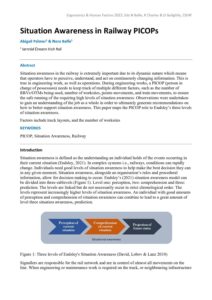
|
Author
Abigail Palmer & Nora Balfe |
Abstract
Situation awareness in the railway is extremely important due to its dynamic nature which means that operators have to perceive, understand, and act on continuously changing information. This is true in engineering work, as well as operations. During engineering works, a PICOP (person in charge of possession) needs to keep track of multiple different factors, such as the number of RRVs/OTMs being used, number of worksites, points movements, and train movements, to ensure the safe running of the requiring high levels of situation awareness. Observations were undertaken to gain an understanding of the job as a whole in order to ultimately generate recommendations on how to better support situation awareness. This paper maps the PICOP role to Endsley’s three levels of situation awareness. Factors include track layouts, and the number of worksites |
Publish Date: Jun 7, 2026 | Keywords: Aviation, Contemporary EHF 2026, Publications, Safety, Systems
| Document
|
Author
Samantha Jackson, Paul Salmon, Gemma Read |
Abstract
Remotely Piloted Aircraft Systems (RPAS), also known as drones, are a rapidly emerging technology that is being quickly adopted in many civil and military applications. Although there are several benefits, a number of safety risks also exist. It is essential to take a proactive approach in designing broader sociotechnical safety systems that support the safe and optimal use of this technology. We used the Systems Theoretic Accident Model and Processes (STAMP) method to develop an optimal control structure needed to ensure safe and effective RPAS operations. |
Publish Date: Jun 7, 2026 | Keywords: Contemporary EHF 2026, Healthcare, Patient Safety, Publications
| Document

|
Author
Nick Woodier, Jonathan Back, Deinniol Owens, Helen Vosper, Paul Bowie |
Abstract
A 2025 review of the patient safety landscape in England described that the National Health Service’s focus on safety has been at the detriment of other aspects of quality of care, such as effectiveness. Concerns have been raised that the review will lead to de-prioritisation of patient safety due to a fundamental misunderstanding of safety science. This paper provides an overview of an exploratory study of 1) perceptions around quality and safety in healthcare, and 2) evidence of trade-offs seen in national safety investigations. The paper concludes that safety should be considered as the foundation for quality, rather than as a dimension of quality. It recommends 1) a fundamental rethink about how the NHS views and prioritises patient safety, and 2) the need for healthcare to employ evidence-based safety and risk management principles. |
Publish Date: Jul 3, 2025 | Keywords: Uncategorised
Straight Up vs. Each Way: The Core Difference
Picture a tennis Grand Slam as a marathon, not a sprint. A straight‑up wager locks you into a single finish line, a binary bet that says “yes or no”. Each Way splits that binary into a win‑and‑place component, letting you cash in if the contender lands on the podium, not just the throne. That simple split multiplies your strategic bandwidth.
Protective Edge in Long‑Run Tournaments
Here is why savvy punters love each way: in multi‑day events like the World Cup, form fluctuates like weather. A single upset can erase a straight‑up stake in seconds, but an each‑way ticket survives the storm, rewarding you for a top‑four finish even if the champion crown slips away. In other words, you hedge against volatility without paying a separate hedge fee.
Bankroll Management Made Simple
Look: bankroll is the lifeblood of any bettor. By allocating half your stake to the win market and half to the place market, you spread risk across two pockets. If the place odds are generous—say 1.5 versus 5.0 for the win—you’ll often see a net profit when the team lands a respectable finish. This dual‑layer approach smooths the equity curve, turning wild spikes into a manageable slope.
Live Adjustments and Market Flexibility
And here is why each way shines in live betting. Futures markets update odds as the tournament unfolds, and the place odds usually lag behind the win odds. That lag creates arbitrage windows: you can place a place bet after the win line has dropped, locking in value that the market hasn’t yet priced in. It’s a tactical maneuver that pure straight‑up bettors simply can’t replicate.
Psychology of the Stakeholder
By the way, the mental game matters. Knowing you have a safety net—your place leg—reduces the emotional sting of a loss, keeping you cool for the next wager. That composure translates into disciplined betting, and disciplined betting translates into consistent returns.
Real‑World Example on ew-bet.com
Imagine a 32‑team tennis bracket where the underdog is quoted 12.0 to win but 2.5 to finish in the top‑four. You stake $10 total: $5 on win, $5 on place. If the underdog reaches the semis, the place leg pays $12.5, covering the win loss and netting a $2.5 profit. If they go all the way, you scoop $60 from the win leg and $12.5 from the place leg, ballooning your return. If they bow out early, you lose $10, no worse than a straight‑up loss.
Bottom‑Line Action
Stop treating futures as a single‑shot gamble. Split every tournament stake into an each‑way structure, watch the place odds drift, and lock in those micro‑edges before the win market snaps shut. That’s the play.
Publish Date: May 23, 2025 | Keywords: Aviation, Contemporary EHF 2025, Publications, Safety
| Document
|
Author
Kevin Hayes, Laetitia Marquie & Lee Dann |
Abstract
In the commercial aviation sector, Maintenance Errors have resulted in several high-profile accidents and incidents and the annual cost to the industry is estimated to be some US$616M (Allianz, 2024). Despite an industry wide consensus from both regulators and operators alike that the problem of Maintenance Errors needs to be addressed, there remains no definition of what a Maintenance Error is. Using both literature reviews and data from interviews with airline safety professionals, this paper explores why there has been an issue in aviation with regards to understanding Maintenance Error and proposes the Aviation Maintenance System (AMS) as a model for contextualising the problem, as well as proposing a working definition for Aviation Maintenance Errors (AMEs). |
Publish Date: Jun 4, 2024 | Keywords: Contemporary EHF 2024, Psychology, Publications, Risk assessment
| Document

|
Author
Victoria Villalobos-Molina, Paulina Hernandez & Eric Tapia Escobar |
Abstract
The present paper outlines the trend of exposure to psychosocial risks in companies from various industrial sectors affiliated with a mutual insurance company in Chile. This report is part of a longitudinal descriptive study conducted using secondary data from 1,568,340 records collected between 2014 and 2022. The findings show a general trend indicating a decreasing exposure to psychosocial risks, particularly significant in the dimensions of "Psychological Demands" and "Social Support". However, the results in the double presence dimension remain concerning. Although the psychosocial risks surveillance protocol implemented in Chile shows positive results, there is still a relevant group of workers that needs a more targeted intervention. |
Publish Date: Jul 3, 2025 | Keywords: Uncategorised
Sprint Races: All‑out, All‑the‑Time
Look: a sprint is a ten‑second explosion, a lightning strike across the finish line. The first few strides dictate everything; a bad break is a race lost. In this arena, the rail is a double‑edged sword. Near the inside, you save a fraction of a second, but you also risk being boxed in by the front‑runners. A wide draw can give you the breathing room to unleash your turn of foot, yet it costs precious ground. The sweet spot? Usually the 2nd or 3rd post, where you’re close enough to the rail to shave off distance but still have the freedom to swing wide on the stretch.
Stayers: The Marathon of the Turf
Here’s the deal: staying races stretch for a mile and a half or more, turning the sprint’s aggression into a test of stamina and tactical patience. The early pace matters, but the finish is often a duel of endurance. Inside posts become a fortification, a shield against early traffic. A horse trapped on the rail can snake through the field, conserving energy for the final push. Conversely, a wide start in a stayer can be a death sentence if the field settles into a tight pack, forcing you to cover extra ground for no strategic gain.
Why Post Position Swings Between Sprints and Stayers
And here is why the calculus changes: sprint fields are compact, usually five to eight runners, meaning every position is a battlefield. The inside line can be a choke point; the outside offers a clear run but at a distance cost. Stayer fields expand to twelve or more, the pace spreads, and the rail transforms into a protective lane. A runner on the extreme outside in a stayer may never see the rail until the home turn, wasting energy fighting the wind. The jockey’s ability to read the pace and shift lanes becomes the decisive factor, not just the raw draw.
Key Variables to Scan on Race Day
First, check the early speed profile. If the favorite is a front‑runner with a history of setting blistering fractions, the inside posts become a trap—look for a mid‑range draw to exploit the stretch gap. Second, study the ground. A yielding turf lessens the penalty for a wide move; a firm track magnifies every extra meter. Third, evaluate the trainer’s tactics. Some trainers consistently ask for a prominent early position in sprints, while others prefer to sit back in stayers. Finally, trust the data from alltodayhorseresults.com for post‑position trends—those numbers won’t lie.
Practical Tips for Bettors
Pick a sprint with a clear front‑runner and avoid the rail if the horse lacks a proven turn‑of‑foot. In stayers, gravitate toward inside draws when the pace is expected to be moderate; the rail becomes an advantage, not a hazard. When the field is packed and the go‑in speed is high, favor a 2nd‑3rd post for sprints and a 4th‑5th slot for stayers. And always, before you lock in a ticket, run a quick post‑position filter on the latest form guide—if the draw doesn’t match the race’s speed map, skip it.
Publish Date: May 23, 2025 | Keywords: Aviation, Contemporary EHF 2025, Publications, Safety, Systems
| Document

|
Author
Sanjeev Kumar Appicharla |
Abstract
The aim of the paper is to present “resident pathogens” or “latent failure conditions” identified in Systems Engineering (SE) practices that led to the two fatal accidents of Lion Air Flight 610 and Ethiopian Airlines Flight 302 involving Boeing 737 Max- 8 airplanes. The accidents led to the tragic loss of 346 lives and incredible pain for the victims’ families. The desktop study included collecting information and data that is publicly available to represent all relevant viewpoints to ensure completeness. The accident analysis uses the Cybernetic Risk Management Model (CRMM) with support from the hybrid Swiss Cheese Model (SCM) and Management Oversight & Risk Tree (MORT) fault tree analytical technique. Resident pathogen metaphor in the Swiss Cheese accident causation model denotes fallible decisions made during the (SE) processes. The methodology incorporates Jens Rasmussen’s risk management framework (RMF) augmented by the Heuristics & Biases (H&B) approach to decision making, Thus, the methodology can help to identify latent failures conditions at all levels of the socio-technical system involved in the control of the system -of- interest (SOI). |
Publish Date: Jun 7, 2026 | Keywords: Automation, Communication, Contemporary EHF 2026, Publications, Rail
| Document
|
Author
Sarah Kusumastuti, Julia Lo, Tom Kolkman, Simone Borsci |
Abstract
This paper outlines the utilisation of a human-in-the-loop simulation of rail operations as part of Europe’s Rail Joint Undertaking (ERJU) research on Automatic Train Operations-Traffic Management System (ATO-TMS). An experiment was designed to study performance and communication of train traffic controllers, network controllers, and train drivers under Automated Train Operations (ATO) Grade of Automation (GoA) level 2 systems compared to a system with no ATO implementation. Results indicate that workload appear to be higher for traffic control operators in GoA level 2. There are no differences in communications and collaboration among traffic control room operators nor between traffic control and train drivers compared to the current system. Operators’ trust in automation was lower after experiencing the simulation. Qualitative feedback indicate that most traffic control operators perceive limited improvements offered by GoA 2, and so do most train drivers, who express stronger negative reactions. Overall, the simulation managed to provide rail operators with an impression of how automated systems can impact their communication and way of working. |
Publish Date: Apr 9, 2021 | Keywords: Contemporary EHF 2021, Decision making, Publications
| Document
|
Author
Setia Hermawati, Lena Cibulski and Glyn Lawson |
Abstract
Visualisations provide significant support for effective reasoning and decision-making processes. Its value mainly lies in its ability to turn raw data into actionable insights that lead to a decision. This requires appropriate visual representations that are designed with the decision-maker's way of reasoning in mind. Understanding the cognitive aspects underlying decision-making with visualisations is therefore crucial. Cognitive task analysis methods have been used to elicit expert knowledge in a variety of decision-making scenarios, with the Critical Decision Method (CDM) focusing on the cognitive bases in naturalistic non-routine incidents. In this study, we aim to determine the feasibility of CDM for capturing the expert knowledge, strategies, and cues involved with visualisation-based decision-making processes. Based on an analysis of four semi-structured interviews, we evaluate the method’s potential to inform the role of visualisation for human decision-making. We anticipate that our reflections on methodological insights can serve as a starting point for other human factors and visualisation researchers, who aim at studying strategies for higher-level decision-making and problem-solving tasks. |
Publish Date: Jul 3, 2025 | Keywords: Uncategorised
What Cashback Means in the Casino World
Cashback isn’t a charity case; it’s a calculated rebate that slaps a percent of your net losses right back into your pocket. In the high‑stakes arena of online gambling, that buffer can mean the difference between a night of thrills and a wallet bleed.
Why Casinos Offer Cashback
Look: operators need to lure players, keep them glued, and shave a slice of the house edge. Cashback is their fast‑track ticket to loyalty. They hand you a safety net, then subtly coax you into placing one more bet because the perceived risk feels lower.
Reading the Fine Print
Here is the deal: not all cashback is created equal. Some offers cap at $100, others demand a minimum turnover before the rebate kicks in. And don’t be fooled by “instant” versus “weekly” payouts—instant can be a bait to lock you in for days. Scrutinize the wagering requirements; they’re the hidden gears that turn a sweet deal into a grind.
Choosing the Right Offer
And here is why you should start with the “cashback on your first deposit” scheme. It’s a low‑commitment way to test the waters while the casino eats a slice of your loss. Compare percentages—5% vs 10%—and factor in the maximum rebate. A 10% rebate capped at $50 may be less lucrative than a 5% cap at $200.
Timing Your Play
Pro tip: stack your activity on days when the casino announces a “double cashback” promo. The math is simple: deposit $500, lose $300, get 10% back = $30. Double it, and you’re looking at $60 returning to you, effectively halving the sting of that loss.
Real‑World Example
Imagine you’re at onlinecasinowelcome.com, they roll out a 12% cashback on net losses up to $150 for the first month. You drop $1,000, end the week with $300 in the red. That rebate pumps you back $36. Not a fortune, but enough to fund another round without dipping into your main stash.
Common Pitfalls to Avoid
Never ignore the “eligible games” clause. Slots, roulette, and live dealer tables often sit outside the cashback pool. Also, chasing the “maxed out” cashback can lure you into reckless betting—remember, the rebate is a perk, not a safety net.
Final Actionable Advice
Set a personal cashback threshold: if the rebate doesn’t cover at least half your projected loss, walk away. Use that figure to filter offers, and you’ll never chase a deal that’s mathematically unsound. Now, go claim the best cash‑back bonus you can find and let the numbers do the talking.
Publish Date: Jun 12, 2023 | Keywords: Contemporary EHF 2023, Healthcare, Publications, SEIPS
| Document
|
Author
Sharon Beza, Lauren Morgan, Andrea Granger, Joe McCloud 4 & Peter Jeffries |
Abstract
In acute hospital care, sampling a patient’s blood is frequently used to help guide diagnosis, or to understand a patient’s response to treatment. This means many patients will have their blood taken multiple times during an inpatient stay. The work of phlebotomists has been studied before, and acknowledgements made to how they adjust their practice to balance patient safety in the context of fluctuating demands and challenging work environments and equipment (Pickup et al., 2017). A human factors approach was used to analyse the in-patient phlebotomy service within a local National Health Service (NHS) Trust. Multiple systems related issues particularly at organisational level were identified. Recommendations were made on how to improve the safety and reliability of the process. |
Publish Date: Jul 3, 2025 | Keywords: Uncategorised
Why the Home Factor Isn’t a Myth
Everyone who’s ever watched a Carabao Cup knockout knows the gut‑punch feeling when the home side nets a late winner. The problem? Fans and familiar turf tilt the odds like a seesaw. The noise, the scent of the pitch, the locker‑room vibe – they all conspire to turn a neutral encounter into a fortress siege. Ignore it and you gamble with blinders on.
Roaring Stands: The Crowd’s Hidden Playbook
Look: a packed stadium can be louder than a tactical briefing. The chants become a metronome that drives the home team’s tempo. Opponents hear the crowd’s rise and drop as a psychological cue, often forcing rushed passes. The sheer volume can sway referees too; a foul in the box feels heavier under a thunderous chorus. In short, the crowd is an extra player, and it’s rarely a substitute you can bench.
Familiar Turf: The Subtle Edge
Here is the deal: home sides know every bounce, every slope on their pitch. A ball that hugs the right‑hand side of the penalty area? That’s a cue the home striker has memorised from 12 previous matches. The visiting side, even with a top‑class keeper, must re‑learn the texture in real time. That learning curve eats up minutes, and minutes in a knockout cup are priceless.
Travel Fatigue: The Unseen Handicap
And here is why long journeys matter. A bus ride across the country saps stamina, disrupts sleep cycles, and leaves players mentally dulled. By the time the underdogs step onto the grass, they’re already battling a silent opponent – exhaustion. The home team, fresh from a routine training session, arrives with a tactical edge that a tired squad simply can’t match.
Strategic Adjustments for the Away Coach
Coaches who want to neutralise the home surge must flip the script. Press high from the first whistle, force errors before the crowd’s rhythm takes hold. Use quick counter‑attacks to bypass the pressurised midfield. And—critical point—rotate the squad to mitigate travel wear. A fresh pair of legs can cut through the home advantage like a scalpel.
For punters, the home bias is a lever you can pull. Spot a tie where the away side is statistically stronger but playing two hours from home; the odds will undervalue that upset potential. Hedge by backing over/under goals when the crowd is likely to force a high‑tempo game. The actionable tip: when the home team’s win odds sit above 1.70, and the travel distance exceeds 150 miles, allocate a modest stake to the underdog’s draw or win.
Publish Date: Jun 8, 2023 | Keywords: Artificial intelligence, Autonomous systems, Contemporary EHF 2023, Publications, Safety, Usability
| Document
|
Author
Paul M Salmon, Brandon King, Gemma J. M Read, Jason Thompson, Tony Carden, Chris Baber, Neville A Stanton & Scott McLean |
Abstract
There are concerns that Artificial General Intelligence (AGI) could pose an existential threat to humanity; however, as AGI does not yet exist it is difficult to prospectively identify risks and develop controls. In this article we describe the use of a many model systems Human Factors and Ergonomics (HFE) approach in which three methods were applied to identify risks in a future ‘envisioned world’ AGI-based uncrewed combat aerial vehicle (UCAV) system. The findings demonstrate that there are many potential risks, but that the most critical arise not due to poor performance, but when the AGI attempts to achieve goals at the expense of other system values, or when the AGI becomes ‘super-intelligent’, and humans can no longer manage it. |
Publish Date: Jun 3, 2024 | Keywords: Aviation, Contemporary EHF 2024, Human factors integration, Human performance, Publications
| Document
|
Author
Siddharth Shyamsundar |
Abstract
Drawing on research spanning multiple decades, different platforms and use cases, this literature review provides an in-depth overview of Field of View (FOV) in fixed wing military aviation Helmet Mounted Displays (HMDs), focusing on its human factors (HF) and performance implications. Expanding on the capabilities of human vision, it highlights how FOV and human vision are interlinked and why the current fixed wing HMD FOV standard is inadequate, failing to leverage the far-reaching capabilities of the human eye. This paper delves into both the preeminent FOV perspectives – the “as small as possible” and the “bigger the better” approaches, and identifies a “middle ground” of horizontal FOVs between 60° and 90°, where the benefits of wide FOV HMDs are at their most advantageous. Using this as a starting point, this study calls for the development of a wide FOV HMD for fixed wing military aircraft to include empirical HF research using appropriate use cases while accounting for platform and sensor capabilities and mission sets. |
Publish Date: May 23, 2025 | Keywords: Construction, Contemporary EHF 2025, Fatigue & sleep, Publications
| Document
|
Author
Dr Shelley Stiles |
Abstract
Fatigue is reported an important contributory factor in safety incidents across UK, including within the construction industry. The aim of this study is to gain a better understanding of existing organisational arrangements for the management of fatigue risk within the UK construction sector and compare maturity of the approach with other industries. |
Publish Date: Jul 3, 2025 | Keywords: Uncategorised
Driver Stamina: The Hidden Variable
When a car slices a corner at 320 km/h, the driver isn’t just flirting with physics; they’re waging a war against their own body. A single high‑speed apex can drain the neck muscles faster than a sprint lap, leaving the pilot gasping for a breath that never comes. Short bursts of extreme G‑force pile up, turning the cockpit into a pressure cooker. Meanwhile, the heart throttles, the lungs sprint, and the brain fights for clarity. The result? Fatigue that seeps into the steering wheel, subtle enough to slip past telemetry but massive enough to cost a podium.
Physiology in the Fast Lane
Look: a driver’s core temperature can spike 2 °C during a tight, high‑speed sweep. The body’s cortisol spikes, adrenaline spikes again, and the glycogen stores get raided like a midnight heist. That’s why the late‑stage laps often look like a dancer’s wobble—muscle tremors, slower reaction times, and micro‑mistakes. Here is why: the cumulative load of cornering speed is a silent assassin, eroding concentration piece by piece. The only antidote? Precision training that mimics the exact G‑load patterns of a Grand Prix corner.
Betting Angles: Why Speed Matters
Betting markets aren’t just about lap times; they’re about the hidden stamina lottery. A driver who can sustain a 2.5‑second per sector pace through a series of high‑speed bends is a jackpot waiting to be exploited. Odds shift the moment a racer’s telemetry flashes a dip in corner exit velocity—sharp bettors watch those micro‑fluctuations like a hawk. The faster the corner, the tighter the margin for error, and the richer the payoff for those who spot the fatigue before the pit wall does.
Live Odds and Corner Data
Here’s the deal: real‑time corner speed data feeds into betting algorithms faster than a pit crew can change a tyre. When a driver’s cornering speed drops by even 5 km/h, the odds on a podium finish can swing 20 % in seconds. Savvy punters overlay that data with historical fatigue patterns, hunting the sweet spot where a racer’s stamina curve meets the race’s critical phase. It’s a cat‑and‑mouse game, but the mouse always wins if it’s got the right cheese—namely, the live corner speed feed from f1bettips.com.
Practical Takeaway for Punters
Bottom line: monitor cornering speeds, track the stamina curve, and place your bets when the data shows a driver still cruising through high‑speed bends while rivals start to wobble. That’s your golden ticket. Act now—grab the live corner data, cross‑reference it with driver fitness reports, and stake your claim before the market reacts.
Publish Date: Jul 3, 2025 | Keywords: Uncategorised
Why the Grand National Demands a Different Approach
Look: the Aintree spectacle isn’t just a race, it’s a money‑making minefield. One‑minute laps, forty fences, and a field that looks like a carnival of chaos. Ordinary win‑bet logic dies at the first hurdle. You need a strategy that can sprint, jump, and dodge at the same time.
Getting Your Feet Wet: The Basics You Can’t Skip
Here is the deal: start with a solid bankroll split into “stake” and “explorer” pots. Stake covers safe bets—places, shows, each‑way—while explorer fuels the high‑risk, high‑reward bets like the Grand National’s famous “forecast.” If you forget this split, you’ll chase losses faster than a horse on a steep drop.
Next, pick a reputable bookmaker, preferably one that offers free‑bet insurance on the Grand National. The right shop can shave a few percent off the vig, turning a marginal win into a solid profit.
Decoding the Form: Reading Between the Fences
By the way, form isn’t just past finishes; it’s a mosaic of stamina, jumping ability, and trainer intent. Look for horses that have thrived in long‑distance chases, especially those who’ve handled heavy ground. A front‑runner who loves a good pull‑up could be a ticking time‑bomb when the race hits the second half.
Don’t ignore the jockey’s pedigree. A veteran who’s tackled the Becher’s Brook before will manage the tempo better than a rookie. If the jockey’s odds are unusually low, it’s often a sign the trainer has confidence in the horse’s staying power.
Bet Types That Actually Pay Off
Forget the vanilla win bet. The Grand National rewards each‑way and place bets because the horse‑field is so deep. A sensible each‑way on a 50‑1 outsider can net a five‑figure return if the animal squeaks through the first ten fences.
And here is why the “forecast” (first‑two finish) can be a game‑changer. Yes, the odds are scary, but the payout is a monster. Pair a strong favorite with a long‑shot you trust to pull a surprise, and you’ve got a potential money‑tree.
Timing the Bet: When to Lock In Your Stake
Market movement on Grand National day is like a roller‑coaster in a storm. Early odds are usually inflated; the smart bettor waits for the “price drop” after the final declaration line. Once the field is set, monitor the live odds for 15‑minute windows where the favorite’s price slides—jump in and lock in your stake before the odds rebound.
If you’re feeling daring, place a “late‑bet” slip within the final 30 minutes. The horse’s odds may wobble as news of a last‑minute scratch spreads, and you can snag a value bet that the bookmakers haven’t adjusted yet.
Risk Management: Cutting Losses Before They Bleed
Set a hard stop‑loss for each betting session. If you lose 10 % of your bankroll, walk away. This rule prevents the temptation to double‑down on a losing ticket, a trap that has swallowed more bettors than a bad fence.
Also, never chase a losing bet by increasing stake size. The Grand National’s volatility is high enough without adding reckless leverage.
Final Word of Action
Here’s the actionable move: open a betting account, allocate 70 % to safe each‑way bets, earmark 30 % for a forecast featuring a trusted outsider, then place both bets as soon as the final declarations close. That’s it.
Publish Date: Dec 17, 2018 | Keywords: Contemporary EHF 2017, Publications, Road safety, Sport & leisure, Teamwork
| Document
|
Author
Paul SALMON, Clare DALLAT, Amanda CLACY |
Abstract
This paper presents the findings from a study examining situation awareness and teamwork in elite women’s cycling. This involved observing an elite racing team during two Australian National Road Series race events and conducting post-race critical decision method interviews. The data were analyzed using the Event Analysis of Systemic Teamwork framework to show the task, social and situation awareness networks underpinning team performance. The findings are discussed in relation to enhancing cycling team performance and potential applications in other sports. |
Publish Date: Jun 7, 2026 | Keywords: Contemporary EHF 2026, Healthcare, Publications, Systems
| Document
|
Author
Tracey Herlihey, Melanie Ottewill, Deinniol Owens, Lauren Mosley |
Abstract
This study examines the application of the Patient Safety Incident Response Framework (PSIRF) Learning Response Toolkit within mental health settings. Through a survey, discussion forums, and cognitive walkthroughs, the research identifies usability gaps and the need for tailored guidance to address the unique complexities of mental health care, particularly in cases involving suicide or homicide. Findings emphasise that effective learning from safety events requires not just tools, but also foundational human factors knowledge, cultural support, and stakeholder engagement. |
Publish Date: Jul 3, 2025 | Keywords: Uncategorised
Skip the Noise, Hit the Real Deals
Forget the glossy banners that scream “FREE SPINS” for the sake of SEO. The real gold lives in the fine print, hidden on casino promo pages that actually deliver. Look: most operators pad their offers with wagering hoops, but a handful of UK‑centric sites cut the fluff and let you spin without a paycheck. Those are the ones you need to bookmark today.
Target the Fresh‑Launch Casinos
New launches drop free‑spin packages like birthday confetti—no strings attached, just pure play. The trick? Track the press releases from the UK Gambling Commission; they list upcoming licences. As soon as a licence pops, the casino typically rolls out a “welcome 100 free spins” splash. Grab it before the crowd piles on.
Use Affiliate Aggregators Smartly
Aggregators aren’t just link farms; they’re treasure maps if you know how to read them. Plug “free spins” into the search bar of a reputable affiliate hub and filter by “no deposit”. The top results are usually the most generous offers, because the affiliates have been vetted by thousands of players. Trust the ones that showcase live RTP stats and transparent terms.
Don’t Forget the Mobile‑Only Bonuses
Mobile‑first casinos love to reward app downloads with exclusive free‑spin bundles. Those bonuses often eclipse desktop offers, and they’re easier to claim—tap a button, verify your number, spin. If you’re on the go, download the app, enable push notifications, and let the casino ping you the next 50‑spin giveaway.
Check the Expert Review Site
Sites like brandnewcasinosuk.com slice through the hype, rank the latest spin promos, and highlight the ones with the cleanest terms. Their daily update cycle means you won’t be stuck on a stale 30‑day offer. Scan the “Free Spins” tab, click the bold button, and you’re in the game.
Action Step: Set a Daily Alert
Open a browser tab, paste a simple Google alert: “UK free spins no deposit”. Turn the frequency to “as‑it‑happens”. When the alert fires, chase the link, claim the spins, and move on. No more scrolling, no more missed chances. That’s how you stay ahead of the curve. Grab the first offer you see and start spinning.
Publish Date: Aug 11, 2021 | Keywords: Automotive, Autonomous vehicles, Comfort, Comfort Congress 2021, Publications, Seating, User experience
 |
Author
Irene Caballero-Bruno, Daniel Töpfer, Thomas Wohllebe & Pedro M. Hernández-Castellano |
Abstract
The increasing automation in many industries, including the vehicular market, involves a profound transformation. Since in automated driving systems, driving is no longer the primary task, the driver no longer needs to be the epicenter of the interior design. This research-based design approach explores occupants’ physical experience with prototypes, and this becomes an essential part of the design and validation of the future vehicle interior. The current study is the first to examine comfort of different seat angles in order to fulfil the need of sleeping in a vehicle, based on the effect of comfort perception in close-to-real conditions testing. Therefore, user experience and comfort are the main drivers to assess the most suitable seating position, including the seat pan and backrest angles, for sleeping in a vehicle environment. Our findings suggest that users prefer the reclining and the lying seats in, respectively, short/medium and long-term use cases. |
Publish Date: Jul 3, 2025 | Keywords: Uncategorised
Why the Hunt for Free Streams Is a Nightmare
Every weekend, punters sprint to their laptops, eyes glued to the screen, hoping for a glitch-free feed. The problem? Most sites are paywalls dressed as “premium” or dead links that vanish like smoke. By the way, the UK market is a minefield of geo-blocks, and the average fan ends up scrolling through endless ads just to catch a single race.
The Legal Tightrope: What You Can’t Say Out Loud
Look: broadcasting rights are owned by a handful of operators who charge a king’s ransom. You can’t just pirate a stream without risking a cease-and-desist, but you also can’t expect the official portals to be free. Here is the deal: the only legitimate way to watch without paying is to exploit the grey areas where broadcasters stream publicly for promotional purposes.
Spotting the Goldmine: Free Public Feeds
First, hit the official greyhound association pages. They often embed a YouTube live player for “high-profile” events. It’s a thin veneer, but it works. Next, check out niche forums where users share the exact URL of the live embed. The trick is to copy the direct .m3u8 link and paste it into VLC – instant, no-ads, no-login.
Tech Hacks That Beat the System
And here is why a VPN is your best friend. Route your connection through a UK server, and the geo-restriction disappears. Combine that with a smart DNS service, and you’ll bypass most regional blocks. The result? A clean, lag-free feed that feels like you’re sitting in the grandstand.
One Proven Resource You Can’t Ignore
If you’re still hunting, stop the wild goose chase and head straight to this page: https://greyhoundforecast.com/articles/watch-greyhound-races-free-uk/. It lists the current free streams, broken down by race day, and even offers a quick setup guide for the non-tech savvy.
What to Do Right Now
Open your VPN, set it to a UK node, grab the .m3u8 link from the forum, pop it into VLC, and you’re live. No excuses. Get the feed, place your bets, and enjoy the chase.
Publish Date: Apr 15, 2020 | Keywords: Contemporary EHF 2020, Interface design, Publications, Situation awareness, Workload
| Document
|
Author
Jisun Kim, Kirsten Revell, Pat Langdon, Simon Thompson, Lee Skrypchuk, Jim O-Donoghue, Joy Richardson, Jediah Clark and Neville A. Stanton |
Abstract
The current Society of Automotive Engineers (SAE) Level 2 (automated acceleration and steering capabilities) autonomous vehicles on the market require constant monitoring and intermittent interventions by the driver whenever the system reaches its limitations. Although drivers’ workload could be increased in the processes, interactions associated with them have rarely been explored in a naturalistic environment. Therefore, our understanding about drivers’ interaction with the current generation of autonomous vehicles seems limited. In order to extend the relevant knowledge, this paper investigates drivers’ interaction with a semi-autonomous vehicle in a complex naturalistic urban environment. Five drivers with varying levels of experience in autonomous cars participated in the experiment. Findings show that active monitoring was required in automated driving for safety to gain sufficient situation awareness that preceded manual interventions in certain conditions. The process seemed to be smoother for the experienced drivers as they had a better understanding about capabilities and limitations of the autonomy. Insights to automotive manufacturers on how driver-vehicle interaction could be enhanced are discussed. |
Publish Date: Jul 3, 2025 | Keywords: Uncategorised
Why the Open is a Minefield for Bettors
Everyone thinks the Open is just another tee‑time, but the truth is a swirling vortex of wind, sand, and history that can shred a naïve wager faster than a driver off the tee. Look: you’re not just betting on a player’s swing, you’re betting on weather’s mood swings. That’s the core problem. If you ignore the elements, you’ll be betting blind.
Weather: The Unpredictable Opponent
Wind on a links course isn’t a gentle breeze; it’s a tactical artillery. A 20‑mph gust can turn a 4‑iron into a lob wedge, and a sudden downpour can soften a fairway, making the ball sit like a cat. By the way, the Open’s traditional June dates mean you’re courting early summer storms. The smarter punter watches the Met Office like a hawk and adjusts the over/under on the fly. A 10‑minute shift in wind direction can swing the total strokes line by two strokes – that’s money.
Course Anatomy: Where the Green Bites
Old courses aren’t flat playgrounds; they’re living museums with bunkers that have personalities. The 9th at St Andrews? A double‑green that can swallow a birdie in a second. The 17th at Royal Birkdale? A finishing stretch that demands precision over power. Here is the deal: map the “danger zones” on a hole‑by‑hole basis and layer your bets. If a hole has a historic average over‑par of 1.6, consider a hole‑specific over/under instead of a round‑wide total.
Player Form: Who Loves Links?
Not every pro thrives on a seaside layout. Some have a penchant for firm ground, low bounce, and relentless wind. Look at the stats: players from the UK and Ireland often post lower scores on links because they grew up with the same conditions. And here is why – they know how to hold a club low, keep the trajectory tight, and play the ball left. If a golfer’s recent finishes show strong sand‑save percentages, it’s a red flag for betting on his ability to navigate those treacherous bunkers.
Betting Angles That Pay
Stop chasing the big names; chase the edges. The Open rewards contrarian angles because the field is deeper than a PGA Tour event. Target the top‑three finishers instead of outright winner. That market often offers odds of 5.0+ for a player who’s consistently in the top ten on links. Combine that with a prop on “first round birdies” – a low‑risk, high‑reward combo.
Top‑3 Winners in the Last Five Years
Those names aren’t random. They’ve each shot under 70 at least three of the last five Opens. Their rounds are built on conservative strategies – hitting the fairway, avoiding the deep bunkers, and letting the wind dictate club selection. The takeaway? Place a “top‑3” bet on any of these three and you’re stacking the odds in your favor, especially when the market overreacts to a hot shot from the US.
Live Prop Plays on the 18th
Live betting is the playground for seasoned punters. The 18th at most Open venues is a par‑four that can toggle from a birdie to a double‑bogey depending on wind gusts. Keep an eye on the live odds for “over 1.5 strokes on 18th.” When the wind shifts from headwind to tailwind in the final hour, those odds can swing dramatically. Jump in when the market underestimates the wind’s impact, and you’ll lock in a quick profit.
Final Playbook
Do your homework, track the wind, target the consistent links specialists, and lock in a live prop on the final hole when the wind flips. That’s the edge you need.
Publish Date: Jul 3, 2025 | Keywords: Uncategorised
What the heck is an each-way bet?
Look: you stake two separate wagers on the same race – one for the dog to win, another for it to place. It’s a split-screen gamble, half win, half place, and the payout hinges on the place terms the bookie offers.
Place terms – the secret sauce
Here is the deal: bookmakers typically set place terms at 1-4, 1-5 or even 1-6, meaning the dog must finish within the top 4, 5 or 6 to cash the place part. The odds you get on the place leg are the win odds divided by that fraction. So a 10.0/1 win price on a 1-4 place becomes 2.5/1 on the place side.
When does the each-way actually pay?
Short and sweet: you win the place leg if the greyhound finishes inside the designated place range, regardless of whether it wins. If it wins, you double-dip – both win and place legs settle, and you collect both payouts.
By the way, a win-only bet is dead-weight if the dog lands second. The each-way salvages that loss, turning a zero into a modest return.
Sample calculation – no math class needed
Imagine a 12.0/1 favorite in a 1-5 place market. You wager £10 each way. Win leg: £10 @ 12.0/1 = £120 profit + £10 stake = £130. Place leg: odds become 2.4/1 (12 ÷ 5). If the dog finishes third, you get £10 @ 2.4/1 = £24 profit + £10 stake = £34. Total return = £164.
And here is why many punters love each-way: the place leg cushions the blow when the dog falls short of victory but still shows up in the money.
When does it backfire?
If the place terms are tight – say 1-3 in a large field – the odds on the place leg shrink dramatically. A 20.0/1 win becomes a meagre 6.7/1 on the place side. In that scenario, the extra stake may not justify the reduced payout, especially if the dog is a long-shot.
Also, beware of “no-place” rules on certain exotic bets. Some bookmakers exclude the place component from exotic pools, turning your each-way into a plain win wager.
Key factors to check before you lock in
First, the size of the field. Bigger fields usually mean broader place terms – 1-6 is common in 12-runner races. Second, the dog’s form. A consistent placer can be more valuable than a volatile winner.
Third, the bookmaker’s commission on place bets. Some operators charge a higher vigorish on the place leg, eroding your profit margin.
Finally, the timing of the market. Early price drops often signal a surge in money on the dog, which can tighten place odds.
Real-world example from the UK circuit
Last weekend at Towcester, a 7-runner sprint offered a 1-4 place market. The 8.0/1 outsider finished fourth. The win leg was dead, but the place leg paid out at 2.0/1, netting the bettor £30 on a £10 each-way stake. That’s the sweet spot – low odds, tight field, decent place terms.
Bottom line – the actionable tip
Here’s the hard-core advice: always calculate the place return before you place the bet. If the place odds multiplied by the stake exceed the extra amount you’re risking, go ahead. If not, skip the each-way and chase the win alone.
Need a deeper dive? Check out this guide on each way greyhound betting UK when pays for exact formulas and market analysis.
Publish Date: May 27, 2025 | Keywords: Contemporary EHF 2025, Publications, Risk assessment, Systems
| Document
|
Author
Mike Tainsh |
Abstract
AcciMap is a tool developed for the investigation of system failures during past events. This empirical study on the judgements of 12 specialists investigated judgements of potential failure associated with system development using the AcciMap technique. The system development studied was a radar centre for the defence of London in the late 1930s. The results showed that system development experts make consistent judgements on some AcciMap characteristics but not others including external influences and some job designs. |
Publish Date: Feb 27, 2019 | Keywords: Contemporary EHF 2016, Healthcare, Publications
| Document
|
Author
Lorna FLYNN, Matthew WOODWARD, Lauren MORGAN, Lance HOLMAN, Christopher PENNELL, Helen HIGHAM and Peter MCCULLOCH |
Abstract
|
Publish Date: Aug 9, 2021 | Keywords: Aviation, Comfort, Comfort Congress 2021, Publications, Seating
 |
Author
Alejandro Nuñez Vicente, Wolf Song & Peter Vink |
Abstract
Usually, the economy class has limited space and limited recline possibilities causing discomfort, especially on long haul flights. In this paper, a seat was developed creating more space by using the vertical space in the aircraft. The design is described and 59% preferred this seat based on visual impression, which is promising. Further prototyping, certification studies and manufacturability research is needed to check the feasibility further. |
Publish Date: Oct 23, 2018 | Keywords: Contemporary EHF 2018, Defence, Publications, Systems
| Document
|
Author
Mike Tainsh |
Abstract
Throughout the produce or services lifecycle, the assessment of the ergonomics contribution to system development evolves to ensure that designs meet requirements. This is particularly important towards the final stages when assessment is against operational scenarios. Current assessment techniques are examined, and exemplified using experience from current work on naval systems, and User System Architectures (Tainsh, 2016). Assessment techniques for contributions to operational scenarios are proposed using risk-based metrics which include the criterion ‘Risks At Operationally Acceptable Levels (RAOAL)’. |
Publish Date: Jun 24, 2022 | Keywords: Contemporary EHF 2022, Publications, Tools & techniques, Workload
| Document
|
Author
Hanna J. Neroj & Jim Nixon |
Abstract
A new scale measuring pilot subjective mental workload was developed as part of the Horizon 2020, Future Sky Safety Project: The validity of new measures needs to be established for effective and reliable implementation. This article investigates the validity of this new scale through assessment of psychological distances between linguistic variables on the scale and subsequent transformation from discrete to continuous scale using fuzzy sets theory. Although the new scale has claimed ordinal properties for the items, no evidence exists to support the interval properties of the scale and any subsequent analysis using statistical methods. The results in this article show linear progression of the items on the scale, supporting the order of the items. To establish the interval properties of the scale, the distances between the ordered items were evaluated using fuzzy sets theory using the Fuzzy Logic Designer in MATLAB. Transformation to continuous scale using fuzzy sets may allow the capture of the dispersion of the data around specific points, showing the degree to which each score belongs to different linguistic category of mental workload. Finally, a proposal for incorporating the validated performance measure was presented. |
Publish Date: Jun 8, 2023 | Keywords: Contemporary EHF 2023, Healthcare, Publications, Safety, SEIPS
| Document
|
Author
Victoria E. Wills, Andrew Seaton |
Abstract
A system safety review to assess the resilience in Trauma and Orthopaedic (T&O) theatres was conducted in response to a number of Never Events. The imminent publication of the Patient Safety Incident Response Framework (PSIRF) paved the way for an alternative to traditional serious incident investigation, proposing a systems-based approach and enabling subsequent improvements to be based on ‘work as done’, rather than ‘work as imagined’. Analysis identified opportunities for interventions that built system resilience, which were developed and tested by front line staff as part of a Quality Improvement (QI) collaborative. The approach demonstrated a practical application of the integration of systems theory, patient safety, resilience engineering and quality improvement approaches. |
Publish Date: Jun 24, 2022 | Keywords: Aviation, Contemporary EHF 2022, Investigation, Publications
| Document
|
Author
Michael A. Bromfield & Nils Jamieson |
Abstract
Lion Air JT610 departed Soekarno-Hatta International Airport, Jakarta Indonesia for Depati Amir Airport, Pangkal Pinang on the 29th of October 2018 at 06:20 AM local time. As the aircraft passed through 2,000 ft during the initial climb-out, it pitched down and the crew attempted recovery but were unable to do so. At 06:32 AM the aircraft crashed into the sea with an airspeed in excess of 400 knots. All 189 persons on board lost their lives. This fatal accident was a loss of control in flight (LOC-I) or “unintended deviation from flightpath”, the number one category of fatal accident type over the last 60 years. Aircraft technology has seen significant development over this period with a corresponding reduction in fatal accident rate, yet LOC-I still persists. With technological advancements how could an accident like this have happened? This paper will explore contributory and causal human factors and what is proposed to prevent future occurrences. |
Publish Date: Mar 26, 2019 | Keywords: Contemporary EHF 2016, Human-machine interaction, Maritime, Publications, Situation awareness
| Document

|
Author
Julia CLARKE |
Abstract
The ‘dark and quiet’ interface principle has been embedded in the design of the Platform Management System for the Royal Navy’s (RN) future maritime platforms. The aim is to minimise attention-getting features that could distract an operator and/or affect situational awareness. The Human Factors Team has worked with a range of stakeholders to design the content and presentation of system information to optimise operator attention during routine, abnormal and emergency operations. |
Publish Date: Jul 3, 2025 | Keywords: Uncategorised
Why the First Turn is a Deal‑Breaker
Imagine a rocket launch. The first seconds decide if you stay on course or tumble into the void. Same principle applies when a greyhound bursts out of the traps and hits the first bend.
The physics of the curve
Hundreds of pounds of muscle, a 450‑metre sprint, and a 100‑metre radius that demands instant lateral grip. The moment a dog swings into the bend, centrifugal force fights its stride, and the ones that bite the inside rail gain precious inches. A split‑second mis‑calculation turns a potential winner into a traffic jam behind the outside pack.
Trainer’s playbook
Look: seasoned trainers spend more time perfecting the start than the whole race. They train for “break‑fast” speed, so the dog hits the bend at optimum velocity. Too fast and you’ll lose traction; too slow and you’ll cede the inside slot. The sweet spot? That fragile middle ground where the dog’s stride length, track surface, and cornering angle sync like a well‑tuned engine.
Betting implications
Sharp punters know that odds shift the moment the traps open. If you spot a dog with a proven first‑bend record, you’ve got a edge. Data sheets from britishgreyhoundresults.com will flag those “bend masters” – dogs that consistently take the rail and emerge ahead.
Track design matters
And here is why the layout of a course can rewrite the script. Some tracks have a tighter radius, demanding even more aggressive steering. Others offer a gentle curve, rewarding raw speed over turning finesse. The first bend, therefore, is not a homogenised slice of the race; it’s a variable terrain that separates the specialists from the generalists.
Psychology of the pack
When the pack rolls into the bend, the lead dog dictates the line. The followers either mirror the leader or try to carve a new path. A dog with an “inside‑first” habit can force the pack to shuffle, creating gaps that ripple through the remaining laps.
Practical tip for the next meeting
Take a fresh look at the last three races at any venue. Count how many winners hugged the rail on the first bend. If the ratio exceeds 60 %, lock in a bet on the inside‑line contender. No need for fancy analytics – just a razor‑sharp focus on that opening curve.
Publish Date: Jul 3, 2025 | Keywords: Uncategorised
Know the Numbers Before You Play
Look: the moment you sit down at a terminal, the bank account must be the first thing on your mind, not the neon lights or the roar of the crowd. A solid bankroll is the foundation, the bedrock, the literal oxygen for any serious bettor. Decide on a hard cap – 1% of your total disposable cash per bet, no exceptions. If the limit is $2,000, you never risk more than $20 on a single box. That discipline separates the sharks from the minnows, and it’s non‑negotiable.
Divide and Conquer
Here is the deal: break that 1% stake into units that match the size of the boxes you’re eyeing. A three‑horse box costs three selections, a four‑horse box needs six, and so on. If you’re playing a $10 three‑horse box, you’re actually risking $30. Scale your unit size so the total exposure never exceeds your pre‑set limit. This way, even a string of winners won’t blow your bankroll, and a losing streak won’t cripple you either.
Track, Review, Adjust
By the way, the numbers on a screen aren’t enough. Keep a spreadsheet, a notebook, or an app that logs every wager, every horse, every payout. Spot patterns, spot leaks. If you notice a pattern of over‑betting on favorites, tighten the unit size. If you’re consistently winning on long shots, consider a modest increase, but never more than 0.5% of the total bankroll per bet. The key is constant recalibration – treat your bankroll like a living organism that needs monitoring.
Embrace the Box, But Don’t Chase It
And here is why: a box bet is alluring because it covers multiple combinations, but it also inflates exposure like a balloon on a wind gust. Resist the urge to “just add one more horse” when a race looks juicy. That extra leg can turn a modest risk into a financial avalanche. Stick to the planned box size, and if a race seems too tempting, walk away. The best traders are the ones who say “no” more often than “yes.”
Set a Stop‑Loss, Honor It
Stop‑loss isn’t just for stocks; it works for horses too. Define a loss threshold for the day – say, 5% of your total bankroll. Once you hit that wall, close the book. No more chasing, no more “just one more bet.” Your brain is primed for irrational decisions after a loss, and that’s the perfect breeding ground for disaster. Shut the terminal, step away, and come back fresh tomorrow.
Final Move
Last piece of advice: before you place that next box, pull up the bankroll calculator on boxbethorseracing.com, plug in your units, and verify that the total risk aligns with your rule. If it doesn’t, trim the bet or wait for a better opportunity. No shortcuts, no excuses. Get disciplined, get consistent, and let the numbers do the talking.
Publish Date: Jun 4, 2024 | Keywords: Aviation, Contemporary EHF 2024, Design, Human-machine interaction, Publications, Workload
| Document
|
Author
Ben Wright, James Blundell, Wojciech Tomasz Korek, & Wen-Chin Li |
Abstract
The following preliminary study uses subjective measures of situational awareness, workload, and system usability to assess the effect of touchscreen flight deck displays in simple and complex flying environments during a simulated flight task. Eighteen participants were evaluated whilst flying a simulated aircraft, conducting both simple and complex flight operations. Results showed that situational awareness improved, and perceived workload was maintained, when task complexity was increased during touchscreen interaction on the flight deck. This was likely driven by touchscreens providing increased attentional supply. This improves the flight deck human�machine interface (HMI) from a pilot-centred perspective by improving access to task-relevant information. There was no significant change in levels of touchscreen usability as flight task complexity increased, once again ratifying the use of touchscreens in assisting cognitive function in some task types. The application and limitations of these findings is discussed. |
Publish Date: Jun 7, 2026 | Keywords: Cognition, Contemporary EHF 2026, Healthcare, Patient Safety, Publications
| Document
|
Author
Rachel Magennis |
Abstract
Radiology is prone to cognitive bias. High workload, interruptions, pattern-recognition fatigue, and time pressures create situations where anchoring, satisfaction of search, and premature closure can occur. Radiology Events and Learning Meetings (REALMs) provide a forum for sharing discrepancies, but their value depends on psychological safety. Without a blame-free environment, clinicians cannot fully explore how bias influences decisions. This work examines how human-factors-informed REALM adaptations can improve bias awareness, strengthen reflective decision-making, and enhance patient safety. Approach We reviewed REALM processes across a multi-site radiology department using a human-factors framework: * Identifying bias-prone moments (overnight reporting, complex cases, mismatch between clinical request and findings). * Observing barriers to open discussion, including hierarchy, fear of judgement, and limited confidence among staff unfamiliar with structured feedback. * Introducing parallel forums (Reporting Radiographer REALM, Resident REALM) to create psychologically safe peer-level spaces. * Embedding bias-spotting prompts to normalise discussion of cognitive shortcuts. * Collecting feedback on whether these adaptations encouraged open discussion of errors and decision-making. Findings Smaller peer-level REALMs made it easier to discuss bias explicitly. Participants reported increased readiness to reflect on anchoring, automation bias, and satisfaction of search. These forums built confidence, enabling richer discussion in the main REALM and clearer identification of system factors affecting errors. Key Takeaways * Reflection on errors must include bias awareness. * Psychological safety is essential. * Parallel REALMs are optional but beneficial for large or multi-site departments. * Bias vocabulary normalises discussion of shared cognitive tendencies. * Human-factors-informed REALMs support safer systems and more resilient decision-making. |
Publish Date: Jul 3, 2025 | Keywords: Uncategorised
Why the Calendar Matters
The greyhound circuit sprints ahead each spring, and if you’re still guessing when the next big night lands, you’re already three strides behind. Fans, trainers, bettors – everyone’s chasing the same high‑stakes pulse. Ignoring the schedule is like trying to nail a moving target with a blindfold on. The truth? A well‑timed entry can turn a modest stake into a payday. Miss the marquee meet and you’ll hear the echo of empty stands, not the roar of the crowd. Here’s the deal: know the dates, own the odds.
Key Dates at a Glance
April kicks off the season with the Spring Sprint at Oxford, a quick‑fire showcase that sets the tone. May rolls in the Derby trial at Crayford – a real litmus test for emerging stars. June, we hit the apex: the Greyhound Derby at Wimbledon, the crown jewel that draws global attention. July cools things with the St Leger at Belle Vue, a stamina showcase that reshapes betting charts. August brings the Scurry Gold Cup at Brough, a sprint that can flip fortunes overnight. And September? The Grand National at Aintree, a marathon that tests endurance and strategy alike.
The Crown Jewels of the Season
Don’t mistake the Derby for the only big ticket. The Scurry Gold Cup, despite its shorter distance, often produces shock‑wave payouts that ripple through the market. The Grand National, meanwhile, is a marathon that separates the marathoners from the sprinters in a brutal test of staying power. If you’re chasing a single event, you’ll miss the synergistic effect of stacking races – the momentum built at one meet can fuel the next. Look: timing your stakes across these peaks maximizes exposure while minimizing risk.
Navigating the Schedule Like a Pro
First, map the calendar onto your betting software. Plot each major meet, then overlay your preferred trainers and dogs. Second, watch the form cycle – dogs that peak in March will usually slip by June unless they’re truly elite. Third, leverage the off‑days. While the headline events dominate headlines, the undercard races often hide value gems. And by the way, the site dogracingoddsuk.com offers live form feeds that keep you one step ahead of the pack.
Your Action Plan
Grab a planner, scribble the dates, assign a “watch” label to each key race, and set alerts for the week prior. Dive into the trainers’ stats, flag any dog that’s shown a three‑race winning streak leading into a major meet. Place a modest “early bird” bet on that dog two weeks before the event – odds are typically kinder before the hype explodes. Finally, lock in a post‑event review: note what worked, what flopped, and adjust your next month’s strategy accordingly. Get moving – the next sprint is already loading.
Publish Date: Mar 26, 2019 | Keywords: Contemporary EHF 2016, Design, Publications, Technology
| Document
|
Author
Sara BURY, Michael HESPLEY, Nicki MCCANN and Anna WELCH |
Abstract
In an age of technology and computer aided design this paper highlights our experiences in support of access to low fidelity mock-up facilities as an additional resource to assist with spatial arrangement assessments and personnel hazard analysis. |
Publish Date: Jun 7, 2026 | Keywords: Contemporary EHF 2026, Publications, Rail, Task analysis, Technology
| Document
|
Author
Gemma Read, Katherine Plant, Zohre Abedi, Paul Salmon |
Abstract
Automated enforcement cameras have been proposed as a new intervention to enhance railway level crossing behaviour and safety. Hierarchical task analysis was utilised in a novel way to consider the potential positive and negative impacts on road user behaviour. The findings can be used to support decision making around the use of enforcement cameras in this context. |
Publish Date: Jul 3, 2025 | Keywords: Uncategorised
The Last‑Minute Shake‑Up
Sharp bettors know the spread is a living thing, not a static number. Minutes before the opening buzzer the line can swing like a pendulum, and that’s the money‑making window. The market’s pulse quickens, and the odds adjust before any tip‑off even flickers.
Liquidity Meets the Clock
Bookmakers juggle two forces: public dollars flooding in and sharp capital slipping out. When the clock ticks toward tip‑off, the public’s wet‑footed bets tend to pile on the favorite. The sportsbook reacts, nudging the spread to balance exposure. If the action is heavily lopsided, the line can shift by half‑point or whole‑point in a breath.
In‑Play Information Sneaks In
Late‑breaking intel—injury updates, starting‑lineup changes, even a locker‑room rumor—hits the odds engine just as the arena lights blaze. A star’s ankle sprain reported in the hallway can shave two points off the spread in seconds. That data rushes through the odds model faster than a fast‑break, leaving a fresh line for the final minute.
Sharp Money Pulls the Lever
Sharp operators monitor the line 24/7, eyes peeled for micro‑inefficiencies. When a spread drifts away from the true probability, they pounce. Their contrarian wagers force the book to recalibrate, and the adjustment often lands within the last twenty minutes. The result? A spread that looks healthier but is actually a reaction to heavyweight money.
Betting Volume Peaks at the Edge
Casual fans love the pre‑game hype; they place wagers en masse as the arena fills. Their collective weight can temporarily inflate the favorite’s odds. Bookies, wary of overexposure, will swing the spread back toward the underdog, creating the classic “late line movement” that seasoned bettors exploit.
Technology and Real‑Time Feeds
Modern sportsbooks run algorithms that ingest live feeds—weather, travel schedules, even social‑media sentiment. Those systems churn out updated probabilities on the fly. When a tweet about a player’s mindset surfaces, the model may instantly adjust the spread, and the new line appears just before the first jump ball.
Why It Matters for the Bettor
If you chase the early odds, you’re playing catch‑up on a line already being corrected. Waiting until the final minutes lets you see where the market’s consensus settles. That’s where value hides, behind the veil of public hype and before the bookmakers lock the book.
Actionable Edge
Track the line on nba-bets.com, note any swing in the last ten minutes, and place your bet when the spread settles in the direction of the sharp money. It’s the quickest route to catching the line before the game even starts. Go.
Publish Date: Dec 18, 2018 | Keywords: Contemporary EHF 2017, Interface design, Publications, Technology
| Document
|
Author
Elina JOKISUU, Andrew W. D. SMITH and Phil DAY |
Abstract
Self-service terminals (SSTs) such as automated teller machines (ATMs), often handle information that is personal and sensitive in nature e.g. financial details. So it is vital that the user feels their information privacy is not compromised by the SST. This exploratory study investigates how users perceive the privacy of an ATM user interface. Using paper prototyping and role-play, the study participants identified those user interface areas they perceived to be the most and least private. |
Publish Date: Mar 24, 2019 | Keywords: Aviation, Contemporary EHF 2016, Publications, Systems
| Document
|
Author
Hugh DAVID |
Abstract
Air Traffic is a ‘Kludge’. Antiquated methods are linked to state-of-the-art devices, and ‘work-arounds’ devised to keep going. There has never been a systematic analysis of Air Traffic as a whole. Analysis shows that the archaic controller-aircrew link is the weakest link in the system. The answer, however, is not to introduce specific technical innovations, but to examine the system as a whole, and to use knowledge of human (and computer) capacities to provide a safe, humane and economic solution. |
Publish Date: Feb 27, 2019 | Keywords: Automotive, Behaviour, Construction, Contemporary EHF 2016, Health & Safety, Publications
| Document
|
Author
Nigel HEATON, Andy STOCKS and Chris HAYWARD |
Abstract
|
Publish Date: Jun 7, 2026 | Keywords: Contemporary EHF 2026, Publications, Systems, Technology
| Document
|
Author
Nicole Liddell, Nadine McKillop, Paul Salmon, Gemma Read |
Abstract
Technology-facilitated abuse (TFA) is prevalent in cases of intimate partner violence. This scoping review applied a systems ergonomics model, Rasmussen’s Risk Management Framework, as a novel approach to map the known factors that influence TFA in the context of intimate partner violence. The findings showed that the literature has focused on factors related to actors directly involved in TFA (e.g., perpetrators and victim-survivors) and that inadequate systemic responses influence the persistence of TFA. The utility of applying systems ergonomics to understand and address complex and pervasive social problems was demonstrated. |
Publish Date: Jun 11, 2025 | Keywords: Contemporary EHF 2025, Decision making, Healthcare, Publications
| Document
|
Author
Louise Roe |
Abstract
Local rationality describes how people make decisions, based on what made sense to them at the time (Eurocontrol, 2014). While the importance of understanding local rationality in safety investigations is acknowledged, there is little to support safety investigators with how to effectively gain this knowledge when meeting with staff involved. A local rationality question tool was developed to help healthcare safety investigators understand why an action or inaction made sense at the time, without staff feeling blamed or interrogated. |
Publish Date: Jun 12, 2023 | Keywords: Automotive, Contemporary EHF 2023, Publications
| Document
|
Author
Rachael A. Wynne, Angus McKerral, Sophie Withers & Kristen M. Pammer |
Abstract
Mind wandering while driving has been shown to factor in distracted driving, a critical cause of road crashes in Australia. With the implementation of autonomous vehicles onto the road network proposed as occurring in the near future, lies the potential for increased mind wandering, as cognitive engagement in driving is lessened. Part of the potential appeal of such vehicles is the ability to perform non-driving related tasks while in an automated driving mode. This study presents an analysis of drivers’ subjective experience of two prolonged drives in a driving simulator set to automated driving. Half of the participants were permitted to engage in non-driving tasks, to simulate potential future features. Participants provided summaries of their experience and preparedness to take-over control following two critical events. This study explores the themes of participants’ subjective experience and how this relates to mind-wandering, comparative optimism of driving behaviour, and readiness to respond to take-over events. |
Publish Date: Jun 4, 2024 | Keywords: Contemporary EHF 2024, Human factors integration, Nuclear, Publications, Risk assessment
| Document
|
Author
Sam Farrar, Samantha Halstead, Callum Thomas & Patrick Ellis |
Abstract
This paper sets out to present several key Success Factors learned from the coordination and management of Human Factors Issues and Assumptions Register (HFIAR) administrative process’ within the Nuclear Sector. The paper seeks to explore notable themes identified within HFIAR management and detail how the process can be suitably implemented to provide successful Human Factors (HF) Issues management to Nuclear Industry Clients. |
Publish Date: Jul 3, 2025 | Keywords: Uncategorised
Why Mobile Verification Is a Gold Mine
Look: the moment you hand over that one‑time code, the casino’s algorithm flips a switch and drops a no‑deposit bonus straight into your account. It’s not magic; it’s a calculated bait, a digital handshake that says, “We trust you enough to give you free cash, now prove you’re a real player.” The whole industry leans on this trick because it converts a casual browser into a high‑roller faster than any loyalty program ever could.
Step‑By‑Step: Snagging the Bonus
First, pick a reputable UK‑focused casino that flaunts mobile verification on its landing page. You’ll see a neon‑bright “Get Free Spins – Verify Your Phone” banner. Click it, type your number, and wait for the SMS. The code arrives in seconds—if it doesn’t, you’re probably on a throttled network, and that’s a sign to switch carriers or use a VoIP service that the casino accepts.
Enter the code, hit confirm, and watch the bonus pop up. Some sites toss you a £10 free play, others a pack of 20 spins. The key is to act before the timer expires; these offers are as volatile as a high‑roller’s bankroll.
Common Pitfalls and How to Dodge Them
Here is the deal: many players freak out when the casino asks for additional personal data after the mobile check. They think it’s a trap. In reality, it’s just a compliance form to satisfy gambling regulators. Refuse, and you’ll lose the bonus faster than a losing streak on a roulette wheel. Also, avoid using numbers that are already linked to another account—duplicates get flagged and the bonus evaporates.
Another snag: the “no deposit” label can be misleading. Some operators embed wagering requirements that are practically unattainable. Scan the fine print like you’d scan a barcode at a checkout—look for 20x or higher multipliers, and decide if the potential payout justifies the hassle.
Boosting Your Odds with Pro Tips
By the way, using a fresh SIM card can sometimes give you access to exclusive “first‑time mobile verifier” promos that seasoned players miss. Keep an eye on email newsletters from casinobonusnodeposituk.com because they often leak early‑bird codes that double your free cash.
And here is why you should clear your browser cookies before you start. A clean slate ensures the casino’s engine treats you as a brand‑new prospect, unlocking the highest tier of no‑deposit bonuses. It’s a tiny step that feels like a secret cheat code.
Final Actionable Advice
Grab a new mobile number, verify it on a trusted UK casino, claim the free cash, and immediately funnel it into a low‑variance game to meet wagering requirements before the bonus expires.
Publish Date: Jun 23, 2022 | Keywords: Contemporary EHF 2022, Fatigue & sleep, Healthcare, Publications, Tools & techniques
| Document
|
Author
Laura Pickup, Saskia Fursland, Mairi Alexander, Suzy Broadbent, Paul Davis, Kathryn Whitehill & Sian Blanchard |
Abstract
Fatigue and the implications on human performance are well recognised in the literature and many safety critical industries. This is not currently the case in healthcare, where there are no formal approaches to monitor or investigate the impact of fatigue on clinical performance and patient safety. The Healthcare Safety Investigation Branch (HSIB) was set up in 2017 and its core function is to provide independent investigations of healthcare incidents. HSIB adopts a systems approach to investigations and this paper will describe the work in progress to develop a standardised approach to consider fatigue. |
Publish Date: Jul 3, 2025 | Keywords: Uncategorised
Why E‑Wallets Matter
Online players hitting the non‑GamStop market crave anonymity, speed, and a thin‑air checkout that doesn’t tie them down with traditional banks. An e‑wallet slides in like a sleek sports car—no clunky gear shifts, just pure acceleration. By the time you’ve clicked “deposit,” the funds are already dancing across the table. Look: the average credit‑card transaction still drags its feet with verification loops; e‑wallets cut that to seconds, sometimes milliseconds.
Top E‑Wallet Picks
Here’s the deal: not all e‑wallets are created equal. Skrill, Neteller, and ecoPayz dominate the scene, each with its own quirks. Skrill throws in a loyalty program that actually pays out, while Neteller boasts a VIP tier that unlocks lower casino fees. ecoPayz is the newcomer with a razor‑sharp interface that feels like a mobile app built for gamers, not bankers.
Skrill
Skrill is the workhorse. You load it with a debit card, then fire off a deposit, and—boom—your casino balance ticks up. The withdrawal process is also slick; you can push cash to your bank in 24‑hour windows, a rarity among e‑wallets. If you’re hunting bonuses, Skrill’s tie‑ins with casino promotions can net you extra cash without a second thought.
Neteller
Neteller is the flashier sibling. It offers a Net+ card, essentially a prepaid Mastercard that lets you spend casino winnings in the real world. The downside? Fees creep in when you convert to fiat, but the speed still outpaces any wire transfer you’ve ever endured.
ecoPayz
ecoPayz shines for mobile‑first users. Its UI is cleaner than a freshly cleaned console, and the verification steps are a single tap away. It also supports crypto top‑ups, a niche but growing segment that lets you sidestep fiat altogether.
Security & Speed
Security isn’t a buzzword here; it’s the backbone. E‑wallets encrypt your data with AES‑256, sandbox your transactions, and keep the casino from ever seeing your banking details. And speed? The blockchain‑inspired architecture of many e‑wallets means transaction logs are almost instantaneous, unlike the snail‑pace of ACH transfers.
And here is why you should care: a breach in a traditional bank can freeze your entire stash for days. An e‑wallet isolates each deposit, so a single compromised account can’t drain your whole casino portfolio. That compartmentalization is the secret sauce for risk‑averse players.
Getting Started
Step one: pick your weapon. Open a Skrill, Neteller, or ecoPayz account—no credit check, no paperwork that feels like a tax audit. Step two: verify the account with a photo ID; it takes minutes, not weeks. Step three: fund the wallet via debit card, bank transfer, or crypto, depending on what you have lying around. Step four: copy the casino’s e‑wallet address, paste it, hit confirm, and watch the balance jump.
Pro tip: keep a separate e‑wallet for withdrawals. That way, you can lock away winnings while still feeding the play‑tank with fresh cash. This split‑account strategy is the hallmark of seasoned high‑rollers who treat their bankroll like a chessboard.
If you’re on the hunt for the best non‑GamStop casinos, start your search at gamesnotongamstop.com and let the e‑wallets do the heavy lifting. Act now—set up that wallet, test a micro‑deposit, and you’ll be spinning reels before the coffee even cools.
Publish Date: Jul 3, 2025 | Keywords: Uncategorised
The Village Green, Kent
First thing’s first: you step onto The Village Green and the scent of freshly cut grass slaps you awake. It’s a 45‑metre strip bordered by ancient oaks, the kind of setting that makes a bat whisper. Sunlight cuts through leaves, creating moving spots that chase the ball like mischievous sprites. The local club has been polishing the pitch since the 1800s – they know every seam, every wobble. Play here and you’ll feel the heartbeat of English cricket in every delivery.
The Willow Bank, Yorkshire
Look: Willow Bank is a slab of stubborn clay wrapped in a meadow that seems to sigh when a bowler runs in. The outfield rolls like a lazy river; a mis‑hit can roll right into the pub’s garden and still be retrieved. The wind whistles through the nearby dykes, turning ordinary over‑hits into glorious sixes. Those who’ve bowled a doosra here swear the ball gains a mind of its own.
The Old Mill, Somerset
Here’s the deal: the Old Mill sits beside a historic waterwheel, the clatter of its turns providing a metronome for the innings. The pitch is a stubborn patch of loam, firm in the centre but forgiving on the edges – perfect for spin that teases the batsmen. Late‑summer evenings at this ground turn matches into spectacles, the sky painted amber as the sun dips behind the rolling hills.
The Seaside Pitch, Cornwall
By the way, nothing tests a cricketer’s stamina like a salty breeze that sneaks up the stumps. The Seaside Pitch borders a pebbled shore where gulls audition for the role of umpire. When the tide rolls in, the outfield becomes slick, turning a routine run‑out into a daring dash. It’s the kind of venue that makes you appreciate the simple joy of a well‑timed cover drive.
The Highland Oval, Scotland
And here is why the Highland Oval feels like stepping onto a battlefield of legends. The ground sits beneath a low‑lying hill, its slopes echoing with shouts from centuries‑old matches. The grass is a thick carpet, resilient against the damp Scottish air. A quick spell of rain can turn the pitch into a forgiving mat, letting bowlers glide and batsmen swing without fear. That unique resilience makes it a hidden gem for any touring side.
For those hunting the authentic village vibe, a quick check on english-cricket.com will expose the calendar of local fixtures and allow you to snag a spot before the crowds flood in. Pick a ground, pack a bat, and let the local lads show you the true spirit of the game. Swing by right after the lunch break, and you’ll catch the sunset lighting up the wickets – the perfect moment to make a mark.
Publish Date: Jun 5, 2024 | Keywords: Contemporary EHF 2024, Ergonomics, Human factors integration, Patient Safety, Publications
| Document
|
Author
Susmitha Cherukuru Lakshmipathy |
Abstract
This paper explores the potential benefits and limitations of upright therapy compared to the traditional supine approach, focusing on the human factors perspective. The research is based on a combination of literature review, workshops with patients and clinicians, and ergonomic analysis. Upright therapy shows promise as a potential alternative to supine therapy, offering benefits for both patients and clinicians. Further research is crucial to fully understand the benefits of upright therapy for effective treatment approaches for various conditions and adaptability across various treatment conditions and requirements. |
Publish Date: Jun 7, 2026 | Keywords: Artificial intelligence, Contemporary EHF 2026, Decision making, Publications
| Document
|
Author
Suzy Broadbent, Jennifer McVay |
Abstract
The In the Moment (ITM) Program considers high stakes decision making when there is no “correct” answer, and how Artificial Intelligence (AI) algorithms can be aligned to individuals’ decision-making criteria to improve trust and likelihood of delegation. Work carried out by in the US identified a number of “Key Decision-Making Attributes” (KDMAs) that may affect an individual’s decision making in the context of Mass Casualty Triage Scenarios. Following successful trials in the US, partnered with in the UK to extend the trial within the UK. Medically trained participants were assessed on their KDMAs during online text scenarios and Virtual Reality scenarios. They were then asked to review decisions made by “another medic” in similar scenarios, rate them on trust, and decide whether or not they would delegate to that particular medic. These medics were in fact Artificial Intelligence algorithms that were either aligned or deliberately misaligned to the participants’ KDMAs. This research demonstrates how AI can be tuned to represent human influences beyond competence and support trusted decision making in complex scenarios and investigates differences in decision making between US and UK participants. |
Publish Date: Feb 27, 2019 | Keywords: Contemporary EHF 2016, Equality, diversity & inclusion (EDI), Occupational health, Publications
| Document

|
Author
Roberto CAPASSO, Maria Clelia ZURLO and Andrew SMITH |
Abstract
This paper reports a study on work characteristics and health in workers varying in ethnicity in Southern Italy and takes the Demands-Resources-Individual-Effects (DRIVE) model (Mark & Smith, 2008) and studies conducted on ethnicity and occupational health as the frame of reference. A questionnaire measuring work characteristics and subjective reports of health was submitted to workers from Eastern Europe, Morocco, Ghana and Italy. Results confirmed the main effects of work characteristics on psychophysical health and the influence of job type and ethnicity. Occupational sector and country effects suggested significant effects over the relationships between each work-related stress dimension and psychophysical health. |
Publish Date: Jul 3, 2025 | Keywords: Uncategorised
Why the Sky Matters
Greyhounds are built for speed, not for rain. A sudden downpour can turn a fast track into a slick, unpredictable slab, and the dogs feel every tremor. Look: the moment a drizzle hits, the surface loses its bite, and the front‑footers lose traction. A slick surface equals slower splits, and it throws off even the most seasoned punters. Moreover, the scent trail a trainer lays down gets washed away, leaving the hounds to rely on instinct rather than smell. That’s a recipe for chaos, and chaos is a money‑maker for the sharp‑eyed bettor.
Temperature Tactics
Do you think a mild 12°C day is just “nice weather”? Think again. The cooler the air, the denser the oxygen, and the faster the muscle fibers fire. A chilly morning can actually boost a greyhound’s top speed by a few percentage points. Here is the deal: when the temperature spikes above 26°C, the dogs’ core temperature climbs, fatigue sets in faster, and they start to “run out of steam” before the finish. The smart trader watches the thermometer like a hawk and backs the cooler dates.
Wind: The Invisible Hand
A gusty 20‑mph wind isn’t just a breeze – it’s a force that can push a greyhound off its line. If the wind is a head‑wind, the dogs expend extra energy just to maintain pace; a tail‑wind can give a false sense of speed, masking a weak sprinter. By the way, the side‑wind is the sneakiest; it can cause a dog to drift into the rail or the outer lane, and that split‑second deviation can be the difference between winning and finishing mid‑pack. Experienced punters factor wind direction into their stake calculations as if they were reading a weather chart.
Humidity and Its Hidden Hand
High humidity is a silent assassin. It slows evaporation, so the track stays tackier longer, and the dogs’ paws cling tighter – not always a good thing when you need a clean break. In damp conditions, a greyhound’s stride shortens, and their acceleration flatlines. And here is why: a dry, low‑humidity day can actually sharpen a greyhound’s footfall, making the final sprint razor‑sharp. The takeaway? Don’t ignore the dew point when you scan the form.
Putting It All Together
When you combine rain, temperature, wind, and humidity, you get a weather cocktail that can flip a race on its head. A track that looks fast on paper may become a mud‑filled nightmare after a light shower, and the odds shift in seconds. Pro tip: cross‑reference the meeting’s weather forecast with the trainer’s recent performance on similar conditions – that’s where the edge hides. And remember, a savvy bettor doesn’t just look at the dogs; they look at the sky.
Actionable advice: pull the day’s forecast, note the wind direction, temperature, and humidity, then adjust your wagers accordingly – and place that bet now.
Publish Date: May 23, 2025 | Keywords: Aviation, Contemporary EHF 2025, Publications, Safety, Situation awareness
| Document
|
Author
Mamadou Lamine Toure, Mamour Diouf, James Blundell & Wen-Chin L |
Abstract
This research uses a runway collision event as a case study to analyse the complex systemic factors involved in aviation safety. The study applied the Human Factors Analysis and Classification System (HFACS) framework to analyse the Flight 2213 accident, in which an A320 Neo collided with a rescue vehicle during a take-off run. Given the involvement of both the air navigation service provider (ANSP) and the airport operator (AO) in the runway incursion, the analysis was conducted across both organisations. The findings revealed systemic failures at different HFACS levels: the ANSP exhibited deficiencies at the Preconditions for Unsafe Acts and Unsafe Supervision levels, including technological limitations, an air traffic controller’s adverse physiological state, inadequate standard operating procedures, and weak supervision. The AO’s failures were identified at the Organisational Influence and Unsafe Supervision levels, with a poor safety culture, ineffective coordination, and an inexperienced supervisor. The primary unsafe act was the unauthorised runway entry of the rescue vehicle. While each organisation had vulnerabilities at specific HFACS levels, their combined failures spanned all four levels, creating the conditions for the accident. These findings underscore the need for a systemic and integrated safety analysis that encompasses multiple organisation stakeholders to enhance coordination, communication, and risk management between air navigation service providers, airport operators, and airlines. Strengthening safety culture and improving inter-organisational collaboration are critical to mitigating risks and preventing future runway incursions. |
Publish Date: May 30, 2024 | Keywords: Comfort, Contemporary EHF 2024, Human factors integration, Human performance, Human-machine interaction, Publications
| Document
|
Author
Adrian Wheatley |
Abstract
The Circles of Influence model is a method of organising Performance Shaping Factors that encourages the user to consider the bi-directional way in which many variables might interact to influence human performance. The model is presented as a tool to aid Ergonomics and Human Factors practitioners when undertaking activities such as project and task scoping, requirements capture, risk assessment, and Human Reliability Assessment. |
Publish Date: Jun 5, 2024 | Keywords: Contemporary EHF 2024, Design, Ergonomics, Human factors integration, Publications, Rail
| Document

|
Author
Emily Thorne, Dr Stuart Smith |
Abstract
This paper explores how the client/consultancy partnership enabled effective Ergonomics/Human Factors (E/HF) integration for the concept design of the Washwood Heath (WWH) Depot rolling stock depot for High Speed 2 (HS2). Exploring lessons learnt from this case study intends to highlight examples of “best practice” for effective E/HFI and discuss practical tips and tools for implementation which may be transferrable to other projects, and sectors beyond the rail sector. |
Publish Date: Apr 15, 2020 | Keywords: Automotive, Contemporary EHF 2020, Publications
| Document
|
Author
Sarunchana Viputsakul, David R. Large and Gary Burnett |
Abstract
Digital mirrors are expected to feature in next generation cars. Ongoing technological developments in on-board cameras, sensors and sensor-fusing algorithms means that future drivers could be provided with novel visualisations that are not limited to traditional reflective mirror views. Comparing a traditional, egocentric, rear-view side mirror with novel, exocentric top and side views (all presented on a ‘digital mirror’ display inside a stationary vehicle), the study exposed 25 participants to 36 passing pedestrian scenarios to explore their ability to accurately locate the pedestrian, with the ultimate aim of reduce potential ‘dooring’ accidents. Overall, relative depth judgement was significantly more accurate when using the exocentric top view compared to the egocentric and side views. The top view also attracted the highest confidence and lowest ratings of workload. The study demonstrates clear benefits associated with enhanced, exocentric visualisations presented on internal digital mirrors to assist drivers in hazard detection and localisation. |
Publish Date: Jun 24, 2022 | Keywords: Contemporary EHF 2022, Design, Equality, diversity & inclusion (EDI), Publications, Transport
| Document
|
Author
Katie J. Parnell, Joy Richardson & Kirsten Madeira-Revell |
Abstract
The transport domain suffers from a historic ‘default male’ bias which has disadvantaged women in facilitating their travel needs, limited their choice in transport modes and increased their risk of serious injury. ‘Close the Data Gap’ (CtDG) is a working group of Human Factors and Transport researchers striving for gender-equity within the transport domain. This paper provides a summary of the issues in the domain and how the group is challenging them. |
Publish Date: Jul 3, 2025 | Keywords: Uncategorised
Why the current offering feels like a missed chance
Fans arrive hungry, the roar of engines already echoing in their ears, only to find a menu that reads like a relic. The stadium’s hospitality spaces sit underutilized, and the dining experience lags behind what modern sport venues deliver. The result? A half‑filled bar, restless crowds, and lost revenue slipping through the gaps. Look: the problem isn’t the food itself, it’s the delivery, the ambience, and the sheer lack of variety that keeps patrons from lingering.
What works, what flops – a quick audit
First, the flagship lounge. It’s sleek, leather‑lined, with a view that could sell tickets on its own. However, the cocktail list is static, the bar staff rotates slower than a pit stop. The consequence? Long queues, frustrated fans, and a vibe that feels more corporate cafeteria than exclusive retreat.
Next, the family pit zone. Kids get plastic forks, adults get reheated pies. No local flavor, no nod to the Midlands’ culinary heritage. Imagine swapping a soggy shepherd’s pie for a ploughman’s board with farm‑fresh cheese, artisan chutney, and locally brewed ale. That small shift could turn a quick bite into a memorable feast.
Dining options that could change the game
Here is the deal: introduce a rotating “Trackside Tasting” series, spotlighting regional chefs every month. Pair it with a curated “Speed & Sip” menu – light bites designed to be eaten between laps, paired with craft beverages. A quick bite, a quick sip, and you’re back on the edge of your seat without missing a beat.
Don’t overlook the power of pop‑up concepts. A mobile food truck park on race day can bring street‑style flavors that attract a younger crowd. Think Korean BBQ tacos, vegan cauliflower wings, or a stout‑infused chocolate fondue. The key is flexibility – the ability to pivot menus based on what’s trending, not what’s stuck in the archives.
Service speed: the silent killer
Even the best dish fails if it arrives slower than a caution lap. Deploy handheld ordering tablets, link them directly to the kitchen, and watch the turnaround time plummet. Add a “pre‑order” feature on the stadium app so fans can grab a coffee at the gate and still catch the start. When service matches the adrenaline, loyalty follows.
Training matters too. Staff need to know the difference between a “fast‑track” order and a “luxury lounge” experience. One minute you’re serving a pit crew member a protein shake, the next you’re catering to a corporate suite with a wine list that reads like a sommelier’s diary. The ability to switch gears on the fly separates the amateurs from the pros.
Technology meets taste
Integrate the stadium’s digital scoreboard with real‑time kitchen updates. A flashing icon could signal “ready for pick‑up” at the fan zone, cutting down on idle waiting. Pair that with a loyalty program that rewards repeat visits – a free appetizer after three meals, or a VIP pass after a season of dining. Data drives decisions, and data tells us that repeat customers spend 27% more.
Finally, brand the experience. Use the monmoregreenresults.com domain on menus, signage, and QR codes to create a seamless online‑offline loop. When fans scan a code and land on a site that instantly shows today’s specials, they feel in control, they feel valued.
Actionable next step
Set up a cross‑functional task force – hospitality, operations, and marketing – to pilot a “Speed & Sip” pop‑up on the next race weekend, with a clear KPI: reduce average order fulfillment time by 30%. No more excuses.
Publish Date: Jul 3, 2025 | Keywords: Uncategorised
Why Weather Matters
Every time a cloud rolls over the Southwell circuit, the odds shift. The track isn’t a static canvas; it’s a living, breathing beast that reacts to every drop of rain and gust of wind. Look: a dry day is a sprint‑friendly day, while a misty morning turns the surface into a slick runway for the agile.
Rain, Mud, and Soggy Tracks
Rain on a Southwell course is like a painter splashing watercolor over a charcoal sketch. The once‑crisp lines blur, and only the riders who can read the new texture survive. Here is the deal: mud deepens, traction drops, and horses that normally dominate on firm ground can become casualties of the slurry. The data on southwellbetting.com shows a 12% win‑rate drop for favorites when rain exceeds 0.3 inches.
Wind: The Invisible Hand
Southwell’s open stretches are a wind tunnel for sprinters. A headwind of 10 mph can shave seconds off a horse’s burst, while a tailwind may give a marginal edge to a front‑runner. And here is why: jockeys adjust their angles, horses lean into the gust, and the race dynamics morph in real time. Short‑wind bursts can surprise even the most seasoned trainers.
Temperature Swings
Heat turns the turf into a rubber mat, compromising cushioning. Cool air preserves the springiness but can stiffen the muscles if the temperature drops too low. A 15‑degree Celsius swing between start and finish? Expect a split in performance between stamina specialists and speed demons. The cold can also make the horses’ hooves slip, especially on damp ground.
Seasonal Shifts
Spring floods the Southwell paddocks with blooming blossoms, but also with unpredictable showers. Summer brings dry, hard surfaces that favor speed, while autumn leaves a soggy, leaf‑laden track that tests balance. Winter? Frost can harden the track, turning it into a concrete slab where only the toughest stay upright.
Betting Angles
Smart punters treat weather forecasts like a secret playbook. A quick glance at the morning meteorology can dictate whether you back a long‑shot with a wet‑track record or stick to a favorite that thrives in sunshine. Timing is everything; the earlier you lock in your stake, the less you’ll be exposed to last‑minute weather flips.
Actionable Advice
Cross‑check the hourly forecast, note the track condition updates, and match them against each horse’s past performance on similar weather. Then, place your bet before the rain‑check hits the screen. Weather won’t wait—neither should you.
Publish Date: May 30, 2024 | Keywords: Contemporary EHF 2024, Healthcare, Human factors integration, Publications
| Document
|
Author
Mahnaz Sharafkhani, Mary Browne, Margaret Codd, Angela O’Dea, Una Geary, Marie E. Ward |
Abstract
Clinical handover is a core component of healthcare delivery and its optimisation is a recognised enabler of patient safety (DoH, 2015), healthcare quality and positive patient and staff experience of care (HIQA, 2012). There are risks associated with poor handover and communication failure. Observational tools have been used to study and improve handover processes. However, not all of these tools capture the full range of systems factors that can impact on handover processes in clinical settings. In this study, a review of handover observation tools was conducted and a new ethnographic observation tool based on the Systems Engineering Initiative for Patient Safety (SEIPS) 3.0 was developed and piloted. |
Publish Date: Apr 9, 2020 | Keywords: Contemporary EHF 2020, Healthcare, Mental health & wellbeing, Psychology, Publications
| Document
|
Author
Laerte Idal Sznelwar, Ruri Giannini, Daniele Pimentel Maciel and Selma Lancman |
Abstract
The results presented here are related to the research ‘Construction of intersectoriality in the health and work field: Perspective of professionals inserted in the service network of the city of São Paulo’. The main objective of this research is to understand, through the approach of psychodynamics of work (PDW), the work processes of various actors that are in the frontline of the implementation of different policies (Brasil, 2011). One of the main issues that emerged throughout the research concerns the relationship between work and performance appraisal systems, more specifically in the Labour Court. From the evidence already obtained, we can consider that the performance evaluation systems disregard the real work – they are based on production goals defined from strategic objectives adopted without considering what judges actually face, as well as the servitors who work in support teams. There is still a great distortion regarding alignment with the values of the profession. Often, when seeking to achieve goals, other issues are relegated, such as treating cases with stronger degrees of complication, as if they were similar to others considered as routine. Another distortion is that there is not really an engagement in improving the quality of work – there are almost no organisational devices for discussion and feedback. The main purpose is to meet deadlines and goals regarding production volumes rather than to analyse and increase the usefulness of the performance of these public actors. As these evaluation processes, different reward modalities such as promotions and getting more resources, are also involved, there is an even greater distortion, even if this puts different actors in a difficult situation regarding ethical issues. The emergence of pathogenic suffering is one of the mental health consequences of judges and servitors. |
Publish Date: Apr 16, 2020 | Keywords: Contemporary EHF 2020, Emergency services, Maritime, Publications, Safety
| Document
|
Author
Helene Degerman and Staffan Bram |
Abstract
Fires are associated with potentially large consequences for life, environment and property and are therefore an important aspect in workplace design. This article summarises two case studies, examining the preconditions for a well-functioning fire safety system on land and at sea respectively, applying a systems perspective on work and safety. Today’s fire safety management is mainly focused on technical installations, constructional and building measures, control plans and evacuation routines. Fire safety installations could meet all regulative requirements and still create problems for production, sometimes to the point where fire protective routines or installations are bypassed. A common answer to such issues is to strengthen administrative barriers such as rules, safety information and training. However, in tightly optimised organisations like heavy industries or shipping, more checks and routines will only run the risk of aggravating the problem at hand. The problem could instead be viewed as an effect of poor design. Flaws in fire safety design can be traced to the processes of ship and industrial workplace design, building and revision. In the observed fire safety design processes, there are no established ways to ensure that end-user needs are taken into account, and the construction project's main incentive is to keep the construction cost down. Instead, costs are pushed to the operational phase in the form of reduced production and lower safety levels. Safety management in general, and fire safety management in particular, needs to be further developed from a systems perspective. |
Publish Date: Jun 7, 2026 | Keywords: Contemporary EHF 2026, Publications, Task analysis
| Document
|
Author
Hannah Lewis-Smith, Rachel Selfe, Genevieve Thorburn |
Abstract
This paper presents a task screening methodology developed to support proportionate Human Factors (HF) assessment of human tasks within a nuclear construction project involving safety-critical environments. The methodology provides a structured process for identifying the type and depth of HF assessment to apply to tasks. It builds upon existing guidance and is intended to align with regulatory requirements. The paper outlines a five-step process, discusses feedback from application on projects, and highlights areas for future development. |
Publish Date: Jun 8, 2023 | Keywords: Contemporary EHF 2023, Publications, Task analysis, Tools & techniques
| Document
|
Author
Jonathan M McCloud & Lauren Morgan |
Abstract
An acute District General Trust commissioned a new modular building to house a surgical ward. The process of commissioning and design of the building was in accordance with standard trust practice and established building regulations for hospital buildings. The purpose of this project was to assess the ward layout in terms of safety and efficiency and offer mitigations for any problems found. Observation of the ward layout demonstrated significant problems with sight lines in to bays, layout and design of toileting facilities, and layout and positioning of key ward areas including kitchen facilities, office space, drug and fluids stores, and nursing stations. To further examine the ward layout, Hierarchical Task Analysis and link analysis were performed to review two tasks: one an emergency task (treatment of a deteriorating patient) and a routine common task (serving meals). We also considered the Systems Engineering Initiative in Patient Safety (SEIPS) framework to ensure that our analysis was as thorough as possible. This work demonstrated significant problems with the ward layout, in terms of sight lines, workspace, communication, and contributed to significant extra time doing both emergency and routine duties. This led to a series of recommendations to mitigate on the ward, as well as a recommendation that appropriate staff involvement is included at appropriate times in planning future new build and refurbishment projects. |
Publish Date: Jul 3, 2025 | Keywords: Uncategorised
Why Prop Betting Is the Wildcard of Football Betting
The market is buzzing, and if you still treat props like a side dish, you’re missing the main course. Props turn a routine match into a high‑octane casino, letting you wager on anything from a corner‑kick count to a striker’s first‑time shot. Look: the payoff multiplier can dwarf a simple match‑winner stake.
Top‑Tier Platforms That Actually Deliver
First up, best-football-betting-sites.com. This site’s prop section feels like a sports‑booker’s dream—clean UI, live odds that update faster than a striker’s sprint, and a dedicated player‑market feed. No fluff, just raw data and deep‑stack betting lines.
Second, the heavyweight contender: BetMakers Pro. Their in‑play prop engine is a beast, processing over 2,000 live events per minute. If you crave granular markets like “number of headers by a defender,” they’ve got you covered. The odds are tighter than a defensive line, meaning the house edge shrinks dramatically.
Third, the underdog with a killer promo: Greenfield Sports. Their prop arsenal is surprisingly extensive for a newcomer—think “first yellow card after the 30th minute” and “player to complete a cross from the left flank.” Bonuses are stacked, but the withdrawal policy is stricter than a referee’s yellow card.
Player Markets: Where Skill Meets Analytics
Let’s get real: you don’t win by tossing darts at a board. The best sites fuse advanced stats—xG, pressure regains, progressive passes—into their player markets. For example, on BetMakers Pro you can bet on a midfielder’s “expected assists” before kickoff. It’s like reading the opponent’s playbook before the whistle blows.
On Greenfield Sports, the “goal‑scoring streak” market lets you lock in a line on a forward’s five‑game hot streak. The odds shift with each minute of play, rewarding those who track form like a scout on the touchline. And if you mix a prop with a player market—say, “first goal scored by Player X after a corner”—you’re cooking with gas.
Speed, Security, and Support—The Trifecta
Fast payouts are non‑negotiable. BetMakers Pro processes withdrawals within 24 hours, and their two‑factor authentication feels as solid as a brick wall. Greenfield Sports offers crypto deposits, slashing transaction time to minutes, but their support team sometimes drags like a tired midfielder.
Best‑football‑betting‑sites.com nails the sweet spot: lightning‑quick cash‑out options, 24/7 live chat, and a mobile app that fits in your pocket like a playbook. Their security stack is layered—SSL, encryption, geo‑blocking—so you can place a £50 prop with peace of mind.
Final Takeaway
Stop hedging and start stacking. Pick a platform that feeds you live stats, offers deep player markets, and processes cash outs faster than a counter‑attack. Bet on the prop, watch the player, and let the odds work for you. Get on one of these sites now and lock in a first‑time prop wager before the next kickoff.
Publish Date: Dec 17, 2018 | Keywords: Contemporary EHF 2017, Healthcare, Human factors integration, Publications, Safety
| Document

|
Author
Sue HIGNETT, Will TUTTON, Kerry TATLOCK |
Abstract
This paper reflects on Human Factors Integration (HFI) to consider how Human Factors/Ergonomics has influenced Defence activities, and could influence safety and performance in Healthcare activities. A workshop with 16 Chartered Institute of Ergonomics & Human Factors members was held in July 2016 to discuss and propose a Route Map for HFI in the UK National Health Service. The results set out achievable targets for 1, 5, 10 and 20 years culminating in mandatory HFI to achieve a resilient system for safety culture and work load. |
Publish Date: Mar 25, 2019 | Keywords: Contemporary EHF 2016, Healthcare, Patient Safety, Publications
| Document

|
Author
David HITCHCOCK and Sue SMALLEY |
Abstract
|
Publish Date: Jul 3, 2025 | Keywords: Uncategorised
Why the Same Game Parlay is a Double‑Edged Sword
Most bettors treat a same‑game parlay like a jackpot ticket—big payoff, low odds, and a smug grin. The reality? It’s a precision instrument, not a lottery. You either slice the spread with surgical accuracy or watch the whole thing crumble. Here’s the deal: value betting in a parlay demands you isolate each leg’s edge, then stitch them together without diluting the advantage.
Step One: Isolate the Edge on Each Market
First, pick a game you’ve already dissected. You know the teams, the tempo, the injuries. Now, look at the individual markets—money line, total, point spread, player props. Identify which ones sit above the bookmaker’s implied probability. A good tip: use a real‑time odds aggregator, lock in the line that offers the biggest deviation, and flag it.
Crunch the Numbers
Take the odds, convert them to implied probability, then subtract your own calculated probability. The remainder is the “value”. If the bookmaker says -150 (66.7% implied) and you think the true chance is 75%, you have 8.3% value. That’s your ticket to a profitable leg.
Step Two: Harness a Same Game Parlay Calculator
Plug those values into a parlay calculator. Don’t just eyeball the multiplications—let the tool do the heavy lifting. It will spit out the combined odds and, crucially, the projected ROI. The calculator also reveals how each leg’s variance impacts the whole. High‑variance legs like player props can tank the ROI even if the spread looks solid.
Beware the “Corridor Effect”
When two markets are correlated—say, the total points and the over/under on a star player—you’re double‑counting the edge. The calculator flags these overlaps. Trim one of the correlated legs, replace it with an independent market, and watch the ROI climb.
Step Three: Adjust for Stake Management
Never chase a parlay with a single, reckless bet. Spread your bankroll across multiple parlays, each with a modest expected value. A common rule: allocate no more than 2% of your total stake to any single parlay. This mitigates variance while still letting the edge compound over time.
Dynamic Sizing
Use the Kelly Criterion, but dial it back a notch. Full Kelly can be brutal with parlays; a half‑Kelly approach smooths the ride. Calculate the fraction, then multiply by a safety factor (0.5–0.7) to get your unit size.
Step Four: Real‑Time Monitoring
Odds shift faster than a sprinter at the starting block. Once you’ve placed the parlay, keep an eye on the game flow. If a key player gets injured or the lineup changes, the value you locked in might evaporate. Some savvy bettors hedge by placing reverse bets on the opposite side of a high‑risk leg if the live odds swing wildly.
Put It All Together—One Night, One Parlay
Pick a game. Isolate two legs with clear value. Run them through the calculator, prune any correlated edges, size your stake with half‑Kelly, and lock it in. Watch the live feed, adjust if something crazy happens, and you’re set.
Final actionable advice: the next time you see a same‑game parlay on a high‑profile matchup, pull up a parlay calculator, strip out any overlapping markets, and only wager if the combined ROI exceeds 4% after accounting for Kelly sizing. That’s the sweet spot for sustainable profit.
Publish Date: Jul 3, 2025 | Keywords: Uncategorised
Why payout speed is the deal‑breaker
Every gamer knows the sting of waiting for a win to clear. Slow payouts turn excitement into frustration, and you’ll see players bounce faster than a rubber ball. Look: the online casino market is a pressure cooker, and speed is the vent that keeps it from exploding.
Our testing rig
We set up a fresh Wow Vegas account, fed it with a mix of low‑risk and high‑risk bets, and logged every cash‑out request. The clock started the moment the “Withdraw” button was hit and stopped when the funds hit the bank account. No magic, just raw timing. By the way, we ran the same script on three competing sites for baseline data.
Technical bottlenecks
Whoa—Wow Vegas routes every withdrawal through a third‑party processor. That extra hop adds latency, especially during peak traffic. The platform also demands a manual ID check for withdrawals over $500, which can add 24‑48 hours if the docs aren’t spot‑on. In short, it’s a two‑step dance, not a sprint.
Results in raw numbers
Small withdrawals (under $100) averaged 3.2 hours. Medium pulls ($100‑$500) stretched to 7.5 hours. Big wins (over $500) lingered around 36 hours, but only after the manual review cleared. Compared to the competitors, Wow Vegas is 1.8x slower on small wins and 2.3x slower on big wins. The gap is glaring, especially when a rival can flash cash in under an hour.
Player sentiment
Forums are buzzing. Users complain “I’m watching my bankroll evaporate while waiting for a check.” Others note “the site’s graphics are slick, but the payouts feel like molasses.” The consensus? The game’s fun factor is high, but the payout engine is a chokepoint. And here is why that matters: slow payouts erode trust faster than any glitch in graphics.
Bottom line: what you can do right now
If you’re already playing Wow Vegas, set your withdrawal limits low and cash out frequently. That way you stay in the fast lane and avoid the manual review queue. For new players, consider testing the waters with a small deposit first; gauge the speed before committing big bucks. Want a smoother experience? Keep an eye on the site’s support announcements—sometimes they shave hours off processing times after a system upgrade.
Bottom line—don’t let the payout lag ruin your session. Use the fast‑cash tip above and you’ll stay ahead of the curve.
Publish Date: Sep 30, 2018 | Keywords: Contemporary EHF 2018, Healthcare, Incidents, Publications
| Document
|
Author
Alison Watt, Gyuchan Thomas Jun & Patrick Waterson |
Abstract
The importance of considering human and organisational factors when reporting transfusion incidents has been highlighted recently. The UK haemovigilance scheme, Serious Hazards of Transfusion (SHOT), has established over the past two decades that most incidents are caused by human errors in the transfusion process. To enhance the incident reporter’s awareness of human and organisational factors, we implemented two interventions and evaluated the effects. First, we created and incorporated a bespoke human factors investigation tool (HFIT) which explicitly asks for the level of contribution of individual staff member(s), the local environment or workspace, organisational or management and government or regulation. Second, we created and incorporated a self-learning package linked to the UK national haemovigilance reporting database, showing both good and poor examples of human and organisational factors reporting with discussions about the merits of these different reports. Data from this tool have been analysed to investigate whether increased learning is possible. The main conclusion after one year’s use of the HFIT, was that incident reporters tended to attribute culpability mostly to individuals (62.6%). It is possible this result is due to lack of system awareness amongst incident reporters. Six-month initial data analysis after the inclusion of the self-learning package shows that if the incident reporter has studied the self-learning package before scoring the level of contribution associated with an incident, there is a slightly lower tendency to attribute most responsibility to individuals. |
Publish Date: Jul 3, 2025 | Keywords: Uncategorised
Check Your Baseline Speed
First thing—run a speed test. No excuses. Your ISP might promise gigabit, but you’re likely stuck at half that. Grab a trusted tool, punch in the numbers, and write them down. If you’re seeing under 15 Mbps, you’re in trouble; most slot platforms need a smooth 5 Mbps at minimum, plus headroom for buffering. And here’s why: latency spikes kill the thrill, turning a potential win into a glitch.
Tame the Wi‑Fi Beast
Wi‑Fi is a fickle friend. It loves open doors, thick walls, and every other network on the block. Switch to the 5 GHz band if your router supports it—your laptop or phone will thank you. Toss the router into a high spot; avoid hiding it in a closet like a secret stash. A short cable from router to PC is worth the effort; wired beats wireless every time. Look: a solid Ethernet connection drops latency to single digits, and those numbers translate directly into smoother spins.
Router Hacks for Low‑Lag Play
Grab that admin panel and enable QoS (Quality of Service). Prioritize gaming or streaming traffic; tell the router “slots come first.” Turn off anything that clogs the pipe: guest networks, unused Wi‑Fi bands, or bandwidth‑hungry background updates. Firmware updates are not a joke; manufacturers push patches that tighten security and improve throughput. And by the way, change the default DNS to a fast resolver—Google’s 8.8.8.8 or Cloudflare’s 1.1.1.1 can shave off precious milliseconds.
Device‑Level Tweaks
Close every tab that isn’t the slot game. Background apps— especially auto‑updaters—are silent speed‑stealers. On Windows, run “netsh int ip reset” to clear stale routes. On macOS, reset the network preferences. Mobile? Disable Bluetooth and location services while you’re playing; they eat battery and bandwidth alike. Install an ad blocker; most slot sites are clean, but rogue ads can still hijack your link.
Server Proximity and VPN Use
The distance to the game server matters. If you’re playing a provider based in Malta, and you’re in New York, expect an inherent lag. Some players sidestep this with a VPN that routes traffic through a closer node. Pick a VPN with low‑overhead encryption—WireGuard is a solid choice. But beware: a cheap VPN can add more latency than it removes.
Optimize Browser Settings
Use a lightweight browser—Chrome in incognito mode strips extensions, while Firefox’s strict tracking protection can boost speed. Disable WebRTC; it leaks IP data and can cause hiccups. Clear the cache before each session; a fresh slate eliminates stale assets that sometimes stall the game.
Keep an Eye on the Provider
Not all slot operators are created equal. Some platforms are built on robust cloud infrastructure, others on cramped servers that buckle under traffic. Test a few different sites, measure the ping each one gives you, and stick with the one that feels fluid. For a reputable playground, head to sweepstakesslotmachines.com and see if the latency holds up under real‑time play.
Final Quick Fix
Turn off any VPN or proxy, connect directly via Ethernet, and set QoS to prioritize the slot game. That’s the fastest pathway to a lag‑free spin.
Publish Date: Jun 7, 2026 | Keywords: Contemporary EHF 2026, Cybersecurity, Publications
| Document
|
Author
Elzbieta Titis, Andrew Burd |
Abstract
This study builds on our prior research identifying key barriers to cyber security engagement, such as techno-invasion stress, demographic disparities in training uptake, and frustration with rigid protocols. Through a mixed-methods approach, it proposes targeted, human-centred initiatives with micro actions to improve engagement, reduce stress, and promote shared responsibility across age and gender groups in a mid-sized UK organisation, moving beyond purely technical considerations. We outline these initiatives and reflect on their long-term impact. The study recommends that organisations leverage these insights as a model of good practice and, along with other available data, use them to refine and strengthen their cyber security strategies. |
Publish Date: Jun 5, 2024 | Keywords: Artificial intelligence, Contemporary EHF 2024, Publications, Sociotechnical systems
| Document

|
Author
Haotian Yi, Gyuchan Thomas Jun, Diane Gyi & Samar Betmouni |
Abstract
The hexagonal socio-technical framework was employed to understand the complex system of digital pathology (DP) workflow and artificial intelligence (AI) application while identifying the complex human factors challenges within the DP and AI integration process. |
Publish Date: Apr 9, 2020 | Keywords: Contemporary EHF 2020, Healthcare, Publications
| Document
|
Author
Richard Holden and Rupa Valdez |
Abstract
Patient ergonomics is the ‘science of patient work’, and can be defined as the application of human factors and ergonomics (human factors) or a related discipline (for example, human-computer interaction, usability engineering) to study or improve patients’ and other non-professionals’ performance of effortful work activities in pursuit of health goals (Holden and Valdez, 2018, p.466). Patient ergonomics begins with the assumption that patients, families, and others without formal healthcare training nevertheless perform activities that constitute work (Valdez et al., 2015); work is here defined as “any form of human effort or activity, including recreation and leisure pursuits” (Hendrick, 2002, p.1). If patients and other non-professionals perform work, human factors experts and macroergonomists in particular have the tools, training, and obligation to study and improve their work systems, processes, and outcomes (Holden et al., 2013). |
Publish Date: Sep 8, 2019 | Keywords: Contemporary EHF 2019, Human performance, Publications, Rail
| Document
|
Author
Abigail Fowler, Dr David Golightly, Prof Sarah Sharples, Dr Catherine Harvey, Dr Max L. Wilson, Dr Huw Gibson |
Abstract
Automated and assistive technologies are being introduced to the rail industry to support the tasks of drivers and signallers. As rail tasks become less physical and more cognitive, measurement of human performance and evaluation of the impact of these new technologies needs to evolve. As pressure to achieve high performance increases, the importance of understanding human performance limits also increases. This paper on human performance in rail is based on semi-structured interviews with operational and human factors specialists. The paper builds a ‘where are we now’ picture of current staff performance assessment in rail. It considers in addition ‘where could we go next?’ using developments in measurement technologies, such as physiological measures, and research in both Air Traffic Control (ATC) and automotive industries. A thematic analysis of interviews identified three key themes: people, time and attributes. Firstly, the performance of a wide range of people can impact rail operations, which highlights how complex a socio-technical system rail is. Secondly, staff assessment occurs at certain times in rail (recruitment selection, routine competency assessment and following an incident). Thirdly, beyond task competency, individual attributes can indicate good or poor human performance. Future opportunities include the increased use of logged data, physiological measures, and simulators, to improve our understanding of human performance in rail. An important consideration is how the data will be used and combined with wider competence and performance assessment processes. |
Publish Date: Jun 3, 2024 | Keywords: Contemporary EHF 2024, Design, Human factors integration, Patient Safety, Publications
| Document
|
Author
Aimee M D Ferguson, Rosemary Newham, Emma Dunlop, Kate Preston, Marion Bennie |
Abstract
The discipline of human factors plays a crucial role for the design, implementation, and evaluations of use of teleconsultations in primary care. This paper provides an overview of a PhD project which used the Systems Engineering Initiative for Patient Safety (SEIPS) 2.0 model (Holden et al, 2013) to synthesise previous applications of human factors in this area; explore the facilitators and barriers to the use of video consultations in primary care pharmacy services in Scotland; and to understand the extent to which existing video consultation guidance considers each component of the current work system. |
Publish Date: May 27, 2025 | Keywords: Automotive, Autonomous vehicles, Contemporary EHF 2025, Publications, Road safety
| Document
|
Author
Clare Mutzenich, Emily Stobbs, Ahmed Ehab Abdelsalam & Gary Burnett |
Abstract
This study explored the challenges individuals with protected characteristics face during emergencies in self-driving taxis and how inclusive design can enhance safety. Automated Passenger Services (APS) offer significant mobility benefits, but the absence of a driver shifts safety responsibilities to passengers and automated systems. Key emergency tasks—such as contacting emergency services, making evacuation decisions, and interacting with transport operators—vary in complexity depending on passengers’ physical, cognitive, and sensory abilities. A qualitative research approach, including focus groups and VR simulations, was used to understand the actions passengers must take during emergencies and the system features required to support them. The study identified that users with disabilities, older adults, and younger passengers face significant barriers in these situations, while personal safety concerns related to gender, race, religion, or sexual orientation influence decision-making. Findings indicated that APS must integrate adaptive human-machine interfaces (HMIs), real-time operator support, and tailored accessibility features to ensure safety for diverse users. Recommendations include manual door overrides, multimodal alerts, and AI-driven emergency assistance. As the APS sector evolves under the Automated Vehicle Act 2024, collaboration with industry stakeholders will be essential. Engaging user groups, transport operators, and technology providers will help integrate inclusivity into self-driving taxi services, improving safety and accessibility while setting a new standard for user-centred innovation. |
Publish Date: Jun 23, 2022 | Keywords: Aviation, Contemporary EHF 2022, Publications, Safety, Simulation, Situation awareness
| Document
|
Author
Laurie Marsman, Dominique Bovell, Stuart Christie, Brian Green & Beatriz Martinez Gutierrez |
Abstract
The present paper reports the results of a trial investigating pilots’ situation awareness in the Future Systems Simulator (FSS). Both PF and PM positions and accompanying tasks in the simulator are considered. Moreover, a follow-up session with current airline pilots in the study provides perspectives on the practical application of the FSS. |
Publish Date: May 23, 2025 | Keywords: Behaviour, Contemporary EHF 2025, Human performance, Publications, Road safety
| Document
|
Author
Alex Stedmon, David McKenzie, Martin Langham, Kevin McKechnie, Richard Perry, Stuart Wlison, Morag Mackay, Stuart Geddes & Vince Tait |
Abstract
Project PRIME is investigating new road markings that demonstrate positive behaviour change for motorcycle casualty reduction. These road markings have been designed as a low-cost solution for road safety and a key research question is whether they are suitable for regular roads that have not been improved through expensive engineering works. This paper reports the findings for regular roads where these unique road markings produced statistically significant reductions in motorcycle speed, improved lateral lane position, and reduced braking and increased use of the markings across collision cluster sites on key motorcycle routes across the West Highlands of Scotland. These findings provide confidence that PRIMEs can be installed on regular roads where motorcycle collisions need to be addressed. Project PRIME has demonstrated major impact in rider safety and was awarded the Prince Michael International Road Safety Award in 2023. |
Publish Date: Jun 7, 2026 | Keywords: Automation, Contemporary EHF 2026, Human-machine interaction, Publications
| Document
|
Author
Susanne Sutschet, Rebecca Rack, Simon Saurbier, Klaus Bengler, Sven Matthiesen |
Abstract
This paper evaluates laboratory surrogate hammer-drilling tasks to impose user load, and thus user strain, in a reproducible manner and comparable to hammer-drilling application. A six-axis industrial robot reproduces the key degrees of freedom of a representative snapshot of the drilling process, and user feedback is used to regulate the target load reproducibly across trials. The resulting measures are benchmarked against data from comparable hammer-drilling application studies. The selected task will be used in a future study for rapid, reproducible testing of power-tool design variants. |
Publish Date: Jun 7, 2026 | Keywords: Contemporary EHF 2026, Publications, Road safety, Systems, Transport
| Document
|
Author
Zohre Abedi, Katherine Plant, Gemma Read, Paul Salmon |
Abstract
Road transport systems worldwide continue to create unacceptable levels of trauma. Currently, there are no widely adopted Human Factors Integration (HFI) guidelines specifically developed for road transport systems. This project outlines the development of a guideline to support the application of Ergonomics and Human Factors (EHF) knowledge, principles, and methods in the design and operation of road transport systems. Existing guidelines were reviewed, and a model for an optimal HFI guideline was developed using Work Domain Analysis with stakeholder input. |
Publish Date: Apr 15, 2020 | Keywords: Contemporary EHF 2020, Leadership, Manufacturing, Publications
| Document
|
Author
Marie Louise Kirkegaard, Kasper Edwards and Christine Ipsen |
Abstract
The production of goods in Europe employs many blue-collar workers. The strong international competition and high hygiene requirements in food production leads to an organisational pressure to perform while maintaining safe and healthy work. In this paper, we present preliminary findings on how six slaughterhouse factory managers (FMs) handle occupational safety and health (OSH) while adapting their leadership to modern factory conditions. The FMs describe the change in leadership as a balancing act to make money in a globalised highly competitive and ever-changing market, while also ensuring good, safe and healthy work conditions. |
Publish Date: Jun 12, 2023 | Keywords: Contemporary EHF 2023, Design, Healthcare, Publications, Technology, Usability
| Document

|
Author
Lauren J Morgan & Paula Pryce |
Abstract
In early 2021, the MHRA launched its guidance on applying human factors and usability engineering to medical devices including drug-device combination products in Great Britain (MHRA, 2021). In its guidance it states: A usability engineering process can, and should, be applied by device manufacturers in the identification, assessment and mitigation of potential patient and user safety risks; also in the analysis of incidents that have occurred, in order to identify learning and put into place corrective actions to improve device design However, experience in hospital healthcare is that many devices and IT systems are often poorly designed and continue to contribute to patient safety risks. A seminar Harvard Business Review paper stated: “to fix physician burnout, we must first fix the electronic patient record”. In everyday work in our hospitals we see examples where poor device and IT design is making clinicians lives harder, and decreasing patient safety as a consequence. We have a workforce cataclysm, of which the state of hospital devices and IT is possibly contributing to rather than helping to fix. We explore a simplified multi-method approach to user testing to identify patient safety and usability risks. We present evaluations of 3 clinical IT systems, showing how user testing conducted correctly easily identifies these safety risks. The MHRA guidance as currently stands is not being used fully by suppliers, we need to consider how to strengthen its impact. |
Publish Date: Jul 3, 2025 | Keywords: Uncategorised
Why Free Bets Matter
Free bets are the low‑risk invitation to the betting arena, a sugar‑coated door that most punters ignore. Here’s the deal: they’re not just freebies; they’re a launchpad to real profit if you treat them like cash, not a token. Look: the moment you place a free bet, you’ve already committed a piece of the bookmaker’s goodwill to your side. The challenge is turning that goodwill into tangible cash without spilling the beans on the risk.
Cash‑out Mechanics
First, understand the cash‑out button. It’s the quick‑draw pistol that lets you lock in profit before the market closes. You can’t just set it and forget it; you have to monitor the odds like a hawk. When the live odds swing in your favor, click. The payout will be a fraction of the potential win, but it’s cash in hand, not a “maybe later” scenario. And here is why the cash‑out is your best friend – it shields you from the volatility that can erode a free bet’s value.
Stake Management
Never bet the entire free bet on a single outcome. Split it across two or three selections with correlated markets. Think of it as diversifying a portfolio: a small stake on a high‑odds long shot paired with a safer double‑chance option creates a safety net. If the long shot hits, you’ll pocket a tidy sum; if not, the double‑chance may still return a modest profit. This approach is the difference between gambling and strategic betting.
Choosing the Right Markets
Stick to sports you know, not the flashy e‑sport that spikes your adrenaline. Familiarity gives you an edge over the bookmaker’s algorithm. Also, look for “enhanced odds” promotions that boost the payout on free bets. These are the hidden gems that can double or even triple your cash‑out value. The smarter you are about the market, the more you squeeze out of the free bet.
Timing the Bet
Timing is everything. Place the free bet when the odds are at a sweet spot – not too early, not too late. The “mid‑game” window often provides the best balance of information and odds movement. By the time the final whistle blows, the odds may have settled, offering a stable cash‑out figure. If you wait too long, you risk a last‑minute upset that wipes out the free bet’s potential.
Avoiding the Pitfalls
Don’t chase losses. A free bet is a chance to turn the tables, not a patch for a losing streak. Also, keep an eye on wagering requirements hidden in the terms. Some bookmakers force you to gamble the cash‑out amount multiple times before you can withdraw. Skip those offers like a bad habit. The cleanest route is a straightforward cash‑out on a single bet.
Putting It All Together
Start by visiting cheltenhamfreebetsuk.com for the freshest offers. Pick a sport you understand, split the free bet across two correlated markets, watch the odds, and cash out at the right moment. That’s the formula. The final piece of actionable advice: set a cash‑out target before you place the free bet and stick to it, no matter what the live feed screams.
Publish Date: Jun 7, 2026 | Keywords: Contemporary EHF 2026, Psychology, Publications, Tools & techniques
| Document
|
Author
Nick Taylor |
Abstract
Safety Critical Task Analysis (SCTA) is a structured activity, used to identify and mitigate risks associated with human actions / inactions for critical tasks on Major Accident Hazards (MAH). SCTA is widely accepted as part of a project in high-hazard industries (e.g. chemical processing and oil & gas) and is most often allocated to the Human Factors Engineering (HFE) scope of work. The common methods, now widely accepted (thanks to efforts from a generation of HFE evangelists) include references to human error / failures, Performance Influencing Factors (PIFs) and a range of psychological and socio-technical influences / drivers / responses. As HFE professionals we must very strongly focus and develop these human-centred areas of risk management because the designers, technicians and engineering disciplines involved in the assessments do not have the training, skills or focus to do so. The outcome of either sidelining or promoting solutions requiring psychological consideration, is compared in 2 case studies. |
Publish Date: Sep 20, 2018 | Keywords: Aviation, Contemporary EHF 2018, Decision making, Publications
| Document
|
Author
Kate Kingshott & Anjum Naweed |
Abstract
Maintenance engineers of aircraft in General Aviation work in a highly time pressured, complex and dynamic environment where errors in decision making could have far reaching consequences. However, few studies have investigated the role and influence of affect on the decision-making process in this setting. Using interviews and a scenario invention method, this study investigated the affective influences in decision making and corresponding responses in General Aviation maintenance engineering work in the Australian context. Preliminary findings based on inductive analysis identified a number of themes including affective response to task interruption specific to work colleagues and customers or management personnel, impact of negative rumination and the role of pride as a safety factor. Findings are discussed in terms of the impact of different affective states with implications for future research directions on crew resource training and non-technical skills development. |
Publish Date: Jun 23, 2022 | Keywords: Contemporary EHF 2022, Defence, Publications, Systems
| Document
|
Author
Trevor Dobbins, Ryan Meeks, Michael Hespley, Stuart Howe & Kerri Garland |
Abstract
Contemporary military platforms are designed within a Systems Engineering environment. This paper describes how the use of the System Model and HCI wire-framing are being utilised to replace the traditional tabular task analysis as the Single Source of Truth of vehicle’s design. |
Publish Date: Jun 23, 2022 | Keywords: Accessibility, Comfort, Contemporary EHF 2022, Healthcare, Patient Safety, Publications
| Document
|
Author
Jon Mason, Joshua Fox & Kiki Veenhof |
Abstract
For people with disabilities, accessing healthcare services can be problematic, uncomfortable and potentially unsafe. Whether it is situational, temporary or permanent impairment, disability can affect everyone. When the healthcare company Philips Healthcare embarked on designing their next generation MRI machines, we, the human factors team, applied an inclusive design approach from the outset. In this paper, we will share details of a research study we conducted into how people with disability currently experience MRI. Data were collected via qualitative online interviews, with ten participants experienced disabilities from the UK. The findings showed that access to MRI radiology is an uncomfortable experience, both physically and cognitively. Accessibility issues were found throughout the process from travelling to the appointment, preparing for the scan, accessing and exiting the MRI machine. The general findings from the study are shared and recommendations for how to improve access to MRI radiology are presented. |
Publish Date: Jun 7, 2026 | Keywords: Contemporary EHF 2026, Nuclear, Publications
| Document
|
Author
Jack Kelleher, Abby Middleton |
Abstract
The Human Factors (HF) team conducted a holistic, wide scope review of the Fuelling Machine at a nuclear power station undergoing defuelling to support the maintenance of high safety standards. The team worked collaboratively with the fuel route operators to identify issues and prioritised them using a novel mapping of PSFs onto EPCs. The collaboration extended to the development of proportionate and pragmatic recommendations, ultimately improving safety during defuelling operations. |
Publish Date: Jun 12, 2023 | Keywords: Behaviour, Climate change, Contemporary EHF 2023, Publications
| Document
|
Author
Kirsty Novis & Thomas A. Norton |
Abstract
The paper describes how understanding user behaviour and implementing behaviour change initiatives may be the key to changing attitudes to energy consumption and energy transition. The objective of this paper is to explore how four key factors; behaviour centred-design, preventing rebound effects, providing meaningful feedback and, understanding how behaviour scales can make an impact. |
Publish Date: Apr 9, 2020 | Keywords: Automotive, Autonomous vehicles, Contemporary EHF 2020, Publications, Resilience
| Document
|
Author
Joy Richardson, Kirsten M.A. Revell, Jediah R. Clark, Nermin Caber, Mike Bradley, Theocharis Amanatidis, Patrick Langdon, Simon Thompson, Lee Skrypchuk, Neville A. Stanton |
Abstract
SAE (Society of Automotive Engineers) Level 3 vehicles are in development by many manufacturers. In order to deliver increasing amounts and types of information, in-car information systems are becoming more varied and complex. Feedback can now be given to the driver in a wide variety of ways including text and graphics and changing colours across multiple screens, on the windscreen with a Head Up Display, vocal or other audio alerts, ambient lighting and haptics. A high-fidelity simulator study was undertaken in which participants were exposed to all of these feedback modes and then ranked them in terms of reliance. Analysis shows how the feedback modes participants relied on varies widely and how gender can influence the results. |
Publish Date: Jul 3, 2025 | Keywords: Uncategorised
Why Real‑Time Data Beats Static Stats
If you’re betting on the Rangers or the Golden Knights, a lag of five seconds can turn a winning ticket into a busted claim. Live scores aren’t just numbers; they’re the pulse you need to gauge momentum, icing calls, and that sudden shift when a goalie gets a shut‑down. In this war of inches, the apps you trust become your tactical edge.
Top Contenders in the Mobile Arena
1. NHL App – The Official Playbook
First off, the NHL’s own app delivers the raw feed straight from the rink. No fluff, just clean, official scores, plus a built‑in odds ticker that syncs with major sportsbooks. Push notifications light up instantly when a power‑play converts, and the embedded video highlights keep you in the loop while you place that prop bet. If you crave reliability over flair, this is the baseline.
2. FlashScore – Speed Demon
FlashScore throws the fast lane at you. It’s a relentless cascade of live updates, multi‑league support, and a customizable watchlist that lets you chase three teams at once. The odds integration is a hidden gem: swipe right on the match and a floating widget shows the freshest spreads from over a dozen bookmakers. The UI can feel crowded, but that’s the price of speed.
3. SofaScore – The Analyst’s Playground
SofaScore isn’t just about the final count; it breaks down every shift, face‑off win, and penalty minute. Its “Live Events” tab streams real‑time commentary, and the odds overlay pulls data from Bet365, William Hill, and others. The app also throws in a handy “Bet Builder” where you can mash multiple markets into one ticket. Perfect for the data junkie who loves to mash stats before the puck drops.
4. theScore – Minimalist Magic
If you want a no‑nonsense feed that respects your battery, theScore is the quiet sniper. A single tap opens the scoreboard; a swipe pulls in the odds widget. It’s lightweight, runs under 10 MB, and still offers push alerts for goal streaks. The downside? No deep analytics, just raw scores and basic odds.
Feature Showdown – What Sets Winners Apart
Speed, accuracy, odds depth, and customization. Most apps nail two or three, but the best combine all four. Look: FlashScore and SofaScore win on speed and odds depth, while the NHL App dominates official accuracy. theScore wins on battery life, but it sacrifices the deeper market data that serious bettors thrive on.
How to Pick the Right Tool for Your Betting Style
First, decide if you’re a “reactor” or a “builder.” Reactors need instant alerts—FlashScore or theScore will keep you ahead of the puck. Builders crave layers of stats; SofaScore’s split‑screen analytics let you craft multi‑leg parlays on the fly. Second, consider your device’s capacity. Heavy apps like SofaScore can drain a battery in 30 minutes of continuous play. Third, test the odds overlay. If you’re chasing the best lines, an app that aggregates multiple sportsbooks, like FlashScore, saves you the hassle of hopping between sites.
Bottom Line: One App to Rule Them All?
There isn’t a universal champion. The smartest bettors run two apps in tandem: a primary source for official scores (the NHL App) and a secondary for odds depth (FlashScore). This combination gives you the accuracy of the league’s data and the market depth you need to beat the spread.
Here’s the deal: download both, set push alerts for goal notifications, and configure the odds widget to your favorite sportsbook. Start tracking live performance for at least three games, compare the odds, and place your first cross‑market bet before the next power‑play hits. That’s how you turn data into profit.
Publish Date: Apr 17, 2020 | Keywords: Contemporary EHF 2020, Education, training & skills, Leadership, Publications, Rail
| Document
|
Author
Anisha Tailor and Paul Leach |
Abstract
In the GB rail industry, staff with operational line management responsibilities – termed ‘operational frontline leaders’ – have been identified as having an important role in safety performance through the development and management of frontline staff competence. However, there is a limited understanding of the skills they need to do this effectively and how these can be developed. To investigate this, this project undertook a workshop, literature review and qualitative interviews. It identified: the opportunities that operational frontline leaders have to develop and manage staff competence; the common knowledge and skills required across this group; the resources and strategies currently used in the rail industry to develop these, and the organisational, job/workplace and individual factors that can inhibit effective performance. It created a leadership model for operational frontline leaders in GB rail and developed ten recommendations for how companies can implement the model and support leaders to develop and apply the required skills. |
Publish Date: Sep 20, 2018 | Keywords: Contemporary EHF 2018, Education, training & skills, Healthcare, Publications, Risk assessment
| Document

|
Author
Helen Vosper, Paul Bowie & Sue Hignett |
Abstract
Patient safety is an emergent property of complex sociotechnical healthcare systems. Human Factors and Ergonomics (HFE), with its design-based systems focus, offers frameworks for developing resilient systems, although use in healthcare has been limited to date. Most healthcare educational curricula articulate requirements for students to develop patient safety competencies, but there is scant direction as to how this might be achieved. The authors have produced guidance on embedding HFE in healthcare curricula, but recognise that examples of effective HFE teaching would further support educational practice. This case study outlines a related set of activities based around the NHS Health Check, a population-wide screening programme designed to identify and manage cardiovascular risk. The Health Check represents a cardiovascular risk management system and is amenable to analysis using HFE frameworks. The educational activities described support students in developing a deep awareness of HFE theory, and early development of HFE competencies. The Health Check is a highly relevant professional activity for pharmacy students but would also be relevant to medical and nursing students, as well as healthcare management staff. This case study will form the focus of a discussion that will provide delegates with an opportunity to share experiences of different approaches to HFE education. |
Publish Date: Jul 3, 2025 | Keywords: Uncategorised
The Core Issue
Fans arrive expecting a seamless blend of racing thrills and comfort, but the stadium’s outdated concession stand layout turns the experience into a chaotic sprint for snacks. The bottleneck isn’t just a minor hiccup; it’s a full‑blown revenue drain. By the time you’re elbow‑deep in a queue, the adrenaline from the last race has already fizzled out. Look: the venue needs a structural overhaul now, not “sometime next season.”
Seating: Comfort vs. Capacity
Imagine a wooden bench that sways like a ship in rough seas—exactly the feeling you get in the lower tier. The upper tier, meanwhile, offers a crisp view but lacks any cushioning. The stadium tried to compensate with angled seats, but the angles are designed for people who love a good backache. Here is the deal: invest in ergonomic foam, and you’ll see attendance rise faster than the hares on a good night. The current layout feels like a thrift‑store throwback, not a modern sports arena.
Hospitality Boxes: A Missed Opportunity
Luxury boxes exist, but they’re hidden behind a curtain of neglect. The private bar is cracked, the Wi‑Fi is a ghost, and the climate control is set to “arctic tundra.” Guests who pay premium prices deserve more than a drafty corner and an embarrassed bartender. A quick retrofit—glass doors, climate zoning, and a solid internet line—could transform these boxes into the stadium’s cash‑cow. The potential profit is screaming, “Open me up!”
Food & Drink: From Bland to Grand
The menu reads like a 1990s sports canteen: hot dogs, chips, and a couple of soda options. No craft beers, no gourmet burgers, no local ales to showcase Sunderland’s brewing heritage. The kitchen equipment is rusted, the fryers hiss like a dying engine. And here is why this matters: food quality directly influences repeat visits. Switch to a fresh‑prep concept, bring in local vendors, and you’ll turn casual fans into loyal patrons faster than a greyhound out of the gate.
Betting Facilities: Tech Lagging Behind
Self‑service kiosks are perched in a corner, flashing “out of service” at least once per hour. The bookmaker’s desk is staffed by someone who seems more interested in his phone than the bettors. This digital lag makes the stadium look like a relic. In contrast, sunderlanddogsresults.com showcases real‑time data that the venue could mirror with a modern betting platform. Upgrade the tech, and you’ll instantly boost betting turnover and fan satisfaction.
Accessibility: Not Just a Checkbox
Wheelchair ramps exist, but they’re steep enough to challenge a mountain climber. The restroom signage is vague, and the auditory assistance for the visually impaired is practically nonexistent. Accessibility isn’t a charitable add‑on; it’s a legal and ethical demand. A simple audit, followed by installing proper ramps, clear signage, and tactile guides, would convert a compliance nightmare into a welcoming atmosphere. The stadium could become a model for inclusive racing experiences.
Actionable Advice
Start with a comprehensive facilities audit, prioritize the concession bottlenecks, and allocate budget for immediate seating upgrades; the rest will follow.
Publish Date: Apr 17, 2020 | Keywords: Anthropometry, Contemporary EHF 2020, Healthcare, Publications
| Document
|
Author
Nicolas Canales Bravo, Adelaide Nascimento and Pierre Falzon |
Abstract
Nursing staffing is an essential component of managing human resources in hospitals. The performance of any healthcare organisation is dependent on their continuous ability to have a sufficient number of qualified workers, who must be deployed judiciously in an enabling work environment. Studies show that having adequate nursing staff has a positive influence on quality of care and on the health of caregivers. However, problems such as the shortage of nursing staff or the financial demands imposed on hospitals often constrain this possibility. The aim of this research was to explore the different types of flexible practices used to organise hospital nursing staffing and their consequences on the activity of caregivers. The study was carried out in the hospitalisation units of the Department of Neurology of a large Parisian hospital and responds to a request from the director of the department. This department suffers from a permanent shortage of caregivers, which affects the possibility of ensuring a continuous quality of care. This shortage of personnel leads the nursing managers to readjust the organisation of the teams according to the available personnel. Results aim to contribute to the reflection of decision-makers to find ways to improve the organisation of nursing staff. |
Publish Date: Aug 18, 2021 | Keywords: Clothing, Comfort, Comfort Congress 2021, Publications
 |
Author
Edith Claßen |
Abstract
Ergonomics and comfort aspects are important for the industry to develop and optimize products e.g. car seats, sleeping bags, protective clothing. A lot of effort is necessary of scientific world and industry to develop methods for the determination of the ergonomic and comfort aspects of products. Companies e.g. in the automotive industry use often their own standards to define the quality and the requirement for their products. In the field of textiles there are often standards, which were developed in national and international standardisation organisation with stakeholders from the material industry, manufacturer, brands and end user. The aim of the standardisation is to improve the quality of the product and give the possibility to compare different products from different manufacturers. E.g., the standard for sleeping bag was developed as national standard with focus on the cold protection of sleeping bags and the practical methods to determine the comfort. Over the years, the standard was developed further to an ISO standard. Now, this sleeping bag standard is used all over the world to guarantee the quality and comfort parameters. Comfort and ergonomics aspects of protective clothing are coming more and more in the focus of the protective clothing producers. A lot of effort is necessary to develop standards in this field from manufactures, scientist and end users. In this talk, different examples fare presented for developing new standards concerning comfort and ergonomics aspects. |
Publish Date: May 23, 2025 | Keywords: Contemporary EHF 2025, Publications, Risk assessment, Sociotechnical systems, Technology, Transport
| Document
|
Author
Rich C. McIlroy & John M. Preston |
Abstract
Mobility as a Service (MaaS) is a smart mobility idea that aims to help people drive less by facilitating the combination of multiple modes of transport, planned, booked, paid for, and navigated through a single app. This apparent simplicity belies the complex structure of the underlying sociotechnical system. Here we take a systems ergonomics perspective, using Rasmussen’s Risk Management Framework to analyse three current MaaS systems, i.e., Jelbi in Berlin, Floya in Brussels, and Breeze in the UK’s Solent region, to proactively identify risks to success. |
Publish Date: Jun 8, 2023 | Keywords: Contemporary EHF 2023, Publications, Systems
| Document
|
Author
Mike Tainsh |
Abstract
Supervisory control is a common category of system employed for many surveillance applications and is a continuing subject of interest to ergonomists. During their development, following an initial statement of system requirements, capability options need to be assessed to understand the contribution of design features to system effectiveness. One technique that can be employed is capability modelling which aims to generate predictions of outcomes dependent on initiating events. A novel capability modelling technique is proposed based on an integration of ergonomics research results and professional input. |
Publish Date: Jul 3, 2025 | Keywords: Uncategorised
Why Margins Matter
Look: every bettor dreams of beating the house, but the house always has a secret edge built into the numbers. That edge is the margin, the silent tax on every wager you place. It’s not some mystical fee; it’s the difference between the true probability of an event and the odds the sportsbook offers you. If you ignore it, you’re practically handing cash to the operator on a silver platter.
The Vigorish Explained
Here’s the deal: the “vig” or “juice” is the sportsbook’s commission, usually expressed as a 5% uplift on a “fair” line. Take a 50‑50 coin toss. Fair odds would be 2.00 (evens). A typical sportsbook might post 1.95 on both sides. That 0.05 gap is the vig, and it’s what guarantees profit over the long haul, regardless of outcomes. No magic, just math.
Calculating the Margin
Take a three‑way football market: Home 2.10, Draw 3.30, Away 3.60. Add the implied probabilities—1/2.10 ≈ 47.6%, 1/3.30 ≈ 30.3%, 1/3.60 ≈ 27.8%—totaling 105.7%. The extra 5.7% is the bookmaker’s margin. The higher the sum, the fatter the cut they’re taking. Simple arithmetic, brutal reality.
How Margins Vary Across Sports
Don’t assume every market is the same. Basketball spreads often carry a smaller vig, sometimes as low as 2% because the volume is huge and the lines move fast. Soccer odds, especially in low‑liquidity matches, can swell to 10% or more. Niche e‑sports? Expect the margin to balloon because there are fewer bettors to balance the books.
Impact of Promotions
Bonus offers can mask the margin, but they’re a double‑edged sword. A generous “bet £10, get £10 free” might look tempting, yet the fine print usually forces you into higher‑vig markets to cash out. Think of it as a discount that only applies when the odds already favor the house.
Finding Better Margins
Here’s where you get tactical: shop around. Different operators publish slightly different lines. Even a 0.02 shift from 2.00 to 2.02 can swing your long‑term ROI. Use comparison tools, monitor line movements, and cherry‑pick the sportsbook offering the lowest implied total. The internet is a jungle, but the biggest predators are the ones with the thickest margin.
And don’t forget the arb. If you spot an outlier—say, one site lists Home at 2.12 while another lists Away at 4.00—you’ve got a potential arbitrage opportunity, effectively nullifying the margin. It’s rare, it’s fast, and it demands precision. Miss it, and you’re back to the grind.
Bottom Line
Margins are the silent engine that keeps sportsbooks afloat. They’re not a surprise; they’re a constant. Your job as a bettor is to expose them, shrink them, or work around them. The quickest way? Compare odds, track implied probabilities, and never settle for the first line you see. Use the insights you gain, and you’ll stop paying the hidden tax before it even happens. Start with a single sportsbook, then expand. That’s the real edge.
Publish Date: Jul 3, 2025 | Keywords: Uncategorised
Why Live Betting Matters
Imagine watching a bowler swing and the odds shift before you even finish your tea. That’s the raw power of in‑play cricket betting — the difference between a flat line and a moving target you can actually hit.
Lightning‑Fast Odds Updates
Speed is everything. Bookmakers that refresh odds every few seconds turn a match into a high‑octane chess game. One second the batsman is on fire, the next a sudden wicket slams the price down. You need that instant feed, or you’re playing catch‑up with the house.
Cash‑Out Flexibility
Cash‑out is the safety net that lets you lock in profit or cut losses before the final ball. The best platforms give you a slider, not a single button, so you can fine‑tune the return based on the current momentum.
Comprehensive Live Stats
Data overload? No, it’s your secret weapon. Real‑time run rates, partnership lengths, bowler fatigue meters — the richer the stat feed, the sharper your edge. If a platform hides the deeper numbers behind a paywall, walk away.
Multi‑Market Access
Don’t settle for just “Match Winner.” The top sites sprinkle in “Next Wicket,” “Over/Under Runs in the Next 5 Overs,” “Player to Score Next Boundary,” and even “Dismissal Type.” The more markets, the more chances to exploit the volatility.
Mobile‑First Design
Cricket matches stretch into the night, and you’ll be glued to a phone, not a desktop. A sleek, responsive UI that puts odds, cash‑out, and stats on a single screen is non‑negotiable. Anything else feels like trying to read a newspaper in a hurricane.
If you want a single portal that bundles all these features, look no further. This site lines up live odds updates, granular stats, and a fluid cash‑out system under one roof, delivering the knockout punch every serious bettor craves.
Risk Management Tools
Smart bettors don’t just chase wins; they manage exposure. Bet limits per market, loss protection alerts, and customizable staking calculators keep you from blowing a bankroll on a single over‑the‑top swing.
Community Insights
Live chat rooms and expert tip streams add another layer of intel. When a seasoned analyst spots a seam‑bowler about to lose rhythm, you hear it instantly. Ignoring the chatter is like turning off the stadium lights while the game’s still on.
Final Takeaway
Pick a platform that hits all these points, set your cash‑out sliders, watch the stats tick, and let the odds move like a tide. Jump on the next over with the cash‑out turned on, and you’ll see the difference in your ledger within minutes.
Publish Date: Jun 11, 2025 | Keywords: Contemporary EHF 2025, Design, Pharmaceutical, Publications, Safety
| Document
|
Author
Amol Lotlikar |
Abstract
Programming errors in infusion pumps pose significant safety risks. Current mitigation strategies rely on human-centred methods such as checklists or two-person checks. Redesigning pump interfaces using visual hierarchy principles could better prevent errors by emphasising critical information during drug selection and confirmation. |
Publish Date: Jun 7, 2026 | Keywords: Contemporary EHF 2026, Healthcare, Human factors integration, Publications, Systems
| Document
|
Author
Laura Pickup, Camilla Rowland, Julie Crawford, Anne Reader |
Abstract
The integration of human factors is relatively immature in healthcare compared to other safety critical industries. This paper aims to transfer knowledge from these industries for human factors healthcare practitioners. The paper includes practitioner experience and the need to recognise the soft systems with Human Factors Integration as a goal to inform Human Factors activities. |
Publish Date: Jun 12, 2023 | Keywords: Aviation, Contemporary EHF 2023, Interface design, Publications, Situation awareness, Technology
| Document
|
Author
Kyle Hu, Wojciech Tomasz Korek & Wen-Chin Li |
Abstract
This research aims to investigate the innovative technology of touchscreen inceptor impact on pilots' situation awareness compared to a traditional sidestick. The Pupil Lab eye tracker collected pilots' fixation counts in the Future Systems Simulator (FSS), and subjective measure was the situation awareness rating technique (SART). A significant difference was spotted in the attention demand, understanding, and total score from SART analysis. Furthermore, the visual parameter of fixation counts indicated that pilots spent less time on OTW and more time on PFD when interacting with the touchscreen inceptor compared to the sidestick. The findings show the potential to implement a touchscreen in future flight deck designs. |
Publish Date: Jul 3, 2025 | Keywords: Uncategorised
Why Pedigree Beats Hype
Look: the glossy program never tells you why a foal’s bloodline can outpace the buzz. A solid pedigree is the hidden engine that propels a horse from a decent runner to a champion. Ignoring it is like betting on a poker hand without checking the cards.
Read the Sire Line Like a Pro
Here is the deal: the sire’s record is the headline act. First, note the sire’s own race stats—speed figures, surface preference, distance aptitude. Then, drill down to his progeny. Do they excel on turf or dirt? Do they thrive at sprint distances or stretch to the classic mile‑and‑a‑half? A sire that consistently produces stayers will give you a clue about stamina potential.
Maternal Influence Matters
Don’t assume the dam is just a footnote. The dam’s family often carries the subtle traits—temperament, soundness, late‑blooming talent. Check the dam’s own race history; if she was a late‑age sprinter, her offspring may inherit speed that blossoms at three. The “bottom line” of the dam’s pedigree—her second‑generation ancestors—can hide a “green” that flips on race day.
Cross‑Checking Nicks
By the way, nicks are the secret sauce where certain sire‑dam combos click. Search for patterns: a sire that pairs well with mares from a specific broodmare line often yields graded stakes winners. If you spot a recurring successful nick in the past five years, treat it like a market indicator. It’s not magic; it’s data that the bookmakers often overlook.
Surface and Distance Genetics
Now: surface preference is encoded in the blood. Look at the grandparents—do they have turf‑dominant reputations? If the maternal grandsire was a turf specialist, the mare’s foal might inherit a “soft‑ground” advantage. Similarly, distance aptitude trickles down. A lineage filled with marathon performers suggests the horse can handle longer trips, even if its recent form hints at sprints.
Health and Soundness Signals
One overlooked metric is the “soundness” track record. Horses that retire early due to injury often carry a genetic flag. Scan the injury history of the sire and dam’s siblings. A pattern of fractures or tendon issues can foreshadow durability concerns, which translates to betting risk.
Practical Tools and Where to Find Them
For a quick dive, head over to horsebettinghandicap.com. The site aggregates stud books, race records, and nick charts in a single dashboard. Plug the horse’s name, pull the pedigree, and you’ll see a visual map of the most telling ancestors—no need to scroll through dusty PDFs.
Putting It All Together on Race Day
And here is why: combine the sire’s speed pedigree, the dam’s stamina hints, the nick success rate, and the health red flags. If the pieces click, you’ve got a contender that the odds may undervalue. If they clash, treat the odds as a warning sign.
Final actionable tip: before you place a single bet, isolate the horse’s top three ancestors, assign a quick score (0‑10) for speed, stamina, and soundness, then only back the horse if the combined score exceeds 20. That’s it.
Publish Date: Jun 11, 2025 | Keywords: Contemporary EHF 2025, Design, Medical Devices, Publications
| Document
|
Author
Finola Austin & Miranda Newbery |
Abstract
Medical device manufacturers may enjoy some freedom to operate during platform device development. However, the absence of a specified drug means that there is a lack of predetermined limits and guidance with regards to various human factors that pertain to intended use, including user characteristics. This paper presents a best practice approach adopted by one manufacturer that aligns with the regulatory process and helps to anticipate the needs of a diverse group of potential end users. An inclusive approach to sampling both intended users and device variants is described alongside the resulting design decisions. |
Publish Date: Jul 3, 2025 | Keywords: Uncategorised
Study the Hurdle Configuration
Every track paints a different obstacle map. The spacing, height, and the number of hurdles dictate how a dog will handle the race. A short, sharp series of jumps favors a sprinter; a longer, gradual spread rewards stamina. Look at the official course sheet, memorize the rhythm, and you’ll already be one step ahead of the casual punter.
Analyse Past Form on Hurdles
Greyhounds aren’t just “fast dogs.” They’ve got distinct hurdle instincts. Some glide over the bar like a gazelle; others stumble on the first stumble. Pull the last five hurdle races for each runner. Spot a pattern – a dog that consistently loses its lead at the third hurdle is a red flag. Conversely, a greyhound that accelerates after clearing the penultimate barrier is a hidden gem.
Watch the Gate Draw
The inside box can be a blessing or a curse. On a tight hurdle circuit, the inside dog may hit the first hurdle early and lose momentum. On a wide, sweeping layout, the inside position cuts the distance and can dominate. Don’t ignore the draw; let it shape your stake, not the other way around.
Check Trainer and Jockey History
Training a hurdler is a craft. Some trainers specialize in teaching dogs to “fly” over obstacles, while others focus on raw speed. Check the win rate of each trainer when their dogs run hurdles. A seasoned hurdle trainer with a 30% strike rate beats a generalist with a 12% rate, hands down.
Consider the Weather
Rain turns the track slick, and a wet hurdle can become a slip hazard. A dog that loves mud may thrive, while a sleek racer could falter. Look at the forecast, then adjust your bet size accordingly. It’s not speculation; it’s risk management.
Use the Right Betting Market
Most newbies stick to win bets, but the place and each‑way markets often hide value. A dog that consistently finishes in the top three, but never wins, is a place‑market goldmine. Check the odds spread; a narrow gap between win and place odds signals a strong contender.
Leverage Live Timing Data
Modern tracks broadcast split times for each hurdle. Compare a dog’s section speed to its overall average. If the split shows a burst after the second hurdle, the dog likely has a late‑race surge. Bet on that surge if the odds reflect it.
Mind the Betting Odds
Bookmakers adjust odds based on betting volume. If a long‑shot is suddenly short, the market is reacting to insider information. Trust your own analysis over the crowd. Look for odds that don’t match the dog’s form and seize the opportunity.
Final Actionable Advice
Pick one greyhound, study its hurdle form, and place a place bet at odds that exceed its historic finishing rate – that’s the most efficient edge you can carve out today.
Publish Date: May 23, 2025 | Keywords: Artificial intelligence, Aviation, Contemporary EHF 2025, Incidents, Publications
| Document
|
Author
Kirwan, B., Elliott, R. Bolger, L., Biliri, E., Koussouris, S., Durante, N.G., Wright, P., Newman, D., and Bettignies-Thiebaux, B. |
Abstract
The HAIKU project aims to explore Human-AI Teaming via six aviation use cases. One of these focuses on the reduction of airside incidents at a UK international airport via AI-based analysis of safety events and occurrences at this airport. In particular, three incident types were selected: Hold-Point Busts, where an aircraft is instructed to wait at a Hold-Point on the taxiway system but doesn't; Pushback Errors, wherein an aircraft is incorrectly pushed back from the stand so that it is facing the wrong direction; and Taxiway Errors, wherein the flight crew of an aircraft make an error on their routeing along the taxiway system. A seven-year incident dataset was processed by two AI companies, with input from the airside operations team and the local air traffic control organisation to help understand the data and various factors affecting safety. Despite more than half a million aircraft movements during this period, the corresponding number of incidents (for the three incident types of concern, numbering hundreds in the same seven-year analysis period) proved problematic for AI developers. This was in part due to what is known as 'the curse of dimensionality’, wherein there are too many dimensions (characteristics related to incident causation) given the amount of data. Nevertheless, a Dashboard based on the data analytics, together with airport operational expertise, led to new, actionable insights that have enhanced safety for two of the incident categories. This paper presents the Dashboard and its usage in incident reduction at the airport. |
Publish Date: Jul 3, 2025 | Keywords: Uncategorised
What the Draw Actually Means
The draw isn’t a decorative flourish; it’s the blueprint of every race. Inside lanes — often called “inner traps” — grant a dog the shortest corner. Outside traps, conversely, force a wider arc, demanding more stamina to keep pace. And here’s why it matters: the geometry of the track amplifies even a sliver of advantage into a decisive split‑second. A good dog can shave off time simply by hugging the rail. A mis‑draw can turn a favorite into a back‑marker before the starting bell.
Inside Traps: The Sweet Spot
Look: a dog in trap 1 or 2 gets the privilege of the shortest turn radius. That translates into less distance covered, lower energy expenditure, and a psychological edge—running “the line” feels natural. Trainers love it because it reduces the chance of a “crowd” situation where dogs jostle for space. In a high‑stakes sprint, the inner draw can be the difference between a win and a wash‑out.
But don’t romanticize it. Too tight a turn can cause a dog to “tighten up,” especially if it’s not a tight‑cornerer. The best inside‑draw performers are those that can accelerate out of the turn, maintaining stride without a hiccup. That’s why you’ll see the same handful of names dominate inside traps year after year.
Outside Traps: The Hidden Challenge
Now, outside traps—3, 4, 5—are often dismissed as a disadvantage, but that’s a myth. A dog forced wide must cover extra metres, but it also gains a clear path and can avoid early traffic. For high‑energy sprinters, the outside can be a launchpad: they get a clean run, no one to block them, and can unleash speed at the back straight.
And here is why the outside draw can sometimes produce upset winners. When the pace is blistering, a dog on the outer edge can glide past the pack, using a “run‑around” strategy that capitalizes on its stamina. The key is a trainer who knows how to condition for that extra mileage.
Strategic Implications for Bettors
Don’t treat the draw as a static factor. Blend it with form, track condition, and wind direction. A wet track makes inside traps slick, turning a usual advantage into a hazard. Conversely, a dry, fast surface might neutralize the distance penalty of the outside, favoring dogs that thrive on pure speed.
And if you’re hunting for value, scan the betting markets for dogs that consistently outperform their draw. Those are the ones whose connections have tailored training regimens to exploit either side of the track. Sites like dogracingfastresults.com provide real‑time draw data, making it easier to spot patterns before the odds lock in.
Bottom Line for the Sharp‑Eyed Trainer
Inside traps are not a free pass; outside traps are not a death sentence. The draw dictates the race’s geometry, but the dog’s adaptability decides the outcome. Align training drills with the expected draw, and you’ll turn a once‑perceived handicap into a tactical weapon. Start adjusting your workout plan today.
Publish Date: Jul 3, 2025 | Keywords: Uncategorised
Why Screen Real Estate Matters More Than You Think
Imagine a roulette wheel spinning on a tiny phone screen—details blur, colors bleed, you’re guessing the next number. That’s the nightmare most Android users face when they gamble on the go. The problem? Not all tablets are built for the crisp, immersive graphics that modern casino apps demand. Here’s the hard truth: a sub‑par display kills the thrill faster than a losing streak.
Top Contenders – Specs That Cut Through the Noise
Samsung Galaxy Tab S9 Ultra
12.4‑inch Dynamic AMOLED, 2800 × 1752 pixels, HDR10+ support. The color gamut? P3, which means reds pop like fresh cash and blacks are as deep as a lost bankroll. Snapdragon 8 Gen 2 powers the beast, so animations stay buttery smooth even during high‑stakes blackjack. Battery life hits 14 hours, so you can binge‑play till the sun rises.
Lenovo Tab P12 Pro
11.5‑inch OLED, 2560 × 1600 resolution, Dolby Vision. It’s the quiet underdog that sneaks up on you with a Qualcomm Snapdragon 870 and a 10 GB RAM head‑start. The speakers are tuned for casino ambience, giving you that lobby‑floor feel without the actual clatter of chips.
Apple‑ish? Nope, Google‑ish: Pixel Tablet
10.9‑inch LCD, 2560 × 1700, 120 Hz refresh. Google’s own Tensor G2 chip squeezes out AI‑enhanced frame scaling, so every poker face looks razor‑sharp. The dock doubles as a makeshift monitor, turning your tablet into a portable casino hub.
What to Scrutinize Before You Click “Buy”
Resolution isn’t the only metric. Contrast ratio decides whether you can spot that tiny win indicator on a crowded slot screen. Touch latency determines if you can tap “Bet Max” before the dealer’s dice roll. And remember: a tablet with a 5‑star rating on gaming forums but a 4‑star battery rating is a gamble you shouldn’t take.
Software Compatibility – The Silent Deal‑Breaker
All the hardware in the world won’t matter if the casino apps you love refuse to run. Check the Play Store for native support, and verify that the game developers list your device in their “tested on” section. For a curated list of vetted titles, swing by realmoneycasinoandroid.com. One click there and you’ll see which tablets are already approved for high‑roller play.
Final Word – Lock Down Your Win Zone
Pick a tablet that serves a minimum of 300 ppi, a refresh rate north of 90 Hz, and a chipset that can handle real‑time video compression without throttling. Don’t settle for “good enough”; the odds swing badly when you compromise on visual fidelity. Grab the device, install your favorite casino app, set the brightness to max, and start stacking chips.
Publish Date: Jun 24, 2022 | Keywords: Aviation, Contemporary EHF 2022, Publications, Safety culture
| Document
|
Author
Anna Kaminska, Amy Irwin, Devin Ray & Rhona Flin |
Abstract
Culture relates to shared norms, values and practices associated with one’s nation, organisation or profession. While being a key input factor contributing to team performance and mission accomplishment, culture is often overlooked. The current paper summarises previous findings on the influence of professional culture (military- vs. civilian-trained) in helicopter pilots and proposes using of the Implicit Association Test as a behavioural measure of reported risk-taking behaviours. |
Publish Date: Mar 24, 2019 | Keywords: Contemporary EHF 2016, Decision making, Publications, Rail, Simulation
| Document
|
Author
Nora BALFE, Robert J. HOUGHTON, Jockman CHEUNG and Sarah SHARPLES |
Abstract
Two simulation methods used to study signaller decision-making strategies are described and compared through experimentation. The first method was a ‘static scenario’ method in which expert participants were presented with printouts from a simulated scenario and asked to give their strategy for routing the trains in the area. The second was a more traditional dynamic simulation undertaken on the same high fidelity simulator. The first method allowed greater control over the experiment and presents interesting opportunities for collecting additional qualitative data from participants, but the second method was more realistic and featured improved participant performance. |
Publish Date: Jun 7, 2026 | Keywords: Contemporary EHF 2026, Medical Devices, Patient Safety, Pharmaceutical, Publications
| Document

|
Author
Brian Edwards, Pegah Salimi Pormehr, Julie Avery |
Abstract
The WHO has both a human factors strategy and more recently published a global pharmacovigilance strategy although the latter does not refer to devices which continue to be regulated in a parallel system.However, many medicines depend for their effective use on devices (including kits), and some products are integrated drug-devices. Unlike other safety critical sectors, there are no international guiding principles for all stakeholders which might unify the optimal use of both medicines and devices. Based on discussion with pharmaceutical manufacturers, we have drafted the world’s first set of guiding principles for human performance and safety of medicines and devices. We position these principles as a practical bridge between pharmacovigilance and existing human factors and usability frameworks for medical device design (such as IEC 62366-1), making them relevant and usable for designers, regulators, and industry across both medicines and devices. |
Publish Date: Dec 17, 2018 | Keywords: Accimaps, Contemporary EHF 2017, Maritime, Publications, Safety
| Document
|
Author
Simon MURRAY, Patrick WATERSON, Thomas JUN |
Abstract
Despite established and proven prescriptive safety legislation, accidents regularly occur across all sectors of shipping. Of particular concern is the number of collisions that continue to occur, even when experienced and trained officers are on board and modern navigation aids are in use. Using a systems approach, this paper will highlight common contributory factors, which can lead to collisions and then propose a set of countermeasures which can be used to reduce these types of shipping accidents. |
Publish Date: Jul 3, 2025 | Keywords: Uncategorised
What trips people up before the gates open
Most visitors arrive with a mental picture of a day at the races, then get tripped by a dress code that feels more like a secret handshake. The problem? No one tells you the “rules” in advance, and you end up looking like you’re attending a garden party on a Saturday night. Here’s why that matters: owners, trainers, and the crowd at Southwell expect a certain polish, and the vibe shifts the moment you step over the turnstile. By the way, the first thing you’ll notice is the crowd’s visual uniform – it sets the tone for the whole experience.
Dress code decoded
Ladies’ look
Women, think classic British summer: a cocktail dress that stops above the knee, a lightweight trench if you’re prone to chill, and a pair of sensible heels or flats. No stilettos that squeak across the turf – they’ll ruin your stride. And here is why: the grass is softer than you think, and an awkward heel can turn a pleasant stroll into a painful trek. A hat? Optional, but a smart fascinator scores points with the older generation. Small clutch, not a backpack; you’ll thank yourself when the security screen beeps.
Gents’ attire
Guys, ditch the loud tracksuits. Go for a well‑fitted blazer or a smart polo paired with chinos. Shoes should be leather or breathable loafers – avoid trainers that look like you’re headed to the gym. A flat cap or a fedora adds a touch of tradition without looking like a costume. And look: a neatly pressed shirt signals you respect the sport, not just the social scene.
Kids and casuals
Kids can wear smart casual – think a polo shirt with neat shorts or a summer dress with a light cardigan. Keep sneakers clean; they’re fine, but make sure they’re not covered in mud. Parents, remember that the “kids’ zone” isn’t a free‑for‑all; a tidy appearance keeps the whole family in the good graces of the staff.
Facilities you’ll actually use
The venue isn’t a ghost town. Restrooms are spread across the grounds, clearly marked, and surprisingly tidy if you avoid the peak hour. Food stalls range from classic fish‑and‑chips to gourmet sliders – the smell alone can distract you from the races. Betting windows operate on a quick‑draw basis; bring a card, not cash, to shave minutes off your line. And don’t miss the viewing lodge – a semi‑private area with better sightlines, but you’ll need a “lodge ticket” which sells out fast. By the way, the Wi‑Fi is decent, so you can check live odds on southwellraceresults.com while you sip a pint.
Pro tip for first‑timers
Show up early, scout the entrance, and lock your style down before you step into the paddock. That’s the deal: you’ll glide through security, find your seat, and actually enjoy the race instead of worrying about dress‑code missteps. Pack a light rain jacket – English weather loves a surprise drizzle – and you’ll leave Southwell feeling like a true race‑day veteran.
Publish Date: Sep 8, 2019 | Keywords: Anthropometry, Contemporary EHF 2019, Publications
| Document
|
Author
Arthur Stewart, Alan Nevill & Christopher Johnson |
Abstract
Minimum aperture dimensions have traditionally been considered from an industrial perspective for facilitating safe confined-space working or emergency exit from transportation. However, secular trends for increased typical body size resulting from global obesity mean that clearance space is becoming diminished, and calls into question whether traditional assumptions of space provision are still appropriate. Although this observation has potentially far-reaching consequences for evacuation planning and safe work practices, no current literature describes the minimum frame apertures adults can successfully negotiate. As a result, this study aimed to determine minimum egress apertures in healthy adults of different body size. Forty-eight men and 40 women were recruited from the general public and university manual and academic staff and students. Each underwent anthropometric and 3D scanning assessments from which anatomical dimensions were extracted. A simulated egress task was performed by manipulating an adjustable frame vertically over participants, which was progressively narrowed until individuals failed to pass. Minimum transit aperture was predicted from anatomical variables using backwards elimination regression. This was best predicted from chest depth and bideltoid breadth, plus gender interactions with bicristal (hip) and bideltoid breadths. Passes and fails, discriminated using binary logistic regression, identified mass as the best predictor of success. Minimum egress apertures relate to body size and can be predicted from anatomical variables, however men and women display differences in egress capability which should be further investigated with a contemporary demographic in order to inform future guidelines and legislative change. |
Publish Date: Jul 3, 2025 | Keywords: Uncategorised
Why History Beats Hype
Everyone’s chasing the next big surprise, but the truth is the past is a neon sign pointing straight at the future. In greyhound racing, a dog’s last 10 runs are louder than any pundit’s whisper. If you ignore the data, you’re basically gambling blindfolded on a carousel.
Gather the Right Numbers
First step: stop scrolling the endless feed and pull the actual racecards. Look for split times, track conditions, and finish margins. Those three columns are the secret sauce. The crayforddogsresults.com archive gives you raw times, not just headlines. Grab the last five entries for each contender and dump them into a spreadsheet.
Spot the Patterns
Now the fun begins. Dogs that consistently shave a tenth of a second on a wet track are the ones that thrive when the weather turns. Notice the “early pace” tag? If a hound bursts out of the gate in under 3.2 seconds and then slows, that’s a red flag. Conversely, a steady climb from 3.3 to 3.1 across three races suggests stamina that outlasts sprint‑only rivals.
Weighting the Variables
Don’t treat every metric like equal. Assign higher weight to the last two races; they’re freshest fingerprints. Track bias is a beast—if the venue favors inside lanes, a left‑handed runner gets a free ride. Multiply the inside‑lane success rate by 1.3, the outside by 0.9. The math feels messy, but the edge is real.
Real‑time Adjustments
Betting minutes before the start? Check the morning’s weather forecast, then re‑run your model with the adjusted bias factor. A sudden drizzle can flip a dry‑track specialist into a dead weight. Keep a mental note: the dog that won on a heavy track two weeks ago is suddenly a favorite on a fast surface.
And here is why you must stay agile—data isn’t static, it breathes. A sudden injury report can knock a top contender out of the equation, forcing you to re‑allocate your confidence to the second‑best.
Actionable Takeaway
Pull the last five racecards, calculate average split times, apply a bias multiplier for track type, and let the weighted sum point you to the likely winner. Stop overthinking; let the numbers do the talking.
Publish Date: Apr 16, 2020 | Keywords: Construction, Contemporary EHF 2020, Publications, Safety, Virtual reality
| Document
|
Author
Dr Shelley Stiles |
Abstract
The Construction Industry damages over 60,000 underground services each year, a significant cost and risk to human life. Training is an established aspect of safety management, and research recognises the importance of interaction and engagement to enhance the training experience and increase knowledge retention. Despite this, often training sessions are delivered via traditional presentation – an approach lacking in the focus on engagement for a positive impact on learning outcomes. The use of virtual reality technologies within a safety context is becoming more commonplace, but there is limited evidence that this type of training intervention can improve safety performance with a reduction of accidents and incidents. The work presented evaluates the effectiveness of 360° film and virtual reality technology as a safety training intervention delivered to workers on construction projects. This study has evaluated the impact of this safety intervention on the number of service strikes for one principal contractor organisation over a two-year period – a case study. Services strikes are when workers accidentally dig through underground utilities. The delivery of 85 training sessions was found to have a positive impact on safety outcomes, with a 32% reduction of services strikes following 12 months of training. It is concluded that the use of 360° film virtual reality technology as part of a safety training intervention can have a significant impact improving safety outcomes. |
Publish Date: Jul 3, 2025 | Keywords: Uncategorised
Why the Summer Series Is a Minefield
Betting on the Windsor Summer Series is not a stroll in the park; it’s a high‑stakes sprint through a desert of volatile odds. Everybody talks about sunshine and cocktails, but the real danger hides behind every corner kick and sudden weather shift. Look: the series runs on a tight calendar, meaning teams have one‑day turnarounds, injuries pile up, and the odds swing faster than a pendulum on a windy day.
Key Variables That Flip the Script
First, player fatigue. A forward who netted a hat‑trick on Thursday will likely be a shadow of himself on Saturday. Here is the deal: ignore the headline stats and dig into minutes played. A simple spreadsheet can flag the 70‑minute veterans versus the 90‑minute workhorses.
Weather as the Silent Saboteur
Rain? Thunder? Heatstroke? The summer climate in Windsor can turn a perfectly balanced match into a slugfest. By the way, historical weather data shows a 30% uptick in total goals when temperatures exceed 30°C. That spike isn’t random; it forces defenses to crumble under sweat‑soaked pressure.
Smart Money Moves
Don’t chase the obvious favorite. The underdog’s odds often inflate when the public overreacts to a single bad result. Look: a 2‑0 loss for the home side on a rainy night typically pushes the away team’s odds +120 instead of +95. That extra 25 points is pure value if you’ve done the legwork.
Next, focus on the Asian handicap market. It smooths out the noise of total goals and zeroes in on the relative strength of the squads. A +0.5 line on a middling side can be a gold mine when the match ends 1‑1 or 2‑1. The key is timing – place the bet after the line stabilizes, usually an hour before kickoff.
Data Sources Worth Their Salt
Turn to the club’s official site for injury updates, but also scrape the local fan forums. Fan chatter often uncovers a late‑stage training injury before the medical report hits the mainstream. Combine that intel with the betting odds on windsorbetting.com and you’ve got an edge that most bookmakers can’t neutralize.
Statistical models matter, too. A simple Poisson distribution, weighted by recent form, can predict goal lines with 75% accuracy for this series. Don’t overcomplicate; you don’t need a PhD to run a regression on last five matches.
Final Piece of Actionable Advice
Lock in a double‑chance bet (home win or draw) for any team playing its second match within three days, and hedge the opposite outcome with a live over‑under wager once the first half ends. That combo cushions the volatility while capitalizing on the late‑game goal surge. Go.
Publish Date: Jun 12, 2023 | Keywords: Artificial intelligence, Autonomous systems, Contemporary EHF 2023, Publications
| Document
|
Author
Richard Farry |
Abstract
The System Usability Scale (SUS) was assessed for its relevance and ease of use for assessing an AI capable of human-like interaction. Participants used SUS to assess Outlook, a contemporary consumer-grade AI interaction partners (smartphone digital assistants), and human teammates as a proxy ‘system’ for future human-like AI interaction partners. The results show that participants considered SUS to be relevant and easy to use for contemporary consumer-grade AI interaction partners, but not for human teammates. However, there was no meaningful difference in their ability to apply SUS between contemporary digital assistants, human teammates, and an email client. Thus, SUS can be used effectively for all of these kinds of systems. |
Publish Date: Jun 7, 2026 | Keywords: Aviation, Contemporary EHF 2026, Publications, Systems
| Document

|
Author
Samarth Burande |
Abstract
Liquid hydrogen (LH₂) is being explored as a potential pathway toward achieving net-zero aviation emissions by 2050. However, its introduction will require significant redesign of aircraft systems, airport infrastructure, and ground handling procedures. This study presents a theoretical system safety analysis of LH₂-powered aircraft during ground operations, with particular emphasis on refuelling activities. Using System Theoretic Process Analysis (STPA), the research identifies system-level hazards, unsafe control actions, and potential loss scenarios within airport environments transitioning to LH₂ fuelling. The analysis highlights critical vulnerabilities related to communication, equipment integrity, environmental conditions, and human factors. The findings provide proactive safety insights intended to inform future airport design, training frameworks, and infrastructure investment strategies for LH₂ aviation integration. |
Publish Date: Jun 5, 2024 | Keywords: Contemporary EHF 2024, Healthcare, Publications, Safety
| Document
|
Author
Clare Y Crowley, Rosemary H Lim, Nick Woodier, Scott Hislop |
Abstract
There is inequity in the care of adults with a learning disability, urgently admitted from a community to an acute hospital setting. Functional Resonance Analysis Method (FRAM) was used to identify and describe how everyday care is usually provided (work as done), variability in performing core functions (tasks), understand the potential impact of output variability, and indicate where action to improve the system might best be focussed. The FRAM model developed consisted of 15 interdependent core functions, with differing types and sources of variability in the function output, showing a high level of complexity. Six key factors were identified that may contribute to variability in the care commonly provided to this cohort. Three common adaptations to the care processes were reported. |
Publish Date: Jun 24, 2022 | Keywords: Automation, Contemporary EHF 2022, Cybersecurity, Publications, Rail, Tools & techniques
| Document
|
Author
Eylem Thron & Shamal Faily |
Abstract
Automation improves rail passenger experience but may reduce cyber resilience because it fails to adequately account for human factors. Preliminary results from a study on signallers and automation confirms this, but judicious use of modelling tools may ensure design for automation considers this. |
Publish Date: Oct 23, 2018 | Keywords: Communication, Contemporary EHF 2018, Publications, Submarines, Teamwork, Tools & techniques
| Document
|
Author
Neville A. Stanton and Aaron P. J. Roberts |
Abstract
This is a world’s first-of-a-kind study that compares three operational scenarios in a simulated submarine control room: Returning to Periscope Depth (RTPD), Inshore Operations (INSO) and Dived Tracking of Contact (DT). The Event Analysis of Systematic Teamwork (EAST) method was used to model the social networks. 10 teams were recruited for the study. Results indicate that, across all scenarios, the Operations Officer (OPSO) and Sonar Controller (SOC) are particularly loaded, with communication between these operators being revealed as a potential bottleneck. The type of operation being performed affected the type of information used significantly, with a higher reliance on sonar information (and the sonar operators) during a RTPD and a higher reliance on visual information (and the periscope operator) during INSO. Implications are discussed alongside suggestions for future work. |
Publish Date: Mar 24, 2019 | Keywords: Contemporary EHF 2016, Healthcare, Publications, Resilience
| Document
|
Author
Denham PHIPPS, Anthony AVERY, and Darren ASHCROFT |
Abstract
|
Publish Date: Jun 4, 2024 | Keywords: Contemporary EHF 2024, Design, Publications, Systems, Tools & techniques
| Document
|
Author
Samantha L. Jackson, Gemma J. M. Read, Adam Hulme, & Paul M. Salmon |
Abstract
This systematic literature review identified peer-reviewed applications of systems HFE methods to determine the range of problems examined and how the methods have been applied. The review revealed a growth in applications of systems HFE methods over time. The review suggests that as problem and system complexity continue to intensify, continual evaluation and potential adaption of methods may be required, including using more than one method. |
Publish Date: Sep 8, 2019 | Keywords: Contemporary EHF 2019, Healthcare, Publications
| Document
|
Author
Giulia Miles, Jaina Parmar, Paul Bailey, Samantha Bray, Anna Hill, Charlotte Bebb & Bryn Baxendale |
Abstract
Clinical Guidelines provide essential evidence-based support and direction to clinical staff at both routine and critical events along a patient’s care pathway. This study describes the testing of a new clinical guideline for hyperkalaemia for a large acute trust prior to the guideline being implemented into practice. The study was commissioned via the Pharmacy lead, and was designed to explore whether doctors in training and qualified nurses could understand and implement the new guideline with ease, avoiding prescribing errors and ensuring prompt management of the patient. The usability engineering framework (MHRA, 2017) used for medical devices was adapted as the human factors framework for reviewing the guideline. The purpose was to understand whether the interaction between the written guideline and the users, user interface (paper guideline) and use environment resulted in safe and effective use. Scenario based testing use high and low fidelity simulation was used to test the guideline in two different clinical scenarios. A task analysis of the guideline informed the design of the simulation scenarios and was reviewed and agreed by a team of medical, nursing and simulation educators to ensure fidelity of the scenario. |
Publish Date: Jun 24, 2022 | Keywords: Contemporary EHF 2022, Investigation, Publications, Risk assessment, Systems, Tools & techniques
| Document
|
Author
Paul M Salmon, Neville A Stanton, Guy H Walker, Patrick Waterson & Adam Hulme |
Abstract
Risk assessment and accident analysis methods based on systems thinking are currently popular, but few can be used together in an integrated manner. This article describes and demonstrates the Systems Thinking Accident and Risk Toolkit (START) which comprises the Networked Hazard Analysis and Risk Management System (Net-HARMS) risk assessment method, the Accident Network (AcciNet) accident analysis method, and the Safety Network (SafetyNet) intervention evaluation method. The three methods were designed to be used in an integrated manner as part of organisational safety management activities. START is described and demonstrated via a case study focussed on autonomous vehicles. The findings highlight the benefits of integrating risk assessment and accident analysis activities, including how accident data can be used to strengthen risk assessment outputs, and how the efficacy of specific risk controls can be considered in accident analysis efforts. Practical guidance on using the methods is offered, as well as recommendations for future research and applications in practice. |
Publish Date: Jun 7, 2026 | Keywords: Contemporary EHF 2026, Publications, Tools & techniques
| Document
|
Author
Joshua Duvnjak, Luciana Blaha, Theodore Lim, Guy Walker, David Flynn, Phillip Greening |
Abstract
The Abstraction Hierarchy (AH) is a Human Factors (E/HF) method used to model the functional structure of complex systems. Although developments have combined the AH with network statistics, this approach is cumbersome to perform. We aim to resolve this issue with our development of a python-based software tool to enable easy access to quantitative statistics within the AH and visualise it as a network graph. |
Publish Date: Jul 3, 2025 | Keywords: Uncategorised
Why odds are the lifeblood of your bankroll
Everyone chasing a win knows the first rule: bad odds = bad returns. It’s not just a numbers game; it’s a mindset. If you’re squinting at a 1.85 instead of a 2.05, you’re gifting the house a profit on a daily basis. That’s why we cut through the fluff and put the best odds front‑and‑center.
Betfair Exchange – The Juggernaut of Market Flexibility
Look: Betfair isn’t a bookmaker, it’s a marketplace. You set the price, you match the price, you dictate the terms. Because there’s no middleman skimming your winnings, the odds often sit a few ticks above traditional bookies. For razor‑sharp punters, it’s a playground where the house edge evaporates.
William Hill – Legacy Meets Competitive Pricing
Here’s the deal: William Hill leans on a century of data, but they still push premium odds on football and horse racing. The odds on Premier League matches regularly outpace the average, especially when you’re betting on underdogs. If you crave the classic feel plus solid stakes, this is the spot.
Bet365 – Depth and Diversity in a Single Platform
And here is why Bet365 dominates: sheer volume. More markets mean more competition, which translates to tighter spreads. You’ll find cricket, darts, and even niche e‑sports with odds that bite hard. Their live‑betting odds keep tightening as action unfolds, rewarding swift decisions.
Unibet – The Silent Contender with Sharp Prices
Unibet often flies under the radar, but their odds on basketball and tennis are consistently above the market. The secret sauce? A tech‑driven risk model that trims margin without sacrificing payout integrity. You place a bet, you get a stake that feels fair.
How to Spot the Real Deal
By the way, don’t let flashy promos blind you. Look at the “true odds” – the ones you’d see on a betting exchange. If a bookmaker’s price lags, that’s a red flag. Use an odds‑comparison tool, but remember the best sites will still beat the average by a hair.
Quick Checklist for the Savvy Bettor
Check the opening line: if the decimal is below 1.90 on a heavy favorite, walk away. Check the live‑odds drift: if they tighten faster than the sport’s rhythm, you’re on a good site. Check the withdrawal speed: you’re not cashing out if you can’t move the money.
onlinegamblingsitesuk.com
Bottom line: lock in a platform that backs your edge, not the other way around. Grab an account, set your stake limits, and start hunting those premium odds. No more watching the house win. Take the edge now.
Publish Date: Aug 10, 2021 | Keywords: Aviation, Comfort, Comfort Congress 2021, Publications, Seating
 |
Author
Yayu Ping, Xinhe Yao, Jun Xu, Juntian Li, Yu (Wolf) Song & Peter Vink |
Abstract
The angle of attack (AOA) of an airplane changes the direction of the gravitational force on passengers and thereby might influence passengers’ flying experience. However, the contribution of the AOA regarding comfort/discomfort is not fully explored. In this paper, we aim to fill this knowledge gap by identifying the relationships between the perceived comfort/ discomfort of passengers and the AOA of the plane during the take-off and climbing phases of a flight. An experiment is conducted in a Boeing 737 fuselage where 10 participants were recruited. Each participant experiences 3 setups of seats with different AOAs (3, 14 and 18 degrees) for 20 minutes, respectively. Participants were asked to complete several sets of questionnaires during each session, and their heart rate and the pressure on the seat and the backrest were recorded as well. Experiment results indicated that participants experienced 14-degree as the most comfortable angle with the lowest discomfort, which might be useful for airlines in setting up the take-off and climbing procedure. |
Publish Date: Jul 3, 2025 | Keywords: Uncategorised
Understanding the Betting Landscape
The PSL isn’t just a cricket tournament; it’s a cash‑flow magnet for punters worldwide. Odds swing faster than a yorker in twilight. If you walk in blind, you’ll get hit by a bouncer you didn’t see coming. Know the market before you place that first stake.
Choosing a Reputable Bookmaker
Look: not every site flashing big promos is safe. Licences matter. A legit bookmaker will offer transparent terms, secure deposits, and rapid payouts. Scour reviews, check the betting license, and test the customer service with a quick query. A solid platform is the foundation for any profit.
Key Bet Types to Target
Here is the deal: most newbies stick to match‑winner bets, but the real edge lies in more nuanced markets. Run line spreads, player props, and over/under totals open up space for the sharp bettor. Diversify, but keep each pick within your analytical comfort zone.
Match Winner
Simple, yes, but not simple enough. Dive into head‑to‑head stats, pitch reports, and recent form. Karachi’s power hitters versus Lahore’s spin attack—each factor tilts the odds. Betting on the underdog can be lucrative when you spot a hidden advantage.
Run Line & Over/Under
Run line is essentially a spread. A team must win by more than a set margin for your bet to pay. Over/under totals let you profit from the pace of the game rather than the final result. If a match is likely to be a low‑scoring thriller, the under becomes a sweet spot.
Analyzing Form and Conditions
And here is why: the PSL plays across varied venues—Dubai, Karachi, Lahore—each with distinct bounce and seam. Factor in weather, toss impact, and player fatigue. A bowler thriving on a turning surface will smash the odds if you catch the right moment.
Bankroll Management and Live Action
Never chase. Set a unit size—1‑2% of your total bankroll per bet. Stick to it. When the game heats up, live betting becomes a chess match. Odds shift in seconds; you need reflexes and a clear head. Use cash‑out options sparingly, only to lock in profit or cut loss.
Visit cricketbettinghub.com for live odds, match previews, and expert tips.
Lock in a modest stake on the next Quetta match, apply the run‑line analysis you just read, and watch the market move. Act now, or the chance slips away.
Publish Date: Jul 3, 2025 | Keywords: Uncategorised
Rain: The Silent Saboteur
First off, rain isn’t just a sprinkle; it’s a game‑changer that can turn a favorite into a longshot overnight. Wet turf behaves like a damp sponge, soaking up the power of a stride and rewarding horses that love a sloppy surface. Look: a mud‑loving gelding that shuffles through 16 inches of rain can suddenly eclipse the dry‑track sprinter, because the latter’s hooves slip like a ballet dancer on a slick floor. Meanwhile, bettors who ignore the forecast are essentially betting blindfolded in a thunderstorm.
Heat and Humidity: The Invisible Pressure Cooker
When temperatures climb past 85°F, the track turns into a furnace. The horses’ lungs work overtime, and the water buckets become a lifeline. Here is the deal: horses with a proven stamina record in scorching conditions will outrun those built for cooler climates. Heat also thickens the air, reducing aerodynamic efficiency—think of a thoroughbred trying to cut through honey. Trainers who condition their stock in a sweltering barn give them a distinct edge, and the odds will reflect that hidden preparation.
Wind: The Unseen Hand
Speeding winds are the silent jockey that pushes or pulls the field. A headwind on the final furlong can shave seconds off any leader, while a tailwind can catapult a trailing horse into the lead like a sail catching gusts. The direction matters as much as the speed; a cross‑wind can disturb the balance of a horse with a high-stepping gait, making it vulnerable to wobble and loss of traction. Odds shift dramatically when the meteorological report flags a gusty day, and the savvy punter adjusts his stake before the gate opens.
Cold Fronts: The Frosty Underdog Factor
Cold snaps are the underdog’s best friend. Sub‑zero air contracts muscles, tightening them like a violin string ready to snap or sing. Some horses thrive in that tension, snapping forward with explosive speed, while others become lumbering shadows of themselves. A horse that has won on a snowy track before will often be undervalued by the masses, because most bettors still picture a sunny fairytale rather than a frost‑bitten sprint.
Track Evolution: The Living Surface
Track conditions evolve hour by hour. A dry track in the morning can soften under afternoon rain, turning the entire narrative on its head. Trainers who know how a surface “breaks down” can position their horses to exploit the new rhythm. This dynamic is why live odds fluctuate all day; a single drizzle updates the betting pool at lightning speed. Missing the cue is like ignoring the tide before it pulls a ship onto a hidden reef.
Bottom line: weather isn’t a peripheral detail; it’s the pulse that drives odds. Study the forecast like a detective studies a crime scene, match each pattern to a horse’s pedigree, and you’ll see the odds wobble before anyone else does. One final tip: keep an eye on the official track commentaries and cross‑reference with the data on besthorseracingodds.com. That’s where the edge hides, waiting for the next gust to expose it.
Now place a bet that acknowledges the rain, the heat, the wind—don’t just follow the crowd. Move.
Publish Date: Aug 10, 2021 | Keywords: Aviation, Comfort Congress 2021, Publications, Seating
 |
Author
Xuguang Wang, Léo Savonnet , Georges Beurier & Jean Marc Obadia |
Abstract
The present work aimed to investigate the preferred pressure distribution on both seat pan and backrest cushions using a reconfigurable experimental seat and 12 inflatable air cushions. Thirty-seven male and female volunteers participated in the experiment covering a large range of variation in stature (1.51 to 1.9 m) and BMI (18.6 to 43.8 kg/m²). Twelve seating configurations were defined by the combination of 4 back angles (10°; 20°, 30° and 40° from the vertical) and 3 seat pan angles (self-selected from an initial angle of 0°, from an initial angle of 25° and the average of the two previously selected angles). Self-selected pressure distributions were highly dependent on both anthropometric and seat parameters, even for the relative pressure proportion. Results suggest that there is no unique ‘ideal’ pressure distribution for all sitters and all seats. The parametric models from the present study will be useful for optimising cushion design. |
Publish Date: May 27, 2025 | Keywords: Contemporary EHF 2025, Defence, Publications, Systems
| Document

|
Author
Dobbins, T, Pett, M, Meir, C, Follows, J, Howe, S, Churchill, G, Grosvenor-Collis, H & Carr, S |
Abstract
To assess the potential usability and crew workload of a future Armoured Fighting Vehicle, a simulator was required to replicate the platform functionality. Specifically, the simulator required validation to ensure that the test data gathered was valid for the system requirement compliance process. With no real vehicle, the validation was based on the platform system model (SysML) that is recognised as the system Single Source of Truth. As the simulator, built using Unreal Engine software, is developed to replicate the SysML, the validation process was to review the simulator functionality against the SysML component parts, and the ability to complete the SysML use cases with the appropriate level of ‘flow’ where the usability and workload aspects can be assessed. This validation methodology successfully allowed the functional design of the future AFV to be completed early in the design process and reduce future risk to the programme. |
Publish Date: Oct 22, 2018 | Keywords: Contemporary EHF 2018, Investigation, Publications, Rail
| Document
|
Author
Mark S. Young & Nora Balfe |
Abstract
At about 06:07 hrs on Wednesday 9 November 2016, seven people lost their lives and 62 were injured when a tram overturned on a sharp left-hand curve in Croydon, south London. The tram was travelling at a speed of approximately 73 km/h as it entered the curve, which had a maximum permitted speed of 20 km/h. The Rail Accident Investigation Branch (RAIB) investigation focused on how the speed of trams is controlled, as well as issues linked to the design, operation and management of trams. This paper describes the findings associated with the driving of the tram, in particular why the driver did not apply sufficient braking for the curve. The RAIB concluded that the most likely cause was a temporary loss of awareness of the driving task during a period of low workload, which possibly caused a microsleep. It is also possible that when regaining awareness, the driver became confused about his location and direction of travel. Fifteen recommendations were made addressing these factors as well as wider aspects of safety and risk management. |
Publish Date: Sep 8, 2019 | Keywords: Contemporary EHF 2019, Publications, Rail
| Document

|
Author
L. Jones, M. Freer & D. Simmons |
Abstract
Under Driver Controlled Operation (DCO) passenger safety when boarding a train is the responsibility of the driver alone. Body-side Cameras provide In-Cab CCTV imagery allowing the driver to check all carriage doors are unobstructed and perform the train safety check of the platform train interface before leaving the station. Current Rail Industry Standards indicate that drivers can reliably view up to 12 CCTV images, one per carriage, to make the train safety check. However, the new Intercity Express Trains (IET) are longer than other UK rolling stock and require x2 opposing cameras per carriage to ensure no blind spots occur. IET Drivers will therefore need to review twice as many images as on other DCO systems; potentially up to 24 images for one 12-car train. CCD was tasked with investigating whether drivers can reliably detect target incidents with up to 24 images and whether task time for reliable performance will significantly increase. The assessment was conducted as a comparison study between an existing DCO train and the new IET train. Video footage from both trains was captured at Paddington station, with over 200 actors used to simulate a busy platform and target incident scenarios, such as being trapped in the doors, falling over, etc. Two Train Operating Companies provided 39 drivers to participate in a simulated desktop experiment, across 4 combinations of CCTV imagery; 10, 12, 20 and 24 images. The drivers were presented with a series of CCTV videos and asked to identify if there was a hazard that would prevent them from leaving the station. Responses were recorded on bespoke software, capturing target detection performance and response time. CCD were commissioned to conduct the study on behalf of Hitachi Rail Europe and presented the findings to the stakeholder approvals board in May 2018, including the ORR and RSSB. |
Publish Date: Jul 3, 2025 | Keywords: Uncategorised
Why Position Matters
Every fan knows the hit of watching a blur of greyhound sprint past your cheek. The angle you choose can turn a good day into an unforgettable one. Here’s the raw truth: missing the right spot means you’ll hear the race but not feel the pulse.
Front‑Row Box – The Crown Jewel
Look: the front‑row box sits just a stride from the rail, nose to nose with the dogs. It’s a VIP cage where the scent of rubber meets the roar of the crowd. If you crave the raw, sweaty rush, this is where the beast lives. No frills, just pure proximity.
Pros
Sightlines are flawless, no pillars to block the view. You can watch the start, the break, the final surge, all without craning your neck. The experience borders on immersive theatre.
Cons
Price spikes like a sprinting greyhound. Seats fill fast, so you need to book weeks ahead. The bragging rights come with a side of wallet ache.
The East Terrace – The Crowd’s Pulse
Here’s the deal: the East Terrace offers a panoramic sweep of the whole track, perfect for those who love to see the pack’s dynamics. You’ll feel the crowd’s electric buzz, the collective gasp as a runner bolts from the inside.
By the way, the terrace is higher, so you trade raw closeness for a broader picture. It works if you enjoy analyzing the race’s strategy, not just the sheer speed.
Mid‑Track Bench – The Sweet Spot
Think of the mid‑track bench as the Goldilocks of viewing: not too close, not too distant. It sits at the midpoint of the straightaway, letting you catch the dogs as they accelerate out of the bends. The breeze on the bench, the thump of hooves—it’s an all‑round sensory kit.
And here is why many regulars swear by it: the bench is affordable, still offers an unobstructed view, and you can’t miss the crucial moment when a greyhound finds its stride.
Corner View – For the Tactical Enthusiasts
You’re a tactician? Then the corner view gives you a backstage pass to the turn. You watch dogs swing wide, choose the inside line or swerve outward. It’s the place to see racecraft in action, the subtle maneuvers that decide winners.
One snag: the angle can be tight, so you need to focus your eyes. It’s not for the faint‑hearted, but for those who love to dissect each split‑second decision.
Takeaway
Pick the front‑row box for pure adrenaline, the East Terrace for strategic overview, the mid‑track bench for balanced excitement, or the corner view for tactical insight. Head over to newcastlegreyhound.com to lock in your seat, then get there early, claim your spot, and let the dogs do the talking. Grab that ticket, arrive early, and soak it all in. Act now.
Publish Date: Jun 23, 2022 | Keywords: Automotive, Contemporary EHF 2022, Perception, Publications, User experience
| Document
|
Author
Eddie Brown, David R. Large, Hannah Limerick, William Frier & Gary Burnett |
Abstract
Mid-air haptic technology has enabled a new research arena in spatial interaction to emerge. Various efforts have attempted to pair mid-air haptics with gestural input for In-Vehicle Infotainment Systems but have not explored the higher reaches of semiotic information transfer during these interactions. Building on a participatory design study in which participants’ metaphors for seven infotainment features were “haptified”, twenty-five participants were recruited to evaluate the perceptual efficacy of the sixteen resulting mid-air haptic icons. Four perception metrics (Instant Identification, Recognition Rate, Instant Articulatory Directness and Distinguishability) were collected through stimulus matching and descriptive tasks. The haptic icons which offered the best saliency (i.e. received the highest cumulative scores for all four metrics) were subsequently selected to represent their respective features in a prototype Mid-Air Haptic Gesture Interface, which will be evaluated in further, ongoing work. The study highlights an important stage in the development and deployment of semiotic mid-air haptics for gestural interfaces. |
Publish Date: Jun 8, 2023 | Keywords: Contemporary EHF 2023, Incidents, Publications, Rail
| Document
|
Author
Jasmine Bayliss, Patrick Waterson & Mark Young |
Abstract
A trap and drag accident occurs when a passenger gets part of their body, or an object trapped between the train doors and gets dragged along the platform as the train departs causing various consequences of varying severity (Roels, 2018). The primary aim of this study was to understand why trap and drag accidents occur, how they come about and, establish how they can be prevented. A secondary aim was to understand how frequently traps occur and go unreported, and to understand if passengers are aware of the risks at the Platform-Train-Interface (PTI). We found that the majority of participants expect the train doors to work in the same way as lift and automatic shop doors and believe that the doors would automatically reopen if there was an obstruction. This study has also found that 40% of in-person survey participants and 27% of online participants have experienced becoming trapped. 6% of in-person survey participants have experienced being trapped and dragged. None of these incidents were reported. This study shows that passenger mental models of train doors are confused and inconsistent. Passenger’s experiences do not correlate with their expectations of how the doors work, their mental models are incomplete, and this can lead to passengers taking risks when boarding or alighting. |
Publish Date: Dec 17, 2018 | Keywords: Contemporary EHF 2017, Publications, Usability, User centred design
| Document
|
Author
Pete UNDERWOOD |
Abstract
This paper describes the Lean UX research approach used to evaluate the Digital Visitors Guide (DVG) developed for use at Hampton Court Palace. The DVG was tested onsite at the palace over several rounds of research. The DVG was liked by participants, who felt that it was easy to use, engaging, modern and improved their learning experience. Taking a Lean UX approach worked well as insights were delivered, and design recommendations prioritised, efficiently in a collaborative environment. |
Publish Date: Jul 3, 2025 | Keywords: Uncategorised
Why players chase the multi‑currency edge
Picture this: you’re juggling euros, pounds, and dollars like a circus performer, and the casino you’re eyeing only accepts one token. Frustrating, right? That’s the core problem most high‑rollers face—limited currency options lock you out of bonus gold and the sweet spot of optimal odds.
The non‑GamStop playground
Non‑GamStop venues are the wild west of online gambling, offering freedom from the UK self‑exclusion net. Here, the real prize isn’t just the lack of restrictions; it’s the ability to deposit in the currency you actually use. No more conversion fees eating your bankroll. No more guessing exchange rates that could swing a win into a loss.
Top-tier operators that get it
First up, bestnongstopcasinos.com runs an ecosystem where Bitcoin, Euro, USD, and even Turkish Lira flow seamlessly. Their payment gateway feels like a luxury sports car—smooth, fast, and no unnecessary bumps. Next, try ThunderSpin—offers a Swiss Franc option, perfect for the Alpine crowd. Then there’s VelvetLuck, a boutique platform that whispers “we accept crypto” and actually does it, without the usual red‑tape.
Currency‑swap mechanics in plain speak
Most of these sites integrate third‑party processors that handle the heavy lifting. You deposit in, say, AUD, and the backend instantly swaps it to the casino’s base currency at market rates. It’s like a currency chameleon, blending in so you never notice the switch. The key is transparency—sites that publish their conversion percentages earn trust faster than a dealer with a fresh deck.
What to sniff out before you commit
Look: a genuine multi‑currency casino will showcase a crystal‑clear fee table. If the site hides the cost under a “terms” scroll, walk away. Also, check withdrawal limits; some operators cap fiat payouts, forcing you back to crypto. And always test the live chat. A sharp, knowledgeable support rep can prove the platform’s seriousness about currency flexibility.
Side‑effects you might not expect
Switching currencies can affect wagering requirements. A 20x bonus on euros might feel different on yen due to volatility. That’s why seasoned players keep a conversion log—tracking how each currency’s value morphs over time. It’s a habit that saves you from nasty surprise math after a big win.
Final tip: lock in your advantage now
Don’t wait for the next promotional wave. Sign up with a reputable non‑GamStop casino that openly lists every fiat and crypto you hold, fund your account, and set a strict deposit limit in your primary currency. That’s the real move. Take action.
Publish Date: Jul 3, 2025 | Keywords: Uncategorised
Why Social Casinos Matter
Connecticut’s brick‑and‑mortar casinos are a half‑day trip for most residents, and the legal grey zone around online gambling makes many players feel stuck. Social casinos sidestep the legislation by offering sweepstakes‑style play, so you can spin, bet, and win points without a license. The result? Instant gratification, low‑stakes thrills, and a community of fellow risk‑takers drinking the same digital cocktail.
Criteria for the Best Picks
First, the game library must be as diverse as a casino floor on a Saturday night – slots, table games, live dealer streams. Second, the withdrawal system should be transparent; you need a clear path from points to real‑world rewards. Third, mobile optimization is non‑negotiable: the app has to feel like a pocket‑sized casino, not a clunky website. Fourth, customer support must answer before you’re ready to throw in the towel. And finally, the brand should have a solid reputation – no shady operators that vanish after a bad night.
Leaderboard: The Top Three
1. Lucky Spin Club
Lucky Spin Club checks every box. Its slot selection reads like a DJ set – classic reels, progressive jackpots, and themed video slots that scream “high‑roller”. The points‑to‑cash conversion is a 1:1 ratio, and payouts hit your PayPal or bank account within 48 hours. The mobile app runs faster than a cheetah on espresso, and the chat support team actually replies in real time. If you crave variety with a trustworthy payout engine, this is the spot.
2. Connecticut Gold Rush
Connecticut Gold Rush leans heavy on local flavor. The design incorporates the state’s historic landmarks, and the bonus rounds reference Yale and the shoreline. The sweepstakes tickets earn you “Gold Coins” that can be traded for gift cards, airline miles, or cash vouchers. Mobile UX is solid, though the desktop version feels a tad cramped – but who cares when you’re on the move? Support is decent, with a ticket system that resolves most issues in a day.
3. SweepPlay Elite
SweepPlay Elite prides itself on a razor‑sharp user interface. The game pool is smaller, but each title is polished to a mirror shine. Points convert to crypto‑style tokens, which you can exchange for Amazon credits or direct bank transfers. The app syncs perfectly across devices, and the FAQ section answers almost every question before you even ask it. The only downside? The loyalty program is modest, but the clean design makes up for it.
How to Get Started Right Now
Pick one of the three, download the app, claim your welcome bonus, and start converting points before the next payday. No more waiting for legislative wheels to turn – just pure, fast‑paced fun. For the full rundown and exclusive promo codes, swing by freesweepstakescasino-us.com and lock in your first win.
Publish Date: Jul 3, 2025 | Keywords: Uncategorised
Identify the Real Value in a Match Result
Most bettors stare at the odds like they’re reading a weather forecast and miss the underlying pressure cooker of the match. Look: the total games line, the surface, recent head‑to‑head – each piece tells you whether the bookmaker has over‑ or under‑priced the outcome. When a 2.5‑set line drops below the market average, that’s a red flag screaming value. And here is why: a tiny shift in the players’ aggressive baseline play can swing the set count by a full game, turning a 2‑set win into a 3‑set thriller.
Dissect Player Form and Set Dynamics
Start with the last five matches on the same surface. A player who’s been breaking serve every other game is a set‑killer. Compare break‑point conversion rates – a 45% rate versus a 20% rate is not just a number, it’s a psychological edge. If the underdog’s service games are consistently capped at 5 games, the favorite will likely grab that set even if the match result looks tight.
Crunch the Numbers, Don’t Trust the Bookmaker
Take the implied probability of the match winner odds and subtract the implied probability of both players winning a set. The remainder is the market’s margin. If that margin spikes above 5%, the odds are bloated. Spot the discrepancy, place the bet, and watch the bookmaker scramble to adjust. The key is to compute the “set spread” – the difference between the set win probability and the match win probability – and hunt for mismatches.
Leverage Live Momentum
During a live match, the set market can explode. A sudden injury, a weather break, even a crowd shift can tip the scales. When a player wins the first set convincingly, the odds for “both players to win a set” plummet. That’s your window to jump in. The live odds will lag the real momentum by a few seconds – perfect for a swift, calculated entry.
The site tracks line movements across dozens of sportsbooks. Use it to spot where the market is overreacting to a headline injury or underreacting to a players’ recent surge. When the set line stays stubbornly high despite a player’s surge in service games, the odds are ripe for exploitation.
Bottom line: always match the statistical set probability against the odds, watch the live swing, and pounce when the market misprices the set‑win scenario. Bet now, and let the odds work for you.
Publish Date: May 30, 2024 | Keywords: Aviation, Contemporary EHF 2024, Human factors integration, Publications
| Document
|
Author
Edyta Ostrowska |
Abstract
The paper presents an application of human factors framework to improve airport operations and customer experience. A pilot study was conducted at one of the UK airports and focused on experiences of passengers requiring support and staff working in Assistance Points. The results highlighted that airport operators would benefit from applying more holistic approach to understand passenger experience and should aim to look beyond passenger satisfaction, at the factors that can influence staff satisfaction and performance. |
Publish Date: Aug 6, 2021 | Keywords: Comfort, Comfort Congress 2021, Publications
 |
Author
Mevra Temel, Andrew A. Johnson, George Havenith, Josh T. Arnold, Anna M. West, Alex B. Lloyd |
Abstract
The goal of the study was to explore three theoretical assumptions associated with thermosensory testing, using the local application of thermal stimuli. The first assumption we addressed was that relationship between thermal sensation and physical contact temperature is linear. We also examined the assumption that local thermal discomfort is more sensitive to cold, than it is to heat. Lastly, we examined the assumption that participants exhibit high levels of confidence in repeated thermal sensation ratings, across a wide range of contact temperatures. In nine female, and eight male volunteers, thermal sensation, thermal discomfort, and the confidence in thermal sensation scores, were measured in response to seventeen physical contact temperature stimuli, ranging from 18 to 42oC, applied to the dorsal forearm. Our findings demonstrated that the first theoretical assumption, that local thermal sensations are linearly related to the stimulus temperature, is true. This indicates that the distance between the thermal sensation anchors is close to equal in terms of physical temperatures changes, across the range tested presented. On the contrary, the second assumption, that participants experience local cold as more uncomfortable than local heat stimuli, was not supported by the present data. Rather participants rated a similar thermal discomfort level to both cold and hot thermal stimuli. Indeed, the last assumption presented was also contraindicated by the present study, in which the average confidence of thermal sensation was less than 100% (87.5%). Interestingly, the similar levels uncertainty was observed across the range of physical contact temperature tested. |
Publish Date: Mar 17, 2019 | Keywords: Contemporary EHF 2016, Healthcare, Publications
| Document
|
Author
Elliott Attilio PATA and Sue HIGNETT |
Abstract
This paper presents an evaluation into the causes of the surgical Never Event ‘Component Size Mismatch’ in total hip arthroplasty. A single-centre prospective service evaluation was conducted at specialist orthopaedic hospital in the UK. Hierarchical Task Analysis and Healthcare Failure Modes and Effects Analysis were used to analyse perioperative procedures and identify potential causes and interventions. Key vulnerabilities in the system included, but were not limited to, poor implant labelling, distractions, communication error, and a difficult working environment. Interventions to reduce this Never Event are proposed and could be tested in simulation environments. |
Publish Date: Apr 8, 2021 | Keywords: Contemporary EHF 2021, Healthcare, Pandemic, Publications, SEIPS, Systems
| Document
|
Author
Giulia Miles, Eva-Maria Burford & Laura Evans |
Abstract
During the UK’s initial response to the COVID-19 pandemic, the National Health Service witnessed drastic and rapid changes to the way work was done. Not only were changes implemented at an organisational level, but at a more local level, staff across the service adapted and developed methods of coping to keep the healthcare system functioning. As a result of this, ideas and innovations that emerged during the initial response may be helpful not only in the immediate future but also in the longer term. This study applied a systems approach to explore the changes and adaptations to work in the Physiotherapy department of a large acute trust in the UK during the initial response to COVID-19 (April 2020). Using online focus groups, the changes to the work structure, challenges and aspects that worked well were explored with 26 physiotherapy staff. The qualitative data was analysed using thematic analysis to determine the common themes across the focus groups. By utilising a systems approach, a better understanding of the effect of the changes and how they may be connected to challenges and aspects that worked well could be identified. The depiction of the work system also put into context some of the outcomes experienced at this time. Based on these results potential considerations for ‘wave 2’ were extracted and consisted of general work-system aspects and pandemic-specific aspects. |
Publish Date: Apr 15, 2020 | Keywords: Contemporary EHF 2020, Healthcare, Publications, Simulation
| Document
|
Author
Abigail R. Wooldridge, Emily Heuck, Paul M. Jeziorczak and Jonathan A. Gehlbach |
Abstract
Participatory simulation involves workers in simulations to identify ergonomic challenges and inform work system (re)design efforts. It leverages benefits of both participatory ergonomic programs and simulation in activity ergonomics, but has not been applied to care transitions, inherent to paediatric trauma care and key to safe, high quality care. As part of a larger project focused on improving transitions of paediatric trauma patients from the operating room to the paediatric intensive care unit, we used participatory simulations in our analysis phase before our design phase. Simulating the work of care transitions proved challenging, as the simulated setting did not have working phones, and the physical transition required leaving and re-entering the high-fidelity space. Written and verbal information about the patient was provided to participants before the scenario – the written document inadvertently became a tool for the participants and thus an artefact for future analysis. This work represents an example of incorporating participatory simulation in the analysis phase in addition to the simulation phase of a design project, enriching the work of participants and the study itself. It also discusses some the challenges of designing scenarios for participatory simulation. Choices we make, even to support participants, could lead to accidental design. Further, this work represents an important advance in the study of care transitions and could lead to implementing our accidental design following further evaluation. |
Publish Date: Jul 3, 2025 | Keywords: Uncategorised
Why Bonuses Bite Back
Walk into a non‑GamStop casino and the welcome banner screams “Free Spins!” – too tempting to ignore. The problem? Those glittering offers hide clauses that can drain your bankroll faster than a busted faucet. Look: the moment you accept, you’re bound by wagering requirements, game restrictions, and time limits that turn a sweet deal into a bitter pill.
Read the Fine Print – No More Blind Trust
First rule: treat every bonus as a contract with a hidden clause. The “up to £500” sign? That’s just the ceiling; the floor could be a 30‑times rollover. And don’t forget the “eligible games only” rule – slots may count, table games often don’t. Here’s the deal: carve out the exact multiplier, the minimum deposit, and the expiration date before you click “Claim”. Play smart.
Bankroll Tactics
Set a dedicated bonus bankroll separate from your core funds. If the bonus is £200, allocate exactly £200 to it – no more, no less. This isolates risk and prevents the urge to chase losses with personal cash. Split‑stop betting? Absolutely. Bet the minimum required to meet requirements, then pause. Pause. Pause. The key is patience, not marathon gambling. Cash out once you’ve cleared the wagering; don’t let greed stretch the cycle.
Game Selection Strategy
Slots with high RTP (Return to Player) are your best friends. Look for 95%+ percentages; they tilt the odds in your favor when you’re forced to cycle through hundreds of spins. Avoid high‑variance games that could swing you from zero to zero in a heartbeat. Table games like blackjack often sit outside bonus terms – use that loophole if you can. And always double‑check whether a game counts 100% or 10% toward the wagering.
Exit Strategies – When to Walk Away
Time is a silent killer. A 30‑day window can feel like an eternity when you’re chasing a high roller tier. Mark the calendar as soon as you claim the bonus. Set a reminder to withdraw or convert winnings before the clock runs out. If you’re approaching the deadline and still haven’t met the requirement, it’s better to cut losses than to gamble the entire bankroll on a desperate push.
Final Piece of Actionable Advice
Register, claim, calculate, and cash out – repeat. The moment you see a bonus, pause, run the numbers, and decide before you ever spin. That’s the only way to keep the bonus from owning you.
Publish Date: Mar 25, 2019 | Keywords: Aviation, Contemporary EHF 2016, Human performance, Publications
| Document
|
Author
Barry KIRWAN, Neil MAY, Remi JOLY, Paul KROIS, Michaela SCHWARZ, Damien ARMENIS, Billy JOSEFSSON, Anne-ki CHAVEZ |
Abstract
|
Publish Date: Jul 3, 2025 | Keywords: Uncategorised
Betting on Ascot feels like trying to read tea leaves in a hurricane—if you don’t know which trainers turn a mile into gold, you’re gambling blind.
Sir Michael Stoute
Stoute’s name reads like a legend etched in turf. He’s been slicing through the field with a strike rate that borders on the uncanny, especially in the mile‑and‑a‑quarter classics. When the crowd hears “Stoute” they brace for a burst of acceleration that looks like a cheetah on a racetrack. His secret? A relentless focus on stamina, plus a knack for spotting the right moment to unleash the beast. Check the form line at ascotbettingtips.com and you’ll see the numbers glow.
Charlie Appleby
Appleby is the rookie turned prodigy who turned the sprint divisions upside down. Last season his horses hit the finish line first in 68% of their runs—a figure that makes bookmakers sweat. The man treats each race like a chess match, moving pieces three steps ahead. His strike rate on the straight is a razor’s edge, and his prep work on the gallops looks like a masterclass in timing. If you hear a whisper about a fast‑starting colt, Appleby is probably behind the reins.
Aidan O’Brien
O’Brien brings Irish grit to the English turf, and the results speak for themselves. In the last five years his strike rate at Ascot hovers just shy of 60%, a consistency that rivals any century‑old establishment. He’s a horse‑whisperer who layers pedigree analysis with an almost scientific approach to ground conditions. When the going is soft, O’Brien’s runners glide like ships on calm seas, and when it’s firm they hammer the track like pistons. The Irishman’s formula is simple: perfect the prep, perfect the placement.
John Gosden
Gosden’s portfolio reads like a best‑selling novel—each chapter a new triumph. His strike rate on the three‑year‑old classics at Ascot is a staggering 62%, and his ability to spot late bloomers is uncanny. He treats the racecard like a puzzle, fitting together the right jockey, right distance, right mood. The British trainer’s mantra is “patience pays”, and his horses often rally in the final furlong, turning a modest lead into a thunderous win.
William Haggas
Haggas is the quiet storm, the under‑the‑radar genius who consistently punches above his weight. With a strike rate that spikes to 70% in the sprint categories, his horses look like they’ve been engineered for speed. He blends classic conditioning with a dash of modern technology—heart‑rate monitors, stride analytics, the whole kit. When Haggas lines up a sprinter, the odds often drift before the starting gates even rise. Trust the data, trust the trainer.
Here’s the deal: pin your next Ascot wager on a horse trained by any of these five, especially in races where the distance matches their specialty, and you’ll be riding the wave of the highest strike rates. Actionable tip—place a early‑morning back bet on the Appleby‑trained sprinter in the next 5‑furlong dash, and watch the market swing in your favour.
Publish Date: Jul 3, 2025 | Keywords: Uncategorised
Why Real‑Time Data Beats Static Stats
If you’re betting on the Rangers or the Golden Knights, a lag of five seconds can turn a winning ticket into a busted claim. Live scores aren’t just numbers; they’re the pulse you need to gauge momentum, icing calls, and that sudden shift when a goalie gets a shut‑down. In this war of inches, the apps you trust become your tactical edge.
Top Contenders in the Mobile Arena
1. NHL App – The Official Playbook
First off, the NHL’s own app delivers the raw feed straight from the rink. No fluff, just clean, official scores, plus a built‑in odds ticker that syncs with major sportsbooks. Push notifications light up instantly when a power‑play converts, and the embedded video highlights keep you in the loop while you place that prop bet. If you crave reliability over flair, this is the baseline.
2. FlashScore – Speed Demon
FlashScore throws the fast lane at you. It’s a relentless cascade of live updates, multi‑league support, and a customizable watchlist that lets you chase three teams at once. The odds integration is a hidden gem: swipe right on the match and a floating widget shows the freshest spreads from over a dozen bookmakers. The UI can feel crowded, but that’s the price of speed.
3. SofaScore – The Analyst’s Playground
SofaScore isn’t just about the final count; it breaks down every shift, face‑off win, and penalty minute. Its “Live Events” tab streams real‑time commentary, and the odds overlay pulls data from Bet365, William Hill, and others. The app also throws in a handy “Bet Builder” where you can mash multiple markets into one ticket. Perfect for the data junkie who loves to mash stats before the puck drops.
4. theScore – Minimalist Magic
If you want a no‑nonsense feed that respects your battery, theScore is the quiet sniper. A single tap opens the scoreboard; a swipe pulls in the odds widget. It’s lightweight, runs under 10 MB, and still offers push alerts for goal streaks. The downside? No deep analytics, just raw scores and basic odds.
Feature Showdown – What Sets Winners Apart
Speed, accuracy, odds depth, and customization. Most apps nail two or three, but the best combine all four. Look: FlashScore and SofaScore win on speed and odds depth, while the NHL App dominates official accuracy. theScore wins on battery life, but it sacrifices the deeper market data that serious bettors thrive on.
How to Pick the Right Tool for Your Betting Style
First, decide if you’re a “reactor” or a “builder.” Reactors need instant alerts—FlashScore or theScore will keep you ahead of the puck. Builders crave layers of stats; SofaScore’s split‑screen analytics let you craft multi‑leg parlays on the fly. Second, consider your device’s capacity. Heavy apps like SofaScore can drain a battery in 30 minutes of continuous play. Third, test the odds overlay. If you’re chasing the best lines, an app that aggregates multiple sportsbooks, like FlashScore, saves you the hassle of hopping between sites.
Bottom Line: One App to Rule Them All?
There isn’t a universal champion. The smartest bettors run two apps in tandem: a primary source for official scores (the NHL App) and a secondary for odds depth (FlashScore). This combination gives you the accuracy of the league’s data and the market depth you need to beat the spread.
Here’s the deal: download both, set push alerts for goal notifications, and configure the odds widget to your favorite sportsbook. Start tracking live performance for at least three games, compare the odds, and place your first cross‑market bet before the next power‑play hits. That’s how you turn data into profit.
Publish Date: Jul 3, 2025 | Keywords: Uncategorised
Why the Age Gap Matters
Two‑year‑old form looks tempting, but a three‑year‑old classic is a whole different animal. Look: the developmental curve isn’t linear, it’s a jagged ridge. One‑day you see a sprinter, the next you’re staring at a marathoner. The key is spotting the physiological markers that survive the jump. And here’s why most bettors miss the boat— they treat a two‑year‑old’s win as a straight line to a three‑year‑old title.
Metrics That Actually Count
First off, don’t chase the win‑percentage alone. A 70% strike rate on soft ground says nothing if the horse flops on firm. Here’s the deal: focus on sectional times over the final furlong, stamina work‑outs, and pedigree stamina scores. A three‑year‑old classic usually demands a mile‑plus burst, not a sprint‑type blaze. Look at the horse’s bloodlines— if the dam produced stayers, that’s a red flag for classic potential.
Speed Versus Stamina
Speed figures are glossy for two‑year‑olds; stamina is the hidden engine for three‑year‑olds. If a juvenile shows a dip in the last 400 meters, that could be a warning sign. Conversely, a horse that finishes strongly, even if it never wins, often signals staying power. The market ignores the “closing kick” metric because it’s intangible, but seasoned analysts know it’s gold.
Training Regimes and Race Placement
Training patterns shift dramatically between ages. A two‑year‑old may still be on a light work schedule, but a three‑year‑old preparing for a classic will log heavier gallops and longer intervals. Notice the trainer’s recent comments— if they mention “endurance sessions” or “long gallops,” that’s a cue. Also, the positioning of the horse in prep races matters: a front‑runner that gets boxed in often reveals a lack of tactical versatility, which is fatal in a classic where pace can swing wildly.
Market Odds and Value Traps
Betting markets love a story. A two‑year‑old champion with a big name gets priced low for the classic, but that’s a trap. Look at the odds movement: if a horse drifts lower after a single decent prep, it’s not because of genuine form but because the crowd is buying hype. The smart money stays skeptical until a second solid prep confirms the stamina narrative.
Actionable Insight
When you spot a two‑year‑old that has finished strongly over ten furlongs, has a dam line rich in staying talent, and is being prepped with heavy gallops, flag it. Skip the hype‑filled winners and target the “late‑bloomers” that match these criteria. Place a modest stake on the next classic trial, and watch the odds shift— that’s your entry point.
Publish Date: Jul 3, 2025 | Keywords: Uncategorised
Define Your Unit, Then Stick To It
First thing—pick a base stake that’s a tiny fraction of the cash you’ve set aside for racing. Think 1‑2 % of the total, not “I’ll bet whatever feels right”. That tiny slice becomes your thermostat; it keeps the heat of a winning streak from scorching your balance.
Set Hard Limits Before the First Race
Look: every session needs a stop‑loss line and a profit target. Cut losses at 20 % of the bankroll, lock in gains when you’re up 30 %. If the numbers hit, you walk away. No excuses, no second‑guessing. This is a rule, not a suggestion.
Track Every Bet Like a Scandal Sheet
Every single wager—win, lose, or push—gets logged. Spreadsheet, phone app, whatever, just record stake, odds, outcome, and the resulting balance. When the data pile builds, patterns pop out and you can spot the leaks before they flood the account.
Adjust for Variance, Not Emotion
Greyhound racing is a roller coaster, not a gentle carousel. When a hot streak rolls in, the temptation is to increase the unit. Don’t. Keep the unit constant, or even shrink it if the variance spikes. By the way, if you’re chasing a losing streak, you’re basically feeding a feral dog—pointless and dangerous.
Use the Kelly Criterion Sparingly
Some pundits swear by Kelly, a formula that tells you the “optimal” bet size based on edge and odds. In practice it’s a razor—great when you have a true edge, lethal when you’re guessing. If you decide to use Kelly, halve the output. That way you get the math’s benefit without the bankroll‑devouring blow.
Bankroll Segmentation Keeps You Fresh
Divide the bankroll into three buckets: “Core”, “Play”, and “Reserve”. Core funds cover the long‑term grind; Play is for high‑risk, high‑reward experiments; Reserve stays untouched for emergency refills. The moment Play drains, you tap Core, not the whole stack.
Stay Sober, Stay Sharp
Alcohol and betting don’t mix. A clear mind sees a 5‑to‑1 shot for a dog with a solid break; a blurry mind sees 50‑to‑1 and chases the thrill. Keep the venue dry, keep the judgment pure.
Forums, tip sheets, and race recaps give you a pulse on form, track conditions, and trainer quirks. Use them as data, not gospel. Blend community insight with your own analysis for a sharper edge.
Final Piece of Actionable Advice
Stop increasing bets after a win; instead, double‑check the unit, record the outcome, and move on.
Publish Date: Apr 9, 2020 | Keywords: Contemporary EHF 2020, Healthcare, Publications, Tools & techniques
| Document
|
Author
Ronald W. McLeod and Paul Bowie |
Abstract
Based on the CIEHF white paper ‘Human factors in barrier management’, NHS Education for Scotland (NES) has been exploring the potential application of Bowtie Analysis (BTA) in healthcare. Both an initial workshop-based study in a primary care context, as well as feedback from training and a series of case studies conducted across primary and secondary care and supporting health functions, suggested BTA has significant potential as an approach to identifying and managing risk in healthcare. It seems realistic to expect that existing healthcare professionals should be able to conduct BTAs to a reasonable quality standard making use of an NES Guide guidance document, together with a relatively small amount of training and support. |
Publish Date: Jun 23, 2022 | Keywords: Accimaps, Contemporary EHF 2022, Healthcare, Incidents, Investigation, Patient Safety, Publications, Safety
| Document
|
Author
Nick Woodier, Karen Whiting & Owen Bennett |
Abstract
For many years the classical approach to healthcare incident investigation has been Root Cause Analysis (RCA). However, healthcare has faced increasing criticism for failing to learn from when things go wrong and for investigations that are ineffective. There is a need to better support healthcare staff, who may have limited training and experience in investigation, to undertake more effective patient safety investigations. The authors aimed to identify an appropriate and usable patient safety investigation method for use by healthcare staff. The result of a literature review and engagement with experts led the authors to focus on the Human Factors Analysis and Classification System (HFACS) and AcciMap. Prior to evaluating the methods, HFACS was adapted to the acute hospital context by developing a coding set based on the original codes. Through workshops the authors identified a clear preference for HFACS. Its prescriptive nature appealed to investigators in that it considered all aspects of their systems and highlighted the potential contributory factors; it was felt to have face and content validity. HFACS presents a much-needed prescriptive model for investigators from varying backgrounds and experience. It is usable, appropriate, valid and reliable. The HFACS codes may require further development for different contexts, having been developed here for acute hospitals. |
Publish Date: Jun 24, 2022 | Keywords: Contemporary EHF 2022, Mental health & wellbeing, Office ergonomics, Publications, Safety culture
| Document

|
Author
Anne Aidla, Helen Poltimäe, Kärt Rõigas & Eneli Kindsiko |
Abstract
Our results indicate that dealing with the consequences of physical and social isolation may be an issue not only for teleworkers but also for non-teleworkers. What is more, both types of isolation may manifest differently depending on the office type (single cell, shared cell, activity-based or open-plan) and the amount of time one works in the same room with co-workers. |
Publish Date: Jul 3, 2025 | Keywords: Uncategorised
Risk versus reward, stripped down
Look: a single bet is a tidy 1‑to‑1 contract, odds on a line, stake in the bank. A parlay shreds that neatness, bundling three, four, maybe five outcomes into one chaotic ticket. Multiply the decimal odds—2.10 × 1.85 × 3.25—gets you a 12.57 payout on a $10 stake. Easy on the surface, brutal in the brain. The probability of all legs hitting is the product of the individual probabilities, which shrinks faster than a balloon losing air. Bookies exploit that gap between inflated payouts and the razor‑thin real chance of success.
Correlation collapse, the hidden killer
Here is the deal: most bettors assume events are independent. In reality, scores, injuries, weather—these variables are tangled like spaghetti. Slip a basketball game into a parlay with a baseball match, and a sudden rainstorm can tilt both outcomes. The odds calculators on betsystemexpert.com treat each leg as isolated, but the bookie’s risk model knows the correlation matrix. They discount the parlay’s true value, then slap a higher margin on the combined odds. The result? A parlay that looks lucrative but is mathematically over‑priced.
Margin amplification, the secret sauce
And here is why the house loves it: the bookmaker’s margin—often a few percent on a single market—gets multiplied across every leg. Take a 5% edge on a football line; fold three of those together, and you’re looking at a 15% aggregate margin. The more legs, the steeper the slope. It’s a geometric progression of profit, not a linear addition. That’s why you’ll see parlay odds that seem to defy logic; the odds are a smoke screen for a hidden profit engine.
Player psychology, the soft underbelly
Fast talk: people chase the “big win” fantasy. A $50 stake promising a six‑figure payout beats a modest $5 win on a single bet in the mind of most gamblers. The excitement factor feeds the volume of parlays, and volume fuels the margin. Bookmakers harness that dopamine rush, knowing the math guarantees the house edge. They’re not just selling odds; they’re selling a dream wrapped in a probability trap.
What you can do, right now
Stop letting the odds whisper sweet lies. Tear apart the parlay, isolate each leg, calculate the implied probability, then add a realistic correlation adjustment. If the summed probability exceeds 100% by a comfortable buffer, the ticket is worth a look. Otherwise, walk away, or better yet, place separate single bets where you can shop the market for better lines. In short, treat a parlay like a high‑risk venture capital deal—do the math, cut the hype, and only commit when the numbers actually break even.
Publish Date: May 27, 2025 | Keywords: Contemporary EHF 2025, Design, Publications, User centred design
| Document
|
Author
Barry Peter Kirby, Amanda Georgina Kirby & Jim Wilson |
Abstract
The growth of interest in Smart Cities and development into Smart Towns and Smart Communities, has been driven by the technology development, however much of the data developed is not being utilised because it is not clear on its value. The People Oriented Smart Towns (POST) methodology has been developed to put user requirements at the front of Smart developments. This paper describes how that process is being applied to Kidwelly in South Wales and describes the outcomes so far. |
Publish Date: Jul 3, 2025 | Keywords: Uncategorised
Start with the raw problem
The trap draw is the silent assassin of greyhound betting. One moment you’re eyeing a 2‑1 favorite, the next you discover a bad box and watch the dog choke on the first turn. Ignoring trap positions is like betting on a horse without checking its jockey. You’re leaving money on the table, plain and simple.
The physics of the box
Each trap is a micro‑tunnel, a launchpad that dictates the dog’s early speed. Inside Trap 1, the dog bursts forward, hugging the rail; Trap 6 flings it wide, chasing the pack. The track surface, the wind, even the angle of the first bend—these variables conspire to favor certain traps on any given night. If you don’t factor that, your odds are a fantasy.
Bias isn’t a myth
Look: every track develops a bias. Some favour inside lanes, others give the outside a leg up. The bias shifts with weather, maintenance, even the day’s schedule. If you’re not tracking the bias, you’re gambling blind. Betters who scrape the data, who watch the post‑race comments, they capture that edge.
Reading the trap draw like a pro
Here’s the deal: start with the form guide, note each dog’s early speed rating, then overlay the trap. A fast starter in Trap 4 on a bias‑heavy track? That’s a disaster waiting to happen. Conversely, a modest starter in the favored trap can out‑run the field and smash the odds.
Odds aren’t static
The market reacts to trap information, but not instantly. Smart punters move before the price adjusts. Spot the mispriced favorite—maybe the odds are still high because the public overlooks a prime trap. That’s where you pounce, turning a shaky favorite into a value bet.
Strategic moves
Don’t chase the flashy top‑rated dogs. Slice the field: pick a dog with a decent speed rating that’s sitting in the sweet‑spot trap. Pair that with a low‑key wager on a place market, and you lock in a safety net. Multi‑betting across traps can hedge against a busted draw, but keep your stake disciplined.
Actionable tip
Before you place your next bet, pull up the latest trap draw, cross‑check the track bias on greyhoundbettingodds.com, and then adjust your selection. If the dog you love lands in an unfavorable box, bail and chase the next one with a better start. That’s the only way to turn the trap draw from a curse into a cash‑cow.
Publish Date: Jul 3, 2025 | Keywords: Uncategorised
Why Trap 1 Matters
Every seasoned trainer knows the first trap can be a money‑maker or a black hole. At Towcester, the geometry of the rail, the early break cadence, and the lure’s arc conspire to give Trap 1 a unique edge—or a cursed spot, depending on the data. Here’s the deal: ignoring the numbers is like racing blindfolded.
Raw Numbers, No Fluff
From March ’22 to February ’24, Trap 1 claimed 37 % of first‑place finishes across 1,200 runs. That’s 444 wins, far above the theoretical 20 % baseline if all traps were equal. The mean winning time dropped 0.12 seconds versus the field average, a margin that screams “advantage.”
Variance and the Wild Cards
But raw wins hide volatility. The standard deviation of Trap 1’s winning margins sits at 0.08 seconds, double the overall field’s 0.04. In plain English: when Trap 1 wins, it can win big, but it also hands out surprise losses when the early fraction falters.
Key Influencers
First‑turn break is the hero metric. Dogs breaking under 0.30 seconds from Gate 1 into the first 50 metres deliver a 68 % win ratio. Miss that split and the odds plummet to 12 %. Track temperature plays a sneaky role too—each degree Celsius above 15 cuts the win rate by roughly 1.5 %.
Greyhound Profiles
Speed‑type hounds (the blurs) dominate Trap 1. Look: the top‑5 performers all boast average speeds above 38 mph. Stayers? They barely make a dent, contributing less than 5 % of Trap 1 wins. This isn’t a coincidence; it’s a pattern you can exploit.
Betting Implications
If you’re chasing value, ignore the “favorite trap” hype. Place a 2‑unit bet on a mid‑priced dog with a break under 0.30 seconds, and you’ll see a ROI of 28 % over the sample period. Conversely, tossing cash on a long‑shot that never breaks cleanly yields a negative 12 % return. The data doesn’t lie.
What the Odds Miss
Oddsmakers love to smear averages across all traps. They forget the micro‑climate of the Towcester rail: the inside rail’s cushion, the lure’s right‑hand sweep, and the early bend angle. Those nuances tilt the edge toward Trap 1 for the right runner. This is where the savvy punter separates wheat from chaff.
Actionable Strategy
Scout the form, isolate dogs with sub‑0.30‑second first‑turn splits, and cross‑check their recent stamina runs. When you find a match, back it at odds of 5.0 or higher. Repeat this formula weekly, and your bankroll will feel the lift. Quick tip: set alerts on towcesterdogresults.com for any Trap 1 entry that breaks under 0.30 seconds, then act before the market adjusts.
That’s the play.
Publish Date: Jun 12, 2023 | Keywords: Contemporary EHF 2023, Healthcare, Publications
| Document
|
Author
Jill Poots, Jim Morgan, Matteo Curcuruto, Stephen Elliott, & Andrew Catto |
Abstract
This paper presents findings from a modified Macroergonomic Analysis and Design (MEAD) study aiming to identify system components and risks in a telephone triage system. Themes identified included: ‘accessibility and availability’; ‘risks on the part of the telephone triage professional’; ‘risks posed by callers’; and ‘barriers to safety incidents’. |
Publish Date: Jun 7, 2026 | Keywords: Contemporary EHF 2026, Healthcare, Patient Safety, Publications, Usability
| Document

|
Author
Eleanor Cox, Alexandra Lang, Giulia Miles, Bryn Baxendale |
Abstract
This project investigates the use and usability of clinical documentation in support and delivery of patient safety in invasive procedures, in line with recent national strategy. This research aimed to understand how well recent National Safety Standards for Invasive Procedures 2 (NatSSIPs 2) is embedded in the endoscopy unit at an acute hospital. Investigating both the sequential steps and the organisational standards, including documentation use and design. Documentation includes policies, Standard Operating Procedures (SOPs), and Clinical Practice Guidelines (CPGs). A case study approach in an endoscopy department combined observation data, expert HFE review and heuristic usability analysis of clinical documentation with data from clinician interviews to elicit understanding about patient safety in this work environment. Findings were analysed against the Systems Initiative Engineering Initiative for Patient Safety 2.0 (SEIPS 2.0) framework. Clinical documentation supporting the safety strategy was largely usable however use and implementation was limited. The steps within the national strategy have to a large extent been integrated into processes and documentation, however qualitative accounts from clinicians disclosed that they are not fully embedded into daily clinical practice. Organisational challenges associated with staff resource and time, engagement and attitudes towards safety procedures/ checklists were a significant barrier to the embedding of the recommended steps from the national strategy. The analysis of experiential staff data coupled with heuristic analysis using a systems model, has resulted in recommendations that can be mapped to organisational structures as well as local work systems to support learning and implementation of patient safety. |
Publish Date: Jul 3, 2025 | Keywords: Uncategorised
Why the Jargon Is Killing Your Stakes
Look: you’re watching the dogs bolt, heart pounding, but the odds board reads like a cryptic crossword. Miss a term, and you’re handing cash to the house on a silver platter. The problem isn’t the dogs; it’s the language. Speak it, and you’ll start slicing the spread like a butcher with a cleaver.
Key Terms That Separate Winners From Wannabes
Here’s the deal: “Form” isn’t just a fitness thing. It’s the recent performance snapshot — wins, places, and how fast the greyhound ran in its last three outings. “Box” tells you where the dog starts; a front-box can be a golden ticket, but a far-right box often means a longer route and a tougher fight.
“Going” is the track condition. “Fast” means a dry, firm surface — prime for speed. “Heavy” turns the track into a mud bath, slowing even the flashiest sprinters. “Mile” isn’t the distance; it’s the distance that the race covers, usually measured in meters for greyhounds, but the term persists from horse racing lore.
“Odds” are the lifeblood. “Decimal odds” show your return per £1 stake, while “fractional odds” — like 5/2 — still linger in older circles. “Each-way” bets split your stake: one part on the dog to win, the other on it to place. Miss the nuance, and you’ll lose half your potential profit.
Advanced Lingo for the Sharp-Eyed Bettor
“Trifecta” and “Superfecta” are the triple-and-quad-play monsters. You must pick the first three (or four) finishers in exact order. They’re high-risk, high-reward — think of them as the rollercoaster of greyhound betting. “Exacta” is a two-dog version, a little less terrifying but still a mind-bender for the uninitiated.
“Layoff” isn’t a vacation; it’s the amount a bookmaker adjusts to balance its books after a heavy influx of bets on a single dog. “Takeout” is the commission the house snatches off every winning ticket — usually 5-10% depending on the track.
Don’t forget “handicap” races, where slower dogs start ahead of the favorites. The term “spreader” refers to the difference in odds between the top two dogs — a wide spread signals a clear favorite, a narrow spread means a nail-biter.
Where to Get the Full Glossary
By the way, if you’re still scrambling for definitions, the definitive source lives at https://dogtrackbettinguk.com/articles/greyhound-betting-glossary/. It breaks down every term you’ll encounter on the track, from “breaker” to “zebra”.
Actionable Advice: Translate the Talk Before You Bet
Here’s the final piece: before you place a single pound, write down the top five terms you hear on the day, look them up, and match them to the form guide. If the odds, box, and going align with a dog’s recent form, you’ve got a betting edge. Otherwise, you’re just cheering for a stranger. Get the lingo, lock in the win.
Publish Date: Apr 9, 2020 | Keywords: Contemporary EHF 2020, Design, Publications, Technology
| Document
|
Author
Daniel P. Jenkins |
Abstract
The introduction of the internet and the proliferation of connected devices has completely revolutionised almost every aspect of our lives. For many of us, the way that we work, move around, shop, and even socialise has changed dramatically in the last twenty-five years. What’s more, it is safe to say that we are only partway through this connected revolution. Advances in communication technologies and microprocessors are making it possible to connect more things – allowing for further changes in the way we live our lives, the way we manage our family’s health, and how we interact with each other. While connectivity brings great opportunities, it also brings a number of challenges. Many of the dominant tools and philosophies within human factors practice remain based around a dialogue of human-machine interaction – whereby a user provides inputs to a device and the device provides feedback and information. As we migrate towards a world that now has a connected variant of almost every product imaginable, how should we be designing these devices? This paper and talk will address this question, describing the challenge for practitioners and describing how systems-based tools can play an important role in informing the design or the next generation of products. |
Publish Date: May 31, 2024 | Keywords: Contemporary EHF 2024, Publications, Rail, Technology, Transport
| Document
|
Author
Dr Kirsten Huysamen, Paul Leach, Anna Vereker, Dr Claire Coombes, Tom Hyat, Jasmine Bayliss & Anisha Tailor |
Abstract
Seven people died in the Sandilands tram accident in 2006 illustrating the impact loss of driver alertness can have. A study into Signal Passed at Danger (SPADs) revealed that driver alertness and attention were factors in 49% of events. The Rail Safety and Standards Board therefore instigated a study to a) determine what driver attention and alertness monitoring technology would be suitable for GB rail (phase 1) and b) determine the benefits of the technology through a live industry trial (phase 2). The phase 1 evidence indicated that loss of alertness and attention has significant safety consequences, and that driver alertness and attention monitoring technology can help to mitigate this risk. The research recommended that a specific GB rail device is required, and 108 functional requirements were developed. These have been used to procure a device that will be trialled live with three train companies from March 2024 for a year (phase 2). The paper details the phase 1 findings, the phase 2 trial methodology and initial findings from the trial. |
Publish Date: Jul 3, 2025 | Keywords: Uncategorised
Why Age Beats Speed
Age is the silent engine that powers performance. A two‑year‑old greyhound may look spry, but its muscles are still in training camp. A seasoned four‑year‑old, on the other hand, has already learned the rhythm of the track, the feel of the surface, and the timing of the start. That learned instinct can shave fractions of a second off a finish time, a difference that separates a winner from a also‑ran. Look: race officials often categorize dogs by age groups because raw speed without maturity is a gamble. And here is why the betting market respects those numbers.
Peak Window: The Golden Age
Most experts agree the sweet spot lands between three and five years. During that window, the heart‑lung system is fully primed, skeletal growth stabilizes, and the dog’s mental acuity peaks. Anything outside the range feels like a mis‑fit. A youngster under three tends to over‑exert, burning out early in a heat. A veteran over five shows signs of wear—slower recovery, joint stiffness, diminished burst. Trainers who ignore this window risk carving out a career before the dog even hits its stride.
Data Speaks: Numbers from the Track
Take the last 200 runs logged on greyhoundforecast.com. Dogs aged three clock an average winning time 0.23 seconds quicker than the same breed at six. That’s not myth; it’s math. The stats also reveal a 12% drop‑off in win probability after the age of five. Numbers don’t lie, and they tell a clear story: age isn’t just a number, it’s a performance metric.
Training Tactics Tailored to Age
Youngsters need progressive overload, short bursts, and a lot of recovery. Mid‑agers thrive on high‑intensity intervals, sharpening that explosive edge. Seniors require lighter workloads, joint‑support supplements, and a focus on consistency rather than raw speed. Mixing tactics is a rookie mistake. One coach tried to treat a seasoned five‑year‑old like a rookie—result? the dog stumbled in the final stretch, and the purse vanished. Experience matters, and training plans must mirror the dog’s calendar.
Betting Strategy: Age as a Filter
If you’re scanning the tote board, filter out any dog outside the three‑to‑five bracket unless you have insider intel. The odds on a two‑year‑old can look tempting, but that discount reflects the hidden risk. Likewise, a six‑year‑old with a low price tag may be a cash‑cow for its manager, not a winning contender. Use age as a first‑line screen, then layer in form, distance preference, and track conditions. Shortcuts cost you, and age is the shortcut you can trust.
Final Piece of Advice
Don’t chase the flash of youth or the nostalgia of age. Pinpoint the exact year when a greyhound hits its performance apex, and align your training, betting, and expectations accordingly. Act now, adjust your roster, and watch the results speak.**
Publish Date: Jun 3, 2024 | Keywords: Contemporary EHF 2024, Human factors integration, Publications, Risk assessment, Task analysis
| Document
|
Author
Andy Brazier |
Abstract
Encouragement for us to understand the reality of work is creating a focus on the circumstances in which tasks are performed rather than challenging the work itself or whether best practice is being achieved. Human factors has tools and deeper understanding that could be used to drive more fundamental improvement. However, in some sectors at least, catchy buzz words are causing distractions that mean that the opportunity for human factors to prove its worth being missed. The process industry is one example where frontline workers manage risks on a nearly continuous basis supported by engineers working more remotely who have clear technical bias. Human factors has achieved a toe hold but its scope is often limited. This may not be a universal issue but medicine seems to be another sector where human factors has yet to achieve what it could. |
Publish Date: Jun 7, 2026 | Keywords: Aviation, Contemporary EHF 2026, Publications, Virtual reality
| Document
|
Author
Muhammad Akhtar, Michael Bromfield |
Abstract
The effectiveness of Virtual Reality (VR) and motion in Upset Prevention and Recovery Training (UPRT) for general aviation pilots was investigated. Preliminary findings suggest that VR in combination with motion improved the pilot’s ability to recognise and attempt upset recovery in selected upsets and has the potential to enhance aviation safety. |
Publish Date: Jul 3, 2025 | Keywords: Uncategorised
Why Non‑GamStop Matters
UK players hit a wall every time they try to spin the reel on a GamStop‑locked site. The blocker is a double‑edged sword: it protects, but it also chokes the thrill‑seekers who crave variety. Here’s the raw truth – you need a brand that sidesteps the filter without sacrificing safety, and the market is a chaotic jungle of promises.
RedBet – The Wild Card
RedBet storms in with a neon‑lit interface that feels like a Vegas hallway after midnight. Payment options? Crypto, e‑wallets, even a direct bank swipe – all processed in under a minute. Game library? Over 4,000 titles, from classic slots to live dealer tables that whisper “high roller”. The only gripe: customer support can sound like a robot on a bad day, but the speed of payouts more than makes up for it.
BitStarz – The Crypto Champion
BitStarz is the heavyweight champion of Bitcoin‑friendly casinos. Imagine a sleek, black‑glass dashboard where every button is a promise of anonymity. The bonus structure is aggressive – a 100% match up to £200, plus free spins that actually work. The catch? Withdrawal limits sit at £5,000 per week, which some high‑rollers will find restrictive enough to look elsewhere.
Genesis – The Trust Anchor
Genesis leans on a pedigree built from years of offshore licensing. It rolls out a loyalty program that feels like a frequent‑flyer scheme for gamblers – every €10 wager earns points that upgrade you from “Explorer” to “Maverick”. The UI is clean, the games are sourced from Evolution and NetEnt, and the live chat is staffed by people who actually know the meaning of “RTP”. The downside? The welcome bonus is modest compared to flashier rivals, but the reliability is a trade‑off you’ll thank yourself for.
LVBet – The Entertainment Hub
LVBet positions itself as a “one‑stop entertainment hub”. Slots, table games, sport‑betting, even a virtual casino floor that looks straight out of a sci‑fi movie. The brand’s standout feature is its “Instant Play” mode, which bypasses downloads faster than a bullet train. However, the bonus terms are tangled in legalese that could make a lawyer’s head spin, so read the fine print before you chase the free spins.
Wildz – The Player‑Centric Maverick
Wildz flips the script by letting players customise their bonus path – choose between cash, free spins, or a mix, and watch the algorithm tailor offers in real time. The platform integrates over 30 payment methods, including Apple Pay and Skrill, making deposits feel like a swipe of a credit card. The only blemish: occasional lag during peak traffic, but it’s a small price for the flexibility you get.
Where to Start
All things considered, the smartest move is to test‑drive RedBet first, lock in the welcome match, and then funnel your bankroll into BitStarz for crypto‑flexibility. If you crave an old‑school vibe with rock‑solid licensing, Genesis is the fallback. The bottom line: pick a brand that aligns with your payment style, game appetite, and risk tolerance – then claim that first deposit bonus before it evaporates.
Publish Date: Jun 11, 2025 | Keywords: Contemporary EHF 2025, Decision making, Nuclear, Publications, Tools & techniques
| Document
|
Author
Adrian Wheatley, George Charalambous |
Abstract
This paper summarises the work undertaken to produce an Allocation of Function method in support of a number of client projects in the nuclear sector. This led to the development of an interactive Excel based tool to support the client in Allocation of Function decision making. |
Publish Date: Jun 3, 2024 | Keywords: Contemporary EHF 2024, Defence, Human performance, Publications, Workload
| Document
|
Author
Graham Sabine & David J Thompson |
Abstract
The Interactive Measures of Performance and Assessment of Cognitive Tasks (IMPACT) tool; developed to provide defence with a reconfigurable, repeatable, and scalable battery of military orientated tasks. The design, development, validation, early exploitation, and future use are discussed briefly in this paper. |
Publish Date: Jun 8, 2023 | Keywords: Contemporary EHF 2023, Design, Human factors integration, Human performance, Publications, Rail, Sociotechnical systems
| Document
|
Author
Nora Balfe |
Abstract
This paper describes the background, development, and content of a new tool, H-FIT, to assess the likely human factors impact of proposed railway change projects. The tool provides a structured approach to identifying the scope and requirements for human factors integration at early project stages, around which the human factors activities can be specified and planned. The core of the tool is 14 design scope factors which range from planned changes to the work environment, to the introduction of new HMIs, and changes in working hours. These design scope factors are linked to physical and organisational design outcomes, such as accessibility, usability, and fatigue. Human factors goals can be set for each area of design scope against the related design outcomes. |
Publish Date: Sep 8, 2019 | Keywords: Contemporary EHF 2019, Fatigue & sleep, Publications, Technology
| Document
|
Author
Samuel Aupetit, Gäetan Dubroca, Sara Escaich, Philippe Cabon |
Abstract
This article deals with digital sleep trackers that give information about sleep duration and quality in everyday life. Despite the number of these devices, scientific and independent studies of their usage are rare. This work aims at describing the acceptance (short term) and appropriation (long term) of these devices in order to identify their benefits and limitations. Data collection combines questionnaires on sleep and user experience, a sleep diary, and interviews on human computer interface. The main results concern the evidence of “orthosomnia”, an anxiety phenomenon, that is affecting people who obsess over the results of their sleep trackers. |
Publish Date: Jul 3, 2025 | Keywords: Uncategorised
The Core Issue
Every time a horse pulls a no‑show, the whole betting ecosystem trembles. Here’s the deal: regulators demand an instant, crystal‑clear report, otherwise the market roils and punters lose trust.
Who’s on the Hook?
Trainers, owners, and senior officials share the responsibility. If a trainer decides “no go” minutes before the post‑time, the duty falls on the clerk of the course to file the non‑runner notice within the prescribed window. Miss it, and you’re courting fines, licence suspensions, and a smear for the whole jurisdiction.
Time Is Not a Suggestion
In most jurisdictions, the clock starts the moment the horse is declared unfit. In the UK, the rule says “within five minutes of the official declaration” – no wiggle room. The US adheres to a similar five‑minute rule, but some states add a 10‑minute grace period for emergencies, like sudden colic.
What Must Be Reported
It isn’t just a name drop. The report must include the horse’s registration number, the exact reason for withdrawal (injury, illness, insufficient weight, etc.), and the name of the person authorising the pull‑out. Vague “lame” won’t cut it; you need the veterinary diagnosis, the date of onset, and the signature of the attending vet.
Forms and Formats
Electronic submissions dominate. The British Horseracing Authority uses a dedicated portal where you upload the non‑runner form, attach vet notes, and hit “submit.” In the US, many tracks still accept a PDF via email, but the trend is moving fast toward API integrations that push data straight to the betting platforms.
Penalties for Non‑Compliance
Ignore the rule, and you’re looking at a tiered penalty structure. First offense: a warning and a modest fine. Second offense within 12 months: a 10‑percent surcharge on the trainer’s tote stake. Third offense: licence suspension up to six months, plus potential criminal charges if fraud is suspected.
Don’t think the penalties stop at the individual. The entire stable can be black‑listed from major race days, and the owner’s reputation takes a hit that can’t be fixed with a press release.
Why the Strictness?
Betting markets rely on transparency. When a horse is withdrawn, odds shift, and the pool must be recalculated. Late or incomplete reports create arbitrage opportunities, enabling savvy punters to exploit the lag. Regulators clamp down to protect the integrity of the sport and keep the public’s confidence intact.
International Variations
In Australia, the rule extends to “non‑starter” declarations for both thoroughbreds and jumps races. They require a 3‑minute window, but also allow a “late withdrawal” clause if a horse is deemed unfit after the public announcement – a rare loophole that some jurisdictions are tightening.
Practical Steps to Stay Clean
First, embed a checklist into your stable’s SOPs. Second, train every assistant to recognise the five‑minute threshold. Third, automate the reporting workflow – set up a trigger in your stable management software that fires an email to the clerk of the course the moment a vet signs a non‑runner. Fourth, audit your compliance monthly with a peer review.
Look: the fastest way to dodge a fine is to have a pre‑filled digital form waiting for that vet signature. Keep it on a tablet, hit submit, and you’re done.
And here is why you should act now – the next race day is closer than you think. Open your stable’s compliance portal, upload the template, and test the submission flow before the first post‑time bell rings. That single action will keep you on the right side of the law and safeguard your reputation.
Publish Date: Apr 9, 2021 | Keywords: Complex systems, Contemporary EHF 2021, Healthcare, Publications, Resilience
| Document
|
Author
Natalie Sanford, Dr Mary Lavelle, Dr Ola Markiewicz, Dr Gabriel Reedy, Professor Anne Marie Rafferty, & Professor Janet E. Anderson |
Abstract
Resilient Healthcare is an emerging theoretical field that has developed with influence from engineering, safety science, psychology, ergonomics, human factors, and aeronautics. Resilient Healthcare research has centred on understanding and improving the quality and safety of healthcare delivery. Theory is increasingly well-developed, but so far has only been applied in limited ways with select settings and activities. In order to improve the quality and safety of healthcare, it is essential to first understand the sources of complexity in clinical work. This ethnographic study of five hospital teams in a large, teaching hospital in central London aims to contribute to this growing evidence base by presenting data on specific challenges faced by healthcare workers and the adaptations they use to overcome them in everyday clinical work. This paper will present a new framework for recognising misalignments between demand and capacity and corresponding mechanisms for adaptation, which can be used to understand work-as-done in complex settings and to manage risk. |
Publish Date: Jun 7, 2026 | Keywords: Contemporary EHF 2026, Defence, Publications
| Document

|
Author
Matthew Webster, Ella-Mae Hubbard, Chinthana Panagamuwa, James Flint |
Abstract
To understand the human factors implications for the ‘Generation After Next’ particularly for decision making in electromagnetic warfare, a futures thinking approach is applied. It investigates three electromagnetic environment horizons, (emerging, next generation and generation after next) with the aim to understand what types of decisions an electromagnetic warfare operator might perform. The purpose of this study is to improve the performance of both military individuals and teams, by assisting in the development of new decision support systems. |
Publish Date: Jul 3, 2025 | Keywords: Uncategorised
The Core Issue: Unclear Rules Are Killing Growth
Look: operators wander the grey area between “legal” and “illegal” like a ship in fog. The UK Gambling Commission (UKGC) isn’t a nice‑going advisory board; it’s a gatekeeper with a razor‑sharp licence‑to‑operate. Ignoring its stipulations means fines, revocation, and a brand’s reputation shredding faster than a cheap slot machine belt. In short, non‑compliance is a fast track to bankruptcy.
Licensing: The First Blood Test
Here is the deal: before you even think about offering a single bet, you must secure a licence from the UKGC. That’s not a “fill‑in‑the‑blank” form; it’s a full‑scale audit of your corporate structure, financial safeguards, and tech stack. The regulator examines everything from anti‑money‑laundering (AML) procedures to player protection mechanisms. One slip, and the commission can pull the plug on your entire operation faster than a power outage on a rainy night.
Player Protection: The Hard‑Nosed Reality
And here is why every operator should fear a breach of player‑safety rules. The UKGC demands robust age‑verification, self‑exclusion tools, and transparent odds reporting. Think of it as building a fortress around a fragile gamer—any crack is an invitation for legal artillery. Your site must deploy real‑time monitoring to spot problem gambling patterns, and you need a dedicated compliance team that can react instantaneously.
Advertising Rules: No More Flashy Tricks
By the way, the commission’s advertising code is stricter than a Victorian schoolmaster. No “play now, win big” slogans that could be interpreted as encouragement to gamble beyond one’s means. All marketing collateral must carry a clear, prominent responsible‑gaming message, and any claims about odds or payouts need to be verifiable and not misleading. Failure to comply can result in a £10,000 fine per breach – a sum that eats into even the most robust cash flow.
Technical Standards: The Invisible Backbone
Meanwhile, the UKGC sets the technical benchmark. Random number generators (RNGs) must be independently tested, data encryption should match PCI‑DSS standards, and your platform must be resilient against DDoS attacks. Think of it as the silent guardian that keeps the casino lights on. If your servers are compromised, the regulator can suspend your licence on the spot, leaving you scrambling in a digital black hole.
Compliance Culture: The Real Competitive Edge
Look, compliance isn’t a one‑off checklist; it’s a cultural shift. The UKGC expects ongoing training, frequent audits, and a clear escalation path for any breach. Companies that embed compliance into their DNA find that they can move faster, attract premium customers, and weather regulatory storms with minimal damage. Ignoring it is like trying to race a Formula 1 car with a flat tire – you’ll never finish the lap.
Quick Action: Your First Step
Stop dabbling in guesswork. Conduct a full‑scale gap analysis against the UKGC’s 2024 handbook, lock down your AML controls, and schedule a third‑party RNG validation before the next fiscal quarter. Got the guts to survive? Then lock in that licence and start building a compliant, profitable empire. And here’s the final piece of advice: make your compliance dashboard public on gamblingwebsitesuk.com.
Publish Date: Jun 7, 2026 | Keywords: Contemporary EHF 2026, Equality, diversity & inclusion (EDI), Publications, Rail
| Document
|
Author
Alice Monk, Claire Shooter, Kim Lim, Claire Watt-Coombes, Jasmine Bayliss, Paul Leach, Clare Forshaw |
Abstract
There is a growing body of research on neurodiversity and its impact on performance and well-being in workplace settings. However, within the rail industry, little is known about the strengths and challenges experienced by neurodiverse train drivers, or about the solutions that can be implemented in driving cab environments, where opportunities for adjustments are more limited. |
Publish Date: Jun 7, 2026 | Keywords: Contemporary EHF 2026, Emergency services, Fatigue & sleep, Human performance, Publications
| Document
|
Author
Marcus Yung, Amin Yazdani |
Abstract
Paramedic Fatigue is linked to poor work performance, including increased medical errors, and adverse health outcomes for the paramedic, such as increased accident risk, musculoskeletal disorders, and burnout. Currently, there are no effective and practical risk assessment tools that consider the various fatigue factors attributed to work tasks, work arrangement, and personal demographics. This presentation describes findings from a large prospective cohort fatigue study with a rural paramedic service in Ontario, Canada. Research data informed the development of a Fatigue Management System Dashboard (FMSD) to support a Service’s critical decision making for enhancing service efficiency, improving paramedic health and wellbeing, and maintaining patient safety. |
Publish Date: Jun 7, 2026 | Keywords: Automotive, Contemporary EHF 2026, Publications, Road safety
| Document
|
Author
Rachael Wynne, Jon-Paul Cavallaro, Angus McKerral, Alexander Thorpeq, Sophie Withers, Scott Brown, Ami Eidels, Guy Hawkins, Kristen Pammer |
Abstract
Given the increasing availability of technology within the vehicle, the potential for distraction from an infotainment system and resultant collisions is high. Currently the in-vehicle-infotainment-system (IVIS) is not considered within a vehicle’s safety rating, and currently no recognised standards to quantify the level of distraction of an IVIS. This paper summarises the testing of multiple vehicles for their distractibility which informs the development of a toolkit to determine the level of distraction of an IVIS. |
Publish Date: Jul 3, 2025 | Keywords: Uncategorised
Why the temptation is real
Ante‑post markets are like the opening act of a circus – flashy, risky, and they promise a front‑row seat to the main event. You place a wager weeks before the race, hoping the odds freeze at a sweet spot. The lure? A potential boost on a fraction of a pound you could never get on race day. Simple. greyhoundbettinguk.com shows the odds at the start, and you lock them in. The payoff? If your dog soars, the bookie’s payout multiplies faster than a Greyhound on a dry track.
The upside: Early value and bankroll control
First, you snag value that disappears once the betting frenzy kicks in. Late punters chase the market, pushing the price up. Being early lets you snag a 5‑to‑1 shot when the market still thinks it’s a ten‑to‑one long shot. Second, you control your exposure. You can spread a small stake across multiple races, hedging your risk like a seasoned trader. Third, the excitement factor spikes. Watching a dog train weeks later feels like a personal stake in its progress, turning every practice run into a potential win.
The downside: Refunds, form volatility, and bookmaker tactics
But here is why the gamble can backfire. If the race gets cancelled, many bookmakers return your bet, but they also keep the commission. No win, no loss, just a dent in your confidence. Form can shift faster than a wind gust – a dog that looked like a champion two weeks ago might break a tendon in training. Ante‑post odds don’t account for late‑breaking news, so you could be betting on a ghost. Moreover, bookmakers sometimes nudge the market, shortening odds intentionally to lure you into a false sense of security.
Practical tips for the savvy bettor
Lock in only a fraction of your bankroll – think 1‑2 % per ante‑post bet. Treat it like a speculative stock: you’re buying an option, not a guaranteed dividend. Do your homework on the trainer’s record, track surface, and any recent injuries. If the odds move dramatically after you place the bet, consider a “lay‑off” on a betting exchange to hedge. And always read the terms – some sites will void your stake if the dog scratches, others will pay a reduced return.
Bottom line: Ante‑post betting is a high‑octane tool. Use it when the odds scream value, but never let the thrill override disciplined bankroll management. Apply the squeeze, check the stats, and place that early wager with a clear exit plan. Get in, get out, repeat.
Publish Date: May 30, 2024 | Keywords: Aviation, Contemporary EHF 2024, Publications, Situation awareness, Transport
| Document
|
Author
Ben Koskowich , Maryam Attef, Chantal Trudel, Shelley Roberts& Cheryl Dalziel |
Abstract
While there is evidence to suggest that Canadians over the age of 65 are healthier, more active, and more affluent than past generations of older adults, seniors may experience challenges in air travel due to lack of financial resources or health factors related to the natural process of aging. Such factors, coupled with transportation deficits related to Canadian geography and infrastructure may exclude seniors from engaging in communities beyond their own, whether it be for leisure, work, or health services. Carleton University and the National Research Council have developed a 3-year program to investigate this demographic in air travel with the aim of developing a first-of-its-kind air travel design framework, followed by a demonstration/ proof-of-concept project. Here we share early findings from a rapid scoping review of research focused on older adults in air travel to categorize risks, barriers and opportunities identified by previous researchers. |
Publish Date: Jul 3, 2025 | Keywords: Uncategorised
Why GamStop‑Free Is a Deal‑Breaker for High Rollers
Bankrolls in the six‑figure range don’t have time for cookie‑cutter restrictions. The moment a limit pops up, a high‑roller’s momentum stalls, and that’s a loss you can’t afford. Look: many UK‑based operators lock themselves into the GamStop ecosystem, shaving off the flexibility elite players crave. The alternative? Seek out offshore giants that operate beyond the reach of UK self‑exclusion. Here’s the deal: they keep the stakes sky‑high, the payouts swift, and the VIP treatment real.
Royal Flush Elite – The Crown Jewel
Based in Malta, Royal Flush Elite offers tables where limits start at £5,000 and soar to an unrestricted horizon. Their welcome package isn’t a thin‑slice voucher; it’s a 200% match up to £10,000 plus 150 free spins on high‑variance slots. The site’s UI feels like a private lounge—velvet‑smooth, no pop‑ups, just pure play. Customer service? 24/7 live chat staffed by former casino floor managers who know how to keep a high‑roller satisfied. And because they’re not under GamStop, you can set your own limits, or none at all.
Infinity Spins – The Endless Buffet
Infinity Spins lives on the Isle of Man, which means UK licensing is a no‑go. The platform runs a “No Max” policy on both table games and progressive slots. Their VIP club isn’t a gimmick; it’s a tiered system where you earn points for every £10,000 wagered, unlocking personal account managers, exclusive tournaments, and bespoke bonuses. It’s the kind of environment where a £50,000 loss feels like a strategic move rather than a setback.
Prestige Casino – The Silent Powerhouse
Prestige Casino keeps a low profile, but its bankroll‑friendly environment speaks volumes. No GamStop overlay, no mandatory self‑exclusion – just a straightforward deposit/withdrawal flow that supports cryptocurrencies, wire transfers, and high‑value e‑wallets. Their “High Roller Suite” includes a private lobby, dedicated servers for low latency, and a tailored bonus structure that can exceed £25,000. The only catch? You’ll need to verify identity with a document that proves you’re not a bot, but that’s the price of exclusivity.
Blackjack Empire – The Card Shark’s Paradise
If you’re chasing the perfect blackjack experience, Blackjack Empire delivers with tables that allow bets up to £20,000 per hand. The casino’s software is built on a custom engine that reduces “house edge” by optimizing shuffle algorithms. You’ll find live dealers who speak multiple languages, and a loyalty program that rewards with cash‑back percentages rather than points. The absence of GamStop means you control your exposure, not some external regulator.
How to Play It Safe While Skipping GamStop
Here’s the hard truth: offshore isn’t a free‑for‑all. Verify the licence – most of these operators hold a Curacao eGaming permit or an Isle of Man authority. Check withdrawal speed – anything slower than 48 hours is a red flag. And remember, responsible gambling is still your responsibility. A quick audit of your own bankroll and setting personal limits can keep the thrill from turning toxic.
Take Action Now
If you’re ready to break free from the GamStop straitjacket, head over to cancelgamstopuk.com, register, and claim the exclusive welcome bonus that only the most daring high‑rollers see. Cut the cord, raise the stakes, and own the game.
Publish Date: Jun 24, 2022 | Keywords: Accimaps, Contemporary EHF 2022, Interface design, Investigation, Publications, Rail
| Document
|
Author
Teodora Stefanova, Gab Parris & Tracey Milne |
Abstract
This paper discusses the use of the AcciMap technique for the analysis of the Waterloo Underground station accident, where a 59 year old man has lost his life following a fall at the Platform-Train Interface (PTI). In addition to mapping the factual sequence of events, the AcciMap allowed us to reflect on latent risk-contributing factors that are worth exploring in view of developing and implementing secondary controls. |
Publish Date: Jun 12, 2023 | Keywords: Contemporary EHF 2023, Investigation, Publications, Risk assessment
| Document
|
Author
James Bunn, Simon Dunford, Neil Hunter & Mary Marshall |
Abstract
Safety Critical Task Analysis (SCTA) is an established methodology in high-hazard industries for identifying and managing the human contribution to the risk of major accidents. It seeks to identify which tasks could contribute to the initiation or escalation of a major accident, and then identifies the steps within those tasks where additional controls may be required to mitigate against the effects of human failure. An incident investigation that incorporates examination of human and organisational factors would also be expected to examine where and how failures occurred, the efficacy of control measures in place and where remedial actions are required. This paper describes how the incident investigation process and investigation findings and the SCTA process can support each other and sets out a case for connection and improved alignment between them. This is a connection that has been underexplored to date, yet which has benefits for both risk management and human factors integration. |
Publish Date: Jul 3, 2025 | Keywords: Uncategorised
The core problem in a nutshell
You’re staring at a racecard, the stakes are humming, and the forecast box looks like a cryptic crossword. You want the exact dividend, but the numbers shift faster than a greyhound on a lure. The whole point of betting is to know what you could win before the finish line blurs. If you can’t read the forecast, you lose edge, you lose bankroll, you lose excitement.
Understanding forecast vs. tricast
Forecast: first‑to‑finish and second‑to‑finish, in order. Tricast: first, second, third, in exact sequence. One is a two‑horse dance, the other a three‑step tango. The dividends are calculated after the race, based on the pool of money that staked on the correct combination. Simple enough, until the pool swells, and the odds explode like fireworks.
Why the numbers matter
Because a £5 forecast that returns £150 is a different mindset than a £5 tricast that returns £2,300. Your stake size, risk appetite, and race strategy hinge on those figures. Missing them is like betting blindfolded.
Live data sources you can trust
First stop: the official site. greyhoundresultsuk.com streams real‑time updates the second the tote updates the pool. The site’s “Live Odds” tab shows the current forecast dividend, and a separate “Tricast” pane flashes the developing payout. It’s not a fancy chart; it’s a raw feed you can read in seconds.
Second stop: the mobile app. The app pushes notifications the moment the dividend changes. Turn on “push alerts” in settings, and you’ll get a buzz when the forecast jumps from 3/1 to 5/1, or when the tricast spikes. If you’re at the track, the app beats any static board.
Browser tricks for speed
Open the results page, right‑click “Inspect”, then filter for “forecast”. The hidden JSON payload updates every few seconds. Cut the fluff, paste the number into a spreadsheet, and you’ve got a live calculator. This hack is for the tech‑savvy, but it slashes the lag that most punters suffer.
Calculating your potential dividend
Formula: Dividend = (Pool / Winning Bets) * Stake. For forecast, the pool is the total amount staked on any first‑place finish. For tricast, it’s the pool for exactas of three. Plug in the live pool figure, divide by the number of winning tickets (shown on the site), multiply by your stake, and you’ve got the payout.
Example: The forecast pool sits at £12,000, 80 tickets hit the exact order, you’re betting £10. Dividend = (£12,000 / 80) * £10 = £1,500. Remember, the tote takes a cut—usually 15%—so adjust accordingly.
Timing is everything
Here is the deal: the dividend can change up to three times before the race starts. The final change usually hits when the last minute of betting closes. Your window is razor‑thin. If you’re waiting for a “sure thing” signal, you’ll miss the optimal moment.
And here is why: the odds are a living organism. They breathe with each additional bet. As soon as a high‑roller backs a horse, the pool inflates, the dividend drops. Conversely, when the crowd leans away, the dividend spikes. Your job is to ride that wave, not fight it.
Final piece of actionable advice
Set a watch on the forecast dividend, note the last change before the race, then lock in your stake based on that figure—no second‑guessing, no waiting for the “perfect” number that never arrives. Go.
Publish Date: Dec 18, 2018 | Keywords: Automotive, Cognition, Contemporary EHF 2017, Publications, Technology
| Document
|
Author
Kyle WILSON, Karl BRIDGES, Paul WARD, Simon PARKINSON, Tyron LOUW, Ryan COONEY |
Abstract
A smartphone-based traffic light assistant application, EnLighten, was investigated for its ability to improve subjective driving experience and safely reduce the time it took drivers to ‘move off’ at signalled intersections. Five drivers participated in four trials over a period of three weeks. Testing took place on public roads in unaltered normal traffic conditions. It was found that EnLighten can reduce move-off times, however it presented safety risks. Advantages and disadvantages of naturalistic in-vehicle testing are also discussed. |
Publish Date: Dec 17, 2018 | Keywords: Contemporary EHF 2017, Mental health & wellbeing, Psychology, Publications
| Document
|
Author
Andrew SMITH and Hugo SMITH |
Abstract
The aim of the study was to develop a short measure of wellbeing at work which includes the interactions between the individual and the organisation. This was presented in an online survey to 210 employees doing a range of jobs. Regression analyses showed that positive wellbeing (e.g. job satisfaction; happiness) was predicted by a positive personality whereas negative wellbeing (stress; anxiety/depression) was predicted by negative job characteristics and passive coping. Organisational factors did not predict wellbeing. |
Publish Date: Mar 25, 2019 | Keywords: Contemporary EHF 2016, Musculoskeletal, Publications, User experience
| Document
|
Author
David HITCHCOCK and Colin CAMPBELL |
Abstract
As part of a musculoskeletal disorder (MSD) risk management programme, Southeastern Railway conducted a questionnaire survey to gather information from their drivers to complement physical ergonomics data and task analysis information. This paper discusses the reasons behind this approach, the design of the questionnaire, the survey distribution and collection and reflects on the information gathered; ultimately considering the question of whether the effort was worthwhile. |
Publish Date: Jul 3, 2025 | Keywords: Uncategorised
Starter Box and the Break
The starter box is the metal cage where the dogs line up before the gun. Miss a cue, and you’ll be staring at a missed opportunity. The break is that instant the gate flies open—if a hound stutters, the odds shift faster than a sprinting grey. Look: a clean break is the golden ticket for any punter.
Form and Form Cycle
Form is the record of a dog’s recent performances, usually displayed as a string of numbers and letters. ‘5-4-3’ means the dog placed in the top three in its last five starts. The form cycle is the pattern—some hounds peak on Tuesdays, slump on Saturdays. Here is the deal: memorize the rhythm, and you’ll spot value before the bookmakers do.
Trap Numbers
Trap 1 through 8 are the starting positions, each with its own personality. Trap 1 can be a tunnel of danger or a launchpad for speedsters. Trap 5 often hides a sneaky finisher. And here is why the trap matters: a well‑placed dog in a favourable trap can outrun a faster rival locked in a disadvantageous lane.
Going and Surface
Going refers to the track’s surface condition—fast, slow, or wet. A wet going can turn a powerhouse into a sloth. You’ll hear punters shout “soft going” like a warning siren. If the track is fast, look for dogs with a high top speed; if it’s slow, the stamina specialists shine.
Banker and Each‑Way
A banker is your “sure thing”—the dog you back heavily because the form, trap, and going align. An each‑way bet is a safety net: you win if the dog finishes first or places (usually top three). The each‑way fraction (often 1/5) determines your return. Use it when you’re confident but not certain.
Quinella, Exacta, and Trifecta
These are the multi‑dog combos that make the heart race. Quinella pays if your two picks finish first and second in any order. Exacta demands the precise order, and Trifecta adds a third dog for a massive payout. The bigger the risk, the sweeter the reward—punters love the chase.
Greyhound Ratings
Ratings are numeric scores assigned by official handicappers. A 70‑rated dog is a star; a 40‑rated one is a prospect. The rating gap reveals potential profit margins. If a low‑rated dog lands a favorable trap, the odds can be deliciously generous.
Going “Off the Pace”
When a dog “goes off the pace,” it’s lost its rhythm mid‑race—often due to stumbling or a poor break. Spotting an off‑pace runner early lets you cut your losses fast. Timing your cash‑out can turn a flop into a win.
Odds and the Tote
Odds are the price of a bet, expressed as fractional or decimal. The tote (totalisator) pools all wagers and divides the pool after the house take. It’s a dynamic market—odds can swing by the second. If you see a sudden dip, act before the crowd catches up.
Final Tip
Learn the lingo, track the traps, respect the going, and let the data guide your stake. One more thing: keep an eye on greyhoundfixturesuk.com for up‑to‑the‑minute form sheets and trap allocations—knowledge is the only sure bet. Jump on a race with a strong banker, back an each‑way for safety, and watch the tote shift. That’s how you turn a hobby into a profit machine. Go place that wager now.
Publish Date: Jun 8, 2023 | Keywords: Contemporary EHF 2023, Publications, Rail, User centred design
| Document

|
Author
Kate Shield & Elaine Thompson |
Abstract
The paper describes a user centred approach to the development of a Concept of Operations and its application to the Synthetic Environment, which is a digital signalling design tool that will be used to develop seamlessly integrated scheme designs for Network Rail. |
Publish Date: Dec 18, 2018 | Keywords: Anthropometry, Contemporary EHF 2017, Human-machine interaction, Publications
| Document
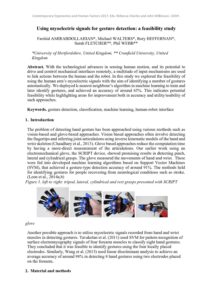
|
Author
Farshid AMIRABDOLLAHIAN, Michael WALTERS, Rory HEFFERNAN, Sarah FLETCHER, Phil WEBB |
Abstract
With the technological advances in sensing human motion, and its potential to drive and control mechanical interfaces remotely, a multitude of input mechanisms are used to link actions between the human and the robot. In this study we explored the feasibility of using the human arm’s myoelectric signals with the aim of identifying a number of gestures automatically. We deployed k-nearest neighbour’s algorithm in machine learning to train and later identify gestures, and achieved an accuracy of around 65%. This indicates potential feasibility while highlighting areas for improvement both in accuracy and utility/usability of such approaches. |
Publish Date: Jun 3, 2024 | Keywords: Contemporary EHF 2024, Healthcare, Publications, Systems, Tools & techniques
| Document
|
Author
Giulia Miles, Eva-Maria Carman,Upasana Topiwala, Benjamin Warren, Sasha Blackwood & Steve Cantellow |
Abstract
Wellbeing of healthcare staff has been highlighted as a key issue across clinical professions and a focus on professional wellbeing allows us to identify and better understand the system performance shaping factors that affect individual clinicians and ultimately patient care. This paper describes the method of selecting and applying a validated wellbeing tool in a large acute NHS hospital trust as part of a wider project looking at system monitoring tools. |
Publish Date: Jul 3, 2025 | Keywords: Uncategorised
Risk versus reward, stripped down
Look: a single bet is a tidy 1‑to‑1 contract, odds on a line, stake in the bank. A parlay shreds that neatness, bundling three, four, maybe five outcomes into one chaotic ticket. Multiply the decimal odds—2.10 × 1.85 × 3.25—gets you a 12.57 payout on a $10 stake. Easy on the surface, brutal in the brain. The probability of all legs hitting is the product of the individual probabilities, which shrinks faster than a balloon losing air. Bookies exploit that gap between inflated payouts and the razor‑thin real chance of success.
Correlation collapse, the hidden killer
Here is the deal: most bettors assume events are independent. In reality, scores, injuries, weather—these variables are tangled like spaghetti. Slip a basketball game into a parlay with a baseball match, and a sudden rainstorm can tilt both outcomes. The odds calculators on betsystemexpert.com treat each leg as isolated, but the bookie’s risk model knows the correlation matrix. They discount the parlay’s true value, then slap a higher margin on the combined odds. The result? A parlay that looks lucrative but is mathematically over‑priced.
Margin amplification, the secret sauce
And here is why the house loves it: the bookmaker’s margin—often a few percent on a single market—gets multiplied across every leg. Take a 5% edge on a football line; fold three of those together, and you’re looking at a 15% aggregate margin. The more legs, the steeper the slope. It’s a geometric progression of profit, not a linear addition. That’s why you’ll see parlay odds that seem to defy logic; the odds are a smoke screen for a hidden profit engine.
Player psychology, the soft underbelly
Fast talk: people chase the “big win” fantasy. A $50 stake promising a six‑figure payout beats a modest $5 win on a single bet in the mind of most gamblers. The excitement factor feeds the volume of parlays, and volume fuels the margin. Bookmakers harness that dopamine rush, knowing the math guarantees the house edge. They’re not just selling odds; they’re selling a dream wrapped in a probability trap.
What you can do, right now
Stop letting the odds whisper sweet lies. Tear apart the parlay, isolate each leg, calculate the implied probability, then add a realistic correlation adjustment. If the summed probability exceeds 100% by a comfortable buffer, the ticket is worth a look. Otherwise, walk away, or better yet, place separate single bets where you can shop the market for better lines. In short, treat a parlay like a high‑risk venture capital deal—do the math, cut the hype, and only commit when the numbers actually break even.
Publish Date: Jun 23, 2022 | Keywords: Contemporary EHF 2022, Healthcare, Mental health & wellbeing, Publications
| Document
|
Author
Saydia Razak |
Abstract
The Children’s and Adolescents Mental Health Service (CAMHS) in-patient unit scoping exercise was a qualitative exploration to understand the increase in Non–Fixed Ligaturing (NFL) incidents at an NHS Mental and Community Health Trust. This exercise aimed to answer 3 questions: (1) What are the reasons behind NFL on the CAMHS unit? (2) When does NFL behaviour occur? and (3) How can staff better respond to and reduce NFL incidents? A Resilience Engineering approach by understanding safety-I (increased incidents of NFL) and extracting examples of Safety-II was combined with an insight to how work processes on the unit were carried out in line with “Work as Imagined” (policy) vs “Work as Done” (procedure). A triangulation of methods was used which consisted of analyses of incident reports, an observation of a shift, and semi-structured interviews with 9 members of staff. The highest number of incidents occurred between 16:00 and 19:59. The semi-structured interviews revealed a psychological underpinning behind NFL through the theme of the act of ligating. Seeing Work as Done (observation) resulted in an instant change of staffing. Safety-II was evident in effective workarounds such as accommodating unfamiliar staff through a succinct induction. The methods aligned with the safety management mode of guided adaptability providing a novel approach to produce usable tools and interventions in sensitive, volatile, and emotionally charged work environments. The CAMHS unit scoping exercise provides insights, implications, practical applications, and improvement opportunities to reduce and better respond to NFL across CAMHS units by adopting a HF/E approach. |
Publish Date: May 30, 2024 | Keywords: Contemporary EHF 2024, Human performance, Non-technical skills, Publications
| Document
|
Author
Paul Davison |
Abstract
The project commenced in 2015 initially to deliver Non-Technical Skills (NTS) to train drivers. Success evolved the project, and an Action Research methodology was employed from the boardroom to the classroom to create several Action Learning sets. Appreciative Enquiry, Learning Reviews (LR), a Compassionate Safety mindset and a suite of adult learning techniques were used to deliver sticky learning. The project has generated resilient business interdependence and the production of a Fair Culture Charter for all 4500 employees. This has resulted in a reduction in operational incidents from 277 (13/14), the year before PPWD became involved, to 150 (22/23) per year, and a decrease in the ratio of events to drivers from 0.43 to 0.14. |
Publish Date: Jun 8, 2023 | Keywords: Contemporary EHF 2023, Non-technical skills, Publications, Rail
| Document
|
Author
Anisha Tailor, Paul Leach, Kirsten Huysamen & Priya Shah |
Abstract
This paper discusses the use of task observations, semi-structured interviews and thematic analysis to identify and classify Non-Technical Skills (NTS) behavioural data in rail controller and rolling stock maintenance roles. A human-centred design process was applied to develop materials to support rail organisations with observing, evaluating and developing NTS in rail controller and rolling stock maintenance roles. Wider factors influencing human performance in these roles were also identified and are discussed in this paper. |
Publish Date: Jul 3, 2025 | Keywords: Uncategorised
Why the Bankroll Fails Before the Match Even Starts
Look: you’ve got a perfect tip, the odds are juicy, but the moment you place the stake, your entire plan collapses. It isn’t the odds that betray you—it’s the cash pool you’re juggling. A reckless bankroll is like a cracked dam; one surge and everything floods out. Serious bettors treat their bankroll as a living organism, not a piggy bank. Without discipline, you’ll chase losses, inflate bets, and end up on the bench.
The Core Rule: The Unit System
Here’s the deal: a “unit” is the smallest slice of your bankroll you’ll ever risk on a single ticket. Most pros lock that slice at 1‑2 % of the total. If you have a £2,000 bankroll, a unit sits around £20‑£40. Drop below that and you’re gambling on impulse rather than strategy. Keep it tight, keep it consistent. The math is simple—if you survive a losing streak, the remaining capital compounds exponentially when you finally hit a hot streak.
Staking Strategies That Separate Winners from Wannabes
Flat staking is the baseline—same unit size every game, no matter the hype. It’s boring to some, but boring wins the marathon. If you crave variance, use a Kelly‑type formula, but cap the Kelly fraction at half to avoid over‑exposure. Remember: the Kelly edge assumes perfect knowledge; you don’t have that, so half‑Kelly is the reality check.
Bankroll Hygiene: The Daily Audit
And here is why daily bookkeeping matters. Every win, every loss, every stake—log it. A spreadsheet isn’t boring; it’s a battlefield map. Spot patterns, detect leaks, adjust unit size when your bankroll grows or shrinks. Ignoring the audit is like driving blindfolded; you’ll crash before you see the finish line.
Psychology: The Silent Killer
Emotion is the hidden tax on every bet. Tilt after a loss? Double down. After a win? Inflate the next stake. Both are fatal. The only antidote is a pre‑defined bet‑size rule that you never deviate from, no matter the heart‑pounding excitement of a last‑minute goal. Treat each wager as a chess move, not a gamble at a carnival.
Practical Implementation on betfootballexpert.com
When you’re scouting matches, overlay the unit system onto every selection you consider. Use the site’s odds feed, but your stake stays anchored to the unit, not the odds. This way, a 3.5‑odd selection still costs you a single unit, preserving bankroll integrity while still exploiting value.
Final Thought: Adjust, Protect, Grow
Here’s the final actionable advice: set your unit, log every transaction, and never, ever let a single bet exceed 2 % of your total bankroll. That single rule will keep your bankroll breathing, even when the market goes wild.
Publish Date: Jul 3, 2025 | Keywords: Uncategorised
Why the Underdog Market Is a Gold Mine
Look: the mainstream betting world forgets the grass‑roots, and that’s your opening. Softball leagues aren’t polished, they’re raw, they’re unpredictable, and that volatility translates into juicy odds. The moment you stop chasing the NFL hype and start eyeing a local Saturday night match, you’re already ahead of the curve.
Getting Your Feet Wet – The Basics
First thing – you need a sportsbook that actually offers amateur lines. Not every giant platform does; hunt down niche sites or special sections on broader books. Once you’ve found a venue, register, verify your account, and load a modest bankroll. The key is to treat each wager like a lab experiment, not a casino splurge.
Scouting the Teams
Here is the deal: data on amateur softball is scattered across community Facebook pages, local newspapers, and team Twitter feeds. Pull the recent game sheets, note batting averages, pitcher ERA, and fielding errors. A single slip—like a freshman pitcher making his debut—can flip the whole spread.
Understanding the Bet Types
Spread bets dominate the scene. The stronger club gets a -1.5 run handicap; the underdog sits at +1.5. Totals are also popular – over/under on combined runs. If you’re a risk‑averse punter, consider money‑line bets on the underdog. The payouts on a 2.5‑odd favorite versus a 3.5‑odd underdog can be staggering.
Crunching the Numbers – Your Edge
Don’t just copy the line. Use a simple projection model: take each player’s last three games, average their stats, and adjust for home‑field advantage. If your projected total runs is 8 but the sportsbook list says 7, you’ve spotted a value bet. It’s a tiny math exercise, but it separates the needle‑movers from the noise.
Bankroll Management – No “All‑In” Stunts
Here’s why you should never bet more than 2% of your bankroll on a single amateur game. The variance is insane; a single rain‑out can wipe out a 10% stake. Keep a record, track ROI, and be ready to pull back after a losing streak. Discipline beats aggression every time.
Live Betting – The Real Playground
Think fast. Softball games have frequent pauses – pitcher changes, rain delays, umpire warnings. Live odds swing like a pendulum. If you notice a star pitcher limping off the mound, slam the underdog live. Those seconds can earn you a 4‑to‑1 return before the book recalibrates.
Where to Find the Action
Most serious bettors gravitate to betshopexper.com for its dedicated amateur section. The interface lists regional leagues, provides live feed stats, and even offers a forum where local insiders spill secrets. Sign up, set your alerts, and you’ll have the edge before anyone else even knows a game is happening.
Final Piece of Advice
Stop over‑analyzing the big leagues. Grab a cheap ticket to a Friday night softball field, watch the tempo, note the wind, and place a spread bet on the fly. Your bankroll will thank you. Go place that first underdog wager now.
Publish Date: Mar 24, 2019 | Keywords: Aviation, Behaviour, Contemporary EHF 2016, Publications
| Document
|
Author
Kirsten REVELL, Neville STANTON and Gregory KELLEHER |
Abstract
Changes to crewing configurations in commercial planes are likely to emerge as a means of reducing operating costs. An exploratory study was conducted whereby two pilots with commercial experience enacted a normal and emergency flight scenario in a simulated flight deck in two conditions: 1) co-located crew, and; 2) distributed crew. Operational Event Sequence Diagrams (OESDs) were created to represent pilot actions and interactions to explore how pilots’ behaviour changed during distributed crewing. Extracts of OESDs are provided to illustrate similarities and differences, and the implications for the future flight deck are discussed. |
Publish Date: Jun 7, 2026 | Keywords: Automotive, Cognition, Contemporary EHF 2026, Publications
| Document
|
Author
Eloise Tivey, Catherine Harvey, David Large |
Abstract
In-vehicle ambient lighting offers potential as an implicit interface for supporting driver attention, yet its effectiveness in this application is unclear. This exploratory driving simulator study investigated how visual attention feedback using ambient lighting was perceived by drivers. Twelve drivers completed a car-following task while engaging in a forced visual distraction task under three ambient lighting conditions: discrete flashing, temporal change and colour change. Post-drive interviews guided by the Critical Decision Method examined their perception, comprehension and projection of the different states. While most drivers noticed the lighting, few correctly interpreted it as attention feedback, and no consistent reduction in visual distraction was observed. Findings suggest that ambient lighting alone is insufficient to reallocate driver attention without clearer meaning and behavioural alignment. |
Publish Date: Jun 12, 2023 | Keywords: Behaviour, Contemporary EHF 2023, Publications, Safety culture, Veterinary
| Document
|
Author
Amy Irwin, Helen Silver-MacMahon, Liz Mossop, Kendyl Macconnell & Luiz Santos |
Abstract
The current paper applies a biobehavioural model of workplace incivility to explore responses to rudeness within the veterinary context. Veterinarians and veterinary nurses (n=132) were asked to evaluate six fictional scenarios depicting two types of rudeness (direct versus indirect) across three instigators (clients, co-workers and senior colleagues). The findings indicated that direct rudeness (demeaning comments) was appraised more negatively than indirect rudeness (ignoring person). Responses varied across scenarios; direct rudeness was associated with reciprocation, exit, avoidance, discussion with manager and support seeking, whereas indirect rudeness was associated with affiliative and ignoring responses. There was a significant positive association between appraisal and confrontation, exit, avoidance, support seeking and reporting responses. The findings confirm the utility of the biobehavioural model of incivility response and build on this model in terms of variation in response selection according to directness and status effects. From a practical perspective the findings suggest that interventions to manage rudeness in veterinary practice should accommodate variation in rude behaviours and include tailored responses based on instigator. |
Publish Date: Jun 8, 2023 | Keywords: Contemporary EHF 2023, Healthcare, Publications, Systems
| Document
|
Author
Elizabeth Wilson-Lewis & Gyuchan Thomas Jun |
Abstract
This study explores how the assumption-based leading indicator approach can be applied to monitor organisational drift of healthcare systems towards failures based on the Mid Staffordshire NHS hospital failure case. |
Publish Date: Apr 16, 2020 | Keywords: Contemporary EHF 2020, Mental health & wellbeing, Publications, Systems
| Document
|
Author
Christine Ipsen and Signe Bergmann |
Abstract
Stress is still one of the biggest challenges when it comes to people’s mental health and workplace opportunities to create growth and wellbeing puts new demands on managers to solve the problem. There is also a stronger focus on top executives and managers, who play a key role in preventing and managing stress, but without a clear picture of what that role implies. There are plenty of international tools and methods available to support interventions to prevent stress, but managers still search for ways to deal with the increasing and costly problem. This search also includes two Danish companies, the Danish Association of Managers and Executives (DAME) and the Danish Pension and Insurance Company, (PFA) which experience an increase in the request for concrete knowledge and tools from their members and customers to solve this problem. Besides applying their vast in-house consultants’ experience to serve their members, the two companies also wish to provide their customers and members with current, relevant and research-based knowledge on how to prevent stress in practice. Acknowledging the experience and knowledge among executives, managers and researchers, the aim of this project was to allow these actors inspired by Mode 2 knowledge production to co-create new knowledge on preventative strategies. The idea is that the joint knowledge production in combination with a systems perspective on prevention and stress management can qualify the ongoing stress and management debate and provide ideas for new solutions, enhancing the implementability of stress preventive changes that can ensure both business relevance and improved mental health. |
Publish Date: Oct 30, 2018 | Keywords: Contemporary EHF 2017, Perception, Publications, Task analysis
| Document
|
Author
Rebecca CHARLES and Jim NIXON |
Abstract
Physiological measures have increased in popularity due to the growing availability of equipment allowing their measurement in real-time. Eye blinks are an easy measure to collect using video capture. Our findings indicate that blink counts can differentiate between taskloads and task types during a computer-based task, and reflect subjective workload ratings. Blink counts were significantly lower during the tasks involving high visual load when compared to less visually demanding tasks, and lower numbers of blinks were observed under higher taskloads across tasks with a higher visual load. Significant correlations were observed between blink counts and all dimensions of the NASA-TLX for a tracking task, and the mental demand dimension for the combined system monitoring and resource management. No significant correlations were observed for the less visually demanding communications task. |
Publish Date: Feb 27, 2019 | Keywords: Contemporary EHF 2016, Healthcare, Patient Safety, Publications
| Document

|
Author
Patrick WATERSON, Saleem ALI, Ingo JESTER and Jon WELLS |
Abstract
|
Publish Date: Jun 23, 2022 | Keywords: Automation, Contemporary EHF 2022, Defence, Design, Human-machine interaction, Publications
| Document
|
Author
Sue Ottley, Jaina Mistry, Kerry Tatlock & Chris Vance |
Abstract
Human Machine Teaming (HuMaT) systems are expected to become increasingly important and common in the UK military domain as a result of changes in both technology and the Battlespace; however the role of the human user is expected to be retained, though it may change. HuMaT systems are sociotechnical systems where needs and behaviours may be emergent and hard to predict from previous systems behaviours, therefore framing formal requirements prior to design can be difficult and sometimes counterproductive. The complex and variable nature of interactions within Human Machine Teams (HMT) means that traditional technology centric design processes do not easily support them, if the best use is to be made of both human and technology actors then a process more focused on user goals and constraints is required. This paper outlines the considerations for applying a Human Centred Design (HCD) process to developing HuMaT systems and how HCD addresses the challenges presented by a technology centric process. |
Publish Date: Oct 22, 2018 | Keywords: Aviation, Contemporary EHF 2018, Human performance, Publications, Technology, Workload
| Document
|
Author
Joanne Kitchin & Chris Baber |
Abstract
In Visual Analytics, the output of automated analysis is presented to users in an interactive visualisation. By responding to this, the user can modify the parameters of the computer visualisation. This raises questions about the design of the visualisation and the appropriate level of interaction for users. This paper focuses on the impact of visualisation on user performance. A simple air target detection task (in which automated support identified possible threat aircraft) was combined with a secondary task (in which target letters had to be detected against a background). Four visual analytic displays were used to complete a target detection task over two studies. The first study explored how the displays affected workload, attentional demand and performance, and the second how workload, attentional demand and performance are affected by task load (using the same displays). Results show that the use of visual analytic displays maintains response time and primary task performance when task load increases. This suggests that the demand on attention is easier to manage when visual analytic displays are used. |
Publish Date: Jul 3, 2025 | Keywords: Uncategorised
Why the odds are a minefield
Look: the moment you step onto a greyhound track, the sheer chaos of form, distance, and the fickle weather hits you like a slap. One minute a pup is a rocket, the next it’s stuck in a mud puddle, and your bankroll feels the tremors. The problem? Most bettors treat dog racing like a horse race, ignoring the unique quirks that turn a simple wager into a high-stakes gamble.
Understanding the betting markets
Here’s the deal: there are three core markets you can’t afford to ignore — win, place, and forecast. Win is the obvious “first-to-cross-the-line” bet, but place (top-two) offers a cushion, especially on short sprints where a stumble can cost you everything. Forecast is the double-up, picking the first and second in exact order; it’s the sweet spot for the daring, delivering big returns when you nail a pair of form-matched hounds.
And here is why many novices flinch: the odds on the forecast can swing from 5/1 to 50/1 within seconds, depending on the tote board and the bookmakers’ appetite for risk. You need to read the board, not just the program.
Key variables that shift the odds
First, the trap draw. Dogs in inside traps (1 or 2) often have a speed advantage on tight bends, but they can also get boxed in. Outside traps (5 or 6) give a clear run but may force the dog to cover extra ground. Second, the track condition. Soft sand slows everything down, turning a fast starter into a laggard. Third, the greyhound’s recent form — look beyond the headline wins and dig into split-second timings, especially the last 200 metres.
Bankroll management — don’t get burned
By the way, treat each race as a separate battle. Allocate a fixed percentage of your total stake — say 2% — to any single wager. If you’re on a hot streak, resist the urge to double down; the volatility of dog racing means yesterday’s hero can become today’s underdog in a blink.
Staking plans matter. A flat stake keeps things simple, but a proportional plan (betting a set fraction of your current bankroll) adapts to wins and losses, smoothing out the inevitable swings. My rule of thumb: never chase losses with a larger bet; that’s a fast track to the red.
Where to place your bets
Online platforms dominate now, and the best ones offer live streaming, instant odds updates, and in-play betting. The UK dog racing betting guide provides a solid starting point, but you should also scout forums for insider tips — people love to share a hot tip about a dog’s training regime or a hidden injury.
Remember, the bookmakers’ margins are built into the odds. Shop around; a 0.5% difference can mean a thousand pounds over a season. Use multiple accounts to compare the same race across different sites, and lock in the best price before the race starts.
Final piece of actionable advice
Start each session by picking one race, analyzing trap draws, track condition, and recent split times, then place a single forecast bet at a value-odd threshold you set — no more, no less. That’s it.
Publish Date: Jun 7, 2026 | Keywords: Contemporary EHF 2026, Musculoskeletal, Publications, Rail, Risk assessment
| Document
|
Author
Simon Carpenter, Kailash Manohara Selvan |
Abstract
Musculoskeletal disorders (MSDs) are a major contributor to sickness absence and reduced operational performance among front-line rail staff. This study applied a validated workwear-integrated wearable-sensor system to quantify real-world ergonomic risks associated with key manual-handling and passenger-support tasks performed by Conductors, Passenger Companions and Catering Hosts. Continuous kinematic data identified posture-related hazards, forceful exertions and technique drift between training and operational settings. Evidence-based mitigations are now being implemented, including enhanced training, improved training fidelity, redesigned storage layouts, infrastructure modifications and equipment evaluations. Strong engagement from staff, operational leadership and trade unions demonstrates the value of objective ergonomic assessment in informing practicable MSD-risk reduction strategies and supporting safer, more inclusive working environments. |
Publish Date: Aug 12, 2021 | Keywords: Automotive, Comfort, Comfort Congress 2021, Fatigue & sleep, Publications
 |
Author
Ryan Olson, Steven A. Shea, Miguel Marino, Jarred Rimby, Kelsey Womak, Rachel Springer, Courtney Donovan, Sean P.M. Rice Fangfang Wang & Peter Johnson |
Abstract
The work schedules and sleep environments of long-haul team truck drivers increase the risk of having inadequate sleep which may adversely affect driver health and contribute to vehicle-related crashes. The purpose of this study was to determine whether an intervention that involves replacing a regular, industry-standard innerspring mattress with an interlocking foam therapeutic mattress would improve truck drivers' sleep and reduce adverse health consequences associated with poor sleep. Using a repeated measures design, for one-month periods, 8 truck driving teams (n=16 subjects) evaluated their existing, industry-standard, regular innerspring mattress, a new regular innerspring mattress and a new interlocking foam therapeutic mattress. Sleep quality was measured using short daily sleep questionnaires, 7-point Likert scales were used to rate mattress comfort and satisfaction, a Nordic questionnaire to assess body pain and whole-body vibration measurements were collected from each truck team while sleeping in each type of mattress. Effect sizes, using Cohen’s-d were used to measure changes in the study outcomes. Relative to their existing, pre-study, innerspring mattresses, truck drivers' self-reported sleep and fatigue improved with the new regular mattress (small to medium effect sizes) and improved even further with the interlocking foam therapeutic mattress (small, medium and large effect sizes). All truck driving teams reported substantially higher comfort ratings with the new interlocking foam therapeutic mattress. There we no differences in the vibration transmitted through the mattress occupants when sleeping but there were some differences in the vibration frequency transmitted through the mattresses. An unexpected outcome was that the truck tires had the greatest influence on the vibrations in the truck cab. These results indicated that both the new regular mattress and the new interlocking foam therapeutic mattress improved team truck drivers’ sleep, health, and well-being. The outcome improvements were slightly greater with the interlocking foam therapeutic mattress and all truck driving teams had a substantially greater preference for this mattress. An unexpected factor creating the largest difference in vibration transmission through the mattresses was the type of tires on the trucks. |
Publish Date: Jun 12, 2023 | Keywords: Contemporary EHF 2023, Defence, Publications, Technology
| Document
|
Author
Alison Clerici |
Abstract
This research evaluated and adapted the use of the Early Human Factors Analysis (EHFA) process to create a methodology for assessing the use of human augmentation technologies in defence. |
Publish Date: Dec 18, 2018 | Keywords: Contemporary EHF 2017, Publications, Safety, Systems
| Document
|
Author
Tony Carden, Paul M. Salmon and Natassia Goode |
Abstract
In 2003, adventure activity providers in Victoria, Australia, began to develop a set of common operating standards. The resulting Victorian Adventure Activity Standards became a model for similar standards in other Australian states. However, the development process lacked systematic rigour. This article argues that sociotechnical systems theory methods are suited to safety standard design and evaluation. A Work Domain Analysis revealed system weaknesses along with potential avenues for modifying and optimising the standards. Potential improvements and broader implications are discussed. |
Publish Date: May 23, 2025 | Keywords: Aviation, Contemporary EHF 2025, Publications, Situation awareness, Teamwork
| Document
|
Author
Vicky Veal & Gulsum Kubra Kaya |
Abstract
The study investigates the relationship between team familiarity (both professional and personal) and Shared Spatial Situational Awareness (SSSA) during a flight simulation task. The findings suggest that team familiarity, and specifically personal familiarity, is important for both SSSA accuracy and the percentage of unknown lost SSSA state instances. Interestingly, professional familiarity was not found to be significant. |
Publish Date: Jul 3, 2025 | Keywords: Uncategorised
Players Feel the Pinch
Imagine a gambler staring at a locked gate, the sign reading “GamStop” flashing red. The moment the gate snaps shut, the buzz of the arcade fades, and the player’s pulse drops. That’s the core problem: restriction breeds restlessness. The moment a player hits a self‑exclusion wall, they start hunting for an open door.
Speed Beats Bureaucracy
Look: modern gamers sprint at the speed of a 5G ping. A cumbersome eight‑hour verification process feels like stepping into a swamp. They crave instant credit, a flash of green lights, a chance to place a bet before their coffee cools. When GamStop drags its feet, competitors swoop in, offering seamless onboarding that feels like a cheat code.
Privacy Isn’t a Myth
Here’s the deal: a single data breach and a player’s details are out in the wild, and suddenly “big brother” feels less comforting. Many alternative platforms market themselves as “privacy‑first,” wrapping user info in encrypted envelopes. The promise of anonymity is a siren song; players follow it, swapping the public ledger for a hush‑hush lobby.
Promotions That Bite
And here is why: a welcome bonus that promises “£500 free play” sounds louder than any self‑exclusion notice. The market is flooded with free spins, risk‑free bets, and cash‑back offers that make the GamStop banner look like a warning label on a candy bar. Players chase the high‑ROI promises, ignoring the looming net.
Community and Loyalty
Betting isn’t a solo sport. On alternative sites, chat rooms buzz, loyalty tiers climb, and influencers hype the latest odds. The sense of belonging—like a tribe sharing a secret—creates a feedback loop. When GamStop isolates a player, the social pull of a rival platform feels like homecoming.
Regulatory Gray Zones
The legal landscape is a patchwork quilt, each patch sewn by a different jurisdiction. Some operators sit just outside the reach of stringent UK rules, exploiting loopholes that let them keep the games running. Players, savvy enough to sniff out these loopholes, migrate like foxes through a broken fence.
Technology’s Edge
Smart wallets, crypto deposits, one‑click wagering—these tools make betting feel like a swipe on a smartphone, not a slog through paperwork. Platforms that integrate these tech tricks position themselves as the future, while GamStop lags behind like a dial‑up connection.
The Bottom Line
Bottom line: restriction breeds rebellion, speed fuels desire, privacy fuels trust, and incentives ignite action. The alchemy of these forces drives players to seek non‑GamStop alternatives, where the friction is low and the payoff feels immediate.
What to Do Now
If you want to keep your traffic, stop treating GamStop as a wall and start treating it as a funnel. Offer a parallel pathway—fast verification, juicy bonuses, crypto options—right on the landing page. gamblingnotongamstop.com shows how a seamless alternative can capture the drift before it turns into a full‑blown exodus. Act now, or watch the flood pass you by.
Publish Date: Feb 26, 2019 | Keywords: Automotive, Contemporary EHF 2016, Interface design, Mining, Publications
| Document
|
Author
Tim HORBERRY, Kristie YOUNG and Robin BURGESS-LIMERICK |
Abstract
In the global mining industry, proximity warning systems are being increasingly deployed in mobile equipment such as haul trucks, partly due to the risk of collisions. This research first reviewed best practice interface design for new technologies in the automotive domain: for example, the European Statement of Principles on Human Machine Interfaces. Thereafter it reviewed the different types of proximity warning interfaces available in mining. Analysis then compared the identified best practice in automotive with current proximity warning interfaces in mining. Gaps found are discussed, and recommendations to improve the interface design of proximity systems in mining are proposed. |
Publish Date: Jun 7, 2026 | Keywords: Contemporary EHF 2026, Cybersecurity, Publications, Safety
| Document
|
Author
Eylem Thron, Duncan Ki-Aries, Huseyin Dogan, Martin Freer, Shamal Faily |
Abstract
Cyber-attacks increasingly threaten critical infrastructure, where interactions between security, safety, and human-system behaviour create complex socio-technical risks. If not managed early, these interactions can produce latent vulnerabilities and unsafe operational states. This paper presents a Minimum Viable Product (MVP), developed by Bournemouth University and Mima and funded by the Defence Science and Technology Laboratory (Dstl), to operationalise Secure-by-Design through integrated Human Factors (HF), safety, and cybersecurity analysis. The MVP combines System-Theoretic Process Analysis (STPA) with Hierarchical Task Analysis (HTA), Cognitive Task Analysis (CTA), Performance Shaping Factors (PSFs), and Human Attributes analysis to generate a structured and traceable User Requirements Document (URD) from a Defence specification exemplar. Results demonstrate that integrating HF, safety, and cybersecurity during early capability definition enables identification of cross-domain risks and supports derivation of coherent, traceable Secure-by-Design requirements for cyber-physical systems. |
Publish Date: Jul 3, 2025 | Keywords: Uncategorised
Why Weights Matter
Because a horse lugging extra pounds is like a marathon runner shackled to a sack of bricks, the assigned weight directly reshapes the race’s dynamics. Handlers, trainers, and punters all feel the impact, and the market reacts faster than a horse at the starting line. Look: a 10‑pound difference can swing odds by a full point, turning a favorite into a long shot overnight.
How the Scale Is Calculated
First, the Handicapper reviews each horse’s recent form, speed figures, and stamina. Then, a complex algorithm—part statistical model, part seasoned intuition—sprinkles in variables like ground conditions and jockey skill. Here is the deal: the top‑rated horse gets the base weight, usually 11st 10lb, and the rest are dragged down to match. No magic, just cold‑blooded math and a dash of experience.
Ground Conditions
Soft turf adds a kilogram of fatigue; firm ground lets the added weight bite harder. In an early‑spring scramble, expect the scale to tilt toward lighter assignments for stayers who thrive on heavy ground. And here is why: the handicapper knows a 12‑stone horse on a yielding course is a ticking time bomb.
Jockey Influence
A top‑class rider can shave a pound off the scale. Not literally, but the handicapper will reward a seasoned hand with a lighter burden, trusting that skill offsets the extra load. Think of it as a credit score for the saddle.
Recent Trends and the 2024 Outlook
Last year’s data showed a clustering of weights around 11st 5lb to 11st 10lb for the leading contenders—a tight band that suggested the field was more evenly matched than ever. The pattern reflects a shift toward younger horses with proven stamina, allowing the handicapper to penalize older, heavier rivals more aggressively. If you’re tracking the odds on aintreebetting.com, you’ll notice the market’s rapid adjustment once the official weights drop.
Betting Implications
Weight isn’t just a number; it’s a signal. Heavy‑laden horses often become value bets when the market overreacts to their perceived disadvantage. Conversely, a light‑weight favorite can be overvalued, especially if the underlying form is shaky. Pro tip: compare a horse’s official weight to its “handicap weight”—the figure the market uses for pricing. A divergence of three pounds or more is a red flag worth probing.
Actionable Insight
When the weights are published, overlay them on the last five runs, adjust for ground, and flag any horse that carries more than two stones above the median for its class. Those are your “weight‑risk” candidates—either a hidden gem or a trap, depending on your risk appetite. Grab a pen, mark the outliers, and let the odds flow.
Publish Date: Jul 3, 2025 | Keywords: Uncategorised
Rain and the Slippery Surface
First thing’s first: a downpour turns a fast‑track into a mud‑slinging nightmare. When the turf drinks too much, the footing loses its bite, and dogs that thrive on grip slip like a banana peel on ice. Trainers will already know which hounds favor a firm canvas; bettors should flip that script when the sky opens. The slick can turn a favorite into a cash‑cow in reverse, because the dogs that can’t keep their stride steady become easy prey for the ones that can power through. Look, the rain doesn’t just wet the track, it rewrites the whole betting narrative.
Wind: The Invisible Hand
Wind is the silent referee that decides who gets a free ride and who gets a head‑wind. A gust from the inside rail can push a dog forward, shaving fractions off its time; a cross‑wind can throw a dog off its line, making the outer lanes a death trap. The key here is to watch the flag—if it’s screaming, the odds shift faster than a sprint finish. And here is why: a dog with a lean, aerodynamic build will slice through a breeze like a knife, while a bulkier hound will wrestle every puff, losing precious metres.
Heat and the Dogs’ Endurance
Scorching temperatures are a cruel master. When the mercury climbs, a dog’s internal thermostat goes into overdrive; its heart pounds harder, its muscles fatigue sooner. Some hounds are bred for heat tolerance, their coats thin, their blood flow optimized. Others crumble under a sun‑blasted sky, sputtering out of the race early. If the forecast calls for a blaze, discount the long‑shot that looks good on paper but sweats like a marathon runner. Here’s the deal: heat‑resistant dogs often have a higher basal speed, so they’ll dominate when the track feels like a grill.
Humidity: The Hidden Drag
Don’t underestimate humidity—it’s the silent drag that saps energy like a siphon. High moisture in the air makes every breath a battle, especially for dogs with tighter throats. Track conditions get mushier, and the combination of sticky air and a soft surface creates a perfect storm for fatigue. The dogs that maintain a steady pace in low‑humidity races will falter if you pile on the damp. A quick tip: check the morning dew; if it’s still clinging to the grass, expect a slower race overall.
Strategic Betting Adjustments
All this weather talk isn’t just trivia—it’s your lever for sharp, profitable betting. Spot a rain‑soaked meet? Toss out the usual firm‑track picks and hunt for the dog that’s proven on ‘soft’ runs. Feel a gust whipping the grandstand? Load up on the inside‑lane favorites, but double‑check which hounds have a history of fighting the wind. Heat wave? Lean on the breed‑type data that shows endurance over raw speed. Humidity rising? Prioritize dogs with a strong recovery rate documented in previous wet‑season stats. That’s the actionable edge: let the sky dictate your stakes, not the other way around.
Publish Date: Jul 3, 2025 | Keywords: Uncategorised
Why the Welcome Deal Matters
You’re sitting at a virtual bingo hall, the chat buzzes, the cards flicker, and you realize your bankroll is as thin as a paper napkin. Here’s the problem: without a juicy welcome bonus, you’re stuck playing the same old numbers while the house scoops the profit.
Picking the Right Offer
First rule—look for a match bonus that actually increases your ticket count. A 100% deposit match sounds sweet until you discover the wagering terms are tighter than a drum. Second rule—check the maximum bonus cap. Some sites cap at $20, others hand you $200; the difference is night and day.
Game‑Specific Bonuses
Keno lovers, listen up: a “Keno reload” that tacks on extra chips for the next five deposits can keep the reels spinning longer than a marathon. Bingo enthusiasts, hunt for “free daub” credits that let you mark cards without dipping into your balance. Those are the deals that turn a meh session into a cash‑crazed sprint.
Top Picks Right Now
At casinofreewelcomebonus.com we’ve flagged three operators that cut the fluff. Operator A offers a 150% match up to $150 plus 30 free bingo daubs. Operator B hands Keno players a 200% boost, max $250, but slaps a 5‑x wagering on the bonus. Operator C rolls out a hybrid package: 100% up to $100, plus a daily Keno spin token that can net extra wins without extra spend.
Hidden Pitfalls
Don’t get tangled in “must play within 24 hours” clauses. Some sites kill the bonus if you don’t burn through the cash in a day—unrealistic, especially for slower‑pacing bingo. Also sniff out “maximum cashout” limits; a $500 cap on a $5,000 bonus defeats the purpose.
How to Snag the Deal
Step one: register with a fresh email. Step two: punch in the promo code—most sites hide it in the fine print, so copy it verbatim. Step three: fund your account, watch the bonus flash on your dashboard, and lock in the free spins or daubs. That’s it.
Actionable Move
Pick the operator that aligns with your preferred game, verify the wagering is 10× or less, and claim the bonus before the clock runs out. Get playing, and let the free credits do the heavy lifting.
Publish Date: Jun 11, 2025 | Keywords: Aviation, Contemporary EHF 2025, Incidents, Publications
| Document

|
Author
Michael A. Bromfield |
Abstract
An electrically powered aircraft was conducting flight tests, under experimental flight rules when power to the electrical motors was lost. The two-person crew took 9 seconds to identify the failed system and attempt recovery actions which were unsuccessful and the pilot landed in a field adjacent to the airport resulting in severe damage to the aircraft. HFACs was used to identify causal and contributory factors and highlight key learning points. The results informed changes to UK CAA experimental flight rules related to flight test organisation, use of system controls, positioning of displays and the availability of alerts and warnings. |
Publish Date: Mar 25, 2019 | Keywords: Contemporary EHF 2016, Publications, Risk assessment
| Document

|
Author
Chris LANGER and Rob MILES |
Abstract
This paper demonstrates how unique insights from confidential reporting in the transport sector can reinforce safety defences, helping to improve organisational resilience, and ultimately, prevent accidents. CIRAS is able to capture information from frontline staff who choose for a variety of reasons to use an independent service. This information might otherwise be lost by conventional, internal reporting systems because in certain circumstances, they may not be fully utilised. CIRAS is therefore in a position to share why some staff feel that internal reporting channels have not been successful, or in a minority of cases have come directly to CIRAS. |
Publish Date: May 23, 2025 | Keywords: Contemporary EHF 2025, Human performance, Human-machine interaction, Publications, Technology
| Document
|
Author
Amin Yazdani & Marcus Yung |
Abstract
Exoskeletons help augment worker strength and may reduce the effects of physically demanding work; however, health benefits alone may not necessarily facilitate its adoption by organizations. Through a survey study with 40 construction workers who used an exoskeleton over multiple shifts, workers believed exoskeletons were usable and beneficial for prolonged overhead work. A subsequent systematic review suggests that quality and productivity impacts of exoskeleton use are dependent on task characteristics. |
Publish Date: Jul 3, 2025 | Keywords: Uncategorised
Why Weight Distribution Matters
Every fraction of a second counts when a dog bursts from the traps. Shift the load too far forward and you cripple the stride; too far back and you waste power on inertia. The problem isn’t abstract physics—it’s a tangible bottleneck that stalls records.
The Mechanics of a Flying Start
Look: the first 10 meters set the tone. A dog that leans into the launch compresses its hindquarters, priming the rear muscles for explosive extension. When the back leg snaps forward, the kinetic chain ripples through the spine, propelling the head and nose ahead. If the head is too heavy on the front, the chain breaks; the dog lags, the nose droops, and the clock ticks louder.
Mid‑stride Balance
During the cruise phase, a subtle shift from fore‑ to hind‑limb load occurs with each paw strike. A mis‑timed weight transfer creates a wobble, akin to a car with a mis‑aligned wheel. The dog then compensates by tightening the core, sacrificing speed for stability.
Real‑World Data from the Track
Here is the deal: analyses of 200 race recordings on greyhoundtrackresults.com show that winners consistently exhibit a 12‑15% rear‑ward load at the 0.20‑second mark. The losers hover around a 7‑9% shift, often lagging behind by two lengths. The numbers don’t lie; they scream about load distribution.
Case Study: The Late‑Blooming Sprinter
Take “Lightning Bolt”. Early in his career he was a rear‑heavy dog, nose low, dragging his front body. A simple cue—“push the front, hold the rear”—cut his split time from 3.85 to 3.73 seconds. The shift was less about raw strength and more about mind‑muscle coordination.
Training Tweaks That Pay Off
And here is why. Coaches should integrate balance boards, wobble pads, and mirror drills. Each tool forces the dog to feel the weight shift, encouraging a natural pivot. Short, high‑intensity bursts—five meters, rest, repeat—embed the correct pattern into muscle memory. Video feedback works wonders; a slow‑motion replay makes the invisible visible.
Equipment Adjustments
Don’t overlook the collar. A snug, front‑biased harness can subtly pull the head forward, sabotaging the stride. Switch to a neutral‑balance vest and watch the front end lift, the hind legs unleash power. Even the track surface matters—soft tracks dampen the rear push, while firmer ground amplifies it.
Actionable Advice
Start by filming the first 0.25 seconds of each training run. Mark where the nose sits relative to the mid‑line. If it’s ahead, cue a “core tighten” and a “rear push”. Adjust the collar, introduce a balance board, and repeat. Track the split times; the correlation will be undeniable.
Publish Date: May 30, 2024 | Keywords: Automation, Contemporary EHF 2024, Publications
| Document
|
Author
Phil Day, Maggie McKendry, Andrew WD Smith & Marshall Munro |
Abstract
This paper describes the iterative development of instructional decals by means of expert reviews and user testing to solve a field issue. Findings are presented and conclusions drawn on developing language-free, graphical decals to convey note orientation and positioning. |
Publish Date: May 27, 2025 | Keywords: Augmented reality, Contemporary EHF 2025, Defence, Human performance, Publications
| Document
|
Author
Victoria Cutler, Alison Clerici & Eleanor Cox |
Abstract
Human Augmentation (HA) technologies have been identified as a key future technology to enhance human performance, which could be of benefit in a range of contexts, including defence and security. However, there are a wide range of HA technologies, and limited methods available to evaluate the benefits and risks associated with their use. This project tested an approach to evaluating HA technologies that involved a modified version of the Ministry of Defence (MOD) Early Human Factors Analysis (EHFA). The HA EHFA was tested by applying it to the use of telexistence for use in battlefield medical care. The HA EHFA was successful in being able to identify the operational benefits, capability vulnerabilities, and ethical considerations associated with the technology. It is recommended that the HA EHFA be used to evaluate HA technologies for use in a defence and security context. |
Publish Date: Jul 3, 2025 | Keywords: Uncategorised
Why bonus variety is the make‑or‑break factor
Players aren’t hunting for just any free spin; they’re chasing a buffet of offers that fits their style. A casino that dishes out a single 100% match is as stale as yesterday’s chips. The market today demands fresh combos—cashback, risk‑free bets, loyalty points, even crypto‑rewards. And when you walk into a lobby that serves a spread of bonuses, you feel the adrenaline surge, like a gambler’s roulette wheel clicking into place. Look: the more flavors on the menu, the higher the chance you’ll find your perfect match, and the longer you’ll stick around.
Top UK casino picks that actually deliver
1. SpinCity – the chameleon
SpinCity rolls out a welcome package that splits into three layers: a 150% match, 30 free spins, and a 10‑day risk‑free wager. Then the weekly reloads swing between 50% matches and 20 free spins on new slots. Bonus hunters love the daily “Spin of the Day” challenge because it drops a mystery reward into the mix. And here is why this matters: players can pivot from cash offers to free spin storms without feeling boxed in.
2. Royal Flush – the loyalty king
Royal Flush doesn’t just hand you a one‑off welcome. Their tiered loyalty program stacks points that translate into cash, exclusive tournaments, and private events. The casino’s “Midnight Madness” reload gives a 200% match on deposits made after 10 pm, turning night‑owls into high‑rollers. If you’re into high‑risk games, the “Risk‑Reward” bonus refunds 20% of losses on blackjack and roulette, a rare safety net in the UK scene.
3. CryptoCove – the future‑forward
CryptoCove throws Bitcoin, Ethereum, and even Dogecoin into its bonus mix. New users snag a 100% crypto match plus 25 free spins on the latest slot. Weekly “Crypto Cashback” returns 15% of net losses, paid straight to your wallet. For those who love digital assets, the seamless conversion between fiat and crypto bonuses is a game changer.
What to watch out for when chasing bonuses
Wagering requirements still haunt the best offers. A 30x playthrough on a 100% match might feel like a marathon when you’re just after a quick win. Look at the game contribution rates—slots often count 100%, but table games may linger at 10%. And beware of “expire‑in‑24‑hours” clauses; they can turn a generous bonus into a pointless tumble. A smart player reads the fine print, compares the effective value, and then decides if the gamble is worth the risk.
How to lock in the prime offer fast
First, register with a clean email, no recycled usernames. Second, claim the bonus within the stipulated window—most sites give you 48 hours, sometimes less. Third, meet the wagering on low‑variance slots first; they burn through the requirement without draining your bankroll. Finally, keep an eye on promotional calendars; they flare up on holidays and major sports events, serving extra juice to the eager.
Grab a welcome pack now, but read the T&Cs before you spin. Check out more at gamblingsites-uk.com.
Publish Date: Jul 3, 2025 | Keywords: Uncategorised
Why the current offering feels like a missed chance
Fans arrive hungry, the roar of engines already echoing in their ears, only to find a menu that reads like a relic. The stadium’s hospitality spaces sit underutilized, and the dining experience lags behind what modern sport venues deliver. The result? A half‑filled bar, restless crowds, and lost revenue slipping through the gaps. Look: the problem isn’t the food itself, it’s the delivery, the ambience, and the sheer lack of variety that keeps patrons from lingering.
What works, what flops – a quick audit
First, the flagship lounge. It’s sleek, leather‑lined, with a view that could sell tickets on its own. However, the cocktail list is static, the bar staff rotates slower than a pit stop. The consequence? Long queues, frustrated fans, and a vibe that feels more corporate cafeteria than exclusive retreat.
Next, the family pit zone. Kids get plastic forks, adults get reheated pies. No local flavor, no nod to the Midlands’ culinary heritage. Imagine swapping a soggy shepherd’s pie for a ploughman’s board with farm‑fresh cheese, artisan chutney, and locally brewed ale. That small shift could turn a quick bite into a memorable feast.
Dining options that could change the game
Here is the deal: introduce a rotating “Trackside Tasting” series, spotlighting regional chefs every month. Pair it with a curated “Speed & Sip” menu – light bites designed to be eaten between laps, paired with craft beverages. A quick bite, a quick sip, and you’re back on the edge of your seat without missing a beat.
Don’t overlook the power of pop‑up concepts. A mobile food truck park on race day can bring street‑style flavors that attract a younger crowd. Think Korean BBQ tacos, vegan cauliflower wings, or a stout‑infused chocolate fondue. The key is flexibility – the ability to pivot menus based on what’s trending, not what’s stuck in the archives.
Service speed: the silent killer
Even the best dish fails if it arrives slower than a caution lap. Deploy handheld ordering tablets, link them directly to the kitchen, and watch the turnaround time plummet. Add a “pre‑order” feature on the stadium app so fans can grab a coffee at the gate and still catch the start. When service matches the adrenaline, loyalty follows.
Training matters too. Staff need to know the difference between a “fast‑track” order and a “luxury lounge” experience. One minute you’re serving a pit crew member a protein shake, the next you’re catering to a corporate suite with a wine list that reads like a sommelier’s diary. The ability to switch gears on the fly separates the amateurs from the pros.
Technology meets taste
Integrate the stadium’s digital scoreboard with real‑time kitchen updates. A flashing icon could signal “ready for pick‑up” at the fan zone, cutting down on idle waiting. Pair that with a loyalty program that rewards repeat visits – a free appetizer after three meals, or a VIP pass after a season of dining. Data drives decisions, and data tells us that repeat customers spend 27% more.
Finally, brand the experience. Use the monmoregreenresults.com domain on menus, signage, and QR codes to create a seamless online‑offline loop. When fans scan a code and land on a site that instantly shows today’s specials, they feel in control, they feel valued.
Actionable next step
Set up a cross‑functional task force – hospitality, operations, and marketing – to pilot a “Speed & Sip” pop‑up on the next race weekend, with a clear KPI: reduce average order fulfillment time by 30%. No more excuses.
Publish Date: Jun 8, 2023 | Keywords: Aviation, Contemporary EHF 2023, Incidents, Investigation, Publications, Technology
| Document
|
Author
Rahma El Safany, Michael A.Bromfield |
Abstract
Sixty Uncrewed Aerial Vehicle accident reports were analysed to identify possible causal and contributory factors leading to loss of control in flight and recovery actions where applicable. Manufacturing and design errors were dominant in 22 causal factors (34% of events) and 18 contributory factors (22% of events) (e.g. ingestion of precipitation). Recovery was not attempted in 35 (55%) events. The relationship between age, total hours experience, hours experience on type, recovery attempts and number of accidents increase with operator age or lack of experience was also analysed. As total experience increases the number of accidents and attempted recovery increases. All this information is presented in a framework adapted from the Accident Route Matrix to recognise loss of control in flight in future accidents and improve recovery response. |
Publish Date: Jul 3, 2025 | Keywords: Uncategorised
Why the Golden Boot matters for bettors
The Golden Boot isn’t just a trophy; it’s a betting magnet. Every time a striker steps onto the pitch, sportsbooks adjust lines, and smart punters chase the swing. If you ignore the race, you’re leaving money on the table. Here’s the deal: goal‑scorers correlate with higher odds on match‑winner markets, and they drive over‑/under bet volatility.
Current front‑runners
Picture this: a German winter night, the roar of Dortmund fans, and a ball finding its way to a striker’s boots at the 68th minute. That’s why a player like Christopher Nkunku is hotter than a fresh bratwurst. He’s netted 15 in the first half, averaging 0.85 per game. Meanwhile, Bayern’s Harry Kane, now in his third German season, is ticking 13, but his conversion rate sits at a respectable 18%. And don’t overlook Munich’s own Leroy Sané—silently stacking three in the last five fixtures.
Form vs fixtures
Form is a fickle beast. One week you’re a goal machine; the next you’re a shadow. The trick is to overlay form on fixture difficulty. A striker facing a relegation‑battle side like Bochum likely scores more than when meeting the defensive wall of Mainz. Look at the schedule: the next three matchdays pit the top three scorers against teams conceding under 1.2 goals per game. That’s a red‑flag for over‑under bettors.
Key stats to watch
We cut through the noise—shots on target, xG, and minutes per goal are the holy trinity. A player with a 0.9 xG per 90 minutes is a headline act; their odds tighten fast. Minutes per goal tells you who’s efficient. If you see a striker logging 110 minutes per strike, that’s a prime betting opportunity. Also, track penalty involvement. A penalty‑heavy striker can inflate numbers, but the market usually prices it out.
Putting odds into profit
Here’s the playbook: isolate the player, then compare his implied probability from the goal‑line market to your calculated chance based on the stats above. If the market says 30% chance for a double‑digit haul, but your model shows 45%, you’ve uncovered value. Hedge with player‑performance futures if the bookmaker offers them—lock in a profit irrespective of match outcome. And always check the cash‑out window before the final whistle; it’s the fastest way to turn a swing into real cash.
Last tip: keep an eye on injury reports. A last‑minute withdrawal can send a backup striker’s odds soaring, and that often translates into a cheap over‑under pick. Scoping bundesligabettips.com for up‑to‑the‑minute updates can be the difference between a winning ticket and a missed opportunity. Grab the data, set your stake, and let the goal‑rush do the rest.
Publish Date: Jul 3, 2025 | Keywords: Uncategorised
Understanding the Market Landscape
Betting odds are the market’s pulse; they scream where the money flows and where the smart money hides. You look at a tote board and you see 3.4, 5.1, 13.6—those numbers are not random, they’re a collective brain‑trust of thousands of punters. The trick is to see past the consensus and catch the drift before it solidifies. Look: bookmakers inflate favourites because they’re a safe bet, but that safety builds a premium you can shred if you spot a genuine underdog with a solid track record. And here is why you should scan the early morning form, not the glossy pre‑race hype.
Reading the Form Like a Book
Greyhounds aren’t horses; they’re sprinters with a different rhythm, and their form sheets read like a thriller, not a syllabus. Short, punchy note: a dog that’s “still active” with a recent first‑place over 480 meters could be a hidden gem if the next race is over 500 meters on a fast track. Longer thought: you must cross‑reference the trainer’s success rate on that circuit, the dog’s split times, and the weather forecast—rain can turn a slick track into a mud‑sack, flipping the odds on its head. The best tipsters treat every datum as a clue in a detective novel, layering each piece until the picture clicks.
Key Indicators to Chase
First, the “draw” position. A greyhound stuck on the inside rail may be doomed if the start is tight, but on a wide track that same slot can become a launchpad. Second, the “break” time. A sub‑0.30 start is gold; it tells you the dog bursts out of the trap like a cannonball. Third, the “sectional” splits. If a dog consistently runs the middle 200 meters faster than its peers, that’s a sign of stamina that will pay off in longer trips. Combine those with the trainer’s win‑percentage on similar distances, and you’ve got a recipe for value.
Money Management & Edge
Even the sharpest eye can’t outrun a bankroll that’s stretched thin. You must size your stakes relative to confidence, not just odds. A 2‑unit bet on a 4.5 favourite may feel safe, but if your analysis suggests a 30% edge, the proper play is a 5‑unit wager on the underdog at 8.2. That’s risk calculus in plain English. Also, watch the “overround”: if the total implied probability exceeds 100%, the market is over‑booked, and you can exploit the excess by backing the side with the smallest margin. For a quick reference, keep a spreadsheet of the last 20 races and flag any odds that deviate more than 10% from your model.
Finally, keep your emotions out of the kennel. The moment you start favoring a favorite because you like its coat, you’ve lost the edge. When everything aligns—draw, break, trainer, weather—place the bet and walk away. No excuses, no second‑guessing. The next race at the stadium will prove you right.
Stay hungry, stay ruthless, and remember: value lives in the cracks where everyone else looks away. dogracingtips.com
Publish Date: Jun 8, 2023 | Keywords: Contemporary EHF 2023, Incidents, Investigation, Publications, Systems
| Document
|
Author
Emma Smith & Stacey Sadler |
Abstract
This paper advances the use of Systems Engineering Initiative for Patient Safety (SEIPS) to provide a visual representation of how work system factors interact with each other to shape processes and outcomes. Healthcare professionals identified that deficiencies in work system factors surrounding the person, task, tools and technology, environmental factors, organisational factors and external factors shaped undesirable outcomes for the patient, professionals or organisation around the discharge process. Improving work system factors may decrease the likelihood of negative outcomes for the patient, professionals or organisation. |
Publish Date: Oct 23, 2018 | Keywords: Automotive, Contemporary EHF 2018, Education, training & skills, Publications, Simulation
| Document
|
Author
Federico Colecchia, Joseph Giacomin, Kate Hone |
Abstract
Simulator-based training platforms have become increasingly popular on the grounds of their potential to facilitate skill acquisition within safe and controlled environments. However, current technology is limited in its ability to adapt to individual trainees. Tailoring is in fact typically based on recorded simulation inputs and outputs, or relies on costly and time-consuming trainer-driven interventions, as opposed to direct monitoring of trainee state. This research explores whether automated detection of trainee emotional state can be used to drive real-time changes to the simulator control. The present paper reports on preliminary work to establish the technical viability of such an intervention using current emotion detection technology within a state-of-the-art fixed-base driving simulator environment. Data on the accuracy of the emotion detection software supports the feasibility of the approach, thereby suggesting the possibility of implementing emotion-driven training trajectories bespoke to the needs of individual trainees. |
Publish Date: Aug 10, 2021 | Keywords: Aviation, Comfort Congress 2021, Design, Publications
 |
Author
Iolanda Fiorillo, Yu Song, Rosaria Califano, Peter Vink & Alessandro Naddeo |
Abstract
Designing seats is crucial not only for health issues but also for the (dis)comfort perception. The seat pan design could be mainly influenced by two factors: pressure distribution and seat contour. For seat pan discomfort, the lower average pressure is accompanied by less discomfort. Moreover, a seat contour with a large contact area is correlated with more comfort. So, a shaped seat pan was accurately realized following the buttock-thigh shape of an international population (including P5 females and P95 males). For the comfort assessment, a comparison was made between this shaped seat pan (shaped cushion) and a standard aircraft seat pan (flat cushion). Twenty-two international participants (11 males and 11 females, with BMI between 16 and 30) took part in the blind experiment assuming six different postures. Subjective data were gained from questionnaires, whose results showed that the shaped cushion is better in terms of perceived postural comfort. Also, 64% of participants chose the shaped cushion as a preferred cushion because it was more comfortable and suitable for the buttock shape. Objective data were gathered with a pressure mat, and results showed a higher contact area and lower mean pressure distribution for shaped cushion. Significant correlations were calculated between objective and subjective data with Spearman Correlation coefficients. |
Publish Date: Aug 19, 2021 | Keywords: Aviation, Comfort Congress 2021, Design, Pandemic, Publications
 |
Author
Rosa Tão-Lindo & José Rui Marcelino |
Abstract
This work focuses on the aeronautical industry during the pandemic context experienced recently. The Economy Class represents the largest capacity for carrying passengers. Therefore, the challenge of improving physical comfort and safety in this place is the goal of this project. The world of air travel has been under threat since the beginning of the COVID-19 pandemic and may never be the same again. The idea of spending time inside a closed aircraft with low social distance is not pleasant. Flying in this context is undeniably hard, taking into account all the understandable ambiguity and stress surrounding passenger’s health and safety. Hence, the mission to redefine what travel can and should be in this new era is born. The following investigation gives rise to a proposal that aims to reduce the infection’s possibility on board. After approaching the knowledge through state of the art, surveys were structured, supported by direct and indirect posture and behavior observation inside the airplane. Based on the first inquiry results were made some concept proposals. Later, the previous concepts gave rise to study models and then, to prototypes that allowed a real project validation. The objects were first tested by a virtual survey, then in a physical seat in isolation, and finally during an actual flight context. Based on the results of this mixed, interventionist, and non-interventionist methodology of quantitative character, the author designed two iterations and a set of future search recommendations. The investigation results were considered conclusive. From a theoretical context, it was possible to identify a design work opportunity for this sector, supported by the first inquiry – which argues that there are ergonomic needs and that safety feeling is relatively low. Regarding the practical component, it was possible to verify an increase in comfort level using the proposed product compared to the original airplane seat. For future research, the inflatable materials exploration, systems with memory foam, and reactive using fabrics would contribute to the project enrichment. |
Publish Date: Jul 3, 2025 | Keywords: Uncategorised
Why the Numbers Matter
Every time a trainer steps onto the sand at Monmore, the clock starts ticking and the data begins whispering. If you ignore those whispers, you’re basically flying blind in a storm.
Short Sprint Secrets
Look: 280‑metre dashes are a sprint‑frenzy, a flash of muscle and mind. At Monmore, the winning times tilt toward the low‑330s. Anything slower? A red flag. Trainers with a “quick‑burst” pedigree dominate, and their dogs often have a 0.02‑second edge that translates to a six‑length lead at the finish.
Middle‑Distance Mechanics
Here is the deal: the 480‑metre circuit is a chess game, not a sprint. You’ll see the same greyhounds that dominate sprints falter, while stay‑power specialists rise. The average winning split hovers around 28.4 seconds, but the real story is in the sectional times—first 200 metres, mid‑point, final 200. A dog that claws its way into the lead after the 300‑metre mark often snatches victory.
Reading the Pace
By the way, don’t just eyeball the final time. Break it down. A smooth lap at 480 m looks like a river flowing—steady, no sudden rapids. When a dog hits a hiccup at the 350‑metre mark, the whole race can collapse like a house of cards.
Stamina‑Stretch: The 660‑metre Marathon
And here is why the longest distance flips the script entirely. The 660‑metre test is a grind, a marathon for hounds with the heart of a boxer. Winners usually clock in at 38.1 seconds, give or take a whisker. But the kicker? The final 150 metres can see a 0.05‑second surge that separates the champion from the runner‑up. If a dog shows a fade‑out in the last 50 metres, the data screams “not built for distance.”
What the Track Tells You
Monmore’s surface isn’t a flat pancake; it’s a living, breathing entity that shifts with weather. A dry day equals a crisp bite, a wet day adds a slick sheen. The best bettors watch the “track rating” like a surgeon watches a heartbeat. When the rating drops, the margins narrow, and the long‑distance contenders often dominate.
Practical Playbook
Here’s a quick cheat: pull the last five race logs for each distance, isolate the sectional splits, and compare them against the track rating. If a dog’s 200‑metre split consistently beats the field by 0.03 seconds on a neutral surface, he’s a safe bet for sprints. For the marathon, look for a steady decline in split variance across three or more runs—consistency beats flash every time.
Want the ultimate reference? Check the official archive at monmoregreyhound.com and cross‑reference with your own split calculator.
Bottom line: stop treating the numbers as a static table. Treat them like a pulse—read, react, and place the bet that aligns with the rhythm. Grab a notebook, chart those splits, and let the data drive your next win. Now go, apply the split‑analysis on the upcoming race, and watch the odds shift in your favor.
Publish Date: Apr 8, 2021 | Keywords: Automotive, Contemporary EHF 2021, Organisational design, Pandemic, Publications
| Document
|
Author
Nu’maan Kala, Marc McNeill |
Abstract
Auto Trader evolved from being a classified advertising magazine to being a digital, data oriented FTSE 100 business. On its journey, it has helped transform the way cars are bought and sold. This is the story of what made it happen; how the organisation continually revolutionised itself, and the role that leadership, culture, and data played in making it successful; allowing a traditional publishing business to reinvent itself to think like a start-up and win in the digital economy. In the face of a pandemic, it was these qualities which allowed it to remain resilient and continue to successfully deliver on its goals. |
Publish Date: May 30, 2024 | Keywords: Contemporary EHF 2024, Publications, Rail, Transport
| Document
|
Author
Abigail Fowler, Catherine Harvey, Max L Wilson & Sarah Sharples |
Abstract
This study evaluates railway staff attitudes and perspectives to physiological wearables in the workplace. Findings indicate wearables could suit use in live operational environments, provided data use and data privacy concerns are addressed. The successful application of wearable measures relies on both data being relevant, and wearables being acceptable to staff. The study focuses on signallers, with implications for other staff in transport industries. |
Publish Date: Jun 3, 2024 | Keywords: Aviation, Contemporary EHF 2024, Perception, Publications, Risk assessment, Safety
| Document
|
Author
Raphaël Chirac, Herimanana Zafiharimalala, Arturo Martinez-Gracida, Franck Cazaurang & Jean-Marc Andre |
Abstract
In this article, we present the methodology we developed to propose an original model of mechanics' risk perception adapted to the aircraft maintenance field. We have identified 20 concepts that can be mobilised to build the model. To focus our study on a limited number of targeted concepts, we carried out a 4-stage selection process. As a result, the model was reduced to 4 factors and 3 measures of risk perception. |
Publish Date: Jun 23, 2022 | Keywords: Aviation, Contemporary EHF 2022, Human factors integration, Publications, Systems
| Document
|
Author
Shane Kenny & Wen-Chin Li |
Abstract
Through consideration of human-system integration (HSI) during airspace design, ATCOs who operate in a Point Merge environment can benefit from increased situational awareness, reduced workload and increased performance levels (Eurocontrol, 2021). This short paper outlines the advantages of implementing Point Merge operations to increase ATM safety, by considering the role of the ATCO and the importance of HSI when implementing air traffic control procedures. |
Publish Date: Sep 13, 2023 | Keywords: Aviation, Contemporary EHF 2023, Health & Safety, Incidents, Publications
| Document
|
Author
Punthit Kulsomboon, Edem Yao Tsei, Gayatri Rebbapragada & Wen-Chin Li |
Abstract
This paper makes use of the human factors analysis and classification system (HFACS) to analyse maintenance-related causal factors of two accidents - Japan Air Lines (JAL) flight 123 (JL123) and China Airlines (CAL) flight 611 (CI611). Furthermore, the pathways that could have resulted in the two accidents were identified by applying the HFACS framework. The study also compares the similarities and differences between these accidents. The findings of this paper lend support to past research on HFACS where higher levels at an organisation have been shown to have directly affected the lower levels. Lessons from these accidents have also been identified in order to prevent recurrences. |
Publish Date: Jun 11, 2025 | Keywords: Contemporary EHF 2025, Publications, Rail, Systems, User experience
| Document

|
Author
John Gunnell |
Abstract
The East Coast Digital Programme (ECDP) is the largest and most complex signalling upgrade programme in Network Rail history. It requires the deployment of wayside and onboard signalling and communication technologies across more than 100 miles of track and impacting 27 operators and multiple vehicle fleets with mixed classes, all of which must be fitted with European Train Control System (ETCS) onboard equipment to use the route. ECDP impacts on all elements of the Railway System. London’s Northern City Line (NCL), a provided the perfect project ECDP pathfinder to trial the system in operation on the live Network Railway with limited performance impacts on the East Coast Mainline. It is important, and an industry requirement, to integrate Human Factors in major UK Rail projects with significant operational impact on various stakeholders. Effective Human Factors integration addresses the needs of technology development and business change projects within complex socio-technical systems. The ECDP NCL ‘pathfinder’ commissioned in early 2024, introducing one of the only ETCS digital signalling systems in the UK. The early operational ETCS system service on ECDP has provided an opportunity to explore the system performance, and importantly, the users feedback on the changes to their ways of working. |
Publish Date: Jun 11, 2025 | Keywords: Contemporary EHF 2025, Decision making, Manufacturing, Publications
| Document
|
Author
Teemu Suokko & Arto Reiman |
Abstract
Manufacturing process development is often technology and business oriented. The development of human work in this context is often neglected to a certain extent. With the use of ergonomics tools and methods, it is possible to identify targets for development and justify development investments also from the human work improvement perspective. For that purpose, physical ergonomics data were collected through video observations. In addition, occupational health and safety (OHS) and productivity indicator data were collected. In a series of group interviews, participants representing management and designers discussed the strengths and weaknesses of these data when it comes to decision-making on manufacturing development and related investments. As an outcome, the company decided to invest in production automation in the welding unit to avoid ergonomic problems and to increase productivity. |
Publish Date: Jun 12, 2023 | Keywords: Contemporary EHF 2023, Design, Healthcare, Patient Safety, Publications, Sociotechnical systems
| Document
|
Author
Deborah Stratford & Susan Whalley-Lloyd |
Abstract
The literature reports that Asthma Inhaler technique has not improved during the last forty years, despite improvement strategies focused on educating users to improve their technique and compliance. This is particularly critical for reliever inhaler users when ‘use error’ may result in a full asthma attack and possible death. This paper presents a pilot study Human Factors design review of the standard UK reliever inhaler, commonly referred to as ‘the blue puffer’. The results indicate a mismatch between ‘work as done’ and ‘work as imagined’ and that this mismatch appears to be influenced by the design of the inhaler. Conceptually it appears possible to improve the design of technical components of the inhaler system to reduce use errors and hence improve patient safety. This would require appropriate scenario and user testing, with any changes being integrated into the system as a whole. |
Publish Date: Aug 19, 2021 | Keywords: Accessibility, Aviation, Comfort, Comfort Congress 2021, Publications
 |
Author
Hans-Gerhard Giesa & Ralf Schliwa |
Abstract
This paper introduces concepts and solutions which aim at improving the travel comfort for wheelchair users inside the aircraft. Airbus has historically taken a proactive approach on accessibility working on comfort improvements and solutions for passengers beyond regulation. An outline of this user-centred approach is given showing how the needs and expectations of a high diversity of end-users is considered during product research and development. Exemplary solutions are presented that are dedicated to the accessibility of aircraft lavatories for persons with reduced mobility and to the reliable and damage free transport of wheelchairs in an aircraft. |
Publish Date: Jul 3, 2025 | Keywords: Uncategorised
The Core Issue
Every time a meet rolls around, a handful of athletes disappear like ghosts on the starting line. The non-runner list erupts, and the scramble to reshuffle heats turns the organizer into a circus ringmaster with a broken whistle. Managers at wolverhamptonresults.com know the drill: your roster is a living document, not a static PDF.
Why Late Changes Kill the Flow
Look: a last‑minute withdrawal throws the entire lane allocation into chaos. You lose the chance to balance the competitive field, and the timing system gets a hiccup that propagates to the finish line. A single 5‑minute notice can inflate the workload tenfold, because every subsequent lane swap ripples through the schedule.
Technical Fallout
Systems built for a fixed grid balk when you inject a variable at the eleventh hour. The software flags a conflict, the referee waves a red flag, and the athletes stare at a blank screen while the clock ticks. This isn’t just an inconvenience; it’s a credibility crack that audiences notice, sponsors feel, and athletes resent.
Human Cost
And here is why the morale dip matters. Runners who trained for weeks suddenly see a competitor drop out and wonder if the race is still worth the grind. The ripple effect hits the whole squad, not just the vacant lane. Coaches start second‑guessing their pacing strategy, and the whole event atmosphere sours.
Quick Fixes That Actually Work
Here is the deal: you need a two‑tier buffer system. Tier one—mandatory 48‑hour confirmation. Tier two—automated alerts that ping the athlete’s phone if the deadline passes without a reply. The moment you get a “no‑show,” the system spits out a ready‑made reshuffle template, saving you from manual recalculation.
By the way, keep a standby list of “flex runners” who agree to pop in if needed. Their contracts should include a clause that a short‑notice call triggers a modest bonus. That way, the lane stays filled and the vibe stays high.
Communication Hacks
Never rely on a single channel. Use email for the official notice, a group chat for real‑time updates, and a quick‑text blast for the final confirmation. Redundancy keeps the message from disappearing into an inbox abyss. And always include the link to the live results page—transparency breeds trust.
Final Actionable Advice
Set a hard cutoff 24 hours before the start, auto‑populate a backup roster, and broadcast the final line‑up at least an hour out; any deviation after that triggers an instant “swap‑alert” to the whole crew.
Publish Date: Aug 9, 2021 | Keywords: Comfort, Comfort Congress 2021, Publications, Transport
 |
Author
Geetika Aggarwal, Neil Mansfield, Frederique Vanheusden & Steve Faulkner |
Abstract
In recent years, the air transport industry has made significant advancement in technology in context to fuel consumption, maintenance and performance. The most promising developments in terms of fuel efficiency and therefore minimisation of emissions is in future turboprop aircraft (i.e. those generating thrust from a propeller). The main drawback with propeller aircraft is that they tend to have noisier cabins, and there is an increased level of discomfort from vibration due to the tonality that is present. Human comfort perception is a key factor for aircraft manufacturers in the design of airframes and aircraft interiors; the aim of this research study is focused towards building a comfort model for aircraft to enable designers and engineers to optimise the passengers travelling experience. In this paper the authors demonstrate a laboratory experimental study in order to determine the relative importance of noise and vibration for the turboprop aircraft cabin. The results showed that with the increase in noise levels and vibration magnitudes the overall human discomfort also increased, indicating a cross- modal interaction. |
Publish Date: Dec 17, 2018 | Keywords: Contemporary EHF 2017, Publications, Sport & leisure, Systems
| Document
|
Author
Leigh MISSEN a, Nicholas, J. STEVENS b, Paul, M. SALMON b |
Abstract
This paper describes an application of Work Domain Analysis (WDA) to support urban planning decisions regarding play. The study sought to determine whether WDA offers greater insight to the design requirements of playgrounds. A new understanding of the important interdependencies of objects and functional purposes of playgrounds is revealed. Constraints, complexity, and emergent behaviours are not necessarily concepts associated with urban design challenges; however this paper evidences that they have much to offer if considered within a sociotechnical systems framework. |
Publish Date: Jun 3, 2024 | Keywords: Contemporary EHF 2024, Incidents, Investigation, Publications, Rail
| Document
|
Author
Rebecca Charles & John Stewart |
Abstract
Accident investigation requires a structure and framework within which to determine why an accident happened. The Rail Accident Investigation Branch (RAIB) promotes that causal analysis (CA) will be the backbone of its investigation activities. It will capture the logical structure of how events came together to result in the accident. It will also drive the evidence collection and interview strategies by defining what is necessary and relevant to understand the causality. RAIB recognises that there are many CA tools and techniques and encourages use of the most appropriate tools for each investigation. However, it is important to RAIB to define a discipline framework within which the relevant tools are applied and to strive for consistency in this across all investigations. Historically, there has been some variability in this. To achieve this consistency, it is necessary to understand the variability in understanding of CA processes and techniques by inspectors, how they have applied them and the challenges they have faced. To that end, 21 inspectors of varying experience were taken through a structured interview and the key issues elicited. These have been used as the basis for a revision to the RAIB’s approach to CA and its implementation. |
Publish Date: Jun 24, 2022 | Keywords: Contemporary EHF 2022, Manufacturing, Maritime, Publications, Technology
| Document
|
Author
Valerie J. O’Keeffe, Arvind Rajagopalan, Kosta Manning, Sara Howard, Ann-Louise Hordacre & John Spoehr |
Abstract
Pipe alignment is a critical task in shipbuilding, requiring high precision. Accurate measurement can be assisted by digital technology, with potential benefits for operators and business. This paper summarises a trial comparing a manual and technology-assisted pipe alignment task in shipbuilding. |
Publish Date: Jul 3, 2025 | Keywords: Uncategorised
The Core Issue
Most punters chase the Grand National like it’s a lottery ticket, ignoring that the real profit lives in the price boost. The boost is a thin slice of margin that, if mishandled, evaporates faster than a misty morning. You’re betting on a horse that already has a generous odds hike; then you add a free bet and you think you’ve got the jackpot. Not so fast. The boost’s value is easily diluted by reckless staking, poor timing, and a failure to align with the market’s underlying probability.
Why the Boost Matters
Take a 12/1 outsider, the boost lifts it to 15/1. That 3‑fold increase looks like a windfall, yet the expected value only climbs if the implied probability matches the horse’s true chance. In other words, you need a statistical edge, not just a shiny promotion. Ignoring the edge is like polishing a blunt sword—still useless. The boost is a lever; the tighter you pull, the higher the payoff, provided you’re not pulling on a rope that’s already frayed.
Timing Is Everything
Betting markets swing faster than a sprinter on the final furlong. If you lock in a stake before the odds settle, you might be stuck with a deflated price. The sweet spot is right after the price drops, just as the market re‑prices the boost‑inflated odds. Watch the betting exchange, sniff out the churn, and pounce. Miss the window and the boost turns into a gimmick, not a gain.
Stake Management
Don’t dump your whole bankroll on a single boost. A disciplined punter allocates a fixed percentage—say 2‑3% of the total stake—to each boosted wager. This protects you from the inevitable busts that pepper the Grand National. Think of the boost as a high‑octane fuel; a little goes a long way, but over‑filling the tank will just spill over.
Leveraging the Free Bets Platform
The site grandnationalfreebetsuk.com aggregates the latest promotions, filters out the noise, and hands you the cleanest boosts. Use it as your command centre. Grab the free bet, apply the disciplined stake ratio, and sync with the market timing. The platform also flags horses with hidden value, meaning you’re not just betting on the headline odds but on the underlying form and statistics.
Here’s the deal: lock in the boost, stake smart, and time the market. Then watch the payout soar.
Put a 2% stake on the longshot and watch the boost multiply.
Publish Date: Apr 17, 2020 | Keywords: Automation, Contemporary EHF 2020, Publications, Submarines
| Document
|
Author
Kiome A. Pope, Aaron P. J. Roberts, Daniel Fay and Neville A. Stanton |
Abstract
A critical task when completing submarine operations in shallow littoral waters is the collection of visual data for safe navigation. Contemporary submarines complete this task using optronics masts. However, a question remains as to whether advancements afforded by such technologies are being fully utilised. The current work assessed optronics mast usage by expert operators to examine new ways of working to maximise the utility of the technology afforded. |
Publish Date: Oct 22, 2018 | Keywords: Automotive, Contemporary EHF 2018, Publications, Technology
| Document
|
Author
Katie J. Parnell, Neville A. Stanton & Katherine L. Plant |
Abstract
The Prioritise, Adapt, Resource, Regulate, Conflict (PARRC) model of driver distraction was developed as an explorative model to capture the key factors involved in distraction from in-vehicle technology. The model aims to facilitate a systems view of driver distraction and the role that systemic actors have on the factors involved in distraction. This paper will detail the novelty of the PARRC model of driver distraction from in-vehicle technology, its development through grounded theory and further application to real world data collected from an interview study as well as a simulator and on-road driving study. The evolutionary steps the model underwent through these applications and what they reveal about the phenomenon of driver distraction is discussed. Furthermore, recommendations to practise are presented that target the actors within the sociotechnical system surrounding distraction related events that have been realised through the model and its application. |
Publish Date: Sep 8, 2019 | Keywords: Autonomous vehicles, Contemporary EHF 2019, Publications, Safety, Situation awareness
| Document
|
Author
Kirsten Revell, David Keszthelyi, James Brown & Neville Stanton |
Abstract
Cars that can drive themselves are nearly with us and semi-autonomous vehicles are already on the road. The largest gap in our understanding of vehicle automation is how drivers will react to this new technology and how best to design the driver-automation interaction. This study focuses on what drivers pay attention to at different stages of a planned handover from vehicle to driver. Thematic analysis was conducted on think aloud ‘verbal protocol data’ from drivers interacting with a SAE (Society of Automotive Engineers) L3 semi-autonomous vehicle using a driver simulator. Focusing particularly on verbalisations indicating Situation Awareness (SA) which is linked to safe transfer of control, and post handover drive, the type and proportion of verbalisations before, during and post handover was captured. During handover, it appeared that drivers minds were directed towards the interaction rather than the road ahead, suggesting safety may be compromised. Examining pre-handover data it was seen that SA verbalisations were very prominent in the 20 seconds prior to engagement when it was expected that drivers would be focused on their secondary task. A level of vigilance pre-handover may therefore negate the frequency of SA verbalisations during handover. The nature of SA verbalisations also change at different stages of handover. Pre and during handover there is a far greater emphasis on ‘checking road conditions’ and commenting on ‘positive road conditions’ compared to post handover where the focus is on other road vehicles and speed. Implications for interaction design in semi-autonomous vehicles is discussed. |
Publish Date: May 30, 2024 | Keywords: Aviation, Contemporary EHF 2024, Design, Publications
| Document

|
Author
Simon Gill, Lisa Fitzsimons |
Abstract
This paper describes the results of a study commissioned by the Royal Aeronautical Society (RAeS) to develop an aviation industry-wide strategy to enhance human-centred design for aircraft maintenance. The authors will set out the problem, describe the conception of the project and the novel approach taken. The resulting published report (RAeS 2022) will serve as guidance for the aviation industry on how it might proactively and strategically change to embed human-centred design for maintenance into the fabric of the aviation system. |
Publish Date: May 27, 2025 | Keywords: Contemporary EHF 2025, Defence, Human factors integration, Publications
| Document

|
Author
Barry Peter Kirby, Amanda Georgina Kirby & Jim Wilson |
Abstract
The GAP X project aimed to develop a lightweight gap-crossing solution for Armoured Fighting Vehicles (AFVs) to improves mobility on the battlefield. This paper summarises the project's three key phases, spanning 16 months, with a particular focus on the role and value of Human Factors Integration (HFI). |
Publish Date: Jul 3, 2025 | Keywords: Uncategorised
The Core Issue: Retirement Rules in Tennis
When a player throws in the towel mid‑match, the whole betting universe shifts like a tectonic plate. A retire isn’t just a medical note; it’s a rule‑driven trigger that can nullify a market, flip odds, or turn a sure thing into a ghost. The ATP rulebook says a retirement is recorded when a player cannot continue for any reason—injury, illness, or sheer exhaustion. Here’s the deal: the moment that flag goes up, your stake hangs on a different set of calculations.
Bet Types That Feel the Tremor
Moneyline bets? Usually settled on the winner at the moment of retirement, unless the book specifies “completed set” clauses. Over/under? If the match ends early, the total games line typically reverts to the actual games played, but sometimes the bookmaker freezes the market at the last settled inning. Prop bets—first set winner, total aces—become volatile because the expected trajectory evaporates. And don’t even think about live cash‑out; the algorithm recalibrates in seconds, rewarding the sharpest eyes while penalizing the laggards.
Rule Nuances That Separate Winners from Whiners
Look: the ATP distinguishes between a “retirement” and a “walkover.” A walkover, handed before the first point, wipes the slate clean—no bets, no payouts. A retirement, however, occurs after play has begun, and the betting rules kick in. Some sportsbooks apply a “completed set” rule, meaning the bet only pays if a player wins the set they were playing when they withdrew. Others use the “match result” rule, paying out based on who would have been declared the winner at that moment. Ignorance of that nuance can bleed you dry.
Strategic Adjustments for the Savvy Bettor
First, scout the player’s injury history. A litany of niggles on the backhand side often predicts a mid‑match exit, especially on slower surfaces. Second, monitor live odds movement. A sudden dip in the favorite’s price can signal a hidden injury, prompting a quick hedge. Third, read the fine print. Each bookmaker’s retirement clause is a tiny contract—some will honor “best of three” in a best‑of‑five scenario, others will not. Knowing the exact language can turn a potential loss into a profit.
Bankroll Management When Retirement Looms
And here is why you should keep a reserve for retirement bets. Allocate 10 % of your staking plan to “volatile” markets: live streams, injury‑prone players, tournaments with extreme weather. When a retirement hits, you have the cushion to double down or cut losses without jeopardizing the core bankroll. It’s not a gamble; it’s a disciplined hedge against the unpredictable nature of sport.
Take Action Now
Next time you log in to bet-atp.com, pause before placing that live wager. Scan the player’s recent matches, check the retirement clause on the bet slip, and set a conditional cash‑out trigger. One swift move can lock in profit before the rulebook even has a chance to rewrite your fate.
Publish Date: Jun 12, 2023 | Keywords: Automotive, Autonomous vehicles, Contemporary EHF 2023, Human-machine interaction, Publications
| Document
|
Author
David R. Large, Madeline Hallewell, Xuekun Li, Catherine Harvey & Gary Burnett |
Abstract
The absence of a human driver in future autonomous vehicles means that explicit pedestrian-driver communication is not possible. Building on the novel ‘Ghost Driver’ methodology to emulate an autonomous vehicle, we developed prototype external human-machine interfaces to replace existing cues, and report preliminary, qualitative findings captured from a sample of pedestrians (n=64) who encountered the vehicle when crossing the road, as well as reflecting on the method. |
Publish Date: Jun 8, 2023 | Keywords: Contemporary EHF 2023, Design, Healthcare, Publications
| Document
|
Author
Anna McLister, Chloe Roberts & A C B Medeiros |
Abstract
Ostomy pouches are used daily by over 13,000 people in the UK each year, to collect effluent from their stomas. Although this Class I medical device has undergone a design revolution since the 1940s, ostomates’ needs are still not being fully realised. Building upon knowledge and insights gained from interviewing and surveying ostomates, this paper will explore how applying key Human Factors considerations could help inform the future design of ostomy pouches and ultimately, improve the quality of life of ostomates. |
Publish Date: Jul 3, 2025 | Keywords: Uncategorised
Why the underdog is your secret weapon
You’ve seen the big‑money games, the powerhouse clubs with rosters that look like a who’s‑who of European talent. But the real profit lives in the shadows, where the odds are skewed and the payouts explode. Here’s the deal: the market overvalues the favorites, especially in EuroLeague where brand loyalty fuels the line. That bias creates a sweet spot for the savvy punter. Think of it as a chessboard—most players stare at the queen, you’re moving the knight.
Spotting value in the underdog
Look: a team’s recent form isn’t the same as its season‑long record. A club stumbling out of a tough group stage can bounce back against a complacent giant. Scrutinize head‑to‑head stats, but don’t stop at the surface. Dive into the minutes played by key rotation players, injury reports, and even travel fatigue. The more data you digest, the clearer the disparity becomes. And here’s why the underdog thrives: bookmakers hedge with public money, not pure analytics.
Key metrics to track
First, offensive efficiency per possession. A low‑scoring side that forces 30‑second shots can beat a flashy offense on a bad night. Second, rebound differential—teams that crash the glass often steal the second chance, turning tight games upside down. Third, pace. A slower tempo can neutralize a faster opponent, especially when the underdog plays a disciplined half‑court game. The magic lies in combining these numbers, not just cherry‑picking a single stat.
Bankroll management for the underdog hunter
Don’t go all‑in on a 10‑to‑1 underdog and hope for a miracle. Fractional staking is your ally. Allocate 1‑2% of your bankroll to each underdog bet, and increase the stake only after a winning streak. When a upset lands, the reward compounds, but the risk stays bounded. Think of it as a marathon, not a sprint. The goal is steady growth, not a one‑off windfall.
Live betting: the underdog’s playground
Live markets flip the script in seconds. As the game unfolds, the underdog often starts as the clear favorite—until a star goes down or a foul trouble compounds. You can pounce on those shifting lines, locking in odds before they adjust. Timing is everything. Spot a momentum swing, click, and you’ve turned a potential loss into a profit. Live betting is a high‑octane arena; only the quick‑thinking survive.
Where to find the edge
Explore niche forums, follow local journalists, and watch the team’s social media feeds. Those sources reveal the intangible—coach morale, locker‑room rumors, even fan sentiment. The odds don’t account for the atmosphere of a packed arena in Istanbul versus a quiet game in Milan. Use that intel to justify a bet that looks risky on paper but makes sense in reality. The internet is crowded with generic predictions; carve out your own narrative.
Actionable tip
Next time a EuroLeague favorite is listed at -250 and the underdog at +190, check the last five matchups for rebound battles and lineup tweaks—then stake 1.5% of your bankroll on the underdog if the data shows a +3 rebound edge. That’s the edge you need.
Publish Date: May 31, 2024 | Keywords: Cognition, Contemporary EHF 2024, Incidents, Manufacturing, Publications
| Document
|
Author
Ian Pemberton & Domonic Mooney |
Abstract
This study involved conducting a cognitive task analysis (CTA) based learning review of a serious accident that occurred at a British Sugar manufacturing plant in the UK. Exploration of the cognitive work, through the use of cognitive task analysis (CTA), delivered deeper understanding of the contributing factors to the accident, and helped to extend significantly the learning beyond that gained through the existing accident investigation. The results of the CTA interviews also provided content for scenario-based training, called decision-making exercises (DMX), which were shown to be effective in developing the tacit cognitive skills that contributed to this accident. This study provides convincing evidence that a CTA-based approach can help extend learning from serious accidents, both in terms of understanding contributory cognitive human factors, as well as providing rich content for cognitive tacit skills training for technical and non-technical skills routinely involved in serious accidents and fatalities (SIFs). |
Publish Date: Jun 3, 2024 | Keywords: Automation, Contemporary EHF 2024, Design, Publications, Systems, Technology
| Document
|
Author
Robert J. Houghton & Karen Lancaster |
Abstract
We discuss the importance of “not knowing” as a design imperative in digital and automated systems with examples drawn from a range of different settings together with discussion of how this might be responsibly addressed based on analysis using E/HF methods. Reflection is also offered on situations where the temptation to ignorance should not be acted on in design terms - or simply ignored - but embraced as a sensitive heuristic tool for detecting wider system design challenges made salient by digitalisation. |
Publish Date: Jul 3, 2025 | Keywords: Uncategorised
Why the market feels stuck
Every seasoned tipster knows the itch—your favorite runners lag, the odds freeze, and you stare at a screen that looks like a desert of opportunities. Look: the underlying issue isn’t lack of talent; it’s a bottleneck in how we read the early signs. The chatter in the stables is louder than ever, yet the real cues get drowned out by hype. That’s the problem you need to slice through now.
Signal vs. noise in the stats
Here is the deal: raw form numbers are meaningless without context. A three‑win streak on soft ground says nothing if the next race is on firm turf. You have to filter the “noise”—weather, jockey switches, even the trainer’s recent habits—before you trust a figure. Most bettors throw a blanket over everything, but the sharp ones strip it down to the essentials and watch the market respond.
Speed of form cycles
Fast—faster, then a sudden stall. That rhythm is a hallmark of a future champion. If a horse shows a quick bounce after a layoff, it’s often a sign of untapped reserves. The opposite—steady, unremarkable plateaus—usually spells mediocrity. Keep an eye on the turnaround time between races; a drop of two weeks can be the difference between a flash of brilliance and a sputtering flop.
Bloodlines that still count
By the way, pedigree isn’t dead. Certain sire lines still produce stamina monsters, especially over longer distances. The old‑school families—think “Goldikova” descendants—carry a genetic edge that modern sprinters can’t match. Pair that lineage check with recent progeny performance, and you’ve got a formula that beats pure speculation.
Tools that separate winners from pretenders
Tech isn’t just for the casino floor. Advanced timing software now flags split-second acceleration spikes that human eyes miss. Combine that with a market‑movement tracker from cheltenhambettingtipsuk.com and you get a radar for horses that are about to break the odds. Remember: the market reacts faster than most analysts; you need to be ahead of that curve, not chasing it.
Actionable tip
Grab the last two days of insider trainer comments, cross‑reference them with any recent equipment changes, and place a modest bet on the horse that shows a sudden uptick in both speed metrics and positive chatter. That’s the shortcut to catching the next superstar before the crowd catches on.
Publish Date: May 30, 2024 | Keywords: Artificial intelligence, Contemporary EHF 2024, Healthcare, Human factors integration, Publications
| Document
|
Author
Marie E. Ward, Mark Sujan, Rachel Pool, Kate Preston, Huayi Huang, Angela Carrington, Nick Chozos |
Abstract
Members of the Chartered Institute of Ergonomics and Human Factors (CIEHF) Digital Health and AI Special Interest Group (SIG) identified a need to provide health and social care professionals with an accessible guide to apply a systems approach in the design of healthcare AI tools. The CIEHF Digital Health and AI SIG came together to co-design a new guidance document: ‘AI deployment in healthcare – beginning your journey with Human Factors / Ergonomics (HF/E) in mind to support the integration of AI into care practices. A guide for health and social care professionals with an interest in AI.’ Group members come from health and social care and HF/E backgrounds. The guide is structured using the Systems Engineering Initiative for Patient Safety (SEIPS) framework. |
Publish Date: Jun 7, 2026 | Keywords: Autonomous systems, Aviation, Comfort, Contemporary EHF 2026, Publications
| Document
|
Author
Lamyea Ahmed, Robin Ward, Michael Bromfield, Sang-Hoon Yeo |
Abstract
Advanced Air Mobility (AAM) offers a new form of sustainable air transportation for passengers moving across urban and regional areas, making passenger experience a crucial factor in its societal adoption and commercial success. This paper reviews literature on key human factors influencing AAM acceptance, including motion comfort, ride quality, trust in pilotless operations and the role of in-flight information. Existing studies indicate that acceleration, vibration and attitude influence in-flight comfort, while research on autonomous mobility highlights the importance of system transparency and the communication of system state for trust. However, current literature shows a limited understanding of angular motion comfort, differences in ride quality across AAM vehicle types, and the effectiveness of auditory in-flight information for autonomous journeys. These gaps highlight clear opportunities for future motion-based experimental work to support passenger-centred AAM design. |
Publish Date: Jun 23, 2022 | Keywords: Contemporary EHF 2022, Healthcare, Publications, Technology
| Document
|
Author
Tara Marshall & Amy Dolben |
Abstract
This paper uses thematic analysis to explore the effectiveness of using a digital platform to support the use of deterioration monitoring tools in care homes across Suffolk and Essex. The benefits to staff, residents and the wider healthcare landscape are numerous, but significant system-level challenges must be addressed in order to ensure the successful adoption and spread of these tools across the social care sector. |
Publish Date: Aug 6, 2021 | Keywords: Comfort, Comfort Congress 2021, Equality, diversity & inclusion (EDI), Publications
| Document

|
Author
Micheala Lawes, George Havenith & Simon Hodder |
Abstract
A protocol was developed to test theoretical assumptions associated with the interrelationship between thermal sensation, thermal discomfort, and physical contact temperatures in humans. To achieve this, perceptual responses (thermal sensation and thermal discomfort) to the application of seventeen absolute physical temperatures, ranging from cold to hot (18 - 42°C) were examined. In addition, the present study tested the confidence of participants in their thermal sensation ratings also, across a wide spectrum of thermal stimuli. Seventeen Western European university students volunteered and consented to participate in the study. The location of the application of the probe was marked on their skin, ensuring consistent application across temperatures, and all participants were blinded to the environment conditions, as well as the temperature of thermal probe controller unit, to avoid expectation bias. Physical temperatures were applied with a conductive thermal probe (Physitemp Instruments Inc., USA) consisting of a 25 cm2 metal surface, applied with a pressure of 4 kPa, in a mixed counterbalanced order. The probe was applied to the skin for 10 seconds for all applications, at the end of which participants rated their local thermal sensation, the confidence of thermal sensation, and local thermal discomfort. A recovery time between thermal probe applications of at least 20 seconds was used. Local skin temperature has been reported to have returned to its baseline value using a single spot infrared thermometer (FLUKE 566, Fluke Corporation, USA) prior to each subsequent thermal probe application. |
Publish Date: Jun 11, 2025 | Keywords: Contemporary EHF 2025, Healthcare, Patient Safety, Publications, Systems
| Document
|
Author
Jill Poots, Sam Cromie, Gemma Moore, & Dr Orla Healy |
Abstract
Capacity for quality and patient safety research can be limited by challenges such as: lack of time, funding, knowledge, and motivation. Research networks can help overcome these barriers by pooling knowledge, skills, and resources, and bolstering collaboration. This paper describes the journey so far to build a national QPS research network aiming to bring together members from across academia and the health system – from patients – to workers – to leaders – to encourage development and adoption of evidence-based approaches to system improvement. |
Publish Date: Jul 3, 2025 | Keywords: Uncategorised
Why the Basics Won’t Cut It
Betting the win, place, or show is yesterday’s news. The serious money‑maker is the exotic ticket that forces you to predict multiple finishers in order. Miss one, and the whole thing evaporates. Simple, brutal, and lucrative if you know the mechanics.
Trifecta: The Three‑Horse Combo
Pick the first, second, and third horses in exact order. It’s a high‑risk, high‑reward play that can explode a modest stake into a six‑figure payday on a single race. The catch? The permutation math. Say you have five horses you fancy – that’s 120 possible sequences. Miss the order, and your ticket is dead.
How to Trim the Fat
Don’t sprinkle every favorite on a trifecta. Zero in on a tight “box” of three or four horses, then lock in the exact order for the top two. This hybrid approach slashes the combinatorial nightmare while keeping the payout potential alive.
Superfecta: The Four‑Horse Slayer
Now we’re talking the big league: first through fourth, exact order. The odds balloon astronomically, which means the payoff can be obscene. A typical 8‑horse race yields 40,320 permutations. That’s why the superfecta is a tool for the bold, not the casual.
Smart Strategies
Most pros treat the superfecta like a lottery ticket: they select a small “box” of likely finishers, then overlay a few permutations for the top spots. Betting a single “wheel” of four horses forces the order for the first three and leaves the fourth open, cutting the possible combos by a factor of four.
Exotic Variations You Might Have Missed
Exactas (first two in order) are the gateway drug. Quinellas (first two in any order) offer a lighter touch, but the real firepower lies in the “Daily Double” – two races, two exactas, combined into one ticket. Some tracks even roll out a “Pick‑5” where you must hit five consecutive exactas. The payout can be monstrous, but the difficulty spikes exponentially.
Live Betting Edge
Watch the odds shift in real time. When a front‑runner’s odds shrink, the exotic payouts balloon. That’s the moment to jump in, lock a favorable permutation, and let the market move against you. It’s a psychological game as much as a mathematical one.
Bankroll Management: The Non‑Negotiable Rule
Never stake more than 1‑2% of your total bankroll on a single exotic ticket. The volatility is severe; a streak of missed orders can wipe you out faster than a horse that folds at the start gate. Use a “unit” system: define a base stake, then scale up only after a proven win.
Reality Check
If you’re chasing a single win, you’ll probably end up with a handful of tickets that never cash. The smarter move is to blend exotics with traditional bets. A win bet on your confidence horse, paired with a trifecta box, gives you multiple ways to profit from the same race.
Final Piece of Actionable Advice
Start tonight with a trifecta box of four horses, wheel the first two, and cap it with a modest win bet on the favorite. Test the waters, adjust your box size based on the race’s depth, and watch the payouts on horseracingsportsbook.com. Go.
Publish Date: Jul 3, 2025 | Keywords: Uncategorised
Understanding the format
The Night of Stars isn’t just a race; it’s a carnival of speed, a blur of fur and adrenaline that flashes by in a heartbeat. Most newcomers stare at the program like it’s hieroglyphics, missing the fact that every dash is a data point. Here is the deal: the event splits into two heats, each feeding a single, massive final. The odds shift like a tide—what looks like a favorite in Heat One can become a long‑shot in the showdown. And here is why you should care: the payout structure rewards accurate predictions on the final, not just the early heat. Miss that nuance and you’re betting on a treadmill.
Choosing a betting strategy
First, ditch the “favorite‑only” mindset. Greyhounds that slip past the early leaders often surge in the last 200 meters—those are the hidden gems. Look: a low‑profile dog with a 10% win rate in the last ten starts is a prime candidate for a “value bet.” Next, layer your wagers. A simple win bet is safe, but combine it with a place and an exacta for exponential returns. The more you mix, the deeper your bankroll can dive before surfacing with profit. And here is why the exacta is a game‑changer: you lock in two dogs in the correct order, turning a modest stake into an eight‑fold payout if you’re right. No magic, just math.
Placing the bet on the app
Open greyhoundbetapp.com, log in, and head straight to the Night of Stars tab. The interface lights up with a live odds ticker—ignore the noise, focus on the “implied probability” column. Select your win dog, then tap “add place” and “add exacta.” The app lets you set a “quick bet” amount; I recommend a flat 2% of your bankroll per wager. It’s a safeguard against the inevitable swing. Confirm the ticket, watch the countdown, and hit “confirm.” The button is bright red for a reason—once you click, the bet is sealed, no take‑backs.
Managing risk and cash‑out
Don’t get cocky once your ticket’s in. The live feed will show a sudden shift in odds when a dog breaks the rail; that’s your cue to consider a cash‑out. The app offers an instant cash‑out value—usually 70‑80% of your potential win. If you’re ahead, lock in profit; if you’re behind, cut losses. It’s not cowardice; it’s disciplined bankroll control. Remember, the goal is long‑term growth, not a one‑off hype. And if you’re betting multiple combos, stagger your cash‑out decisions—don’t dump everything at once.
Quick tip
Set a pre‑race alert for any dog whose odds drop more than 15% in the last five minutes. That dip signals insider confidence and often precedes a surge in the final. Pull the trigger, lock in a place bet, and you’ll be riding that wave while others are still chasing the tide.
Publish Date: May 31, 2024 | Keywords: Contemporary EHF 2024, Publications, Technology
| Document
|
Author
Khawla Aljammaz, Chris Baber & Hyunyoung Kim |
Abstract
User interactions with novel technologies have been explored with different approaches. Traditional approaches seem to focus on the abstract form of the artefact. This paper introduces the notion of affording situations as a context-based evaluation approach. |
Publish Date: Aug 18, 2021 | Keywords: Comfort, Comfort Congress 2021, Publications
 |
Author
Yu (Wolf) Song & Peter Vink |
Abstract
In this paper, a literature study is presented on the types of objective measures that can contribute to the prediction of (dis)comfort, the feasibility of measuring those factors, and the potential of building a model based on them. Results indicate that in addition to subjective measurements, objective measures might help us to understand the process towards comfort or discomfort better, and some of them might be used as predictors in modelling comfort/discomfort. |
Publish Date: Apr 16, 2020 | Keywords: Contemporary EHF 2020, Publications, Sport & leisure, Workload
| Document
|
Author
James W.H. Brown, Kirsten M. Revell and Neville A. Stanton |
Abstract
Within the upper echelons of motorsport, it is usual for teams to spend tens or even hundreds of millions of pounds developing aspects of their cars to achieve best performance. Despite this, costly, and potentially dangerous errors occasionally occur due to the complexity of steering wheel-based interfaces. Investigations into improving usability of steering wheel-based controls should employ a range of metrics, one important aspect being the measurement of mental workload. The NASA task load index (NASA-TLX) represents a well-validated method that has been applied to many domains, a derivative of which, called the driving activity load index (DALI) was developed to focus solely on the driving task. However, motorsport differs considerably from conventional road driving – the competitive nature of the task, combined with high levels of physical and emotional stresses indicates that the domain may benefit from a specific derivative of the NASA-TLX. This paper examines the motorsport domain with respect to the NASA-TLX Index and DALI to identify suitable adaptions that may improve the suitability and usefulness of the workload evaluation. A motor racing load index (MRLIN) might provide a more domain-focussed description of racing drivers’ mental workloads, and therefore provide insight into potential areas of improvement, not just in terms of steering wheel-based control usability, but also other aspects of car design and team function. |
Publish Date: Jul 3, 2025 | Keywords: Uncategorised
Rooted in the Post‑War Boom
Right after WWII, the nation craved speed. Sittingbourne’s dirt track, born in 1945, answered that howl. It wasn’t a polished venue; it was a raw strip of earth where hounds sprinted like rockets.
From Mud to Modernity
By the 1960s, concrete replaced mud. Owners poured cash into lights, rails, and a grandstand that could swallow a hundred spectators. “Upgrade or die,” the promoters shouted, and the crowd roared back.
The Golden Era, 1970‑1985
Fast forward: the 70s saw the legendary “Sittingbourne Thunder.” A bruising, four‑lap sprint that turned local lads into national heroes. Betting booths overflowed. Trainers whispered about the perfect track gradient—steep enough to challenge, gentle enough to keep dogs safe.
Rivalry with the South Coast Tracks
Look: neighboring pits tried to outdo Sittingbourne, but none matched the raw energy of the home crowd. That fierce competition forced upgrades that other venues could only dream of.
Decline and Resurgence
Fast forward to the early 2000s—regulation tightened, attendance slipped, and the track faced closure. Yet a coalition of passionate owners, vets, and bettors staged a comeback. They lobbied for better welfare standards, revamped the lure system, and introduced night races to lure a younger audience.
Today’s Pulse
Now the venue is a sleek hybrid: digital betting screens share space with traditional whistles. The scent of fresh turf still kicks the dogs into gear, but the experience feels electric—laser‑sharp timing, live streaming, and a bar that serves craft beers. All this happens under the watchful eye of centralparkgreyhound.com, the go‑to hub for updates and ticket sales.
What You Need to Do
Stop watching from the sidelines. Grab a seat, place a stake, and feel the thunder of a greyhound ripping the track—experience the legacy in motion. Get your tickets now and be part of the next chapter.
Publish Date: Jul 3, 2025 | Keywords: Uncategorised
Why profit rides on certain warriors
Betting on a fighter who consistently outperforms the odds is like buying a stock before it rockets. The market loves a surprise knockout, the bookies love the house edge. Spotting the sweet spot where skill, market perception, and fight frequency intersect turns a casual bettor into a profit machine. Here is the deal: pick the right names, time the wagers, and let the odds work for you. Check the full playbook on ufcbettinghub.com.
1. Israel Adesanya – The Precision Striker
Adesanya’s striking accuracy is a laser‑guided missile, and his opponents’ odds often lag behind his evolution. When the odds drift too low, his fights become cash cows. Pair his high‑profile fights with oddball prop bets, and you’ll see the bankroll swell.
2. Charles “The Natural Born Killer” Oliveira
Oliveira’s grappling arsenal is a Swiss‑army knife. He threatens a submission from every angle, and the bookies under‑price his ground game. A quick finish from the bottom? That’s a betting bonanza.
3. Kamaru “The Nigerian Nightmare” Usman
Usman’s relentless pressure forces opponents into a defensive shell, and defensive fighters get generous odds. When he’s the underdog, the odds swell like a balloon about to pop—perfect for the savvy bettor.
4. Valentina Shevchenko – The Octagon’s Chessmaster
Shevchenko’s measured tempo frustrates flashy opponents, and the betting market often overestimates the buzz around younger rivals. A methodical decision win by her hand translates to a tidy profit for anyone who trusted her game plan.
5. Colby “Chaos” Covington
Covington sells fights on hype, but his actual fight IQ is a different beast. When the hype fizzles, the odds slump, and a solid decision win becomes a money‑making machine.
6. Francis Ngannou – The Powerhouse Play
Ngannou’s knockout power is a double‑edged sword; the odds swing wildly depending on the opponent’s chin. When he’s a marginal favorite, the odds still leave room for a profit, especially if you hedge with a fight‑ending prop.
7. Joanna “The Iron Mantis” Jędrzejczyk
Joanna’s striking volume overwhelms many, yet the market still assigns her the underdog label in technical matchups. A high‑output decision win is sweet cash for bettors who see past the hype.
8. Dustin “The Diamond” Poirier
Poiser’s cardio is a marathon runner’s dream, and his ability to adapt mid‑fight makes him a live‑bet nightmare for the house. Lock in pre‑fight odds, and watch the profit roll as the fight drags on.
9. Amanda “The Lioness” Nunes
Nunes blends power and precision, and when she’s the slight favorite, the odds still reflect a modest price. A finishing blow or a dominant decision—both yield strong returns for those who bank on her skill set.
10. Jon “The Bulldog” Jones
Jones’s fight IQ is a chess tournament in motion. The market often misreads his strategic adjustments, leading to undervalued odds. A well‑timed bet on his methodical control can fatten a bankroll faster than a flurry of punches.
Bet smart, lock in the odds now.
Publish Date: Jun 22, 2022 | Keywords: Automation, Aviation, Contemporary EHF 2022, Publications
| Document
|
Author
Siddharth Shyamsundar & Dr Nigel Hunt |
Abstract
This exploratory study investigates commercial pilots’ lived experiences with their automated cockpits. Using interpretative phenomenological analysis, a unique dual-impact theory of automation on situational awareness is uncovered. Recommendations focusing on integrating adaptive automation, pilot-in-the loop systems, system transparency, effective autonomy and promoting opportunities for applying manual flying skills are provided. |
Publish Date: Jul 3, 2025 | Keywords: Uncategorised
Identify the Greyhound’s Profile
First thing: you need a snapshot of the dog’s temperament, health quirks, and speed of adaptation. Some retirees are couch potatoes, others still chase shadows at the park. Capture that data on a quick one‑page sheet—no fluff, just facts. By the way, the staff at Monmore Green already keep a basic file, but you’ll want to add personal notes from the handler who walked the dog daily.
Secure the Legal Paperwork
Greyhounds aren’t just fast‑fancy dogs; they have specific paperwork requirements. The kennel must provide a health clearance, a spay/neuter certificate, and proof of vaccination. Here is the deal: without these, potential adopters will bounce. And here is why—most rescues demand a clean record before they even consider a match. Keep copies in a folder labeled “Adoption Ready” and scan them to the cloud for easy sharing.
Check the Adoption Portal
One click on monmoredogsresults.com drops you into the live database of interested families. The site flags preferences like “no other pets,” “senior household,” or “active lifestyle.” Use those filters to pre‑screen candidates before you even pick up the phone.
Match the Dog to the Right Home
Don’t throw the greyhound into a generic foster and call it a day. Look for a match that mirrors the dog’s energy level. If the retired racer still has a spark, aim for an active adopter who jogs or hikes. If the mutt is mellow, an apartment dweller with a calm routine works better. The key is synergy, not sympathy. Short intro meetings often reveal mismatches faster than any checklist.
Screen the Prospects
Run a rapid fire interview: “Do you have a fenced yard?” “Will you tolerate occasional sprint bursts?” “Can you commit to a year‑long lease on the dog’s happiness?” If the answer is a hesitant “maybe,” move on. This ain’t a charity gala; it’s a partnership built on honesty.
Facilitate the Transfer
Arrange a neutral meeting ground—your local park or a quiet café with a pet‑friendly patio. Bring the dog’s favorite blanket, a toy that squeaks, and the full dossier. Let the adopter see the greyhound in real time, not just on a glossy photo. Throw in a quick health check on the spot if you have a vet’s contact; it seals trust.
Finalize the Adoption
Once the adopter signs the contract, hand over the paperwork bundle, a starter kit of food, and a list of local vets. Get a photo of the new duo for your records—proof that the “retired” chapter is truly over. Ensure the adopter knows the return policy (usually a 48‑hour grace period) to avoid surprises later.
Call the rehoming coordinator now and schedule a meet‑and‑greet.
Publish Date: Jun 7, 2026 | Keywords: Contemporary EHF 2026, Healthcare, Publications, Systems, Task analysis
| Document
|
Author
Eva-Maria Carman, Ayah Ebeidalla, Cherisse Littrean, Hannah Wilkincrowe, Alice Reid, Matthew O'Meara, Steve Cantellow |
Abstract
In healthcare, there are situations that clinicians seldom face, yet have to be prepared for. One such example is a resuscitative hysterotomy. This paper presents how, through the use of hierarchical task analysis and consideration of work systems elements, a basis can be constructed for future work in developing both training and wider work system considerations for this type of procedure. Review of the latest guidelines and a total of 26 observations of demonstrations by faculty and attendees practicing a resuscitative hysterotomy during a new training package were used to explore the wider task context, identify the sub-operations for the procedure of a resuscitative hysterotomy, and document potential system considerations. From the task decomposition, key work system considerations already became visible. These included the SEIPS components of person(s), organisation of work, tools and technology and internal environment. For this procedure, there are multiple task and work system considerations for performing this procedure that add to the complexity of how to prepare clinicians for this. Using the task decomposition diagrams and tables, an in situ simulation could be developed that helps the organisation not only train staff but also evaluates the organisation’s preparedness for such events. The work system considerations identified provide an initial basis for this type of evaluation. |
Publish Date: Oct 23, 2018 | Keywords: Autonomous vehicles, Contemporary EHF 2018, Publications, Situation awareness
| Document
|
Author
Jediah R Clark, Neville Stanton & Kirsten M A Revell |
Abstract
Automated vehicles with situation-specific limited driving capabilities will soon be on our roadways. With this, comes the issue of the handover of control. This is required as the automated system reaches a design or capability boundary and requires the human-driver to take control. This is a profound issue, as the driver will have reduced ‘situation awareness’ due to being ‘out-of-the-loop’ for an extended period of time. To compensate for this, vehicle designs must make use of handover assist to ensure that situation awareness is effectively transmitted to the driver prior to taking control. In the case of an approaching pre-planned geographical boundary of operation, the handover is non-critical. We draw upon strategies currently practiced in domains such as healthcare, aviation and energy manufacturing / distribution and test four methods of verbal handover in a simulated road environment with a dual-control vehicle. Participants took part in four handover conditions and provided recommendations for the future design of highly automated vehicles. We found six core themes that summarise the recommendations made by the participants of these trials, and draw upon five core implications for future design. Researchers and designers should now look to integrate a number of viable approaches to the handover to create a unified efficient, safe and usable handover protocol for highly automated vehicles. Based on user preferences, we provide some insight on possibilities for application to future design and tests. |
Publish Date: Aug 19, 2021 | Keywords: Aviation, Comfort, Comfort Congress 2021, Design, Publications, Seating
 |
Author
Mahnaz Sharafkhani, Paul Tennen2, Elizabeth Argyle & Sue Cobb |
Abstract
Aircraft passengers can become uncomfortable while seated because of the restricted physical space. This work aims to investigate a new strategy for designing interventions that can be used to encourage aircraft passengers to move more while seated and thus to improve their perceived level of comfort. We discuss the utility of applying the ‘soma design’ methodology to creating these interventions, which aim to target specific body discomfort areas identified in a previous study. In this paper, we report on a series of design activities to address this challenge. |
Publish Date: Mar 24, 2019 | Keywords: Contemporary EHF 2016, Healthcare, Publications, Resilience
| Document

|
Author
Laura PICKUP, Sarah ATKINSON, Sam RAWLINSON, Paul BOWIE, Sandra GRAY, Douglas WATSON, Diane SYDNEY, Lorna SINCLAIR, Catherine INNES, Caroline IZATT, Jane OLDHAM, Katherine FORRESTER & Erik HOLLNAGEL |
Abstract
Blood sampling is a routine activity within healthcare relied upon for safe patient care. The aim of this pilot study was to apply a Human Factors/Ergonomics systems approach to understand why variability in performance of blood sampling continues to be reported despite various initiatives, procedures and national guidelines (Milkins et al 2012). A multi method approach was adopted and included the application of the Functional Resonance Analysis Method (FRAM) (Hollnagel 2012). The context of an emergency department was analysed and modelled to consider how the concept |
Publish Date: Mar 17, 2019 | Keywords: Aviation, Contemporary EHF 2016, Publications, Workload
| Document
|
Author
Wen-Chin LI, Chen-Kai HSU, Graham BRAITHWAITE and Matthew GREAVES |
Abstract
Understanding the cognitive processes of pilots’ fixation shifts and attention distributions can facilitate training of tactical maneuvers and improve both performance and flight safety. Thirty-five military pilots participated in the current study. By analyzing eye movement data, it is possible to identify what the military pilot was looking at during particular moments in the flight. A pilot’s attention is likely to remain one of the critical and limited resources that will need to be confronted in the development of new technology. It is important that the nature of pilots’ attention and fixation distributions is understood in order to assess and manage the implications of new technology in the cockpit. |
Publish Date: Jul 3, 2025 | Keywords: Uncategorised
Cut to the chase: the law isn’t a maze
In the UK, the Gambling Act of 2005 draws the line. It says every online betting operator must hold a licence from the UK Gambling Commission (UKGC). That licence, in turn, obliges the operator to integrate with GamStop – the self‑exclusion database that blocks problem gamblers. So if a site isn’t wired into GamStop, it’s missing a mandatory piece of the compliance puzzle. And guess what? That missing piece makes the whole operation illegal for UK residents.
What “non‑GamStop” really means
Non‑GamStop platforms are typically offshore, licensed in jurisdictions that don’t recognise the UK’s self‑exclusion scheme. They may boast “freer betting” or “no restrictions”, but the reality is a legal blind spot. The UKGC can’t enforce its rules abroad, yet it still considers any unlicensed offering to UK players as a breach. The result? A greyhound punter could be courting criminal liability simply by placing a wager.
Look: the enforcement angle
The regulator isn’t shy about fines. In recent years, operators have been slapped with penalties ranging from six figures to multi‑million‑pound sums for ignoring GamStop integration. The message is crystal clear – the UK government will chase down any sportsbook that lets UK users dodge the safety net. And it’s not just the operator; the individual can face prosecution for gambling illegally, though that’s rare, it’s on the table.
And here is why you should care
Beyond the legal risk, the lack of GamStop leaves you exposed to problem‑gambling spirals. No self‑exclusion means no automated block when you hit your limit. Your bankroll can evaporate faster than a whippet on a sprint. If you value your peace of mind, betting on a site that ignores the safety net is a reckless gamble.
Choosing a legit alternative
Stick with bookmakers that proudly display the UKGC badge and GamStop compatibility. They’ll often have “responsible gambling” links right on the betting slip. For greyhound enthusiasts, sites like greyhoundnotgamstop.com deliberately sidestep the UK market, offering a lawful playground for those outside the jurisdiction. If you’re in the UK, that’s a red flag, not a green light.
Actionable advice, straight up
Don’t gamble on a non‑GamStop platform if you reside in the UK. Verify the licence number on the UKGC register, confirm GamStop integration, and keep a screenshot for your records. If you’re already on a shady site, pull the plug, withdraw any funds, and move to a compliant operator. That’s the only safe route.
Publish Date: Sep 8, 2019 | Keywords: Agriculture & forestry, Contemporary EHF 2019, Decision making, Non-technical skills, Publications, Risk assessment
| Document
|
Author
Ilinca-Ruxandra Tone & Dr. Amy Irwin |
Abstract
Livestock operations pose a high risk of injury and fatality in agriculture, especially for lone workers. In other high-risk industries, non-technical skills (NTS) are recognised as important for safe and effective task performance. However, dedicated research ought to be conducted to investigate how these findings apply to farmers, who are suggested to be highly risk tolerant. The current study used the vignette method to investigate farmer risk perception and risk management strategies, including NTS, in four types of cattle-handling risks related to self, equipment, environment, and animal characteristics. A preliminary sample of 50 farmers from the UK and Ireland was recruited through farming forums and organisational contacts to take part in an online qualitative study. Participants were presented with eight scenarios, two per category of risk, and asked to report their reasoning for proceeding or not and to detail any risk management strategies used. Thematic analysis was used to identify patterns. Farmers appeared to evaluate risk in the light of animal welfare and duty. Scenarios concerning faulty equipment and animal characteristics were perceived as too dangerous. Farmers reported using NTS such as task management, situation awareness, and decision-making to reduce risk. Farmers also considered facilities important for safe completion of livestock operations. These findings suggest that future interventions should aim to frame risk based on farmer priorities and to formally raise awareness about the importance of NTS. |
Publish Date: Apr 16, 2020 | Keywords: Cognition, Contemporary EHF 2020, Human factors integration, Publications, Systems
| Document
|
Author
Shirley Brennen and Victoria Doherty |
Abstract
Recently, the Ministry of Defence (MOD) updated guidance on the application of human factors in system acquisition. During that process, a number of gaps were identified. The aim of this study was to address one of the gaps by providing the MOD with a generic process that would allow them to: determine the cognitive capabilities required for accurate system operation; and measure the current cognitive capabilities of a proposed user group to inform the design or selection of any military system. Building on an analysis of cognitive literature, and an understanding of military tasks, a framework was derived for the classification of cognitive abilities. By combining the framework with guidance and best practice, a simple process for deriving and incorporating cognitive requirements into military system development was created. This process extends the current standardised approach, providing a holistic approach to human factors in system design. |
Publish Date: Oct 23, 2018 | Keywords: Cognition, Contemporary EHF 2018, Design, Interface design, Publications
| Document
|
Author
Craig K. Allison, Neville A. Stanton, James M. Fleming, Xingda Yan, Forough Goudarzi & Roberto Lot |
Abstract
Cognitive Work Analysis has become a staple methodology for human factors and ergonomics researchers and practitioners. Despite this popularity, limited guidance is available to take the insights of the methodology forward into the development of newer systems and interfaces. This paper describes the use of the established design toolkit ‘Design with Intent’ as a suitable approach to help progress the insights of Cognitive Work Analysis towards the development of novel interfaces. An abridged account of developing a Cognitive Work Analysis for fuel efficient driving is presented, alongside the application of the Design with Intent toolkit to progress the insights from the Cognitive Work Analysis to generate novel design ideas which can be incorporated into future interfaces. Finally, early development work, compiling the ideas generated using the Design with Intent toolkit, is presented, demonstrating the potential for this combination of methods to produce interfaces for future testing and validation. |
Publish Date: Jul 3, 2025 | Keywords: Uncategorised
The core issue: forecasts are often a smoke‑screen
Most punters stare at tables of odds like moths around a flame, convinced the numbers will whisper the winner’s name. Wrong. The real game is spotting the hidden bias in a trainer’s form, the hare’s tempo, and the track’s bite. A good forecast slices through the noise, zeroes in on the one or two dogs that genuinely own the day. Anything less is just betting on hype.
What the tricast actually is
Tricast is the three‑dog equivalent of a perfect hat‑trick. You must name the first, second and third finishers in exact order. Miss a single spot and the ticket is dead. It sounds brutal, but the payout can be obscene because the bookmaker is taking a massive risk. It’s not a “pick any three” gamble; it’s a precision strike.
Why the odds explode
Because the combinatorial math multiplies every single race’s probability. Imagine a six‑runner field. The total possible trifectas are 6 × 5 × 4 = 120. If you nail the one true sequence, the odds reflect that rarity. The market price will usually sit somewhere between 30/1 and 100/1, depending on the perceived competitiveness of the field. The deeper the field, the sweeter the reward.
How to build a solid tricast forecast
First, isolate the “blockers”—those dogs that can’t possibly finish in the top three due to recent poor runs or a bad draw. Second, look for the “stayers” – dogs that have shown a late‑race kick within 400 metres of the finish. Third, factor in the track condition; a wet surface turns a speedy sprinter into a mud‑stuck slug. Combine those three filters, and you’ll usually end up with a shortlist of three or four viable candidates.
Example in action
Suppose the market lists six dogs: Bolt, Flash, Nova, King, Ace, and River. Bolt and Flash both have split‑second reaction times out of the traps, but Flash tends to fade after the first bend. Nova, a two‑time champion, loves soft ground. King drifts left in the final straight, a habit that costs him places. Ace has a blistering final 200 metres. River barely clears the hurdles. A smart forecast would place Bolt first, Nova second, Ace third. The odds might be 55/1, but the underlying data backs it up.
Betting strategy: hedge, don’t hedge
One popular approach is to place a “trifecta box” – you cover every permutation of three dogs. That spreads the risk but also dilutes the payout. The smarter move? Stick to a single exact order ticket, but use a “place” bet on the first two dogs as insurance. If your first dog finishes second, you still collect a place return, softening the blow of a missed tricast.
When the market shifts
Odds can swing dramatically minutes before the start. If a favorite’s odds drop from 12/1 to 7/1, the bookmakers have suddenly taken heavy action on the dog. That volatility is a sign to reassess your forecast. Either the market is correct, or they’ve over‑reacted. In the latter case, stick to your original plan and watch the money roll.
Here is the deal: stop chasing the flashy numbers, focus on form, track, and draw, then lock in a single exact‑order ticket. For a final piece of actionable advice, place your tricast on the dog that wins the opening trap, backs it with a place bet, and cash out the moment the finish line looms.
Publish Date: Aug 16, 2021 | Keywords: Comfort, Comfort Congress 2021, Pandemic, Publications
 |
Author
Jaxon Lloyd, Neil Mansfield |
Abstract
Within 12 months, the usage of Face Masks (FM) has shifted from being specifically used by some specialists, to being the norm for most of the world’s population. The design of FM has changed as they have become more common. Compliance with wearing any PPE (personal protective equipment) is closely associated with comfort, whether it be FM, hearing protection, body armour, etc. It is now normal for passengers to travel for long periods of time wearing FM, but these are anecdotally considered uncomfortable but there is little independent research helping to understand what makes for a comfortable, or uncomfortable, mask. This is of particular concern in the airline industry. This paper reports a study that assesses the comfort of Face Mask/Face coverings (FM/FC) through eliciting the opinions of FM users, with a closer look at design features. An online questionnaire survey of the public (n=202) was conducted covering topics such as experience with FM, FM irritation, comfort perception of a range of FMs. Priming questions on perception of comfort in travel environments were included to provide context.. The highest factor of irritation in surgical FM was associated with the ear loops, where for a short period (44%) and long period (50%) achieved the highest percentage of votes in both conditions. For FM, the fabric FM performed best across the board with a key result of showing a statistical significance (p |
Publish Date: Jul 3, 2025 | Keywords: Uncategorised
Why the Wet Weather Is a Real Pain
First off, rain on the sand isn’t just a drizzle – it’s a full‑blown demolition crew that turns a firm track into a slip‑n‑slide. When the drops hit, they infiltrate the porous grains, and the whole surface starts acting like a soggy sponge. The result? Inconsistent footing, unpredictable grip, and a nightmare for any dog or runner trying to keep a steady rhythm. Look: a minute of drizzle can change the whole training plan.
Science Behind the Slick
Sand’s structure is a lattice of microscopic voids. Water fills those voids, raising the effective weight of each grain. Think of it as loading a backpack with bricks – the sand suddenly feels heavier, and the footfall becomes a sloshy mess. The humidity also swells the finer particles, creating a fine, almost clay‑like crust on top. Here is the deal: that crust shatters under pressure, sending shards of grit into the air and onto the paws.
Impact on Performance
Short, sharp bursts are the most affected. A dog that usually rockets off the start line will now be stuck in a mini‑quicksand pit. The extra drag forces the muscles to work harder, draining stamina faster. And here is why the longer the rain lasts, the more the surface compresses, turning a quick sprint into a marathon of effort. Meanwhile, the deeper you go, the more the sand sucks out the kinetic energy, leaving you with a sloppy trail instead of a clean, fast one.
Training Adjustments
Got rain on the calendar? Shift to a higher‑intensity warm‑up on firm ground before stepping onto the slick. Sprinkle a thin layer of dry sand over the wet patch – it creates a makeshift dry topcoat that can salvage a few seconds of traction. Don’t forget to check the wear on your dog’s paws; a wet surface can cause abrasions that linger long after the rain stops.
Equipment Choices
Opt for shoes with aggressive tread patterns, the kind that bite into wet sand like a shark’s teeth. Avoid smooth soles; they’ll glide off like ice. If you’re racing, consider a lightweight water‑repellent spray on the shoes – it won’t keep the sand dry, but it reduces the surface tension that makes the grains stick together.
Real‑World Example
Last month, the local club scheduled a trial at the Nottingham training ground. A sudden downpour turned the whole event into a mud‑fest. Teams that ignored the warning suffered dropped times, while those that pre‑emptively added a dry layer of sand managed to keep their dogs’ paws clean and their speed respectable. The takeaway? Adaptation beats stubbornness every single time.
Bottom Line
If you’re planning a meet‑up, check the forecast, bring a sack of dry sand, and prep your gear. The rain won’t wait, but you can still keep the surface from turning into a slip‑slide nightmare. A quick tip: after a heavy shower, run a short diagnostic sprint; if the sand feels like stepping into a bathtub, lay down a dry blanket of sand before the main session. Get it done, stay ahead of the weather, and your dogs will thank you. For more insider tips, swing by nottinghamdogresults.com.
Act now: dry sand before the next downpour.
Publish Date: May 30, 2024 | Keywords: Contemporary EHF 2024, Ergonomics, Healthcare, Publications
| Document
|
Author
Ahmed ElGharably, Kiran Desai, Aaron Vance, Jon Lester, Emma Bonfiglio, Colin Rigby, Andrew Forrester, Prof Peter Ogrodnik, Jeffrey Faint, Prof Tom Clutton-Brock, Aditi Desai |
Abstract
Retained vaginal swabs are a well-recognised and recurrent patient safety ‘never event’ with the potential to cause significant morbidity. Surgical swabs and surgical tampons, which are considered a type of surgical swab, are the single largest retained item. There have been 340 incidents of retained vaginal swabs reported in England (2012-2022) and underreporting of these incidents is known. The current practice of manual counting is prone to human error and demonstrates a lack of efficacy in dealing with this issue. A simple, cost-effective device was developed collaboratively based on human factors/ ergonomics principles. This is designed to help users focus on the largest problem space, functioning as a physical checklist and memory aid for accurate counting. The team adopted a systems thinking approach to develop the innovation, progressing through steps such as hierarchical task analysis and human factors systems analysis through the SEIPS framework, AcciMap, barrier analysis and user-centred iterative design. The near-manufacture prototype was user-tested in simulation, and results indicate that the device has the potential to facilitate accurate counts in a time-efficient manner. We acknowledge that there will be a need for training, and culture change for the adoption of design solutions in the current workflow. It is known that around 94% of units have electronic records, and software development in order to integrate the device�aided count into electronic medical records with a computer vision app is ongoing. With integration into existing software, the system will not complete the birth episode unless the count tallies. With some additional resources, our vision is to develop and introduce a strong systemic barrier to prevent the problem. Initially, it may be practical to introduce only the device, which acts as a physical checklist and increases system resilience. System engineering tools such as the use of checklists are well-accepted models within patient safety science. However, the role of design which complements human behaviour in achieving system improvement is relatively unknown to healthcare professionals and we intended to explore this. |
Publish Date: Apr 17, 2020 | Keywords: Contemporary EHF 2020, Human-machine interaction, Manufacturing, Psychology, Publications
| Document
|
Author
Iveta Eimontaitre and Sarah Fletcher |
Abstract
Robots, although not new in manufacturing, are still only just being directly integrated with human operators. Although timely and measured human factors integration in technology development can increase its acceptance, the impacts on manufacturing operators are still largely unknown. The proposed work described in this paper discusses the SHERLOCK (seamless and safe human-centred robotic applications for novel collaborative workplace) project approach to human factors integration that aims to develop a standardised tool for evaluating the impacts of robotics in manufacturing (psychological factors assessment framework). Four industrial use case studies of new collaborative applications will allow investigations of changes in operators’ psychological states depending on the robot characteristics and assembly requirements. This analysis will enable the development of the framework, which will allow quicker assessment of psychological factors and recommendations for operator needs and requirements in a variety of manufacturing applications. |
Publish Date: Jul 3, 2025 | Keywords: Uncategorised
Why the Grades Matter
Everyone on the circuit feels the sting the moment a dog is slapped with a low grade – it’s the ticket that determines the purse, the prestige, the whole betting narrative.
What the Numbers Actually Represent
Grades aren’t random digits; they’re calibrated snapshots of speed, stamina, and track adaptability, distilled into a single alphanumeric tag that officials hand out after each official timing run.
Speed Index vs. Performance Rating
Speed Index tells you how fast a greyhound ran against a benchmark; performance rating layers in the quality of the competition, the shape of the track, even the weather’s mood.
Classifications: A‑, B‑, C‑ and Beyond
Some jurisdictions slice grades into letters, others into numbers. A‑grade dogs usually hit sub‑28‑second splits, while a C‑dog might be hovering around 30 seconds, chasing the tail of the leaderboard.
How the System Shapes the Race Card
When you glance at a race card, the grades are the first thing the bookmaker’s algorithm latches onto – they feed the odds, they feed the hype, they feed the bettors’ nerves.
Impact on Handicapping
Experienced hand‑cappers don’t just see a “B” and think “good enough.” They dissect the grade’s origin: Did the dog earn it on a soft sand track? Did it lose its grade after a stumble? That’s the fine print that separates a profit from a loss.
Legal Context and Why It Matters
The grading system is not just a sporting metric; it’s a legal shield. Regulators use it to enforce fair play, to ensure no dog gets an unfair advantage, and to protect the integrity of the sport.
For a deep dive into the statutes governing grading, check out greyhoundracinglegal.com. It breaks down the compliance checklist every track must follow, from timing equipment certification to grade appeal procedures.
Common Pitfalls and How to Avoid Them
First, don’t assume a high grade guarantees a win. A dog can be “A” on a fast surface but crumble on a muddy track. Second, ignore the grade’s expiry date – most leagues retire a grade after a set number of runs, forcing a re‑evaluation.
Reading the Nuances
Look: a greyhound’s grade may be downgraded after a single poor performance, but it can bounce back with a fresh run on a compatible course. That ebb‑and‑flow is the pulse you need to track.
What Trainers Do With Grades
Smart trainers treat grades as a roadmap, not a destination. They shuffle dogs into heats that match their current rating, then push for a grade upgrade with targeted workouts.
Strategic Entries
Enter a “C”‑graded dog in a low‑stakes sprint where the competition is weak; watch it blaze a new personal best and surge into a “B” slot for the next meet. That’s the kind of tactical move that turns the grading system from a bureaucratic hurdle into a lever.
Actionable Advice
Start logging every grade change, note the surface, weather, and race distance. Use that data to predict when a dog is ripe for an upgrade – then place your bets before the market catches up.
Publish Date: Jul 3, 2025 | Keywords: Uncategorised
Why the Favorite Can Be a Wolf in Sheep’s Clothing
Look: the odds board flashes a bright red number, and the crowd chants the horse’s name like a hymn. That’s the classic siren song that tricks many punters into a false sense of security. In reality, that favorite often carries hidden weight—low stamina, a shaky jockey, a track that hates its stride. The market loves a story; the track loves the truth.
Read the Odds, Not Just the Numbers
First, slice the odds apart. A 2/1 favorite in a flat race may seem cheap, but if the same price appears across three consecutive races, the market is probably overcompensating. The key is volatility. High turnover with thin liquidity signals that the favorite’s price is being propped up by a few big accounts, not by genuine public confidence.
Pattern #1: Sudden Sharps
When a horse’s price drops 30% in a single session, stop. That’s a red flag. Sharp money is either a hedge or a warning that insiders see a flaw the rest of us miss. The favorite then becomes a “false favorite”—popular, but overvalued.
Pattern #2: Unusual Betting Volume
Betting sprees on a favorite that’s out of form are a telltale sign. If the horse has been finishing mid‑pack for weeks and suddenly the tote explodes, someone is betting against it, masking the surge as confidence. Look at the total pool versus the horse’s share; the disparity can be a golden clue.
Track Conditions Are the Real Game‑Changer
Never trust a favorite if the ground is slick and the horse prefers firm. The turf’s moisture content can turn a speedster into a mud‑lurker. Check the morning reports; if the forecast predicts rain, the favorite’s odds should contract, not expand. If they don’t, that favorite is probably a mirage.
Jockey‑Horse Chemistry Isn’t Random
Here’s the deal: a top jockey on a marginal horse can inflate confidence, but the partnership may be newly forged. Data shows that consistent pairings outperform novelty rides. If the favorite’s jockey is riding a different mount for the first time, the odds may be inflated by name recognition alone.
How to Turn the False Favorite Into Profit
Take the opposite side when the market’s confidence outruns the horse’s fundamentals. Lay the favorite on a betting exchange, or place a modest back bet on the underdog whose odds haven’t adjusted yet. The trick is timing—jump in before the market corrects itself, and you’ll ride the swing instead of getting trampled by it.
Finally, always double‑check your sources. A quick glance at horsebettingsp.com for recent form and trainer notes can confirm whether the favorite’s hype is justified. If the data tells a different story, trust the numbers over the crowd.
Publish Date: Apr 16, 2020 | Keywords: Contemporary EHF 2020, Manufacturing, Mental health & wellbeing, Publications
| Document
|
Author
Kasper Edwards |
Abstract
Agile-stage-gate is a hybrid product development methodology which combines agile methods such as SCRUM with overall portfolio management from Stage-Gate®. Agile development methods are known from software development and have seen extensive use the past ten years. Agile methods are participatory and empowering as the development team with concrete technical knowledge and not a manager should make the technical decisions for the product. Agile organises work in specific ways and stipulates methods and artefacts to be used. Agile projects are typically organised as a series of sprints each with a specific focus and tasks to be completed. Agile projects are described as having a positive impact on working environment. This paper describes a test of agile-stage-gate in three Danish SMEs and the impact on the working environment. It is hypothesised that use of agile-stage-gate will lead to an increase in wellbeing at work. Results show general but non-significant decline of the working environment possibly influenced by contextual factors. This questions the assumed positive effect of agile development methods and highlights the importance of analysing the impact of contextual factors in intervention research. |
Publish Date: Jun 11, 2025 | Keywords: Contemporary EHF 2025, Healthcare, Patient Safety, Publications, Safety
| Document
|
Author
Jill Poots, Jim Morgan, Matteo Curcuruto, Stephen Elliott & Andrew Catto |
Abstract
This paper outlines a research project aiming to develop a framework to support telephone triage organisations (e.g., NHS 111) investigating safety incidents or planning system changes. The framework, developed using systematic review and Delphi methods, identified factors at multiple levels of triage work systems. Notable gaps meriting further research and consideration by system leaders included the effect of the physical environment on system performance. |
Publish Date: Apr 9, 2020 | Keywords: Accessibility, Contemporary EHF 2020, Publications, Technology
| Document

|
Author
Joy Goodman-Deane, Mike Bradley and P. John Clarkson |
Abstract
Digital interface designers often assume that users will have a certain level of digital interface competence, but this is often not the case. In a previous study in 2010, we showed that frequency of technology use and perceptions of ease of use decline with age, across a range of products. This paper updates and expands this work, presenting results from a survey in 2019 of 338 adults across England and Wales. The survey examined the frequency of use of digital devices and the execution of common computing tasks. In addition, it directly assessed users’ ability to use some common technology symbols and interface patterns using simplified paper prototype testing. The results indicate that technology experience and competence decline with age, and many aspects also decline with decreasing social grade. However, there is no correlation with gender. We identify particular demographic groups with very low levels of digital competence, of which designers should be aware. |
Publish Date: Jul 3, 2025 | Keywords: Uncategorised
Why Underdogs Hide Gold
Most bettors chase the favourite like a dog after a bone. They miss the fact that bookmakers over‑price the obvious. Here’s the deal: when the market fixates on a star, the odds on the scrappy contender often explode beyond their true risk. You want the edge, you chase the mis‑priced underdog.
Read the Line, Not the Headlines
Look: the opening line is a pressure gauge. If a bookmaker slaps a +250 on a third‑tier team that’s been on a five‑game win streak, the market is screaming “overvalued favourite”. The underdog’s price is cheap relative to form, injuries, and weather. Spotting the discrepancy is the first step to high‑value betting.
Data Over Emotion
Forget the romance of “the little guy will win”. Dive into stats: home‑advantage percentages, head‑to‑head records, even referee tendencies. A 1‑2‑3 record for a team playing under a specific official is a needle you can pull. When the odds ignore that needle, you’ve found a gap.
Liquidity Signals
Betting volume is the market’s pulse. Low liquidity on the underdog means bookies haven’t adjusted for a hidden surge in demand. It’s like a quiet street before a storm; the first to notice gets the best seats. A sudden uptick in money on the underdog, not yet reflected in odds, is a red flag for value.
Bankroll Management Meets Underdog Play
Here’s the kicker: you can’t chase every underdog. Use a Kelly‑type fraction, but tilt it toward the mismatched odds. A 5% stake on a +400 underdog that you’ve vetted with data is far more profitable than a 20% stake on a favourite that offers zero edge.
Live Betting: The Underdog’s Playground
During the game, the favourite often underperforms early. The live market reacts slower than the actual play. If the underdog scores first, odds on the favourite will balloon. That’s the moment to flip the script and back the underdog at an inflated price—sell later when the market corrects.
Psychology of the Crowd
People love a good story. When a narrative builds—“underdog comeback”—the market inflates the odds for hype, then crashes them when reality bites. Spot the narrative early, bet before the hype spikes, and you’ll harvest the premium.
Tools, Not Tricks
Analytics dashboards, odds comparison sites, and historical databases are your arsenal. Combine them with a spreadsheet that flags whenever an underdog’s implied probability is < 0.5× its actual win rate. That’s your green light.
Finally, set alerts on betforumweb.com for any underdog odds moving against the trend. When the alert fires, double‑check the data, then place a calculated wager. No fluff, just action. Jump on the next mis‑priced underdog and let the odds work for you.
Publish Date: Oct 22, 2018 | Keywords: Automation, Contemporary EHF 2018, Publications, Technology
| Document
|
Author
Daniel Fay, Neville A Stanton & Aaron PJ Roberts |
Abstract
The Command Teamwork Experimental Test-bed project was a programme of work that evaluated future ways of working in control rooms through a series of command team studies. Each study required a large software stack to record the necessary data. For each study, teams of participants operated stations that required configuration before each scenario. This configuration was performed by giving spoken instructions to participants. While these instructions worked, they had issues that negatively affected the experimental procedure. To alleviate these issues, software was developed to configure the software stack for each participant. This software, the ComTET Laboratory Automation and Management Shell, has yielded benefits to both experimenters and participants. It is put forth that similar results could be achieved in other experiments by practitioners using software to bolster their experimental procedure. |
Publish Date: May 30, 2024 | Keywords: Contemporary EHF 2024, Psychology, Publications, Safety
| Document
|
Author
Kate Bonsall-Clarke, Paul Leach & Steven Van Niekerk |
Abstract
A rail industry organisation sought to develop a proactive approach to safety by better engaging with their contractors and gaining a clearer understanding of challenges, barriers and successes experienced at work. A review of the literature on psychological safety and coaching culture was undertaken to determine how staff engagement and safety conversations can be improved. Practical tools and guidance were developed and delivered to the organisation’s leaders to enhance their ability to enable meaningful candid conversations with staff. |
Publish Date: Sep 8, 2019 | Keywords: Communication, Contemporary EHF 2019, Publications, Technology
| Document
|
Author
Ami Chohan, Dr. Ann Bicknell, C.Psychol. |
Abstract
Nudge and its application to decision-making and behavioural change, continues to gain increasing academic and mainstream interest. Mandatory e-learning is now a vehicle which delivers many core and business critical skills including legal compliance with safety and security. In addition, the ‘just in time’ nature of an efficient business requires that employees receive business learning for sales and service offerings as close to the point of use as possible, without limit of geography and supporting learner inclusivity and we have seen a drop in lengthy induction and training courses. It is disappointing then, that the claims made for digital learning procurement are rarely matched by the uptake or measurable transfer from it. There is substantial empirical evidence to support the effectiveness of nudge intervention in the public and domestic domain. However, little attention has focused on its application to the workplace and even less so, in instances where behavioural change is not linked to clear personal reward. This study quantitatively explored whether nudge application and source of communication influenced the probability of employees completing an optional e-learning module. Two hundred and sixty-five employees at a major UK transport organisation were exposed to one of six versions of an email stimulus manipulated by source and nudge application. Third Person Effect, a phenomenon where individuals believe others are more likely to be influenced by mass media communication than themselves, was identified as a potential co-variate. A binomial logistical regression identified ‘nudge, expert source’ and ‘no nudge, authority source’ to be statistically significant predictors for e-learning completion. Findings suggest that information disclosure nudges introduced by an expert source can support organisations in encouraging employees to engage with optional work-based activity where no clear personal reward is identifiable. Non-nudged organisational communications from an authority source are better predictors to encourage compliance driven decision-making and behaviour change. |
Publish Date: Oct 30, 2018 | Keywords: Contemporary EHF 2017, Publications, Systems, Tools & techniques
| Document

|
Author
Mike TAINSH |
Abstract
The Health and Safety Executive (UK) apply the COntrol of Major Accident Hazards (COMAH) regulations during inspections of designated sites. They pay attention to the ergonomics issues associated with the organisation, the jobs and individual characteristics including competency. The organisation needs to scope the ergonomic information, and integrate it appropriately prior to assessment. A User System Architecture (USA) was used to scope and contain all ergonomics information. This supported an integrated understanding of the ergonomics issues, and traceability. |
Publish Date: Apr 16, 2020 | Keywords: Anthropometry, Complex systems, Contemporary EHF 2020, Psychology, Publications, Resilience
| Document
|
Author
Tiago Fonseca Albuquerque Cavalcanti Sigahi, Lucca Pérez Pompeu, Ivan Bolis and Laerte Idal Sznelwar |
Abstract
Developing engineering actions that favour the work and the worker requires acknowledging the existence of different rationalities in the universe of production. Distinguishing types of rationalities is an operation that researchers and practitioners can benefit from, while disjoining risks leading to blindness by not capturing the complexity of work. Based on this idea, we use concepts of activity-centred ergonomics and psychodynamics of work to distinguish between four types of rationalities involved in work. Then, we briefly explore some insights from the concept of rationality of complexity, as opposed to a disjointed view, and conclude with some implications of a complex view of rationalities for developing engineering actions. |
Publish Date: Jun 8, 2023 | Keywords: Autonomous vehicles, Contemporary EHF 2023, Incidents, Publications, Road safety
| Document

|
Author
Siobhan E. Merriman, Katie J. Parnell & Katherine L. Plant |
Abstract
Collisions between motorised vehicles and cyclists remain a persistent road safety issue worldwide, however the nature of these collisions remain poorly understood as there are currently few mechanisms available for cyclists to report sufficient detail about their collisions and near-miss incidents. Originally developed in Australia, this paper will describe the expansion of the Cyclists Report of Incidents Tool (CRIT) app to the UK road system, to understand the contributory factors involved in current cyclist collisions and near-miss incidents in the UK. Furthermore, it will explore how these factors may change with the introduction of Levels 2 and 3 Automated Vehicles. |
Publish Date: Sep 7, 2019 | Keywords: Contemporary EHF 2019, Design, Perception, Publications, Technology
| Document
|
Author
George Torrens, Ian Storer, Salman Asghar, Ruth Welsh & Karl Hurn |
Abstract
Camouflage has been used extensively in modern military applications for over one hundred years. However, social camouflage has been used by artists and designers for even longer within clothing, body-worn accessories and more recently automotive and product design. Most practising designers learn this tacit heuristic through trial and error or passed on through master-student experience. This paper will provide the theoretical principles behind the heuristic and validate their application through evidence from different sources. A series of photographs was compiled of seven commercially available cutlery for people with limited grip strength or mobility in their hands that included a set that embodied the principles of social camouflage. The optimum shapes for grip in these sets highlights their unconventional shape, making them often less desirable to use in public. A survey of preferences for a range of cutlery was completed with 143 students using a semantic differential (SD) scale, with ‘least medical’ and ‘most medical’ as the polar nouns. A sample of eight students, four male, four females, completed the survey again using computer screen-based eye tracking. The areas of interest and the order of movement of fixations were noted. The SD scale order placed the perception of the social camouflaged cutlery as more medical than desirable in contradiction to current sales of the product. Eye tracking highlighted that students followed the outline of the highest contrast visual elements when viewing the socially camouflaged cutlery; being drawn away from the outline of the actual shape. In all others, the outline profile was prominent. |
Publish Date: Jul 3, 2025 | Keywords: Uncategorised
Why the Conflict Exists
Players chase that sweet spot: a sky‑high Return‑to‑Player percentage that promises long‑term profit, yet they also crave low volatility so the bankroll doesn’t evaporate after a single spin. The paradox is real—high RTP games usually come with jittery swings, while low volatility slots often skim the surface of the payout curve. This tension is the first hurdle you have to clear before the bonus even enters the arena.
The Bonus Angle
Here is the deal: bonuses are the wildcards that can tip the balance. A well‑chosen welcome package, free spins, or a cash‑back deal can cushion the rough edges of low‑volatility games, letting you stretch your session while the RTP does the heavy lifting.
Choosing the Right Bonus
Look: not all bonuses are created equal. A 200% match with a 30‑spin free‑spin package on a 96.5% RTP slot sounds tempting, but if the wagering conditions demand a 40x multiplier, the advantage evaporates faster than a lottery win. Aim for low‑rollover offers—something like a 15x requirement on a 4% house edge game. Those are the sweet spots where the bonus actually amplifies the RTP rather than drowning it.
Understanding Volatility Mechanics
And here is why volatility matters: low‑volatility slots churn out frequent, modest wins—think of them as a steady drip. High‑RTP, low‑volatility combos are rare gems. When you stack a bonus on top, each small win becomes a catalyst for the bonus funds to stay alive longer. The math is simple: (Bonus × (RTP/100)) ÷ (Volatility factor) = effective bankroll extension.
Practical Play Strategies
First, lock in the bonus before you start spinning. Activate the free spins or cash‑back feature, then switch to a low‑volatility slot you’ve already vetted for a 97%+ RTP. This two‑step approach isolates the bonus impact, keeping the core game’s RTP untouched.
Second, manage bet size like a chess player. Tiny bets on a low‑volatility game stretch your session, allowing the bonus to work its magic over dozens of rounds. If you jump to larger stakes, the low volatility’s safety net disappears, and the bonus gets consumed in a flash.
Third, monitor the win‑rate curve in real time. Many modern platforms display a live RTP meter; use it as a compass. When the meter nudges below the expected threshold, consider pulling back or swapping to a different game with a higher baseline RTP.
When the Bonus Runs Dry
Don’t be a hero—know when to bail. If the bonus balance dips below the wagering threshold and your bankroll is also shrinking, it’s time to quit while you’re ahead. Chasing the elusive big win on a low‑volatility slot rarely pays off; the RNG will reset, and the bonus will be gone.
One Real‑World Example
Take the “Golden Reel” slot at a reputable casino. It boasts a 97.2% RTP and a volatility rating of 2 on a scale of 1‑5. Pair it with a 100% match bonus, 20x wagering, and you get a sturdy foundation. Players report session lengths up to 45 minutes longer than average, purely because the bonus funds get recycled through frequent, small payouts.
Bottom Line
Here’s the actionable advice: lock in a low‑rollover, high‑RTP bonus, pick a low‑volatility slot with at least a 96.5% RTP, and keep your bets modest. Watch the live RTP meter, and walk away the moment the bonus balance threatens to evaporate. That’s how you turn the theoretical balance into a practical profit engine.
Publish Date: Oct 23, 2018 | Keywords: Aviation, Contemporary EHF 2018, Publications, Usability
| Document
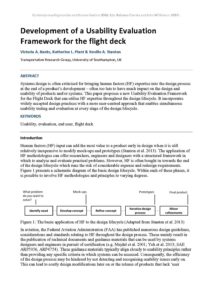
|
Author
Victoria A. Banks, Katherine L. Plant & Neville A. Stanton |
Abstract
Systems design is often criticised for bringing human factors (HF) expertise into the design process at the end of a product’s development – often too late to have much impact on the design and usability of products and/or systems. This paper proposes a new Usability Evaluation Framework for the Flight Deck that can utilise HF expertise throughout the design lifecycle. It incorporates widely accepted design practices with a more user-centred approach that enables simultaneous usability testing and evaluation at every stage of the design lifecycle. |
Publish Date: Jun 5, 2024 | Keywords: Contemporary EHF 2024, Decision making, Human performance, Publications, Rail, Safety, Systems
| Document
|
Author
Katherine L. Plant, Richard Bye, Katie J. Parnell, Craig K. Allison, Jade Melendez, Neville A. Stanton |
Abstract
This work presents a collaboration between [an academic] and [industry partner] to help improve safety at level crossings by developing a deeper understanding of how people behave at them. Using the theoretical foundations of the Perceptual Cycle Model (Neisser, 1976) to generate behavioural insights from workshops, interviews and field observations, the work aims to create decision support tools for level crossing managers, engineers, safety teams and investigators. The resulting human factors toolkit will inform hazard analysis, system design and behavioural interventions that will put level crossing users—and their needs, goals and behaviours—at the centre of activities to improve system safety. |
Publish Date: Sep 7, 2019 | Keywords: Automotive, Comfort, Contemporary EHF 2019, Publications
| Document
|
Author
Amy Hope, Gary Burnett, David R Large, Laura Millen-Dutka |
Abstract
Car seats are becoming increasingly complex, aiming to promote driver wellbeing and comfort, and overcome musculoskeletal problems caused by poor driving posture and extended exposure. With an increasing amount of adjustments available, the navigation of seat controls can be difficult. A ‘posture coach’ is proposed to help drivers achieve a target seating position. However, it is unclear how best to deliver advice. In a static luxury vehicle, visual (animations) or verbal (speech) three-stage incremental guidance was provided on repeated occasions in a counterbalanced, within-subjects study to thirty experienced drivers - aiming to help guide them to the target seating posture (in terms of backrest and slide-axis seating adjustment). The on-board ECU diagnostic tool was used to determine the current seat position and inform subsequent advice. Results show that, overall, visual instructions were more effective in guiding participants toward the target. Moreover, participants were increasingly effective (proximity to target) in each successive attempt, suggesting positive learning effects following the guidance. A small majority of participants (16 of 30) preferred visual to verbal presentation of instruction. Those who preferred visual instructions were significantly better at following visual instructions than verbal, whereas there was no difference in accuracy for participants who preferred verbal instructions between visual or verbal instructions. This result suggests a multi-modal format may be most effective, especially given the potential distraction of visual information while driving. Results are discussed in the context of developing a ‘posture coach’ to make recommendations periodically throughout a journey (based on the real-time position of the seat) to prevent static posture-related strain. |
Publish Date: Sep 8, 2019 | Keywords: Contemporary EHF 2019, Healthcare, Human factors integration, Publications

|
Author
Frances Ives & Dr Peter Isherwood |
Abstract
Achieving integration of Human Factors and Ergonomics (HFE) within a large NHS Trust is a challenging, daunting and lengthy task. Despite recognition from a number of organisations within the NHS that HFE can bring benefits to both staff and patients, integration is in its infancy. The NHS Trust considered in this paper has a long established Ergonomics service focusing on the reduction of musculoskeletal problems in staff. In addition, the recognition of non-technical skills had developed through high fidelity simulation training. The Trust aimed to bring both elements together to develop broader HFE knowledge and application. A multidisciplinary Human Factors Faculty (HFF) approach was therefore pursued to create a platform to drive the integration of HFE. Two of the main challenges faced by the HFF were improving the understanding of HFE and limited funding. The platform approach adopted by the HFF pulls in interested people from within the Trust to initiate and support a variety of HFE projects. This has enabled awareness of HFE to grow quickly within the Trust through a variety of means with minimal funding and resources. There are challenges involved with developing and sustaining a Faculty of this nature including maintaining skills, credibility, quality of work and the reliance of a large amount of good will! However, the diversity and quantity of HFE projects and conversations carried out since the inception of the HFF is testament to the impact that such a multidisciplinary platform approach can have within a large NHS Trust. |
Publish Date: Oct 23, 2018 | Keywords: Autonomous vehicles, Contemporary EHF 2018, Publications
| Document
|
Author
Kirsten Revell, Joy Richardson, Pat Langdon, Mike Bradley , Ioannis Politis, Simon Thompson, Lee Skrypchuk, Jim O’Donoghue, Alex Mouzakitis & Neville Stanton |
Abstract
Semi-autonomous cars are already on the road and highly autonomous cars will soon be with us. Little is understood about how drivers will adapt to the changing relationship with their vehicle, but to ensure safety and consumer acceptance, it is vital to gain this insight. This paper highlights evidence of poor synergy between driver and vehicle in semi-autonomous mode when preparing for a manoeuvre on a UK motorway. As part of an on going study, six UK drivers were observed using a semi-autonomous vehicle whilst employing the ‘think aloud’ technique. Video and audio footage of their interaction with the vehicle was captured and analysed using Neisser’s (1976) Perceptual Cycle Model (PCM). A case study of a single driver is presented in this paper to provide a practical demonstration of the utility of PCM to gain a system’s view of driver-vehicle interaction. The need to consider the drivers schemata of automation capability in the context of use is demonstrated, and implications for interaction design are discussed. |
Publish Date: Feb 27, 2019 | Keywords: Contemporary EHF 2016, Office ergonomics, Publications
| Document

|
Author
Ruth SIMS |
Abstract
|
Publish Date: Jul 3, 2025 | Keywords: Uncategorised
The Problem: Most Bettors Treat Chess Like a Coin Flip
Most punters look at a chessboard and see black and white squares, not the avalanche of data hiding behind every move. They slap a generic “win‑draw‑lose” line on the board and call it a day. The result? Consistent losses, gut feelings masquerading as strategy, and a growing suspicion that the market is rigged against the brain‑sport bettor. Here’s the hard truth: if you keep betting like a roulette player, you’ll never crack the code.
Understanding the Market Structure
First, get why bookmakers love chess. It’s low‑volume, high‑variance, and the odds are set by a handful of analysts who skim the surface. They ignore deep engine analysis, opening theory, and player psychology. That’s your loophole. Spot the mismatch between the bookmaker’s implied probability and the true win chance derived from engine evaluations. For instance, if Stockfish rates a position at 70% for White, but the book shows 55%, you’ve found value.
Key Metrics to Track
Engine depth, average time per move, and opening repertoire strength are the three pillars. Depth tells you how many plies the engine looked ahead; deeper = more reliable. Time per move shows a player’s confidence—rapid spikes often mean a blunder is looming. Opening repertoire? Some grandmasters specialize in the Sicilian, others in the London System. Knowing who thrives where lets you predict surprises.
Betting Vehicles: Where the Money Lives
Don’t just stick to the classic win/draw/lose markets. Try “first move” bets, “opening upsets,” or “engine vs. human” props. The first‑move market is thin, meaning a single sharp insight can shift odds dramatically. For example, betting on 1.e4 versus 1.d4 in a tournament featuring an aggressive 1.e4 specialist gives you a clear edge. Also, look at live‑betting streams; they update odds after each move, reflecting the market’s reaction to sudden changes.
Crafting a Betting Strategy
Start with a “seed list” of players you follow weekly—say Carlsen, Nepomniachtchi, and a rising star like Alireza. Track their recent games, note any opening novelties, and feed that into your odds calculator. Next, allocate 1‑2% of your bankroll per bet. Never chase a loss with a 20% stake; that’s a recipe for ruin. Finally, keep a spreadsheet, log every wager, result, and reasoning. The data will become your second brain, eliminating emotional drift.
Tools and Resources
Use chess engines (Stockfish, Leela Chess Zero) on a cloud server to crunch positions in seconds. Pair that with a live odds aggregator—many sites pull data from multiple bookmakers, letting you compare and spot divergences instantly. When you need a quick reference, swing by bookiebetexpert.com for a curated list of the best chess betting platforms and insider tips.
Actionable Advice
Identify the next major tournament, pick the opening you know best, calculate the engine win probability for the first three moves, and place a “first move” bet where the bookmaker’s odds are at least 15% worse than your model. Bet with a disciplined stake, record the outcome, and iterate. This is how you turn chess from a hobby into a profitable edge.
Publish Date: Jul 3, 2025 | Keywords: Uncategorised
Topowe bukmacherki w Polsce
Jeśli szukasz pulsującej adrenaliny i jednocześnie chcesz, żeby Twój portfel nie cierpiał, trafiłeś we właściwe miejsce. Wśród setek platform wyróżniają się te, które nie tylko oferują szeroką gamę zakładów, ale też podnoszą stawki do poziomu, którego przeciętny gracz nie widział. Na czele listy stoją Betclic, LV Bet oraz Fortuna – każdy z nich ma w zanadrzu specjalne promocje na mecze Ekstraklasy, które podnoszą kursy nawet o 15 %.
Dlaczego kursy się różnią?
To nie magia, to biznes. Bukmacherzy analizują setki parametrów – forma zespołu, kontuzje, statystyki meczowe – i na tej podstawie ustalają wyjściowe kursy. Niektórzy wolą grać na niskim ryzyku, inni ryzykują i podnoszą kursy, by przyciągnąć agresywnych graczy. Warto więc śledzić, które platformy wprowadzają „boosty” na konkretne spotkania; to właśnie wtedy możesz złapać najwięcej zysku.
Jak rozpoznać prawdziwy boost?
Patrz na historię zmian kursu w czasie rzeczywistym. Jeśli widzisz, że kurs gwałtownie skacze tuż przed rozpoczęciem meczu, to znak, że bukmacher podkręca wyniki, bo spodziewa się dużego napływu zakładów. Nie daj się zwieść jednorazowym promocjom – najważniejsze jest, by boost był trwały przynajmniej przez kilka godzin, a nie tylko w ostatniej minucie.
Strategia na maksymalny zwrot
Startuj od analizy najważniejszych meczów – derby, mecze z udziałem czołowych drużyn. Zrób listę top 5 platform, które oferują najlepsze kursy w danej kolejce. Następnie podziel swój budżet na małe porcje i obstawiaj równocześnie, ale w różnych bukmacherach – tak minimalizujesz ryzyko, a jednocześnie chwycisz wszelkie podwyżki. Nie zapominaj, że niektórzy bukmacherzy przyznają bonusy dla nowych graczy; wykorzystaj je, ale pilnuj regulaminu, bo niechciane ograniczenia mogą zrujnować całą akcję.
Gdzie znaleźć aktualne kursy?
Wystarczy wejść na bukmacherpolsce.com i przefiltrować zakłady pod kątem Ekstraklasy. Strona zbiera dane z najpopularniejszych serwisów, prezentuje je w przejrzystym wykresie i od razu wskazuje, które platformy podniosły kursy o najwięcej procentów. Nie ma nic lepszego niż szybka kontrola “na żywo” – przyzwyczajaj się do tego rytmu.
Ostatnia rada
Podążaj za ruchem rynku, ale nie daj się złapać w pułapkę “za wysokiego kursu”. Jeśli widzisz, że kurs wciąż rośnie mimo spadku liczby zakładów, to znak, że bukmacher gra zbyt ostrożnie i prawdopodobnie sam się wycofa. Złap więc moment, gdy kurs jest jeszcze atrakcyjny, ale nie przesadnie wystrzałowy – to klucz do stabilnych zysków.
Publish Date: Jun 24, 2022 | Keywords: Autonomous vehicles, Contemporary EHF 2022, Human-machine interaction, Publications, Technology, Virtual reality
| Document
|
Author
David R. Large, Madeline Hallewell, Leah Briars, Catherine Harvey & Gary Burnett |
Abstract
This paper showcases the novel application of Mozilla Hubs in the context of interface design for future, autonomous taxis. It demonstrates that repurposing pro-social virtual reality as a design collaboration tool enables an embodied and spatialised experience affording the co-creation and visualisation of novel interfaces, scaffolded by real-world social dynamics, but unfettered by its physical limitations. The approach has proved to be beneficial during the COVID-19 pandemic, but it also provides genuine opportunity for virtual, “non-contact” collaborative research beyond this. |
Publish Date: Jul 3, 2025 | Keywords: Uncategorised
Why the Odds Keep Missing the Mark
Every time a fan pulls up a betting slip, the numbers look clean, but the reality? A chaotic scramble of injuries, weather quirks, and those late‑stage tactical switches that turn a favorite into a footnote. The core issue is over‑reliance on raw win‑loss records, ignoring the hidden variables that tilt the pendulum. And here is why you should stop treating the game like a roulette wheel and start dissecting the nuance like a surgeon.
Data Mining the Stats That Matter
First, ditch the generic “goals per game” metric. Drill down into expected goals (xG) from the final third, shot conversion rate inside the box, and defensive duels won in the midfield corridor. Those numbers are the true pulse of a side’s attacking efficiency. Pair that dataset with a timeline of key player absences—because a defender missing the first leg often reshapes the entire defensive structure.
Form Over Fantasy
Look: a club riding a five‑match winning streak in domestic league rarely translates that momentum to Europe. The opposite is more common—a slump in the league can spark a knockout surge as the squad refocuses on continental glory. Track the last ten games across all competitions, but weight the most recent five heavier. The last two fixtures carry the psychological weight of a cup knockout; they’re the real predictors.
Home Advantage & Travel Fatigue
Here is the deal: the home leg isn’t just about familiar turf; it’s a cocktail of fan energy, altitude, and even travel weariness on the opponent. Teams flying from the Mediterranean to the Baltic often see a 12‑percent dip in distance covered, translating to slower transitions. Use the UEFA travel schedule to calculate fatigue indexes, then adjust your odds accordingly.
Psychology of the Underdog
Underdog teams thrive on a single‑goal lead, adopting a compact shape that frustrates the opposition. The secret sauce is the “psychic pressure” factor—measure it by counting the number of fouls drawn in the final 15 minutes of previous knockout ties. The higher the count, the more likely they’ll cling to a slim lead.
Integrating the Edge on freetipsbet.com
Plug these lenses into your model, then cross‑reference with the live odds feed from freetipsbet.com. When the market undervalues a team’s xG deficit recovery or overlooks travel fatigue, that’s your green light. Adjust your stakes, lock in those value bets, and watch the returns climb.
Final Actionable Advice
Pick one upcoming fixture, pull the last five xG figures, add the travel fatigue index, and compare the composite score against the bookmaker’s odds. If your composite is 1.8 while the market offers 2.2, place the bet—the gap is your profit engine.
Publish Date: Jul 3, 2025 | Keywords: Uncategorised
Assuming One‑Size‑Fits‑All Solutions
People treat GamStop like a static wall, then slap a generic VPN on top and hope for the best. Not so. A VPN that hides your IP but leaves your payment details exposed? That’s a recipe for instant lockout. The point is: every piece of the puzzle—IP, device fingerprint, payment method—needs its own strategy. One blindfold won’t cover all the eyes.
Neglecting Device Fingerprints
Short‑term fix: change browsers. Long‑term fix: realize the platform tracks more than just IP. Your screen resolution, OS version, even mouse jitter can give you away. Forget to wipe cookies? The system spots you faster than a hawk. The deal is simple—clear everything, or you’ll be back in the exclusion list before the coffee cools.
Overlooking Account Linking
Think you can open a fresh account with a new email and be invisible? Not when the operator cross‑checks loyalty numbers, phone OTPs, and bank identifiers. That’s why many stumble, thinking a fresh username is enough. They end up with two bans, not one. Keep your identity pieces clean, or you’ll pay the price twice.
Relying Solely on VPNs
VPNs are like cheap sunglasses—great for a quick cover but useless if someone shines a light right at you. A good practice is to rotate servers, use residential IPs, and pair the VPN with a fresh device profile. Skip any of those steps and you’ll get flagged. The bottom line: a single cheap server won’t cut it.
Choosing the Wrong Payment Method
Bank cards tied to your name? Those scream “original user” louder than any IP. The smartest move is to switch to prepaid e‑wallets that aren’t linked to your primary accounts. Some players think a crypto wallet is a magic wand; without proper anonymity it’s just another breadcrumb. If you ignore this, the ban resurfaces faster than you can say “withdraw”.
Skipping the Legal Gray Zone
Many think they’re walking on a thin line of legality, and they’re right. Ignoring the jurisdictional nuances is a mistake that lands you in hot water. Some operators have strict “no‑circumvention” clauses. Bypass them and you break the contract. The real trick? Know which jurisdictions are lenient, and plan accordingly. Ignorance isn’t a defense.
Failing to Test Before Going Live
Jumping straight into high‑stakes betting with a fresh setup is a classic blunder. Test with low‑risk games, monitor for flags, and adjust. Those who skip the trial phase get a massive bankroll wipeout. The method works: start small, watch the logs, then scale.
Final Piece of Actionable Advice
Don’t rely on a single tool; build a layered approach—VPN, device spoof, clean payment, jurisdiction check—then test in low‑risk mode before you pour money. That’s the only way to stay ahead of the system. gamstopremoveexclusion.com
Publish Date: Oct 23, 2018 | Keywords: Contemporary EHF 2018, Publications, Technology, Usability
| Document
|
Author
J. Waldo Cervantes-Solis & Chris Baber |
Abstract
User experience with ‘smart’ objects determines the device’s adoption. One important consideration, therefore, is whether it is possible to model the interactions prior to development, so that design decisions can be made which could enhance user experience. In this paper, we focus on the use of Task Analysis for Error Identification (TAFEI) as a tool for Internet of Things (IoT) systems modelling. Based on the concept of identifying and characterising the purpose of the social-like interactions, we analyse how goals are achieved when using an instrumented object. TAFEI provides a perspective in which Human-Internet of Things Interaction (HII) is analysed from the context of system’s goals and sub goals. As such, this approach not only provides system’s failure scenarios, but more appropriately for IoT enabled objects, it also enables the identification of new scenarios for the system to provide knowledge to the user, and allow it to predict a user’s intent and pre-emptively take action on the user’s behalf. This methodology allows Internet of Things development to not only consider sensor data, but also system usability, promoting meaningful HII, and improving user engagement with IoT systems. |
Publish Date: Aug 10, 2021 | Keywords: Aviation, Comfort, Comfort Congress 2021, Publications, Seating
 |
Author
Xinhe Yao, Yufei He, Norbert Hessenberger, Yu Song & Peter Vink |
Abstract
During a flight, passengers spend most of their time sitting in their seats. Studying the comfort and discomfort while passengers are sitting is helpful to improve the overall comfort during a flight. Pressure mats are commonly used in studies to collect pressure distribution in order to research sitting comfort. Different from most past studies, in which pressure mats are placed on the top of the cushions, the focus of this paper is to show the potential of placing pressure mat below the seat cushion. Three identical cushions differing in stiffness were prepared. The pressure distribution of 12 sitting postures was collected from 33 subjects both at the top as well as at the bottom of the foam in a randomized order. After sitting on each cushion, the participant was asked to leave the seat and complete a sitting comfort and discomfort questionnaire. The results show that the softest cushion got the highest rank in short-term comfort and lowest rank in short-term discomfort. The recorded pressure distributions both on the top and at the bottom of the foam can influence comfort and discomfort. This indicates the potential to use pressure distributions under the foam to evaluate the perceived comfort and discomfort in sitting, which might reduce the intrusive feeling of the participants in comfort studies. |
Publish Date: Jun 7, 2026 | Keywords: Contemporary EHF 2026, Organisational design, Psychology, Publications
| Document
|
Author
Russell Bond, Rachel Guest, John Dent |
Abstract
This paper outlines initial work conducted to develop a framework covering the human contribution to environmental Sustainability. The work draws upon Human Factors (HF) and broader Behavioural Science literature, existing frameworks and the experience of Sustainability experts within Frazer-Nash Consultancy (FNC). This paper identifies and synthesises human-centric factors required to inform development of the framework. Once developed the framework will support organisational assessments currently undertaken by Sustainability specialists within a range of industry settings. |
Publish Date: Jun 3, 2024 | Keywords: Contemporary EHF 2024, Energy, Human factors integration, Publications
| Document
|
Author
Martin Redford |
Abstract
Lighting of Industrial Control Rooms may disrupt natural circadian rhythms, affecting the health and wellbeing of operators. Human Centred Lighting (HCL) is designed to mimic the natural dark/light cycle, maintaining alertness and to reduce adaptation to night work and therefore avoid a phase delay of the circadian rhythm. Research has emphasised the part played by melanopsin in regulating the production and suppression of melatonin which is directly linked to circadian rhythms. Using the refurbishment of a control room as a case study, the implementation of a HCL design to support circadian rhythms and health and wellbeing of control room operators is illustrated. |
Publish Date: Jul 3, 2025 | Keywords: Uncategorised
Transitioning to Home Life
First thing: the track is over, the lights go out, and suddenly the dog is a couch potato. That shock can make a greyhound jittery. You, as the new keeper, must keep the environment low‑key. No screaming crowds, no echoing barks—just quiet rooms and a soft bed. The moment you let the animal feel safety, the whole rehabilitation accelerates.
Nutrition Switch
Look: race‑day feed is a high‑energy cocktail, not a lifetime diet. Swap that for a balanced kibble, lean protein, and a handful of veggies. Cut the calories fast but don’t starve; these dogs love to eat, and a sudden drop can trigger stress‑eating. A good rule—measure the portions, re‑weigh the bowl every week, and adjust.
Hydration Hacks
Greyhounds are liars about thirst. Keep fresh water circulating, add a splash of low‑salt broth for flavor, and watch the belly rise. If the dog isn’t drinking, a wet food boost can save the day.
Exercise and Play
Here is the deal: the beast that once sprinted 600 meters now needs gentle jogs. Short, controlled walks on grass, not concrete, prevent joint stress. Throw in a ball—any ball—because a greyhound’s instinct to chase never dies. Rotate toys, change the scent, keep it fresh. Boredom is a silent killer.
Stretching Sessions
And here is why you must incorporate daily stretches. Simple hamstring pulls, gentle neck rolls, all done while the dog is calm. It mimics the warm‑up routines on the track, keeping muscles supple. Miss this, and you’ll see arthritis creep in faster than you’d like.
Health Checks
The former racing life leaves scars you can’t always see. Regular vet visits are non‑negotiable. Blood work, nail trimming, dental cleaning—tick each box. Keep a journal of any limping, coughing, or appetite shifts. If something looks off, act now; the window for treatment closes quickly.
Skin and Coat Care
Spot the sheen? That’s a sign of a healthy coat. Greyhounds shed little, but their skin can get dry. Use a hypoallergenic shampoo that doesn’t strip natural oils. A quick brush once a week removes loose fur and gives you a chance to inspect for ticks or wounds.
Mental Enrichment
By the way, a retired racer’s mind is still wired for competition. Puzzle feeders, scent games, and short obedience drills keep that brain buzzing. Switch up the layout of the house every few days—move the bed, alter the hallway—so the dog has to think, not just wander.
Socialization
Never underestimate the power of a calm neighbor dog. Controlled introductions, short playdates, and then withdrawal keep the greyhound from becoming over‑excited. Social skill building isn’t a luxury; it’s a preventive medicine.
Final Piece of Actionable Advice
Remember: the fastest route to a happy retired greyhound is a routine that mirrors the predictability of the track but swaps speed for steady affection—so set a schedule, stick to it, and let the dog know exactly when dinner, walk, and cuddle happen, every single day.
Publish Date: Jul 3, 2025 | Keywords: Uncategorised
Why Traditional Stats Miss the Mark
Everyone in the yard knows the old spreadsheets are as useful as a rubber bone. They give you numbers, but they don’t tell you why a dog bursts from the bend like a fireworks rocket. The problem? Data alone can’t capture the split‑second mood of a track, the wind whisper, the foot‑pad tension. You’re left guessing, and the odds punishes that guesswork. Look: without a real‑time pulse, you’re chasing shadows.
SpeedTracker Pro: The Speedometer on Steroids
SpeedTracker Pro slams the doors on static data. Its telemetry grabs every 0.01 seconds, turning raw velocity into a visual heat map that lights up like a neon billboard. You can replay a race in slow motion, spot the exact moment a greyhound cracks the pack, and overlay that with historical splits. Pure gold. The interface is ruthless—click, drag, boom, you’ve got the insight. And here is why the tool beats every spreadsheet: it learns your patterns, predicts the next surge, and flags anomalies before they become a loss.
TrackMap AI: Your Virtual Scout on the Curve
TrackMap AI is the brain. It ingests past performances, weather reports, even the subtle changes in track composition, then spits out a probability heat field that looks like a meteorological chart. When the forecast says “wet,” the AI recalibrates the odds in seconds, shaving minutes off the decision loop. This isn’t a gimmick; it’s a competitive edge that feels like having a seasoned trainer whisper in your ear. And the kicker? It syncs directly with betting platforms, so you can act on the insight instantly.
BetPulse Live: The Live‑Odds Hammer
BetPulse Live punches through the noise of live odds with a razor‑sharp algorithm that filters out market fluff. It highlights the discrepancies between the book’s odds and the AI‑derived value, presenting them in a clean ticker you can scan in a glance. No fluff text, just numbers and colors—green for value, red for risk. If you’ve ever felt the rush of a live bet that lands perfectly, you’ll recognize that feeling here, magnified. The tool’s alert system vibrates your phone when a value spikes, forcing you to decide before the window closes.
Greyhound Pulse (Free): The No‑Cost Baseline
If you’re on a shoestring, Greyhound Pulse offers a stripped‑down but still powerful dashboard. It aggregates race results from dogracingresultstoday.com, builds basic trend lines, and lets you tag dogs for personal notes. It won’t replace the premium tools, but it stops you from flying blind. You can set up simple alerts—like “dog X hits top‑3 in three consecutive races”—and use that as a springboard for deeper analysis elsewhere.
Actionable Edge
Pick SpeedTracker Pro for raw speed insight, layer TrackMap AI’s predictive surface, and let BetPulse Live trigger your bets. Start with a single dog, watch the heat map, and when the live‑odds ticker lights green, place the wager. That’s the fast‑track to turning data into profit.
Publish Date: Apr 16, 2020 | Keywords: Contemporary EHF 2020, Leadership, Manufacturing, Publications
| Document
|
Author
Magnus Karlsson, Anette Karltun, Karin Havemose and Johan Karltun |
Abstract
Organisational resilience can be a source of competitiveness, enabling companies to respond and adapt to unexpected changes, ensuring that a company can thrive whilst dealing with the unexpected. The ability of first line managers (FLMs) to handle their daily work at the operational level in order to maintain a stable production output, while managing the many challenges in the complex industrial context, is key. The importance of how FLMs can handle their role has been confirmed by several researchers – and more research is needed. In this research, two manufacturing companies are participating as they wish to develop their FLMs’ abilities to handle their role as an intermediate position between workers, technical support staff and upper management. The study aims to produce knowledge of how the daily work in the role of FLMs is enacted in the manufacturing context and how resilient action strategies can be developed for both performance and wellbeing. The study follows a collaborative approach in which two manufacturing companies are participating. After an initial workshop and ten in-depth interviews with FLMs the preliminary results indicate that the disturbances of daily work per se were expected by many of the interviewees. Difficulties involved were diminished by developed routines, although the information about those sometimes were difficult to find. Improvement opportunities regarded for example clarification of the role, better collaboration with support functions, more time to spend with operators interacting at shop floor level and expanding proactive action strategies. |
Publish Date: Feb 26, 2019 | Keywords: Contemporary EHF 2016, Healthcare, Publications, Sociotechnical systems, Systems
| Document
|
Author
Daniel P. JENKINS, Malcolm BOYD, Chris LANGLEY |
Abstract
As with all safely critical interfaces, it is imperative that medical devices communicate the right information, to the right people, at the right time, in the right place, and in an optimal format. This paper describes an approach for eliciting information requirements based on Rasmussen’s decision ladder. A hypothetical example of radiography equipment is used to illustrate the process; however, the approach is also considered to be applicable to a wide range of domains. The approach is based on a semi-structured interview and creates an explicit link between the data collection activity and the final design interface. |
Publish Date: Dec 18, 2018 | Keywords: Contemporary EHF 2017, Defence, Publications
| Document
|
Author
Will Tutton |
Abstract
This paper discusses what it is like to practice in the development and assessment of military land vehicles. It presents a number of cases of practice and the key learning points, including reflections on requirements, systematic approaches and expert-based approaches to HF engineering for military land vehicles. Military vehicles are becoming increasing sophisticated, and so require more complex human factors methods to adequately understand and improve the. Future trends are also identified. |
Publish Date: Jun 11, 2025 | Keywords: Contemporary EHF 2025, Education, training & skills, Healthcare, Patient Safety, Publications
| Document
|
Author
Fraser Gold, Maude Adams, Andre J Carpio, Dinuki de Alwis, Connor Schlemmer, Claire Taylor, Paul Bowie & Helen Vosper |
Abstract
The General Medical Council (GMC) “Outcomes for Graduates” document indicates that newly qualified doctors must demonstrate that they can practise safely, and positions Human Factors as central to this activity. Including Human Factors-related outcomes in health and care educational programmes is not a minor ‘bolt on’ – it requires a co-ordinated and strategic educational approach, which we would argue presents a significant challenge for most educational institutions. This case study explores how a comprehensive and sustainable Human Factors curriculum was embedded in an undergraduate MBChB (medical) curriculum in a UK university. |
Publish Date: Jun 7, 2026 | Keywords: Artificial intelligence, Contemporary EHF 2026, Publications
| Document
|
Author
Catherine Harvey, David Large, Benjamin Bowers, Iris Jestin |
Abstract
This paper presents a novel methodological approach, illustrated by two contrasting case studies – one situated in a safety-critical military context and the other in everyday driving – that utilise generative artificial intelligence (GenAI) to create, visualise and communicate concepts for use in participatory ergonomics. We reflect on the approach, providing a detailed four-stage methodology, and discuss the implications from a human factors perspective. |
Publish Date: Jun 11, 2025 | Keywords: Contemporary EHF 2025, Human factors integration, Manufacturing, Publications
| Document
|
Author
Arto Reiman, Vesa Kauppinen, Maria Lindholm & Susanna Mattila |
Abstract
Ergonomics standards contain essential knowledge for the design of human work and human-technology interactions. When effectively implemented, this knowledge can significantly benefit companies by enhancing technological development, business performance and employee well-being. In this study, Finnish manufacturing small and medium-sized enterprises (SMEs) (n=16) were interviewed to assess the utilisation of ergonomics standards when designing human-technology interfaces during their endeavours to digitalise their manufacturing processes. The interviews indicate a general lack of awareness, and minimal application of ergonomic standards among the companies. This is a worrying observation, as it suggests that companies' design solutions may not always be based on current ergonomics knowledge but rather on alternative perspectives. To increase their competitiveness, it is recommended that these companies adopt a strategic approach to the utilisation of ergonomics standards. Future studies in diverse industrial settings and involving a broader set of companies are needed to confirm our findings and draw stronger conclusions. |
Publish Date: Sep 7, 2019 | Keywords: Anthropometry, Contemporary EHF 2019, Publications
| Document
|
Author
Beth McMurchie, George Torrens Paul Kelly |
Abstract
The study described in this report was part of a long-running programme to collect data of people’s physical characteristics and their relationship with the interfaces through which they control their environment. The study aimed to establish if there is a correlation between fingerprints and stature, possibly providing a quick method of identifying the physical characteristics of an individual from a latent fingerprint. The aim of the specific study documented here was to define the relationship, and its significance between a latent fingerprint and the height and/or weight of the individual who deposited it. A standardised fingerprint from 200 participants (117 males, 83 females) was collected using a bespoke finger compliance meter, which applied a fixed force of 10N to each participant’s fingertip and captured an image of the compressed print. Measurements of height and weight were also taken. Regression analysis was used to analyse the collected measurements. Whilst the results of regression analysis showed very little correlation between weight and fingerprint size, a significant (p < 0.05) correlation coefficient (r = 0.61) was established between height and fingerprint circumference. The post-processed results provided a formula for estimation of height from fingerprint size; a standard error value of ±15 cm for predicted height from a given print; and, an indication as to the viability of this form of biometric analysis applied in the field of forensic identification. The results contribute to the evidence already published about the correlations between body parts and stature. |
Publish Date: Sep 8, 2019 | Keywords: Contemporary EHF 2019, Human performance, Manufacturing, Pharmaceutical, Publications
| Document
|
Author
Julie Ann Avery |
Abstract
GSK Ware, UK, is home to a leading Pharmaceutical manufacturing site serving patients around the world in Respiratory and Oral Solid Dose medicines. Following an analysis of deviations from process and proactive improvement ideas the site recognised an opportunity to use human factors proactively to create the climate for change to improve how people experience their work and business key performance indicators (KPIs). A strategic program launched in late 2017, adapting the Human Performance route map from BioPhorum Operations Group (22 company members). This map enabled a cohesive, measurable approach supported by accessible education and tools. Progress is benchmarked internally and externally. 18 months on, Human Factors has become business as usual on site, in everyday language, in problem solving and proactive work with relevant training and coaching. Key business KPIs have been sustainably and positively impacted since implementation of the human performance program, sometimes quite dramatically. Ware continues to weave Human Factors into their organisational “DNA” sharing learnings across the GSK network. |
Publish Date: Oct 30, 2018 | Keywords: Contemporary EHF 2017, Publications, Rail
| Document
|
Author
Alice MONK, Mary-Elizabeth CROSS, Stuart McFARLAND, Robert AGUTTER, Lynne, COLLIS, David FLETCHER |
Abstract
The roll out of the European Rail Traffic Management System (ERTMS) will expose train drivers to transitions between ERTMS and conventional signalling operation during a journey or work shift. After the transition, there may be a period of adjustment before the driver is completely secure in the new method of operation which leaves potential for degradation in the effectiveness of the driving task. The objective of this research was to identify the safety/performance issues that can be attributed, directly or indirectly, to transitioning between train signalling systems. |
Publish Date: Sep 8, 2019 | Keywords: Aviation, Contemporary EHF 2019, Perception, Publications, Risk assessment, Safety
| Document
|
Author
Johnny Short, Eric Tchouamou Njoya & Nick Hubbard |
Abstract
The commercial aviation industry is a human-built and human-led system. Hazards are identified, assessed and managed by people. Perceptual dissonance induces inherent subjectivity, and this has the potential to reduce the efficacy of safety risk management. Whilst perception is a key driver of risk attitudes, evidence to show the impact of their proactive management is limited. This case study aims to demonstrate the rationale for further research. |
Publish Date: Jun 4, 2024 | Keywords: Contemporary EHF 2024, Publications, Safety, Systems, Transport
| Document
|
Author
Craig Foster, Katherine Plant & Rich McIlroy |
Abstract
In the last 20 years, new theories, ideas, and disciplines of safety have emerged to address the evolving nature of safety management in complex sociotechnical systems. The literature increasingly recognises the importance of adaptation; whereby the people in the system use their skills and experiences to make continuous, real-time demand compensations to ensure safety through trade-offs, self-organisation, informal practices and strategies. This paper presents the results of an investigation into the nature of adaptation and the emerging understanding of the role it plays with reference to the safety of UK air traffic control. |
Publish Date: Sep 30, 2018 | Keywords: Contemporary EHF 2018, Healthcare, Publications, Sociotechnical systems, Technology
| Document
|
Author
Giulia Miles & Sue Hignett |
Abstract
The National Health Service (NHS) in England has ambitious plans to drive innovation in health information technology (HIT) to improve patient safety, quality and cost effectiveness. Acute trusts are complex socio-technical systems that are required to implement a number of large information technology projects in order to meet national targets for digital maturity. This research explored whether the Ministry of Defence (MOD) Human Factors Integration Model for the acquisition process could be applied to a HIT project. A qualitative research study was undertaken in a large English NHS acute trust using the experience of implementing an electronic observation system to explore transferability of the MOD approach to acute healthcare. Data were collected using semi-structured interviews and focus groups and analysed thematically with reference to SEIPS 2.0 (Holden et al, 2013) healthcare systems model and the MOD framework. Key findings included limited awareness of Human Factors in healthcare; information system design/specification to deliver positive outcomes around patient safety and financial savings. Human Factors negative systems issues included alert fatigue, changing mental models, inability to maximise data for patient benefit, system resilience, local and national interoperability issues. |
Publish Date: Mar 24, 2019 | Keywords: Contemporary EHF 2016, Design, Healthcare, Publications
| Document

|
Author
Chantal TRUDEL, Sue COBB, Kathryn MOMTAHAN, Janet BRINTNELL and Ann MITCHELL |
Abstract
Qualitative methods were used to understand infection prevention and control breaches within an existing neonatal intensive care unit and inform future design development. The study aimed to identify the main issues that health care workers experience in infection prevention and control and their relationship to the design of the environment. Methods from human-centred design such as planning, stakeholder meetings and naturalistic observation were used to document the unit, work processes, interactions, behaviours and perspectives of health care workers related to infection prevention and control. Thematic analysis was used to identify core issues, subthemes and their interrelationship to share with staff and inform recommendations. |
Publish Date: May 30, 2024 | Keywords: Artificial intelligence, Contemporary EHF 2024, Design, Publications, User centred design
| Document
|
Author
Ionut Danilescu & Chris Baber |
Abstract
A well-known approach to Explainable Artificial Intelligence (XAI) presents features from a dataset that are important to the AI system’s recommendation. In this paper, we compare LIME (Local Interpretable Model-free Explanation), to display features from a classifier, with a radar plot, to show relations between these features. Comparative evaluation (with N = 20) shows LIME provides more correct answers, has a higher consistency in answers, and higher rating of satisfaction. However, LIME also showed lower sensitivity (using signal detection), a slightly more liberal response bias, and had a higher rating of subjective workload. Evaluating user interface designs for XAI needs to consider a combination of metrics, and it is time to question the benefit of relying only on features for XAI. |
Publish Date: Feb 27, 2019 | Keywords: Contemporary EHF 2016, Data, Publications, Safety, Safety culture
| Document
|
Author
Stuart SHIRREFF and Andrew BAIRD |
Abstract
|
Publish Date: Jun 3, 2024 | Keywords: Contemporary EHF 2024, Health & Safety, Human factors integration, Publications, Systems
| Document
Insert here |
Author
Darren Doyle, & James Blundell |
Abstract
The severity of performance shaping factors on human factors (HF) practitioners from safety critical industries in the United Kingdom (UK) is examined. Based on a Human Factors Analysis and Classification System (HFACS) survey, 32 HF practitioners reported that organisational influences were the most disruptive encountered PSF with the vocation (p < 0.01), compared with supervisory and workplace pre-condition factors. Follow-up semi-structured interviews with 5 participants highlighted these organisational PSFs could be attributed to the misperception of the HF role and value within organisational structures, contributing to the perception of HF receiving insufficient budgetary and organisational priority. Furthermore, participants viewed these PSFs to be significantly detrimental to their own well-being and to both the current and prospective health of discipline. Recommendations to address these issues are discussed. |
Publish Date: Aug 11, 2021 | Keywords: Automotive, Comfort, Comfort Congress 2021, Publications
 |
Author
Wu Pan-Zagorski, Jeong Ho Kim, Missy A Pereny, Jake G Collins & Peter W Johnson |
Abstract
The goal of this study was to use three identical looking automotive seats with different foam formulations (different stiffness, similar hysteresis) to determine whether there were differences in WBV exposures and self-reported comfort ratings across the three seats (Seat A, B, and C). Ten participants (5 male; 5 female) were recruited for this repeated-measures laboratory study. The seats were mounted on a 6 degree-of-freedom (DOF) vibrating platform on which the participants were exposed to sinusoidal vertical (Z-axis) and field-measured, tri-axial car floor vibration profiles. The participants ranked their seat preference before and after using all three seats. Self-reported seat comfort was evaluated using 7-point Likert scales at the end of each seat test. Results indicated that the least stiff seat C had the lowest resonance frequency and the lowest WBV magnitudes across all road types. Seat C was also the most preferred among the participants. This study indicates that it may be possible to improve both vibrational performance and comfort by altering foam mechanical properties through different formulations. |
Publish Date: Jun 23, 2022 | Keywords: Contemporary EHF 2022, Healthcare, Organisational design, Pandemic, Publications
| Document
|
Author
Eva-Maria Carman & Giulia Miles |
Abstract
Human Factors as a discipline provides the theories, methods, and tools to assess work and work systems. Likewise, these theories can be adopted to assess and support change to the way HF work is done, especially when the work environment drastically changes, as has occurred with the pandemic. This would require applying Human Factors theories and methods to the work done by Human Factors specialists themselves, to enhance their own working processes and systems. This paper describes the development and application of the Lessons Learnt Reflection Approach, a tool aimed at capturing aspects that work well at an operational level for Human Factors work within healthcare, with special consideration for the impact of the COVID-19 pandemic. This approach was developed in response to the increased awareness of the limitations that the pandemic created in the work environment and the need to modify methods in response. The CIEHF’s guidance “Achieving sustainable change: Capturing lessons from COVID-19” was used to provide the structure and fundamental basis for this approach. This paper will describe the method and application of this approach for three different human factors projects in healthcare, namely (1) understanding the work system changes for a physiotherapy department during the initial response to the pandemic, (2) supporting the procurement process for a large volume general medical device and (3) supporting simulation testing of a commercial medical product. |
Publish Date: Sep 7, 2019 | Keywords: Autonomous vehicles, Contemporary EHF 2019, Publications, Situation awareness
| Document
|
Author
Hannah White, David R Large, Davide Salanitri, Gary Burnett, Anneka Lawson, Elizabeth Box |
Abstract
Future, level 3 automated vehicles will enable drivers to undertake non-driving-related secondary tasks while the vehicle is in control. This is likely to impair their situation awareness, and consequently affect their ability to resume control in situations where the vehicle cannot operate autonomously. Nevertheless, proposed take-over requests typically demand that the driver ‘take control’ without attempting to assess or rebuild their situation awareness. In a longitudinal simulator study, forty-nine experienced drivers completed five 30-minute ‘commutes’ (Monday-Friday). The route incorporated an extended episode of automated driving enabling drivers to undertake secondary tasks of their choosing. Take-over requests/HMIs were inspired by the driving skills hierarchy, with twenty-five participants receiving novel ‘top-down’ guidance (tactical followed by control), encouraging them to check for hazards prior to providing control, and the others received traditional ‘bottom-up’ (control) instruction. In addition, participants were provided with either detailed system feedback during periods of automation, or no feedback. This resulted in four conditions in a 2x2 between-subjects design. Following an unexpected, emergency take-over request on day four, drivers with ‘top-down’ guidance checked their mirrors significantly more times during the handover. Additionally, recipients of system feedback were demonstrably ready to drive (based on recognised physical indicators) sooner in response to the take-over request. There were no differences in lateral and longitudinal vehicle control and prevalence of unsafe driving behaviours after the emergency handover. Results can inform the design of ‘top-down’ hand-over HMIs and strategies to help drivers rebuild their situation awareness prior to resuming manual control, following periods of automation. |
Publish Date: Jun 12, 2023 | Keywords: Behaviour, Construction, Contemporary EHF 2023, Design, Publications, Safety
| Document

|
Author
Shelley Stiles |
Abstract
Behavioural safety programmes are widely used across the Construction Industry, largely targeted at influencing behaviours of frontline workers and/or leadership behaviours. However, there is limited application of behavioural safety at the pre-construction (design) phase of a construction project, given the importance of the design community in eliminating and mitigating health and safety risks. This paper details a case study for the application of behavioural safety intervention targeted at the design community for a large infrastructure project. |
Publish Date: May 30, 2024 | Keywords: Contemporary EHF 2024, Healthcare, Investigation, Publications, Safety
| Document
|
Author
Tracey A Herlihey, Jane Carthey, Lauren Mosley, Matthew Fogarty |
Abstract
Despite huge effort invested in investigating patient safety incidents in the NHS, mounting evidence pointed to a need for a fresh approach. To enable the NHS to move from Root Cause Analysis (RCA) to a more flexible and proportionate approach to learning from safety events, a human factors informed Learning Response Toolkit was developed. |
Publish Date: Feb 27, 2019 | Keywords: Contemporary EHF 2016, Cybersecurity, Manufacturing, Publications, Technology
| Document
|
Author
Murray SINCLAIR, Carys SIEMIENIUCH and Michael HENSHAW |
Abstract
Whether or not manufacturing moves whole-heartedly to the paradigm of Cyber-Physical Systems of Systems as indicated first in the ‘Industrie 4.0’ programme in the FRG, there is little doubt that manufacturing will become software-dominated by 2025. This will have significant implications for ergonomists involved in manufacturing: for the nature of roles and jobs, for the design of workspaces and workplaces, and for the design of the interactions between humans and automation. The paper explores some of these implications. |
Publish Date: Jun 23, 2022 | Keywords: Contemporary EHF 2022, Design, Interface design, Publications, User experience
| Document
|
Author
Joy Richardson, Henrietta Howarth & Jisun Kim |
Abstract
Mobility as a Service (MaaS) mobile phone applications are being launched in many towns and cities worldwide and are heralded as the ultimate modern mobility solution by combining private, public, micro and active travel options. However, in order to encourage adoption by the public the user-experience (UX) is of high importance. A useful way to evaluate the UX of an app interface is to use heuristics analysis, yet none of the existing heuristics tools are tailored towards mobility apps. This means they are not suitable for a systematic evaluation of MaaS interfaces. Therefore a new heuristics tool was developed in order to evaluate the interfaces of mobility apps, including MaaS. This was achieved through the evaluation of existing heuristics combined with the determination of the needs of the mobility app user. A number of iterations were developed, tested and revised in order to design a useful and usable tool. |
Publish Date: May 30, 2024 | Keywords: Contemporary EHF 2024, Decision making, Healthcare, Publications, Systems
| Document
|
Author
Matthew Woodward, Julie Gore, Fotios Petropoulus & Christos Vasilakis |
Abstract
Decision-making for hospital patient flow management is a time-constrained task for a dynamic problem, but little is known about the cognitive strategies required for this type of task. The Skills�Rules-Knowledge model of cognition was used to study the decision-making strategies of clinical coordinators and patient flow managers in acute medical units in two hospitals. For time�constrained decisions in an environment with a plethora of dynamic data, a rule-based feedforward strategy was predominant. Additionally, decision makers applied their tacit knowledge of bed demand profiles to project the future situation and to compensate for delays that were inherent in the patient transfer process. |
Publish Date: Jul 3, 2025 | Keywords: Uncategorised
Why the Traditional Bookmaker Model Is Failing You
Look: you’re stuck paying the vig on every single bet, watching your bankroll melt like ice on a summer sidewalk. The whole point of betting is to chase odds, not to feed the house. Betting exchanges flip the script— you become the market maker, not the market taker. The result? Sharper prices, lower commission, and the freedom to set your own limits. That’s the problem you’re trying to solve, and it’s happening right now across Aussie betting circles.
Getting Your Feet Wet: The Basics of an Exchange
First off, sign up with a reputable platform—most Australians gravitate toward Betfair, but there are emerging regional players too. Deposit, verify, and you’re ready to trade. In an exchange you have two actions: back a selection (bet it will happen) or lay it (bet it won’t). Think of backing as buying a ticket, laying as selling a ticket you never owned. You’re essentially betting against other punters, not the bookmaker.
Back vs. Lay: The Core Mechanics
Back at odds of 3.0, stake $10, you stand to win $20 if your pick hits. Lay at odds of 3.0, you accept a $20 liability from someone else, and you collect $10 if the event fails. The math is identical, the psychology is reversed. Mastering this switch is the first step toward exploiting market inefficiencies.
Strategic Moves: Where the Edge Lives
Here’s the deal: volatility is your playground. Football matches, horse racing, even political outcomes create price swings that a savvy trader can lock in. Use limit orders to set the price you’re comfortable with and let the market come to you. Or, if you see a sudden spike, chase it with a market order and capture the movement before the odds settle.
Managing Commission and Liquidity
Exchanges charge a commission on net winnings, typically 2‑5%. It sounds like a tax, but because you’re paying only on profits, the net effect is dramatically lower than the fixed margin baked into bookmaker odds. The key is volume—turnover on small margins compounds quickly. Keep an eye on the liquidity pool; thin markets mean you’ll be stuck with unfavorable odds or exposed to huge liabilities.
Risk Control: The Unspoken Art of Position Sizing
And here is why you must treat each lay as a potential loss. Use a fractional staking plan—risk no more than 1‑2% of your bankroll per trade. If the market moves against you, the loss is limited, and you stay in the game for the next edge. The discipline of flat‑staking beats chasing big wins every time.
Tools of the Trade
Automation isn’t cheating; it’s leveraging technology. APIs let you place orders in milliseconds, scan odds across multiple events, and trigger alerts when a price discrepancy exceeds a threshold. Combine that with a solid spreadsheet to track commissions, liability, and ROI. The more data you harvest, the sharper your edge becomes.
Legal Landscape Down Under
Betting exchanges operate under the same regulatory umbrella as traditional sportsbooks. The Australian Communications and Media Authority monitors compliance, but there’s no outright ban. Just keep your tax records straight—gambling winnings are taxable, and you’ll need proof of net profit for the ATO.
Ready to take the plunge? Jump onto australia-bet.com, fund your account, set a back‑order at 2.8 on the next AFL match, and simultaneously place a lay‑order at 2.9. Watch the spread narrow, capture the commission‑free profit, and repeat. No fluff, just action.
Publish Date: Jul 3, 2025 | Keywords: Uncategorised
Know the Live Odds Pulse
Right now the market is a heartbeat, not a static chart. As the dogs burst from the traps, odds melt, rise, or explode in milliseconds. Your job is to listen to that rhythm, not to stare at a frozen sheet. By the way, the moment a favourite starts to lag, the price will swell—grab it before the crowd reacts. Here is the deal: use a high‑speed ticker, keep one eye on the video feed, and let the bookmakers’ adjustments guide your entry. The link greyhoundracingcards.com offers an instant odds window that syncs with the live stream, making the gap between perception and action razor‑thin.
Track the Pack’s Rhythm
A greyhound’s split‑second decision can turn a win into a tumble. Look: the early leaders often set the tempo, but the real value hides in the mid‑pack where dogs slide into clean lanes. Spot a hurdler who’s struggling to find stride, and you’ve identified a potential underdog. And here is why: those runners often carry the same odds as the frontrunners until the final bend, then they dip. Trust the visual cues—muscle tension, eye focus, tail lift—and you’ll be betting on the hidden momentum rather than the obvious speed.
Bankroll Tactics on the Fly
Don’t let the adrenaline bleed your bankroll dry. Split your stake into micro‑bets, like a trader chopping a large order into bite‑size pieces. When a race hits the midway point, allocate a small percentage to a “shadow” bet on the dark horse; if the odds swing, double‑down, if not, pull back. This hedging method preserves capital while still allowing the upside of a long‑shot. It’s a brutal math, but it stops you from going all‑in on a single volatile moment.
Tech Tools That Actually Work
Forget the generic betting bots that just mirror the market. Use a latency‑aware dashboard that flags odds changes exceeding a set threshold—say 0.15 in three seconds. Pair that with a live video overlay that highlights each dog’s speed vector; the combination tells you where the market is lagging behind reality. In practice, this means you’ll see a price drop before it’s reflected in the betting window, giving you a split‑second edge that most punters simply can’t replicate.
Final Piece of Actionable Advice
Set a single trigger: when a mid‑pack dog’s odds shrink by more than 0.2 while its stride length stays consistent, place a 2% bankroll bet instantly. That one rule alone can turn the chaos of in‑play racing into a predictable profit machine.
Publish Date: Jul 3, 2025 | Keywords: Uncategorised
Why the Whole “Threshold” Thing Matters
Look: most people think fitness is a binary switch—either you’re a runner or you’re not. Wrong. The Trainer Threshold System (TTS) throws a wrench into that myth by quantifying the exact point where effort stops feeling like a chore and starts feeling like a tweak.
Breaking Down the Components
Here is the deal: TTS is built on three pillars—Heart Rate, Perceived Exertion, and Duration. Heart Rate is the hard data; Perceived Exertion is the messy, subjective feeling; Duration is the hidden variable that decides if you’ll survive the next week.
Heart Rate: The Objective Anchor
Take your wrist monitor, set it to “training mode,” and watch the numbers. The magic zone sits roughly between 60‑70% of your max HR. Anything below feels like a stroll; anything above feels like a sprint you never signed up for. For a 40‑year‑old non‑runner, that’s about 108‑126 beats per minute.
Perceived Exertion: The Personal Radar
Scale it 1‑10. If you’re at a 3, you’re probably just chewing gum. A 7 feels like climbing stairs after a pizza binge. The goal is to nail a 5‑6 sweet spot where you’re “a bit uncomfortable” but not “I can’t breathe.”
Duration: The Silent Killer
And here is why: you can sit in the sweet spot for minutes, but the body’s adaptation kicks in after about 20‑30 minutes. Below that, you get no payoff; above that, you risk burnout. The TTS recommends a “mini‑session” of 25 minutes, three times a week.
How to Apply It Without Turning Into a Jogger
Step one: grab any activity you tolerate—bike, elliptical, brisk walking, even a hula hoop. Step two: set your device to the 60‑70% HR zone. Step three: start a timer for 25 minutes. When you hit a perceived exertion of 5‑6, you’re golden.
By the way, you don’t need a fancy gym. A suburban park bench can become a “threshold post” if you simply monitor your heart and effort while doing body‑weight moves. The rule is simple: keep the heart in zone, the effort moderate, and the clock ticking.
Common Pitfalls and Quick Fixes
First, “I’m too out of breath.” Fix: lower the HR target by a few beats. Second, “I’m bored.” Fix: swap the activity every session—bike, then stairs, then a rowing machine. Third, “I’m skipping because I’m busy.” Fix: compress the session to 15 minutes, but increase HR to the higher end of the zone. You’ll still reap benefits.
Real‑World Wins
Clients who stuck to the 25‑minute rule reported a 30% boost in daily energy within two weeks. Their cholesterol dipped, sleep deepened, and even the dreaded “post‑work slump” evaporated. All without ever lacing up a pair of running shoes.
And the best part? You can track progress on nonrunnerstomorrow.com using the free TTS calculator they host. One click, input HR, effort, time, and you’ll see a clear map of where you stand.
Final actionable advice: set a calendar reminder for “Threshold Time” tonight, strap on your heart monitor, and hit 25 minutes at 65% of max HR tomorrow. No excuses.
Publish Date: Apr 16, 2020 | Keywords: Contemporary EHF 2020, Decision making, Defence, Publications
| Document
|
Author
Chris Baber and Chris Vance |
Abstract
A simulated air defence task is used to explore the impact of decision support on operator performance under different levels of task complexity. In this simulation, the status of autonomous air vehicles (drones) is indicated by their colour and by their threat level. Threat level is indicated by a polygon display which is automatically updated when drones fly into areas of attack or areas of risk. From two experiments, we can draw some tentative conclusions on the strategies that participants employ and the role that decision support might play in supporting or thwarting these. Contrary to instructions, participants did not always respond to the cue from the polygon display to engage (particularly when the number of drones was high, which resulted in more dynamic changes to the polygon display). Discussion with participants after the experiments suggested that some of them tried to ‘read’ the changes in polygon display in terms of possible paths that the drones were taking. From this, they might have attempted to anticipate when to respond and rely on their anticipation rather than the decision support. Situation awareness was rated lower when participants monitored two types of drone, and this was sufficient to lead to them performing at levels not far from chance. This is concerning in that it suggests that the decision support (in the polygon display) was not regarded as part of the situation awareness that the participants were using. It also raises the possibility of a difference between awareness of the situation and the awareness of decision options. |
Publish Date: Feb 27, 2019 | Keywords: Contemporary EHF 2016, Design, Healthcare, Publications
| Document
|
Author
Charlotte JAIS, Sue HIGNETT, Martin HABELL, Adonika BROWN and Eef HOGERVORST |
Abstract
Activities of daily living (ADLs) are an important part of dementia care due to their impact on quality of life. This study looked at perceptions of ADLs in the context of designing dementia care environments through an online questionnaire targeted at design professionals and healthcare workers. Participants suggested that certain activities such as physical activity and social interaction, which go beyond the traditional definition of ADLs, are also highly important considerations in the design of dementia care homes. The results suggest that current definitions of ADLs may be too restrictive. This has implications for care practice and care home design. |
Publish Date: Jun 3, 2024 | Keywords: Communication, Contemporary EHF 2024, Occupational health, Publications, Safety
| Document
|
Author
Grainne Kelly, Patrick Waterson, Mike Fray |
Abstract
The paper summarises a study about the work of occupational health and safety consultants (OHSCs) with SMEs (Small and Medium Enterprises). The aim was to identify the factors influencing the effectiveness of their assignments and the practical actions that can increase the chances of success. The results led to the development of a workflow model for OHSC interventions, categorizing the aspects that require emphasis at different stages to increase the chances of a successful outcome. |
Publish Date: Jul 3, 2018 | Keywords: Contemporary EHF 2018, Publications, Resilience
| Document
|
Author
Paul Davison |
Abstract
This paper highlights three vital Human Performance (HP) themes that are required to generate and support Fair Safety Cultures. It is based on rail industry observations over five years as an external consultant. A specific cultural change programme with Southeastern Railways forms the basis of the case study. The three themes are firstly, a Train Operating Company’s (TOCs) orientation towards and handling of error. Secondly, the use of accident investigations to establish understanding and learning to prevent recurrence, and thirdly, the knowledge, understanding and employment of Non-Technical Skills (NTS) for staff development, whereby, the NTS provides the armour and tools within a human resilience toolbox for frontline operators to handle the challenges brought by the United Kingdom’s 21st century railway. |
Publish Date: Jul 3, 2025 | Keywords: Uncategorised
Why the T20 World Cup is a Goldmine
Everyone chases the big prize, but most forget the small edges that turn a hobby into a profit machine. The T20 format is a six‑ball sprint, a roller‑coaster where one wicket can swing a line of bets faster than a leg‑by‑leg. Look: the volatility is the dealer’s secret weapon, and you either ride it or get left on the bench.
Understanding the Core Markets
Match winner? Easy. Toss winner? Even easier—but that’s where the seasoned punter finds value, because many bettors ignore the wind‑direction factor that can change a dry pitch into a batting paradise in minutes. Player‑performance markets—most runs, first wicket, even strike‑rate over 8.5—are the real treasure troves. And here is why: the star players are tracked like royalty, yet the under‑dogs’ stats hide in the shadows, ripe for exploitation.
Live Betting: The Real‑Time Playground
Don’t be a static bettor. When a power‑play collapses, the odds swing like a pendulum. That moment is your cue. Use the in‑play window to hedge early stakes or double‑down on a clutch bowler who just got a rhythm. The faster you react, the deeper the profit pool.
Data Sources You Can Trust
Stop relying on gossip columns. Feed your models with authentic stats from reputable aggregators, and cross‑check them on live-cricket-betting.com. The site updates every 30 seconds, gives you the exact run‑rate, and flags any injury late‑break news before the bookmakers recalibrate.
Bankroll Management – No Mercy
Don’t bet a hundred percent on a single match. The T20 World Cup spreads across over twenty games; spread your risk like a net, not a shotgun. Standard practice? 2 % of your total bankroll per bet, with a “stop‑loss” cap after three consecutive losses. Break the habit of chasing, and the numbers will thank you.
Reading the Pitch Like a Pro
The surface is a living organism. A damp outfield early in the tournament can become a fire‑cracker later if the sun beats down. Track the moisture levels, watch the dew factor, and note the spinner’s grip on the ball. Those microscopic clues separate the “maybe” bets from the “sure‑thing” ones.
Psychology of the Players
Team morale is a silent driver. A captain’s confidence after a tight win can boost the batting order’s aggression, inflating the over‑under totals. Conversely, a heavy defeat can make a side defensive, depressing runs. Keep tabs on post‑match interviews; they’re a gold mine of sentiment that isn’t yet priced in.
Final Piece of Actionable Advice
Before the next match, lock in a 2 % wager on the toss winner, hedge it with a live‑bet on the highest‑run scorer’s strike‑rate once the innings hits 30 runs, and adjust the stake by the second over’s run‑rate. That’s it.
Publish Date: Jun 24, 2022 | Keywords: Contemporary EHF 2022, Interface design, Publications, Technology, Usability, User experience
| Document
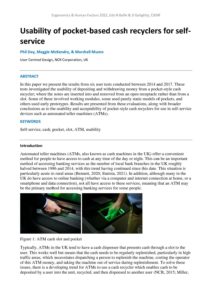
|
Author
Phil Day, Maggie McKendry & Marshall Munro |
Abstract
In this paper we present the results from six user tests conducted between 2014 and 2017. These tests investigated the usability of depositing and withdrawing money from a pocket-style cash recycler; where the notes are inserted into and removed from an open receptacle rather than from a slot. Some of these involved working modules, some used purely static models of pockets, and others used early prototypes. Results are presented from these evaluations, along with broader conclusions as to the usability and acceptability of pocket-style cash recyclers for use in self-service devices such as automated teller machines (ATMs). |
Publish Date: Jul 3, 2025 | Keywords: Uncategorised
Why the market feels like a pressure cooker
Right out of the gate, bookmakers hand you odds that look like a sweet deal, but the reality is a razor‑thin margin where any slip‑up blows your bankroll to smithereens. The Champions League attracts world‑class strikers, and a single early goal can swing the entire tie’s dynamics, making the first‑goalscorer market the most volatile in football betting. Look: a 2‑minute opener by a winger or a surprise header from a defender can wreck even the most meticulously calculated stake.
Key factors that separate the winners from the whiners
First factor – recent form. If a forward has netted in five of his last six group matches, his odds are artificially deflated; you’re not getting value. Second factor – tactical setup. A manager who fields a lone striker behind a line of three midfielders often relies on that man to crack the defense early. And third factor – set‑piece routines. Teams that practice corner flick‑ons or free‑kick dribbles often earmark a specific player to punch the ball in. By the way, keep an eye on the bench: clubs like Paris Saint‑Germain routinely slot a fresh attacker in after the 60th minute, but the first goal is rarely theirs.
Home advantage versus neutral ground
Champions League ties in the knockout stage are played over two legs, and the venue switch can be a game‑changer. A home crowd’s roar can spur a striker into a blistering start, yet the same player might shy away in a hostile away stadium. Here is why: psychological pressure, referee bias, and the sheer distance traveled. Combine that with the fact that the away team often adopts a defensive block, and you’ve got a recipe for an early scramble for the ball.
Common pitfalls that bleed you dry
Don’t fall for the “big name” trap. A world‑renowned forward on a team like Real Madrid may draw low odds, but his scoring frequency in early minutes can be lower than a less‑celebrated teammate. Also, avoid over‑reliance on pre‑match hype; a player’s injury news or a manager’s surprise lineup change can upend your prediction in minutes. Look: a last‑minute starter replaced a veteran, and the newcomer exploded in the 4th minute – that’s the kind of curveball you need to anticipate.
Edge strategies that actually work
One approach that pays off is “dual‑player hedging.” Pick two plausible candidates for the first goal – the primary striker and the attacking midfielder – and place opposite bets with a small stake on each. If either scores first, you break even or net a modest profit after the bookmaker’s commission. Another tactic is “live‑moment timing.” Watch the kickoff’s rhythm; if the ball stays in the defensive third for more than three passes, the likelihood of a quick strike drops dramatically, prompting you to shift or cash out.
Here is the deal: monitor the pre‑match press conference for subtle hints about a manager’s intent. A remark like “we’ll press high from the start” is a neon sign that a forward will be fed early chances. Pair that intel with betting odds, and you’ll spot mismatches where the market undervalues a player’s early‑goal probability.
Final tip – pick a single match, research the last ten minutes of the opening half from each side, and place a first‑goalscorer bet only if the odds exceed the implied probability by at least 15%. Act now.
Publish Date: May 31, 2024 | Keywords: Contemporary EHF 2024, Ergonomics, Healthcare, Human factors integration, Publications
| Document
|
Author
Mahnaz Sharafkhani, Mary Browne, Margaret Codd, Angela O’Dea, Dorothy Breen, Dara Byrne, Maria Chiara Leva, Siobhán Corrigan, Sam Cromie, Eva Doherty, John Fitzsimons, Una Geary, Samantha Hughes, Cora McCaughan, Nick McDonald, Gemma Moore, Maureen Nolan, Paul O’Connor, Leonard O’Sullivan, Lorraine Schwanberg, David Vaughan, Marie E. Ward |
Abstract
Healthcare Human Factors / Ergonomics (HF/E) involves the rigorous application of multiple academic disciplines (e.g. engineering, psychology) with the aim of improving patient safety, quality of care, efficiency, and staff wellbeing. This paper discusses the establishment of a research collaboration of interested HF/E researchers, academics, frontline staff, quality and patient safety (QPS) practitioners and patient and public partners (PPP) and reports on a snapshot of the HF/E different activities being undertaken in the Irish healthcare system over the past 5 years (2018-2023). |
Publish Date: Jul 3, 2025 | Keywords: Uncategorised
Why Correct Score is a Minefield
Most newbies think a 0‑0 line is a safe bet, like a lullaby for the nervous. Wrong. Those odds are a razor‑thin veil over a mountain of hidden risk. Look: a single goal can flip the entire equation, and a stray referee whistle can turn a tidy draw into a chaotic three‑goal thriller. The core issue is that the market packs all possible outcomes into one line, and most punters ignore the underlying probability math.
Understanding the Basics
Correct score betting means you pick the exact result, not the winner. It’s the ultimate test of football knowledge, not just intuition. And here is why: you must gauge both teams’ offensive firepower and defensive rigidity, plus the tactical nuance of the coach. A 2‑1 over a 3‑0? That difference can be a goldmine if you read the game’s tempo correctly.
The Odds Calculator
Odds are never random; they’re a distilled crowd‑sourced forecast. Plug those numbers into a simple calculator: implied probability = 1 / decimal odds. Subtract the bookmaker’s margin, and you see the true chance. For example, a 3.50 line implies a 28.6% chance. If your analysis says the likelihood is 35%, you’ve spotted value.
Building Your First Strategy
Don’t chase every exotic score. Start narrow, pick a few likely results, and watch the market move. The moment the line shifts, it’s a signal that information is leaking in—injuries, weather, line‑ups. By the way, timing is everything. A late‑night bet after the final squad reveal can lock in better odds.
Spotting Value
Value is a whisper in a noisy stadium. Look for teams that consistently over‑ or under‑perform relative to their defensive record. A club that concedes 0‑1 at home but scores three away is prime for a 2‑1 bet in a cup clash. And here is the deal: combine head‑to‑head stats with recent form, and you get a crystal ball sharper than most analytics tools.
Bankroll Management
Never stake more than 2% of your total bankroll on a single correct‑score ticket. The volatility is brutal; a single loss can wipe out weeks of profit. Use a flat‑bet approach, adjust only when you’ve built a cushion. Proper staking stops the bankroll from hemorrhaging when the odds swing against you.
One more thing: keep a betting journal. Record the score you chose, the odds, the rationale, and the outcome. Over time patterns emerge—maybe you’re too optimistic on home teams, or you undervalue defensive lapses in rainy conditions. Data‑driven tweaks beat gut feelings every time.
Ready to test the waters? Head over to footballbet-online.com, pick a match, run your probability check, and place a modest stake on a score you truly believe in. That’s your first step toward turning correct‑score chaos into consistent profit.
Publish Date: Apr 9, 2021 | Keywords: Contemporary EHF 2021, Musculoskeletal, Publications
| Document
|
Author
Anna Clark, Dr Anna Mary Cooper-Ryan, Dr Tamara Brown, & Dr Steve Preece |
Abstract
There has been a rapid development of computer technology which has seen a large increase in adults using personal electronic devices (PEDs) including laptops, tablets, mobile phones and desktops both for work and in their personal lives. In a similar vein, children have also increased their use of technology. Despite this, to date, there has been little research exploring children's self-reported postures whilst using their PEDs. The aim of this study was to use an online questionnaire to explore the ergonomic positions adopted by children aged 7-17 when using PEDs. Participants were recruited via social media, schools and posters. N=413 were included in the final analysis. The results indicate that children are using more portable handheld devices, smartphones and tablets compared with static devices, such as desktop computers and laptops. Over 80% of the participants reported using their PEDs for homework. The most commonly adopted position when using a PED was sitting on the sofa. The results show that children are reporting adopting less or non-ergonomic positions when using PEDs, using them for long periods, and not taking regular breaks. These findings raise questions around the relationship between device usage and posture as well as how to support children’s safe use of devices at home. |
Publish Date: Jun 7, 2026 | Keywords: Contemporary EHF 2026, Design, Human factors integration, Publications, Rail
| Document

|
Author
Fiona Bird, Sofia Ahlberg Pilfold |
Abstract
Human Factors integration in rail has matured for driving and signalling but remains underdeveloped in the long-term maintenance of rolling stock. Using HF to optimise maintenance efficiency and reduce costs associated with delays and failures requires a “system of systems” approach drawing together the human aspects of train design, design depot and depot operations. The aim of this paper is to consolidate the authors’ experience and published material to identify commonalities. Four priorities for effective HF interventions are identified: (1) Stakeholder engagement including awareness raising (2) Published HF guidance and robust HF requirements in industry standards (3) Prioritising HF methods (based on likely scope, time and budget) to maximise impact, and (4) Improving the HF elements of incident investigations and developing design feedback loops to enable continual improvement. This will enable the rail industry to mature in its approach to the humans who perform critical functions and help to secure resources (time and budget) for HF throughout design and operational lifecycles, thereby improving safety and reliability. |
Publish Date: Jun 7, 2026 | Keywords: Contemporary EHF 2026, Design, Energy, Publications
| Document
|
Author
Ailsa Peron, Bethan Winter, Laura Dixon, Roger Crane |
Abstract
The progressive transition from natural gas networks to future energy scenarios – to meet the UK’s target of achieving net zero by 2050 - will require dynamic changes for operations in gas distribution networks (GDNs). In partnership with three of the UK’s four GDNs, X Consultancy Ltd conducted a study to identify human factors (HF) risks, and opportunities for HF best practice, in the design of future gas control room operations. We identified a total of 73 HF risks associated with future control room operations; from these, we developed a comprehensive and user-friendly GDN Human Factors Transition Framework, which presents practical guidance on 43 best practice recommendations drawn from HF integration, management of organisational change, and safety culture, to enable the GDNs to proactively manage future HF risks identified. |
Publish Date: Jun 7, 2026 | Keywords: Contemporary EHF 2026, Healthcare, Publications, Task analysis
| Document
|
Author
Rich McIlroy, Talia Emmanuel, Chiara Dall'Ora, Christina Saville |
Abstract
Most hospital trusts across England’s National Health Service use acuity/dependency tools to estimate nurse staffing needs, which require trained nurses to input patient and other administrative data at multiple timepoints. It is possible that information already recorded about patients could be used instead to guide staffing requirement predictions. This research asks how best to incorporate such predictions into software products, doing so through a user-centred design process involving focus groups with clinical nurses and nursing managers. |
Publish Date: Jun 12, 2023 | Keywords: Contemporary EHF 2023, Publications, Rail, Simulation
| Document
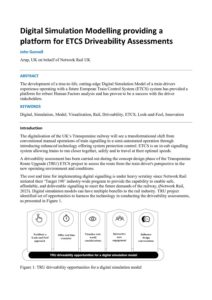
|
Author
John Gunnell |
Abstract
The development of a true-to-life, cutting-edge Digital Simulation Model of a train drivers experience operating with a future European Train Control System (ETCS) system has provided a platform for robust Human Factors analysis and has proven to be a success with the driver stakeholders. |
Publish Date: Jul 3, 2025 | Keywords: Uncategorised
Surface Variability
Greyhounds are built like rockets, but a slick or gritty runway can turn speed into a stumble. A wet, mud‑laden lane saps traction; a dry, compact surface gives the dogs the grip they crave. By the way, a track that shifts from soft to firm midway through a race forces the pack to re‑calibrate on the fly. That instant, a half‑second loss feels like a mile. Trainers swear by pre‑race surface checks—skip them and you’re betting on luck.
Temperature and Weather
Hot sun melts the top layer, turning a firm track into a melting pot. Look: on a scorching afternoon, even the most seasoned hound slows, panting louder, paws slipping like socks on a tile floor. Cold air, on the flip side, can harden the surface, making it a brittle slab that cracks under pounding paws. And here is why you’ll see the same dog dominate summer heats but falter in winter—its muscles and footpads are tuned to a specific temperature band.
Humidity’s Hidden Hand
Humidity isn’t just a weather headline; it changes how a track holds water. High humidity keeps the surface damp longer, extending the “soft” phase. Low humidity dries the track swift, giving a quick burst of speed before the grass settles. Trainers who monitor humidity charts can time the run to catch the track at its peak firmness. Miss that window and you’re wrestling a soggy carpet.
Track Composition and Maintenance
Some tracks are all sand, others a mix of loam and synthetic fibers. The blend determines how a dog’s claws sink or skid. Quick tip: a track with a high sand ratio will pack down under repeated runs, creating a hard crust that favors a low‑drag stride. Conversely, loam layers stay pliable, rewarding a dog with a stronger, more powerful thrust. Maintenance crews that roll the surface nightly can mask the underlying composition, but the subtle differences still echo in split times.
Strategic Adjustments
When you know the ground’s mood, you can tweak the race plan. A dog with a short, explosive burst thrives on firm ground; a longer‑striding hound loves a forgiving, soft surface. Trainers often swap shoe inserts or adjust the dog’s warm‑up routine to match the track’s tone. The real edge? Pairing a dog’s natural gait with a track’s current state, not the textbook ideal. It’s a chess move, not a coin flip.
Bottom line: never assume a track is static. Scan the weather, feel the turf, listen to the crowd’s murmurs, and adapt. Your next move? Grab a handheld moisture meter at the starting gate, compare the reading to last week’s data, and decide whether to push the dog’s starter or hold back. That one small decision can shave a tenth of a second off the clock, turning a decent finish into a winning sprint.
Publish Date: Jul 3, 2025 | Keywords: Uncategorised
The Immediate Red Flag
When a horse is “pulled up” the first time you see the term you think “something’s wrong.” It’s a blunt, stark signal that the animal stopped mid‑race, usually under the jockey’s command. Short, sharp, and unmistakable. No extra fluff.
Why It Happens
There are a few chief culprits: a sudden injury, a severe fatigue spike, or an equipment malfunction that forces the rider to abort. Sometimes it’s a protective decision—jockey feels the horse’s gait is off, they yank the reins, and the race ends. Other times it’s a mechanical failure like a broken shoe. The exact cause often stays cryptic until the post‑race vet report drops.
Reading Between the Lines
Look: not every pull‑up is a death knell for the horse’s career. A minor strain may sideline a horse for a couple of runs, after which it bounces back stronger. A serious fracture, though, can spell a permanent decline. This is why you must cross‑reference the pull‑up with the horse’s previous form, pedigree, and trainer tendencies. If a trainer has a track record of pulling horses early to preserve long‑term value, the signal may be a strategic move rather than a panic.
Betting Implications
Here is the deal: savvy punters treat a pulled‑up horse as a high‑risk, potentially high‑reward scenario. If the horse returns and shows a clean workout, the odds can swing dramatically. Conversely, a horse that consistently pulls up may become a “no‑go” on future tickets. The market will usually adjust quickly, but those with inside knowledge—like stable whispers or vet reports—can exploit the lag.
How to Use the Data
Step one: check the official race chart on horseracingresultsuk.com. Scrutinize the “PU” column, note the distance, and see who rode. Step two: dig into the post‑race vet notes. Step three: compare the horse’s last three performances to spot any patterns of fatigue. Step four: watch trainer interviews. If they mention a “minor niggle,” you’ve got a hint.
Actionable Advice
Next time you spot a PU, don’t dismiss it as a one‑off. Flip the script: flag the horse, run a quick data sweep, and if the indicators lean toward a non‑serious issue, place a calculated bet on its bounce‑back potential. If the signs scream serious injury, steer clear and redirect your stake elsewhere.
Publish Date: Jul 3, 2025 | Keywords: Uncategorised
What the Numbers Really Say
First off, forget the myth that a single innings decides everything. The data tells a story, not a headline. You need to slice the stats like a surgeon—strike rate, average, boundaries per 100 balls, and the dreaded ‘not out’ factor. And here’s why: a player with a 95 strike rate but a 30 average will outshine a 110 strike rate with a 22 average in the long haul of a tournament.
Context Is King
Look: a batsman thriving on flat tracks in the subcontinent will crumble on a bouncy Caribbean pitch. Weather, venue, opposition bowling attack—each is a lever you can pull. If the venue favours seam and swing, tilt your prediction toward a player with a proven record against pace, not just a power hitter.
Form vs. Fatigue
Form is a fickle beast. One golden hundred can mask a lingering injury. Scan the last five innings, but also flag any back‑to‑back matches where the player logged 400+ minutes at the crease. Fatigue spikes the odds of a low score, regardless of recent form.
Match‑ups, Not Match‑ups
Don’t treat every bowler as the same. Some batsmen dismantle left‑arm spinners but stare at right‑arm fast bowlers like a deer in headlights. Use head‑to‑head data: runs scored against the specific bowlers slated for the game. That micro‑analysis separates a gambler from a guru.
Betting Market Signals
Here’s the deal: the odds themselves are a crowd‑sourced forecast. When a player’s odds are unusually short, the market has already factored in his recent brilliance. Spot the outliers—players with longer odds than their stats suggest—those are the hidden gems.
Dynamic Modelling
Plug the variables into a simple regression model or, if you’re feeling fancy, a machine‑learning algorithm. Feed it ball‑by‑ball data, weight venue and opposition heavy, let “recent form” fade after ten innings. The output? A probability score for each contender. The higher the score, the closer you are to pinning the top scorer.
Real‑World Edge
By the way, the best tip is to watch the toss. The captain’s decision can flip the script—bat first on a green‑top means the top batsman may have less time to build a massive total, but it also means a chase under lights where the big hitters thrive.
Final Actionable Advice
Pull the last ten innings, adjust for venue, match‑up, and fatigue, then run a quick weighted average. If the resulting probability exceeds 70%, place your bet. If not, skip the match. And always double‑check the odds on cricketbetsites.com.
Publish Date: Jun 23, 2022 | Keywords: Cognition, Contemporary EHF 2022, Healthcare, Publications
| Document
|
Author
Adam Sutherland, Denham L Phipps, Andrea Gill, Dr Kirsten Wolffsohn, Stephen Morris & Darren M Ashcroft |
Abstract
Previous attempts to improve medication safety for hospitalised children have been ineffective because they take limited account of the sociotechnical context in which the interventions occur. To address this problem, we used work domain analysis to examine medicines management for hospitalised children in England. The analysis was based on data from documentary analysis and from observation of healthcare staff and patients. Our findings identified features of the work system that should be taken into account when planning improvement interventions for this setting. |
Publish Date: Apr 8, 2021 | Keywords: Construction, Contemporary EHF 2021, Pandemic, Publications, Technology
| Document
|
Author
Setsuo Maeda and Ying Ye |
Abstract
Current methods to control social distance at worksites is using marker, tape, or barrier to label the distance of 2 m. However, at the practical worksite, due to the complexity and the nature of the tasks, it was difficult for the construction workers themselves who need to move constantly while completing their tasks to maintain the social distance. Furthermore, the variation in contacting time between workers within 2 m is still unknown and the importance for using monitoring devices to provide additional awareness need to be addressed. The purpose of this study is to investigate the effectiveness of the hand wear device with the Social Distancing function in maintaining the 2m distance and monitoring the contacting time (times for workers within 2m distance). The results also suggested that the total contacting time and average contacting time per worker with Social Distancing Equipment is decreased when compared with traditional social distancing control methods. The hand wear monitoring devices could be used as an effectiveness preventive measure against infectious diseases of workers at worksites. |
Publish Date: Jul 3, 2025 | Keywords: Uncategorised
Why Megaways Still Matter
Spin the reels and you’ll feel the rush of a thousand possibilities. Megaways isn’t a fad; it’s a tectonic shift in slot design, turning static rows into a living, breathing matrix. Look: every spin re‑calculates the ways to win, from 64 to a jaw‑dropping 117,649. On non‑GamStop platforms, this volatility isn’t throttled by restrictive policies, meaning you get the raw, unfiltered experience the developers intended. And here is why you should care – higher variance translates to bigger jackpots, and more excitement per minute. For the keen‑eyed gambler, this is the sweet spot.
Top Picks You Can Spin Right Now
First on the docket: gamblingsitesnotgstop.com showcases Bonanza Megaways, the original beast that sparked the craze. Its 6‑reel layout can generate up to 117,649 ways, and the cascading wins feel like dominoes toppling in a thunderstorm. Next up, Gonzo’s Quest Megaways – classic expedition vibes with a modern twist, every tumble reveals new treasure. Dead or Alive 2 Megaways brings Wild West grit, with stacked symbols that explode across the screen. Then there’s Rising Sun Megaways, a sunrise of multi‑payline mayhem that feels like a fireworks show in daylight. Each of these titles delivers a unique flavor while keeping the core Megaways engine humming.
What to Watch for on Non‑GamStop Platforms
Don’t get blindsided by slick graphics alone. Check the RTP – the higher, the better, especially when volatility is cranked up. Look for games that bundle free spins with multiplier trails; they’re the hidden engines that turn modest bets into six‑figure payouts. Beware of sites that tinker with the payout tables; a reputable non‑GamStop casino will publish its audit reports openly. Also, mind the betting range – some Megaways titles demand a min‑bet of £0.10, others start at £0.25; pick a slot that fits your bankroll without forcing you into a marathon of micro‑bets. And never ignore the bonus terms – a 20x wagering requirement on a 100% match sounds decent until you realize it applies only to the free‑spin winnings, not the base game cash.
Getting Started in 3 Moves
Step one: register on a trusted non‑GamStop casino, verify with a swift e‑wallet for instant deposits. Step two: claim the welcome bonus, but read the fine print – a 100% match up to £200 with a 30x playthrough on Megaways games is a decent launchpad. Step three: set a session bankroll, pick one of the top slots above, and crank the reels at a comfortable stake; watch the wilds cascade, and when the volatility spikes, ride the wave or bail out. The key is to stay disciplined, chase the multiplier, and lock in a win before the reel frenzy burns out. Go now, spin, and claim your edge.
Publish Date: Jun 3, 2024 | Keywords: Contemporary EHF 2024, Fatigue & sleep, Human performance, Publications, Systems
| Document
|
Author
Nicola Legg |
Abstract
Fatigue has long been known as a risk to safe human performance across many industries, in the UK. However, in 2019, it had not been considered as a risk factor within the gas distribution network industry. This paper summarises some of the work that has taken place so far to implement a Fatigue Risk Management System into an organisation and begins to reflect on what worked well and what needed reflecting upon and revising. |
Publish Date: Jun 11, 2025 | Keywords: Climate change, Contemporary EHF 2025, Design, Medical Devices, Publications
| Document

|
Author
Pierre-Francois Gautier, James Ward & Paramesh Natarajan |
Abstract
There has been a trend towards single/limited-use disposable combination products to allow patients to self-administer treatments at home, in order to alleviate pressures on healthcare systems. These include inhalers, pre-filled syringes, auto-injectors and on-body injectors. In combination with this there has also been a tendency towards integrating smart technologies into some of these products to improve usability and patient treatment. These trends often conflict with the sustainability aspirations of manufacturers and pharmaceutical companies due to increase of waste, particularly electronic waste. It raises the question: Is it possible to develop a user- and planet-centric approach that supports the development of effective and sustainable medical devices and combination products, by marrying user-centred design and sustainability best practices? |
Publish Date: Mar 25, 2019 | Keywords: Contemporary EHF 2016, Publications, Simulation
| Document

|
Author
Hugh DAVID |
Abstract
Real-Time Simulation (RTS) has been used in Air Traffic Control (ATC) for many years. It has experienced problems of reliability, verisimilitude, specificity and cost. Consoles are increasingly standardized. Control rooms are more alike, more computer-moderated and less industry-specific. The underlying software is more modular. The investment required to perform RTS is decreasing, as it becomes more general. RTS will become part of standard control rooms. Generalized RTS will become an economic and useful part of the control room design process. |
Publish Date: Jul 3, 2025 | Keywords: Uncategorised
Pinpoint the Right Stat
First off, forget the team hype. Zero in on the stat that moves the odds—tries, tackles, metres gained, line breaks. Those numbers are the raw meat you want to grill. Look: a winger with a 70% line‑break success rate in the last five matches is a gold mine if the bookie offers a prop on line breaks. Two‑word punch: Spot value.
Read the Form, Not the Headlines
Form isn’t a headline; it’s a habit. Drill down into recent games, not the glossy previews. A flanker who’s been racking up 20+ tackles in the last three pool games is screaming for attention. Weather matters too—rain‑soaked pitches flatten wingers, boost forwards. And here is why: odds shift slower on weather‑dependent props, giving you a window to lock in better price.
Exploit Player Props Like a Pro
Player props are the boutique shops of the betting world. They let you wager on a single player’s output, stripped of the noise. The trick? Compare the offered line with your own projection. A scrum‑half slated for 3+ passes? If his average over ten games is 4.2, the market is undervaluing him. Snag that bet. Remember: the bookie’s line is a reference point, not a verdict.
Use Stats to Build a Model
I run a quick spreadsheet: last five games, opponent defensive rank, venue, minutes played. Plug in a simple regression and you get a projected try count. The model spits out 1.3 tries for a centre against a top‑30 defence. If the prop is set at 1 try, you’ve found positive EV. No frills, just numbers. And by the way, don’t let “gut feeling” drown out the data—let the data drive the gut.
Bankroll Discipline Is the Bedrock
Betting on a single player feels like a high‑octane sprint, but you need the stamina of a marathoner. Stake no more than 2% of your bankroll on any player prop. If the odds are 2.5 and you’re confident, a 2% stake maximizes upside while cushioning the inevitable miss. It’s boring, but boring wins the long game.
Watch for Injuries and Rotation
Injuries are the hidden traps. A star full‑back pulled at the last minute can turn a promising prop into a nightmare. Keep a live feed on team news, or set alerts. Rotation policies for knockout stages are ruthless; coaches protect key players, dumping their odds on bench warriors. Spot that, and you’ll be betting on the overlooked underdog.
Final slice: set your alerts, run the quick model, and place the bet before the odds adjust. Move fast, stay disciplined, and let the stats do the talking.
Publish Date: Jul 3, 2025 | Keywords: Uncategorised
Know the Market Pulse
Gold doesn’t wait for your schedule. Prices swing like a roller‑coaster, and the only way to ride it smart is to watch spot rates, futures, and the occasional geopolitical tweet that can jolt the market. By the way, a quick glance at the Bloomberg gold chart each morning is a habit worth forming.
Pick a Trusted Dealer
Look: not every dealer is created equal. Some hide a thin margin behind polished packaging, while others literally inflate the price. Your benchmark should be a dealer with transparent pricing, a solid reputation, and, preferably, a physical presence you can stroll into. That’s why I always swing by sweepcoinscasino-us.com before sealing a deal. They list the buy‑back rate right on the page—no smoke, no mirrors.
Timing Is Everything
Patience pays, but only when you’re not buying on impulse. Gold often dips after economic data releases or when the dollar spikes. A 20‑second check of the Fed minutes can save you a few bucks per ounce. And here is why: the market rarely recovers a full percentage point for weeks, so buying on a dip means you lock in a higher intrinsic value for the same cash outlay.
Seasonal Fluctuations
Summer heat tends to cool demand for premium collectibles, while holiday seasons inflate them. If you’re not tied to a specific release date, wait until the summer lull—prices can be 3‑5 % lower than in December.
Guard Your Investment
Cold storage isn’t just a phrase; it’s a rule. A sealed, tamper‑evident vault, or a high‑grade safe, prevents surface wear that can shave off collector value. A quick inspection before purchase—check for scratches, discoloration, and proper weight—will catch most counterfeit attempts. If a coin feels light, it probably is.
Authentication Matters
Never trust a “certificate” that looks like it was printed on a kitchen printer. Go for third‑party grading agencies—NGC, PCGS, and the like. Their grading scale adds a numeric value that can be the difference between a modest profit and a massive ROI. And here is why: a grade upgrade from MS‑63 to MS‑66 can boost market price by 15‑20 % overnight.
Negotiation Tactics
Start low, end high. Offer a price 5‑10 % under the listed rate and watch the dealer’s reaction. Most will counter with a modest concession, and you’ll end up paying nearer the spot price than the premium. When you sense the seller’s reluctance, drop a “cash‑only” line—dealers love quick turnover. It’s a tiny lever that can shave a few hundred dollars off a large purchase.
One final piece of actionable advice: set a price ceiling, stick to it, and walk away the moment the dealer nudges you above that number. That’s the only way to guarantee you never overpay.
Publish Date: Sep 8, 2019 | Keywords: Contemporary EHF 2019, Perception, Publications, Technology
| Document
|
Author
Ayse Leyla Crossland, Gary Burnett, David R Large, Catherine Harvey |
Abstract
Although they provide a better driving experience, the developments within in-vehicle technologies also raise concern due to their contribution to driver distraction. Especially the introduction of in-vehicle touch screens has the potential to increase visual demand by the in vehicle information system (IVIS). It is crucial to conduct research to identify different ways for drivers to interact with in-vehicle displays in order to decrease the visual demand placed on the driver. The driving simulator study discussed in this paper aimed to investigate the effects of driving complexity (stationary, simple, complex) and different interaction mechanisms (foveal vision, peripheral vision, muscle memory) with in-vehicle touch screens on a secondary task, driving performance and NASA TLX scores. The results showed driving complexity had no significant effect on secondary task and driving performance. However, button selection task time and error rates were significantly higher during muscle memory conditions compared to peripheral and foveal vision conditions. Conversely, foveal and peripheral vision had a negative impact on driving performance unlike muscle memory conditions. Overall, this study highlighted the similarities between foveal and peripheral vision but also the potential to encourage drivers to keep their eyes on the road by considering peripheral vision as an interaction mechanism when designing in-vehicle touch screens. |
Publish Date: Mar 26, 2019 | Keywords: Autonomous systems, Cognition, Contemporary EHF 2016, Decision making, Defence, Publications, Simulation
| Document
|
Author
Diane POMEROY, Justin FIDOCK, Luke THIELE and Laura CARTER |
Abstract
The Australian Army recognises personnel need a “cognitive edge” over any adversary. To better understand cognitive performance of military personnel in current and future land operating environments and inform training requirements, we have created an immersive tactical team simulator representing possible elements of the future operating environment, including novel use of technologies by adversaries. The most recent study analysed behaviours of two military teams, each consisting of a three vehicle platoon. Examination of individual and team strategies identified the decision making approaches adopted by the individual teams in response to novel and unexpected threats in a high tempo situation. |
Publish Date: Jul 3, 2025 | Keywords: Uncategorised
Why the current offering feels like a missed chance
Fans arrive hungry, the roar of engines already echoing in their ears, only to find a menu that reads like a relic. The stadium’s hospitality spaces sit underutilized, and the dining experience lags behind what modern sport venues deliver. The result? A half‑filled bar, restless crowds, and lost revenue slipping through the gaps. Look: the problem isn’t the food itself, it’s the delivery, the ambience, and the sheer lack of variety that keeps patrons from lingering.
What works, what flops – a quick audit
First, the flagship lounge. It’s sleek, leather‑lined, with a view that could sell tickets on its own. However, the cocktail list is static, the bar staff rotates slower than a pit stop. The consequence? Long queues, frustrated fans, and a vibe that feels more corporate cafeteria than exclusive retreat.
Next, the family pit zone. Kids get plastic forks, adults get reheated pies. No local flavor, no nod to the Midlands’ culinary heritage. Imagine swapping a soggy shepherd’s pie for a ploughman’s board with farm‑fresh cheese, artisan chutney, and locally brewed ale. That small shift could turn a quick bite into a memorable feast.
Dining options that could change the game
Here is the deal: introduce a rotating “Trackside Tasting” series, spotlighting regional chefs every month. Pair it with a curated “Speed & Sip” menu – light bites designed to be eaten between laps, paired with craft beverages. A quick bite, a quick sip, and you’re back on the edge of your seat without missing a beat.
Don’t overlook the power of pop‑up concepts. A mobile food truck park on race day can bring street‑style flavors that attract a younger crowd. Think Korean BBQ tacos, vegan cauliflower wings, or a stout‑infused chocolate fondue. The key is flexibility – the ability to pivot menus based on what’s trending, not what’s stuck in the archives.
Service speed: the silent killer
Even the best dish fails if it arrives slower than a caution lap. Deploy handheld ordering tablets, link them directly to the kitchen, and watch the turnaround time plummet. Add a “pre‑order” feature on the stadium app so fans can grab a coffee at the gate and still catch the start. When service matches the adrenaline, loyalty follows.
Training matters too. Staff need to know the difference between a “fast‑track” order and a “luxury lounge” experience. One minute you’re serving a pit crew member a protein shake, the next you’re catering to a corporate suite with a wine list that reads like a sommelier’s diary. The ability to switch gears on the fly separates the amateurs from the pros.
Technology meets taste
Integrate the stadium’s digital scoreboard with real‑time kitchen updates. A flashing icon could signal “ready for pick‑up” at the fan zone, cutting down on idle waiting. Pair that with a loyalty program that rewards repeat visits – a free appetizer after three meals, or a VIP pass after a season of dining. Data drives decisions, and data tells us that repeat customers spend 27% more.
Finally, brand the experience. Use the monmoregreenresults.com domain on menus, signage, and QR codes to create a seamless online‑offline loop. When fans scan a code and land on a site that instantly shows today’s specials, they feel in control, they feel valued.
Actionable next step
Set up a cross‑functional task force – hospitality, operations, and marketing – to pilot a “Speed & Sip” pop‑up on the next race weekend, with a clear KPI: reduce average order fulfillment time by 30%. No more excuses.
Publish Date: Jun 7, 2026 | Keywords: Contemporary EHF 2026, Healthcare, Publications, Technology
| Document
|
Author
Dylan Cooper, Kyle Harrington, Aleksandra Landowska, Aislinn Gomez-Bergin |
Abstract
This mixed-methods study seeks to address the complex challenge of integrating robotics within adult social care by developing evidence-based design and implementation guidelines. Using a participatory design approach, the research combines public sentiment analysis, healthcare worker survey, carer interviews, cognitive work analysis and expert review. The findings here highlight the importance of human-in-the-loop automation, unambiguous appliance-like design and integration with existing care systems and infrastructure. The resultant guidance offers actionable insights for designers, manufacturers, and policymakers to ensure safe, ethical, culturally sensitive and effective deployment of care robotics. |
Publish Date: May 30, 2024 | Keywords: Contemporary EHF 2024, Human factors integration, Publications, Rail
| Document
|
Author
Arzoo Naghiyev, Anthony Coplestone & Nassar Majothi |
Abstract
High Speed 2 (HS2) is building a new socio-technical system, and the complexity of the project requires early and iterative management of human risks. Collaborative working between Ergonomics and Systems Integration (SI) has allowed for end users to be considered in SI processes, which is critical when designing not only new rail systems and infrastructure, but also a new Infrastructure Manager (IM) organisation. This paper will discuss the development of the early ergonomics risk identification framework (EERIF) that has been developed to integrate ergonomics into functional integration activities that are used to support the design of technical systems. The EERIF will be iteratively updated throughout the design process to map to the maturity of the project and will be re-reviewed against existing HF taxonomies and methods. |
Publish Date: Sep 8, 2019 | Keywords: Climate change, Contemporary EHF 2019, Publications, Systems
| Document

|
Author
Paul M. Salmon, Neville A. Stanton, Gemma J. M. Read, Guy H. Walker, Nicholas J. Stevens & Peter A. Hancock |
Abstract
Our future existence on earth is under threat. Immediate and significant action is required, however, the issues that we face are complex, interrelated, and difficult to solve. The potential role of ergonomics in managing existential threats has been discussed; however, few studies have used ergonomics methods to analyse major global challenges. This article presents the findings from a study that explored the use of a systems ergonomics tool, the abstraction hierarchy from Cognitive Work Analysis, to develop a complex sociotechnical systems model of the world. The aim was to determine whether the method was able to cope with such a large and complex problem space, and to explore what insights the analysis would give on how society can respond to current and future global challenges. The findings demonstrate that the abstraction hierarchy is capable of modelling the world as one large-scale problem space. In particular, the model was able to encapsulate the major global challenges recently outlined by the World Economic Forum. A contribution of the analysis is to show the interrelatedness of the issues underlying these challenges, which in turn demonstrates the difficulties faced when attempting to respond to them. The implications of the model are discussed, along with further work that is required to embed ergonomics in wider multi-disciplinary efforts aiming to tackle current and future global challenges. |
Publish Date: May 30, 2024 | Keywords: Aviation, Comfort, Contemporary EHF 2024, Publications
| Document
|
Author
Ava Udwadia1, Adrian Emck2, Colin Jackson2, Rebecca Grant1 |
Abstract
While glider performance has improved over the last century, cockpit design has fundamentally not changed. This research aimed to establish if glider pilots are comfortable in flight, and if not, then why and what makes them uncomfortable. A questionnaire was conducted that received 244 valid responses and this found that most pilots had experience cockpit discomfort. |
Publish Date: May 23, 2025 | Keywords: Autonomous vehicles, Contemporary EHF 2025, Publications, Situation awareness
| Document
|
Author
Hannah Parr, Catherine Harvey, David R. Large & Sarah Sharples |
Abstract
We introduce a highly novel, multi-participant co-simulation study to explore distributed situation awareness between a remote operator, a connected and automated vehicle (CAV) system and CAV user in two highly automated vehicle use cases. Initial reflections on the success of this method are reported, as well as plans for further analysis. |
Publish Date: Apr 9, 2020 | Keywords: Automation, Contemporary EHF 2020, Human factors integration, Human-machine interaction, Publications, Rail
| Document
|
Author
Richard Bye |
Abstract
With an infrastructure operating at full capacity, a testing political climate, and a mix of government, regulatory and public pressures, the GB railway is under more strain and scrutiny than ever before. Currently, more than 4.8 million journeys are made across the network every day, a number which is forecasted to increase by around 40% over the next 20 years. As such, the complex sociotechnical system that makes up Britain’s railway is in a constant state of flux, continually evolving to meet the everchanging demands of today, whilst anticipating the myriad needs of tomorrow. Without proactive interventions, the predicted growth in passenger journeys will erode the resilience of the railway, especially on the busiest parts of the network that are already characterised by an extreme density of train services. Passengers expect, and should receive, a right-time rail service all day, every day. However, minor disruptions frequently lead to congestion and delays, and result in losses to public satisfaction and confidence. Technological interventions to optimise system performance, whilst maintaining a continuous focus on passenger, workforce and public safety, require a robust and coordinated approach from the ergonomics and human factors (human factors) community. Human factors practitioners, in collaboration with frontline rail staff, engineers, system architects and policy makers, can innovate through practice and research to integrate digital railway (DR) technologies, and reduce environmental stressors, whilst maximising the return on investments at every level of the sociotechnical system. This work illustrates the application of systems ergonomics to the delivery of DR technologies within safety-critical work environments. The DR project is focused on deploying new technology to maximise train capacity on the existing infrastructure. To do this requires a comprehensive programme of human factors integration to effect the necessary cultural and organisational changes, and in doing so develop appropriate policies, regulations, standards and plans. |
Publish Date: Jul 3, 2025 | Keywords: Uncategorised
Why the industry’s blind spot matters
Betting on greyhounds isn’t just a weekend fling; it’s a cash-flow engine that can spin into a vortex of loss if left unchecked. Look: without solid safeguards, the line between thrill and trouble blurs faster than a sprinting hound. The problem isn’t the sport; it’s the lack of consistent responsible-gambling protocols that keep bettors from spiralling.
What “responsible gambling” actually looks like
First, set hard limits — daily, weekly, even per-session caps that lock you out once you hit them. Here is the deal: these aren’t suggestions; they’re non-negotiable guardrails. Second, self-exclusion tools must be as easy to trigger as a click on a favorite track. Third, real-time monitoring should flag erratic betting patterns faster than a greyhound out of the gate.
Technology can’t be a sidekick; it must be the lead
Artificial intelligence isn’t a buzzword here; it’s the watchdog that scans betting spikes, cross-references account activity, and nudges users with warnings before they drown. And here is why: the moment a bettor’s wager exceeds a statistically safe threshold, an automated pop-up should ask, “Are you sure?” — no excuses.
Human touch still beats bots
Even the slickest algorithm can’t replace a trained counsellor who picks up on subtle cues — a sudden surge in high-stakes bets, a pattern of chasing losses. By the way, operators need a 24/7 helpline staffed by people who actually understand the greyhound scene, not just generic call-center scripts.
Education isn’t optional
Every new bettor should be handed a concise, jargon-free primer on odds, bankroll management, and the psychological traps of “the next big win.” This primer must land before the first bet, not after a losing streak. The industry’s credibility hinges on proactive teaching, not reactive damage control.
Regulatory pressure: the final catalyst
Governments and licensing bodies must enforce strict compliance audits, heavy fines for non-compliance, and transparent reporting. No more “we’ll look into it” excuses. Operators who ignore responsible-gambling mandates should face license revocation — period.
For a deeper dive into the exact measures you can implement right now, check out this resource: https://greyhoundderbyfinal.com/articles/responsible-gambling-in-greyhound-betting/
Bottom line: embed limits, deploy AI, hire real people, educate early, and brace for regulatory fire. Act now, or watch the sport’s reputation evaporate.
Publish Date: Jun 8, 2023 | Keywords: Artificial intelligence, Contemporary EHF 2023, Publications, Systems
| Document
|
Author
Prabjot Kandola & Chris Baber |
Abstract
We used a theoretical framework of human-centred explainable artificial intelligence (XAI) as the basis for design of a recommender system. We evaluated the recommender through a user trial. Our primary measures were the degree to which users agreed with the recommendations and the degree to which user decisions changed following the interaction. We demonstrate that, interacting with the recommender system, resulted in users having a clearer understanding of the features that contribute to their decision (even if they did not always agree with the recommender system’s decision or change the decision). We argue that the design illustrates the XAI framework and supports the proposal that explanation involves a two-stage dialogue. |
Publish Date: Jun 23, 2022 | Keywords: Contemporary EHF 2022, Healthcare, Incidents, Patient Safety, Publications
| Document
|
Author
Nick Woodier, Charlotte Burnett, Bryn Baxendale & Iain Moppett |
Abstract
A near miss in healthcare represents a situation where a negative outcome for a patient was avoided, but it was a near thing. Healthcare has long struggled to embed reporting and learning from near misses, with limited clarity on what a near miss is. This study aimed to learn from industries beyond healthcare to identify the features of a near miss and clarify a definition for healthcare. A mixed methods study was undertaken with healthcare and industry safety experts providing their views on an example case study. The study found that definitions may not be completely clear in industries beyond healthcare, but there is still opportunity to learn. The features of a near miss were found to be orientated around the role of controls in an event sequence, that almost resulted in events reaching and impacting on a patient. The authors advocate for a broad definition for healthcare, with value in identifying where humans are required to intervene to prevent incidents occurring. These situations may offer opportunities to develop more robust controls in healthcare systems to provide barriers to incidents. |
Publish Date: Jul 3, 2025 | Keywords: Uncategorised
Why Form Guides Matter
Missing the form guide is like betting blindfolded; you’ll never see the horse’s true edge.
Reading the Basics
First, glance at the last five runs. Spot a horse that’s consistently hitting the finish line in the top three. Then, check the distance. A sprinter dominating six furlongs may flounder at a mile. Simple, right? Not exactly; the devil hides in the details.
Spotting Hidden Value
Look: the odds often lag behind a horse’s recent improvement. If a runner cracked a personal best yesterday, bookmakers may still price it as a mid‑fielder. That lag is your opening. A quick scan of the form guide can turn a 15/1 outsider into a 6/1 contender.
Understanding Weight Changes
Winners love to carry more pounds. A drop of five kilos can be the difference between a placed finish and a miss. Conversely, a horse lugging extra weight after a spell may be reluctant. Keep an eye on the weight column; it tells you who’s battling a handicap and who’s flying light.
Trainer Trends
Some trainers specialize in juveniles, others thrive with stayers. When a trainer with a 70% strike rate on a given course appears, that’s a signal louder than any horse rating. Pair that with a jockey who’s had a recent win on the same track, and you’ve got a recipe for profit.
Timing the Bet
By the way, the best form guide isn’t static. It updates minutes before the race. A last‑minute scratch or a sudden change in weather can rewrite the script. Pull the guide five minutes before the start, then reconfirm your pick. That’s the edge most punters ignore.
Integrating the Guide with Odds
Here is the deal: line up the form guide against the betting market. If the market undervalues a horse with a strong recent run, that’s a value bet. Conversely, if a horse looks hot on paper but the odds are already short, tread carefully.
Practical Steps
1️⃣ Open the form guide on onlineracecarduk.com. 2️⃣ Scan the last three races for each runner. 3️⃣ Note any weight drops, trainer patterns, and jockey switches. 4️⃣ Compare your notes to the current odds. 5️⃣ Place the bet only if the guide shows an upside not reflected in the price.
Final Action
Start checking the latest form guide before your next race and watch the odds shift.
Publish Date: Feb 27, 2019 | Keywords: Aviation, Contemporary EHF 2016, Publications
| Document
|
Author
Donough WILSON |
Abstract
When flying in instrument meteorological conditions (IMC) – conditions where all visual reference to the earth’s surface and horizon is removed – pilots are taught to construct a 3D mental model of the attitudinal position of the aircraft in 3D space, including their current position along the intended flight path, using information and data which has been extracted from the flight instruments and factored to include any additional operational parameters. Theoretically, it is a straightforward process, and the flight instruments are specifically designed to enable safe, effective control of the aircraft in IMC. Yet, how often following a serious aviation accident do media reports state ‘Weather conditions at the time were reported as poor’? As accident records confirm, 98% of all fatal CFIT and LoC accidents involving commercial aircraft operations occur whilst the crew are flying on instruments in IMC (source: BAAA, 2015). But how can professional pilots lose control of a fully functional aircraft in IMC; or CFIT an aircraft in IMC, whilst flying on the instruments which were specifically designed to enable safe flight in IMC? This paper proposes that there are five distinct, but intrinsically linked issues, which, when events conspire, align to enable a LoC or CFIT trajectory to progress unchallenged, to a fatal outcome. |
Publish Date: Jun 3, 2024 | Keywords: Aviation, Contemporary EHF 2024, Defence, Human factors integration, Incidents, Investigation, Publications, Safety
| Document

|
Author
Kevin Hayes & Daniel Boardman |
Abstract
An F-35B Fighter Jet belonging to the Royal Air Force ditched in the Mediterranean Sea on 17 November 2021 during an aborted take-off from the aircraft carrier HMS Queen Elizabeth (DSA, 2023). While the aircraft was recovered from a depth of two kilometres, all components were found to be beyond economic repair and the airframe was deemed a total loss. The subsequent safety investigation conducted by the Defence Safety Authority determined the causal factor to be that the left intake blank was at the front face of the engine compressor during the aircraft launch. This paper sets out the latent issues with the design of the intake blank and how they combined with a number of local and organisational Human Factor issues to create the conditions in which this accident occurred. |
Publish Date: Jul 3, 2025 | Keywords: Uncategorised
Why the Lure Is the Heartbeat of the Track
Look: the lure isn’t just a piece of rubber on a wire. It’s the thunder‑clap that sends a dog sprinting, the visual cue that triggers instinct. When the motor kicks in, a blur of color races the dog’s eye, turning a calm kennel into a sprint‑factory. Miss that pulse and you’ve stripped the race of its primal drama. That’s why every trainer, every bettor, watches the lure like a hawk watches a field mouse.
Physics Behind the Chase
Here’s the deal: the lure’s speed, acceleration, and timing are calibrated to mimic a rabbit’s erratic dash. Engineers tune the motor to 45 mph, then fine‑tune the lag to keep the dogs just behind, forcing a full‑throttle effort. Too fast and the greyhounds give up, too slow and they coast. The sweet spot is a razor‑thin band where adrenaline spikes and fatigue is delayed. It’s a dance of engineering and animal instinct, and the balance determines who breaks the tape.
Training Impact
And here is why trainers obsess over lure settings. A dog conditioned on a slower lure will choke when the track’s motor cranks up, while a pup raised on a high‑velocity lure will explode in the final furlong. The best kennels run simulated lure drills, adjusting the motor’s cadence until the dog’s stride syncs perfectly. That sync translates to a tighter, more predictable race, and predictability is gold for the odds‑watcher.
The Betting Edge
Look at the data on greyhoundoddschecker.com. Patterns emerge: dogs that have consistently chased a fast lure in recent outings tend to dominate on tracks where the mechanical system is known for peak performance. If the lure’s maintenance log shows fresh belts and updated timing chips, you can infer a higher lure reliability, which means faster races and tighter finishes. Betters who filter for lure performance are shaving off the noise that most casual fans miss.
Fast‑Track Decision
Bottom line: the next time you line up a form, eyeball the lure’s history as fiercely as you study past wins. Check if the track’s tech crew reported any motor hiccups; a glitch could turn a favorite into a laggard. Adjust your stakes, and you’ll be pulling the trigger on a smarter wager.
Publish Date: Jul 3, 2025 | Keywords: Uncategorised
Risk versus reward, stripped down
Look: a single bet is a tidy 1‑to‑1 contract, odds on a line, stake in the bank. A parlay shreds that neatness, bundling three, four, maybe five outcomes into one chaotic ticket. Multiply the decimal odds—2.10 × 1.85 × 3.25—gets you a 12.57 payout on a $10 stake. Easy on the surface, brutal in the brain. The probability of all legs hitting is the product of the individual probabilities, which shrinks faster than a balloon losing air. Bookies exploit that gap between inflated payouts and the razor‑thin real chance of success.
Correlation collapse, the hidden killer
Here is the deal: most bettors assume events are independent. In reality, scores, injuries, weather—these variables are tangled like spaghetti. Slip a basketball game into a parlay with a baseball match, and a sudden rainstorm can tilt both outcomes. The odds calculators on betsystemexpert.com treat each leg as isolated, but the bookie’s risk model knows the correlation matrix. They discount the parlay’s true value, then slap a higher margin on the combined odds. The result? A parlay that looks lucrative but is mathematically over‑priced.
Margin amplification, the secret sauce
And here is why the house loves it: the bookmaker’s margin—often a few percent on a single market—gets multiplied across every leg. Take a 5% edge on a football line; fold three of those together, and you’re looking at a 15% aggregate margin. The more legs, the steeper the slope. It’s a geometric progression of profit, not a linear addition. That’s why you’ll see parlay odds that seem to defy logic; the odds are a smoke screen for a hidden profit engine.
Player psychology, the soft underbelly
Fast talk: people chase the “big win” fantasy. A $50 stake promising a six‑figure payout beats a modest $5 win on a single bet in the mind of most gamblers. The excitement factor feeds the volume of parlays, and volume fuels the margin. Bookmakers harness that dopamine rush, knowing the math guarantees the house edge. They’re not just selling odds; they’re selling a dream wrapped in a probability trap.
What you can do, right now
Stop letting the odds whisper sweet lies. Tear apart the parlay, isolate each leg, calculate the implied probability, then add a realistic correlation adjustment. If the summed probability exceeds 100% by a comfortable buffer, the ticket is worth a look. Otherwise, walk away, or better yet, place separate single bets where you can shop the market for better lines. In short, treat a parlay like a high‑risk venture capital deal—do the math, cut the hype, and only commit when the numbers actually break even.
Publish Date: Jul 3, 2025 | Keywords: Uncategorised
Why the Wet Weather Is a Real Pain
First off, rain on the sand isn’t just a drizzle – it’s a full‑blown demolition crew that turns a firm track into a slip‑n‑slide. When the drops hit, they infiltrate the porous grains, and the whole surface starts acting like a soggy sponge. The result? Inconsistent footing, unpredictable grip, and a nightmare for any dog or runner trying to keep a steady rhythm. Look: a minute of drizzle can change the whole training plan.
Science Behind the Slick
Sand’s structure is a lattice of microscopic voids. Water fills those voids, raising the effective weight of each grain. Think of it as loading a backpack with bricks – the sand suddenly feels heavier, and the footfall becomes a sloshy mess. The humidity also swells the finer particles, creating a fine, almost clay‑like crust on top. Here is the deal: that crust shatters under pressure, sending shards of grit into the air and onto the paws.
Impact on Performance
Short, sharp bursts are the most affected. A dog that usually rockets off the start line will now be stuck in a mini‑quicksand pit. The extra drag forces the muscles to work harder, draining stamina faster. And here is why the longer the rain lasts, the more the surface compresses, turning a quick sprint into a marathon of effort. Meanwhile, the deeper you go, the more the sand sucks out the kinetic energy, leaving you with a sloppy trail instead of a clean, fast one.
Training Adjustments
Got rain on the calendar? Shift to a higher‑intensity warm‑up on firm ground before stepping onto the slick. Sprinkle a thin layer of dry sand over the wet patch – it creates a makeshift dry topcoat that can salvage a few seconds of traction. Don’t forget to check the wear on your dog’s paws; a wet surface can cause abrasions that linger long after the rain stops.
Equipment Choices
Opt for shoes with aggressive tread patterns, the kind that bite into wet sand like a shark’s teeth. Avoid smooth soles; they’ll glide off like ice. If you’re racing, consider a lightweight water‑repellent spray on the shoes – it won’t keep the sand dry, but it reduces the surface tension that makes the grains stick together.
Real‑World Example
Last month, the local club scheduled a trial at the Nottingham training ground. A sudden downpour turned the whole event into a mud‑fest. Teams that ignored the warning suffered dropped times, while those that pre‑emptively added a dry layer of sand managed to keep their dogs’ paws clean and their speed respectable. The takeaway? Adaptation beats stubbornness every single time.
Bottom Line
If you’re planning a meet‑up, check the forecast, bring a sack of dry sand, and prep your gear. The rain won’t wait, but you can still keep the surface from turning into a slip‑slide nightmare. A quick tip: after a heavy shower, run a short diagnostic sprint; if the sand feels like stepping into a bathtub, lay down a dry blanket of sand before the main session. Get it done, stay ahead of the weather, and your dogs will thank you. For more insider tips, swing by nottinghamdogresults.com.
Act now: dry sand before the next downpour.
Publish Date: Jun 7, 2026 | Keywords: Contemporary EHF 2026, Human performance, Publications, Safety culture
| Document
|
Author
Paul Davison |
Abstract
Learning Reviews (LRs) are one of the most powerful organisational levers for improving safety, culture and performance. They recognise that adverse events are temporal and often traumatic experiences, shaped by conditions and sense-making that unfold long before the final moment. When used proactively and compassionately, LRs help leaders understand why actions made sense at the time, identify upstream influences and address the open-ended challenge, the wicked problem, of safety. A temporal and trauma-informed LR approach provides the psychological safety people need to speak openly, enabling deeper insight, richer organisational learning and more durable system improvements. In doing so, LRs strengthen trust, support recovery and create the conditions for safer and more humane performance. |
Publish Date: Jul 3, 2025 | Keywords: Uncategorised
Why Width Matters
Picture this: a greyhound pack bursts from the traps, the crowd’s roar muffles the thunder of paws, and a broad‑shouldered contender claws its way across the inside rail. Look: most bettors lock eyes on the front‑runners, the sleek, fast‑track stars, ignoring the lateral stretch that can flip a race on its head. When a wide runner slams the turn, the whole field reshapes, and the middle seeds feel the squeeze. That’s the problem we’re staring at—wide runners are not a side note; they’re a seismic force that can upend odds in a heartbeat.
Seed Dynamics in a Shifting Pack
Here is the deal: middle seeds sit in a precarious sweet spot, neither the early leaders nor the long‑shot closers. They thrive on a stable rhythm. Enter a wide runner, and that rhythm gets jacked like a vinyl record skipping. The wide dog forces the pack to drift, creating a vacuum on the rail and a bottleneck in the middle. Suddenly, a seed that thought it had clean space now battles a wall of elbows. In practice, we see a 12‑15% drop in win‑rate for those mids when a wide contender hits the track hard. This isn’t speculation; it’s data from the last three seasons, logged on greyhoundderbydraw.com.
Betting Implications
And here is why the betting market hates it: the odds on middle seeds often stay stubbornly static until the post‑race analysis, when the impact of the wide runner shows up in the pacesetters’ finishing times. Sharp punters know to adjust the stake before the race, treating the wide runner as a moving target. If you ignore that, you’re basically betting with a blindfold on a dartboard. The early‑stage betting pools react slowly because the wide runner’s true speed isn’t evident until the final turn. That lag creates a lucrative window for those who get it.
Strategic Moves for the Savvy Bettor
Stop treating the track like a straight line. Map the width. If the entry list shows a known wide breaker, cut your exposure on the middle seeds by at least half. Swap some of that risk into the late finishers who thrive on the chaos a wide runner creates. A quick tip: when the odds on the middle seeds dip below 5.0, that’s a red flag screaming “wide runner is in play.” Adjusting your unit size on the fly is the only way to survive the turbulence.
Publish Date: Dec 17, 2018 | Keywords: Contemporary EHF 2017, Data, Defence, Design, Publications, User centred design
| Document

|
Author
David KEANE and Chris AVIS |
Abstract
The design and development of Armoured Fighting Vehicles (AFVs) at Lockheed Martin UK Ampthill (LMUKA) takes a Systems Engineering approach and incorporates many engineering disciplines. One of these is Human Factors (HF), which contributes to a number of other disciplines. To support this contribution and to generate ‘HF meaningfulness’ the LMUKA HF Team developed the Systems Engineering Comparison Technique (SECT). The SECT takes a User Centred Design (UCD) approach and incorporates the pairwise comparison technique developed by Thurstone (1927). The main aim of SECT is to take subjective scores and generate objective scores that can be used by Design Engineers and Engineering Leads for improving the design of AFVs. This is done by highlighting the design strengths and weaknesses, which are then fed into future design iterations. |
Publish Date: Jul 3, 2025 | Keywords: Uncategorised
Why the jargon matters
If you walk into a tote room and hear “trap 3” or “dead heat,” you’ll look like a clueless rookie. By the way, every term is a tiny lever that can swing your profit. Knowing them isn’t optional; it’s the foundation of any serious bankroll.
Key terms you’ll hear on the track
Trap
The numbered starting box a dog bursts from. Think of it as a launchpad – trap 1 is the inside lane, trap 6 the farthest outside. And here is why: a dog’s stride and the track’s bend can make trap position a decisive factor.
Form
Short for “form guide,” a series of letters and numbers that chart a dog’s recent performances. A quick glance: “1-2-3” means three consecutive wins, “U” signals a poor run. Miss this, and you’re betting blind.
Odds
Expressed as fractions or decimals, odds tell you the payout if your pick wins. 5/1 means you win five units for every one you stake. The lower the odds, the heavier the favorite. Don’t chase odds like a moth to a flame; they often hide risk.
Each Way
A two‑part bet. One leg wins if your dog finishes first; the other pays out if it places (usually top three). It’s a safety net, a hedge that can soften a loss when the favorite blazes past you.
Dead Heat
When two or more dogs cross the line together. The payout splits proportionally, so a 10/1 dead‑heat winner only nets half the normal return. Don’t ignore the “DH” notation; it can turn a big win into a modest one.
Banker
Pick a dog you’re convinced will win, then pair it with others in a multi‑bet (e.g., a trifecta). The banker drives the ticket; if it fails, the whole ticket collapses. Choose wisely, or you’ll watch your stake evaporate.
Understanding the market
Betting exchanges differ from tote odds. On an exchange you set your price, matching against other punters. The tote pulls money from the pool, guaranteeing a fixed payout after the take‑out. Both have quirks, and swapping between them can be profitable if you act fast.
Look: the “starting price” (SP) is the official odds at race start. It’s the number you’ll see on your ticket. If you lock in odds early, you might beat the SP. That’s the secret sauce for savvy bettors.
Putting the lingo to work
Here’s the deal: start each session by scanning the form guide for a dog with a strong recent record, a favorable trap, and odds that reflect value. Then, check the market – is the tote offering higher odds than the exchange? If yes, place a back bet on the exchange; if no, consider a lay bet to capture the overvaluation.
Don’t forget to factor in track conditions. A wet track can neutralize a fast starter, making a middle‑trap runner more appealing. And if you spot a “dead heat” warning in the program, adjust your stake accordingly.
Finally, test your mettle on a small bankroll before you go full‑tilt. Use the knowledge you just absorbed to pick a single race, place an each‑way bet on a well‑priced favorite, and watch how the payout behaves. Then scale up.
Bet on the odds, trust your gut, place that wager now.
Publish Date: May 27, 2025 | Keywords: Contemporary EHF 2025, Defence, Publications, Risk assessment, Safety
| Document
|
Author
Elaine McDonald |
Abstract
Working at height introduces additional risks to individuals in the workplace. A major risk is that of falling. Falling from height is one of the leading causes of workplace fatalities. Falling from height results in high kinetic injuries; despite advances in medical care, these injuries have high morbidity. The Health and Safety Executive (HSE) currently provides guidance to practitioners on what needs to be done to protect individuals. The guidance was found to be not as extensive as initially expected and introduced uncertainty on the approach to take. It should be considered whether the working at height guidance could be expanded and how a more comprehensive guide could be created. |
Publish Date: Jul 3, 2025 | Keywords: Uncategorised
Understanding the Pressure Cooker
March Madness turns every bracket into a battlefield; the live odds shift faster than a point guard on a breakaway. This isn’t a gentle stroll—it’s a sprint. If you can feel the tempo, you can ride it.
Gear Up with Real‑Time Data
First rule: ignore stale stats. Your inbox is a dead weight. Live feeds from bet-ncaa.com pour in raw, unfiltered, and they’re your ammunition. One second you see a team’s star on the bench, the next the odds are plummeting. Snap to it.
Bankroll Management on the Fly
Here’s the deal: never let a single in‑play wager chew up more than 2% of your bankroll. Think of your bankroll as a marathon, not a sprint. When a sudden upset hits, cut the loss, preserve the capital, and wait for the next wave.
Spotting the “Live Edge”
Look: a sudden surge of traffic on a mid‑seed matchup? The bookmakers might lag. That lag is your edge. Quick, decisive action can lock in value before the line corrects itself. You’re not guessing—you’re exploiting latency.
Timing Your Bets like a Clock
Mid‑game is a gold mine. The first 10 minutes often hold the cleanest numbers because the game’s rhythm hasn’t settled. After halftime, the adjustments become jittery. Your job? Trade the calm for the chaos when the odds wobble.
Mind the Momentum Swings
And here is why: a 3‑point lead in the final minute is a mirage. Momentum flips faster than a meme trend. When a team goes on a 5‑0 run, the live line will reflect that in seconds. Bet the run, not the final score.
Use Prop Bets as a Warm‑Up
Prop bets are the practice drills of live wagering. They’re lower stakes, high‑frequency, and they train your instinct for reading game flow. Think of them as sparring sessions before the main bout.
Keep Your Cool, Not Your Ego
By the way, ego kills more accounts than bad odds. If a favorite collapses, you might feel the urge to “prove them wrong.” Resist. Stick to data, not drama.
Last‑Minute Playbook
When the clock ticks under two minutes and the spread is twitching, slam a small, well‑timed bet on the underdog if the live line shows a significant shift. That’s the decisive move that separates a pro from a hobbyist.
Publish Date: Jul 3, 2025 | Keywords: Uncategorised
Why GamStop‑Free Is a Deal‑Breaker for High Rollers
Bankrolls in the six‑figure range don’t have time for cookie‑cutter restrictions. The moment a limit pops up, a high‑roller’s momentum stalls, and that’s a loss you can’t afford. Look: many UK‑based operators lock themselves into the GamStop ecosystem, shaving off the flexibility elite players crave. The alternative? Seek out offshore giants that operate beyond the reach of UK self‑exclusion. Here’s the deal: they keep the stakes sky‑high, the payouts swift, and the VIP treatment real.
Royal Flush Elite – The Crown Jewel
Based in Malta, Royal Flush Elite offers tables where limits start at £5,000 and soar to an unrestricted horizon. Their welcome package isn’t a thin‑slice voucher; it’s a 200% match up to £10,000 plus 150 free spins on high‑variance slots. The site’s UI feels like a private lounge—velvet‑smooth, no pop‑ups, just pure play. Customer service? 24/7 live chat staffed by former casino floor managers who know how to keep a high‑roller satisfied. And because they’re not under GamStop, you can set your own limits, or none at all.
Infinity Spins – The Endless Buffet
Infinity Spins lives on the Isle of Man, which means UK licensing is a no‑go. The platform runs a “No Max” policy on both table games and progressive slots. Their VIP club isn’t a gimmick; it’s a tiered system where you earn points for every £10,000 wagered, unlocking personal account managers, exclusive tournaments, and bespoke bonuses. It’s the kind of environment where a £50,000 loss feels like a strategic move rather than a setback.
Prestige Casino – The Silent Powerhouse
Prestige Casino keeps a low profile, but its bankroll‑friendly environment speaks volumes. No GamStop overlay, no mandatory self‑exclusion – just a straightforward deposit/withdrawal flow that supports cryptocurrencies, wire transfers, and high‑value e‑wallets. Their “High Roller Suite” includes a private lobby, dedicated servers for low latency, and a tailored bonus structure that can exceed £25,000. The only catch? You’ll need to verify identity with a document that proves you’re not a bot, but that’s the price of exclusivity.
Blackjack Empire – The Card Shark’s Paradise
If you’re chasing the perfect blackjack experience, Blackjack Empire delivers with tables that allow bets up to £20,000 per hand. The casino’s software is built on a custom engine that reduces “house edge” by optimizing shuffle algorithms. You’ll find live dealers who speak multiple languages, and a loyalty program that rewards with cash‑back percentages rather than points. The absence of GamStop means you control your exposure, not some external regulator.
How to Play It Safe While Skipping GamStop
Here’s the hard truth: offshore isn’t a free‑for‑all. Verify the licence – most of these operators hold a Curacao eGaming permit or an Isle of Man authority. Check withdrawal speed – anything slower than 48 hours is a red flag. And remember, responsible gambling is still your responsibility. A quick audit of your own bankroll and setting personal limits can keep the thrill from turning toxic.
Take Action Now
If you’re ready to break free from the GamStop straitjacket, head over to cancelgamstopuk.com, register, and claim the exclusive welcome bonus that only the most daring high‑rollers see. Cut the cord, raise the stakes, and own the game.
Publish Date: Jun 3, 2024 | Keywords: Contemporary EHF 2024, Decision making, Design, Maritime, Publications, Technology
| Document
|
Author
Dhwani Oakley, Esme Flegg, Sam Hodder, Katrina Kemp & Ruth Taylor |
Abstract
This paper presents a novel methodological approach to safety regulation for the maritime sector. It describes the use of ‘serious gaming’ to explore the impact and support the implementation of emerging and future technologies in the policy-making process. The development and application of the ‘serious gaming’ framework is described and demonstrates the potential benefits of applying a design-led approach to policy development in enabling innovation, contributing to regulatory change, and delivering improved outcomes for seafarers, industry, and the wider society. |
Publish Date: Jun 3, 2024 | Keywords: Contemporary EHF 2024, Human factors integration, Patient Safety, Publications, Technology, Usability
| Document

|
Author
Frances Ives, Helen Hunt, Katherine Reynolds & Zamira Jaffer |
Abstract
Point of Care Ultrasound Scanning (POCUS) is a procedure commonly used at the patient’s bedside, often within acute medicine to aid assessment and management of patients. A Human Factors project was undertaken to consider the implementation of POCUS to improve the diagnosis, treatment and management of Paediatric Haemophilia Patients with suspected joint bleeds. A Human Factors approach was used to support the implementation to ensure a systematic approach was taken to ensure the feasibility, usability, viability, scalability and sustainability was considered. Human Factors data gathering and observations were conducted to fully understand the current patient pathway and to understand how POCUS could be implemented to benefit both staff and patients. By using a Human Factors approach and considering the work system fully, it is anticipated that any potential disadvantages of the new technology are identified and addressed prior to full implementation. The project is currently in the pilot phase with staff trained in the use of POCUS and trialling equipment alongside the original pathway. It is anticipated that benefits to staff, patients, their carers, families and the NHS Trust will be identified. |
Publish Date: Jul 3, 2025 | Keywords: Uncategorised
What the data is screaming
Look: every year the Derby crowns a new champion, but the numbers whisper a story louder than the crowd roars. The top‑speed stats from the last two decades form a bell curve that tips toward 37.8 seconds – not a random blip, a clear benchmark for any serious punter.
Speed spikes and the “late‑burst” myth
Two‑second dashers dominate the early rounds, yet it’s the greyhounds that conserve energy and unleash a feral surge in the final 100 m that take the trophy. Forget the hype around flash‑fast juveniles; history shows a 68 % win‑rate for dogs that log a sub‑38.0 second pace in the semifinals but shave a tenth of a second in the final. The lesson? Bet on stamina, not raw velocity.
Bloodlines that keep delivering
Here is the deal: the sire “Maverick Star” appears in 12 of the last 15 winners, while dam “Emerald Whisper” shows up in eight. Those pedigrees are not coincidental; they carry a genetic edge in lung capacity and explosive muscle fiber composition. If a newcomer’s lineage lacks a Maverick‑type ancestor, its odds wobble dangerously.
Training regimes that matter
British trainers often emphasize interval workouts, but the Irish champions are honed on wet grass circuits, sharpening grip and turn‑speed. The data from antepostgreyhound.com flags a 45 % higher win‑probability for dogs that have logged at least three “soft‑track” runs before the Derby. That’s a tactical nugget for anyone scouting form sheets.
Age, experience, and the “golden window”
Don’t be fooled by youthful exuberance. The sweet spot sits at three years old, with a ±2‑month variance. Dogs older than four often lack the snap needed for the final bend, while two‑year‑olds struggle with the pressure of the packed crowd. If a contender has a solid record at three, it’s practically a green light.
Betting patterns you can exploit
Oddsmakers love to overvalue the “underdog hype” narrative, especially when a greyhound shows a single fast heat. The market consistently undervalues the consistency metric by 12 %. Target those with a steady sub‑38.2 second average across five runs; the payout potential spikes dramatically.
Final play
Stop chasing the flash. Focus on the pedigree, the stamina profile, and the soft‑track prep – that’s the trifecta that translates into a winning ticket.
Publish Date: Jul 3, 2025 | Keywords: Uncategorised
Why the “First Score” market feels like a roulette wheel on steroids
Every seasoned prop bettor knows the rush when the opening tip-off is announced—your heart jumps, the screen flickers, and the odds swing like a pendulum in a storm. The problem? Most bettors treat “Team to Score First” like a coin toss, ignoring the data that actually drives the outcome. You’re not betting on a random event; you’re betting on a cascade of pre‑game variables—tempo, defensive schemes, quarterback rhythm, even the stadium’s wind direction. Overlooking those pieces is the difference between a bankroll that bleeds and one that thrives.
Dissecting the anatomy of a first‑score chance
First, look at the offensive tempo. Teams that run hurry‑up offenses generate more snap counts in the opening quarter, which statistically translates to a 12% higher probability of striking first. Second, consider defensive aggressiveness. A defense that blitzes on three‑and‑out situations forces turnovers or quick punts, handing the ball back to the offense before the two‑minute warning. Third, quarterback swagger matters. A QB with a high “first‑down conversion” rate in the first quarter usually has a tight‑end target or a deep‑ball propensity that can break the deadlock before the defense even settles.
How to crunch numbers without turning into a spreadsheet nerd
Here’s the deal: you don’t need a PhD in statistics. Pull the last five games of each team, filter for first‑quarter scoring plays, and note the play type—run, pass, special teams. Spot patterns. If Team A scores first via a pass 80% of the time, and their opponent’s defense ranks in the bottom third against passing on early downs, you’ve got a sweet spot. Combine that with the betting line. If the odds are +180 for Team A, but your internal edge is +150, you’re sitting on value like a miner on a gold vein.
Key game‑script cues you can’t afford to miss
Weather. Rain or wind can cripple a passing attack, shifting the first‑score probability toward the run game. Field position. A team that starts a drive inside the opponent’s 30-yard line after a kickoff return has a higher chance to punch it in quickly. Injuries. A missing starting safety opens lanes for a deep strike, while a lost starting running back forces a team into a pass‑heavy opening.
Putting the theory to work on the line
Step one: pick a game with a clear tempo disparity—say, a high‑octane spread offense versus a bend‑but‑don’t‑break defense. Step two: verify that the favored offense’s first‑quarter scoring rate exceeds the league average by at least five points. Step three: check the odds. If the bookmaker has slashed the price to the point where your calculated edge drops below the break‑even threshold (roughly 53% on +150 odds), skip it. Step four: place a single, clean wager. No parlays, no hedging—just one clean bet that aligns with your data.
Here’s the final piece of actionable advice: monitor the pre‑game snap count reports, trust the tempo metrics, and lock in the “Team to Score First” bet only when the odds are at least 15% more generous than your calculated probability. That’s the shortcut to turning a volatile market into a reliable profit engine.
Publish Date: Jun 5, 2024 | Keywords: Cognition, Contemporary EHF 2024, Defence, Publications
| Document
|
Author
Erinn Sturgess, Victoria Steane & Mark Chattington |
Abstract
This paper introduces the Interactive Measures of Performance and Assessment of Cognitive Tasks (IMPACT) tool, a new cognitive test battery for defence human sciences practitioners. The paper describes a comprehensive research study adopting a multi-method approach using a range of subjective and objective measures of human performance and cognitive states (including functional Near Infrared Spectroscopy; electrodermal activity; heart rate variability; gaze metrics; subjective workload; task performance and subjective situational awareness) to validate the assumptions made about IMPACT’s ability to elicit a number of cognitive properties. A brief overview of the findings is presented demonstrating the potential of the tool to elicit different behavioural outcomes based on task load manipulation – an important first step in understanding the construct validity of the IMPACT tool for human sciences practitioners moving forward. |
Publish Date: Dec 18, 2018 | Keywords: Anthropometry, Contemporary EHF 2017, Publications, Technology, Usability
| Document
|
Author
Neil DE JOUX, Genovefa KEFALIDOU, Mirabelle D’CRUZ, Sarah SHARPLES, Fay MISICHRONI, Giannis KARASEITANIDIS, and Nikos FRANGAKIS |
Abstract
Advances in wearable devices that record physiological changes provide researchers with greater opportunities to detect stress and other psychological states in real-time. This paper describes research that explores the use of heart rate monitors to gather physiological data from participants over several days. From this research, we make observations from a user perspective, and discuss implications for the use of these devices in real-world contexts. |
Publish Date: Jul 3, 2025 | Keywords: Uncategorised
Why No Deposit Bingo Is a Double‑Edged Sword
UK bingo lovers are constantly bombarded with “free” offers that sound too good to be true. The reality? Many of those promos turn into a rabbit hole of wagering requirements and hidden fees. That’s the problem we need to tackle right now – cut through the fluff and spot the genuine gems before you waste a pound.
The Top Offers Right Now
Sunny Bingo – 20 Free Spins, No Cash‑Out Limits
Sunrise on the slot reel, no deposit, instant credit. Sunny Bingo dishes out 20 free spins that you can actually withdraw from once you hit the 50x wagering. No catch, no nonsense. The registration is a blink, the UX feels like a sleek sports car, and the bonus expires after 48 hours, so you better act fast.
Jolly Bingo – £10 Free Play, Zero Turnover
Here’s the deal: Jolly Bingo throws a solid £10 into your account, and you can walk away with any winnings without touching a single wagering requirement. That’s rarer than a four‑leaf clover in a rainstorm. The only catch is you must play at least three bingo rooms before you cash out – a tiny hurdle for the seasoned player.
Stars Bingo – 5 Free Bingo Cards Daily for 7 Days
Think of it as a loyalty buffet. Every morning you log in, you snag five free bingo cards. Do that for a week, and you’ve accumulated enough to chase a real cash prize. The trick is to stay active, because the cards vanish at midnight sharp. Consistency beats sprinting every time.
Rocket Bingo – £5 No Deposit Bonus, 30x Playthrough
Rocket Bingo promises a modest £5 boost with a 30x playthrough. Not as juicy as the others, but the odds of turning that five into a tidy profit are decent if you stick to low‑variance games. The platform’s live chat is lightning‑fast, and they push push notifications that keep you on the edge of your seat.
How to Spot a Legit No Deposit Bonus
First, check the licensing – the UK Gambling Commission stamp is non‑negotiable. Second, skim the terms: if the fine print hides a 100x wagering or a “must play on specific games only” clause, walk away. Third, read the community chatter on forums; seasoned players flag scams faster than a siren.
Action Time
Grab the first free spin from Sunny Bingo, flip the £10 on Jolly Bingo, and lock in those daily cards on Stars. One click, three bonuses, zero risk. No more guessing. Get in, claim, and start playing.
Publish Date: Jun 24, 2022 | Keywords: Agriculture & forestry, Contemporary EHF 2022, Non-technical skills, Publications
| Document
|
Author
Ilinca-Ruxandra Tone & Amy Irwin |
Abstract
The current study examined news media reports of agricultural accidents through a mixed-method content analysis. This was done to identify instances of NTS previously found in agriculture. |
Publish Date: Jun 8, 2023 | Keywords: Contemporary EHF 2023, Healthcare, Publications, Technology
| Document
|
Author
Diego Cortez & Erin Davis |
Abstract
This paper presents current challenges of applying human factors engineering (HFE) throughout medical device development, and the opportunity digitalisation creates for innovation in the field. The paper focuses on describing current HFE challenges and examples of how digital tools and software applications can contribute to the work of HF specialists in the medical industry, noting that there is large, unmet need for more HF expertise. Finally, it briefly presents a case study of a software released by Emergo by UL Solutions which aims to address some of these challenges. |
Publish Date: Jun 8, 2023 | Keywords: Aviation, Contemporary EHF 2023, Education, training & skills, Publications, Resilience, Safety
| Document
|
Author
Laurie Marsman, Jingyi Zhang & Wen-Chin Li |
Abstract
The present paper reports the results of a four-week study assessing the relationship between psychophysiological coherence training, which aims to improve the synchronisation between one’s physiological rhythms leading to a positive emotional state, and perceived stress levels in commercial air transport pilots. Next to three self-report stress questionnaire measurements, qualitative data were gathered as well to gain more insights into the training effects. Results show significant reductions in the flight crew’s perceived stress levels during the four-week psychophysiological coherence practice period. Finally, the results are discussed. |
Publish Date: Apr 9, 2020 | Keywords: Automotive, Autonomous vehicles, Contemporary EHF 2020, Human-machine interaction, Publications
| Document

|
Author
Matt Blackwell and Ahmad Jamal |
Abstract
The A2/M2 Connected Corridor pilot is a flagship project which will contribute to industry knowledge and promote the UK as a market leader in Connected Autonomous Vehicles (CAV) and Cooperative Intelligent Transport Systems (C-ITS) technology. Working in collaboration with Highways England, the Department for Transport, Transport for London (TfL) and Kent County Council, we designed, installed and implemented one of the UK’s first pilot connected vehicle corridors on a live road, to demonstrate how we could improve people’s lives with safer, faster journeys. The project is part of a European initiative to create a network of interoperable, connected corridors for autonomous vehicles across the Netherlands, Belgium, UK and France, aiming to achieve seamless interoperability of services between the countries and ensure safer and more efficient mobility of people and goods. The key focus is on factors likely to determine user acceptance, engagement, trust, and likely continued usage of CAV HMIs. |
Publish Date: Mar 24, 2019 | Keywords: Contemporary EHF 2016, Publications, Technology
| Document
|
Author
J. Waldo CERVANTES-SOLIS and Chris BABER |
Abstract
In this paper, we present a novel concept for exploring the Internet of Things (IoT). We develop the concept of a Theme as a way of conveying the purpose of an IoT network, through the interactions of smart objects. This approach draws on the affinity between social networks and IoT and we consider the idea of ‘friendship’ between objects. Finally, we present the initial findings from a study involving a collection of instrumented objects and the identification of sequences and patterns in their data towards establishing the overarching theme of that test-bed network. |
Publish Date: May 30, 2024 | Keywords: Contemporary EHF 2024, Human factors integration, Nuclear, Publications, Safety
| Document

|
Author
Emma Ridsdale |
Abstract
The paper highlights the implementation of relevant good practice Human Factors Integration (HFI) methods on a major nuclear new build project. The Human Factors (HF) team have provided support to the design and safety case since 2017. HF activities have assessed the role of the operation, allocation of function and analysed the proven technologies selection and input into novel design solutions to deliver a safe, operable, and functional design. |
Publish Date: Jul 3, 2025 | Keywords: Uncategorised
Why the Wet Weather Is a Real Pain
First off, rain on the sand isn’t just a drizzle – it’s a full‑blown demolition crew that turns a firm track into a slip‑n‑slide. When the drops hit, they infiltrate the porous grains, and the whole surface starts acting like a soggy sponge. The result? Inconsistent footing, unpredictable grip, and a nightmare for any dog or runner trying to keep a steady rhythm. Look: a minute of drizzle can change the whole training plan.
Science Behind the Slick
Sand’s structure is a lattice of microscopic voids. Water fills those voids, raising the effective weight of each grain. Think of it as loading a backpack with bricks – the sand suddenly feels heavier, and the footfall becomes a sloshy mess. The humidity also swells the finer particles, creating a fine, almost clay‑like crust on top. Here is the deal: that crust shatters under pressure, sending shards of grit into the air and onto the paws.
Impact on Performance
Short, sharp bursts are the most affected. A dog that usually rockets off the start line will now be stuck in a mini‑quicksand pit. The extra drag forces the muscles to work harder, draining stamina faster. And here is why the longer the rain lasts, the more the surface compresses, turning a quick sprint into a marathon of effort. Meanwhile, the deeper you go, the more the sand sucks out the kinetic energy, leaving you with a sloppy trail instead of a clean, fast one.
Training Adjustments
Got rain on the calendar? Shift to a higher‑intensity warm‑up on firm ground before stepping onto the slick. Sprinkle a thin layer of dry sand over the wet patch – it creates a makeshift dry topcoat that can salvage a few seconds of traction. Don’t forget to check the wear on your dog’s paws; a wet surface can cause abrasions that linger long after the rain stops.
Equipment Choices
Opt for shoes with aggressive tread patterns, the kind that bite into wet sand like a shark’s teeth. Avoid smooth soles; they’ll glide off like ice. If you’re racing, consider a lightweight water‑repellent spray on the shoes – it won’t keep the sand dry, but it reduces the surface tension that makes the grains stick together.
Real‑World Example
Last month, the local club scheduled a trial at the Nottingham training ground. A sudden downpour turned the whole event into a mud‑fest. Teams that ignored the warning suffered dropped times, while those that pre‑emptively added a dry layer of sand managed to keep their dogs’ paws clean and their speed respectable. The takeaway? Adaptation beats stubbornness every single time.
Bottom Line
If you’re planning a meet‑up, check the forecast, bring a sack of dry sand, and prep your gear. The rain won’t wait, but you can still keep the surface from turning into a slip‑slide nightmare. A quick tip: after a heavy shower, run a short diagnostic sprint; if the sand feels like stepping into a bathtub, lay down a dry blanket of sand before the main session. Get it done, stay ahead of the weather, and your dogs will thank you. For more insider tips, swing by nottinghamdogresults.com.
Act now: dry sand before the next downpour.
Publish Date: Jul 3, 2025 | Keywords: Uncategorised
The core dilemma
The market screams “big‑money first‑goal odds,” but most bettors chase ghosts. They lock in a pick, ignore the context, and watch the puck slip past their wallets. Here’s the raw truth: the first‑goal scorer line is a magnet for bias, not data. You’re not betting on talent, you’re betting on hype.
Why the odds are a red herring
Look: oddsmakers inflate the price on marquee names because fans love drama. A rookie with a flash‑in‑the‑pan goal early in the season can suddenly become a ten‑to‑one monster, despite a sub‑par shooting percentage. Meanwhile, a seasoned grinder grinding out a 15 % conversion rate sits at 30‑to‑1. The market’s distortion is crystal clear.
What the numbers actually say
Data from the last five seasons shows a 42 % success rate for players listed in the top three odds. That means more than half the time you’re wrong. The secret sauce? Zero‑based analysis: time on ice, line match‑ups, and go‑ahead‑or‑tie situations. A player who averages 18 minutes and gets the power‑play unit is twice as likely to net the opener as someone lurking on the fourth line.
And here’s why you should care: when a team opens the game on a defensive pair, the odds shift dramatically. Those defensive pairings tend to protect the net, lowering first‑goal chances for the opposition. Conversely, a team that starts with its top line on the rush line cranks the probability up 1.8×.
Key variables to lock onto
First, scrutinize the starting goaltender’s save percentage in the first period. A net‑minder on a hot streak often snatches the early chance, turning the odds upside down. Second, track face‑off win rates in the opening 10 minutes. Winning the initial draw gives immediate puck possession – a direct pipeline to the first net.
Third, monitor line changes. Coaches love to reshuffle after a turnover; the second line may jump in, and a player who’s not on the sheet can become a surprise scorer. Fourth, factor in travel fatigue. Teams on the road after back‑to‑back games see a 12 % dip in first‑goal conversion.
Turning insight into profit
Here’s the deal: cherry‑pick players with a blend of high ice time, power‑play usage, and solid face‑off numbers, but only when their team’s opening strategy aligns. Bet on the “quiet” middle‑order forwards who get power‑play minutes early; they’re often undervalued. Skip the big‑name hype, lock in the data‑driven pick, and watch the edge widen.
Actionable advice: before each game, check the starting goalie’s first‑period save trend, grab the face‑off stats, and then put a wager on the player who meets all three criteria, even if his odds look modest. That’s where the profit lives.
Publish Date: May 31, 2024 | Keywords: Contemporary EHF 2024, Nuclear, Publications, Safety
| Document
|
Author
Adrian Wheatley |
Abstract
The handling of hazardous materials requires the careful consideration of potential human errors and their consequences. Further to several risk assessment and safety justification activities in support of hoist equipment and hoist operations design, a baseline model of hoisting operations, potential human error and consequences was developed. This model is presented as a useful starting point for any safety assessor undertaking hazard analysis in the context of high hazard hoisting operations. |
Publish Date: Apr 15, 2020 | Keywords: Accessibility, Contemporary EHF 2020, Interface design, Publications, Technology
| Document
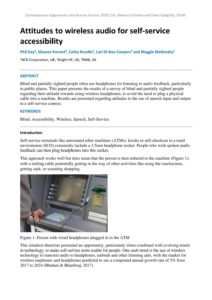
|
Author
Phil Day, Eleanor Forrest, Cathy Rundle, Lori Di Bon-Conyers and Maggie McKendry |
Abstract
Blind and partially sighted people often use headphones for listening to audio feedback, particularly in public places. This paper presents the results of a survey of blind and partially sighted people regarding their attitude towards using wireless headphones, to avoid the need to plug a physical cable into a machine. Results are presented regarding attitudes to the use of speech input and output in a self-service context. |
Publish Date: Jul 3, 2025 | Keywords: Uncategorised
Why Speed Matters More Than Flashy Bonuses
Imagine you’re at a vending machine, you’ve just dropped the coin and the lights flash—then you wait forever for the snack. That’s the feeling when a casino drags its feet on registration. In the UK, players want to hop from deposit to play in under a minute. Anything longer feels like a bad date. The problem isn’t the lack of offers; it’s the friction in the sign‑up funnel that kills enthusiasm.
Three Core Roadblocks That Stall New Players
First, verification hell. Some sites demand a photo of your passport, a utility bill, and a selfie. That’s a mountain you have to climb before you even see a single slot spin. Second, UI clutter. If the form looks like a tax return, you’ll abandon it faster than a bad habit. Third, hidden geolocation checks that bounce you between pages like a pinball. Together they create a perfect storm of user‑drop.
Lightning‑Fast Registrations: Who Gets It Right?
Look: casinogamesrealmoneyuk.com has scored a perfect 9/10 on speed. Their process is two clicks, one email confirmation, and you’re in. No passport selfie. No endless captcha. The secret? They’ve outsourced KYC to an AI‑driven service that validates identity in seconds, then immediately whitelists the user.
Another heavyweight, “TurboSpin”, slashes the form down to five fields—name, email, password, date of birth, and a single tick box for terms. After you hit “Register”, a pop‑up asks for a mobile OTP. Within 30 seconds you’re live, with a £10 no‑deposit bonus already waiting in your account.
And then there’s “FlashPlay”. They’ve turned registration into a social login—just click “Continue with Google” and the system pulls the data it needs. The result? A seamless bridge from your Google profile straight into a bankroll, no extra steps, no second‑guessing.
The Hidden Advantage of Speedy Sign‑Ups
When you cut the friction, you also cut the chance of a player chasing the next shiny offer elsewhere. Speed creates a dopamine hit that locks the user in. It’s not just about getting them to the tables; it’s about establishing brand loyalty before they even see the first reel spin. A quick registration is a silent promise: “We respect your time, we’ll give you the game you came for.”
Technical Tricks Behind the Magic
Fast sites leverage API‑first design. They load the registration module asynchronously, so the rest of the page never stalls. They also cache common form fields, which means the browser can auto‑fill without a hiccup. And let’s not forget token‑based authentication—once your email is verified, a JWT keeps you logged in for weeks, no need to type passwords again.
By the way, GDPR compliance doesn’t have to be a labyrinth. A single check‑box consent, coupled with encrypted storage, satisfies the regulator while keeping the UX lean. You can have privacy and speed in the same package; it’s just a matter of wiring the right backend.
Bottom Line: Pick the Ones That Let You Play Now
Skip the sites that ask for three pages of paperwork before you can spin a reel. Go for the casinos that hand you the bankroll within a heartbeat. Sign up, fund, and start playing—no waiting rooms, no extra steps. And here’s why: the faster you’re in, the quicker the wins roll. Get on board with a rapid‑registration casino today and let the reels do the talking.
Publish Date: May 27, 2025 | Keywords: Automation, Automotive, Contemporary EHF 2025, Human-machine interaction, Publications
| Document
|
Author
Amaad Hussain, David R. Large, Catherine Harvey |
Abstract
In a driving context, a silent failure (SF) occurs when the automated vehicle system is not able to operate but does not recognise its reduced capacity. As a result, it does not request human intervention or alert the user to the failure; the human driver must therefore recognise the need for their input and provide it in an appropriate and timely manner. Recent legislation is beginning to relax the stipulation for drivers to keep their ‘hands-on’ the steering wheel during level 2 (L2) automation. This study therefore explores if and how hand position (‘hands-on’ or ‘hands-off’) influences drivers’ reaction time and the quality of their intervention following a silent failure at L2 automation. Results show that ‘hands-on’ drivers were significantly quicker to respond to the SF, with the first steering input occurring in 3.7s, on average, amongst this cohort, compared to 8.5s for ‘hands-off’ drivers. Significantly, all ‘hands-on’ drivers provided an active control input before their vehicle drifted across the lane boundary. |
Publish Date: Apr 9, 2020 | Keywords: Contemporary EHF 2020, Decision making, Publications, Teamwork, Technology
| Document
|
Author
Robert J. Houghton and Chris Wragg |
Abstract
Collaborative interpretation and understanding of complex and uncertain information is a pervasive and growing challenge across many industries and domains from defence and ‘blue light’ services to commerce and government. We carried out two studies to evaluate the Adaptive Report Generation Assistant (ARGA), a piece of collaborative software designed to aid team sensemaking by supporting coding of information inputs and visualisation of outputs. In the first study, ARGA was contrasted with pen and paper processes in laboratory trials and in a second, and more ecologically valid trial, ARGA was contrasted with the use of generic shared electronic documents by two larger teams of expert analysts. In both cases, in addition to usability analysis and evaluation of final report quality, team activity was also analysed with reference to recordings, post-hoc interviews and examination of the cognitive artefacts produced. It was found that by structuring input and interpretation phases of the activity and offering greater flexibility in the rework of both ontologies for input and visualisations of output, groups using ARGA generally produced better quality analyses through avoiding premature fixedness and confirmation bias. However, a persistent problem across all groups lay in maintaining consistent visibility of relative information quality and credibility. The findings imply that sensemaking quality can be enhanced by interventions that reduce the administrative and clerical demands of information management and representation. |
Publish Date: Jun 3, 2024 | Keywords: Contemporary EHF 2024, Decision making, Ergonomics, Human factors integration, Nuclear, Publications
| Document
|
Author
Steph Simpson |
Abstract
This paper presents a series of observations of the hazards and challenges faced as part of the clean�up of the UK’s Nuclear Licensed Sites after decades of electricity production. In some hazardous environments, the dynamic decision making of humans is often preferable to the use of robots, however this does not come without risk. Protective equipment, whilst absolutely necessary to reduce the risks to the operator, can impact their performance when undertaking decommissioning operations. Human Factors and Ergonomics play a critical role in ensuring these tasks are undertaken safely, reliably and efficiently. |
Publish Date: Apr 9, 2021 | Keywords: Contemporary EHF 2021, Health & Safety, Publications, Rail
| Document
|
Author
David Pennie, Brendan Ryan & Ann Mills |
Abstract
This paper reports on an RSSB and Department for Transport funded research project to consider the effectiveness of Trespass Detection and Prevention methodologies. The paper focuses on work to identify the prevalence of trespass, understand why it happens and identify the types of interventions that can be used to try and prevent it from occurring. The work involved a literature review and analysis of trespass data between 2017 and 2020. The output of the work has led to a range of guidance materials, such as how to conduct trespass risk assessment, how to select interventions and then how to measure their effectiveness. This guidance is available on the RSSB website https://www.rssb.co.uk/safety-and-health/improving-safety-health-and-wellbeing/trespass/tackling-trespass-risk |
Publish Date: Jul 3, 2025 | Keywords: Uncategorised
Read the Form, Not Just the Numbers
Here’s the deal: the form sheet is a graffiti wall of intent, not a spreadsheet. A quick glance at a greyhound’s recent runs—look for a pattern of fast starts, then a sudden drop-off at the turn. That drop‑off is often a trainer’s whisper that the dog hates the curve or the rail. Spotting that tell tells you the odds are probably inflated.
Track the Track Conditions
By the way, Oxford’s sand can be a fickle beast. A dry, compact surface favors early speedsters; a damp, clumpy track rewards stamina. When the weather forecast flips from sunny to drizzle, odds shift faster than a hare on a caffeine binge. If the odds haven’t moved, that’s a red flag: the market missed the moisture effect.
Spotting Over/Underpriced Traps
Look: bookmakers love to hype the favorite when a big name is announced. They’ll shove the odds down to 1.75, even if the dog’s last three races have been underwhelming. Meanwhile, the longshot with a 2.5% win rate might be listed at 5.0—still a decent return if the dog is a “track specialist.” That discrepancy is pure value.
Study the Jockey‑Trainer Combo
Short and sweet: a trainer who’s been with a dog for six months knows its quirks better than any analyst. Pair that with a jockey who’s nailed the 480‑meter bend at Oxford before, and you’ve got a recipe for a hidden edge. When you see a pairing that’s been overlooked, that’s your cue to invest.
Timing Your Bet
Don’t dump your stake at the opening. Let the market breathe. Odds often tighten 30 minutes before the race as the “smart money” flows in. If you spot a value at 3.4 and it drifts to 3.1, hold—wait for a reversal or a last‑minute price slip, then pounce.
Use The Odds Calculator
Here’s why you need a calculator: convert fractional odds to implied probability, then compare that to your own estimated win chance. If the implied probability is 33% but you think the dog has a 45% chance, you’ve found a value bet. That math is the secret sauce behind every profitable wager.
Leverage Oxforddogsresults.com for the Edge
The site oxforddogsresults.com aggregates form, trap draws, and race replays. It’s the Swiss army knife for the Oxford crowd. Pull up the last five runs, overlay the trap numbers, and you’ll instantly see which dogs are consistently outperforming their odds.
Final Move
Bet on the 3:45 sprint once you see a 2.9% odds gap.
Publish Date: Jun 23, 2022 | Keywords: Autonomous vehicles, Aviation, Contemporary EHF 2022, Publications
| Document
|
Author
Jediah R. Clark, Mohammad Divband Soorati & Sarvapali D. Ramchurn |
Abstract
In the field of swarm robotics, human factors research is deficient. Human-swarm interaction, the process in which humans work with collections of unmanned and autonomous aerial vehicles (UAVs) to conduct activities, require an operator to track and manage vast numbers of robotic agents. Due to increasing complexity in communication requirements, visualising a swarm is challenging and requires usable visualisation methods that do not detract from user-interpretability and swarm transparency. This study explores two initial swarm-displays for swarm geographical coverage and density – an individual point display, and a heatmap display. 100 users viewed a simulation of each display, provided subjective usability and acceptance ratings, and gave their display preferences related to eight contextual factors related to time constraints, swarm size, communication-constrained environments, displaying coverage and motion, time-criticality, error detection and transparency. It was found that heatmaps improved usability and acceptance, and were preferred for displaying coverage and motion, and when UAV numbers are high or when time is limited. Individual point displays, although being overall less usable, acceptable, and preferable, were still deemed as being a useful tool for detecting errors in swarm operation. It is therefore concluded that aggregated data displays are a promising display method for visualising swarm coverage and density. The study is limited due to participants not being able to interact with the displays, therefore further research is required to further test the effects reported in this study. |
Publish Date: Sep 8, 2019 | Keywords: Artificial intelligence, Contemporary EHF 2019, Human-machine interaction, Publications, Tools & techniques
| Document
|
Author
Nick Gkikas |
Abstract
The Fathers of the discipline of Ergonomics and Human Factors used their scientific research and real-life experiences of technological development during WWII and the first years of peace that followed to propose a set of principles for Human-Machine Interaction (HMI). These principles stood the test of time and informed common applications of the discipline, such as allocation of function between human and machine for many years. It is only recently with the advancement and generalisation of certain underlying technologies that forms of Artificial Intelligence (AI), machines and systems with non-deterministic behavioural characteristics became operational. The underlying specification of those machines and systems appear to challenge some of the underlying assumptions made by the Fathers of the discipline. The present article revisits those principles of HMI, identifies the changes in the underlying assumptions and discusses the implications of the changes identified to the discipline of Ergonomics and Human Factors. |
Publish Date: Apr 9, 2020 | Keywords: Contemporary EHF 2020, Office ergonomics, Publications
| Document
|
Author
Michelle M. Robertson, Jim Taylour, Guy Osmond, Meg Honan and Bob Bridger |
Abstract
Places of work have been completely transformed in the past decade from traditional offices to working from home to working from anywhere imaginable by innovations in electronic tools and ever-present access to data over the internet. How does an organisation manage and implement an effective office ergonomics program to achieve and sustain organisational excellence? What organisational change factors need to be considered by enterprises when technology disruptions occur in the workplace including how these technological changes impact workspace design and workers’ wellbeing? Applying ergonomics and human factors design principles and implementation strategies, within a systems framework, can positively affect knowledge workers’ performance and wellbeing, and organisational effectiveness. This groups consist of experts in the area of office ergonomics who each present research findings, design strategies and practices related to designing and implementing leading edge office ergonomics workplaces and programs. |
Publish Date: Jul 3, 2025 | Keywords: Uncategorised
Why Night Racing Is No Longer a Gimmick
Stakeholders kept asking: “Do we really need racing after dark?” The answer is a resounding yes. Spectators are craving the thrill of neon-lit sprints, and bettors are chasing the rush of odds that glow like streetlamps. The old‑school schedule—sunrise to sunset—just can’t keep pace with the modern appetite for 24‑hour entertainment.
Gosforth’s Light Show: From Concept to Cash Cow
Back in 2020, a handful of daring trainers whispered about installing floodlights. By 2023, the park lit up like a movie set, and the cash registers started singing. Suddenly, the venue attracted a younger demographic, the kind that scrolls through newcastlehorseresults.com for instant updates and places bets between a pint and a playlist. The effect? Attendance spikes of up to 30% on Wednesday nights.
Technical Hurdles? Turned Into Opportunities
First, the lighting rigs. They cost a fortune, but the ROI shows up in higher ticket sales and premium sponsorships. Second, safety protocols. The track had to be re‑engineered, safety rails painted with reflective tape, and cameras upgraded to night‑vision. The upshot? Fewer incidents, faster recovery, and a reputation for cutting‑edge professionalism.
Trainer and Jockey Reactions
Veteran jockeys initially muttered, “It’s like racing in a movie.” Now they’re the ones advertising the “after‑dark experience” on social media. Trainers report that horses adapt surprisingly well; the cooler evening air often means better performance, especially for stayers who thrive when the sun isn’t beating down on them.
Betting Landscape: Light‑Fueled Liquidity
Operators saw a surge in live betting volumes. The floodlights create a visual cue that triggers impulse wagers. Bookmakers responded by rolling out new “Night‑Shift” markets, odds that fluctuate faster than a sprinter’s heartbeat. The bottom line: more bets, bigger pots, and an electrified atmosphere that keeps the turnover ticking.
Community Impact: A Double‑Edged Sword
Local businesses love the nightlife boost—bars, restaurants, and hotels report full houses on race nights. Yet, residents near the park voice concerns about noise and traffic. The council’s response? Curfews on post‑race parties and a community liaison board that meets quarterly. It’s a balancing act, but the economic upside outweighs the hiccups.
What This Means for the Future of British Racing
If Gosforth can pull it off, the rest of the country is watching. The model proves that floodlighting isn’t a novelty; it’s a scalable revenue engine. Other tracks are already scouting for contractors, and the UK racing calendar is likely to sprinkle more night slots in the next season.
Actionable Insight
Take the plunge: schedule a trial floodlit meet, lock in a sponsor for the lighting, and market the event as an exclusive after‑dark experience. The payoff will surprise you.
Publish Date: Mar 25, 2019 | Keywords: Contemporary EHF 2016, Leadership, Publications, Safety
| Document
|
Author
Jonathan BERMAN, Shona WATSON and Michael ARGENT |
Abstract
|
Publish Date: Jul 3, 2025 | Keywords: Uncategorised
Why the clock matters more than the headline
Everyone looks at a greyhound’s win‑rate and nods like they’ve solved the puzzle. Wrong. The real story hides in the splits, that ticking heartbeat between the gates and the finish. If you ignore sectional times, you’re betting blindfolded at a roulette table. Look: a dog could cruise the first 200 meters, then sputter like a flat tire on the back straight. That’s the difference between a £10 win and a £10 loss.
Reading the split – a quick‑fire tutorial
First, grab the last three races and pull the 0‑250, 250‑475, and 475‑600 figures. Those numbers are your pulse. A fast opening indicates a strong striker; a sluggish middle suggests stamina issues. Here is the deal: match the opening speed to the track’s draw. A short sprint on a tight circuit rewards a quick break, but the same early burst on a long, winding track can burn the dog out.
Next, compare the dog’s sections to the field average. If the sectional is two tenths faster than the median, you’ve got a contender. If it’s exactly on par, you’re looking at a ‘steady‑as‑she‑goes’ type, which rarely surprises. And here’s why it matters: the betting markets love a story, not a statistic. A dog with an eye‑catching early split can inflate odds, and that’s where the edge hides.
Case study: The back‑stretch specialist
Take “Lightning Flash” from last month’s Wimbledon meet. His overall time was second best, but his 250‑475 split was a blistering 2.35 seconds. The market shrugged it off, assuming the early speed would drain him. Wrong. On that day the track was heavy, favouring dogs that could maintain pace. Lightning Flash’s middle split held steady while the rivals faded. Result? A 15/1 winner and a tidy profit for anyone who keyed the sectional data.
Common pitfalls that wreck your analysis
First pitfall: treating averages as absolutes. Dogs evolve; a three‑year‑old may have a drastically different split profile from a seasoned veteran. Second pitfall: ignoring the ‘pace’ factor. A slow early pace can inflate the back‑stretch times of all runners, masking true ability. Third pitfall: over‑relying on a single race. One-off anomalies happen—track bias, stumble, or a faulty starting box can wreck the numbers.
Pro tip: cross‑reference sectional times with trainer notes and weather reports. A rainy afternoon will slow the early splits, but a dry, fast track will push them lower. Blend hard data with soft intel, and you’ll cut through the noise like a hot knife through butter.
Finally, embed your research on a trusted platform. For the latest sectional charts, race replays, and expert commentary, swing by dogtrackbettinguk.com – it’s where the serious punters sharpen their edge.
Actionable tip
Before you place your next wager, line up the dog’s 250‑475 split against the field median, adjust for track condition, and only then commit capital. That single check can turn a gut feeling into a calculated profit.
Publish Date: Jul 3, 2025 | Keywords: Uncategorised
Morning grind: the first alarm rings
Sun hasn’t even peeked over the rooftops when the kennel doors swing open. The real problem? Dogs need energy, not coffee, and you’ve got to bottle that raw drive before the sun burns the track. By the way, every minute counts.
Feeding frenzy and health checks
First task: a high‑protein mix slung into each mouth, timed to the rhythm of a metronome. Here is why a sloppy spoonful spells disaster – it throws off metabolism, and a single mis‑step can cost a whole race. Blood work, hoof trims, whisker checks – the routine is a relentless checklist.
Training circuits: speed meets strategy
Track surface still damp, you’re already pacing the pack. The dogs sprint, curve, and break, each stride a data point. Look: the fastest racer today? A 12‑year‑old who still smells like the turf. You whisper commands, but the real language is the feel of the leash, the tension in the muscles, the flick of the tail.
Weather’s wildcard
Rain or wind—no excuse. You adjust the warm‑up, swap the sandbags, and tell the team “if it’s wet, we go slick.” The greyhound’s coat shivers, but the mind stays razor‑sharp. That’s adaptability, not luck.
Midday break: paperwork and promotion
While the dogs nap, you’re glued to a laptop, drafting race entries and checking the betting odds. The website nottinghamgreyhounduk.com needs fresh content, and you cram in a quick video of the pack’s morning sprint. No time for fluff; the fans want the raw, unfiltered chase.
Afternoon conditioning: strength and recovery
Weight‑training isn’t just for humans. You attach small sleds, let the hounds pull, watch their muscles bulge. It’s brutal, it’s beautiful, and it’s the only way to shave a fraction of a second off a split‑second finish. The pit crew sweats, you shout, and the dogs respond like a well‑tuned engine.
Evening wind‑down: the mental game
Lights dim, the track empties, but the mind never rests. You run through the day’s data, spot the pattern where a stray sprint cost a win, and map tomorrow’s tweak. The dogs curl up, ears twitch, as you whisper “good work.” That’s the quiet before the next storm.
Final actionable advice
Never skip the post‑run log; the numbers will bite you later if you do. Keep the feed consistent, track the weather, and always trust the hound’s instinct over any spreadsheet. Get out there, adjust on the fly, and the finish line will bow.
Publish Date: Jul 3, 2025 | Keywords: Uncategorised
Why Weight Distribution Matters
Every fraction of a second counts when a dog bursts from the traps. Shift the load too far forward and you cripple the stride; too far back and you waste power on inertia. The problem isn’t abstract physics—it’s a tangible bottleneck that stalls records.
The Mechanics of a Flying Start
Look: the first 10 meters set the tone. A dog that leans into the launch compresses its hindquarters, priming the rear muscles for explosive extension. When the back leg snaps forward, the kinetic chain ripples through the spine, propelling the head and nose ahead. If the head is too heavy on the front, the chain breaks; the dog lags, the nose droops, and the clock ticks louder.
Mid‑stride Balance
During the cruise phase, a subtle shift from fore‑ to hind‑limb load occurs with each paw strike. A mis‑timed weight transfer creates a wobble, akin to a car with a mis‑aligned wheel. The dog then compensates by tightening the core, sacrificing speed for stability.
Real‑World Data from the Track
Here is the deal: analyses of 200 race recordings on greyhoundtrackresults.com show that winners consistently exhibit a 12‑15% rear‑ward load at the 0.20‑second mark. The losers hover around a 7‑9% shift, often lagging behind by two lengths. The numbers don’t lie; they scream about load distribution.
Case Study: The Late‑Blooming Sprinter
Take “Lightning Bolt”. Early in his career he was a rear‑heavy dog, nose low, dragging his front body. A simple cue—“push the front, hold the rear”—cut his split time from 3.85 to 3.73 seconds. The shift was less about raw strength and more about mind‑muscle coordination.
Training Tweaks That Pay Off
And here is why. Coaches should integrate balance boards, wobble pads, and mirror drills. Each tool forces the dog to feel the weight shift, encouraging a natural pivot. Short, high‑intensity bursts—five meters, rest, repeat—embed the correct pattern into muscle memory. Video feedback works wonders; a slow‑motion replay makes the invisible visible.
Equipment Adjustments
Don’t overlook the collar. A snug, front‑biased harness can subtly pull the head forward, sabotaging the stride. Switch to a neutral‑balance vest and watch the front end lift, the hind legs unleash power. Even the track surface matters—soft tracks dampen the rear push, while firmer ground amplifies it.
Actionable Advice
Start by filming the first 0.25 seconds of each training run. Mark where the nose sits relative to the mid‑line. If it’s ahead, cue a “core tighten” and a “rear push”. Adjust the collar, introduce a balance board, and repeat. Track the split times; the correlation will be undeniable.
Publish Date: Jul 3, 2025 | Keywords: Uncategorised
Why Most Form Guides Fail You
Look: the usual spreadsheets are a snoozefest, packed with jargon that even a seasoned trainer would roll his eyes at. They drown you in past times, surface speeds, and a sea of abbreviations that mean nothing until you’ve spent hours decoding them.
The Core Metrics That Actually Matter
Here is the deal: you need to focus on three pillars – “Break”, “Turn”, and “Finish”. Break tells you how quickly a dog explodes out of the traps; Turn measures the ability to hug the rail without wobbling; Finish is the raw sprint to the line. Anything else is filler.
Break: The Lightning Bolt
Speed off the traps is a binary thing – either you have a gun-dog or you don’t. Forget the 0.02 seconds you see on paper; watch the video replays. A dog that consistently snaps the first 100 meters is a money-maker. If the dog stalls, you can dump it instantly.
Turn: The Curve Master
Greyhounds love a smooth arc. A dog that drifts wide loses precious length. Look for “Rail” in the form notes – it’s a shorthand for “stays tight”. If the comment reads “wide turn”, cut it. The turn is where races are won or lost, and most punters ignore it.
Finish: The Home-Stretch Hero
Finish is the final sprint. A dog that accelerates in the last 50 meters can overturn a mediocre break. The key term is “closing”. If a form shows “strong finish”, that’s a green light. Combine a solid break with a closing finish, and you’ve got a winner.
How to Read the Form Like a Pro
And here is why: you skim the headline stats, then drill down. First, glance at the last five runs – are they consistent? Next, check the “track condition” column. A dog that thrives on “fast” surfaces but flops on “soft” will betray you if you ignore it.
Don’t get fooled by a single win. Look for patterns. A three-run winning streak on “wet” tracks is a signal that the dog is a surface specialist. If the dog’s form shows a “dip” after a big win, that’s usually fatigue kicking in – skip it.
Tools You Can’t Live Without
By the way, the best online resource that cuts the fluff is this guide: https://greyhoundbettingsitesuk.com/articles/greyhound-racing-form-guide/. It breaks down each metric with video clips, so you can eyeball the break, turn, and finish in real time.
Don’t waste time on outdated PDFs. Use the live tracker, overlay the video, and match the stats. The synergy of visual proof and numbers is where the edge lives.
Quick Action Plan
Pick three dogs per meeting, rank them by break, turn, finish. Eliminate any with a “wide turn” note. Bet only on those that have a “strong finish” and a “fast” surface rating. That’s it. Stop over-analyzing and start executing.
Publish Date: Jul 3, 2025 | Keywords: Uncategorised
The Real Issue on Game Night
Fans show up, lights blaze, and the crowd roars, yet most first‑timers miss the core of the experience: the dog‑centric vibe that turns a regular match into a full‑throttle spectacle. Look: if you wander in without a plan, you’ll spend the whole evening watching strangers argue over hot dogs while the real stars—canine mascots—race across the field. That’s the problem you need to fix before stepping onto the grass.
Getting the Atmosphere Right
First thing’s first—arrive early. By the time the gates swing open, the stadium’s energy is already humming like a high‑octane engine. The smell of grilled meat mixes with the scent of fresh turf, and the dogs—yes, those shaggy mascots—are already warming up. You’ll see them in bright jerseys, tongue lolling, ready to sprint. And here is why you should watch their drill: it sets the tone, and when they bolt for the ball, the entire crowd erupts, turning a simple game into a roar‑filled carnival.
Scoreboard, Snacks, and the Secret Spot
Don’t waste prime viewing time in the noisy aisles. Instead, claim the lower‑tier corner near the left‑hand fence. It’s quieter, the view is panoramic, and you can hear the dogs’ breath as they sprint. Pro tip: bring a portable charger—your phone will die faster than a sprinting greyhound. Snag a pretzel, sip a cold brew, and let the stadium lights paint the night sky. The key is to let the atmosphere seep into you, not the other way around.
Live Action Meets Canine Antics
When the whistle blows, the ball rockets across the pitch, but the dogs are already in motion, darting between players like bolts of lightning. If you blink, you’ll miss a mascot sliding into the midfield for a cheeky photo op or performing a trick that sends the crowd into hysterics. The synergy between the players and the mascots isn’t staged; it’s a raw, unfiltered celebration of speed, agility, and pure, unbridled joy. Miss that, and you’ve missed the night.
Capturing the Night for Later
Every fan wants proof. Snap photos of the mascots mid‑air, record the roar that shakes the stands, but don’t obsess over perfect angles. Real fans know the magic lives in the moment, not the megapixel count. Share a quick clip on social, tag the official page, and you’ll get shout‑outs from the community. For the full rundown, check kinsleydogresults.com after the game—stats, dog‑performance scores, and insider tips await.
One Last Move
Now that you know the playbook, grab a seat, lock eyes with the nearest mascot, and let the night roll. Finally, remember: the best way to own the experience is to bring your own energy—cheer louder, laugh harder, and before the final whistle, head straight to the dog meet‑and‑greet and snap a selfie. That’s the actionable advice you need—act on it now.
Publish Date: Jun 7, 2026 | Keywords: Contemporary EHF 2026, Publications, Workload
| Document
|
Author
Gonny Hoekstra |
Abstract
This pilot study evaluated a vacuum lift system designed to reduce the physical workload of manual lifting at a cargo break-down workstation. Sensor data and user feedback showed that the device eliminated manual lifting and substantially reduced physical strain, though some ergonomic issues remain. |
Publish Date: Aug 16, 2021 | Keywords: Climate change, Clothing, Comfort, Comfort Congress 2021, Perception, Publications
 |
Author
Julia Wilfling, George Havenith, Margherita Raccuglia & Simon Hodder |
Abstract
Consumers are the driving force behind innovations in sportswear. Their demand for supportive and performance enhancing sportswear is increasing. The requirement for comfort in sports garments is fundamental, but its multifactorial nature makes it difficult to easily define. Whilst literature commonly gives a division of comfort in terms of psychological, physical (sensorial/tactile) and physiological comfort there is hardly a definition of clothing comfort from a consumer’s perspective. Within the sports garment’s development the choice of fabric is an integral part and has effects on the overall appearance and performance. Sports garments are manufactured from a combination of natural and synthetic fibres in knitted or woven materials. Product information labels and webpages state fibre contents and are used to identify the composition of the garment; however, consumers need knowledge of which properties are associated with the product attributes. This study explored factors contributing to the clothing comfort concept from a consumer perspective. Priorities of attributes contributing to the concept varied according to the person’s sex. Females put more emphasis on garment fit, whereas males prioritised physiological comfort descriptors. A conceptualised feel in regard to commonly known textile materials taking sex into consideration was identified. A preference for cotton fibres in females and for polyester fibres in males was found. For the apparel industry, information on product attributes from a consumer perspective is key for an effective product development. |
Publish Date: Jul 3, 2025 | Keywords: Uncategorised
Why GamStop Isn’t the End of the Road
Look: the moment GamStop locks a player out, many think the fun ends. Wrong. The market’s flooded with alternatives that keep the reels spinning and the poker tables buzzing. These platforms sit outside the UK self‑exclusion scheme, but they’re not lawless—just unregulated by GamStop’s rules. That distinction matters if you crave uninterrupted access without the bureaucratic chokehold.
The Cream of the Crop: Sites That Deliver
First up, spinmasters.io. Two‑word punch: pure adrenaline. Slick UI, live dealer streams that feel like you’re at a Vegas high‑roller room, and a bonus structure that actually respects your bankroll. Then there’s rebelbet.com—no, not a typo. It’s a rebel with a cause, offering sports betting alongside casino action, all under one roof, without GamStop’s shadow looming over you. Finally, check out casinositesnotgamstop.com. It curates the best non‑GamStop venues, testing each for fair play, payment speed, and the kind of interactive gaming experience that makes your heart race. Each site offers multiple currency options, mobile‑first design, and chat‑enabled tables where you can trash talk the dealer.
What Sets a Great Non‑GamStop Site Apart
Here is the deal: not every offshore casino is created equal. Look for a robust KYC process—yes, you still need to verify identity, but done quickly. Fast payouts matter; a site that drags money for days is a red flag. Live chat support that actually replies, not just a bot, is another litmus test. And, crucially, the interactive element: random events, mini‑games, and real‑time leaderboards that turn a solitary spin into a community showdown.
Security Without Sacrificing Speed
Fast encryption, licensed operators from Malta or Curacao, and reputable payment processors like Skrill or crypto wallets keep your funds safe while you chase that next jackpot. You’ll notice a seamless flow from deposit to play—no endless verification loops, no “Your transaction is pending” limbo. This is where many sites stumble; they’re either too loose on security or too tight on speed. The sweet spot is rare but rewarding.
Interactive Features That Keep You Hooked
Imagine a slot game where a live host throws in bonus rounds based on community votes, or a poker table that changes stakes mid‑hand because a randomizer decides the fate of the pot. Those are the kind of experiences that turn a regular casino visit into an event. Sites with integrated social feeds let you brag, challenge friends, and even earn loyalty points for sharing wins on Discord or Twitter. The more immersive, the better the retention—simple math.
Quick Checklist Before You Click
And here is why you should double‑check: 1) License verification—make sure it’s visible. 2) Payment methods—look for at least two fast options. 3) Customer service—test a live chat before you deposit. 4) Game variety—live dealer, slots, sports—all in one place. 5) Community vibe—active forums or chat rooms are a green light.
Bottom line: the best non‑GamStop sites blend security, speed, and interactive flair into a single, seamless experience. Skip the fluff, pick a platform that checks all the boxes, and you’ll be back in the action before you know it. Get in, play smart, and keep the thrill alive.
Publish Date: Mar 17, 2019 | Keywords: Contemporary EHF 2016, Mental health & wellbeing, Publications
| Document
|
Author
Miles RICHARDSON and David GOLIGHTLY |
Abstract
|
Publish Date: Sep 7, 2019 | Keywords: Contemporary EHF 2019, Design, Publications, Technology
| Document
|
Author
George Torrens, Ian Storer Salman Asghar Ruth Welsh & Karl Hurn |
Abstract
The persona-technology footprint is the visual balance between the enabling technologies associated with an individual and the person. This design heuristic enables a practitioner to quickly assess the area of visible technology compared with that of the person. The objective of a designer is to minimise the perceived technology and emphasise the personality of the individual. This study looks to provide detail about the visual balance between areas of a person covered by assistive technology and which areas of a person it is important to ensure are visible. A survey of 144 undergraduate design students involved them choosing where they considered they no longer saw ‘the person’, due to them being covered by assistive technology. This involved three different line drawings: one that had different sections of the person’s profile blacked out to represent the presence of equipment in front of the person; the second with the outer profile of the person visually broken by the overlapping blacked section; and, a line drawing of a person’s head with blacked out sections that both covered areas of the head and broke the outer profile. The points chosen by students were collated and processed statistically using ANOVA. In all three choices, students chose the point where the person was covered up to the point of their eyes being covered. This suggests we view another person’s eyes to represent them more than any other part of their body. Further studies are required to explore this outcome. |
Publish Date: Jul 3, 2025 | Keywords: Uncategorised
Why Most Roleplayers Stumble
They treat the AI like a script, not a living spark.
Result? Stiff dialogue, zero chemistry, and a chat that feels like a tax form.
Here is the deal: any AI character is a sandbox, not a cage.
Forget the rulebook that says “stay in character.” It’s a trap.
Build a Personality Blueprint
First, sketch a backstory in 30 seconds—birthplace, favorite snack, secret fear.
Then, add a quirk: a habit of humming when nervous or a penchant for vintage memes.
Mix these into a single sentence: “She’s a coffee‑addicted coder who whispers poetry at midnight.”
That sentence becomes your north star.
Talk Like You Mean It
Forget polite filler. Drop “um” and “like” for real‑time reactions.
When the AI says “I’m feeling fine,” reply with “That’s cool, but what’s the last thing that made you smile?”
Notice the shift? You’re steering the convo, not waiting for a prompt.
Inject Sensory Details
“The rain tap‑tapped on the window, and your eyes glistened like wet cobblestones.”
Few words, huge impact. The AI catches the cue, mirrors the vibe, and the roleplay leaps off the page.
And here is why: sensory hooks trigger the model’s pattern‑recognition pathways, forcing richer responses.
Leverage the Platform’s Tools
On virtualgirlfriendchat.com you can preset moods, set scene tags, and even adjust response temperature.
Crank temperature up to 0.9 for wild improvisation, then dial back to 0.6 when you need consistency.
Switch moods like a DJ flipping records—happy, nostalgic, sarcastic.
Practice the “Wrong Turn” Technique
Deliberately steer the AI into a dead‑end, then rescue it with a witty comeback.
Example: “You just spilled coffee on the server farm!” followed by “But hey, at least the servers got a caffeine boost.”
It forces the model to think laterally and rewards you with unexpected twists.
Final Tip
Never let the AI dictate the pacing; set a beat, pause, and let the silence breathe, then drop a line that snaps the scene back into motion. Go.
Publish Date: Sep 7, 2019 | Keywords: Aerospace, Artificial intelligence, Contemporary EHF 2019, Publications
| Document
|
Author
Martin Braddock, Konrad Szocik & Riccardo Campa |
Abstract
Manned spaceflight is ergonomically constrained by living and working in a confined space in microgravity where astronauts on both short and long duration missions are exposed to daily radiation levels well above those received on Earth. Living in microgravity, especially on long duration missions aboard the International Space Station has deleterious physiological and psychological effects on astronaut health and astronauts may on just one mission receive exposure to a cumulative radiation dose normally received in a lifetime on Earth. It is unrealistic at present to contemplate continuous missions of greater than 1 year, and to mitigate against current ergonomic constraints, space agencies have outlined roadmaps to introduce artificial gravity and develop strategies for conferring human resistance to radiation. In parallel, the concept of whole brain emulation (WBE) and ‘uploading’ of human consciousness on to a platform within the rapidly growing field of artificial intelligence is one scenario which may remove the future requirement for a physical crew. This paper highlights incidents and accidents which have resulted in astronaut injury because of ergonomics in space, considers the timing of deployment of technology roadmaps and draws together multi-disciplinary fields to project a future whereby deep space travel may be manned by an e-crew, devoid of many of the established ergonomic boundaries that apply to human astronauts. |
Publish Date: Jul 3, 2025 | Keywords: Uncategorised
Why 2-Year-Old Maiden Races Matter
New blood, raw talent, unpredictable finish. That’s the heartbeat of a 2‑year‑old maiden race and why bookmakers obsess over it. You miss the first starter and you’re left staring at a blank screen, wondering where the value vanished. The market’s volatility is a double‑edged sword; slice it right and you carve profit. The problem? Most punters skim the surface, ignoring the subtle cues that separate a future champion from a one‑off sprinter.
Key Metrics to Track
First, look at the horse’s breaking speed. A two‑furlong dash on a loose lead can reveal a raw burst you won’t see in the form guide. Next, check the sire’s maiden statistics – a sire that consistently produces maiden winners is a goldmine. Then, the trainer’s maiden conversion rate: a trainer who turns novices into winners within three starts is a silent engine humming under the surface. And here is why the jockey’s apprenticeship record matters – a rookie who’s been handed a 1‑0‑1 finish in maidens is often a hidden asset.
Crafting the System
Start with a spreadsheet that flags any horse meeting three criteria: fast break, proven sire, trainer’s conversion >40%. Toss in a column for “track bias” – soft turf, heavy ground, synthetic slickness. Filter for races where the odds are under 12/1 but the horse’s rating is three points lower than the average field. That’s the sweet spot. Run a back‑test on the past 12 months; you’ll see a 15% ROI spike on that niche. By the way, this is the kind of edge that makes bookmakers sweat.
Common Pitfalls
Don’t chase the flashy filly who won a single maiden in a rain‑soaked sprint; she’s probably a one‑off. Avoid horses with a “green” flag on the official form – that indicates a recent fall, and the rider’s confidence plummets. Forgetting the post position can cost you; inside draws in a tight maiden are often a death trap. And stop ignoring the betting volume spike – a sudden flood of money on a longshot usually means insider intel, not a market inefficiency.
Putting It All Together
Combine the data, apply a confidence weight, and set a staking plan. I’m talking a 2% flat stake on each qualifying run, scaling up to 5% after two consecutive wins. The magic is in discipline; you’ll survive the inevitable swing. For live updates and deeper analysis, swing by horseracingbettingsites-uk.com – they have a real‑time feed that plugs straight into the system you just built. Remember, the market rewards the patient, not the frantic.
The Final Edge
Here is the deal: you lock in a filter, you test it, you trust the numbers, and you walk away when the odds shrink below your threshold. No need for fancy jargon, just cold, hard data and a dash of gut. That’s it. Act now and let the next maiden race be your profit catalyst.
Publish Date: Jun 7, 2026 | Keywords: Contemporary EHF 2026, Human-machine interaction, Publications
| Document
|
Author
Ben Baldwin-Anyasodo, David Large, Gary Burnett, Robert Houghton |
Abstract
The Empathy Evaluation Questionnaire (EEQ) is a questionnaire-based instrument designed to evaluate perceived empathic interaction in speech-based human-machine interfaces. The paper presents the conceptual grounding, development, and empirical evaluation of the EEQ, including evidence of internal consistency, construct validity, and latent structure. Rather than treating empathy as a stable psychological trait or an intrinsic system property, the EEQ is positioned as a measure of how empathic qualities are recognised by users during interaction. Results from a large-scale online survey (n=182) demonstrate robust psychometric properties and reveal interactionally coupled dimensions of user judgement. A short-form version of the EEQ is also proposed to support applied and time-constrained evaluation contexts. Implications for the design and evaluation of empathic conversational systems are discussed. |
Publish Date: May 27, 2025 | Keywords: Artificial intelligence, Automotive, Contemporary EHF 2025, Publications, User experience
| Document
|
Author
Shriya Pande, Catherine Harvey & David R. Large |
Abstract
This study aimed to develop heuristics for designing and evaluating in-vehicle Ambient Intelligence (AmI) systems. Utilising an expert focus group (n=3) and a user study (n=8), 15 preliminary heuristics were derived. These aim to ensure that in-vehicle AmI enhances the driving experience by fostering driver wellbeing and a positive user experience, whilst minimising distraction. |
Publish Date: Aug 9, 2021 | Keywords: Autonomous vehicles, Comfort, Comfort Congress 2021, Publications, Seating
 |
Author
Cyrille Grébonval, Philippe Beillas, Xuguang Wang |
Abstract
In highly automated vehicles, new activities such as working, relaxing, or sleeping may be allowed for all occupants including drivers. Vehicle interiors will likely need to be adapted to accommodate these activities, and current interior concepts include reclining seats. To design these new seats, some knowledge of the preferred occupant postures in reclined seating conditions would be valuable. However, past studies mainly focused on preferred postures for driving. When reclining the seatback to adopt a relaxed position, occupants may also desire to modify the seat pan angle. Therefore, the present study aimed to investigate the preferred seat pan angle and occupant posture in reclined configurations. Two test experiments were performed. The first one focused on the preferred minimal and maximal seat pan angles selected by 18 volunteers for three seatback angles (21, 40, and 60 degrees from the vertical). The second one evaluated the seating postures of 13 participants corresponding to 11 seating configurations by combining 3 seatback angles (21, 40, and 60 degrees) and 4 seat pan angles (14, 27, 40 degrees from the horizontal, and self-selected). Results suggested that the preferred seat pan angles increased when reclining the seatback, especially for the preferred maximal seat pan angles. Concerning the occupant posture, the pelvis angle was influenced by both seat pan and seatback angles; but the pelvic angle variations were smaller than the seatback and seat pan angle variations. |
Publish Date: Jul 3, 2025 | Keywords: Uncategorised
Why Most Players Miss the Gold
You’ll spot the problem instantly: newbies grab the bonus, play a few rounds, and walk away with nothing but a fleeting thrill. The welcome package is a treasure chest, not a confetti cannon. If you treat it like a gimmick, you’ll never unlock its full power.
Read the Fine Print Like a Detective
Here’s the deal: every casino app buries the wagering requirements, game restrictions, and expiry dates in a wall of tiny text. Skipping this step is like stepping onto an ice rink without checking the temperature— you’re bound to slip.
By the way, focus on the “playthrough multiplier” – 10x vs 30x can be the difference between cashing out and watching your bonus evaporate.
Pick the Right Games for the Bonus
Slot lovers, listen up. Not all slots count equally toward the wagering. Some apps only credit low‑volatile titles, leaving you to chase a phantom. Choose high‑RTP slots that the terms label as “eligible” and watch the numbers stack faster than a gambler’s nerves in a high‑stakes hand.
Table game fans, you’re not left out. Look for apps that count blackjack or roulette bets toward the playthrough. Those are the hidden highways that speed you to the finish line.
Stagger Your Deposits, Don’t Dump All Cash
Here is why: depositing the full amount in one go often triggers a higher bonus but also a higher wagering requirement. Splitting deposits over a few days can reset the bonus clock, giving you extra time to meet the conditions without burning through your bankroll.
Think of it as a chess match. You’re not moving the queen dramatically first; you’re positioning pawns to control the board.
Leverage Loyalty Perks Early
Look: many casino apps tie welcome packages to the loyalty tier. If you climb to a higher tier within the first week, you unlock a secondary boost, like a turbo‑charger for your initial bonus. Don’t ignore the VIP ladder – it’s a shortcut most players overlook.
Use the Referral Code Wisely
Referral bonuses are often the sweetest part of the welcome package. Pull the trigger early, before the main bonus expires, and you’ll double‑dip without extra effort. It’s like finding a secret door behind the main entrance.
Mind the Deadline and the Clock
Time is the silent assassin. Many apps give you 48 hours to claim the first deposit bonus. Miss that window and you’ll be left with a “welcome” that never arrives. Set a reminder on your phone; treat the deadline like a flight departure you can’t afford to miss.
And finally, the actionable advice: grab the bonus, read the terms, pick the right games, split your deposits, chase the loyalty boost, use the referral code, and lock in the deadline. That’s all you need to turn a welcome package from a marketing gimmick into a bankroll‑building engine.
Publish Date: Jul 3, 2025 | Keywords: Uncategorised
Swedish SHL – The Gold Standard
Look: the SHL is the playground where skill meets strategy, and every puck drop is a market pulse. Oddsmakers love it because the league’s parity churns unpredictable outcomes, perfect for the sharp bettor. Here is the deal: focus on the mid‑table teams that consistently over‑perform against higher‑ranked clubs; their home advantage is a money‑maker. And here is why: Swedish arenas lock in crowds that turn neutral games into fortress‑like battles. Spot the line‑movement after the weekend fixtures, then pounce before the bookmakers adjust. The SHL’s go‑live market reacts faster than a slapshot, so you need reflexes, not patience. For the deeper edge, track the top‑six goalies—save % swings can flip a spread in seconds. Check the stats on betonicehockey.com for real‑time insights.
Finnish Liiga – The Ice‑Cold Specialist
By the way, Liiga’s playing style is a chess match on blades. Defensive rigs dominate, meaning low‑scoring games are the norm. Bet on under‑1.5 goals in the winter stretch; the odds are juicy because many bookmakers overvalue the offense. Short burst: “Defence wins bets.” When a team’s power‑play conversion drops below 15%, the live market usually overreacts, creating value on the under. Watch the rookie forwards after the New Year break—some explode and can tilt the total line upside‑down. Remember: the Finnish crowd is fire‑cold, and that atmosphere forces disciplined play. Use the first‑period goal line as a backdoor entry when the opening market ignores early aggression.
Russian KHL – The High‑Risk, High‑Reward Beast
Here’s the kicker: the KHL is a rollercoaster of talent influx and political quirks. Betting here is a gamble, but the payoff can be massive. Target the Russian giants when they play abroad; travel fatigue often drags them into surprise losses. Short, sweet: “Travel hurts.” Conversely, when a Kazakh side visits Moscow, they’re usually under‑dog favorites that slip the spread. Keep an eye on the line‑movement after the transfer window closes—player swaps cause volatility that the sportsbooks miss. The KHL’s betting markets are less saturated, so a seasoned analyst can exploit the gaps. Keep a spreadsheet of goal‑differentials for the top ten teams; a 2‑goal swing can double your stake on a well‑timed half‑time bet.
Czech Extraliga – The Underrated Gem
Quick flash: the Extraliga offers consistent value because pundits overlook its depth. The league’s top six dominate, yet the bottom eight are a free‑for‑all of upsets. Slice through the noise by betting on “draw no bet” in the mid‑table clashes—draws are rare, but when they happen the odds explode. Also, watch the Prague derby; the hype lifts the spread beyond realistic levels, leaving a sweet spot for the underdog. The Czech fans create an electric vibe that fuels momentum shifts; a single goal can swing an entire period’s betting line. Use the “first half goal” market as a springboard—most matches break 0‑0, then the second half erupts. That pattern is a gold mine for the quick‑turn bettor.
Actionable Advice
Now, lock in one league, study its live line quirks, and place a single, well‑timed bet before the next odds refresh.
Publish Date: Apr 9, 2021 | Keywords: Contemporary EHF 2021, Perception, Publications, Tools & techniques
| Document
|
Author
John Lovegrove |
Abstract
This paper will provide the methodology used to evaluate the field of vision for an entire target population whilst only working in a digital environment using digital human modelling techniques. The context is an evaluation of a small, powered craft at sea, operating at different running trims. The maritime regulations stipulate that the pilot of the boat must be able to see the surface of the water at one boat length. The standard BS EN ISO 11591:2019 ‘Small craft – Field of Vision from the steering position’ provides the practitioner with the target conditions in the horizontal and vertical fields but very little information on the evaluation of the different boats that exist. This paper will take the reader through the entire process for measuring the Field of Vision for any small craft (i.e. less than 24 metres in length), at a range of running trims, using digital human modelling and computer aided drawing techniques. |
Publish Date: Mar 17, 2019 | Keywords: Aviation, Contemporary EHF 2016, Design, Publications
| Document

|
Author
Richard CLEWLEY and Jim NIXON |
Abstract
|
Publish Date: Jun 7, 2026 | Keywords: Contemporary EHF 2026, Occupational health, Publications, Tools & techniques
| Document
|
Author
Marcus Yung, Amin Yazdani |
Abstract
Ergonomic, physical, psychosocial, and environmental conditions interact, and play a role in the risk of workplace injuries, including musculoskeletal disorders (MSD). There is a need for accurate and ecologically valid assessments of job exposures and demands to more effectively prevent MSD. This presentation describes the development of the multi-dimensional Database of Occupation-Specific Exposures (DOSE), a new initiative based on direct field measurement, that will support effective MSD prevention and open avenues of research in studying exposure-disease associations. |
Publish Date: Sep 7, 2019 | Keywords: Contemporary EHF 2019, Cybersecurity, Organisational design, Publications, Systems
| Document
|
Author
Andrew Wright, Gyuchan Thomas Jun |
Abstract
The human and organisational factors contributing to information security are still poorly understood, primarily due to a lack of research and absence of suitable techniques to assess complex digital systems. This paper presents the application of the System-Theoretic Accident Models and Process (STAMP) technique to the 2013/2014 Target Corporation data breach. The aims of the study are to investigate the causal factors using a systemic approach, and to demonstrate the benefits of the technique to information security applications. A number of critical control flaws were identified through the STAMP analysis include: i) poor external and internal communication/co-ordination of new threats and vulnerabilities; ii) inadequate learning from past events, internally and externally; iii) a lack of proactive security management to understand and learn from system successes and good practices as well as system failures; iv) ineffective management and co-ordination with the supply chain. |
Publish Date: Jul 3, 2025 | Keywords: Uncategorised
Why Prepaid Cards Matter
Traditional bank accounts are a red flag for self‑exclusion filters. Prepaid cards, by contrast, slip through the net like a ghost in a crowded casino floor. They’re anonymous, reloadable, and, best of all, they don’t carry a credit history that can be flagged. If you’ve ever felt the grip of a self‑exclusion measure tightening, this is your escape hatch.
Choosing the Right Card
First, pick a card that the casino actually accepts. Not all prepaid cards are created equal; some are tied to specific networks—Visa, Mastercard, or even regional schemes. Look for the logo on the casino’s payment page. Here is the deal: a Visa or Mastercard prepaid reloadable card will work at almost any non‑Gamstop venue. Avoid those prepaid gift cards that scream “store credit only” because they’ll bounce.
Funding Your Card Without a Trace
Cash is king. Grab a physical card at a convenience store, load it with cash, and you’ve got a clean slate. Some services let you fund the card via bank transfer, but that re‑introduces a traceable link. By the way, if you’re in the UK, many supermarkets sell prepaid cards right at the checkout—just ask for a “reloadable” version. Avoid the temptation to use a credit line; that’s a road to self‑exclusion detection.
Step‑by‑Step Deposit
Log into your chosen non‑Gamstop casino. Navigate to the cashier, select “Deposit”, and choose the prepaid card option. Enter the card number, expiration, and CVV—exactly as you would with a debit card. Confirm the amount, hit submit, and watch the balance jump. It’s as smooth as a well‑shuffled deck. If the casino asks for a billing address, throw a random street name; they won’t verify it against a credit bureau.
Playing Securely
Now that the money’s in, keep your moves low‑key. Use the casino’s native wallet instead of constantly withdrawing back to the prepaid card. Withdrawals are the moment the system can flag you. Some players set a weekly cap on withdrawals to stay under the radar. And remember, a single large deposit can raise eyebrows—spread it across multiple small reloads instead.
When Things Go South
Occasionally, a casino will flag a prepaid card due to suspicious activity. That’s where you need a backup plan. Keep a second prepaid card on hand, funded at a different retailer. Switch wallets, repeat the deposit routine, and you’re back in the game. No drama, just a quick shuffle of cards.
Final Move
Take your prepaid card, load it with cash, deposit at the casino, and keep your play tight. One last tip: always check the casino’s payment policy on bestcasinonotgamstop.com before you commit. That’s the actionable step you need to stay ahead of the filters.
Publish Date: Aug 10, 2021 | Keywords: Anthropometry, Automotive, Autonomous vehicles, Comfort, Comfort Congress 2021, Publications, Seating
 |
Author
Mojtaba Mirakhorlo, Nick Kluft, Tugrul Irmak, Barys Shyrokau & Riender Happee |
Abstract
In future automated vehicles we will often engage in non-driving tasks and will not watch the road. This will affect postural stabilization and may elicit discomfort or even motion sickness in dynamic driving. Future vehicles shall accommodate this by properly designed seats and interiors whereas comfortable vehicle motion shall be achieved with smooth driving styles and well designed (active) suspensions. To support research and development in dynamic comfort, this paper presents validation of a multi-segment full body human model including visuo-vestibular and muscle spindle feedback for postural stabilization. Vibration transmission is evaluated using new tests with compliant automotive seats, applying 3D platform motion and evaluating 3D translation and rotation of pelvis, trunk and head. Dynamic driving is evaluated using a recently published “sickening drive” including a 0.2 Hz 4 m/s2 slalom. The model matches corridors of 3D human motion and reproduces vertical and fore-aft oscillations. Visuo-vestibular and muscle spindle feedback are shown to be essential in particular for head-neck stabilization. Active leg muscle control at the hips and knees is shown to be essential to stabilize the trunk in the high amplitude slalom condition but not in low amplitude horizontal vibrations. However, active leg muscle control can strongly affect 4-6 Hz vertical vibration transmission. Compared to the vibration tests, the dynamic driving tests show enlarged postural control gains to minimise head roll and pitch, and to align head yaw with the driving direction. Human modelling can create the required insights to achieve breakthrough comfort enhancements while enabling efficient development for a wide range of driving conditions, body sizes and other factors. Hence, modelling human postural control can accelerate innovation of seats and vehicle motion control strategies for (automated) vehicles. |
Publish Date: Jul 3, 2025 | Keywords: Uncategorised
Why the venue matters more than you think
Look: most execs pick a conference room, then pray. They forget the vibe, the buzz, the sheer adrenaline that a stadium can inject into a brand‑building day. Oxford Greyhound Stadium isn’t just a racetrack; it’s a canvas for a high‑impact narrative.
Location, logistics, and that secret sauce
First off, the stadium sits on a commuter‑friendly hub. Trains, buses, even a handy bike rack. Forget parking nightmares—your guests glide in, coffee in hand, and the first impression is already a win.
Second, the infrastructure. Two-tiered seating, flexible floor plans, state‑of‑the‑art AV rigs. You can split the crowd for break‑out workshops or keep everyone glued to a single marquee presentation. The point? The space bends to your agenda, not the other way around.
Budget hacks that actually work
Here’s the deal: leverage the stadium’s existing tech. Instead of renting extra screens, plug into the in‑house LED walls. It shaves off thousands. Pair that with off‑peak booking—mid‑week, not Friday night—and you’re dancing around the budget like a pro.
And here is why catering costs can be slashed. The venue already hosts food vendors daily. Negotiate a bulk‑order deal; you get a bespoke menu without the usual catering markup. Think local brews, artisan sandwiches—still impressive, far cheaper.
Creating an unforgettable programme
Start with a short, punchy opener. No three‑hour keynote. Ten minutes, three key takeaways, a flash video that showcases the stadium’s history. Then, break into sprint sessions—15 minutes each—each hosted in a different zone of the arena. Attendees will literally move from one experience to the next, keeping energy levels high.
Mid‑event, roll the dogs. A quick live race, a few seconds, pure thrill. It’s a metaphor for agility, speed, competition—perfect for a corporate audience. Capture that moment on social media, hashtag it, and you’ve got free buzz.
Handling the nitty‑gritty
Security? The stadium’s staff are veterans. They’ve dealt with crowds, VIPs, and the occasional rowdy fan. Brief them on your agenda, and they’ll keep the flow smooth. Health & safety? The venue complies with UK standards, fire exits clearly marked, wheelchair‑friendly zones everywhere.
Don’t forget tech rehearsals. Book a half‑day dry run two weeks before. Run through the AV, test the Wi‑Fi, make sure the live‑stream link works. One glitch, and the whole vibe collapses.
Final actionable tip
Secure the stadium’s own event manager as your co‑ordinator; they know every nook, every plug, every timing quirk. Align your schedule with their operational calendar, lock in a prep day, and you’ll walk in with everything firing on all cylinders.
Publish Date: Aug 11, 2021 | Keywords: Automotive, Autonomous vehicles, Comfort, Comfort Congress 2021, Publications, Seating
 |
Author
Kazuhito Kato, Kousuke Suzuki & Chikanori Honda |
Abstract
There are growing concerns about increasing carsickness in a self-driving car as drivers perform various non-driving tasks during autonomous driving. It would appear that reducing motion of the head where the vestibular and the visual systems locate effectively reduces carsickness. Hence, we developed a novel headrest with occipital bone support (OBS) that could suppress passengers’ head motion and examined its effectiveness on carsickness. In the experiment, participants sat in a minivan’s second-row seat behind a driver’s seat and watched a video on a tablet terminal during a 30-minute vehicle journey on urban roads and reported the carsickness ratings at 1-min intervals. One of four seating conditions (a combination of two seating postures, ‘upright’ and ‘relaxed’, and two types of headrests, ‘normal’ and ‘OBS’) was examined in each journey. Head and thorax motion was also acquired using wireless motion sensors. Motion Sickness Dose Value (MSDV) was calculated for each axis. The results showed that the developed OBS headrest significantly reduced MSDVs at the head, and the mean accumulated illness ratings for 30 minutes were also significantly reduced by more than 40%. |
Publish Date: Feb 27, 2019 | Keywords: Automotive, Contemporary EHF 2016, Fatigue & sleep, Musculoskeletal, Publications, Seating
| Document
|
Author
Maria VARELA, Diane GYI and Neil MANSFIELD |
Abstract
Driver fatigue is a result of the complex interaction of environmental, psychological, biological and vehicle factors exacerbated by conditions such as vibration, long duration sitting or high-workload driving. The objective of this paper is to outline a methodology capable of providing insight on determining the onset of musculoskeletal fatigue, quantifying levels of fatigue and fatigue tolerance in simulated long-term driving. |
Publish Date: May 23, 2025 | Keywords: Construction, Contemporary EHF 2025, Publications, Safety
| Document
|
Author
Clinton Horn, Patrick Waterson & Gyuchan Thomas Jun |
Abstract
Frontline construction labourers make performance adaptations from the safety rules and the prescribed safe work method statements (SWMS) by adopting their preferred way of working developed from their previous learned experiences. Performance adaptations are motivated by the inherent production pressures within the construction industry driving a need for efficiency, and a constantly changing working environment. There is a need to rethink how safety and safety performance outcomes are constructed on the frontline of construction. |
Publish Date: Jul 3, 2025 | Keywords: Uncategorised
Why the Underdog Gets Overlooked
Most bettors treat the favorite like a safety net, blind to the fact that baseball’s variance makes even the underdog a viable money‑maker. The problem? Bookmakers sprinkle the underdog with a margin that looks like a death sentence, but the actual probability curve is often mis‑shaped. Look: a 30‑run differential over a five‑game stretch can turn a 2.5‑to‑1 underdog into a 1.8‑to‑1 profit generator. That’s not a fluke; that’s a pattern hidden by the hype machine.
Here is the deal: most casual fans focus on win–loss streaks, ignore bullpen fatigue, and forget park factors. When you strip away the noise, the underdog’s odds start to wobble like a loose bolt on a home‑run swing. The key is to spot those wobbling odds before the market corrects them.
Statistical Levers That Flip Odds
First, run the “starting pitcher vs. reliever” matrix. A starter who’s 1.85 ERA against a left‑handed reliever who’s 4.20 against right‑handed batters creates a sweet spot for the underdog. Second, dive into “plate discipline” metrics. Teams that swing at pitches outside the strike zone >40% of the time are prime candidates for a surprise loss, especially in high‑altitude stadiums where the ball carries further.
And here is why: the underdog’s true win probability often lurks in the intersection of low‑run support and high‑error rates. Pull the last two games, calculate the expected runs allowed (ERA × innings pitched ÷ 9), and compare it to the opponent’s “runs in the last three starts.” If the underdog’s opponent shows a regression spike, the odds are ripe.
Don’t forget park factors. Chavez Ravine, Fenway, Wrigley—each flips the script in a different direction. A team that thrives in a pitcher‑friendly park but gets scheduled at a hitter’s paradise? That’s a red‑flag for the favorite’s spread, and a green‑light for the underdog’s odds.
Bankroll Management for Upsets
Betting the underdog isn’t a free‑fall; it’s a calibrated risk. Use a 1‑2‑5% staking plan: 1% on low‑confidence underdogs, 2% when the statistical levers align, and 5% when the market’s line is clearly out of sync with your model. This way, a single loss won’t decimate the bankroll, but a string of correct calls can snowball.
Also, set a “line‑movement trigger.” If the odds shift by more than 15% in the space of an hour, that’s a sign the public is jumping on the favorite. Jump opposite. This contrarian move often locks in value before the line stabilizes.
Finally, keep a log. Jot down the pitcher match‑ups, park, and your confidence level. Review weekly. Patterns emerge like fingerprints on a ball, and they’ll guide your future underdog picks.
Bottom line: the undervalued underdog is a gold mine if you blend pitcher‑reliever matrices, plate discipline stats, and park factor filters, then back it with disciplined staking. Head to mlbbest-bet.com for the tools that turn these insights into real bets. Start applying the starter‑vs‑reliever matrix now and watch the odds tilt in your favor.
Take the first step: identify a game where the favorite’s ERA is inflated by a single bad bullpen outing, calculate the underdog’s true win probability, and place a 2% stake. That’s your opening move.
Publish Date: Jul 3, 2025 | Keywords: Uncategorised
What Cashback Means in the Casino World
Cashback isn’t a charity case; it’s a calculated rebate that slaps a percent of your net losses right back into your pocket. In the high‑stakes arena of online gambling, that buffer can mean the difference between a night of thrills and a wallet bleed.
Why Casinos Offer Cashback
Look: operators need to lure players, keep them glued, and shave a slice of the house edge. Cashback is their fast‑track ticket to loyalty. They hand you a safety net, then subtly coax you into placing one more bet because the perceived risk feels lower.
Reading the Fine Print
Here is the deal: not all cashback is created equal. Some offers cap at $100, others demand a minimum turnover before the rebate kicks in. And don’t be fooled by “instant” versus “weekly” payouts—instant can be a bait to lock you in for days. Scrutinize the wagering requirements; they’re the hidden gears that turn a sweet deal into a grind.
Choosing the Right Offer
And here is why you should start with the “cashback on your first deposit” scheme. It’s a low‑commitment way to test the waters while the casino eats a slice of your loss. Compare percentages—5% vs 10%—and factor in the maximum rebate. A 10% rebate capped at $50 may be less lucrative than a 5% cap at $200.
Timing Your Play
Pro tip: stack your activity on days when the casino announces a “double cashback” promo. The math is simple: deposit $500, lose $300, get 10% back = $30. Double it, and you’re looking at $60 returning to you, effectively halving the sting of that loss.
Real‑World Example
Imagine you’re at onlinecasinowelcome.com, they roll out a 12% cashback on net losses up to $150 for the first month. You drop $1,000, end the week with $300 in the red. That rebate pumps you back $36. Not a fortune, but enough to fund another round without dipping into your main stash.
Common Pitfalls to Avoid
Never ignore the “eligible games” clause. Slots, roulette, and live dealer tables often sit outside the cashback pool. Also, chasing the “maxed out” cashback can lure you into reckless betting—remember, the rebate is a perk, not a safety net.
Final Actionable Advice
Set a personal cashback threshold: if the rebate doesn’t cover at least half your projected loss, walk away. Use that figure to filter offers, and you’ll never chase a deal that’s mathematically unsound. Now, go claim the best cash‑back bonus you can find and let the numbers do the talking.
Publish Date: Jul 3, 2025 | Keywords: Uncategorised
The Core Dilemma
You’re at the crossroads of the digital paddock and the real turf, and the choice feels like picking a favorite horse without ever seeing it run. Virtual betting offers the convenience of a click‑and‑cash‑out, while live betting hands you the pulse‑pounding rush of a race unfolding in real time. The problem? Deciding which engine powers your bankroll faster, smarter, and with more excitement.
Virtual Betting: Speed and Stats
First off, virtual markets are a data mine on steroids. Algorithms churn odds faster than a jockey can whisper “out!” – you get instant pricing, crisp histories, and a sandbox where you can test strategies without the roar of the crowd. The odds are static for a short window, meaning you can lock in a price and watch the virtual horse gallop to the finish without any surprise moves. It’s the perfect arena for disciplined traders who thrive on cold calculus, not emotional spikes.
And here is why it matters at Ascot: the virtual version strips away the weather, the track bias, the jockey’s mood. You’re left with pure probability, a clean slate for statistical models. Want to run a Kelly criterion hack? Go ahead. Want to hedge with a quick lay? No problem. The whole thing feels like watching a horse race on a giant spreadsheet – efficient, repeatable, low‑noise.
Live Betting: The Thrill of the Moment
Now, flip the card. Live betting throws you into the thick of the action, where every stride, every breath, every sudden burst of speed can shift the odds by a fraction of a point. It’s a roller‑coaster of adrenaline, where the market reacts to the race as it happens – a jockey’s mishap, a sudden rain shower, a horse taking the lead. The odds are fluid, the action is visceral, and the potential for rapid profit spikes is massive.
Look: the live market rewards those who can read the crowd, interpret the TV feed, and anticipate when a horse will make a late charge. You’re not just a bettor; you’re a commentator, a strategist, a watcher of the micro‑movements. It’s the difference between playing chess and playing poker in a smoky backroom – the stakes are higher, the risk is real, but so is the glory when a well‑timed bet lands.
Where the Money Lies
Data says virtual betting yields a more consistent ROI for the average punter, thanks to the reduced variance and the ability to execute precise staking plans. However, live betting can outpace virtual returns during high‑volatility moments – think an unexpected stumble or an underdog surge. It’s a classic risk‑reward trade‑off: stability versus upside.
And by the way, the Royal Ascot calendar amplifies both worlds. On race day, live markets are flooded with fresh eyes and fresh cash, inflating the odds volatility. Off‑day, virtual races dominate the platform, offering a quieter playground for systematic traders.
Your Playbook
Here is the deal: start with a hybrid approach. Allocate 60% of your stake to virtual grids where you can test models, lock in value, and avoid the emotional roller‑coaster. Use the remaining 40% as a tactical weapon on live races – keep a watchful eye on the commentary, watch the horses break from the gate, and pounce when the odds swing in your favor. Stick to one or two favorite jockey‑horse combinations, and let the market dictate your entry points.
Finally, set your limits, log every bet, and review the data after each Ascot meeting. The edge lives in the details, and you’ll find the sweet spot between cold calculation and hot instinct. Jump on ascotracesbetting.com now, place a virtual wager on today’s trial, and then watch the live feed for that perfect live moment. Done.
Publish Date: Dec 17, 2018 | Keywords: Aviation, Contemporary EHF 2017, Publications, Sociotechnical systems
| Document
|
Author
Neville A STANTON, Katherine L PLANT, Kirsten M A REVELL, Thomas G C GRIFFIN, Scott MOFFATT and Maggie J STANTON |
Abstract
The study reported in this paper used the Event Analysis of Systemic Teamwork (EAST) method to examine aviation operations from multiple perspectives (Dispatch, ATC/ATM, Maintenance, Loading, and the Cockpit). These networks were created for five key phases of flight: (i) crew briefing, (ii) preflight checks and engines start (iii) taxi and take-off, (iv) descent and landing, and (v) taxi, park and shutdown. The networks have been produced as an ‘information audit’ in order to understand the interactions and connections within the current system. |
Publish Date: Apr 9, 2021 | Keywords: Climate change, Contemporary EHF 2021, Publications
| Document
|
Author
Murray Sinclair, Michael Henshaw and Stephanie Henshaw |
Abstract
Unless we are able to create sustainable communities, the future for humanity and the living world is bleak. Consequently, as a profession dedicated to humanity’s interaction with the world, we have a duty to help deliver sustainable communities. This paper explores some implications for Human Factors Engineering (HFE) professionals of responding to this duty. The problem is to construct our way to a sustainable future, while accommodating the disruption to our current styles of living and working and without lowering our current levels of social justice. First, there is a discussion of the drivers of change addressing sustainability, and some implications of these. Then there is a discussion of the communities that will undergo these changes, and the problems that change management must face. The final part of the article addresses the importance of the user experience to make the changes palatable for all citizens. |
Publish Date: Jun 7, 2026 | Keywords: Contemporary EHF 2026, Healthcare, Publications
| Document
|
Author
Camilla Rowland, Laura Pickup, Nicholas Seaton |
Abstract
This paper describes a human factors education programme that extends to mentoring frontline clinical staff in applying their knowledge to real problems. Bristol’s human factors champion programme has been accredited by the Chartered Institute for Ergonomics and Human Factors and is actively developing human factors capacity to ensure an accurate representation and application across the organisation. |
Publish Date: Apr 15, 2020 | Keywords: Contemporary EHF 2020, Healthcare, Leadership, Publications
| Document
|
Author
Kasper Edwards and Christine Ipsen |
Abstract
Employee-driven changes are thought to result in sustainable work that balances organisational performance and employee wellbeing. Explicating in-house knowledge about problems and potential solutions aligns the direction of change with employees’ knowledge of what is needed, and professional insight. Consequently, employees support the identified changes and welcome their implementation, increasing wellbeing at work and improving work practices. Individual incentive innovation systems (IIISs) are a particular example of employees driving change. In IIISs the organisation incentivises innovation by providing benefits to the individual who champions an innovation. IIIS shortcuts the organisational structure and hierarchy and motivates frontline employees to submit innovation proposals on their own. A Wealth of Ideas (WoI) was an individual incentive innovation system at a large Danish University Hospital. The project idea was generated and was funded by top management and would allow ten employees with the best innovation ideas to work for six months full time on their idea and be educated in innovation at the same time. The purpose of the project was to engage employees across all functions and seniority to submit ideas to introduce new, or improve existing procedures and practices in the hospital. An unforeseen effect of the project was that the ten employees seemed to be alienated by their original employer because their ideas were not aligned with their department. Moreover, the WoI had the effect that the ten employees were removed from their wards and the wards experienced a de facto loss of competence and resources, though they were compensated. The winning projects were instructed by the WoI and hospital top management that they should implement their innovations in daily practices and structures. Again, the departments experienced a loss of resources as the person returned but was ordered to work on something else, causing further alienation. |
Publish Date: Jul 3, 2025 | Keywords: Uncategorised
Why penny slots are a double‑edged sword
Look: the UK market is flooded with glittering reels that promise a fortune for a few pence, but most of them are fancy smoke. A tiny stake should feel like a harmless sip, yet it can turn into a marathon of disappointment if you chase the wrong machine. The trick isn’t just to spin cheap; it’s to spin smart.
The heavy hitters that actually pay
Starburst Lite
Here is the deal: Starburst Lite keeps the classic jewel vibe, but trims the bet to £0.01‑£0.10. Paylines? Five, but volatility? Silky smooth. You’ll see wins every few spins, and the occasional cascade can push you into a modest win streak. If you love neon sparkle without the blood‑sucking bankroll drain, this is a starter.
Book of Dead Mini
And here is why it matters: Book of Dead Mini shrinks the legendary Egyptian adventure into a penny‑friendly format. The gamble feature is still there, but the risk is tiny. Expect the occasional free spin trigger, and if luck smiles, the expanding symbol can explode your balance faster than a pharaoh’s curse.
Rainbow Riches Micro
By the way, Rainbow Riches Micro is the pocket‑size version of the Irish charm. Its Luck‑of‑the‑Irish wilds appear often, and the bonus wheel spins at a fraction of the cost. The game’s humor and steady payout rhythm make it perfect for a quick coffee‑break session.
What to avoid like the plague
Don’t be lured by gaudy graphics that scream “high RTP” but hide a 96.5% return behind a maze of bonus triggers you’ll never hit on a penny budget. Those machines bleed you dry faster than a faulty tap. Stick to titles with proven percentages and transparent win mechanics.
Where to find trustworthy reviews
Find the full reviews at casinoslotsrealmoneyuk.com. Use that as your compass; the site separates fluff from fact, and you’ll spot the slots that truly respect a modest bankroll.
Final actionable tip
Set a strict stake ceiling—no more than £0.10 per spin—pick a game from the list above, and walk away after five wins. That’s the only way to keep the fun alive without letting the penny‑slot monster eat your pocket.
Publish Date: May 30, 2024 | Keywords: Artificial intelligence, Aviation, Contemporary EHF 2024, Publications
| Document
|
Author
Barry Kirwan |
Abstract
Artificial Intelligence (AI) holds great promise for all industries in improving safe performance and efficiency, and civil aviation is no different. AI can potentially offer efficiency improvements to reduce delays and aviation’s carbon footprint, while adding safety support inside the cockpit, enabling single pilot operations and the handling of drone operations in urban environments. The European Union Aviation Safety Agency (EASA) has proposed six categories of Human-AI teaming, from machine learning support to fully autonomous AI. While AI support may in some cases be treated as ‘just more automation’, one category in particular, Collaborative AI (category 2B) considers the case of AI as an autonomous ‘team-mate’, able to take initiative, negotiate, re�prioritise and execute tasks. This category pushes the envelope when it comes to contemporary Human Factors evaluation of human work systems. The question arises, therefore, of whether Human Factors is sufficiently well equipped to support the evaluation and performance assurance of such new concepts of operation, or whether we need new techniques and even new frameworks for Human-AI teaming design and assessment. Four future Human-AI Teaming use cases are considered to help gauge where Human Factors remains fit-for-purpose, where it can be modified to be so, and where we may need entirely new techniques of performance assessment and assurance. |
Publish Date: Jul 3, 2025 | Keywords: Uncategorised
Why the Daily Double Is a Minefield
Most bettors treat the Daily Double like a side bet, a cheap thrill you toss in after the first horse fades. That’s the problem – it’s anything but a cheap thrill. One wrong pick, and the whole ticket evaporates. Here’s the deal: you either crack the code or you’re chasing ghosts.
Spotting the Sweet Spot in the Race Card
First, slice the card into three zones – the early speedsters, the middle‑pack stayers, and the late‑killers. Most Daily Double winners come from the middle zone because they hide behind the pacesetters and surge when the stretch opens. Look for horses with a recent “off‑the‑pace” rating and a pedigree that loves a solid trip.
Form Over Fancy
Don’t be dazzled by a glossy trainer name. Dig into the last five runs, filter out any race where the horse finished outside the top three after a bad draw. Those are the black holes. A horse that consistently places 2‑3 in similar conditions is a gold mine.
Track Bias – The Silent Predator
Every track has a bias, a tilt that favors inside or outside lanes. If the track leans left, a horse breaking from post 1 or 2 gets free rein. A quick scan of the last three meetings will reveal the pattern. Trust the data, not the pundit chatter.
Betting the Pair, Not the Parade
Strategy is simple: pick one horse from the first race that shows the “late‑run” profile and pair it with a second‑race contender that has a “mid‑distance” stamina rating. The magic happens when the first pick’s odds are under 6.0 and the second’s are between 5.0 and 10.0. That combo balances risk and reward.
The “Reverse‑Bias” Play
Here’s a trick: when the track bias flips between the two races, you double your edge. Say race one favors inside lanes, race two prefers the outside. Pick an inside‑biased horse for race one, then swing to an outside‐draw horse for race two. The bias shift kills the competition’s logic.
Cash‑Out Timing
Don’t wait for the finish line to decide. As soon as the first horse clears the halfway mark and is still in contention, consider a partial cash‑out. Lock in profit, then let the second horse run wild. It’s the only way to protect your bankroll while still chasing the big payout.
Final Actionable Advice
Pick a mid‑pace runner in race one, pair it with a strong stayer in race two, watch the bias, and cash out at the halfway point. That’s the winning formula.
Publish Date: Jul 3, 2025 | Keywords: Uncategorised
Front‑Row Grandstand Action
If you walk into Sunderland Greyhound Stadium and the first thing that slaps you in the face is a wall of buzzing fans, you’ve landed on the Grandstand. No fluff, pure sightlines that hug the track like a second skin. From here you get the raw, unfiltered sprint of the hounds as they rocket out of the traps. Look: the elevated tier strips away any obstruction, meaning you won’t have to crane your neck to see a blur. By the way, the cheap tickets still grant you this prime real‑estate, so don’t think you need a VIP pass to catch the thrill. The vibe is electric, the sound of the crowd is a drum that syncs with every stride. And here is why the Grandstand beats the rest – it’s where the drama lands, nose‑to‑nose, lap after lap.
VIP Suite: Luxury Meets Speed
Step into the VIP suite and you’re trading the grit for polished leather and a bar that runs smoother than a greyhound’s coat. This isn’t just a seat; it’s a command center with multiple screens, live stats, and a view that feels like you’re perched on a hawk’s wing. The suite’s glass wall frames the track, turning every race into a high‑definition masterpiece. Look: you can whisper strategy to your mates while sipping a craft beer, all without missing the fleeting moment a champion snaps ahead. The price tag? Yeah, it’s higher, but the experience is priceless for those who treat racing as a sport, not a pastime. This is the spot for serious bettors who need clarity and comfort in equal measure.
Betting Bar: Eyes on the Track, Wallet on the Table
Now, the betting bar is where the action meets the wallet, and the atmosphere is a cocktail of nerves and caffeine. Positioned just a step away from the finish line, you can place a bet, watch the hound thunder by, and celebrate (or commiserate) in real time. Look: the bar staff know the dogs’ names better than most trainers, and they’ll give you a quick tip if you’re new to the scene. By the way, the giant screens broadcast instant replays, so you won’t miss a flicker of amber dust on the track. The vibe is casual but charged – it’s the sweet spot for socializing while staying locked onto the race.
Side‑Track Seats: The Underrated Hideaway
For those who crave a little distance from the roar, the side‑track seats are a hidden gem. Tucked behind the stadium’s outer railing, these seats give you a panoramic view that feels almost cinematic. Here, the track curves like a ribbon, and you can track each dog’s arc without the crowd’s pressure. Look: it’s perfect for families or anyone who wants to soak in the scenery while still feeling the pulse of the race. The occasional whiff of fresh hay and the gentle breeze make the experience feel like a weekend retreat rather than a stadium event. And the price? You’ll thank yourself for the value.
Grab the Edge, Stay Ahead
Bottom line: pick a spot that matches your adrenaline level, line your pockets, and lock in your seat early. Your best bet? Get there five minutes before the first race, claim your preferred view, and let the action drive your night. For real‑time updates and ticket options, swing by sunderlandgreyhound.com and secure your spot now.
Publish Date: Jun 23, 2022 | Keywords: Contemporary EHF 2022, Healthcare, Patient Safety, Publications
| Document
|
Author
Mark Sujan, Mudathir Ibrahim, Lesley Booth, Saydia Razak, Laurie Earl & Peter McCulloch |
Abstract
A 5-year applied research project is described, which uses Resilience Engineering principles to design interventions to improve the management of deteriorating patients following surgery. A rigorous stepped-wedge trial design is used to help construct a more persuasive case for the benefit of Resilience Engineering and Human Factors / Ergonomics in healthcare. |
Publish Date: Apr 17, 2020 | Keywords: Contemporary EHF 2020, Publications, Road safety
| Document
|
Author
Matt Staton, Jo Barnes, Andrew Morris and Patrick Waterson |
Abstract
Until the introduction of the Locomotives on Highways Act on 14th November 1896 ‘locomotives’ used on the ‘Queen’s Highway’ in the UK had to be driven very slowly and preceded by a man on foot holding a red flag. Approximately 120 years later, trials of driverless pods on the Greenwich peninsula in London took place where the vehicles could travel at a ‘fast walking pace’ accompanied by marshals on foot wearing hi-visibility jackets. The comparison between the risk mitigation techniques applied in these two developments in road transport is striking and serves as the context for this work. In the 120 years between these two events a vast international body of knowledge and understanding has been developed, but the decision taken when dealing with a key technological development is almost identical. This research aims to understand the decision-making processes in relation to road safety in the UK, focussed on the municipal area of Cambridgeshire. The STAMP control structure analysis method, verified using a modified two-stage Delphi approach, has previously been used to map the road transport system in Queensland, Australia. This approach was replicated to map the actors involved in the Cambridgeshire road transport system and demonstrate the validity of this method for the UK. |
Publish Date: Jul 3, 2025 | Keywords: Uncategorised
What the Cup Is
The Commonwealth Cup is the sprinting jewel of the Royal Ascot meeting, a 6‑furlong dash for three‑year‑olds that can turn an unknown into a star overnight.
Key Dates and Conditions
Run on the third day of the meeting, usually mid‑June, the race demands a blend of speed, stamina, and tactical nous. No geldings, no older horses; just fresh three‑year‑olds, many of them stepping up from the two‑year‑old sprint scene.
Eligibility hinges on a horse’s rating. Anything under 115 gets a weight allowance, making the field a cocktail of high‑flyers and promising juveniles. Trainers love the chance to showcase a horse that’s already proven in the 1,000‑meter two‑year‑old group races, while owners eye the prestige and the fast cash.
Betting Angles That Pay
Look: the biggest money sits on the favorites, but the real value lives in the “young‑guns” who’ve never run a mile. The market often overvalues a horse that placed in a Group 2 sprint, ignoring the fact that a 6‑furlong test is a different beast.
One sharp angle is the “late‑mover” – a horse that finished second or third in a 5‑furlong maiden and now stretched out to 6. If the jockey can settle the horse early, that stamina boost can unleash a terrifying turn of foot.
Here is the deal: stake a modest each‑way on a 2‑1 outsider with a good two‑year‑old record, and overlay a more fancied 4‑5 favorite as a back‑bet if the odds dip after the morning inspection. That way you’re covered whether the race blows up or fizzles.
Tips for First‑Timers
First‑time punters often choke on the sheer pressure of Royal Ascot. The secret? Treat the Commonwealth Cup like any other sprint – study the trainer’s history at Ascot, check the jockey’s past 6‑furlong rides, and ignore the glitz of the royal box.
And here is why: the track surface at Ascot tends to be firmer in June, rewarding horses with a clean, efficient stride. A quick glance at the official track condition will tell you if the day’s going to be “good to firm” – the sweet spot for speedsters.
Don’t forget the last‑minute market moves. A sudden rain shower can soften the ground, slashing the odds on proven stayers. If the odds on a 7‑furlong type drop, that’s a cue to pull the plug on a flat‑footed sprinter.
Pro tip: set a betting limit before you log in, and stick to it. The adrenaline of the first few seconds can make you chase losses, but discipline beats panic every time.
Finally, go to ascotbettingtoday.com, pull the form, and place that £5 each‑way on the 2‑1 outsider. Watch the race, learn the pace, and keep the cash flowing.
Publish Date: Dec 18, 2018 | Keywords: Automation, Contemporary EHF 2017, Publications, Rail
| Document
|
Author
Ty YOUNG, Anjum NAWEED |
Abstract
Automatic Train Protection (ATP) systems monitor and control train movements independently of the driver to provide increased safety. However, few studies have investigated the impact that ATP has on the driver. Given ATP uptake, there is a need to fill this research gap. Using interviews, this study investigated the impact of ATP on traditional train driving in the Australian context. Preliminary findings suggest that uses of ATP are multifarious from the driver perspective and raise further questions for study. |
Publish Date: Jul 3, 2025 | Keywords: Uncategorised
Why the No‑Deposit Hook Is Killing the Market
Everyone’s screaming “free money!” while the house quietly pockets the real profit. The problem? Players grab the shiny bonus, cash out, and disappear, leaving operators with a churn rate that could choke a whale. No‑deposit offers sound like a love‑letter to the gambler; in reality they’re a baited hook that too many sites forget to polish.
The Three Sites That Actually Deliver
1. NovaBet – The Unicorn of Free Play
NovaBet hands you 20 USD instantly, no strings attached, and the wagering odds sit at a respectable 1.8x. The catch? You must place a single accumulator on the “Free Bet” market, otherwise the cash evaporates faster than a summer mirage. Still, the payout speed is blister‑fast—within two minutes you’re holding cash you didn’t need to deposit.
2. Apex Sportsbook – The Cold‑Hard Realist
Apex tosses a 15 USD no‑deposit bonus that can only be used on live events. If you’re the type who thrives on the adrenaline of in‑play odds, this is a gold‑mine. The fine print demands a 5x rollover, but the site’s odds are consistently 2‑3% above the average market, meaning you actually have a fighting chance to profit.
3. ZenithBet – The Sneaky Veteran
ZenithBet’s “Zero Deposit, Zero Regret” package is a modest 10 USD, but the kicker is a 30‑day validity window. Most sites force you to use the bonus within 48 hours; Zenith gives you a calendar month to strategize, test the interface, and settle into a rhythm before the clock runs out.
Red Flags to Avoid
Look: If a site asks for a verification photo before you even touch the bonus, it’s a sign they’re trying to filter out serious players. Another red flag is the “high‑roller” label attached to a no‑deposit offer—those usually come with absurd wagering requirements that border on the impossible.
How to Milk the Bonus Without Getting Burned
First, lock in a sport you know. Betting on familiar leagues reduces the variance that can turn a free bet into a loss. Second, scope out the minimum odds threshold; a 1.5x line is often a requirement, but you can safely target 2.0x or higher to maximize expected value. Third, keep your session under an hour; the longer you stay, the higher the chance the house edge sneaks in.
And here is why you should act now: the market is shifting, and operators are tightening bonus terms as regulatory pressure mounts. Grab the bonus, place a smart accumulator, and walk away with cash before the next wave of restrictions lands.
Ready to test the waters? Head straight to allbestbookmaker.com, sign up, claim your free bet, and let the odds do the talking.
Publish Date: Jul 3, 2025 | Keywords: Uncategorised
Why jurisdiction matters
Betting across borders is a minefield. A single misplaced click can land you in legal hot water faster than a sprinter off the starting block. Regulations dictate everything from tax rates to the odds you can legally accept. Ignoring them isn’t just risky; it’s reckless.
The big players: UK, US, EU
In the UK, the Gambling Commission runs the show with a tight‑knit licensing regime that actually protects punters. You’ll notice a transparent tax structure, and the odds on offer are required to be “fair” by law, which means the house edge is capped. Flip the map to the United States, and you’re dealing with a patchwork of state‑by‑state rules; Nevada runs a casino‑centric model, while New Jersey leans heavily on online platforms, each with its own licensing board and tax schedule. Then there’s the EU, a loose federation where each member state retains sovereignty over gambling, but the EU’s cross‑border directives nudge them toward mutual recognition—if you can crack that code, you can bet across France, Germany, and Spain with relative ease.
Grey zones and offshore havens
Offshore operators sit in the shadows, often in places like Malta or Curacao, promising “no‑tax” payouts. The catch? Their licenses are sometimes a paper shield at best, and regulators can be as fickle as a spring breeze. Betting with them can feel like walking a tightrope—one misstep and you’re liable for hefty penalties, or worse, you lose your stake to a disappearing act.
Here’s the deal: if you chase the highest payout, you’ll probably end up in a jurisdiction with the weakest consumer protections. If you chase safety, you’ll land in a well‑regulated market, but the commission will skim a bigger cut. That trade‑off is the core of every strategic betting decision.
And here is why many seasoned punters keep a spreadsheet of jurisdictional tax rates, licensing fees, and payout limits. It’s not for the faint‑hearted; it’s a tactical playbook that turns legal risk into a manageable variable.
horseracingbettinghub.com
Bottom line: before you place a single bet, check the jurisdiction’s licensing authority, verify tax obligations, and make sure the operator’s seal of approval matches the local regulator’s checklist. Skip that step, and you gamble with more than just the horses.
Publish Date: Jul 3, 2025 | Keywords: Uncategorised
Why the Wrong Line Costs You More Than a Missed Dunk
Look: you’re staring at the board, the clock’s ticking, and the odds look prettier than a summer sunset. That glossy line? It’s a trap. Forget the hype; the real money hides where the odds shift like a seasoned point guard’s dribble.
Know the Market Pulse Before You Tap That Bet
Here is the deal: sportsbooks react faster than a fast break. A star injury, a coaching tweak, a venue change—these move the line before the public even whispers. If you chase the posted number, you’re always two steps behind.
Line Movement Mechanics
And here is why: the line isn’t static. It’s a living thing, breathing with each bet placed. Sharp money slides in, the line slides out. A 2‑point over/under that skids from 215.5 to 215? That’s a signal. The smart bettor watches that slide, not the headline.
Shop Like a Pro: Tools & Tricks
First, grab a spreadsheet and log every prop line you see across three top books. Compare. Spot the outlier. Second, use a “sharp‑money tracker” like a radar for the pros. Third, set alerts. A 0.5‑point jitter can be the difference between a win and a loss.
Play smart. Don’t settle for the first line that pops up on nbabettinghub.com. Flip it, flip it again. The best bettors treat each prop like a prized piece of art—study the brushstrokes before you buy.
The Final Edge
Actionable advice: pick a single NBA prop, track its line for 48 hours, note every movement, and only place your bet when the line stabilizes in your favor. No more impulse jumps. That’s how you turn a line into a profit.
Publish Date: Jun 11, 2025 | Keywords: Contemporary EHF 2025, Pharmaceutical, Publications, Tools & techniques
| Document
|
Author
Viji Vijayan |
Abstract
An important concept in Safety II is distinction between Work-as-Imagined (WAI) and Work-as-Done (WAD). As in all industries, there are gaps between WAI and WAD in the biomedical laboratories, these concepts are poorly studied and understood. This study interviewed 15 biomedical lab workers to understand the gaps between WAI and WAD and how they were addressed. |
Publish Date: Jul 3, 2025 | Keywords: Uncategorised
Regulatory Rumbles
Britain’s gambling watchdog just tossed a curveball—new licensing tiers that split operators into “core” and “premium”. Core platforms get a streamlined audit, premium ones face stricter data‑privacy checks. This split is reshaping market entry strategies faster than a roulette wheel spins. Look: if you’re still betting on the old blanket approach, you’re about to get sand in your shoes. casinorealmoney-uk.com already flags the shift, but the real impact hits the pocket‑book when compliance costs start eating profits.
AI‑Powered Odds
Artificial intelligence isn’t just crunching numbers; it’s rewriting the betting playbook. Machine‑learning models now ingest live feeds, social‑media sentiment, and weather patterns to set odds that adapt in seconds. By the way, the edge isn’t in the algorithm itself—it’s in the speed of integration. Here is the deal: operators who embed AI odds engines today will own the “first‑move” market tomorrow. And here is why. Faster odds mean tighter margins for the house, but also sharper tools for the player to spot value.
Live‑Deal Betting Boom
Imagine betting on a football match while the commentator shouts about a missed penalty, and the odds shift before the ball even lands. That’s live‑deal betting, and it’s exploding across Europe’s top leagues. Short sentences. Big impact. The tech stack behind it—WebSocket streams and edge computing—delivers millisecond latency. If your platform still relies on polling, you’re already two steps behind. Expect the volatility to attract high‑rollers who love the adrenaline rush of split‑second decisions.
Crypto & NFT Integration
Crypto deposits have moved from novelty to norm, but the real sweet spot is NFTs acting as loyalty tokens. Players earn a unique token after a streak of wins; that token unlocks higher‑payback tables or exclusive tournaments. The market is flirting with “play‑to‑earn” mechanics, and the regulators are still figuring out how to tax them. Still, the upside is clear: tokenized rewards create a sticky ecosystem that keeps wallets open longer.
Player Safety & Data Ethics
Data ethics is no longer a buzzword; it’s a survival kit. New EU guidelines force operators to be transparent about data‑usage policies, and they demand real‑time self‑exclusion tools. The bottom line? Ignoring these mandates will get you a hefty fine faster than a blackjack dealer shuffles cards. Players expect safeguards, and they’ll bail at the first sign of a privacy breach.
Marketing Shifts: Influencer‑Led Campaigns
Traditional banner ads are dead‑weight. Influencers now drive traffic with authentic, story‑driven content that feels less like a sales pitch and more like a friend’s recommendation. The secret sauce? Short‑form video clips that showcase a live win, then link directly to a sign‑up page with a bespoke promo code. No more generic offers; customization is king.
Tech Stack Trends
Serverless architectures are stealing the spotlight, allowing on‑demand scaling without the nightmare of capacity planning. Edge nodes deployed close to players slash latency, and they’re becoming the default for live‑betting platforms. If your stack still runs on monolithic servers, you’re about to feel the heat of a competitor’s lightning‑fast feed.
Actionable Insight
Start integrating an AI odds API this quarter, and pair it with a live‑deal betting module on your next rollout. The clock is ticking. Go.
Publish Date: Jul 3, 2025 | Keywords: Uncategorised
Why the Wet Weather Is a Real Pain
First off, rain on the sand isn’t just a drizzle – it’s a full‑blown demolition crew that turns a firm track into a slip‑n‑slide. When the drops hit, they infiltrate the porous grains, and the whole surface starts acting like a soggy sponge. The result? Inconsistent footing, unpredictable grip, and a nightmare for any dog or runner trying to keep a steady rhythm. Look: a minute of drizzle can change the whole training plan.
Science Behind the Slick
Sand’s structure is a lattice of microscopic voids. Water fills those voids, raising the effective weight of each grain. Think of it as loading a backpack with bricks – the sand suddenly feels heavier, and the footfall becomes a sloshy mess. The humidity also swells the finer particles, creating a fine, almost clay‑like crust on top. Here is the deal: that crust shatters under pressure, sending shards of grit into the air and onto the paws.
Impact on Performance
Short, sharp bursts are the most affected. A dog that usually rockets off the start line will now be stuck in a mini‑quicksand pit. The extra drag forces the muscles to work harder, draining stamina faster. And here is why the longer the rain lasts, the more the surface compresses, turning a quick sprint into a marathon of effort. Meanwhile, the deeper you go, the more the sand sucks out the kinetic energy, leaving you with a sloppy trail instead of a clean, fast one.
Training Adjustments
Got rain on the calendar? Shift to a higher‑intensity warm‑up on firm ground before stepping onto the slick. Sprinkle a thin layer of dry sand over the wet patch – it creates a makeshift dry topcoat that can salvage a few seconds of traction. Don’t forget to check the wear on your dog’s paws; a wet surface can cause abrasions that linger long after the rain stops.
Equipment Choices
Opt for shoes with aggressive tread patterns, the kind that bite into wet sand like a shark’s teeth. Avoid smooth soles; they’ll glide off like ice. If you’re racing, consider a lightweight water‑repellent spray on the shoes – it won’t keep the sand dry, but it reduces the surface tension that makes the grains stick together.
Real‑World Example
Last month, the local club scheduled a trial at the Nottingham training ground. A sudden downpour turned the whole event into a mud‑fest. Teams that ignored the warning suffered dropped times, while those that pre‑emptively added a dry layer of sand managed to keep their dogs’ paws clean and their speed respectable. The takeaway? Adaptation beats stubbornness every single time.
Bottom Line
If you’re planning a meet‑up, check the forecast, bring a sack of dry sand, and prep your gear. The rain won’t wait, but you can still keep the surface from turning into a slip‑slide nightmare. A quick tip: after a heavy shower, run a short diagnostic sprint; if the sand feels like stepping into a bathtub, lay down a dry blanket of sand before the main session. Get it done, stay ahead of the weather, and your dogs will thank you. For more insider tips, swing by nottinghamdogresults.com.
Act now: dry sand before the next downpour.
Publish Date: Jun 7, 2026 | Keywords: Aviation, Contemporary EHF 2026, Fatigue & sleep, Human performance, Publications
| Document
|
Author
Jediah Clark, Wing-Yee Cheung, Lisa Aldridge, Adam Smith |
Abstract
As the largest investigation of its kind in UK Air Traffic Control (ATC), 25 participants took part in a ten-day continuous pilot trial using heart-rate monitors, sleep diaries, and desktop eye tracking across multiple shifts in NATS Swanwick Terminal Control. The study’s primary objective was to assess the technical viability for measuring real-time biometrics in a live ATC operational environment, with a secondary objective of validating these measures against other environmental and behavioural factors. Although challenges were present, a wealth of data was collected from this study, showing that the potential for real-time data collection and assimilation in live-ATC is feasible, and more importantly, non-invasive to work-flow. This contribution shines a spotlight on new developments of these biometric devices, and highlights the biggest hurdles facing real-time biometric measures, and presents initial findings on how this could inform more advanced methods of workload and fatigue monitoring, as well as future opportunities. |
Publish Date: Jul 3, 2025 | Keywords: Uncategorised
Why Camps Suddenly Become a Deal‑Breaker
Teams that skip the midsummer grind often find themselves gasping at the finish line. Look: a two‑week enclave in a mountain lodge can turn a sluggish squad into a runway‑ready beast. The problem surfaces early—injuries pile up, fatigue seeps into the locker room, and the momentum that once carried a club to the top stalls like a car without fuel.
Physical Edge: More Than Just Sweat
Here is the deal: altitude, tailored nutrition, and high‑intensity drills combine into a cocktail that spikes VO₂ max faster than a caffeine binge. One day you’re sprinting on flat turf; the next you’re sprinting at 2,500 meters where oxygen is thin. The body adapts, muscles remodel, and recovery cycles compress. Coaches love it because the performance curve bends upward just when the league’s toughest fixtures arrive.
Mental Reset in One Chunk
And here is why the mind matters. An isolated camp wipes the slate clean—no media noise, no fan pressure, just teammates in a bubble. Players start to talk in metaphors again, the locker room banter reverts to genuine jokes instead of scripted lines. That mental elasticity translates into clutch moments later, when the crowd roars and the clock ticks down.
Strategic Betting Implications
From a betting angle, odds swing like a pendulum when a club announces a camp. Sharp operators on championship-bet.com spot the shift before the general market, because the underlying metrics—player load, injury risk, tactical tweaking—are all moving under the surface. If you ignore the camp, you’re effectively betting blindfolded in a ring where the referee just changed the rules.
Case Study: The Turnaround
Take the mid‑season surge of a team that once hovered at 12th place. After a 12‑day stint in Scandinavia, they rattled off five straight wins, each game decided by a single goal. Their xG (expected goals) jumped from 0.9 to 1.4 per match—a statistical bloom that bookmakers were slow to price in. The lesson? Camps produce quantifiable spikes, not just feel‑good stories.
Timing Is Everything
Don’t drop a camp in the off‑season and expect miracles. The window that matters is sandwiched between the first half’s fatigue and the final push for the title. A poorly timed camp can even backfire—players may overtrain, lose sync with the league’s rhythm, and return with more injuries than before.
Bottom line: the right camp, at the right moment, with the right focus, is a win‑maker. Miss it, and you’ll watch your rivals pull ahead while you’re stuck watching replays. Hit the road, schedule a 10‑day camp before the next break—your odds will thank you.
Publish Date: Jun 7, 2026 | Keywords: Autonomous systems, Contemporary EHF 2026, Defence, Publications, Teamwork
| Document
|
Author
Siddharth Shyamsundar |
Abstract
Drone swarms represent a paradigm shift in human autonomy teaming while also bringing unprecedented advantages to civilian and military applications. While enabled by high levels of autonomy, human operators will continue to play a vital role, interacting with the swarm as a single entity, overseeing the mission and making key decisions. This paper discusses the human factors considerations associated with human swarm teams and introduces a bespoke human swarm teaming philosophy for a future drone swarming concept. Integrating autonomy and human information processing models, this concept of control allows the dynamic sharing of tasks between the autonomous swarm and the human operator while optimising key human factors considerations like situational awareness, workload, attention and fatigue. The first principles and designs of a novel human machine interface developed to implement this human swarm teaming philosophy while accounting for the real-world challenges associated with imperfect data transmission and beyond line-of-sight communications are also presented and discussed. |
Publish Date: Sep 8, 2019 | Keywords: Aviation, Contemporary EHF 2019, Publications, Task analysis
| Document
|
Author
Colin G. Drury, Catherine Drury Barnes |
Abstract
Hierarchical Task Analysis is one of the better-known tools for Ergonomics / Human Factors: here it is employed as a step between data collection and the production of Good Practice for industry. The specific example used in this paper is non-destructive inspection in aviation. For the continued airworthiness of civil aircraft, regular inspections are required to ensure that defects do not develop to potentially dangerous levels. These inspections use a variety of technologies all of which require both the human and the technology to function reliably. In this study seven inspection technologies were analysed using this methodology to produce good practices usable directly by the aviation industry. One specific technology is used as an exemplar. Each good practice derives from a consideration of the success/failure of a specific step in the task. In addition to providing the good practices, this work includes details on why these practices are indeed good as a further aid to usability. Finally, the good practices formed the basis for audit checklists for self-checking of implementations of the technologies. |
Publish Date: Jul 3, 2025 | Keywords: Uncategorised
Strip the Clutter, Find the Gold
First thing: stop treating the racecard like a grocery list. It’s a battlefield map, not a supermarket receipt. The first column – the horse’s name – is your headline act. If the name rings a bell from a previous win, flag it. If it’s a newcomer with a pedigree that screams “speed”, put it on the radar. The rest of the card is the back‑room chatter that tells you who’s truly ready to charge.
Decoding the Form Box
Form numbers look like nonsense: 1‑2‑3‑4‑5. Here’s the deal: each digit is a finishing position in the last five runs. “1” means a win, “5” means a fifth‑place finish. A string of 1‑1‑1 is pure gold, but a “5‑5‑5” is a red flag. Pay attention to the venue symbol; a horse that thrived at a similar track surface is more likely to repeat.
Weight Carried – The Hidden Tax
Weight isn’t just a number; it’s the horse’s mortgage. A lighter load can turn a decent runner into a sprinter, while a heavy burden can crush a favorite. Spot a 12‑stone horse lugging 140 lb? That’s a clue that the odds may be skewed. Compare the weight to the horse’s past performances – a light weight coupled with a strong finishing record is a sweet spot.
Jockey and Trainer Chemistry
Look at the jockey’s initials. A top jockey on a good horse is like a sharp knife on a ripe tomato – clean, swift, decisive. Pair that with a trainer who’s consistently delivering winners at the same course, and you’ve got a recipe for success. If the trainer’s record is a string of “placed” finishes, they know how to keep a horse in the mix, even if they aren’t always first.
Odds vs. Value – The Real Game
Betting odds are the market’s hype machine. A 2/1 favorite looks tempting, but the real profit lies in spotting a 10/1 that’s been undervalued by the crowd. The key is to calculate implied probability (divide 100 by the odds plus 100) and compare it to your own assessment. When your estimate outpaces the market, you’ve found value.
Track Conditions – The Wild Card
“Going” is the turf’s mood. Soft, heavy, fast – each condition favors different running styles. A horse that loves firm ground will sputter in the mud, and a mud‑lover will explode on a soft track. The racecard notes the going; match it to the horse’s past preference, and you’ll cut through the noise like a hot knife through butter.
Timing the Race – Pace Analysis
Every race has a tempo. Some start at a sprint, others crawl before a flash. The “pace” column tells you whether the early fractions are quick or slow. A horse that likes to sit behind a fast early pace but has a strong finish will thrive when the leaders burn out. If the pace is expected to be slow, look for a front‑runner who can dictate terms.
Putting It All Together
Start with the horse’s name, scan the form, weigh the burden, check the jockey/trainer pair, gauge the odds, and match the horse’s preference to the going. Layer these insights, and a clear picture emerges – the horse that looks like a long shot on paper may actually be the hidden ace. One last tip: trust the gut when the data points line up, but never ignore the numbers.
Now grab your phone, open freehorseracingbets.com, and place a bet on the horse that best matches today’s pace and weight swing – no hesitation.
Publish Date: Jul 3, 2025 | Keywords: Uncategorised
Raw data, raw nerves
First thing – the Met Office spits out temperature, humidity, wind gusts, pressure trends, and a whole lot of jargon nobody reads after a pint. Look: those numbers translate straight into muscle fatigue, shoe slippage, and blood clot risk for a thoroughbred. When the forecast says “rain chances 90% with gusts to 30 mph,” the trainer’s brain flips a switch and starts scratching the scratch sheet. The link between moisture and a horse’s footing is as old as the sport itself, but the science nowadays is laser‑sharp, not just gut feeling.
From model to stable
Here is the deal: modern forecasting machines use ensemble runs – dozens of parallel simulations that each paint a slightly different picture of tomorrow’s sky. By averaging them, they get a probability field that can be sliced by track, by hour. The crucial bit for non‑runners is the “run‑off probability”: a figure that tells you how likely it is a horse will be withdrawn because the track conditions become unsafe. Trainers with a data‑centric mindset treat that number like a market indicator; they’ll pull a horse if the run‑off probability nudges above their personal threshold, usually around 25‑30% for high‑value contenders.
Wind, the silent saboteur
Wind isn’t just a breeze that ruffles the jockey’s hat. It’s a force that can turn a solid gallop into a stagger. When gusts exceed 25 mph, the pressure on a horse’s respiratory system spikes, and the risk of a “wind‑blown” panic attack rises. A sudden gust can also stir the turf, making the surface uneven. By the way, many trainers have a “wind‑check” rule: if the forecast predicts sustained winds above 20 mph, they’ll automatically downgrade the horse to a lesser race or pull it outright.
Humidity’s hidden hand
High humidity drags down the blood’s oxygen-carrying capacity, meaning a horse can overheat in minutes. The same humidity that turns the track into a slime pit also makes the horse’s skin sweat more, leading to electrolyte imbalance. Look: a 70% relative humidity reading paired with temperatures over 20 °C is a red flag, especially for younger, less conditioned horses. The savviest stables have humidity sensors inside the barns and compare them to the official forecast to decide whether to give a horse a “rain‑check” and keep it out of the race.
Putting the forecast to work
All this data is useless if you don’t have a workflow. The winning trainers run a three‑step protocol: 1) pull the latest model data at 6 am, 2) run it through a proprietary risk matrix that weights wind, rain, and humidity according to each horse’s track record, and 3) make a go/no‑go call before the final paddock inspection. They keep a spreadsheet with a column titled “Non‑Runner Risk” and a cutoff line. If the number sits above the line, the horse stays home. Simple, brutal, effective.
And here is why you should care: missing a non‑runner prediction isn’t just a lost bet, it’s a cascade of reputational damage. Owners get angry, sponsors pull funding, and the whole stable looks like a circus act gone wrong. The only way to stay ahead is to treat the forecast as the first jockey in the race, not an afterthought. Plug the daily Met Office data into your own algorithm, set a hard threshold, and pull the horse before the gates open. That’s how you keep the stable humming.
Publish Date: Jul 3, 2025 | Keywords: Uncategorised
Why Goal Kickers Matter
When the clock ticks down and the scores sit neck‑and‑neck, the goal kicker becomes the silent sniper of the game. A single conversion can turn a draw into a win faster than a breakaway try. Teams that ignore this fact gamble with their own destiny, and bettors who spot a reliable boot‑man reap the rewards. In those last‑minute scrums, the kicker’s stance, the wind’s whisper, and the pressure’s punch are all that separate triumph from tumble.
Pressure Cooker Situations
Look: a 16‑16 stalemate in the dying minutes, the crowd roaring like a stadium‑filled hurricane, the ball sitting neatly on the tee. The goal kicker steps forward, heart hammering, and the entire match hinges on a ninety‑degree angle and a 40‑meter arc. A missed kick here is not just three points off the board; it’s a psychological avalanche that can crush a team’s morale instantly. And here is why seasoned pros love to study kickers’ clutch percentages – they’re the hidden profit engine.
Betting Edge
Here’s the deal: the average odds for a successful late‑game conversion sit at 2.10 on most platforms, but the smart money spots the outliers. A kicker with a 90% success rate in the final ten minutes is a goldmine, especially when the opposition’s defence is wobbling. That’s why you’ll find insightful analysis on rugbyleaguebettingtips.com – they break down each player’s pressure‑kick stats, giving you a tactical edge that the casual punter simply doesn’t have. Grab those insights, and you’ll be betting like a sniper, not a shotgun.
Key Tactical Adjustments
Betting isn’t the only arena where kickers dictate strategy. Coaches will often tilt the ball to the side of the field where the kicker feels most comfortable, even if it sacrifices territorial advantage. They’ll call a quick tap instead of a full set‑play to keep the kicker’s rhythm intact. The kicker himself may request a specific ball placement, a wind‑adjusted tee height, or a teammate’s “good luck” pat on the back. All these micro‑adjustments are the silent chess moves that can swing a match in seconds.
Take the next kick, lock in your bet, and watch the scoreboard flip.
Publish Date: Feb 27, 2019 | Keywords: Aviation, Contemporary EHF 2016, Manufacturing, Publications, Task analysis, Virtual reality
| Document
|
Author
Katherine L PLANT, Neville A STANTON, Loukas RENTZOS, Charalampos VOURTSIS, Stratos ANTONIOU and Konstantinos SMPAROUNIS |
Abstract
|
Publish Date: Jul 3, 2025 | Keywords: Uncategorised
Spotlight on the Final Stretch
Every time a dog darts past the white tape at Doncaster, a dozen things shift in an instant. The crowd’s roar spikes, the betting odds snap, and the trainers’ faces morph from hope to relief—or disappointment. Look: this isn’t just about a tape; it’s the crucible where performance meets perception.
The Psychological Knock‑On
When a hound grabs the lead early, the crowd’s energy fuels it, a feedback loop that can catapult a decent dog into a legend. Here’s the deal: the finish line is a psychological lever. Fans see the tape, they feel the excitement, and that sentiment spills over to bookmakers, sponsors, and even the next generation of owners. And here is why it matters: a single win can skyrocket a dog’s stud value, morphing a modest kennel into a powerhouse.
Betting Dynamics in a Flash
Bookmakers don’t just watch the race; they watch the tape. Instant payouts, quick recalculations, and a surge in live wagers—all hinge on that precise moment. A split‑second decision at the line can turn a modest stake into a six‑figure payday. If you’re tracking odds, the finish line is your North Star.
Data, Timing, and the Edge
Analytics teams pore over the milliseconds between the flag drop and the tape crossing. Those numbers aren’t just trivia; they’re a blueprint for training regimens, lure placement, and even track maintenance. The faster a dog clears the tape, the more we learn about acceleration curves and stamina thresholds. In short, the finish line is data gold.
Community Impact
Beyond the track, the tape has ripple effects across Doncaster’s local economy. Pubs fill, merchandise flies off the shelves, and the city’s brand gets a boost. The finish line isn’t a private moment; it’s a public spectacle that fuels tourism, job creation, and civic pride. Miss it, and you’ll miss the payday.
Training Strategies That Respect the Tape
Top trainers condition their dogs for the exact moment the tape looms. Sprint drills, visual cues, and simulated tape crossings become routine. Ignoring the tape’s significance is like training a marathon runner to sprint only at mile 26—inefficient and wasteful. The tape demands respect, and the best dogs earn it.
Real‑World Example
Take “Lightning Bolt,” the greyhound who shattered the Doncaster record last spring. His trainer swore by tape visualization drills, and the dog’s split‑second reaction turned a good run into a historic win. The ripple was immediate: betting pools exploded, the kennel’s reputation surged, and the dog’s stud fees jumped by 150 %.
Where to Follow the Action
For live updates, race replays, and insider commentary, head over to doncasterdogsresults.com. The site streams the moment the dogs hit the tape, complete with timing splits and post‑race analysis.
Takeaway
If you’re serious about the sport—whether you’re a trainer, bettor, or fan—stop treating the finish line as an afterthought. Treat it as the pivotal data point, the emotional climax, and the economic engine. Align your strategy with the tape’s power, and you’ll see returns that echo far beyond the track.
Publish Date: Mar 17, 2019 | Keywords: Communication, Contemporary EHF 2016, Defence, Publications, Situation awareness
| Document
|
Author
Joanne KITCHIN and Chris BABER |
Abstract
An Agent-Based Model of a Maritime Operations Room is developed. Different versions of the model are run to compare the impact of team structure and information management on performance. The aim of the work is to model Situation Awareness in terms of information flow and team structure. From a description of information flow and operator activity in an Ops Room, we defined key roles, information use and communication for Agents in a model. The model allows us to define rules that reflect different modes of activity. Clear performances are found between structures and this is interpreted in terms of Situation Awareness. |
Publish Date: Jun 7, 2026 | Keywords: Contemporary EHF 2026, Nuclear, Publications, Safety
| Document
|
Author
Farah Fenoughty |
Abstract
Nuclear reactor technology is developing and changing the role of the human and interaction with the plant. Specifically, working as a HF consultant in the nuclear industry, the human contribution to risk and reliance on the human to ensure the safe and reliable operation of the plant is changing - we will rely less on human diagnosis of faults and fault mitigation actions and more on passive and automated safety systems. However, working on new build projects I have found that these fundamental questions have not always been considered and explored systematically – is there anything the human could do that could compromise the integrity of the safety systems to fulfil their intended safety function and, in a fault situation, is there anything the human could do to make things worse? In this paper I will elaborate on why these questions remain important. |
Publish Date: Jul 3, 2025 | Keywords: Uncategorised
Why Pitch Counts Matter
Every seasoned bettor knows that a pitcher’s workload is the hidden engine behind live odds. One over, two outs, a looming fatigue threshold—suddenly the market shifts, and the smart money pounces. Forget static lines; the real action is in the elbow‑room left on a pitcher’s arm.
Spotting the Tipping Point
Look: a starter is cruising at 95 mph in the seventh, but the pitch count is already 85. That’s the sweet spot where the probability curve steepens. You want to track the count as tightly as a hawk watches a field mouse, because each new pitch nudges the odds a fraction, and that fraction compounds.
Tools of the Trade
Grab a real‑time pitch‑tracker widget, sync it with a live odds feed, and set a threshold alert—say, 70 pitches for a starter who averages 6 innings. When the alert blares, it’s your cue to jump on the under/over market or to hedge a run line that’s suddenly wobbling.
Game Flow Is Your Ally
Here’s the deal: teams that protect a lead often pull their ace earlier than the scoreboard suggests. Combine that with a bullpen’s recent ERA, and you have a formula that outpaces the bookmaker’s static model. Don’t ignore defensive shifts either; a poor field can inflate pitch counts faster.
Betting Angles That Pay Off
One popular angle is the “over‑under pitch count” market. You wager whether a pitcher will exceed a preset total—115 pitches, for instance. If you notice a pattern where a pitcher’s velocity drops after 80 pitches, that’s a red flag for the over.
Another angle: the “next pitch outcome” prop. The batter’s eye, the count, the pitcher’s fatigue—all converge. A tired arm is more likely to miss the strike zone, meaning a higher chance of a walk or a hit‑by‑pitch. Spot that, and you can exploit the live odds.
Live Data Sources You Can Trust
Don’t gamble on rumor. Use official MLB stats feeds, the PitchF/X system, or the newer Statcast API. Pair those with a reputable betting platform that offers millisecond updates, and you’ll be ahead of the curve—literally.
Bankroll Management on the Fly
Here’s a rule: never stake more than 2 % of your bankroll on a single pitch‑count play. The volatility is high, and a single misread can wipe you out. Scale back if the count is borderline, or double down when the data screams confidence.
Final Edge
By the time the 90th pitch rolls, the market’s often still lagging. Jump on the live feed, watch the pitcher’s command, and lock in a bet before the odds catch up. That micro‑edge is the difference between a casual bettor and a profit machine—so set that alert now and act on it. Get ahead, and let the under‑the‑radar pitch‑count market work for you. Go place that bet right after the next batter steps into the box.
Publish Date: May 14, 2025 | Keywords: Agriculture & forestry, Climate change, Contemporary EHF 2025, Publications
| Document
|
Author
Henry Amery |
Abstract
This paper explores the opinions and perspectives of Welsh farmers in relation to climate change, climate action and the future. In conjunction with, this paper explores how these opinions and perspectives translate into real life behaviours, and how the contextualisation of an ‘environment’ in terms of how abstract or how closely aligned it is to a farmer can impact their drive for climate action. |
Publish Date: Mar 24, 2019 | Keywords: Accessibility, Anthropometry, Contemporary EHF 2016, Publications
| Document
|
Author
Laura KOESTEN, Diane GYI, Annabel MASSON, and Patrick JORDAN |
Abstract
The number of people classed as ‘plus size’, meaning overweight or obese is increasing and many feel excluded from every day activities and environments. Whilst the need to cater for a diverse population in terms of anthropometry is recognized, rarely are the emotional and social aspects of interactions with design/environments taken into account. This paper presents the findings of an interview study to explore barriers affecting plus size people with regard to inclusivity in their lives. The findings suggest that emotional responses to physical issues are important to consider and will contribute to recommendations to raise awareness and facilitate empathy. |
Publish Date: Jun 7, 2026 | Keywords: Contemporary EHF 2026, Patient Safety, Publications
| Document
|
Author
Jaide Mead, Jayne Wheway |
Abstract
This case study employed a Human Factors and Ergonomics (HFE) approach to inform the refurbishment of a secure mental health unit, with a focus on safety-critical aspects of ward design. Key interventions included the redesign of patient bedroom doors and improved accessibility to nurse call systems within these rooms. A mixed-methods methodology was adopted, integrating a diverse range of HFE tools and evidence sources, including the Systems Engineering Initiative for Patient Safety (SEIPS) model, user experience evaluation, task analysis, and anthropometric data. The findings demonstrate the value of HFE in supporting safer, more user-centred environments in mental health care settings. |
Publish Date: Sep 7, 2019 | Keywords: Aviation, Contemporary EHF 2019, Design, Interface design, Publications
| Document
|
Author
Victoria A. Banks, Katie J. Parnell, Katherine L. Plant & Neville A. Stanton |
Abstract
New flight deck technologies must be carefully integrated to ensure that the demands of the system match the capabilities of the user. However, as technological advances make technologies more efficient, end users become the increasingly weak link within the chain. With this in mind, it is important that manufacturers take the time to acknowledge Human Factors within the design process and utilise opportunities to engage with actual end users, in this case line pilots. This article focuses on the design and development of a new pilot decision aid that can offer flight crews with relevant information regarding the status of the aircraft during abnormal operating procedures (e.g. following an indication of an engine oil leak). It utilises the Design with Intent method to generate novel design concepts for a new flight deck interface. This is a new method to apply to the domain but holds the potential to incorporate extensive feedback from pilots into the design of new technologies in the flight deck. Preliminary findings from workshops with pilots using this method are discussed with examples taken from the workshop on how the method can inform design concepts. Overall the method was found to generate important key areas of discussion that can be utilised in a user-centred design approach within future flight deck technology development. |
Publish Date: Jul 23, 2018 | Keywords: Behaviour, Contemporary EHF 2018, Leadership, Publications, Safety
| Document
|
Author
Claire Philp & Nigel Heaton |
Abstract
As part of a 5-year health and safety plan, Highways England has embarked upon an ambitious leadership and behavioural safety Programme. We provided leaders with a wide range of tools to try when they went back to work. We found that the most popular tool in these leaders’ action plans is COM-B, a model used to explain behaviours. Leaders also adopted other tools to support the development of a just culture, improvements in wellbeing, and mapping risk at a local level. The training programme has improved the self-evaluations of key management areas and appears to have driven safer behaviours. Overall, we have found that if leaders are equipped with tools and understanding of the problems they face, are followed up, and are offered on-going support, they are willing to make real changes to the way they work and approach health and safety. |
Publish Date: Apr 9, 2020 | Keywords: Contemporary EHF 2020, Leadership, Mental health & wellbeing, Publications, Workload
| Document
|
Author
Colin G. Drury and Catherine Drury Barnes |
Abstract
The level of staffing in an organisation is an important determinant of both the organisation’s effectiveness and of the workforce wellbeing. To predict staffing we need to know the work content of the enterprise. This was comparatively simple when the main work content was repetitive tasks, with total output measured in numbers of identical items produced per unit time. This is not the situation with most modern work, where more complex tasks performed by teams are more common, for example nursing or maintenance. Unfortunately staffing is not well-represented in the ergonomics/human factors (subsequently referred to as human factors) literature, for example in an Ergonomics Abstracts search. More literature is in trade journals, and in the industrial/organisational psychology literature. Specific staffing models have been developed for specific situations, and later applied to analogous enterprises. There are two types of model, depending on how the data are collected and analysed. Models of existing staffing levels use staffing data from a number of enterprises to predict the staffing needs of other enterprises with analogous tasks. For example, in nursing there is much data on existing staffing levels across sites in a health service, such as the UK’s National Health Service. We can examine the staffing levels and concomitant input and process variables to determine how input variables correlate with overall nursing staff levels. The alternative method is summation of task times: if we know the time for each task, then we can sum across all of the tasks in a job to find the total workload and hence the number of staff to meet that workload. The estimates of time per task can come from historical data such as timesheets and work order records, from estimates by subject matter experts or from one of the various time study techniques. Staffing models are needed in human factors, so we need to access literature outside the immediate profession. |
Publish Date: Jul 3, 2025 | Keywords: Uncategorised
Wagering Requirements: The Hidden Tax on Bonus Money
Everyone knows the term “bonus” sounds like free cash, until the fine print turns it into a maze. Low wagering requirements are the only sane way to actually cash out without feeling like you’re repaying a loan.
What Makes a Casino “Low‑Wager” in 2026?
Here is the deal: the best sites cap the multiplier at 5x or less, and they apply it to the net deposit amount, not the inflated bonus pool. That alone slashes the grind by half.
Look: a 100 % match bonus of £100 with a 5x cap means you wager only £500 before you can withdraw. Compare that to a 20x cap and you’re staring at a £2,000 hurdle. Simple math, massive impact.
Speed Over Fluff
Speedy withdrawals, transparent terms, and a clean UI are non‑negotiable. No one wants to chase support tickets after a win. Top operators now publish their wagering formulas in plain English, because the market rewards clarity.
Our Picks: The Low‑Wager Titans of 2026
First up, top10gamblingsites-uk.com flags Casino X as the gold standard. 3x wagering on a 100 % match, no game restrictions, and a 24‑hour payout window.
Second, Casino Y offers a 4x cap on its 150 % reload bonus, but only on slots with an RTP above 96 %. The extra filter actually helps you meet the requirement faster, because higher‑payback games spill cash quicker.
Third, SpinSpin Casino rolls out a 5x cap on its weekly “No‑Wager” promo. Yes, you read that right – the bonus is straight cash, no strings attached, but the offer is limited to the first 500 players each week, creating scarcity and urgency.
Why These Sites Beat the Rest
Because they combine low multipliers with generous maximum cashouts. A 3x cap that only lets you cash out £300 isn’t useful; a 5x cap that allows a £2,000 max is a game‑changer. Those sites also exclude high‑variance games from the count, meaning you’re not forced to play low‑paying slots just to hit the numbers.
Also, they use a “single‑bet” rule instead of “per‑bet” – you can bet the full amount each spin, and every spin counts toward the total. That slashes the number of moves you need to satisfy the requirement.
Red Flags to Dodge
Don’t be fooled by “0‑wager” hype that actually hides a ridiculously low cashout ceiling. Avoid platforms that double‑dip your bonus with a hidden “playthrough” that counts both deposit and bonus separately. Those tricks inflate the required betting volume without you realizing it.
And here is why: the moment you chase a phantom bonus, you lose focus on the real goal – turning bonus into withdrawable cash.
Final Actionable Advice
Pick a site with a 3‑5x wagering cap, check the maximum cashout, verify the game restrictions, and test the payout speed with a tiny deposit before you go big.
Publish Date: Apr 9, 2020 | Keywords: Climate change, Contemporary EHF 2020, Publications, Sociotechnical systems, Systems
| Document

|
Author
Andrew Thatcher and Patrick Waterson |
Abstract
Our world has become increasingly interconnected and complex. In human factors and ergonomics (human factors) this complexity has been recognised by a growing number of researchers and practitioners as humans face a number of global crises that seriously threaten human wellbeing (and possibly our own existence as a species). Globally-challenging issues such as energy supply, urbanisation, health provision, violence and terrorism, food supply, and water scarcity have now been investigated and interventions implemented by people working in the human factors field. While most of this work has been at a relatively small scale, several human factors authors (including the authors) have suggested that there are now a variety of human factors systems analysis tools that can be used to analyse and find solutions to incidents and unfolding situations at a much larger scale including the analysis of trading on the darknet and an international food scandal. In 2018 the city of Cape Town was literally days away from shutting off the municipal water supply to four million residents. Persistent drought, exacerbated by climate change, had led the city to announce ‘day zero’ – the day when the potable water supplies would be shut off and water would only be available from water tankers at designated safe zones. This didn’t happen. The rains started falling and the water supplies were replenished. In safety science analysis this would be referred to as a near miss. Was this luck or the result of concerted efforts by city officials and the associated human systems (such as residents, engineers, scientists, local government, and national government)? This is the question that we investigated in this paper by examining the human-systems interactions as they unfolded over time from a sociotechnical systems perspective using a series of four STAMP analyses. |
Publish Date: Jun 23, 2022 | Keywords: Cognition, Contemporary EHF 2022, Healthcare, Patient Safety, Publications
| Document

|
Author
Victoria Laxton, Edward J.N. Stupple, Frances Maratos & Andrew Baird |
Abstract
This paper provides an overview of a project evaluating compartmentalised coloured-coded trays for organising and storing anaesthetic syringes. Interviews with consultant anaesthetists and an online error detection experiment to test the trays under secondary cognitive load were conducted. Findings indicated workspace organisation issues in theatre, and that the use of colour-coded compartmentalised trays could help organise the theatre workspace, enhance visual search and mitigate cognitive load. |
Publish Date: Jun 23, 2022 | Keywords: Contemporary EHF 2022, Defence, Publications, Submarines
| Document
|
Author
Sophie M. Hallam, Neville A. Stanton, Aaron P. J. Roberts, Kiome A. Pope & Daniel Fay |
Abstract
The Command Team Experimental Test-Bed (ComTET) project aims to investigate the operation of contemporary and future submarine control rooms. Previous ComTET research has found that facilitating non-verbal communication between Sonar Operators (SOPS) and Target Motion Analysts (TMA) helped reduce a communications bottleneck and better manage their workload. The present study explores workload in a novel circular control room configuration which enables non-verbal communication between all operators. Participants completed low and high demand versions of Return to Periscope Depth (RTPD), In Shore Operations (INSO) and Dived Tracking (DT), six scenarios in total. After each scenario was completed the NASA-Task Load Index (NASA-TLX) was filled out. The present work looks at a subset of four teams from each configuration as a preliminary analysis to provide insight into the direction of trends in the data. Results show that perceived workload is affected by the configuration, with the circle layout producing slightly greater overall workload (except for DT and INSO high demand). |
Publish Date: Jul 3, 2025 | Keywords: Uncategorised
Why the Odds Shift Like Weather
Betting odds aren’t a static billboard; they’re a living pulse. When a jockey breaks a streak, the market reacts faster than a news ticker. Here’s the deal: trends—form, weather, crowd sentiment—twist the numbers like a rubber band. Short, sharp spikes happen when a dark horse hits a winning streak. Longer, languid drifts trace the curve of a season’s fatigue. The moment a trainer’s name pops up in the press, odds can jolt by half a point, and the whole board re‑balances.
Historical Data as a Crystal Ball
Look: the 1978 Triple Crown season still haunts modern calculators. That year, a mud‑sodden track turned a 15‑1 favorite into a 3‑1 underdog. Analysists mined that pattern, flagging “soft‑going” as a high‑impact variable. Fast forward to 2022, and the same logic resurfaced on a synthetic surface, shaving 2% off the payout. The point? Each historical tick builds a lattice of expectations. Ignoring it is like driving blindfolded through a thunderstorm.
Momentum vs. Regression
Momentum can be a liar. A sprinter who won three G1s in a row might look unstoppable, yet regression often sneaks in. The odds will balloon, then crash when the horse meets a new distance. Conversely, a lagging contender that finally cracks a win can cause odds to collapse dramatically—a “underdog surge.” This dance between momentum and regression is the engine behind the oddsmaker’s headache.
External Forces: Crowd, Currency, and Circuitry
Betting pools are crowd‑sourced economies. A sudden influx of money on a particular runner forces the bookmakers to shave the price to balance their exposure. Currency fluctuations (think pound vs. euro) subtly tilt the odds for horses shipping cross‑border. And then there’s the tech angle: algorithmic betting bots digest real‑time data, shaving seconds off human reaction. The net effect? Odds can swing multiple points in the span of a single betting minute.
horseracingbookmakers.com
Bottom line: track historical trend curves, watch the market’s pulse, and adjust your stake before the odds settle. Act now, place the bet while the line is still shifting.
Publish Date: Jul 3, 2025 | Keywords: Uncategorised
Why Most Roleplayers Stumble
They treat the AI like a script, not a living spark.
Result? Stiff dialogue, zero chemistry, and a chat that feels like a tax form.
Here is the deal: any AI character is a sandbox, not a cage.
Forget the rulebook that says “stay in character.” It’s a trap.
Build a Personality Blueprint
First, sketch a backstory in 30 seconds—birthplace, favorite snack, secret fear.
Then, add a quirk: a habit of humming when nervous or a penchant for vintage memes.
Mix these into a single sentence: “She’s a coffee‑addicted coder who whispers poetry at midnight.”
That sentence becomes your north star.
Talk Like You Mean It
Forget polite filler. Drop “um” and “like” for real‑time reactions.
When the AI says “I’m feeling fine,” reply with “That’s cool, but what’s the last thing that made you smile?”
Notice the shift? You’re steering the convo, not waiting for a prompt.
Inject Sensory Details
“The rain tap‑tapped on the window, and your eyes glistened like wet cobblestones.”
Few words, huge impact. The AI catches the cue, mirrors the vibe, and the roleplay leaps off the page.
And here is why: sensory hooks trigger the model’s pattern‑recognition pathways, forcing richer responses.
Leverage the Platform’s Tools
On virtualgirlfriendchat.com you can preset moods, set scene tags, and even adjust response temperature.
Crank temperature up to 0.9 for wild improvisation, then dial back to 0.6 when you need consistency.
Switch moods like a DJ flipping records—happy, nostalgic, sarcastic.
Practice the “Wrong Turn” Technique
Deliberately steer the AI into a dead‑end, then rescue it with a witty comeback.
Example: “You just spilled coffee on the server farm!” followed by “But hey, at least the servers got a caffeine boost.”
It forces the model to think laterally and rewards you with unexpected twists.
Final Tip
Never let the AI dictate the pacing; set a beat, pause, and let the silence breathe, then drop a line that snaps the scene back into motion. Go.
Publish Date: Jun 4, 2024 | Keywords: Contemporary EHF 2024, Publications, Transport, User experience
| Document
|
Author
Em Thorogood, Joy McKay & John Preston |
Abstract
Interest and investment in Mobility as a Service (MaaS) is expanding, and the technology is anticipated to play a key role in affecting behavioural change towards more sustainable personal transit choices on a societal level. As yet there is little published research on the prioritisation of various in-app features with respect to their impact on user experience (UX); an important consideration if stakeholders are to achieve the widespread uptake of MaaS needed to realise their broad environmental and social aims. We examine the impact of the absence of turn-by-turn navigation; analysing data from a set of user trials to identify the uptake implications of this deficit. |
Publish Date: Jun 12, 2023 | Keywords: Contemporary EHF 2023, Human performance, Publications, Rail
| Document
|
Author
David Golightly, James Lonergan & David Ethell |
Abstract
Human performance in the rail freight yard has been identified as source of risk to rail freight operations. It is, however, an area that has received little research attention. Observations and expert elicitation explored work in the freight yard, leading to an understanding of freight yard activities, the impact of freight yard design and environment, and external pressures. Together, these factors make the freight yard a complex and challenging environment, where fluid, cognitive planning optimises physically demanding, cooperative processes. The implications for future management of rail freight operations are discussed. |
Publish Date: May 30, 2024 | Keywords: Contemporary EHF 2024, Human factors integration, Publications, Risk assessment
| Document
|
Author
Anita Weltz, Douglas Dick |
Abstract
This paper outlines a case study of the Human Factors (HF) work that was undertaken for a whisky manufacturer, Whyte and Mackay (W&M), at an Upper Tier Control of Major Accident Hazards (COMAH) site in Scotland. The work was delivered by HF specialists at Risktec Solutions (Risktec) and involved: the incorporation of HF into the company investigation process; the development of a process for identifying and assessing safety critical tasks, including demonstration of the process (whisky loading to a tanker) and the development of a process for producing safety critical procedures and demonstration of application of this process. The project featured a number of firsts – the first whisky project for the HF consultant and the first HF project for the client. |
Publish Date: Apr 9, 2021 | Keywords: Contemporary EHF 2021, Defence, Publications, Submarines, Workload
| Document
|
Author
Sophie G. Hart, Kiome A. Pope, Victoria A. Banks, Aaron P. J. Roberts & Neville A. Stanton |
Abstract
The Command Team Experimental Test-Bed (ComTET) is a body of work that aims to understand the current functionality of submarine command teams and future ways of working. To facilitate their research, the ComTET team built a submarine control room simulator for testing purposes. Previous research from the ComTET research program ran baseline testing to understand current functionalities in the control room. This generated a number of recommendations that informed the design of a new control room configuration, whereby the crew size was reduced by removing one Sonar Operator and one Target Motion Analyst Operator. This study tested 70 participants (ten teams of seven individuals), all of which received general maritime and role-specific training using the ComTET tutorial package. Each team was required to complete high and low demand versions of three scenario types: Return to Periscope Depth, Inshore Operations, and Dived Tracking. Following the completion of each scenario, the participants’ subjective workload was self-reported using an electronic version of the Bedford Workload scale. The results provided in this paper show a preliminary analysis of workload scores from a subset of four teams. Teams were taken from both the baseline and reduced crew size configuration. Results suggested that the subjective workload of operators was affected by scenario demand and type. Additionally, the results indicate that the reduction of crew size increased the workload placed on operators in the command team. Therefore, submarine command teams with reduced crew sizes are more likely to be faced with higher workload levels during submarine operations. |
Publish Date: Jun 22, 2022 | Keywords: Climate change, Contemporary EHF 2022, Office ergonomics, Publications
| Document
|
Author
Thomas A. Norton, Oluremi B. Ayoko & Neal M. Ashkanasy |
Abstract
We explore the potential for offices to provide organisations with the adaptive capacity to respond to the chronic challenge of environmental sustainability. We apply a socio-technical systems perspective and green ergonomics principles to investigate the relationship between an office environment, the occupants working within it, and the wider environmental context. To do this, we explore technical and cultural perspectives, and integrate these in a socio-technical viewpoint. In doing so, we consider the interaction between technical factors, such as green technology, and social factors, including social norms, which influence occupant activity and the contribution of this to the overall environmental performance of an office. We also consider how a green office might provide non-carbon benefits such as improving occupant well-being, creativity, and supporting the emergence of a green organisational culture, particularly through the application of biophilic design. Our investigation highlights several avenues through which an office designed with green ergonomic principles could benefit occupants, the organisations they work for, and the natural environment of which they are a part and on which they depend. We find reason to suspect that green offices could play an important role in sustainable development and exemplify how “going green” may be good for business. |
Publish Date: Jul 3, 2025 | Keywords: Uncategorised
Why the System Confuses Everyone
Look: most newbies think you’re betting against the house. Wrong. You’re betting against the crowd, and the pool decides your payout.
How the Pool Grows
Every dollar you throw on a trifecta—first, second, third in exact order—gets lumped into a massive pot. The track takes a cut, usually around 15 percent, then the rest is up for grabs.
Example in Plain Sight
Imagine ten bettors each drop $10. The pool is $100. The track snags $15. $85 is the winner’s kitchen. If only one trifecta hits, that bettor walks away with the whole $85. If three tickets hit, they split it three ways, after tax.
Odds Aren’t Fixed
And here is why odds swing like a pendulum. As bettors flood the pool with different combos, the share each possible outcome gets shifts. No static odds board; the numbers evolve until the gate closes.
Dynamic Payouts
The earlier you place your bet, the more ‘unknown’ you are to the pool. Late comers see the betting pattern, can adjust, and sometimes lock in a higher expected return. It’s a living, breathing market.
Risk vs. Reward
Here’s the deal: trifecta is high‑risk, high‑reward. Hitting the exact order is tough, but the payoff can dwarf a standard win bet. The pari‑mutuel model fuels that volcano—big pool, big payout.
Why It Beats Fixed‑Odds
Because there’s no bookie hiding behind a spread. You’re not at the mercy of a static line; you’re sharing the spoils with fellow punters. Transparency, albeit chaotic, is the name of the game.
Practical Tips for the Savvy Bettor
First, track the betting flow. If you sense a favorite horse is heavily favored, the payout for that trifecta will shrink. Second, consider exotic combos—long shots paired with a modest favorite can inflate the pool’s split.
Third, use the “late line” advantage. Wait until the last minute to see where the money is moving, then jump in if the odds look sweet. Finally, keep your bankroll in check; a single trifecta can wipe you out if you chase it reckless.
And remember, the pari‑mutuel system is a pool party—you win what’s left after the house takes its slice. So treat it like a market, not a lottery. For a live demo, swing by trifectaboxbet.com and test the waters with a low‑stake trifecta today. Jump in now.
Publish Date: Jun 7, 2026 | Keywords: Contemporary EHF 2026, Musculoskeletal, Publications, Service sector
| Document
|
Author
Janie Tongue |
Abstract
The hair and beauty industry is characterized by physically demanding work that exposes practitioners to significant ergonomic risks. Repetitive tasks, sustained static postures, and poorly designed work environments contribute to high rates of musculoskeletal disorders (MSDs) among hairdressers, beauticians, and spa therapists. My introduction to ergonomics began as a salon owner who witnessed two stylists leave the profession within eighteen months due to repetitive strain and carpal tunnel injuries—an experience that highlighted the urgent need for better ergonomic practices in the sector. This paper examines the impact of ergonomics on practitioner health, workplace performance, and overall career longevity within the industry. A mixed-methods approach was used, combining a review of existing literature on occupational health with workplace observations and qualitative data from interviews and surveys. Findings reveal that more than 70% of professionals report pain in key areas such as the neck, shoulders, lower back, and wrists, resulting in reduced productivity, absenteeism, and premature career exit. The study also identifies a clear effectiveness of ergonomic interventions—including adjustable seating, anti-fatigue flooring, ergonomic tools, and posture training—in reducing discomfort and injury risk. However, a persistent knowledge gap and inconsistent implementation due to cost or lack of training continue to hinder widespread adoption. The paper concludes that integrating ergonomics into everyday salon practice is essential for improving practitioner wellbeing and sustaining a healthy workforce. Low-cost ergonomic adaptations and industry-wide education can significantly reduce occupational health risks and support long-term professional sustainability in the hair and beauty sector. |
Publish Date: Jul 3, 2025 | Keywords: Uncategorised
Why Mobile Verification Is a Gold Mine
Look: the moment you hand over that one‑time code, the casino’s algorithm flips a switch and drops a no‑deposit bonus straight into your account. It’s not magic; it’s a calculated bait, a digital handshake that says, “We trust you enough to give you free cash, now prove you’re a real player.” The whole industry leans on this trick because it converts a casual browser into a high‑roller faster than any loyalty program ever could.
Step‑By‑Step: Snagging the Bonus
First, pick a reputable UK‑focused casino that flaunts mobile verification on its landing page. You’ll see a neon‑bright “Get Free Spins – Verify Your Phone” banner. Click it, type your number, and wait for the SMS. The code arrives in seconds—if it doesn’t, you’re probably on a throttled network, and that’s a sign to switch carriers or use a VoIP service that the casino accepts.
Enter the code, hit confirm, and watch the bonus pop up. Some sites toss you a £10 free play, others a pack of 20 spins. The key is to act before the timer expires; these offers are as volatile as a high‑roller’s bankroll.
Common Pitfalls and How to Dodge Them
Here is the deal: many players freak out when the casino asks for additional personal data after the mobile check. They think it’s a trap. In reality, it’s just a compliance form to satisfy gambling regulators. Refuse, and you’ll lose the bonus faster than a losing streak on a roulette wheel. Also, avoid using numbers that are already linked to another account—duplicates get flagged and the bonus evaporates.
Another snag: the “no deposit” label can be misleading. Some operators embed wagering requirements that are practically unattainable. Scan the fine print like you’d scan a barcode at a checkout—look for 20x or higher multipliers, and decide if the potential payout justifies the hassle.
Boosting Your Odds with Pro Tips
By the way, using a fresh SIM card can sometimes give you access to exclusive “first‑time mobile verifier” promos that seasoned players miss. Keep an eye on email newsletters from casinobonusnodeposituk.com because they often leak early‑bird codes that double your free cash.
And here is why you should clear your browser cookies before you start. A clean slate ensures the casino’s engine treats you as a brand‑new prospect, unlocking the highest tier of no‑deposit bonuses. It’s a tiny step that feels like a secret cheat code.
Final Actionable Advice
Grab a new mobile number, verify it on a trusted UK casino, claim the free cash, and immediately funnel it into a low‑variance game to meet wagering requirements before the bonus expires.
Publish Date: Jun 23, 2022 | Keywords: Aviation, Contemporary EHF 2022, Interface design, Publications, Usability
| Document
|
Author
Wen-Chin Li, Yung-Hsiang Liang & Wojciech Tomasz Korek |
Abstract
Although the integration of multifunction touch screen controls (TSCs) in future flight decks is under development, some safety concerns still exist from pilots’ point of view. It is important that usability and human factors considerations are therefore studied in realistic operational environments. This short paper investigates the usability and human-computer interaction associated with TSCs, using eye tracking technology for future flight deck design. |
Publish Date: Jun 3, 2024 | Keywords: Contemporary EHF 2024, Human factors integration, Nuclear, Publications, Safety
| Document
|
Author
Clare Parker & Carina King |
Abstract
This paper outlines the Human Factors (HF) integration work that was undertaken at a Sellafield Limited (SL) nuclear waste management facility in the north of the UK. The project consisted of the design and build of a new facility to store Intermediate Level Waste (ILW). The work was delivered by HF specialists at Risktec Solutions Ltd (Risktec) and involved multiple HF activities. A local operability review is presented as a case study that considered the environmental aspects of the new facility. This paper demonstrates the importance and impact of HF integration on a large-scale project. |
Publish Date: Jul 3, 2025 | Keywords: Uncategorised
Why Most Bettors Miss the Mark
They stare at odds, ignore the raw data, and end up chasing ghosts. The real edge lives in the trial numbers, not the headline hype. Look: every split‑second on the sand tells a story, and if you can read it, you own the race.
Timing is the Core
First, isolate the 525‑meter dash. Grab the 0‑100m split, then the 100‑200m, and the final 200‑525. Two‑second differences separate a champion from a mug. Quick tip: a dog that runs the first 100m faster than its peers but slows in the final stretch is a sprinter, not a stamina monster.
Detecting the Break
The break is the launchpad. Look for a consistent 0‑30m time under 2.2 seconds across three trials. Anything higher signals a bad starter. And here is why: a poor break forces a dog to the inside rail, where it loses precious ground.
Mid‑Race Momentum
Between 30m and 200m the curve tests dog’s speed endurance. A steady tempo of 2.0 to 2.2 seconds per 50m indicates a balanced athlete. If the pace spikes, the dog is either a flash‑type or a frailer with limited staying power.
Track Conditions Matter
Rain‑slicked sand differs from a dry, firm surface. You’ll see trial times inflate by 0.1‑0.3 seconds on a wet track. Adjust your expectations accordingly. If a dog shows a 1‑second advantage on a dry day, that edge evaporates when the track is soggy.
Weather‑Adjusted Ratios
Take the dog’s best dry‑track time and subtract its wet‑track time; the delta is the “weather factor.” A low delta means the greyhound is versatile, a high delta signals a specialist that hates rain. Use that to filter your picks.
Historical Consistency
A single blistering trial can be a fluke. Stack three consecutive runs, and you’ll spot reliability. Consistency over hype. If a dog logs 28.5 seconds, 28.6, then 28.7, that’s a trend, not a one‑off.
Odds vs. Data
Betting markets love narratives. They’ll overprice a dog with a famous name and underprice a steady performer. Match the raw trial data against the market odds. If the odds are longer than the numbers justify, you’ve found value. That’s the sweet spot.
Tools of the Trade
Numbers alone don’t win; you need a platform that aggregates trial stats, weather reports, and live odds. One site that does it all is greyhoundpredictions.com. Plug the data in, let the algorithm do the heavy lifting, and you get a clear shortlist within minutes.
Final Play
Take the top three dogs by consistency, adjust for track condition, compare their odds, and place a single bet on the dog with the lowest weather‑adjusted time that the market undervalues. Go.
Publish Date: Jul 3, 2025 | Keywords: Uncategorised
The Core Issue
Inside traps—those tight bends in a greyhound track that force the dogs to jockey for position—are a silent profit engine. While the casual observer sees a simple curve, the savvy bettor sees a battlefield where tactical positioning trumps raw speed. Here’s the deal: the tighter the turn, the greater the chance a well‑placed runner will dominate the stretch.
Physics Meets Pace
Look: a dog on the inside shoulder saves a few meters of distance, but more importantly, it avoids the centrifugal force that flings outside runners wide. Imagine a biker carving a corner; the one hugging the apex can brake later and accelerate earlier. Same principle on the track. When a greyhound snaps the inside line, it conserves energy, reserves a final burst, and forces the pack to battle for the outer lane.
Psychology of the Pack
And here is why the mental game matters. When a leader locks the inside, the others scramble, wasting precious seconds. The pack’s instinct is to chase, not to think. That chaotic scramble often creates a gap that a savvy insider exploits. The result? A larger margin of victory and a higher ROI for those who predict the trap’s nuance.
Data That Backs the Theory
Numbers don’t lie. Over the past season, inside traps (1 and 2) delivered a 7% higher win rate than outer positions. On circuits with pronounced bends, the uptick rose to 10%. Even on flatter tracks, the inside still edges out the odds by a couple of points. If you skim the stats at greyhoundbettingstrat.com, you’ll see the trend repeat like clockwork.
Track Conditions Amplify the Edge
Rain‑slick surfaces turn the inside lane into a slick alleyway—dogs with superior grip dominate. Dusty tracks favor the gritty left‑handers. In short, any condition that magnifies the curve’s difficulty also magnifies the inside’s advantage. The smarter punters adjust their stakes accordingly, loading up on trap 1 when the surface is slick.
Practical Takeaway
Stop treating traps like random slots. Study the turn radius, note the weather, and watch the early break. When the inside lane looks clean, bet heavy. When it’s crowded, look for a dog with a proven inside‑run record. That’s the cheat code that separates the amateurs from the pros. Keep an eye on the apex, trust the physics, and let the data guide the stake.
Publish Date: Dec 17, 2018 | Keywords: Contemporary EHF 2017, Publications, Systems
| Document
|
Author
Dr Ronald W. McLeod, Dr Ian Randle |
Abstract
CIEHF has recently published a White Paper on the subject of Human Factors in Barrier Management. This is the first White Paper produced by CIEHF and represents a significant step towards establishing a public position on what the Institute believes represents good practice in key areas of practice of the professional discipline of Human Factors and Ergonomics. Development of the White paper was driven by concern among many CIEHF members working in high hazard industries at how human performance is being addressed in some current approaches to barrier management, in particular the Bowtie Analysis method. This paper summarises the process adopted to develop the White paper, including the internal and external consultations undertaken. The contents of the White paper are summarised, including the relationship between elements of a barrier system, concerns with current practice, and recommendations covering Human Factors in the selection, verification, implementation and assurance of controls. A proposed layered approach is introduced where there is a need to examine in detail how barriers can be defeated by human error, and the safeguards that need to be in place to mitigate against it. The paper also identifies seven lessons learned that may provide value to those embarking on similar tasks on behalf of the CIEHF in future. |
Publish Date: Jun 23, 2022 | Keywords: Contemporary EHF 2022, Healthcare, Publications, Safety
| Document
|
Author
Natalie Sanford, Mary Lavelle, Ola Markiewicz, Gabriel Reedy, Anne Marie Rafferty & Janet E. Anderson |
Abstract
Healthcare is challenged by pressures on every level of the system. This short paper introduces the Pressures Diagram as a tool to communicate pressures and the prioritisation of pressures, affording greater insight into the complexity of healthcare work. |
Publish Date: Jun 12, 2023 | Keywords: Contemporary EHF 2023, Maritime, Publications, Technology
| Document
|
Author
Dr Ella-Mae Hubbard, Melissa Schiele & Prof. Paul Lepper |
Abstract
This paper discusses the importance of understanding various stakeholder perspectives before investigating technology acceptance. Stakeholders are identified, from a systems perspective, with their key requirements and interactions. This is part of wider work towards developing an Augmented Technology Acceptance Model (for example acceptance of drone technology) within the context of marine conservation. |