Contemporary EHF 2025
Use of rapid genetic testing equipment – a human factors case study
| Document
|
Author Rachel Corry |
| Abstract A case study of the successful implementation of a rapid bedside genetic test in neonatal units, to reduce the likelihood of hearing loss in premature and sick babies. |
The RAMP Package 2.0 for Sustainable Musculoskeletal Disorder Risk Management
| Document
|
Author Linda M Rose & Mikael Forsman |
| Abstract This paper describes the background to, and the development of the ‘RAMP 2.0 Package’. This includes the enhanced application range in RAMP 2.0 with its Hand Model. The new web-based version of the RAMP 2.0 tool is presented together with a user-, and a reliability evaluation. |
Exploring Work System Factors Contributing to Nurse Drug Administration Errors
| Document
|
Author Stacey Sadler, Eva-Maria Carman & Selina Rizwan Ladak |
| Abstract Double-checking medication, particularly in the paediatric and neonatal setting, is a widely used intervention for the reduction of medication administration errors and is standard practice in most UK hospitals. A systems analysis was undertaken with paediatric and neonatal nurses at a large NHS teaching hospital to understand the key challenges influencing the drug administration and the second checker process, and to support work system recommendation development. A qualitative explorative approach using the SEIPS 2.0 model was adopted for three focus groups and eight semi-structured interviews. In addition, a process map was generated and a Hierarchical Task Analysis conducted, identifying barriers and enablers specifically for the second-checker task and nurse involvement. To further validate the qualitative results, a review of reported drug administration incidences within the Family Health division was conducted. A variety of sociotechnical barriers were identified that currently hinder both the primary nurse and second nurse checker in this process. The task analysis identified differences that occur in practice when compared with the local standard operating procedure. An example of a barrier unique to the second nurse checker centred on the second nurse not challenging the primary nurse if there was a discrepancy in calculations. This work provided an enhanced understanding of the issues nurses’ face and how these interact and affect their day-to day role. Recommendations arising from this work were wide ranging, highlighting that to try to resolve issues within a process, it is imperative that multiple areas are focused on. |
Building a national, systemic network to advance quality and patient safety research
| Document
|
Author Jill Poots, Sam Cromie, Gemma Moore, & Dr Orla Healy |
| Abstract Capacity for quality and patient safety research can be limited by challenges such as: lack of time, funding, knowledge, and motivation. Research networks can help overcome these barriers by pooling knowledge, skills, and resources, and bolstering collaboration. This paper describes the journey so far to build a national QPS research network aiming to bring together members from across academia and the health system – from patients – to workers – to leaders – to encourage development and adoption of evidence-based approaches to system improvement. |
Developing an evidence-based safety performance framework for telephone triage
| Document
|
Author Jill Poots, Jim Morgan, Matteo Curcuruto, Stephen Elliott & Andrew Catto |
| Abstract This paper outlines a research project aiming to develop a framework to support telephone triage organisations (e.g., NHS 111) investigating safety incidents or planning system changes. The framework, developed using systematic review and Delphi methods, identified factors at multiple levels of triage work systems. Notable gaps meriting further research and consideration by system leaders included the effect of the physical environment on system performance. |
Project PRIME: Enhancing human performance with motorcycle road markings on regular roads
| Document
|
Author Alex Stedmon, David McKenzie, Martin Langham, Kevin McKechnie, Richard Perry, Stuart Wlison, Morag Mackay, Stuart Geddes & Vince Tait |
| Abstract Project PRIME is investigating new road markings that demonstrate positive behaviour change for motorcycle casualty reduction. These road markings have been designed as a low-cost solution for road safety and a key research question is whether they are suitable for regular roads that have not been improved through expensive engineering works. This paper reports the findings for regular roads where these unique road markings produced statistically significant reductions in motorcycle speed, improved lateral lane position, and reduced braking and increased use of the markings across collision cluster sites on key motorcycle routes across the West Highlands of Scotland. These findings provide confidence that PRIMEs can be installed on regular roads where motorcycle collisions need to be addressed. Project PRIME has demonstrated major impact in rider safety and was awarded the Prince Michael International Road Safety Award in 2023. |
Climate Change and Climate Action in Welsh Agriculture
| Document
|
Author Henry Amery |
| Abstract This paper explores the opinions and perspectives of Welsh farmers in relation to climate change, climate action and the future. In conjunction with, this paper explores how these opinions and perspectives translate into real life behaviours, and how the contextualisation of an ‘environment’ in terms of how abstract or how closely aligned it is to a farmer can impact their drive for climate action. |
People Oriented Smart Towns
| Document
|
Author Barry Peter Kirby, Amanda Georgina Kirby & Jim Wilson |
| Abstract The growth of interest in Smart Cities and development into Smart Towns and Smart Communities, has been driven by the technology development, however much of the data developed is not being utilised because it is not clear on its value. The People Oriented Smart Towns (POST) methodology has been developed to put user requirements at the front of Smart developments. This paper describes how that process is being applied to Kidwelly in South Wales and describes the outcomes so far. |
Working at Height Assessment: Learning from Experience on Military Vehicles
| Document
|
Author Elaine McDonald |
| Abstract Working at height introduces additional risks to individuals in the workplace. A major risk is that of falling. Falling from height is one of the leading causes of workplace fatalities. Falling from height results in high kinetic injuries; despite advances in medical care, these injuries have high morbidity. The Health and Safety Executive (HSE) currently provides guidance to practitioners on what needs to be done to protect individuals. The guidance was found to be not as extensive as initially expected and introduced uncertainty on the approach to take. It should be considered whether the working at height guidance could be expanded and how a more comprehensive guide could be created. |
Testing HF Requirements to Optimise Human Performance
| Document
|
Author Chris Heath & Ewan Povall |
| Abstract This paper will cover the approach used to integrate Human Factors (HF) requirements into project testing and commissioning phases of a major nuclear new build project as well as key insights to reliably test the design and tasks involved to optimise human performance. This includes discussion on the importance of deriving good HF requirements, testing these requirements effectively and delves into the HF Verification and Validation (V&V) techniques involved to successfully progress the design project from detailed design into testing and commissioning phases. With the overarching goal to produce a safe and operable facility. |
How well can generative AI design and evaluate user interfaces?
| Document
|
Author Zhenyuan Sun and Chris Baber |
| Abstract The inexorable rise of generative artificial intelligence (GenAI) is threatening a range of work domains. In this paper we explore whether user interfaces produced by GenAI compare with those produce by humans, and whether gen-AI can evaluate user interfaces to a human-like standard. We create user interface designs for a burger ordering app using prompts to Midjourney on Discord, DALL-E 3 on ChatGPT4o, and Stable Diffusion 3 on Stable Assistant. All three GenAI apps had problems with legible text and following prompts provided. However, through adjustment of prompting, DALL-E 3 and Stable Diffusion 3 produced viable designs that met the brief. We compared the resulting designs with commercial products and the designs created by 8 competent (human) user interface designers through a survey of 32 participants evaluating the designs using the UEQ-S. We found no difference in pragmatic quality between designs, but the designs from gen-AI were rated significantly higher on hedonic quality than those from the commercial products or human designers (with the commercial apps having lowest ratings on all measures). We then prompted ChatGPT4o and Stable Assistant using the UEQ-S to evaluate the user interface designs. We found little correlation between the ratings of the gen-AI apps and human raters. This suggests that GenAI might have a place (with appropriate prompt engineering) in generating user interface designs but that, at present, it struggles to produce reliable, human-like evaluation of these. |
Head Movements and Physiological Indicators as Predictors of Passenger Motion Sickness
| Document
|
Author William Emond & Mohsen Zare |
| Abstract Future car transportation is expected to feature automated driving. In such vehicles, drivers will no longer seat behind the wheel but evolve into passengers who may focus on non-driving related activities during the drive. This figure is however expected to increase the incidence and severity of motion sickness while traveling, which motivates the need of an improved understanding of passenger motion sickness and the design of comprehensive mitigation solutions. This research investigated the relationship between passenger motion sickness, physiological parameters and postural activity reflected in head dynamics. In an 18-minute realistic passenger drive scenario, 12 (1 female, 11 male) participants were tested in two separate sessions. Their physiological parameters were recorded using a medical device and their head movements were recorded using motion capturing. Using a Generalized Linear Model, analyses identified changes in peripheral oxygen saturation levels, core temperature and cardiovascular activity as physiological reactions with strong relationships to motion sickness severity. Moreover, the amplitude of head movements in the roll and yaw directions showed significant relationships with motion sickness severity. These findings pave the road for an improved detection of motion sickness depending on passenger individual parameters. |
The Age Factor in Ride Comfort: Comparing Younger and Older Passengers’ Perspectives
| Document
|
Author Mikael Johansson, Melina Makris & Anna-Lisa Osvalder |
| Abstract This questionnaire study examined the influence of age on factors contributing to overall passenger ride comfort in cars. In total, 1,115 individuals participated, including 269 respondents aged 20–30 years and 260 aged 60–83 years. The questionnaire included two multiple-choice questions about the most and least important factors for front-seat passenger comfort, with eleven factors to choose from. Respondents could provide free-text explanations for their choices. Descriptive statistics quantified selected factors, while thematic analysis explored differences in free-text responses. The results showed that younger and older passengers shared similar preferences, identifying a comfortable seat and feeling safe with the driver as the most important factors. However, preferences differed in the perceived importance of safety features, climate, and functional design, due to variations in life experiences and activity preferences. The findings highlight a shared baseline of factors affecting ride comfort, while also revealing age-specific differences in passenger perception. |
Function Allocation for Responsible Artificial Intelligence: How do we allocate trust and responsibility?
| Document
|
Author Patrick Waterson, Chris Baber, Edmund Hunt, Sanja Milivojevic, Sally Maynard & Mirco Musolesi |
| Abstract We consider how guidelines for Responsible Artificial Intelligence (RAI) need to be adapted to address the challenges of Function Allocation (FA) in human-agent teams. We offer an approach that takes a system description, using CWA, to identify where responsibility for consequences of actions might lie across the system. We propose that, in addition to allocation of functions, analysis of the system needs to identify decision points (where agents have a choice of action to perform) and responsibility points (where agents identify the consequences of their decisions). We illustrate this with example experiments. We put forward a set of open challenges and questions facing researchers in the areas of RAI and FA. We point to the need for greater emphasis on the issue of responsibility, trust and accountability in new forms of automation. We also provide pointers for the future and how these might be addressed in the coming years. |
Exploring responses to public transport disruption when travelling with young children
| Document
|
Author Cara Tyrrell, Katie Parnell & Katie Plant |
| Abstract The aim of this study was to understand how adults respond to public transport (PT) disruption when travelling with young children. A series of semi-structured interviews were conducted based on a hypothetical scenario of a 45-minute delay. Analysis of responses revealed distinct differences in how adults respond when travelling accompanied versus alone. Considering the findings a series of recommendations are made which will improve experience of PT when travelling with young children and potentially encourage greater use of PT networks. |

Impact of Aircraft Synoptic Page Designs on Pilot Flight Performance
| Document
|
Author Kübra Bager, Gamze Sevimli, Cemre Aymelek, Gökhan Bayramoğlu, Canan Angın, Gizem Bodur Uruç & Atakan Coşkun |
| Abstract This study evaluates the impact of a newly designed Hydraulic Synoptic page on pilot performance during emergency scenarios in simulated flights. By comparing it with the traditional Hydraulic page, the research assesses pilot workload, situational awareness, and system usability. Results suggest that the synoptic page significantly enhances performance, safety, and usability, offering valuable insights for cockpit interface design. |
Water Quality Investigations and Root Cause Analysis: A Human Factors approach
| Document
|
Author Tracey Milne & Jodie Dix |
| Abstract This project aimed to integrate Human Factors (HF) into water quality investigations to enhance understanding of human behaviour in incidents, improve coordination, and ensure better system management. By developing an HF Root Cause Analysis tool, the client identified gaps in their investigation process, leading to a revised approach that fosters a learning-driven, human-focused culture for water quality events. |
ECDP ETCS Pathfinder: The value of an In-Service Review
| Document
|
Author John Gunnell |
| Abstract The East Coast Digital Programme (ECDP) is the largest and most complex signalling upgrade programme in Network Rail history. It requires the deployment of wayside and onboard signalling and communication technologies across more than 100 miles of track and impacting 27 operators and multiple vehicle fleets with mixed classes, all of which must be fitted with European Train Control System (ETCS) onboard equipment to use the route. ECDP impacts on all elements of the Railway System. London’s Northern City Line (NCL), a provided the perfect project ECDP pathfinder to trial the system in operation on the live Network Railway with limited performance impacts on the East Coast Mainline. It is important, and an industry requirement, to integrate Human Factors in major UK Rail projects with significant operational impact on various stakeholders. Effective Human Factors integration addresses the needs of technology development and business change projects within complex socio-technical systems. The ECDP NCL ‘pathfinder’ commissioned in early 2024, introducing one of the only ETCS digital signalling systems in the UK. The early operational ETCS system service on ECDP has provided an opportunity to explore the system performance, and importantly, the users feedback on the changes to their ways of working. |
Local rationality question tool: understanding why it made sense at the time
| Document
|
Author Louise Roe |
| Abstract Local rationality describes how people make decisions, based on what made sense to them at the time (Eurocontrol, 2014). While the importance of understanding local rationality in safety investigations is acknowledged, there is little to support safety investigators with how to effectively gain this knowledge when meeting with staff involved. A local rationality question tool was developed to help healthcare safety investigators understand why an action or inaction made sense at the time, without staff feeling blamed or interrogated. |
Ensuring that UK medical graduates meet the General Medical Council’s outcomes relating to Human Factors
| Document
|
Author Fraser Gold, Maude Adams, Andre J Carpio, Dinuki de Alwis, Connor Schlemmer, Claire Taylor, Paul Bowie & Helen Vosper |
| Abstract The General Medical Council (GMC) “Outcomes for Graduates” document indicates that newly qualified doctors must demonstrate that they can practise safely, and positions Human Factors as central to this activity. Including Human Factors-related outcomes in health and care educational programmes is not a minor ‘bolt on’ – it requires a co-ordinated and strategic educational approach, which we would argue presents a significant challenge for most educational institutions. This case study explores how a comprehensive and sustainable Human Factors curriculum was embedded in an undergraduate MBChB (medical) curriculum in a UK university. |
Deploying Usability Research Within Low-to-Middle-Income Countries
| Document
|
Author Alejandra Anderson Jimenez |
| Abstract This paper explores the human factors (HF) and usability research conducted during the early-stage development of a novel respiratory device designed to prevent the spread of respiratory viruses in a pandemic scenario. It highlights the application of methods within the disciplines of human factors, user-centred design (UCD) and ethnography in low-and middle-income countries (LMIC) to ensure the device design meets the diverse needs of a global population. The paper highlights the importance of an inclusive, adaptable approach to design and iterative testing to ensure effectiveness and accessibility across varied environments. |
Design And Evaluation of An Ergonomics Risk Assessment Report Using Sensor-Based Data
| Document
|
Author Liyun Yang, Andreas Hallberg, Ida-Märta Rhen, Farhad Abtahi, Jörgen Eklund & Mikael Forsman |
| Abstract The objective of this paper is to present the design and evaluation results of three digital ergonomics risk assessment reports based on sensor-measured data of upper arms, trunk, head and the dominant wrist. An iterative design process involving industrial user groups is used. Fifteen industrial users (five women) answered a digital survey presenting three designs of the ergonomics risk assessment report. The Interface Usability Instrument (INUIT) and open questions on suggestions were included in the survey. The total INUIT scores of the report design A, B, and C were 71, 64, and 61 (normalised to 100 point). Design A showed best ratings regarding confusion and distraction of the three designs. All three designs were considered supportive in communicating the ergonomic risks. In conclusion, the designed reports can be used to support end users in interpreting and communicating ergonomics risks, comparing and improving design of workstations or aids, or evaluating work techniques. The methodology ensures active collaboration between researchers and industrial stakeholders to understand user needs and facilitate the implementation of such digital reports within the industry. In the next stage of the project, the report will be further improved, implemented in the online digital platform, and tested by users in real work scenarios. |
Prospective Cohort Study on Paramedic Fatigue: Impact of Workload and Shift Schedule
| Document
|
Author Amin Yazdani & Marcus Yung |
| Abstract Paramedics experience significant levels of fatigue that may affect their health and safety and the safety of the communities they serve. Through a 1-year prospective cohort study, combining ActiGraph watch data and ambulance call reports, we found possible relationships between workload (i.e., call volume), work arrangement (i.e., shift schedule), and sleep quality and duration. |
Maintenance errors in commercial aviation: contextualising an undefined systemic problem
| Document
|
Author Kevin Hayes, Laetitia Marquie & Lee Dann |
| Abstract In the commercial aviation sector, Maintenance Errors have resulted in several high-profile accidents and incidents and the annual cost to the industry is estimated to be some US$616M (Allianz, 2024). Despite an industry wide consensus from both regulators and operators alike that the problem of Maintenance Errors needs to be addressed, there remains no definition of what a Maintenance Error is. Using both literature reviews and data from interviews with airline safety professionals, this paper explores why there has been an issue in aviation with regards to understanding Maintenance Error and proposes the Aviation Maintenance System (AMS) as a model for contextualising the problem, as well as proposing a working definition for Aviation Maintenance Errors (AMEs). |
On Using AcciMap to Support Judgements of Risk During System Development
| Document
|
Author Mike Tainsh |
| Abstract AcciMap is a tool developed for the investigation of system failures during past events. This empirical study on the judgements of 12 specialists investigated judgements of potential failure associated with system development using the AcciMap technique. The system development studied was a radar centre for the defence of London in the late 1930s. The results showed that system development experts make consistent judgements on some AcciMap characteristics but not others including external influences and some job designs. |
Augmenting aviation incident analysis with Artificial Intelligence, and the curse of dimensionality
| Document
|
Author Kirwan, B., Elliott, R. Bolger, L., Biliri, E., Koussouris, S., Durante, N.G., Wright, P., Newman, D., and Bettignies-Thiebaux, B. |
| Abstract The HAIKU project aims to explore Human-AI Teaming via six aviation use cases. One of these focuses on the reduction of airside incidents at a UK international airport via AI-based analysis of safety events and occurrences at this airport. In particular, three incident types were selected: Hold-Point Busts, where an aircraft is instructed to wait at a Hold-Point on the taxiway system but doesn't; Pushback Errors, wherein an aircraft is incorrectly pushed back from the stand so that it is facing the wrong direction; and Taxiway Errors, wherein the flight crew of an aircraft make an error on their routeing along the taxiway system. A seven-year incident dataset was processed by two AI companies, with input from the airside operations team and the local air traffic control organisation to help understand the data and various factors affecting safety. Despite more than half a million aircraft movements during this period, the corresponding number of incidents (for the three incident types of concern, numbering hundreds in the same seven-year analysis period) proved problematic for AI developers. This was in part due to what is known as 'the curse of dimensionality’, wherein there are too many dimensions (characteristics related to incident causation) given the amount of data. Nevertheless, a Dashboard based on the data analytics, together with airport operational expertise, led to new, actionable insights that have enhanced safety for two of the incident categories. This paper presents the Dashboard and its usage in incident reduction at the airport. |
Anatomy of a Deep Dive into Airport Taxiway Incidents
| Document
|
Author Kirwan, B, Newman, D, Elliott, R, Biliri, E and Bettignies-Thiebaux, B |
| Abstract A Deep Dive exercise was carried out at London Luton Airport (LTN), exploring taxiway incidents with four airlines, Air Traffic Control (ATC), the airport authority London Luton Airport (LLA), a Human Factors expert and a data scientist. The exercise focused on developing a better understanding of Taxiway Errors at LTN and identifying potential mitigations. Eleven key factors underpinning taxiway errors, and nine mitigation pathways were identified, several of which are now being implemented. This paper illustrates the Deep Dive process, and the resources required to make it a success, and recommends it as an agile yet straightforward technique for the Human Factors practitioner. |
Understanding work-as-done: Lessons learned in a case study on fatigue risk management
| Document
|
Author Anisha Tailor, Anna Vereker & Tom Hyatt |
| Abstract This paper presents a case study of a workshop to understand rail track workers’ experiences of organisational fatigue risk controls. The design and facilitation of the workshop drew on key skills, attitudes and practices for learning about work-as-done. This paper describes the successes, challenges and lessons learned associated with practically embedding these into the workshop. |
Enhancing Inclusivity and Safety in Self-Driving Taxis
| Document
|
Author Clare Mutzenich, Emily Stobbs, Ahmed Ehab Abdelsalam & Gary Burnett |
| Abstract This study explored the challenges individuals with protected characteristics face during emergencies in self-driving taxis and how inclusive design can enhance safety. Automated Passenger Services (APS) offer significant mobility benefits, but the absence of a driver shifts safety responsibilities to passengers and automated systems. Key emergency tasks—such as contacting emergency services, making evacuation decisions, and interacting with transport operators—vary in complexity depending on passengers’ physical, cognitive, and sensory abilities. A qualitative research approach, including focus groups and VR simulations, was used to understand the actions passengers must take during emergencies and the system features required to support them. The study identified that users with disabilities, older adults, and younger passengers face significant barriers in these situations, while personal safety concerns related to gender, race, religion, or sexual orientation influence decision-making. Findings indicated that APS must integrate adaptive human-machine interfaces (HMIs), real-time operator support, and tailored accessibility features to ensure safety for diverse users. Recommendations include manual door overrides, multimodal alerts, and AI-driven emergency assistance. As the APS sector evolves under the Automated Vehicle Act 2024, collaboration with industry stakeholders will be essential. Engaging user groups, transport operators, and technology providers will help integrate inclusivity into self-driving taxi services, improving safety and accessibility while setting a new standard for user-centred innovation. |
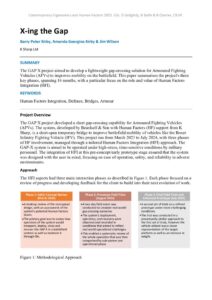
X-ing the Gap
| Document
|
Author Barry Peter Kirby, Amanda Georgina Kirby & Jim Wilson |
| Abstract The GAP X project aimed to develop a lightweight gap-crossing solution for Armoured Fighting Vehicles (AFVs) to improves mobility on the battlefield. This paper summarises the project's three key phases, spanning 16 months, with a particular focus on the role and value of Human Factors Integration (HFI). |
Usability of Drug Delivery Devices: Current Challenges and Innovative Methods
| Document
|
Author Cornelia Kratzer & David Grosse-Wentrup |
| Abstract Healthcare human factors are ever evolving, driven by patient safety, technological advancement, and regulatory requirements. While this progress challenges current practices, it simultaneously serves as a driver for innovation. These current challenges are presented, alongside the innovative methods of force studies, injection and hold time measurements, and iterative instructions for use (IFU) design studies, which can be used to address these challenges. |
Exploring the Perception, Challenges and Benefits of Cabin Crew Peer Support Programmes
| Document
|
Author Jordan M Hazrati & Rebecca L Grant |
| Abstract Twenty cabin crew with current operational experience across a variety of airlines and ranks participated in semi-structured interviews, to determine their views on the perception, challenges and benefits of peer support programmes. Perceptions of peer support were generally positive and involved talking to colleagues about a difficulty that was being experienced to feel ‘heard’, ‘listened to’ and supported by those who understood the lifestyle. The potential benefits of peer support were clear, however, concerns surrounding the trust and confidentiality of colleagues, as well as barriers to success such as lack of trust of management, financial instability of the industry and organisational culture were highlighted. Findings include recommendations to research the issues quantitively with a more diverse group of cabin crew and to industry to implement bespoke, externally–managed programmes, supported by management. |
Human Factors & AI In Nuclear: Regulatory Consensus As the Trust Bucket
| Document
|
Author Gorby Jandu |
| Abstract In 2024, both the inaugural UK AI awards and Nobel Peace Prize for Physics in AI took place. This further intensified the mainstream publicity given to AI both in human automation and machine self-learning. In contrast, the uptake of AI in more industrial and specialist settings has been noticeably measured, especially away from simple automation. For example, in the nuclear industry, Human and Organisational Factors (HOF) have yet to benefit from AI en masse. This is at great odds with the potential that AI presents in mitigating nuclear harm, itself the main concern when scaling nuclear power plants. However, change is afoot. In the last two years, important international nuclear regulatory guidelines for adopting AI in nuclear HOF have been published. This is a major step change for what is a decidedly risk-averse industry as it encourages the development of AI. But the message remains clear. AI must engender ‘top-down’ trust in the technology’s deterministic predictability. Leading up to the published guidance, two world-leading ‘sandbox’ trials were conducted under regulatory auspices. Below, I discuss one in detail to show that nuclear can provide HOF practitioners with much-needed empirical data on the potential of AI. As, if nuclear can utilise AI then a vibrant case exists for other fields. |
Human factors approach to platform device development
| Document
|
Author Finola Austin & Miranda Newbery |
| Abstract Medical device manufacturers may enjoy some freedom to operate during platform device development. However, the absence of a specified drug means that there is a lack of predetermined limits and guidance with regards to various human factors that pertain to intended use, including user characteristics. This paper presents a best practice approach adopted by one manufacturer that aligns with the regulatory process and helps to anticipate the needs of a diverse group of potential end users. An inclusive approach to sampling both intended users and device variants is described alongside the resulting design decisions. |
From data to decision: A case study on ergonomics in manufacturing automation
| Document
|
Author Teemu Suokko & Arto Reiman |
| Abstract Manufacturing process development is often technology and business oriented. The development of human work in this context is often neglected to a certain extent. With the use of ergonomics tools and methods, it is possible to identify targets for development and justify development investments also from the human work improvement perspective. For that purpose, physical ergonomics data were collected through video observations. In addition, occupational health and safety (OHS) and productivity indicator data were collected. In a series of group interviews, participants representing management and designers discussed the strengths and weaknesses of these data when it comes to decision-making on manufacturing development and related investments. As an outcome, the company decided to invest in production automation in the welding unit to avoid ergonomic problems and to increase productivity. |
Carers Perspectives of Usability of Standing Assistive Devices
| Document
|
Author Chia-Jung Kang & Alexandra Lang |
| Abstract Recently, assistive technology has gained a significant interest in research from various domains due to the rapid increase in the elderly, disabled, and immobile patient populations. This study introduced usability into caregivers’ perspectives in using assistive devices with a particular focus on standing aid devices, facilitating the movement of patients and caregivers in a safer transfer. Furthermore, the techniques for examining the caregiver burden and physical activities delivered the mental and physical aspects concerning the usability and devices. These also combined the approaches commonly used in assessing medical devices in human factors engineering (HFE). |
Impact of Neck Support on Headrests for Enhancing Relaxation and Comfort
| Document
|
Author Mohsen Zare, Nahed Jaffel, Hugues Baume & Fabien Bernard |
| Abstract This study explores the impact of neck support in headrest design to enhance relaxation and comfort, particularly in autonomous vehicles. A dual-phase approach was employed for iterative development and evaluation of headrest prototypes, aiming to identify ergonomic improvements and optimise comfort for diverse user profiles. In the preliminary phase, the comfort of headrests from Peugeot 3008, Citroën C4, and DS7 Crossback vehicles was evaluated. Three headrest models were tested using subjective questionnaires (CP50 scale and body map) and objective biomechanical measurements, including pressure mapping, electromyography (EMG), and video recording. Five volunteers participated, performing activities such as napping and reading, while neck and shoulder muscle activity was assessed. In the second phase, the standard headrest was compared with two newly designed prototypes using the same protocol. Results showed that headrests with enhanced neck support significantly reduced neck muscle activity and increased head-to-headrest contact compared to classic designs. These findings highlight the need for redesigned headrests to improve onboard comfort in next-generation vehicles. |
What can the Post Office ‘Horizon’ scandal teach about Artificial Intelligence deployment?
| Document
|
Author Chris Baber, Brandon King, Paul Salmon and Yihao Jiang |
| Abstract In this paper we use the Post Office Horizon scandal. Broadly, accounting errors arising from a computer system were falsely attributed to Subpostmasters who were subsequently accused of theft, fraud, and false accounting. Over 700 prosecutions have been successfully appealed and convictions quashed. Coupled with severe technical shortcomings, there was confirmation bias in the decisions of Post Office Limited to prosecute Subpostmasters and an assumption in UK Law that computers do not make mistakes (unless proven otherwise). From a review of evidence and newspaper reports of specific cases in the Post Office Horizon scandal, we construct and analyse Accimaps. We argue that a common problem across these cases is how different sorts of ‘black box’ of the Horizon system meant that it lacked transparency for all stakeholders. |
HAIQU – A Human Factors Requirements App for Human-AI Teams in Aviation
| Document
|
Author Venditti, R., Pozzi, S., Frau, G., Salam, R., Imbert, J-P., Duchevet, A and Kirwan, B |
| Abstract Contemporary Human Factors requirements sets, such as those embodied in EASA CS29.1302 for cockpit design, and the SESAR Human Performance Assessment Process (HPAP) requirements for air traffic management systems, are unlikely to be sufficient to account for Operational Explainability (OpXAI), shared situation awareness, and other elements associated with proposed Human-AI Teaming systems. Whilst the European Union Aviation Safety Agency (EASA) has provided new guidance on a number of these areas, their focus is largely on safety, with less attention on other areas such as Roles and Responsibilities, Competencies and Training, and Organisational Readiness - all concerned with systems integration. HAIQU (Human-AI Teaming Questionnaire) is a freely available Web App developed in the Horizon Europe HAIKU project. The app aims to make standards and regulations accessible and user-friendly for design teams looking to integrate AI capabilities into safety critical applications. HAIQU contains 180 requirements in eight Human Factors areas (Human-Centred Design, Roles & Responsibilities, Sense-Making, Communication, Teamworking, Error and Failure Management, Competencies and Training, and Organisational Readiness). The App is sensitive to different design maturity levels and AI autonomy levels, consistent with EASA's classification of Human-AI Teaming arrangements. This paper firstly situates the requirements set in terms of current EU and EASA regulations, as well as contemporary Human Factors guidance sources for cockpit and air traffic management systems. It then focuses on showing how HAIQU works and can serve as an aid to Product or Design Teams managing the integration of Human Factors into future AI-based systems, using as illustration a use case in cockpit Human-AI Teaming. |
Improving ineffective instructions
| Document
|
Author Andy Brazier |
| Abstract Despite the availability of extensive guidance, many instructions, procedures, and other documents intended to control how work is performed fail to fulfil their primary role. Major incidents and day-to-day operational inefficiencies often reveal that written instructions are either misunderstood, ignored, or incorrectly followed. Style guides typically focus on aspects such as terminology, tense, and reading level, aiming to ensure clarity and readability. However, these guides rarely address the more critical question: what content should be included, or excluded, to make instructions truly effective. Effective instructions go beyond simply describing how a task should be performed; they are tools that support users in completing tasks with greater accuracy, reducing errors, and enhancing overall consistency. The distinction between well-crafted instructions and poorly designed ones is not trivial; it can mean the difference between safe, efficient operations and incidents with serious consequences. This paper explores why many instructions fall short and how adopting a user-centred, task-focused approach can lead to better outcomes for individuals and organisations alike |
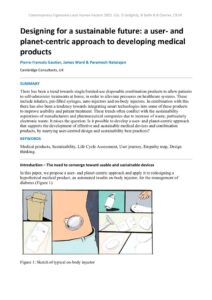
Designing for a sustainable future: a user- and planet-centric approach to developing medical products
| Document
|
Author Pierre-Francois Gautier, James Ward & Paramesh Natarajan |
| Abstract There has been a trend towards single/limited-use disposable combination products to allow patients to self-administer treatments at home, in order to alleviate pressures on healthcare systems. These include inhalers, pre-filled syringes, auto-injectors and on-body injectors. In combination with this there has also been a tendency towards integrating smart technologies into some of these products to improve usability and patient treatment. These trends often conflict with the sustainability aspirations of manufacturers and pharmaceutical companies due to increase of waste, particularly electronic waste. It raises the question: Is it possible to develop a user- and planet-centric approach that supports the development of effective and sustainable medical devices and combination products, by marrying user-centred design and sustainability best practices? |
Human-Centred Assessment of Human Augmentation Technologies
| Document
|
Author Victoria Cutler, Alison Clerici & Eleanor Cox |
| Abstract Human Augmentation (HA) technologies have been identified as a key future technology to enhance human performance, which could be of benefit in a range of contexts, including defence and security. However, there are a wide range of HA technologies, and limited methods available to evaluate the benefits and risks associated with their use. This project tested an approach to evaluating HA technologies that involved a modified version of the Ministry of Defence (MOD) Early Human Factors Analysis (EHFA). The HA EHFA was tested by applying it to the use of telexistence for use in battlefield medical care. The HA EHFA was successful in being able to identify the operational benefits, capability vulnerabilities, and ethical considerations associated with the technology. It is recommended that the HA EHFA be used to evaluate HA technologies for use in a defence and security context. |
Do rail workers still have a ‘feast-and-famine’ sleep pattern post-Covid?
| Document
|
Author Anna Vereker, Barbro Årnes & Claire Watt-Coombes |
| Abstract This paper presents key findings from the Rail Safety and Standards Board (RSSB) 2023 UK rail industry fatigue survey. A similar survey was run in 2018 and found that rail workers (especially shift workers) generally had a ‘feast-and-famine’ sleep pattern. We are now able to compare 2018 results with those from the 2023 survey to ascertain if this pattern still exists and to consider how features of fatigue risk management may have changed for rail workers in the post-covid period. |
Working alone, saving lives: a focus on transfusion laboratory safety
| Document
|
Author Nicola Swarbrick, Debbi Poles & Shruthi Narayan |
| Abstract Serious Hazards of Transfusion (SHOT) is the UK’s independent, professionally led haemovigilance system, collecting and analysing anonymised information on adverse events and reactions in blood transfusion. Where risks and problems are identified, SHOT produces annual recommendations to improve patient safety. Transfusion laboratory errors reported to SHOT help highlight gaps in practices and policies paving the way for improvement actions to enhance safety. SHOT data shows that transfusion laboratory errors occur at a disproportionate rate when staff are lone working. A detailed analysis was undertaken of all laboratory errors reported to SHOT between 2020-2023 where staff working alone in laboratories was identified as a contributory factor (Narayan, 2023). |
Using Design with Intent to Encourage Active Travel in Mobility as a Service
| Document
|
Author Joy McKay & John Preston |
| Abstract Mobility as a Service (MaaS) apps have been developed in the hope of increasing sustainable travel, yet the most sustainable forms of travel; active travel, are yet to receive substantial consideration. This significant change of increasing walking and cycling requires users to have all of their information needs met. Using COM-B alongside Design With Intent users, will co-create in-app features intended to provide the assistance needed to effectively increase active travel use. |
Operational Strategies within Simulated Environments
| Document
|
Author Mohsen Zare, Bernard Mignot, Nicolas Bert & Maxime Norval |
| Abstract Exploring the range of operational strategies could enhance our understanding of effective regulatory approaches, contributing to the prevention of Musculoskeletal Disorders (MSDs). This study aims to assess whether the use of virtual simulation, integrated into a Serious Game, enables users to establish conditions conducive to efficient regulation of their future professional activities. Additionally, we seek to demonstrate how operational strategies differ when performing similar tasks within the simulated context of a virtual reality Serious Game. The key findings reveal the presence of multiple operational strategies for each simulated task, which appear to establish favorable conditions for better regulation of future activities. While the Serious Game demonstrated a diversity of strategies, an important question remains regarding whether the game led to improved postural behavior between the beginning and the end of the session, and whether these changes transferred to real work conditions. The analysis showed that certain users progressively adjusted their strategies based on in-game feedback, improving postures related to upper limb and back positioning. However, others maintained their initial approaches despite recommendations. The extent to which this learning translates into long-term workplace adjustments requires further study. |
Improving users’ performance and safety at Station Pedestrian Crossings: a qualitative study
| Document
|
Author Yanna Carli, Christopher Paglia |
| Abstract In order to improve safety at Station Pedestrian Crossings (SPC), a project was launched to develop a new safety equipment using a behavioural approach. This paper presents a qualitative study using focus groups to identify promising safety equipment concepts based on the theories of situation awareness and perception/action loop. Thirteen participants took part in activities and discussions involving scenarios simulation, mock-ups and questionnaires. Safety equipment elements embodying the theoretical aspects studied were analysed and their design improved to identify the most promising ones regarding pedestrians’ performance and safety, i.e. the ones inducing safe behaviours. Combinations of the latter were then evaluated to identity the best safety equipment concepts that will serve for the development of refined prototypes, the efficacy of which regarding safety at SPC crossings will be evaluated on a mixed-reality testing platform developed on purpose. |
Assessing the effectiveness of virtual reality tasks as stress-inducing environments
| Document
|
Author Debora Colodete, Bernard Costa & Marcus Baldo |
| Abstract Due to safety concerns, the impact of stress on cognitive readiness cannot be assessed in real-time hazardous work scenarios through many psychophysiological methods. This study aimed to evaluate the validity of a virtual reality (VR) simulation designed to replicate a critical situation, eliciting a significant level of stress. This approach enables the analysis of behaviours that may mirror those exhibited by workers in high-risk environments such as oil platforms, deep-sea diving, or bomb disposal units. |
Understanding the effect of team familiarity on Shared Spatial Situational Awareness
| Document
|
Author Vicky Veal & Gulsum Kubra Kaya |
| Abstract The study investigates the relationship between team familiarity (both professional and personal) and Shared Spatial Situational Awareness (SSSA) during a flight simulation task. The findings suggest that team familiarity, and specifically personal familiarity, is important for both SSSA accuracy and the percentage of unknown lost SSSA state instances. Interestingly, professional familiarity was not found to be significant. |
Attention Capture Experimental Paradigm for Cross-Screen Interaction in Nuclear Power Monitoring System
| Document
|
Author Wu Xiaoli, Li Yiqun & Li Qian |
| Abstract This study analyses the mechanism of operators' cross-screen interactive behaviour during the execution of typical monitoring tasks from the perspective of attention capture, in order to enhance the superiority of attention capture for critical task information on interfaces, ultimately improving operators' efficiency in manipulation. The connection between the operator's perceptual cognitive process and cross-screen interactive behaviour is established through the bottom-up and top-down attention capture mechanisms. A cross-screen interaction experimental paradigm is proposed, and experiments are conducted in specific scenarios to verify and refine the potential behavioural mechanisms. The experimental results will help to gain a deeper understanding of the underlying mechanisms of cross-screen behaviour and cognitive processes and reveal the mapping relationship between interface factors and cross-screen interactions. |
Human Performance Optimisation Interventions and Measures of Effectiveness in Air Traffic Control
| Document
|
Author Katie Fisher & Leigh-Anne Smith |
| Abstract This paper outlines three programmes forming the Human Performance Optimisation (HPO) area of work within the Human Factors (HF) and Human Performance (HP) team at NATS, Air Traffic Control (ATC): HP Coaching, Performance Mindset and the HP Buddy Programme. Pre-cursors and drivers, development, application and analysis are described as well as additional work to evaluate and improve effectiveness measures for single and combined interventions. |
Predicting Compliance Behaviour During a Flood Disaster Using the Talk-Through Method
| Document
|
Author Razan Y. Aldahlawi, Glyn Lawson & Vahid Akbari |
| Abstract This study was conducted to explore compliance behaviour during flood evacuation, employing the talk-through approach developed by Lawson (2011), for which participants are required to explain their anticipated actions in response to a hypothetical emergency scenario. The results showed that social cues, as described by the Protective Action Decision Model (PADM) (Lindell & Perry, 2012), were found to be the most effective factor in reducing evacuation delay time and enhancing compliance with evacuation orders. It was also found that in the absence of any routing instructions or specific cues, evacuees ranked familiar and shortest (by distance) routes as more preferable than those taken by neighbours. This study contributes to our understanding of evacuees’ delay times and compliance with evacuation instructions, under the influence of different factors, including environmental cues, social cues, warning message contents, and various sources of the warning. It also demonstrated the value of the talk-through as a tool for studying human behaviour in floods without the risks or complications associated with data collection in real flood events. |
Integration of personas in transport policymaking
| Document
|
Author Phuong Anh Nguyen, Robert Houghton, Amanda Crompton & Sarah Sharples |
| Abstract There is increasing interest in the concept of human-centred design (HCD) for policymaking and the application of Human Factors and Ergonomics (HF/E) methods in this area. In this study, we explored perceptions of a specific method, mainly personas, in the transport policy space. This research aim was accomplished through sixteen interviews with transport policymakers and analysts working in both national and local government, employing critical decision methods and thematic analysis to examine the transcripts. |

An electric aircraft accident case study – human factors analysis and lesson learned
| Document
|
Author Michael A. Bromfield |
| Abstract An electrically powered aircraft was conducting flight tests, under experimental flight rules when power to the electrical motors was lost. The two-person crew took 9 seconds to identify the failed system and attempt recovery actions which were unsuccessful and the pilot landed in a field adjacent to the airport resulting in severe damage to the aircraft. HFACs was used to identify causal and contributory factors and highlight key learning points. The results informed changes to UK CAA experimental flight rules related to flight test organisation, use of system controls, positioning of displays and the availability of alerts and warnings. |

Reimagining Rasmussen’s risk management framework: a contemporary view on risk
| Document
|
Author Paul Salmon & Gemma Read |
| Abstract Rasmussen’s Risk Management Framework (RMF; Rasmussen, 1997) is arguably the most popular model of safety and risk within Ergonomics and Human Factors (EHF). However, the RMF was developed almost thirty years ago and there are questions regarding its suitability for contemporary systems and problems. In this presentation we outline and demonstrate a revised and extended RMF for contemporary sociotechnical systems. |
Developing Human Factors guidance for introducing Artificial Intelligence into the energy sector
| Document
|
Author Robert Becker & Stirling Tyler |
| Abstract The project team updated guidance for the Energy Institute on how the introduction of Artificial Intelligence (AI) and highly automated systems will affect Human and Organisational Factors (HOF) within the energy industry. The project team conducted a review of several papers on HOF and AI to develop new guidance specific to the energy sector. The new guidance focuses on different areas of human performance that AI and highly automated systems will influence. It also details the steps that should be taken during design and implementation of highly automated systems and AI using check sheets and screening tools. |
Impact of a passive exoskeleton on human performance
| Document
|
Author Gonny Hoekstra |
| Abstract This study evaluated the use of passive upper-limb exoskeletons in a bicycle assembly line to improve employee productivity and ergonomics. Results showed that exoskeletons improved posture and reduced back pain for tasks requiring work above shoulder height, but were less effective for tasks involving bending or varied postures. The research concluded that exoskeletons are beneficial for specific tasks but need careful selection based on the work environment, with further testing recommended for longer durations. |
Generation after Next HMI in Defence: What might the future look like?
| Document
|
Author Victoria Steane, Katie Shepherd & Erinn Sturgess |
| Abstract Future systems in defence are likely to incorporate increasingly levels of automation and Artificial Intelligence. With data proliferation representing a significant challenge, alternative visualisation and presentation technologies may be needed to better support operators in completing tasks. This paper aims to provide a view of the current state of the art and future trajectory of visualisation and presentation technologies. Centred on the task of tactical picture compilation, this paper describes the findings of a scoping review and technology scan aiming to identify potentially suitable approaches to support the visualisation and presentation of a tactical picture in Generation after Next (GaN) systems. |
Day in the Life Of: Applying the Process to the Nuclear Industry
| Document
|
Author Lisa Kelly, Rachel Selfe & Suzy Sharpe |
| Abstract Day In The Life Of (DITLO) methodologies have been utilised in the rail industry to elicit user experiences and drive a greater shared understanding of how systems or designs will operate in a variety of scenarios. This paper describes the application of this approach to the nuclear industry, in order to improve the integration of design, engineering and safety disciplines, and to achieve a holistic understanding of the user’s environment to enhance operability and human performance. |
Human Factors in Runway Collision: Lesson Learned from the Flight 2213 Accident Using HFACS
| Document
|
Author Mamadou Lamine Toure, Mamour Diouf, James Blundell & Wen-Chin L |
| Abstract This research uses a runway collision event as a case study to analyse the complex systemic factors involved in aviation safety. The study applied the Human Factors Analysis and Classification System (HFACS) framework to analyse the Flight 2213 accident, in which an A320 Neo collided with a rescue vehicle during a take-off run. Given the involvement of both the air navigation service provider (ANSP) and the airport operator (AO) in the runway incursion, the analysis was conducted across both organisations. The findings revealed systemic failures at different HFACS levels: the ANSP exhibited deficiencies at the Preconditions for Unsafe Acts and Unsafe Supervision levels, including technological limitations, an air traffic controller’s adverse physiological state, inadequate standard operating procedures, and weak supervision. The AO’s failures were identified at the Organisational Influence and Unsafe Supervision levels, with a poor safety culture, ineffective coordination, and an inexperienced supervisor. The primary unsafe act was the unauthorised runway entry of the rescue vehicle. While each organisation had vulnerabilities at specific HFACS levels, their combined failures spanned all four levels, creating the conditions for the accident. These findings underscore the need for a systemic and integrated safety analysis that encompasses multiple organisation stakeholders to enhance coordination, communication, and risk management between air navigation service providers, airport operators, and airlines. Strengthening safety culture and improving inter-organisational collaboration are critical to mitigating risks and preventing future runway incursions. |
Vehicle Simulator Validation – the Power of the System Model
| Document
|
Author Dobbins, T, Pett, M, Meir, C, Follows, J, Howe, S, Churchill, G, Grosvenor-Collis, H & Carr, S |
| Abstract To assess the potential usability and crew workload of a future Armoured Fighting Vehicle, a simulator was required to replicate the platform functionality. Specifically, the simulator required validation to ensure that the test data gathered was valid for the system requirement compliance process. With no real vehicle, the validation was based on the platform system model (SysML) that is recognised as the system Single Source of Truth. As the simulator, built using Unreal Engine software, is developed to replicate the SysML, the validation process was to review the simulator functionality against the SysML component parts, and the ability to complete the SysML use cases with the appropriate level of ‘flow’ where the usability and workload aspects can be assessed. This validation methodology successfully allowed the functional design of the future AFV to be completed early in the design process and reduce future risk to the programme. |

Can AI Recognise Pilot’s Vocal Emotional Expression under Emergency Situations?
| Document
|
Author Wen-Chin Li, Kuang-Lin Hsieh, Jeremia Pramudya & Declan Saunders |
| Abstract The development of Artificial Intelligence (AI) in the field of voice recognition has prompted interest in the field of emotional voice recognition (EVR); EVR is now one of the key challenges in the applications of Natural Language Processing (NLP). When conducting an accident investigation, the voice data from the cockpit voice recorder (CVR) usually provide significant evidence of the pilot’s mental state, which can support some hypotheses on occurrences by investigators, especially the verbal speech between pilots and air traffic controllers. In the past, emotion analysis mainly relies on image and text analysis technology. With the development of large language models (LLM) and AI; such as ChatGPT, Llama, and Perplexity, EVR has become possible. This research aims to explore the potential of using a Recurrent Neural Network (RNN) and the open-source dataset, Toronto Emotional Speech Set (TESS), to identify the pilot’s speech and emotions in emergencies. Further research may combine voice with physiological data, and with facial expressions to serve the purposes of operational and safety monitoring. |
Assessing system safety risks in aircraft landing
| Document
|
Author Ahmed Jilaau & Gulsum Kubra Kaya |
| Abstract Most aviation accidents occur during the landing phase, and accidents are analysed using traditional methods, where individual system components are analysed and, as a solution, the failed component is fixed or removed from the system. This paper aims to analyse the system safety risks in the aircraft landing process by applying the System-Theoretic Process Analysis (STPA) method. STPA enabled a comprehensive analysis of the interactions between system components. The findings revealed 140 unsafe control actions, 142 loss scenarios and 67 safety recommendations for improving the landing process. This study provides an example of STPA application in aviation and valuable insights into accident prevention in the landing phase. |
Using Co-Simulation to Explore Distributed Situation Awareness in AV Remote Operation
| Document
|
Author Hannah Parr, Catherine Harvey, David R. Large & Sarah Sharples |
| Abstract We introduce a highly novel, multi-participant co-simulation study to explore distributed situation awareness between a remote operator, a connected and automated vehicle (CAV) system and CAV user in two highly automated vehicle use cases. Initial reflections on the success of this method are reported, as well as plans for further analysis. |
Realising market potential: HF and Design Thinking for novel ophthalmology patient interfaces
| Document
|
Author Phillips, T J & Gautier, P-F |
| Abstract Breaking into a crowded space requires compelling differentiation. Our client wanted to enter the ophthalmic scanning market with a product which prioritises patient throughput to support the viability of optician businesses. We adopted a unique approach to design-thinking, prototyping and testing to explore novel patient interfaces to help achieve this challenging product requirement. The focus was not solely on enhancing ergonomics but moreover on supporting a robust business case - the surprising results may unlock significant commercial opportunity. |
Complex task performance is predicted by integrative skill domain ability
| Document
|
Author Adrien Jouis, Marie Cahillane, Ken McNaught & Victoria Smy |
| Abstract This paper presents a reanalysis of Lee et al’s (2012) skill acquisition data to test whether performance in a complex integrated task, based on fighter pilot attributes, is predicted by integrative skill domain ability. The findings show that the integrative skill domain ability is predictive of performance in a complex integrated task. In addition, more common individual difference measures like cognitive ability, working memory, attention control, and work sample testing, are either not predictive of performance or less predictive than the integrative skill domain ability. |
Developing Preliminary Heuristics for In-Vehicle Ambient Intelligence Systems
| Document
|
Author Shriya Pande, Catherine Harvey & David R. Large |
| Abstract This study aimed to develop heuristics for designing and evaluating in-vehicle Ambient Intelligence (AmI) systems. Utilising an expert focus group (n=3) and a user study (n=8), 15 preliminary heuristics were derived. These aim to ensure that in-vehicle AmI enhances the driving experience by fostering driver wellbeing and a positive user experience, whilst minimising distraction. |
Highlighting Barriers to the Use of Voice Systems in Cars: An Interview Study
| Document
|
Author Sparsh Khandeparker, David R Large, Catherine Harvey, Gary Burnett, Karl Proctor, & Chrisminder Hare |
| Abstract Advancements in technology have driven significant growth in voice systems, enabling hands-free interaction and offering notable benefits in the automotive domain by reducing visual-manual distractions. Despite the widespread adoption of voice systems in home settings, their use in driving contexts remains limited. This study aims to understand the barriers to using voice systems, exploring perspectives from both users and non-users in home and automotive settings. Semi-structured interviews were conducted with 20 participants with varied experience level with such systems- those who used voice systems in homes, in cars, both contexts and in neither. An inductive thematic analysis revealed key barriers, such as system performance, privacy concerns, passivity, past experiences with similar systems, effort required, user preferences, usage in multi-device settings, and autonomy in using these systems. These findings highlight these key barriers, offering valuable considerations for future design efforts to encourage greater acceptance and effective use of voice systems in both cars and homes. |
Understanding work-as-planned and work-as-done in biomedical laboratories
| Document
|
Author Viji Vijayan |
| Abstract An important concept in Safety II is distinction between Work-as-Imagined (WAI) and Work-as-Done (WAD). As in all industries, there are gaps between WAI and WAD in the biomedical laboratories, these concepts are poorly studied and understood. This study interviewed 15 biomedical lab workers to understand the gaps between WAI and WAD and how they were addressed. |
Self-Assessing Visual Attention While Driving: Implications for Driver Monitoring Systems
| Document
|
Author Max Harding, Catherine Harvey, David R. Large, Gary Burnett, Chrisminder Hare & Karl Proctor |
| Abstract Driver Monitoring Systems (DMS) are now a requirement in all new vehicles. DMS aim to reduce crashes and improve driver attention by providing warnings or interventions to the driver. However, driver acceptance is crucial to ensuring their effectiveness. Various methods exist to detect inattention, but if these do not align with a driver's mental model, acceptance issues may arise regarding the warnings provided. The study outlined in this paper examines how drivers assess their own visual attention by comparing self-reported ratings to a visual attention algorithm. Using an on-road experiment with six participants, initial results highlight the importance of contextual information for accurately assessing visual attention and providing effective warning strategies. |
Allocation of Function: Yes, no, maybe?
| Document
|
Author Adrian Wheatley, George Charalambous |
| Abstract This paper summarises the work undertaken to produce an Allocation of Function method in support of a number of client projects in the nuclear sector. This led to the development of an interactive Excel based tool to support the client in Allocation of Function decision making. |
Fatigue Risk Management within the UK Construction Industry
| Document
|
Author Dr Shelley Stiles |
| Abstract Fatigue is reported an important contributory factor in safety incidents across UK, including within the construction industry. The aim of this study is to gain a better understanding of existing organisational arrangements for the management of fatigue risk within the UK construction sector and compare maturity of the approach with other industries. |
On the use of ergonomic standards in Finnish manufacturing SMEs
| Document
|
Author Arto Reiman, Vesa Kauppinen, Maria Lindholm & Susanna Mattila |
| Abstract Ergonomics standards contain essential knowledge for the design of human work and human-technology interactions. When effectively implemented, this knowledge can significantly benefit companies by enhancing technological development, business performance and employee well-being. In this study, Finnish manufacturing small and medium-sized enterprises (SMEs) (n=16) were interviewed to assess the utilisation of ergonomics standards when designing human-technology interfaces during their endeavours to digitalise their manufacturing processes. The interviews indicate a general lack of awareness, and minimal application of ergonomic standards among the companies. This is a worrying observation, as it suggests that companies' design solutions may not always be based on current ergonomics knowledge but rather on alternative perspectives. To increase their competitiveness, it is recommended that these companies adopt a strategic approach to the utilisation of ergonomics standards. Future studies in diverse industrial settings and involving a broader set of companies are needed to confirm our findings and draw stronger conclusions. |
Adopting Passive Exoskeletons: Worker Perspectives and Impact on Work Productivity and Quality
| Document
|
Author Amin Yazdani & Marcus Yung |
| Abstract Exoskeletons help augment worker strength and may reduce the effects of physically demanding work; however, health benefits alone may not necessarily facilitate its adoption by organizations. Through a survey study with 40 construction workers who used an exoskeleton over multiple shifts, workers believed exoskeletons were usable and beneficial for prolonged overhead work. A subsequent systematic review suggests that quality and productivity impacts of exoskeleton use are dependent on task characteristics. |
Using wearable sensor technology to improve learning transfer in manual handling training
| Document
|
Author Victoria L Forrester & Victoria Filingeri |
| Abstract This research examined the use of wearable technology as an aid in manual handling training. The purpose of which was to establish if using wearable sensor technology can increase the transferability of training to the working environment and the factors that influence the likelihood of learning transfer taking place. Thematic analysis was used to examine the factors that may influence the transfer of learning. The findings suggest that wearable sensor technology has a place in aiding the transfer of learning from manual handling training. |
Resident Pathogens in Systems Engineering: Boeing 737 Max 8 Crashes Case Study
| Document
|
Author Sanjeev Kumar Appicharla |
| Abstract The aim of the paper is to present “resident pathogens” or “latent failure conditions” identified in Systems Engineering (SE) practices that led to the two fatal accidents of Lion Air Flight 610 and Ethiopian Airlines Flight 302 involving Boeing 737 Max- 8 airplanes. The accidents led to the tragic loss of 346 lives and incredible pain for the victims’ families. The desktop study included collecting information and data that is publicly available to represent all relevant viewpoints to ensure completeness. The accident analysis uses the Cybernetic Risk Management Model (CRMM) with support from the hybrid Swiss Cheese Model (SCM) and Management Oversight & Risk Tree (MORT) fault tree analytical technique. Resident pathogen metaphor in the Swiss Cheese accident causation model denotes fallible decisions made during the (SE) processes. The methodology incorporates Jens Rasmussen’s risk management framework (RMF) augmented by the Heuristics & Biases (H&B) approach to decision making, Thus, the methodology can help to identify latent failures conditions at all levels of the socio-technical system involved in the control of the system -of- interest (SOI). |
Adaptive safety on the construction frontline
| Document
|
Author Clinton Horn, Patrick Waterson & Gyuchan Thomas Jun |
| Abstract Frontline construction labourers make performance adaptations from the safety rules and the prescribed safe work method statements (SWMS) by adopting their preferred way of working developed from their previous learned experiences. Performance adaptations are motivated by the inherent production pressures within the construction industry driving a need for efficiency, and a constantly changing working environment. There is a need to rethink how safety and safety performance outcomes are constructed on the frontline of construction. |
FRAM: A boundary object to understand management of paediatric leukaemia patients
| Document
|
Author Nicholas Seaton, Julie Crawford, John Moppett, Laura Pickup |
| Abstract This paper describes the use of the Functional Resonance Analysis Method (FRAM) to understand the potential for variability in the delivery of chemotherapy across distributed care providers. The complexity of the system is considered and how the use of a FRAM model enabled cross disciplinary collaboration. This enabled consideration to common scenarios and incidents, where variability in the delivery of care is critical to adapt to a patient’s condition. The use of scenarios and incident-based analysis revealed how core functions within the system influenced the ability of teams and families to effectively monitor and communicate treatment regimes. In using the FRAM model to facilitate discussions, the team were able to challenge their beliefs on how knowledge of treatment regimens and a shared understanding across geographically distributed sites was achieved. This created new and shared knowledge on the potential variability in communication and transfer of information, essential to the reliability of the delivery of chemotherapy as intended. The paper considers the value and role of the FRAM model as a boundary object, an artefact that can support staff with different roles within the team to engage equally to solve a problem or safety concern. |
Human-AI Decision-Making in Higher Education
| Document
|
Author Robert Houghton, Xinrui Zhai, Zhuojun Li & David R. Large |
| Abstract Findings from an online study and focus groups show that students and staff were receptive to AI decision-making in higher education, highlighting transparency and equitability. Even so, students expressed a desire for creative work to be seen by a ‘fellow human’, suggesting potential for a collaborative human/AI approach. However, a follow-up study revealed that this solution was in fact perceived as less desirable than either a human- or, in some cases, an AI-only decision maker. |
A Human Factors Evaluation of the use of Patient Alerts within an Electronic Medical Records program
| Document
|
Author Camilla Rowland, Dr Laura Pickup, Fiona Spence & Dr Kyle J Harrington |
| Abstract A human factors evaluation of the usability, reliability including staff perception of the Accessible Information Standards (AIS) patient alerts within an acute NHS Trust electronic medical records program (EPMR). Aim of the investigation was to improve patient safety with the creation of a set of patient alert system principles to support future design of patient alerts systems within EPMRs. |
Visualisations and storytelling in defence: Establishing requirements for a service offering
| Document
|
Author Siobhan E Merriman, Robert Becker, Freya Leith, Kolby D Pistak & Steven Wilson |
| Abstract Visualisations and storytelling help to communicate and facilitate the understanding of complex information, thereby supporting problem solving and optimal decision making. Interviews were conducted with 19 stakeholders to discover the needs and requirements for a new Visualisation and Storytelling Service (VSS) within a Defence context. A Thematic Analysis produced six key themes and 18 recommendations for the VSS. This paper will explain the discovery methodology used, and the themes and recommendations generated for the future initialisation of the VSS. |
Do Hands-On or Hands-Off Drivers Perform Better During a Level-2 Silent Failure?
| Document
|
Author Amaad Hussain, David R. Large, Catherine Harvey |
| Abstract In a driving context, a silent failure (SF) occurs when the automated vehicle system is not able to operate but does not recognise its reduced capacity. As a result, it does not request human intervention or alert the user to the failure; the human driver must therefore recognise the need for their input and provide it in an appropriate and timely manner. Recent legislation is beginning to relax the stipulation for drivers to keep their ‘hands-on’ the steering wheel during level 2 (L2) automation. This study therefore explores if and how hand position (‘hands-on’ or ‘hands-off’) influences drivers’ reaction time and the quality of their intervention following a silent failure at L2 automation. Results show that ‘hands-on’ drivers were significantly quicker to respond to the SF, with the first steering input occurring in 3.7s, on average, amongst this cohort, compared to 8.5s for ‘hands-off’ drivers. Significantly, all ‘hands-on’ drivers provided an active control input before their vehicle drifted across the lane boundary. |
Systems thinking for sustainability: Using ActorMaps to compare transport schemes
| Document
|
Author Rich C. McIlroy & John M. Preston |
| Abstract Mobility as a Service (MaaS) is a smart mobility idea that aims to help people drive less by facilitating the combination of multiple modes of transport, planned, booked, paid for, and navigated through a single app. This apparent simplicity belies the complex structure of the underlying sociotechnical system. Here we take a systems ergonomics perspective, using Rasmussen’s Risk Management Framework to analyse three current MaaS systems, i.e., Jelbi in Berlin, Floya in Brussels, and Breeze in the UK’s Solent region, to proactively identify risks to success. |
Gender in human factors education: A pilot study
| Document
|
Author Rich C. McIlroy |
| Abstract Women are chronically underrepresented in engineering. Some have argued that greater emphasis of the social relevance of engineering could help address the challenge. Human factors and ergonomics (HFE), in its focus on the human in the system, does just this. Could HFE therefore help us solve the engineering gender challenge? How is HFE currently performing in terms of gender equity? This study used surveys and interviews with students and educators to explore these issues. Participants highlighted the need for institutional guidelines, sincerity in implementation, and a broader, integrated approach. HFE, by virtue of its human-centred focus, is well-positioned to lead efforts toward gender equity in engineering, but concerted effort is required. |
Exploring the risk and extent of musculoskeletal disorders in UK heavy rail
| Document
|
Author Kirsten Huysamen, Owen McCulloch, Faye Bacon, Jemma Widdows, Barbro Arnes & Paul Leach |
| Abstract Musculoskeletal disorders (MSDs) are one of the leading causes of absence in the UK railway. The data required to address this issue is not readily available. The Rail Safety and Standards Board instigated a study to carry out the first industry-wide MSD survey to understand the prevalence and types of MSDs rail workers are experiencing and why this may be occurring. A railway-specific MSD survey was created using evidence from scientific literature and consultations with UK rail organisations, railway unions and the regulator, and the objectives of the survey. The survey underwent user testing to assess its readability, usability, and applicability to UK heavy rail. The survey was active for a duration of 5 months (July 2024 – December 2024) and open to all job roles contributing to heavy rail operations in the UK. The paper provides details on the survey development and initial findings. |

Verification and Application of Workwear-Integrated Sensors for Ergonomic Injury Risk Assessment
| Document
|
Author Arun Nandakumar, Manal Elhamri, Zain Shah, Kailash Manohara Selvan, Stephen Womack, Simon Carpenter |
| Abstract Risk assessments are a central part in Work-related Musculoskeletal Disorder (MSD) risk management. Wearable sensors integrated into workwear present a promising approach for industrial ergonomic risk assessment This paper has three objectives: first, we assess the accuracy and efficacy of a workwear-integrated sensor system in estimating the MSD risks comparing it to an optical measurement technique, secondly, we outline approaches for using the system for continuous MSD risk assessment using industry standard methods and a Cumulative Damage (CD) exposure metric based on Fatigue Failure Theory (FFT) and third, we demonstrate feasibility by applying the system and approach for assessing 3 manual-handling tasks within the rail industry. Results confirm that the system, and approach can enable a proactive and data-driven approach to MSD management. Key considerations necessary for the wider adoption are also presented. |

Developing healthcare safety investigator competencies for a consensus study
| Document
|
Author Sophie Hide and Rosemary Lim |
| Abstract There is a drive to professionalise healthcare safety investigators but there are currently no agreed core competencies. This paper describes the process of generating an initial set of competencies for healthcare safety investigators. The outputs formed the basis for a later consensus study. |
WRMSD risks within the construction industry
| Document
|
Author Andrew D.J. Pinder |
| Abstract The study sought to review in a systematic way the evidence comparing the rates of work-related musculoskeletal disorders in different construction occupations. The available data indicate that some occupations are significantly worse than others. The samples underlying the data are not sufficiently large to produce reliable estimates of prevalences in all but the largest occupations. |
Understanding the Human Factors Related to Unrecognised Oesophageal Intubation Using the SEIPS Framework
| Document
|
Author Melody CheN, B. L. William Wong |
| Abstract Unrecognised oesophageal intubation (UOI) is a medical procedural error in which a breathing tube is mistakenly placed into the oesophagus and not promptly identified or addressed. A literature review on the human factors relating to UOI was performed and findings presented in the Systems Engineering Initiative for Patient Safety (SEIPS) framework. Key themes relating to issues around intubation equipment factors were used to inform the design of a cognitive aid to improve human performance in this clinical context. A semantically meaningful tray consisting of images and uniquely sized slots was created and sought to address technical and non-technical human factors identified in adverse event reports and coronial cases of UOI. |
Augmented reality in earthquake rescue: impact on workload and decision making
| Document
|
Author Weixuan Li, Glyn Lawson, Setia Hermawati & Kyle Harrington |
| Abstract This study investigates the application of augmented reality to enhance rescue efficiency, alleviate workload, and improve decision-making in earthquake rescue. The findings demonstrate that AR-based solutions surpass conventional approaches in task completion duration, map utilisation, and decision-making simplicity, underscoring AR's capacity to improve human factors issues in disaster contexts. Future studies should include professional rescue teams as well as more complex simulations to test AR's effectiveness in real-world emergency situations. |
Utilising principles of visual hierarchy to reduce errors of accidental drug administration
| Document
|
Author Amol Lotlikar |
| Abstract Programming errors in infusion pumps pose significant safety risks. Current mitigation strategies rely on human-centred methods such as checklists or two-person checks. Redesigning pump interfaces using visual hierarchy principles could better prevent errors by emphasising critical information during drug selection and confirmation. |
Workload and Perceived Usefulness when an Electronic Checklist with Sound is Used for Aeroplane Landing
| Document
|
Author Florin Dumitrascu |
| Abstract This study explored whether there were differences in workload and perceived usefulness between people who used an electronic checklist with sound for aeroplane landing and those who used a paper checklist. Two groups of University students were assigned to one of two conditions (A. paper checklist and B. electronic checklist with sound). Each group read their checklist (paper – group A, electronic checklist – group B) and selected cockpit areas on a screen to indicate completion of landing sub-tasks on an A320 aircraft. Workload and perceived usefulness were assessed subjectively. Those who used the electronic checklist stated lower levels of workload and found their checklist more useful than those who used the paper checklist. These findings suggest that electronic checklists with sound are a promising alternative to paper checklists used for landing, but further research is needed to fully understand their benefits for pilots. |
Exploring Human Performance in Mako-Assisted Hip Replacement Surgeries
| Document
|
Author Jasper Vermeulen, Glenda Caldwell, Müge Belek Fialho Teixeira, Alan Burden, Matthias Guertler |
| Abstract This study investigates the human factors shaping surgical workflows in Mako-assisted Total Hip Arthroplasty surgeries, particularly emphasising non-technical skills such as communication, teamwork, and situational awareness. Using video analysis, we examine interactions between surgical team members and the Mako system, identifying challenges and opportunities that enhance future collaborations. |
Integration of Human and Organisational Factors in Railway Systems Lifecycle Processes
| Document
|
Author Nora Balfe, Virginie Papillault & Anna Windischer-Unterkircher |
| Abstract Integration of human factors in railway change management and systems engineering is an increasingly important topic, not least because of emerging regulatory requirements in the area. This paper will describe one model developed collaboratively in the International Union of Railways (UIC) Human and Organisational Factors Working Group (HOFWG) which maps 12 human and organisational factors steps to the 12 steps in the V-cycle model described in the railway Reliability, Availability, Maintainability and Safety (RAMS) standard (EN50126). The aim is to provide a framework, aligned with existing engineering approaches, to communicate how human and organisational factors can be integrated into a railway change project. |
Introducing CoolSticks for anaesthesia; a human factors approach
| Document
|
Author Joseph Swani, Paul Southall, Frances Ives, Shakira Nathoo & Rachael Cresswell |
| Abstract Regional anaesthesia is commonly tested using ethyl chloride spray, but it is harmful to the environment. The CoolStick is a cost-effective alternative with a lower carbon footprint. This project used human factors methodology in the implementation of CoolSticks within a hospital, aiming to achieve a safe and effective transition and to reduce ethyl chloride use. |
Specific Heuristics for Smartwatch Usability Evaluation: Development, Validation and Comparison
| Document
|
Author Yiyao Li, Maria Richart & Setia Hermawati |
| Abstract This study examined the effectiveness of specialised heuristics for smartwatches, focusing on unique usability challenges of wearable interfaces. The study used a combination of literature review, focus groups, and expert evaluation to develop ten heuristics for smartwatch interfaces. Subsequently, an empirical study of five typical tasks on smartwatch was conducted, with three groups of participants using Nielsen’s heuristics, specialised heuristics, and user testing to collect data. By combining theoretical development and empirical validation, this research proposed a framework for adapting and validating heuristic evaluations to emerging wearable technologies. Our findings showed that the heuristics set for smartwatch was more effective than general heuristics due to its better accuracy in anticipating notable usability concerns. |